Smile Wagon R: A Mint-Green Rental for Okinawa
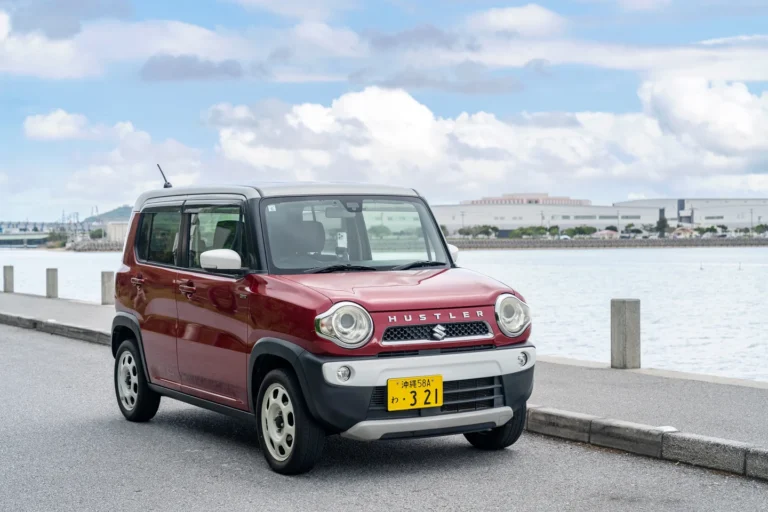
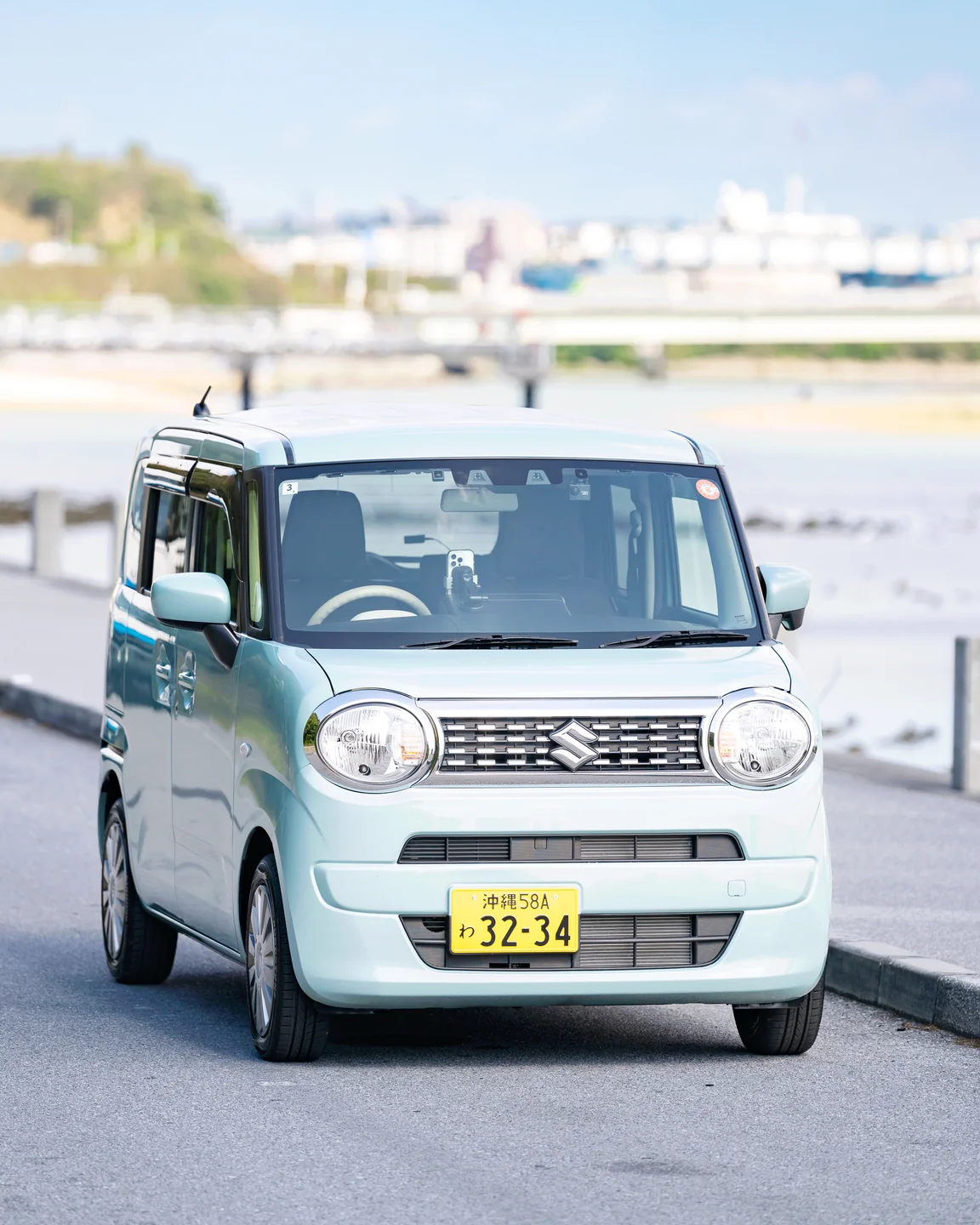
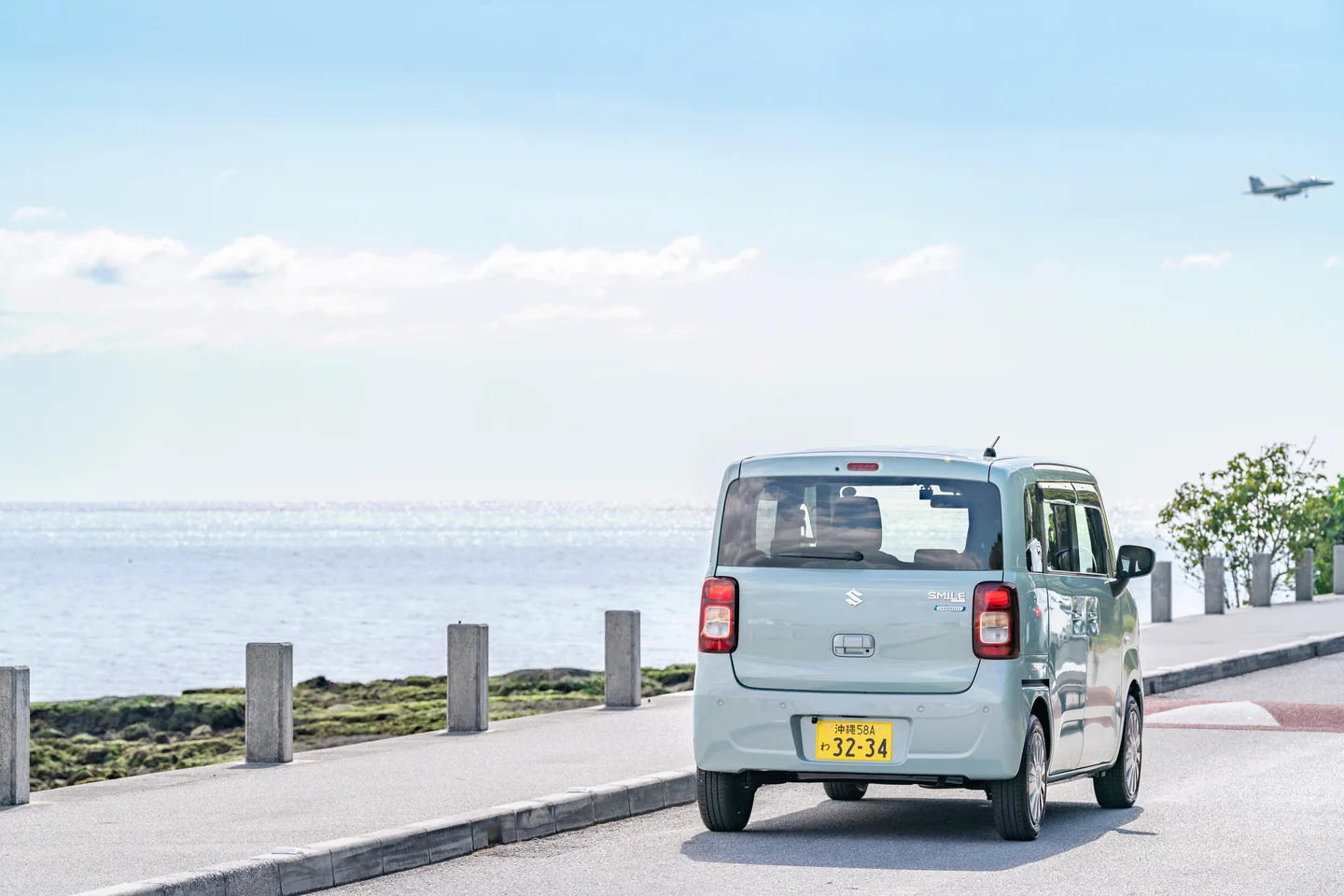
A mint-green Smile Wagon R on an Okinawa coastal road
Haisai! I’m CULT.
Today’s Okinawa rental car review is of a fresh new car delivered in 2024: the Suzuki Smile Wagon R. Basically, it’s one of those.. boxy kei cars you’ve probably seen on YouTube. The Wagon R turned out really well, and the Smile Wagon R is the kei-car version of it. I asked the owner to lend me this one so I could review it.
The owner is Korean
One infant seat is free. From the second seat onward, baby seats cost an extra 1,100 yen each and child seats 550 yen each.
They pick you up at the airport and drive you back after you return the car. If there is a spare seat for the driver, they may take you to the airport in the same car you rented. (No need to unload your luggage)
They give you a driving lesson on what to watch out for in Japan. You drive from the airport to the office while the owner points out what to be careful of.
An international driving permit is required. They check it on the spot, so have it ready.
They absolutely will not rent you a car without one. (Photocopies and Korean licenses with English text are not accepted.)
Understanding the insurance
Aosora Rent-a-Car: You need D basic liability insurance and NOC (non-operation charge) coverage for lost business while the car is being repaired.
D basic liability insurance: This waives your liability. Unlimited third-party bodily injury coverage, unlimited third-party property damage coverage, personal injury coverage of 30 million yen per person, and vehicle damage coverage of 100,000 yen.
NOC: Whether you damage the car or someone else does, you are responsible if it cannot be rented out. The owner has to cancel the next customer’s booking, after all. This insurance waives that liability. The two together cost 1,650 yen per day.
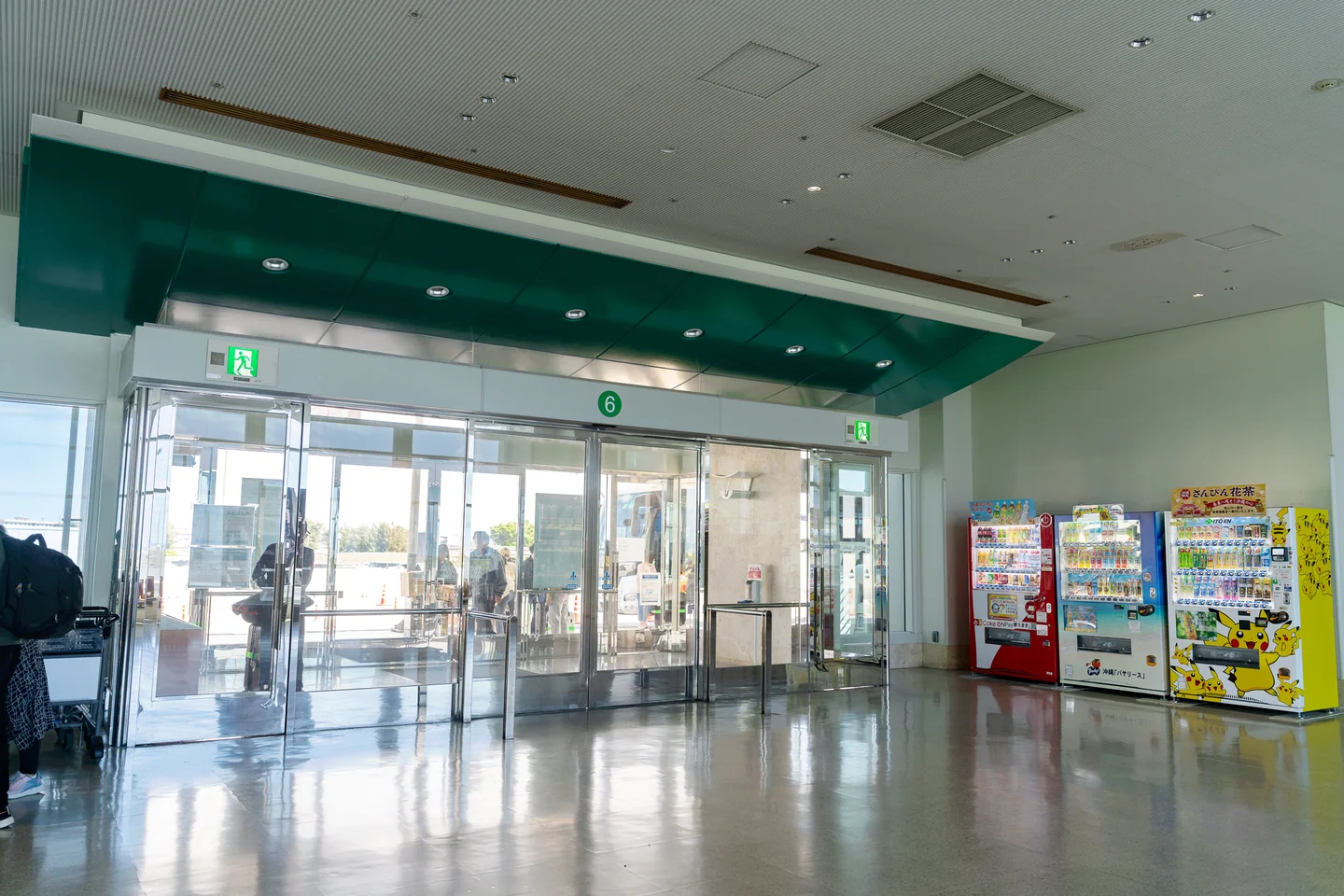
When you arrive at Naha Airport in Okinawa, head to Exit 6 on the 3rd floor.
Suzuki Smile Wagon R at a Glance
It’s a small car with roomy front seats, and folding just one rear seat easily makes room for three people’s luggage.
Details

The owner is Korean, so you can coordinate your location in real time on KakaoTalk. The Wi-Fi at Naha Airport in Okinawa is crap, so having an eSIM or roaming will make things easier. But the free airport Wi-Fi works really well around Exit 6 on the 3rd floor. Once you go out through that exit, the owner will tell you exactly where to find him on KakaoTalk.
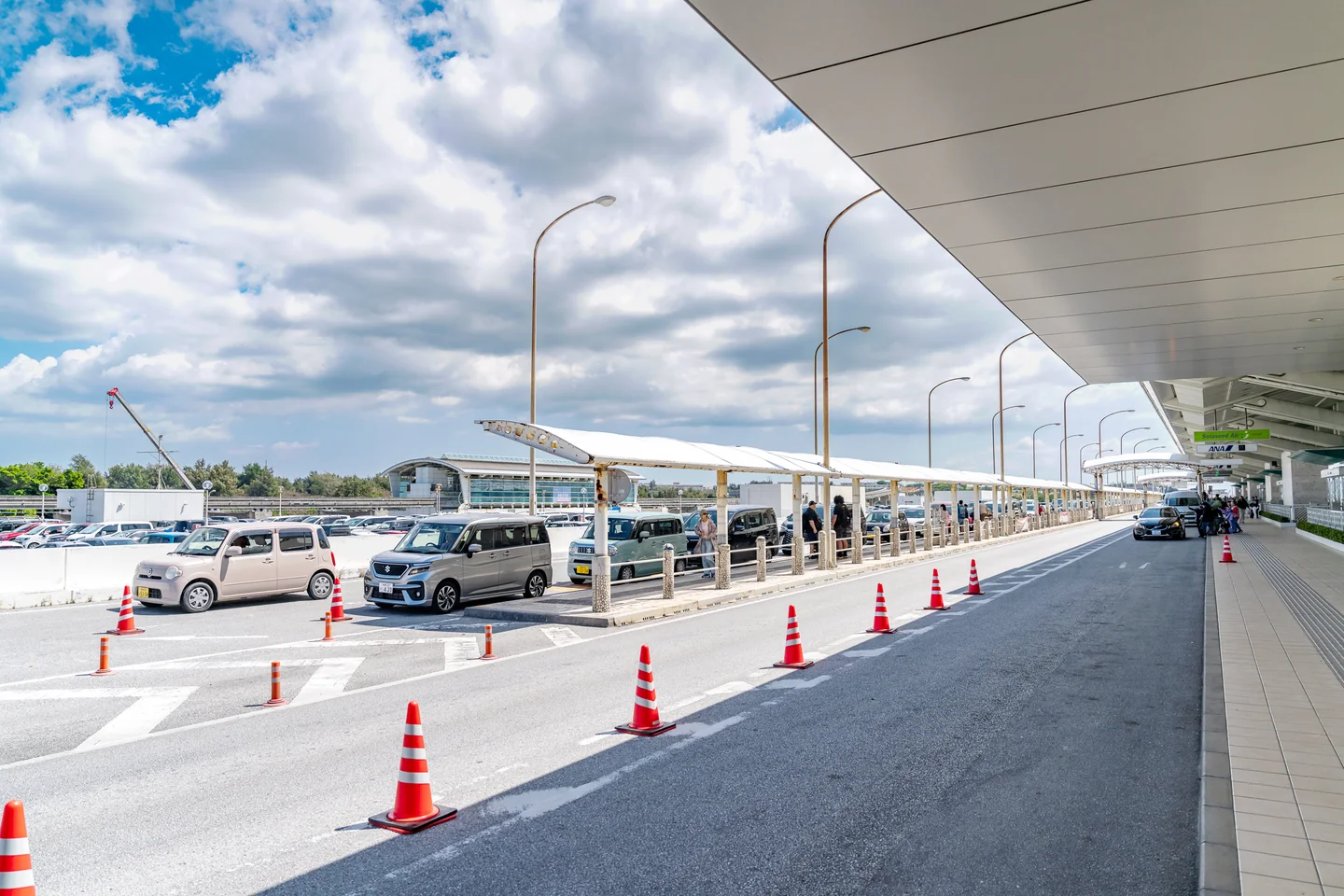
See that roof across the road? Cars are parked in a long row beside it, and it’ll usually be one of those. The owner will be parked there waiting for you.
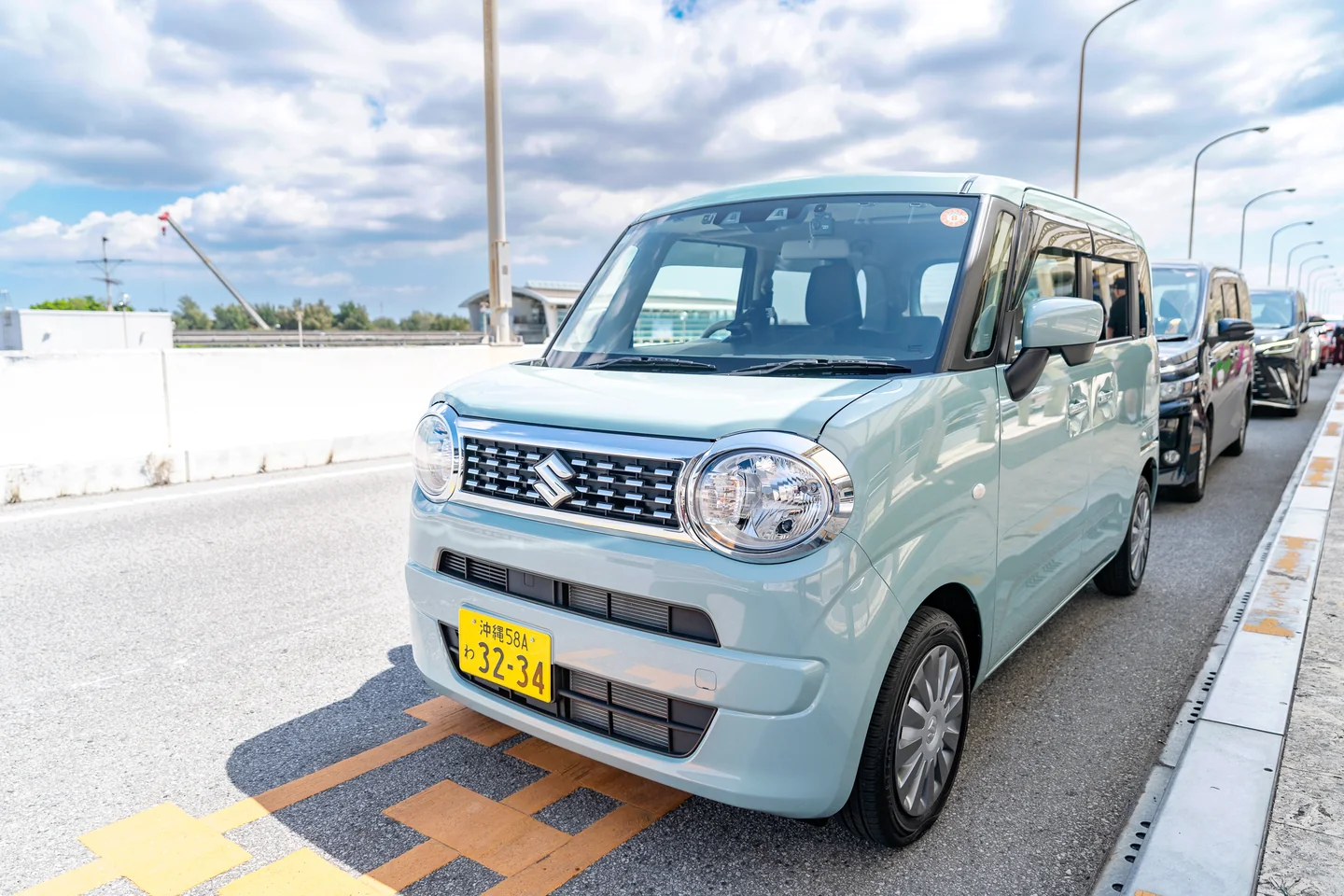
Mint green really is the best car color. I drove a mint-green Fiat 500 when I lived in Prague. Nobody in Prague drove a prettier car than mine.
I gave it to my lawyer instead of paying the fees for winding up my business.. His wife liked it and ended up taking it herself.
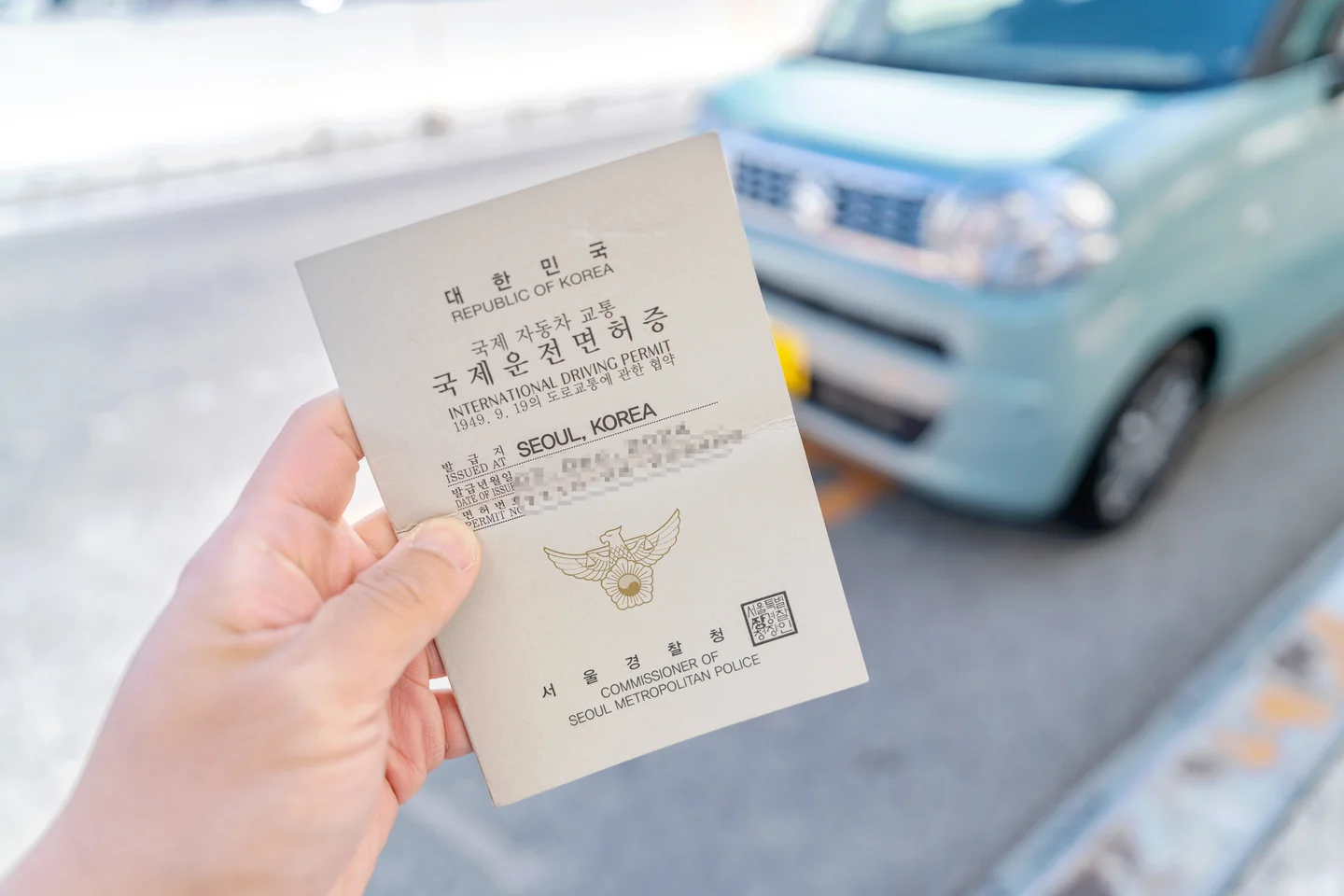
Show your international driving permit to the owner who comes to pick you up. I don’t use mine, so.. I just carry it folded in half.. It’s a bit crumpled. More of a prop for rental car reviews, really?
The owner gives it a quick look, checking things like the date you got your license. Mine says December 3, 2024. I lost my license in Prague and couldn’t exchange it, so the date was reset. I got a driving history certificate from the Czech road traffic authority and even had everything notarized, but Korea went, “Yep, take the driving test again~” So my license date is December 3, 2024.
The car I’m reviewing today is a kei car and isn’t hugely expensive, so new drivers can rent it too. But with nicer cars like the Toyota Alphard or Mitsubishi Delica D5, if you haven’t had your license long, or the driving lesson shows you’re not very good behind the wheel, they may refuse to rent you one.
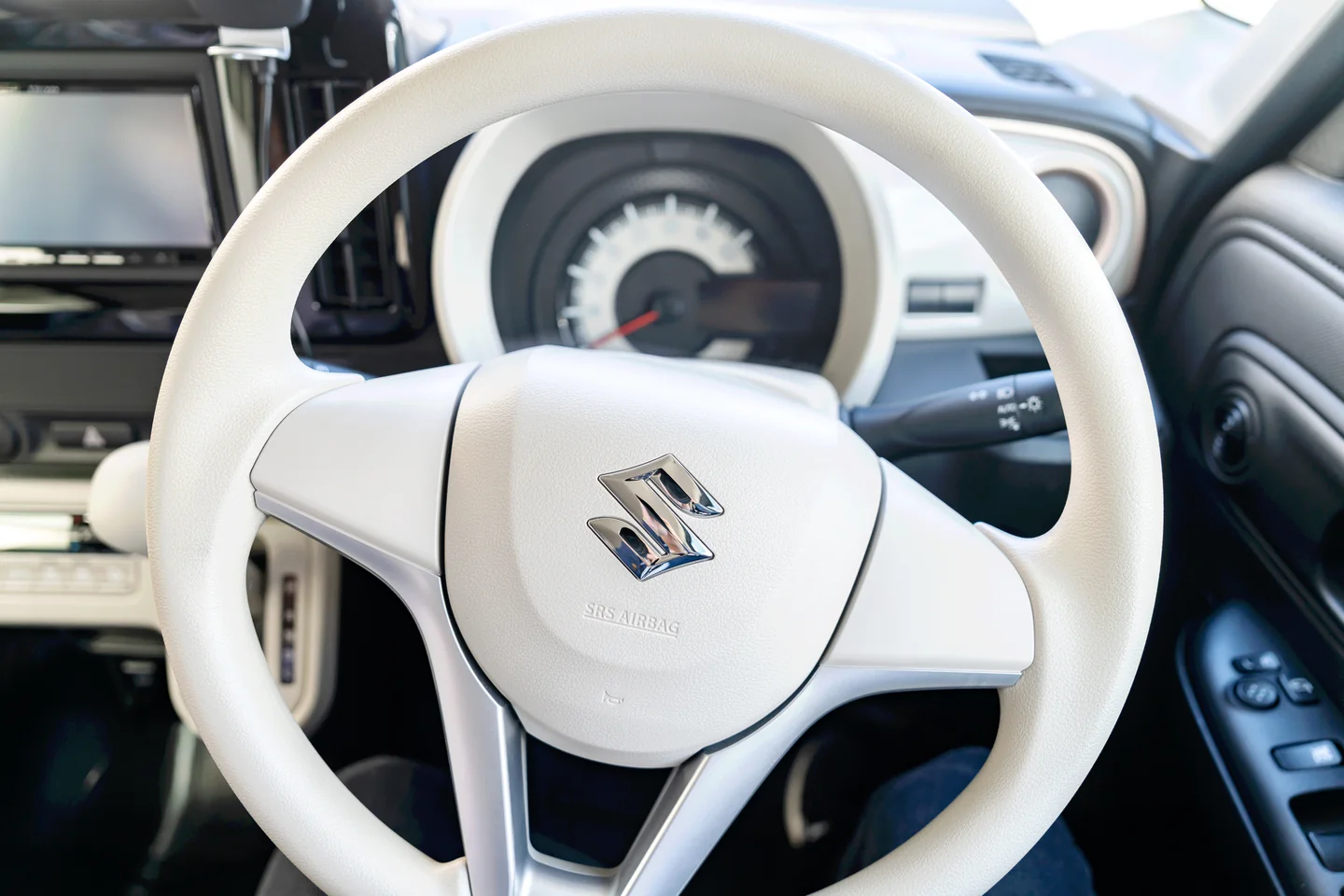
Getting a driving lesson will be tricky if you have a large group. Someone with a Japanese driving license has to sit in the front passenger seat. So a small car like the Smile Wagon R works well for a lesson when there are two of you. If you have more people, the owner brings a bigger car to pick you up. The catch is, that leaves less time for learning ⏰
Once you’ve loaded your luggage and sat in the driver’s seat, the owner sits beside you and starts with the basics: where the parking brake, brake pedal, accelerator, and turn signal stalk are. He also explains common causes of accidents. Listen carefully and remember what he says.
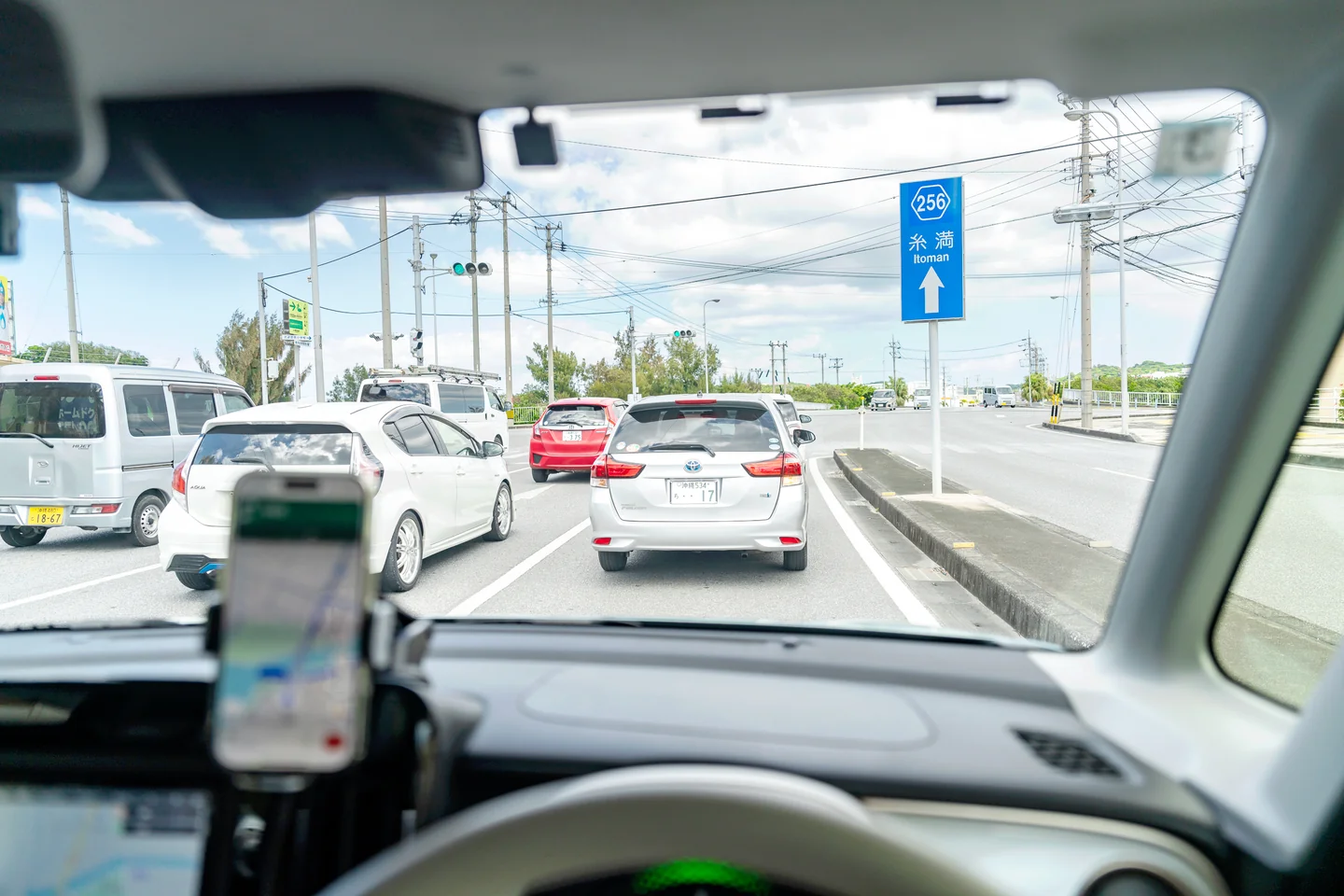
I drive in Okinawa every day, so instead of a driving lesson, it turned into a discussion about how to explain things more clearly.
He explains things like why renters often damage the left side mirror, and how to make unprotected right turns, one of the biggest differences between driving in Korea and Japan.
Every rental company does this. You sign a document about the amounts you are liable for in an accident. Read it carefully before signing.
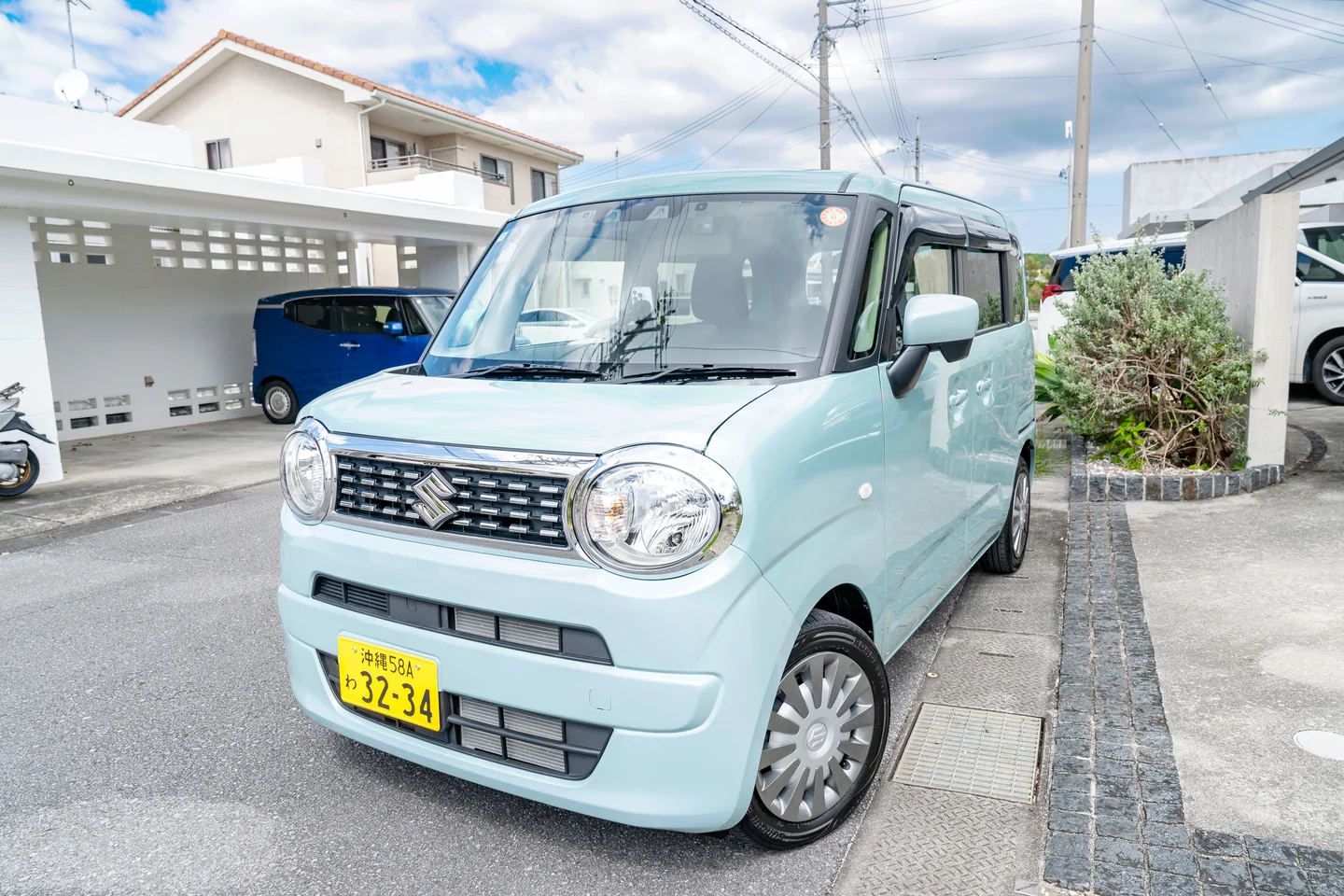
Now take photos of any scratches or damage on the car. It’s new, so.. I could barely find a scratch.. It’s so, so new that even the trunk area, where chipped paint is common, was spotless.
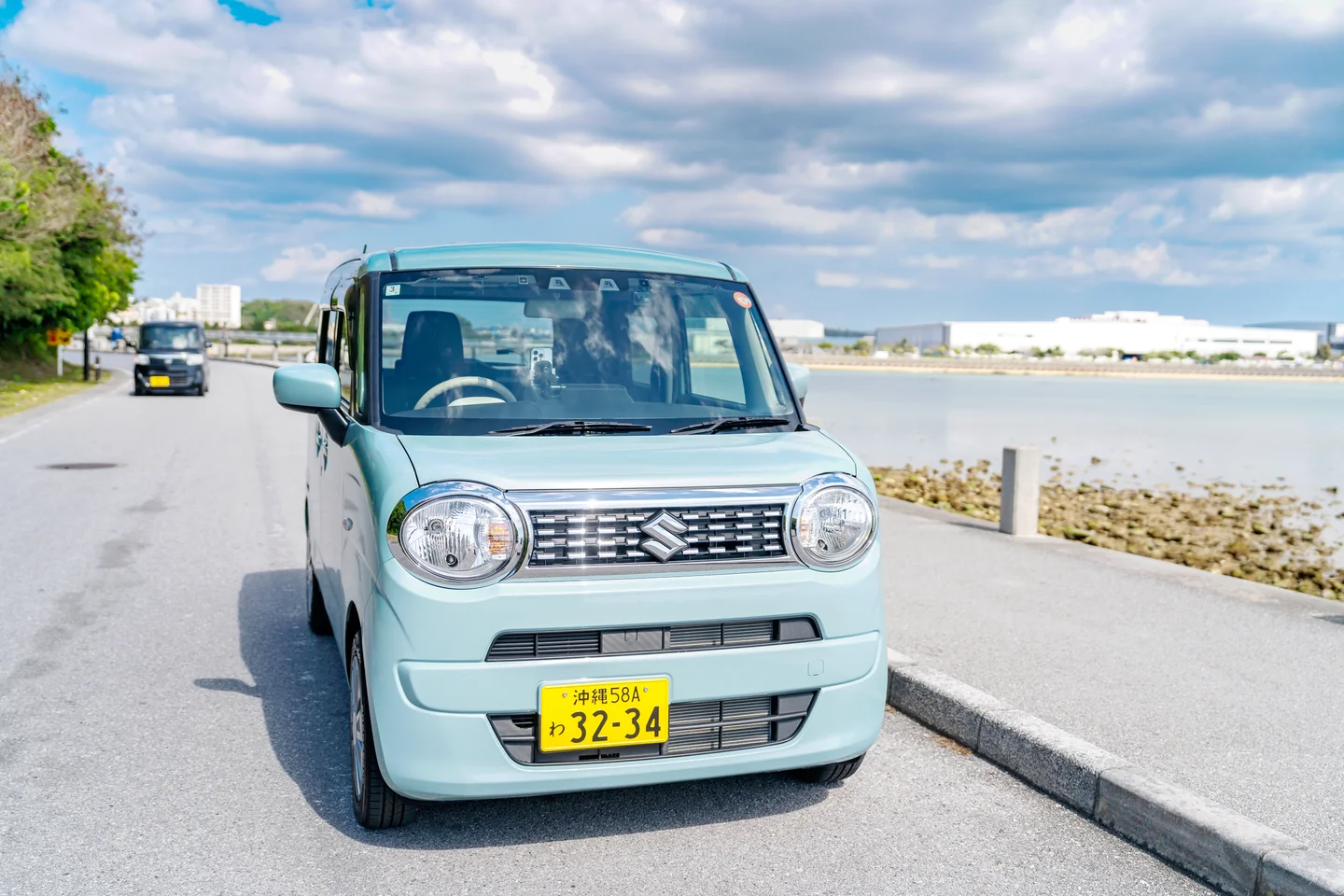
Specifications
Engine: 660cc 4-cylinder / Maximum output: 49 hp / Maximum torque: 5.9 kg; hybrid
Transmission: CVT
Drive: Front-wheel drive / Fuel economy: 25.1 km/L
Length: 3,395 mm / Width: 1,475 mm / Height: 1,675 mm / Weight: 840 kg
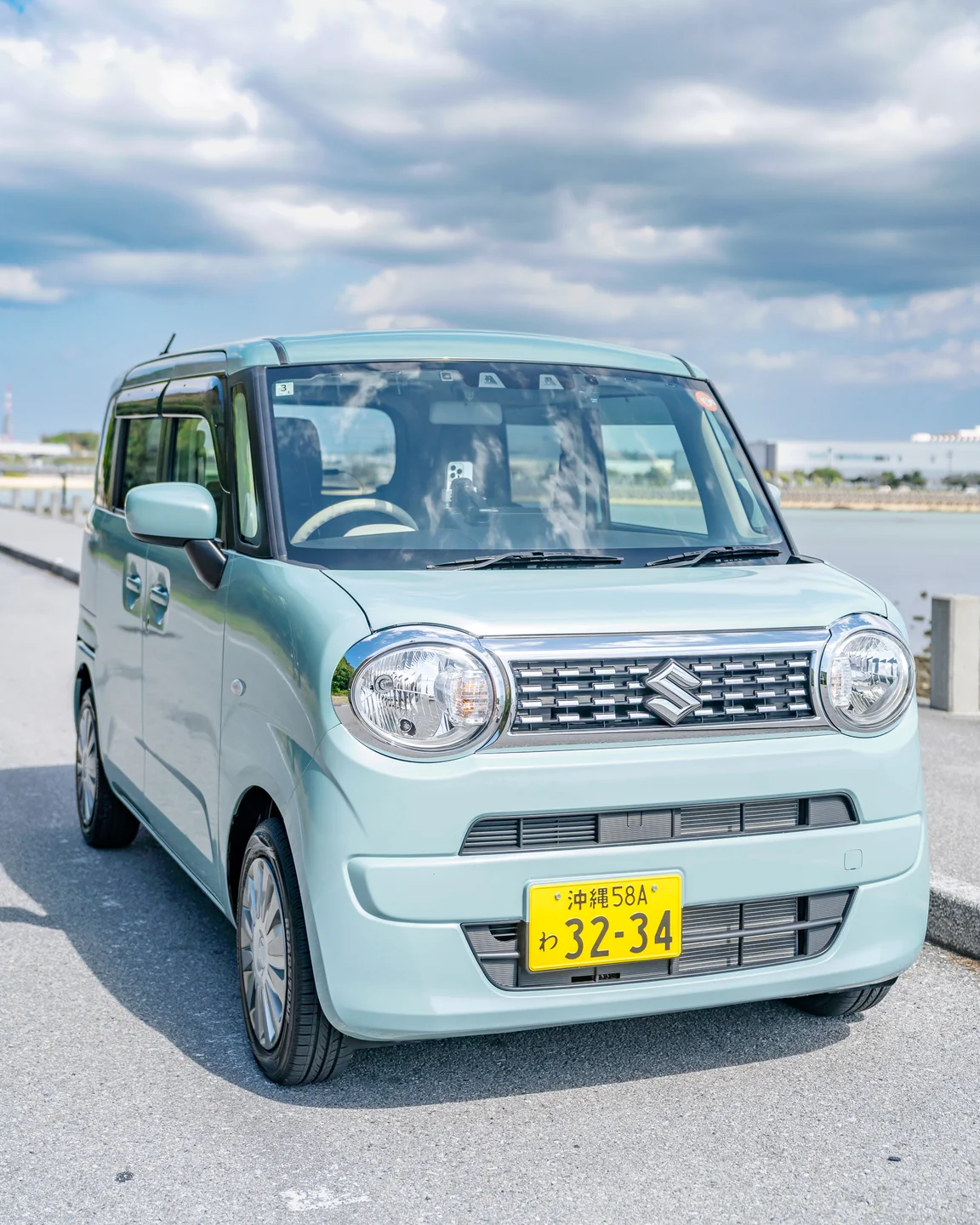
As you can see, this is a boxy kei car, the same sort as the Honda N-BOX you’ve probably seen all over YouTube. But this is a much better car. It’s much more expensive too, and accelerates better. Even the idea of putting a hybrid system in a car with a 660cc engine is surprising. I think it’d make a great companion for an Okinawa trip with two or three people. Four people with luggage won’t work, though. More on that below.
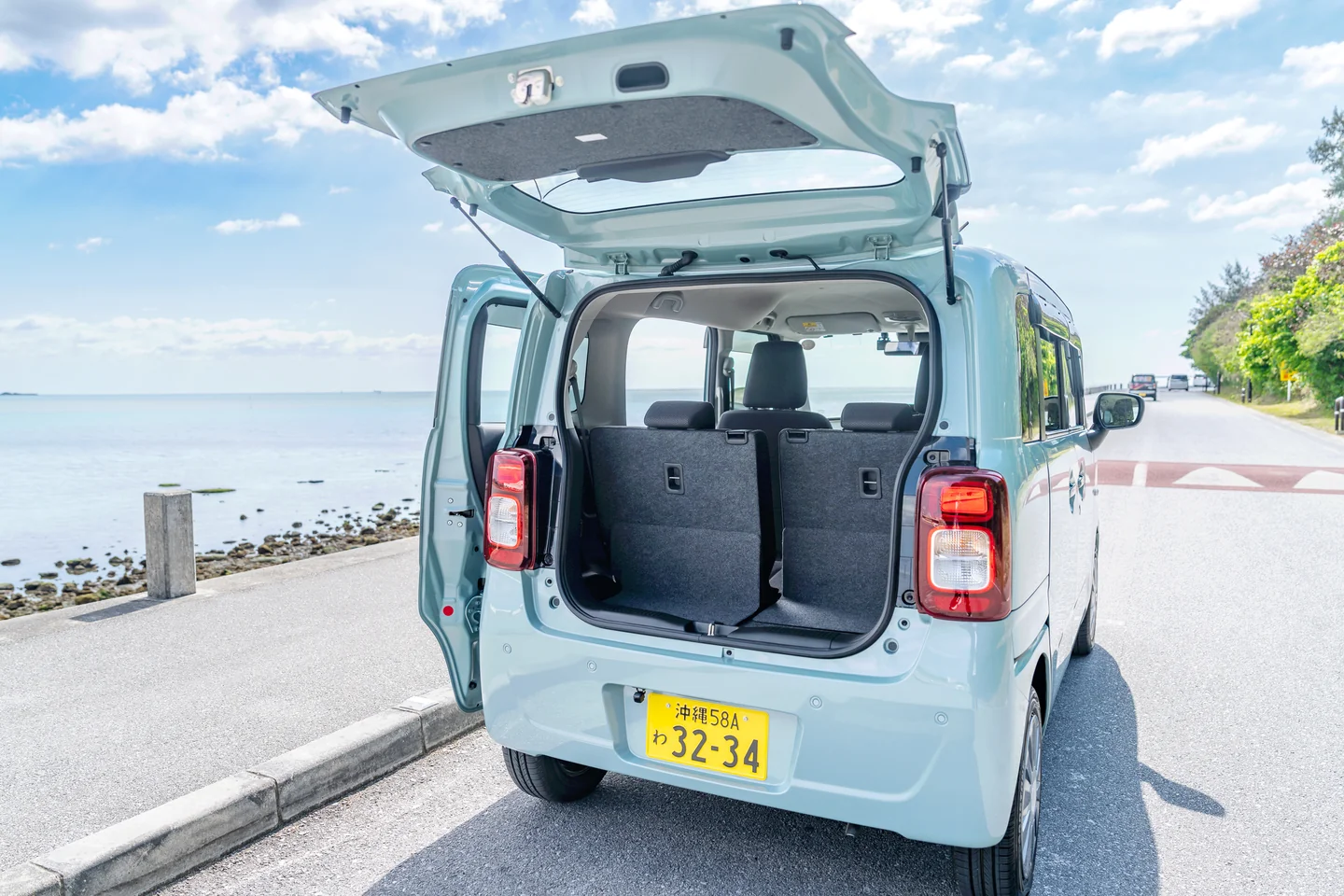
It’s fuel-efficient and great for traveling around Okinawa. But a kei car has its limits. The trunk is small. That’s why I said four people with luggage won’t work. Does that space even look like it could fit a suitcase?
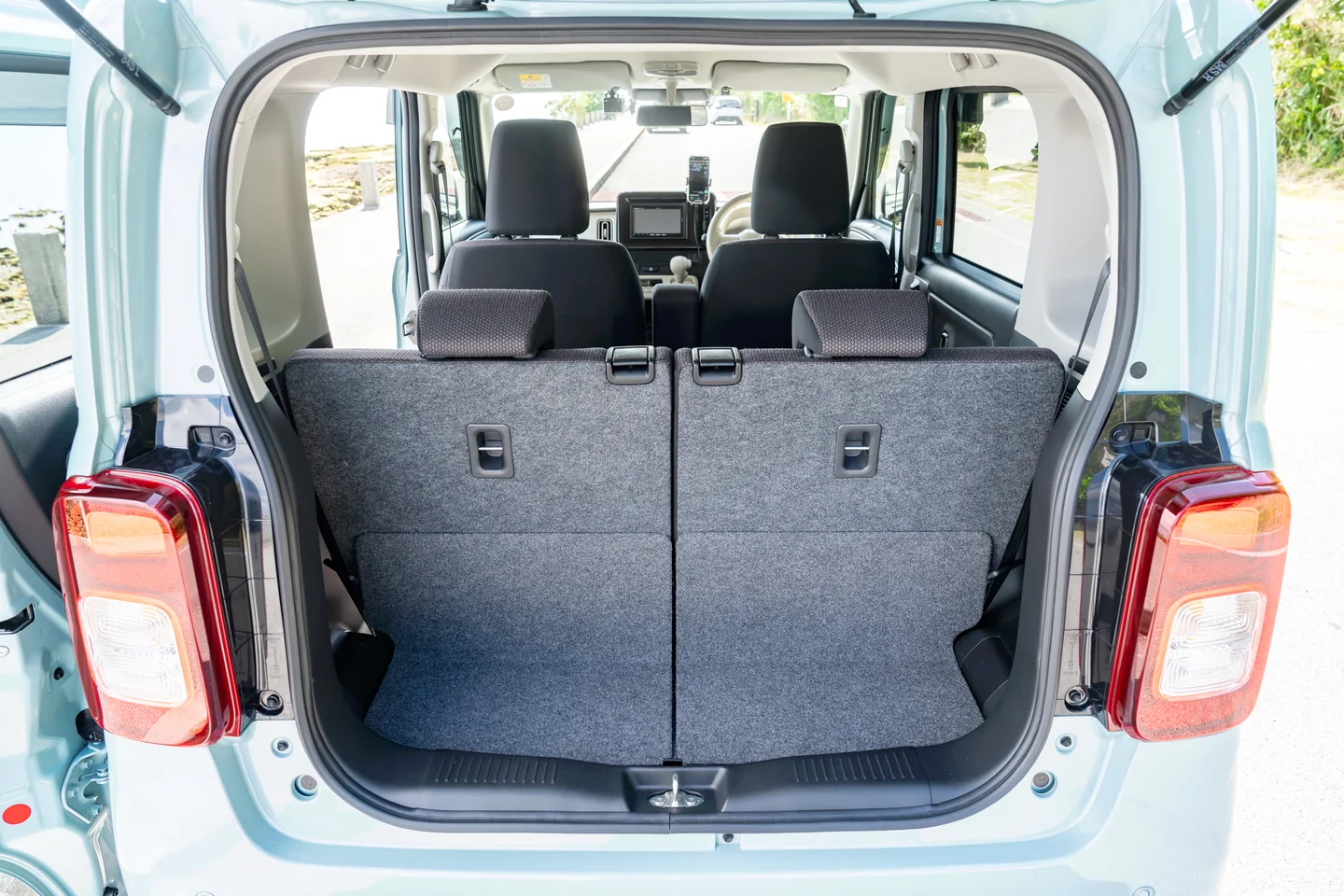
This is what you get with the rear seats all the way back. Enough space for one carry-on, maybe? A 28-inch suitcase won’t fit at all like this.
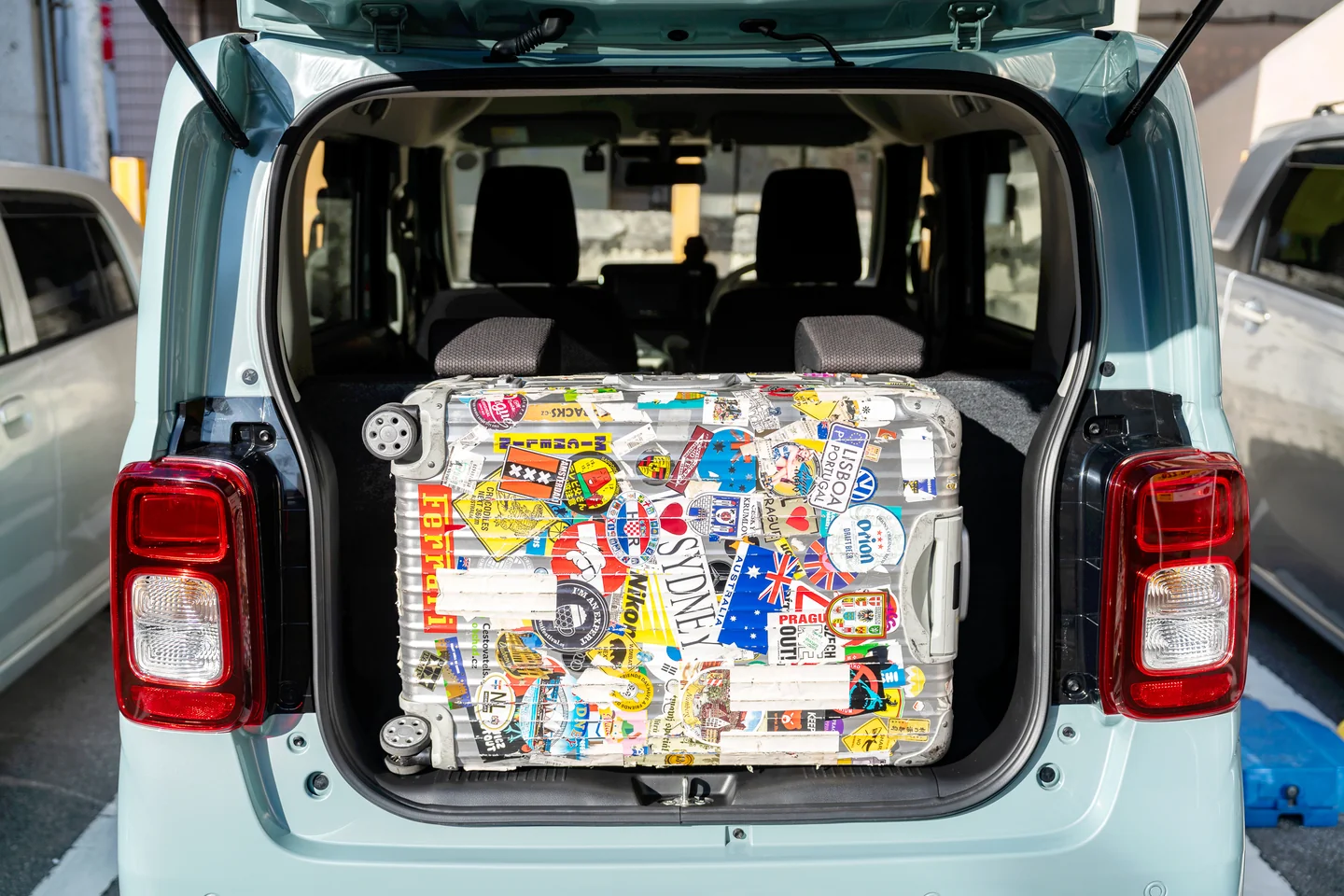
Slide the rear seats forward just a little, and one 28-inch suitcase.. just barely fits. Incidentally, the stickers on that Rimowa suitcase cost more than the suitcase itself. It’s a veteran among veterans, having traveled to every continent except the Americas.
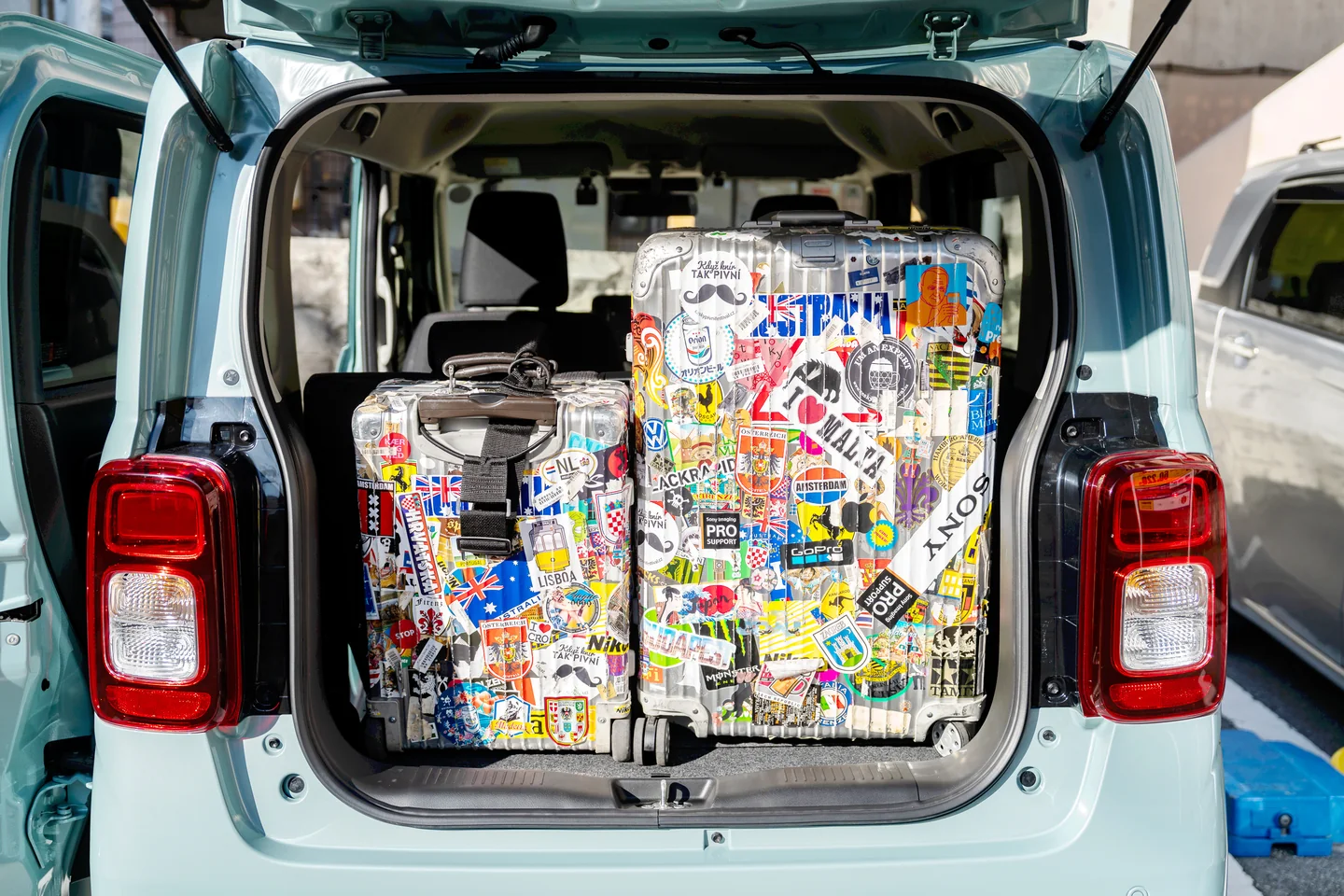
With some Tetris skills, you can fit two. If four people are riding in the Smile Wagon R, this really is it. Nothing else will fit. If you’re a family of four traveling light, for example, maybe this would be enough?
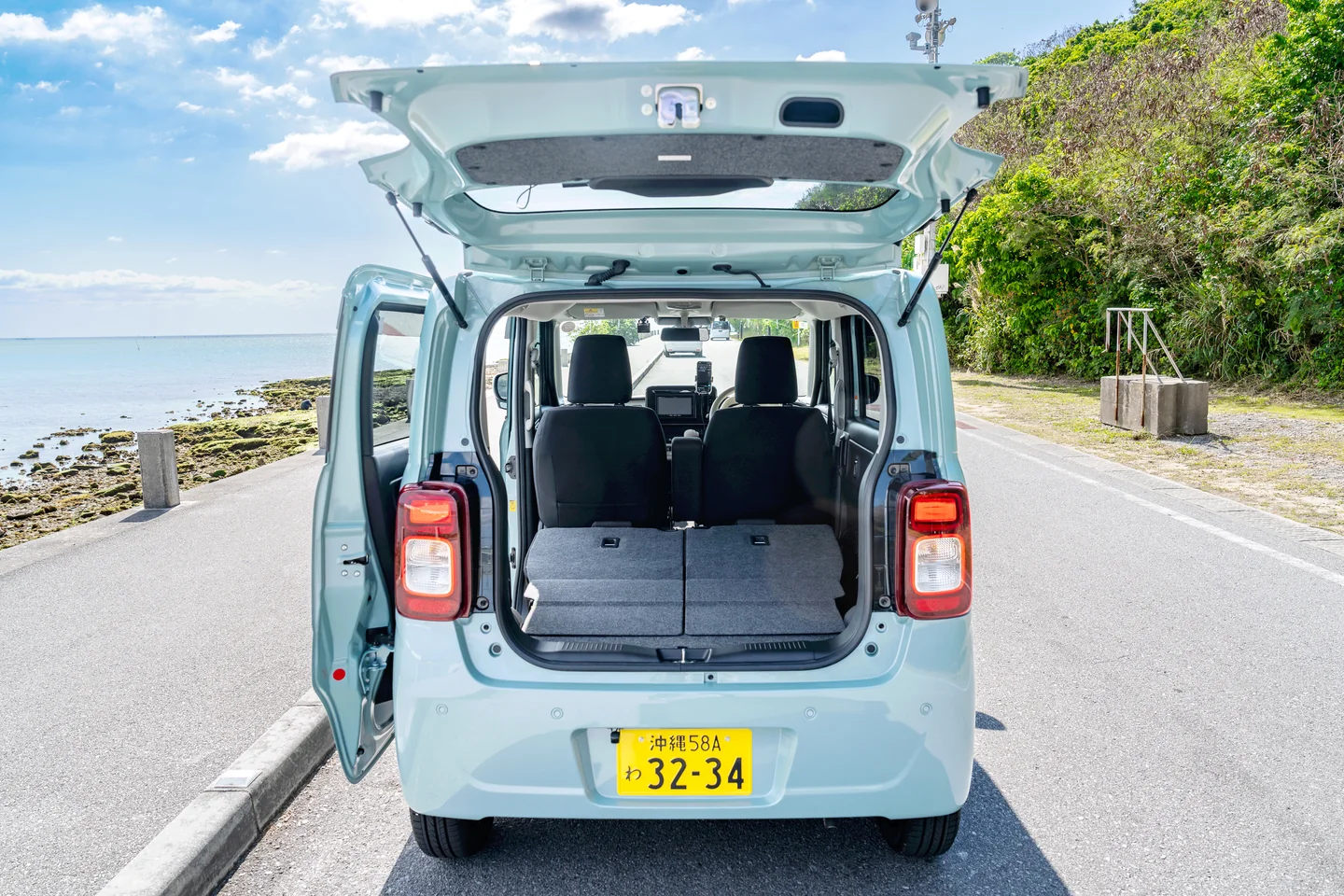
Now let’s fold the rear seats out of the way. I don’t know whether it’s because the car is well made or because it’s new, but the control for pulling the seats forward works more smoothly than in other boxy kei cars I’ve tried, so they fold down really easily. Nice and convenient.
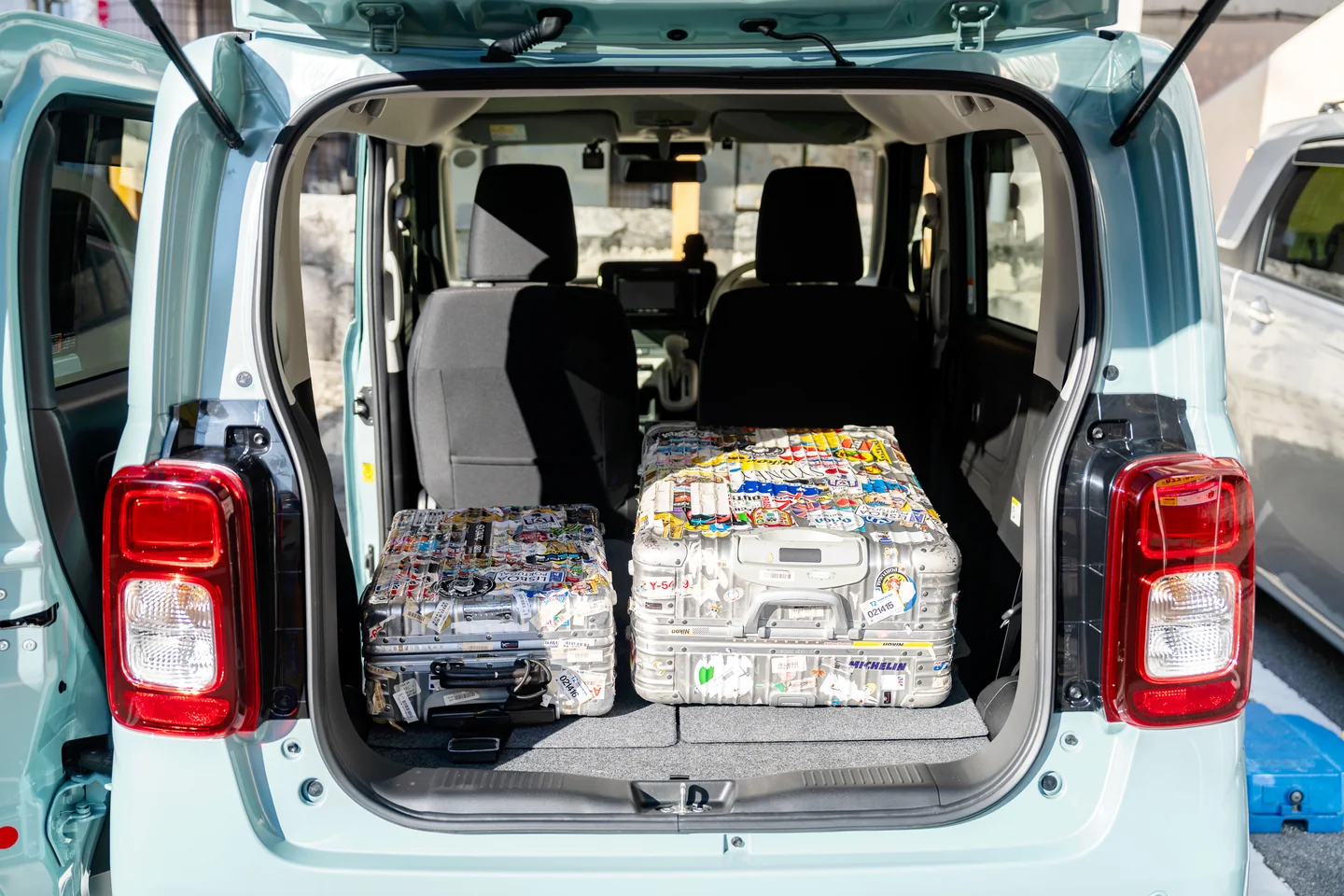
Fold both seats down and there’s.. so much space left. Even folding just one easily makes room for three people’s luggage. That’s why three is the maximum for a trip in a boxy kei car.
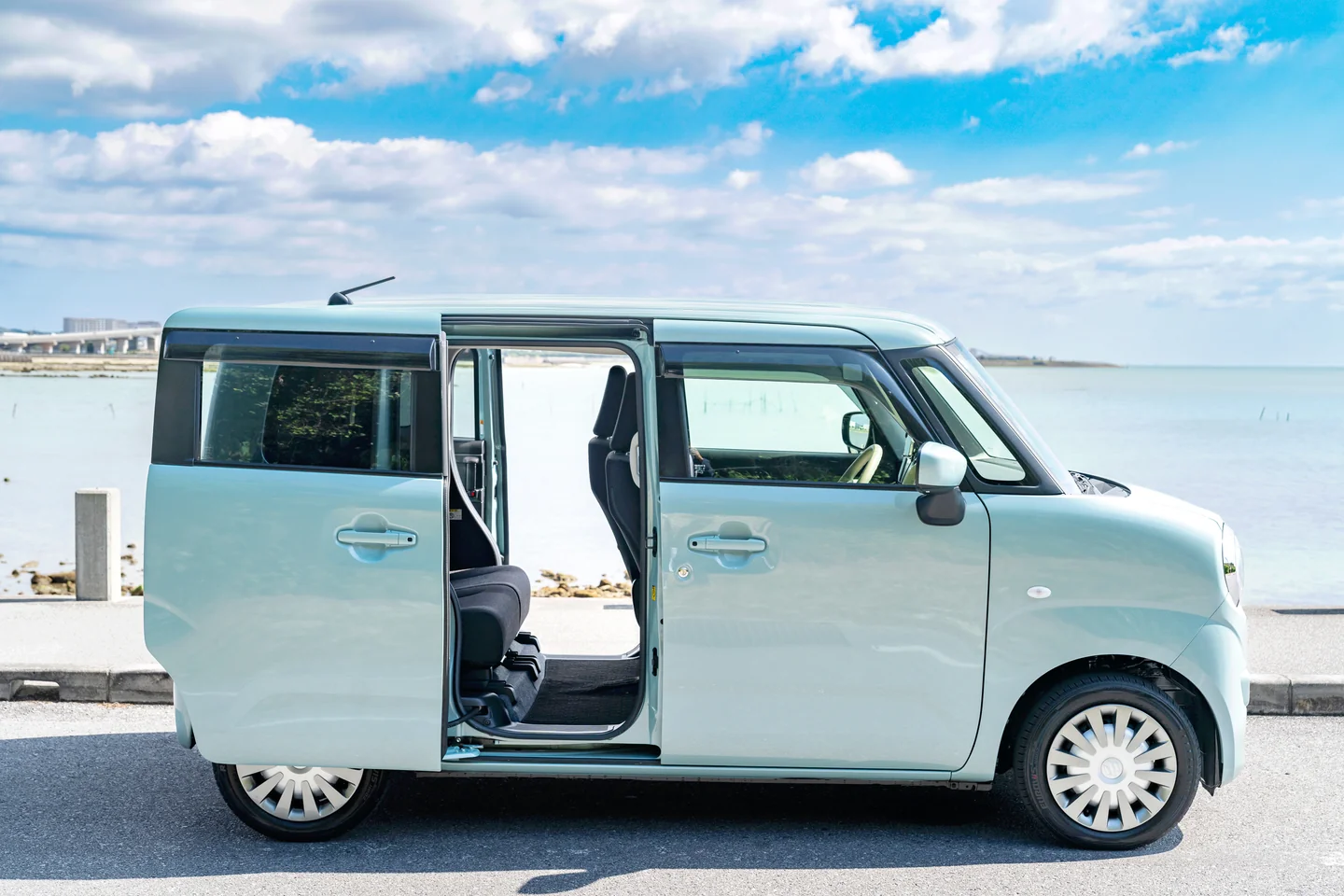
The rear doors are actually.. power sliding doors. As far as I know, rental cars don’t usually have this option, because customers keep breaking them.. Give the rear door handle a light pull and the door glides open automatically. It left me wondering why they’d put so many options in a rental car.
Now let’s take a look inside.
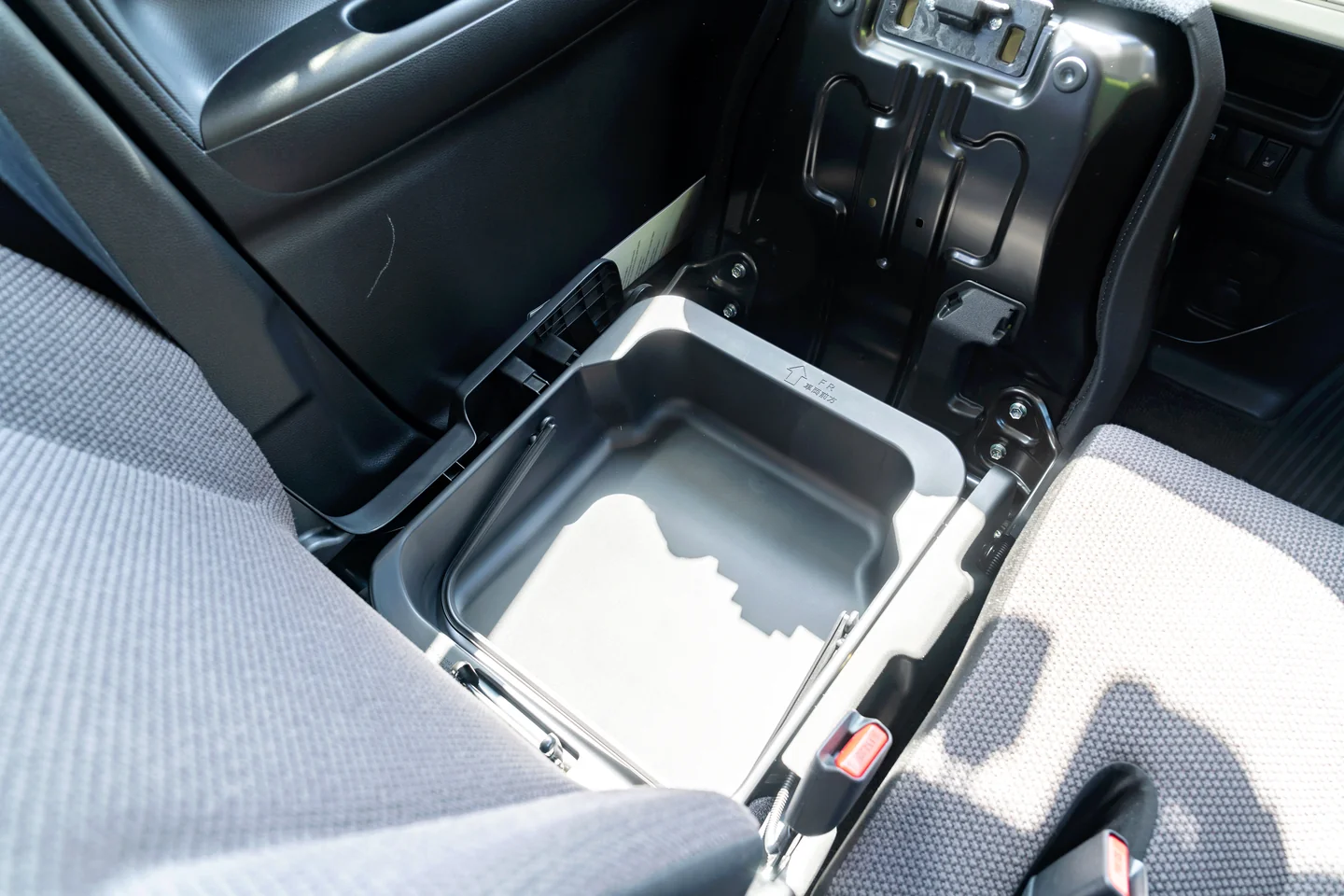
Pull the strap on the front passenger seat and you get.. a secret snack stash. Only on the passenger side, not the driver’s side. When I visit rental offices in Okinawa and look at the other customers, I see quite a few women traveling solo. Maybe because it’s safe and driving is easy? If that’s you, it could be fun to keep some emergency rations here as you explore on your own.
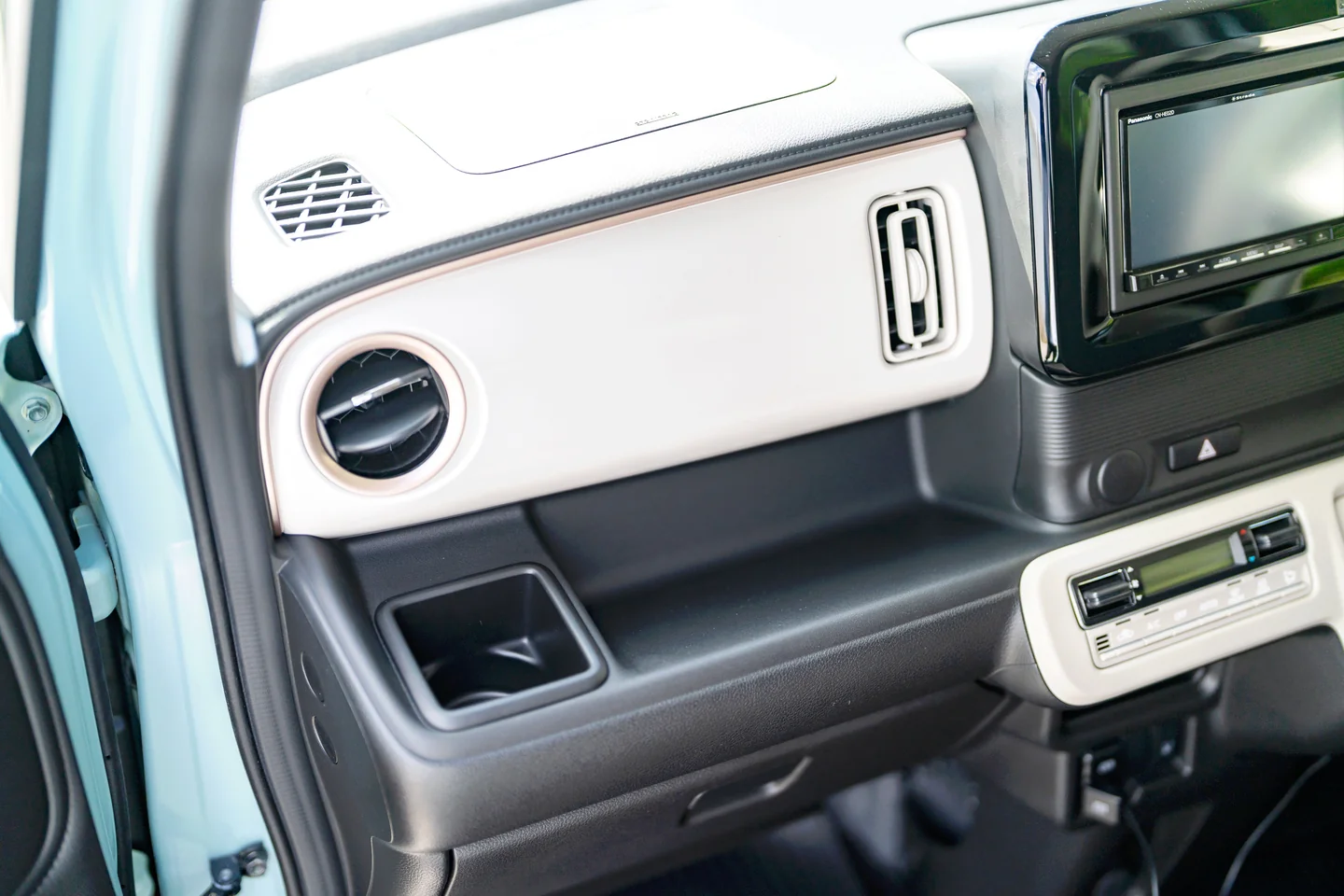
The passenger side is a little plain. The cup holder looks like a handy place to stash loose change, and it’s in just the right spot for snacks.
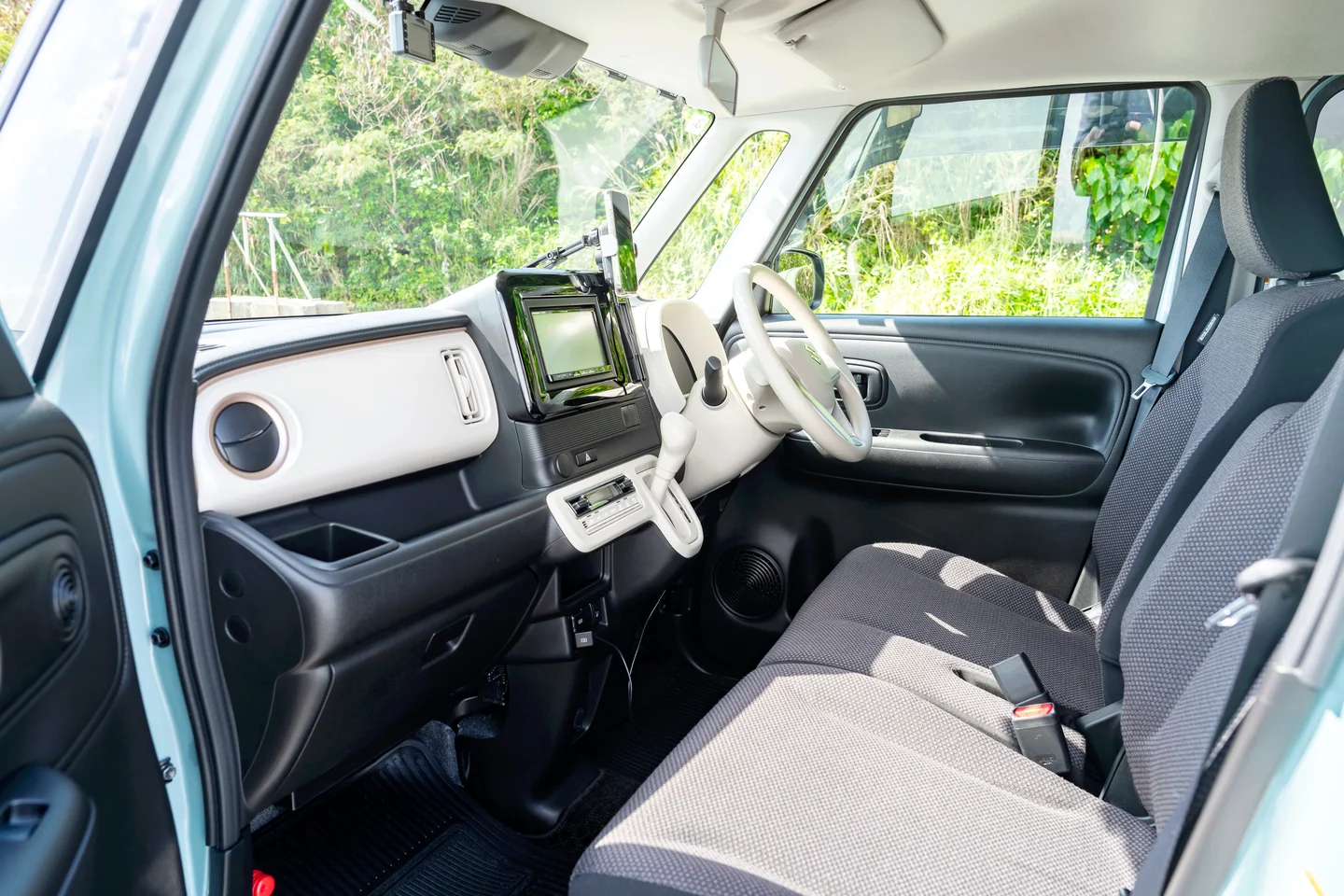
This is roughly what the front seats look like. Being a boxy kei car, it’s really roomy. A car like this is good for a babymoon. The Nissan Roox I introduced last time was so underpowered that it forced me to drive safely, but this one has a little more power. It still feels weak when you press the accelerator, but it’s stronger than the Roox.
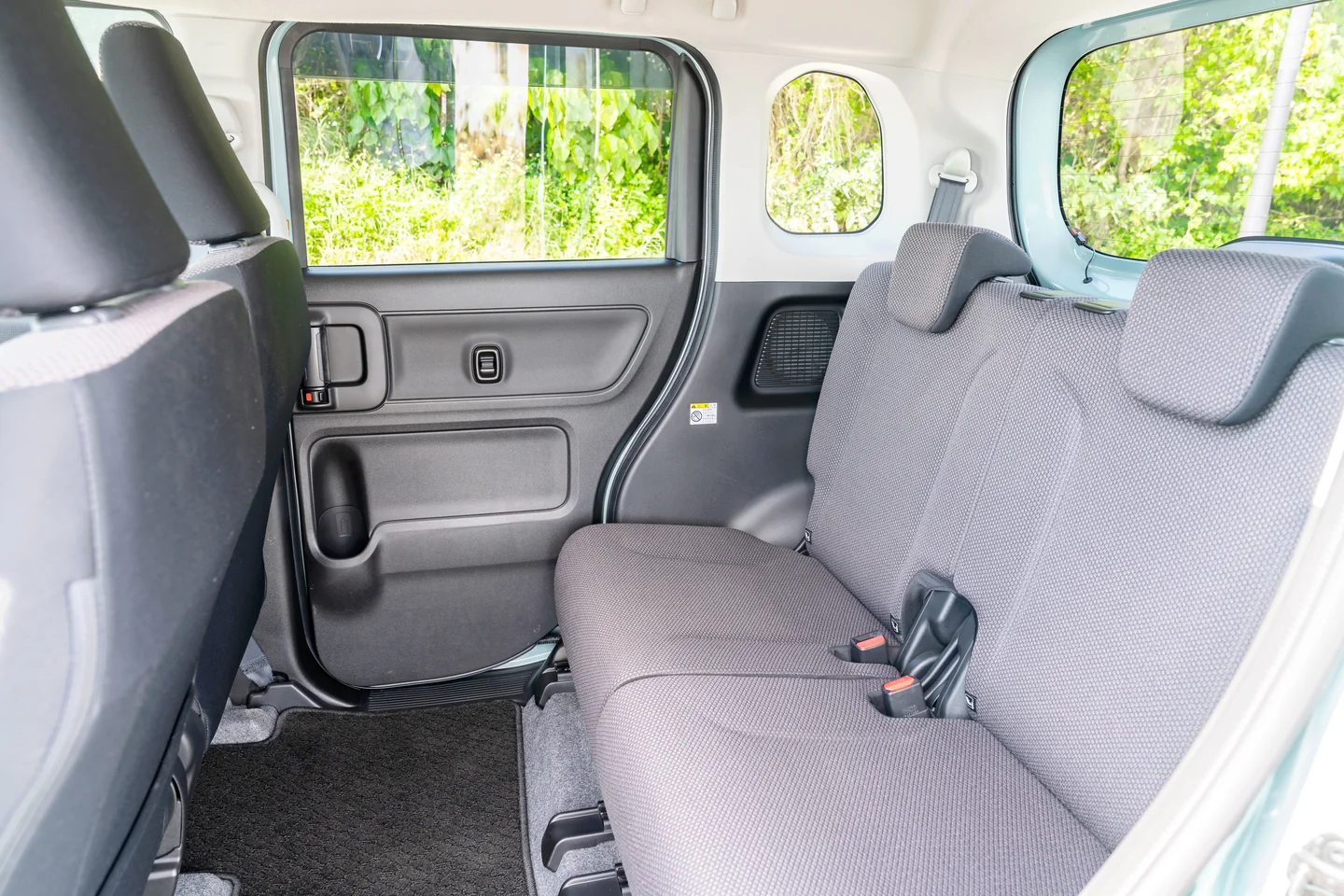
Here are the rear seats. They clearly never intended this design to seat five people. To me, the Wagon R is a three-people-tops car.
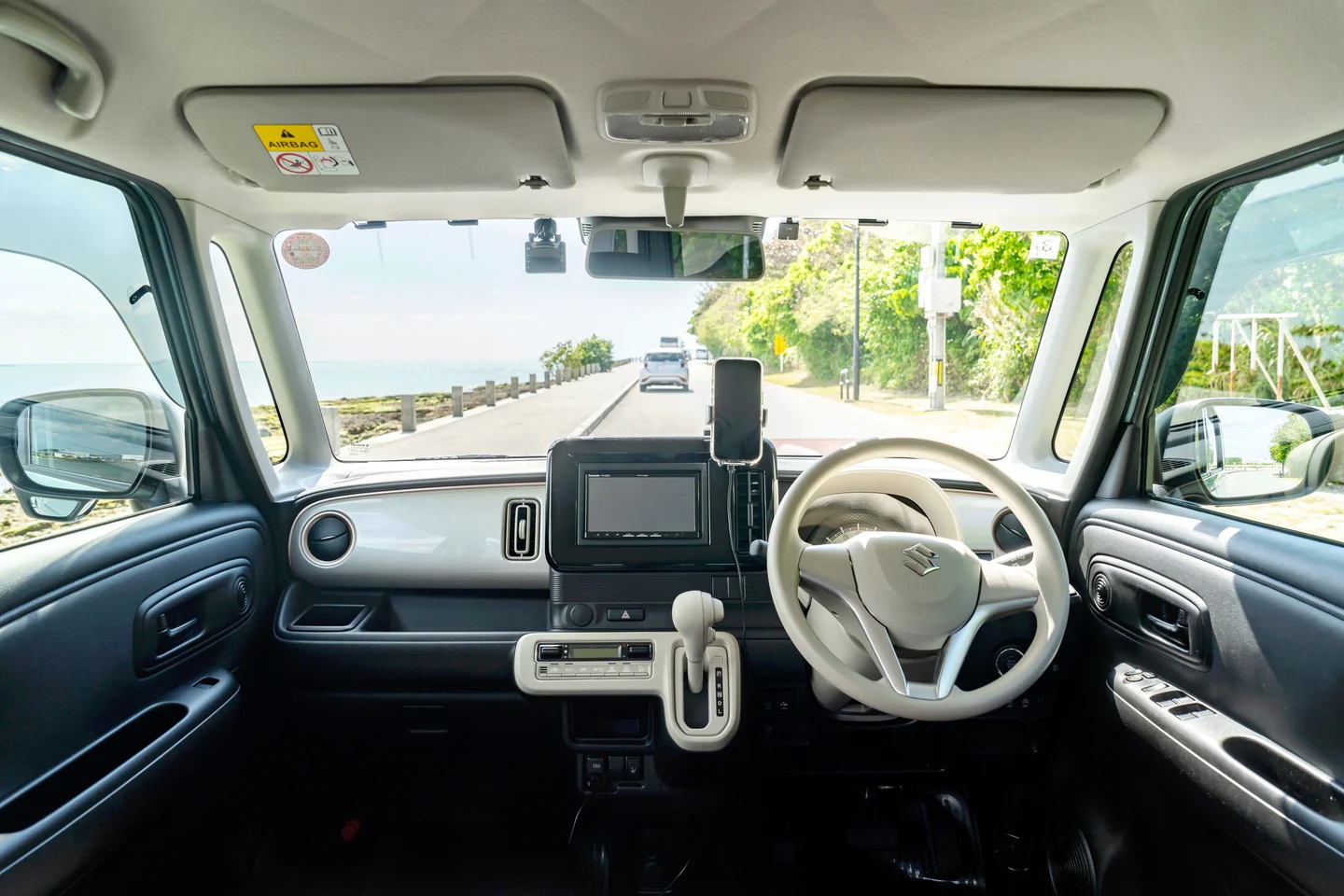
The driver’s area looks neat with its beige controls. Everything is on the opposite side from Korea: the wipers, the turn signals. But you get used to it quickly once you start driving.
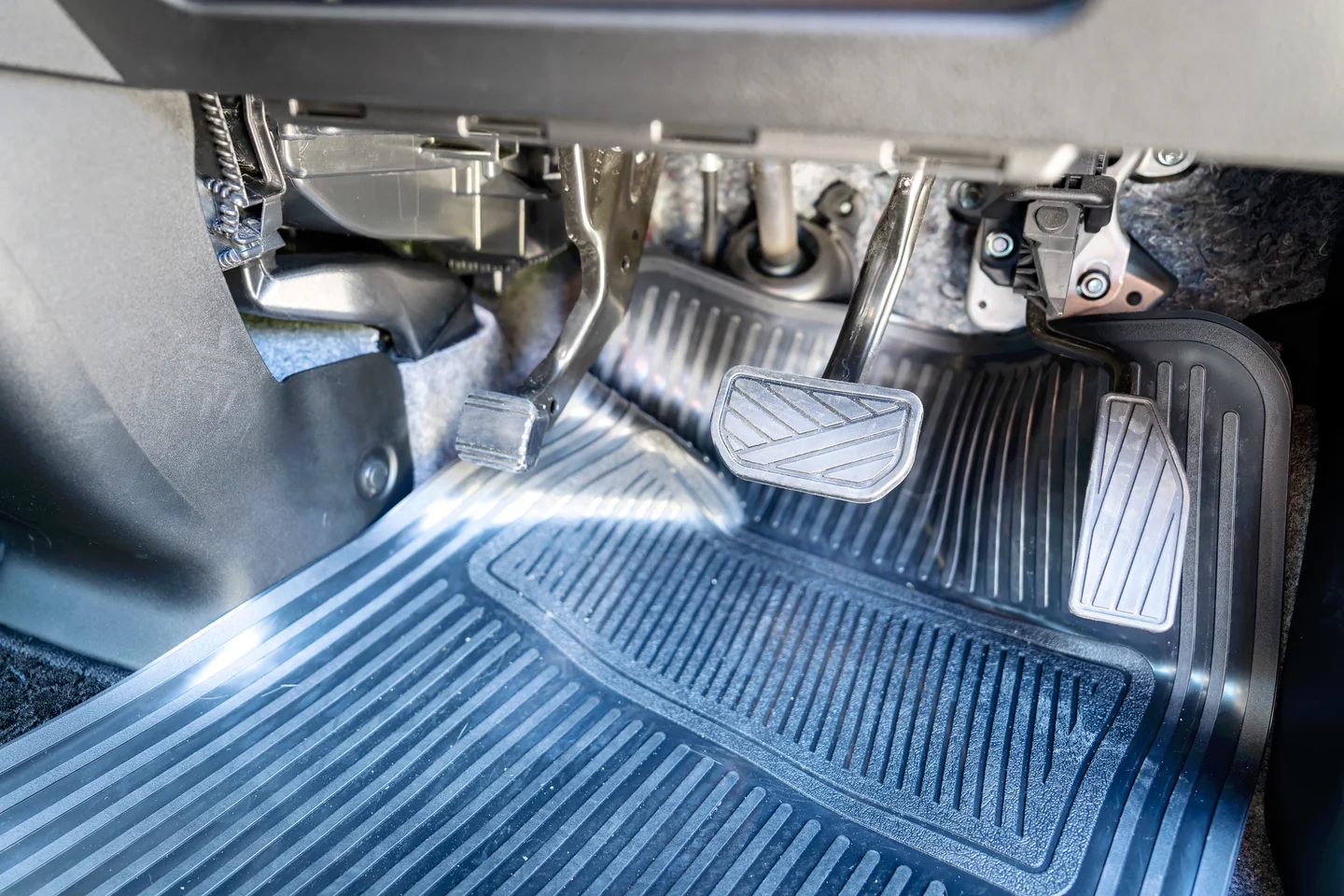
According to the owner of Aosora Rent-a-Car, there was apparently a recent problem with a broken parking brake in another car. I haven’t driven in Korea for a long time, so I’m not sure how things are there, but in Japan the parking brake is to the left of the brake pedal. There are three pedals in the photo, and the one on the left is the parking brake. Apparently, someone drove without pressing it and broke it. If the car seems really sluggish, check the parking brake.
For reference, the parking brake is on the left, the brake pedal in the middle, and the accelerator on the right.
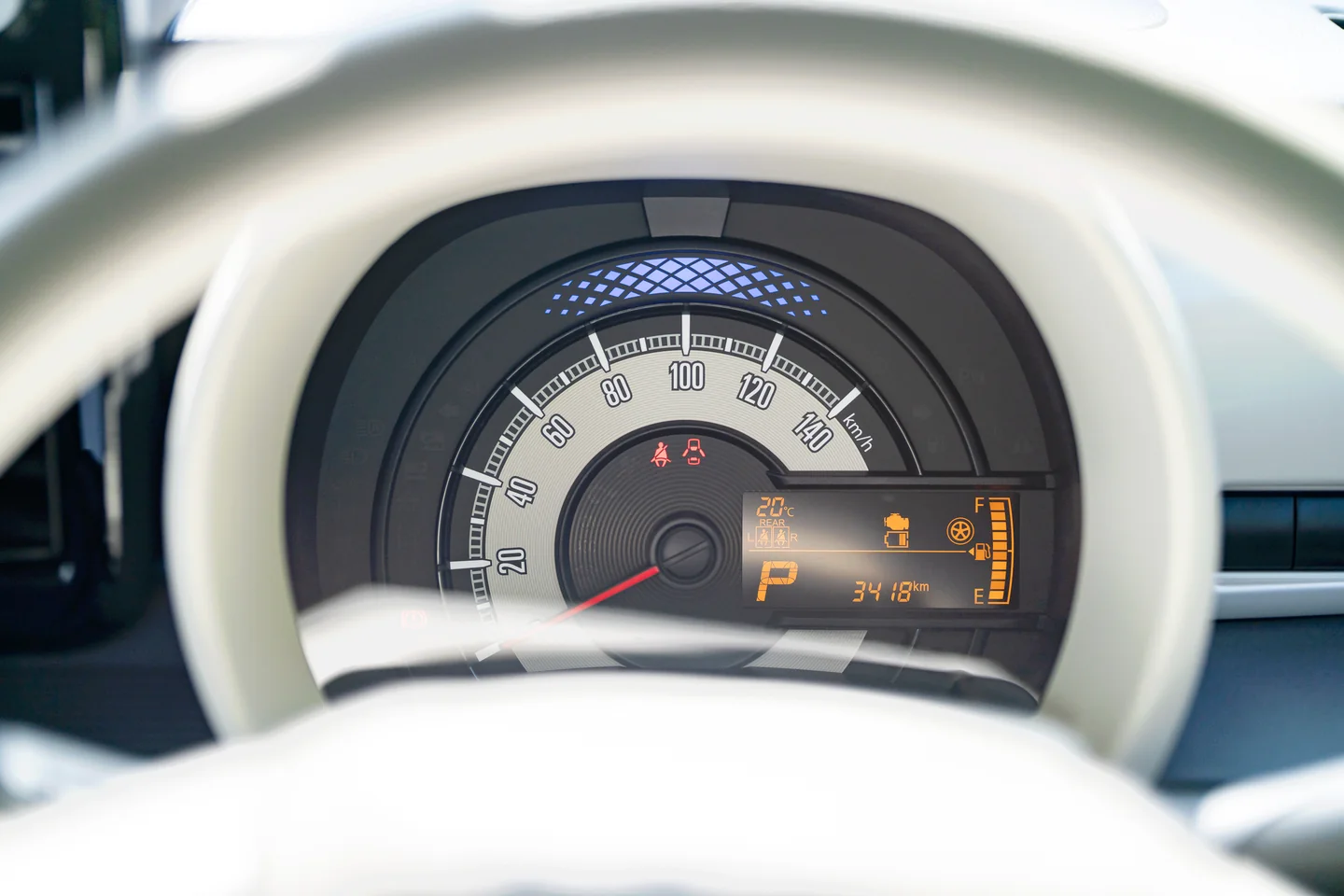
Here’s the instrument panel. With just 3,418 km on it, this is about as new as a car gets. By my standards, a car is new up to 100,000 km.. Of course, that’s because I take such good care of my cars.
When I lived in Prague, I sometimes traveled to Hallstatt for photo shoots. I would visit Český Krumlov on those trips, and leaving before dawn and returning in the evening meant driving exactly 1,000 km. Well.. 1,000 km in a day? Piece of cake.
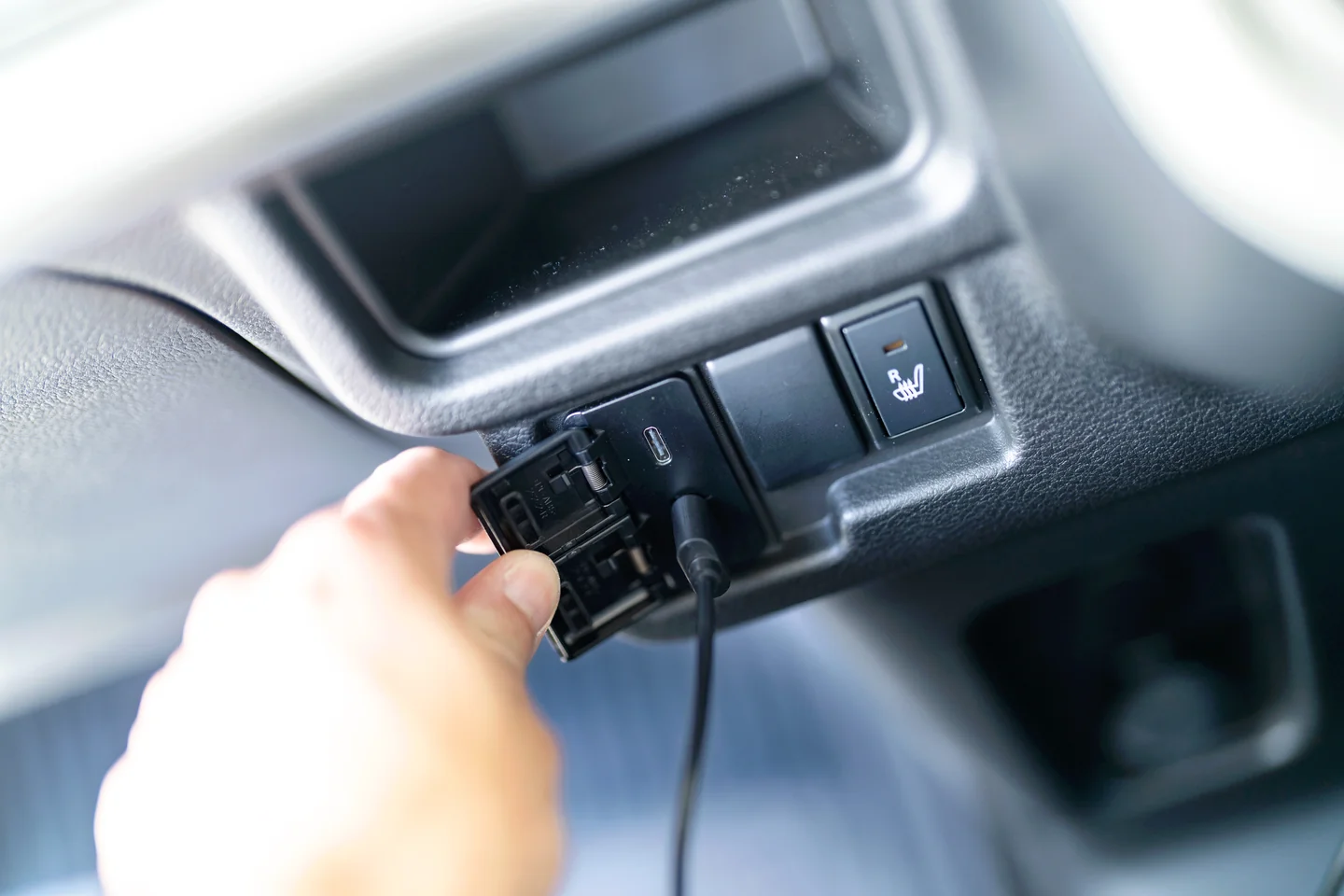
There are USB Type-C and Type-A charging ports. I didn’t look closely, but this setup charged faster than the usual cigarette-lighter chargers. You know how in older rental cars you plug your phone in and wait forever, wondering if it’s even charging, and after an hour it’s only gained 3%? This one definitely charged quickly.
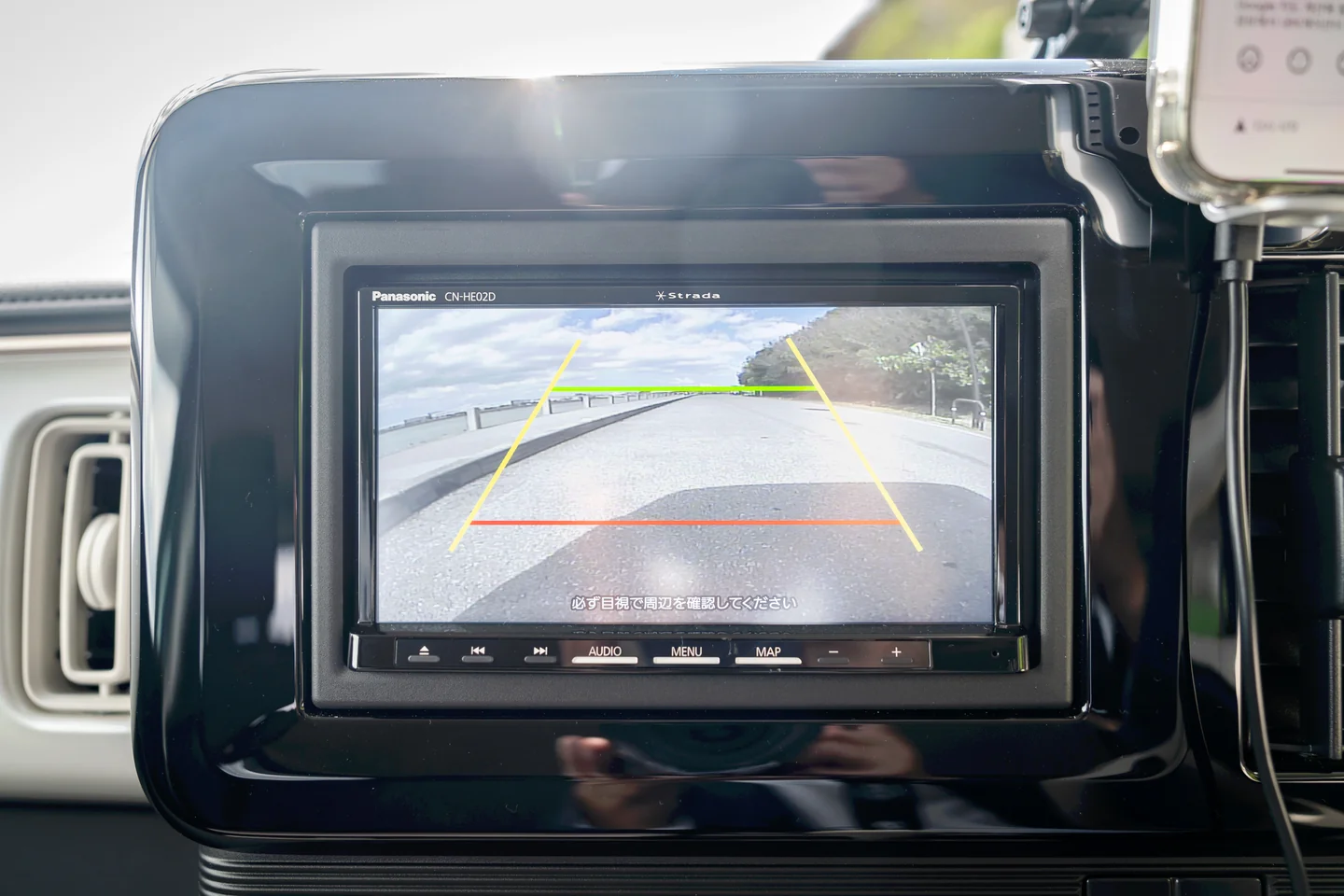
The rear-view camera.. is pretty good. You can see the asphalt and even the clouds in the sky, right? At least that means it isn’t a cheap one. Cheap ones don’t show the clouds ⁉ But one reason boxy kei cars are good for women to drive is that the windows give you a view in every direction, making parking really easy. How do I put it.. If you’re thinking, ah.. I can’t judge the space here.. just turn your head and look. It’s very intuitive. I didn’t even look at the rear-view camera while parking.
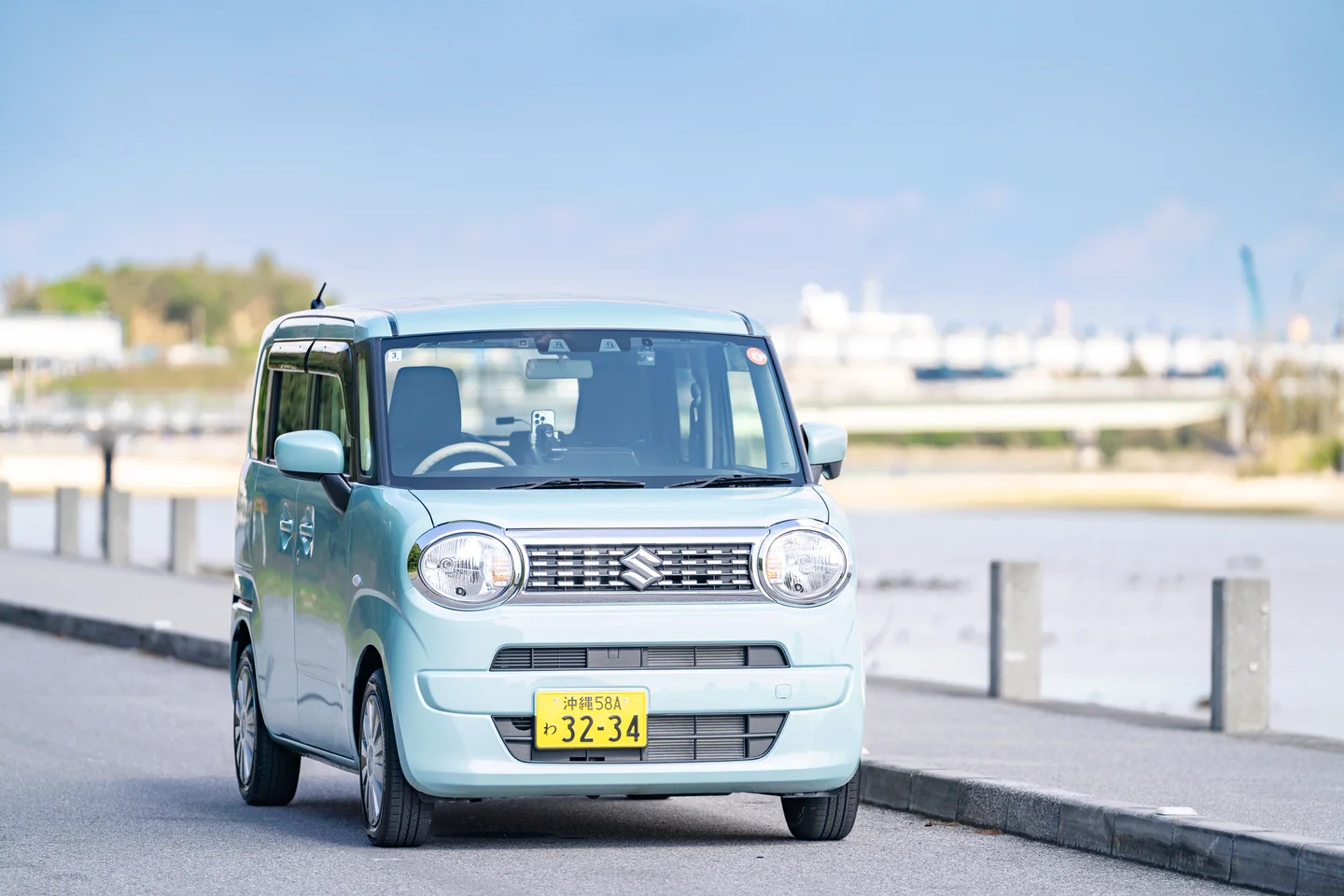
First, how it felt to drive.. It’s new, and it really does feel new. And being a boxy kei car, it clearly doesn’t have much power. A Toyota Yaris or Aqua surges ahead nicely, but this one still forces you to drive safely. So it’s good for women or a babymoon.
With windows you can see through in every direction, parking between cars is easy even without the rear-view camera. There are dedicated kei-car parking spaces too, so parking is even easier than with a regular car.
And the fuel economy.. It’s a hybrid kei car, so.. it’s just.. insane. The Aqua hybrid surprised me by performing well and being ridiculously fuel-efficient, but this goes even further. Though maybe the low power makes the fuel economy feel even better. I reckon even if you drive the Wagon R up to northern Okinawa and refuel before returning it, the bill probably won’t top 2,000 yen.
Our company’s old beater easily burns through more than 3,000 yen just going to Cape Zanpa and back.. A trip to the north costs roughly over 7,000 yen.
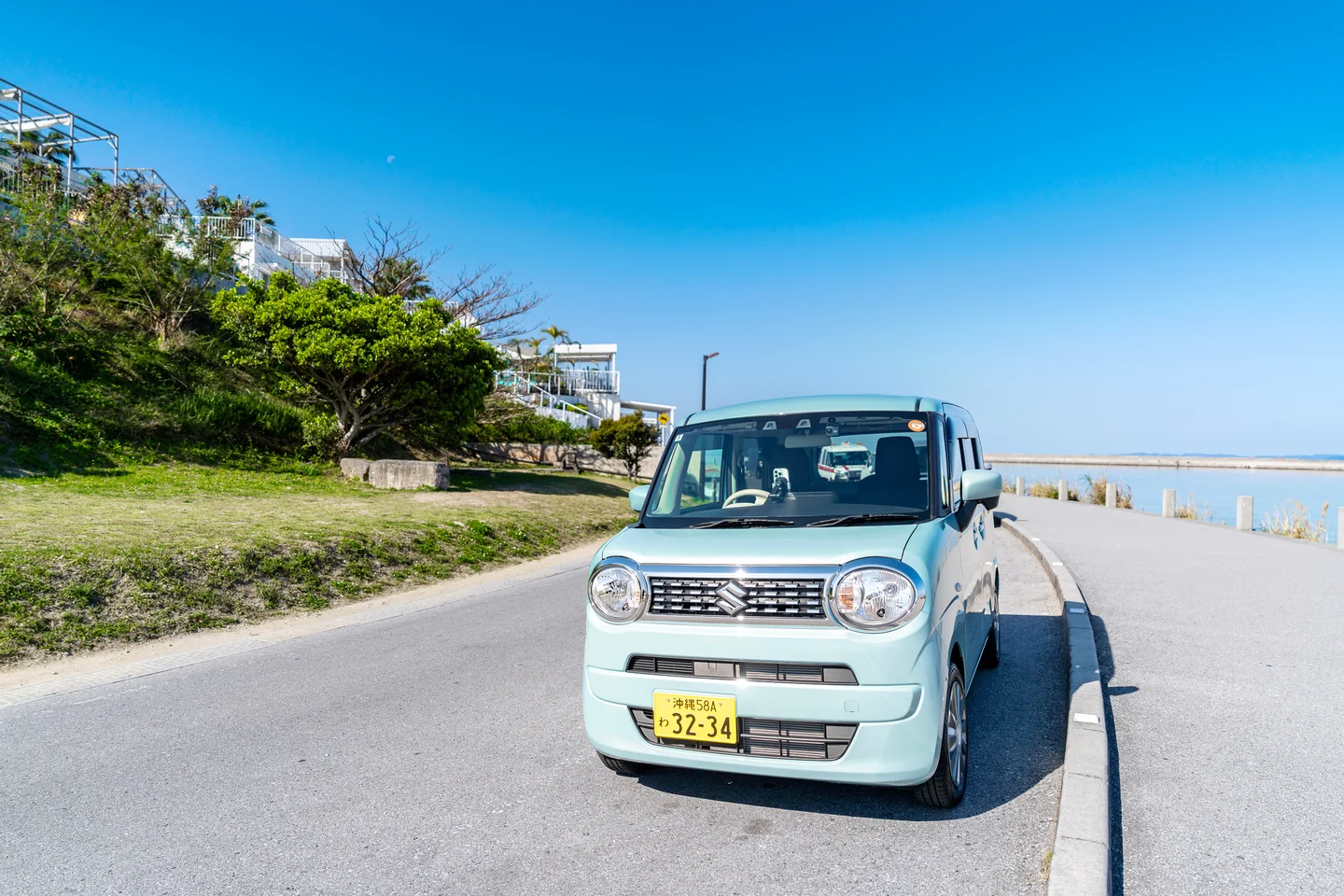
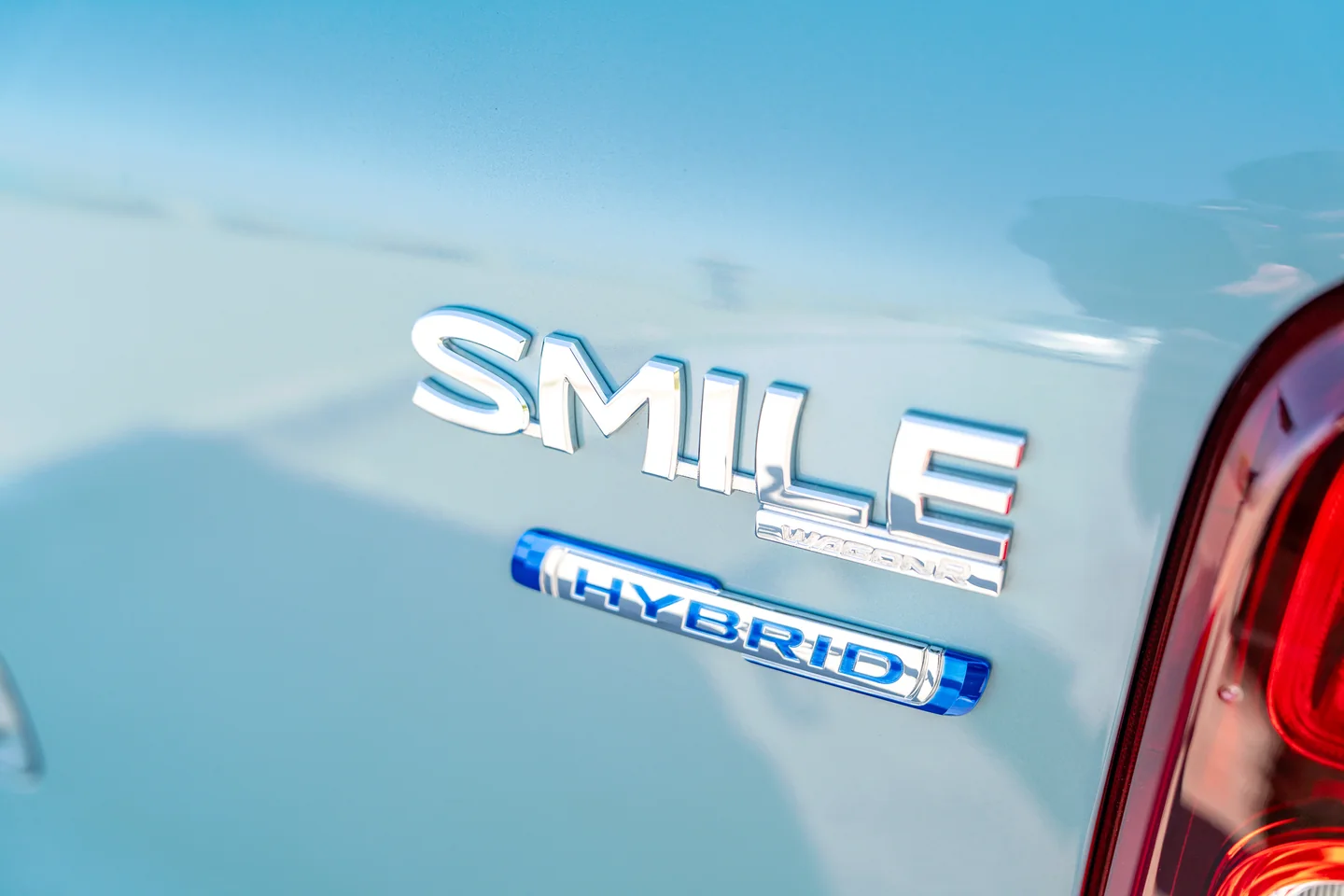
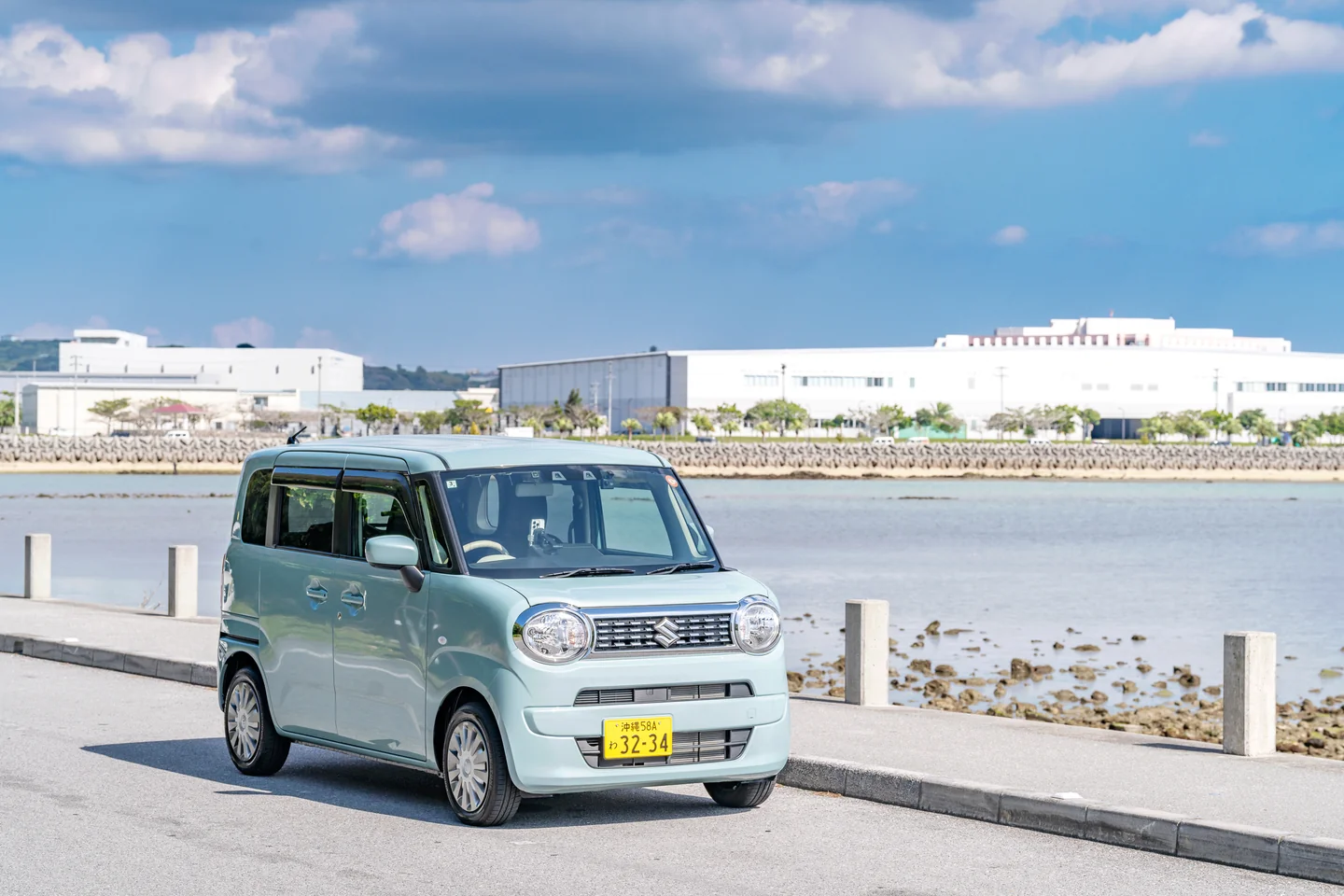
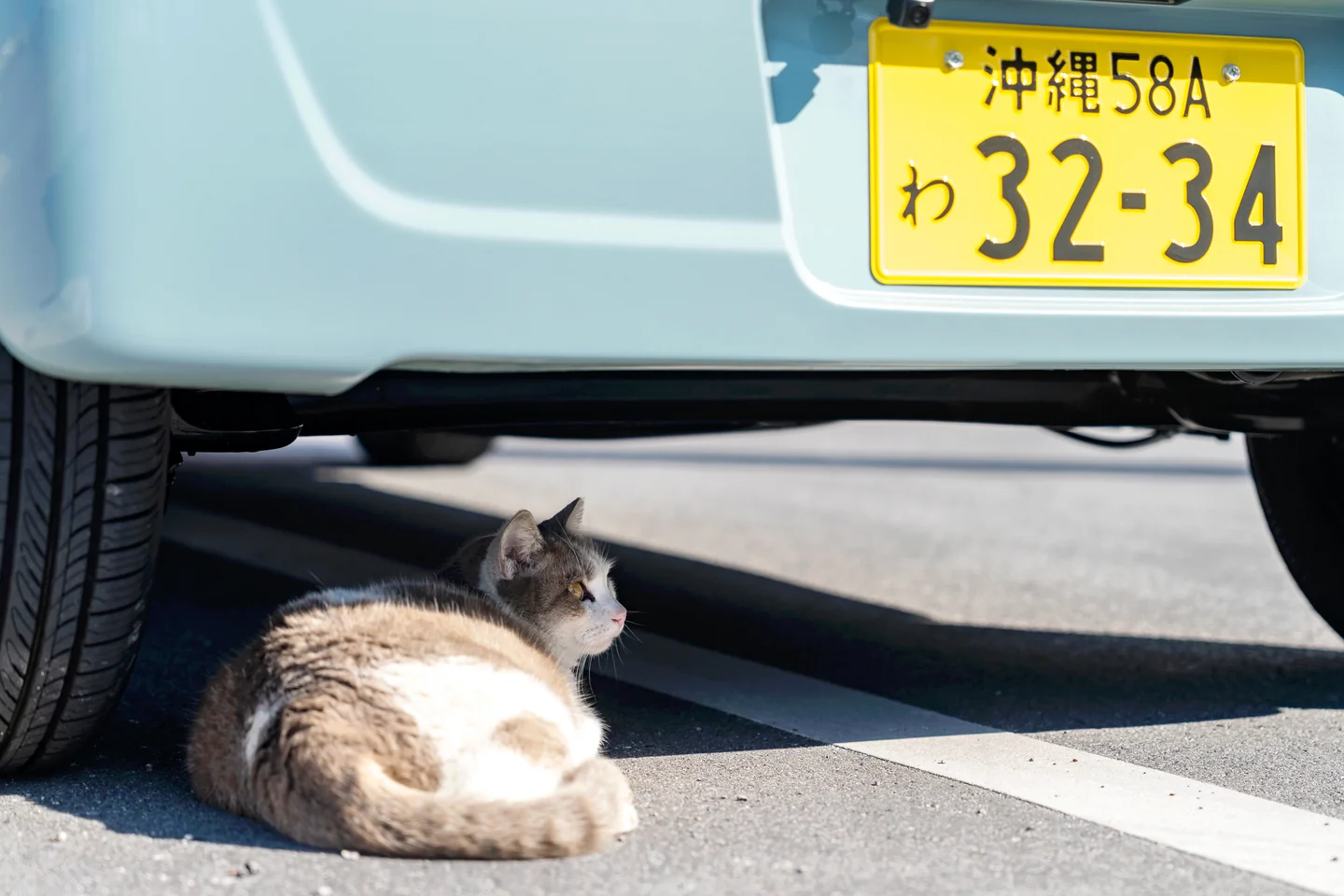
Even cats feel at home with the Suzuki Smile Wagon R.
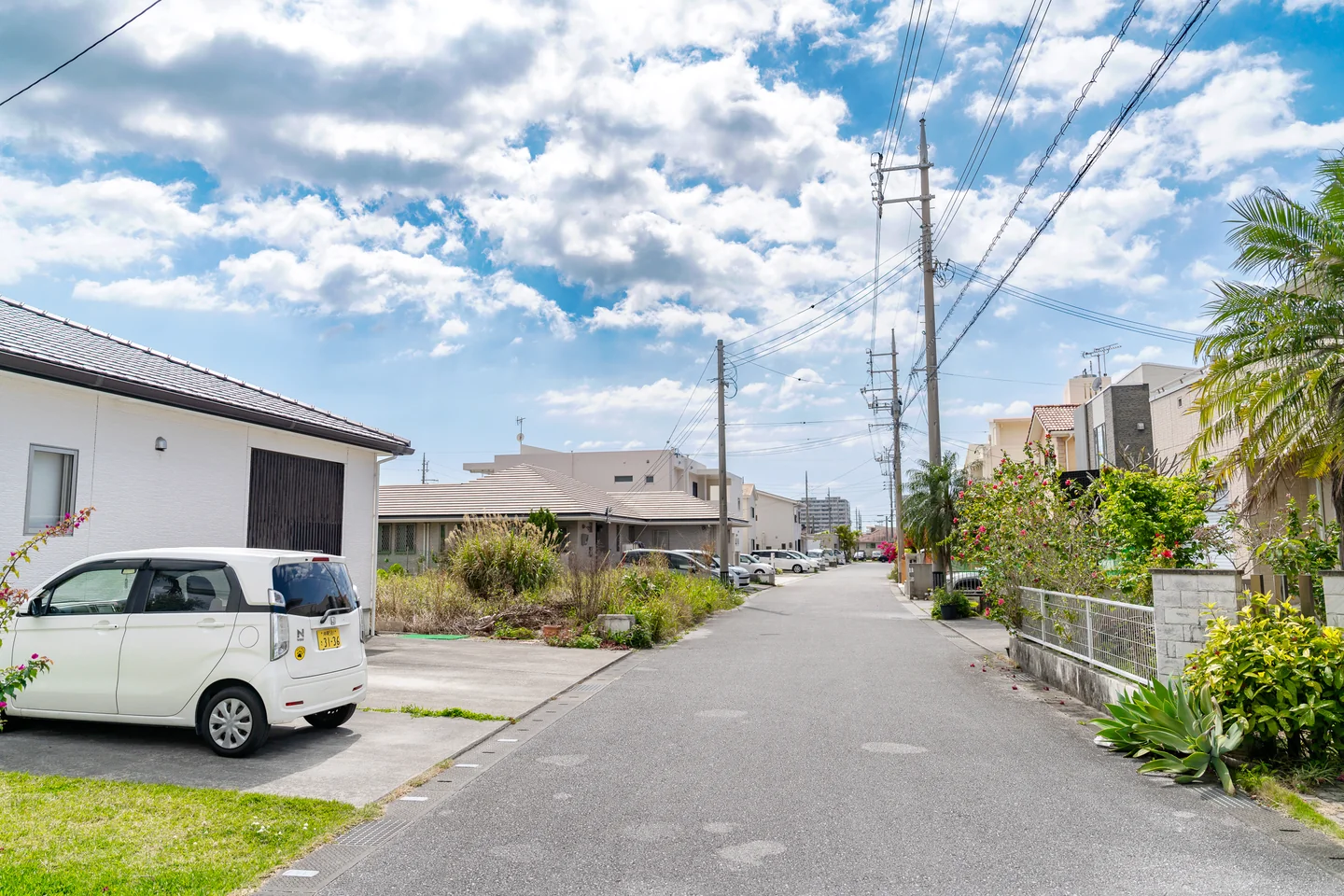
The business is still new, so the owner runs it and looks after the cars in a residential area near the airport. But. Everyone around here rents out cars. There are lots of small rental businesses like this in Okinawa.
Fill the tank before returning the car. At a staffed gas station, all you need to say is ‘Mantan kudasai.’ For self-service stations, the post below makes the process easy to understand.
Return the car to the same place where you signed the contract. The owner said he plans to expand the parking area soon, so I won’t mark it separately on Google Maps. Ask on KakaoTalk and he’ll happily send you a location pin. Once the car has been checked and handed back, if there is a spare seat, the owner will drive you to the airport in the same car without unloading your luggage, or take you to a nearby monorail station.
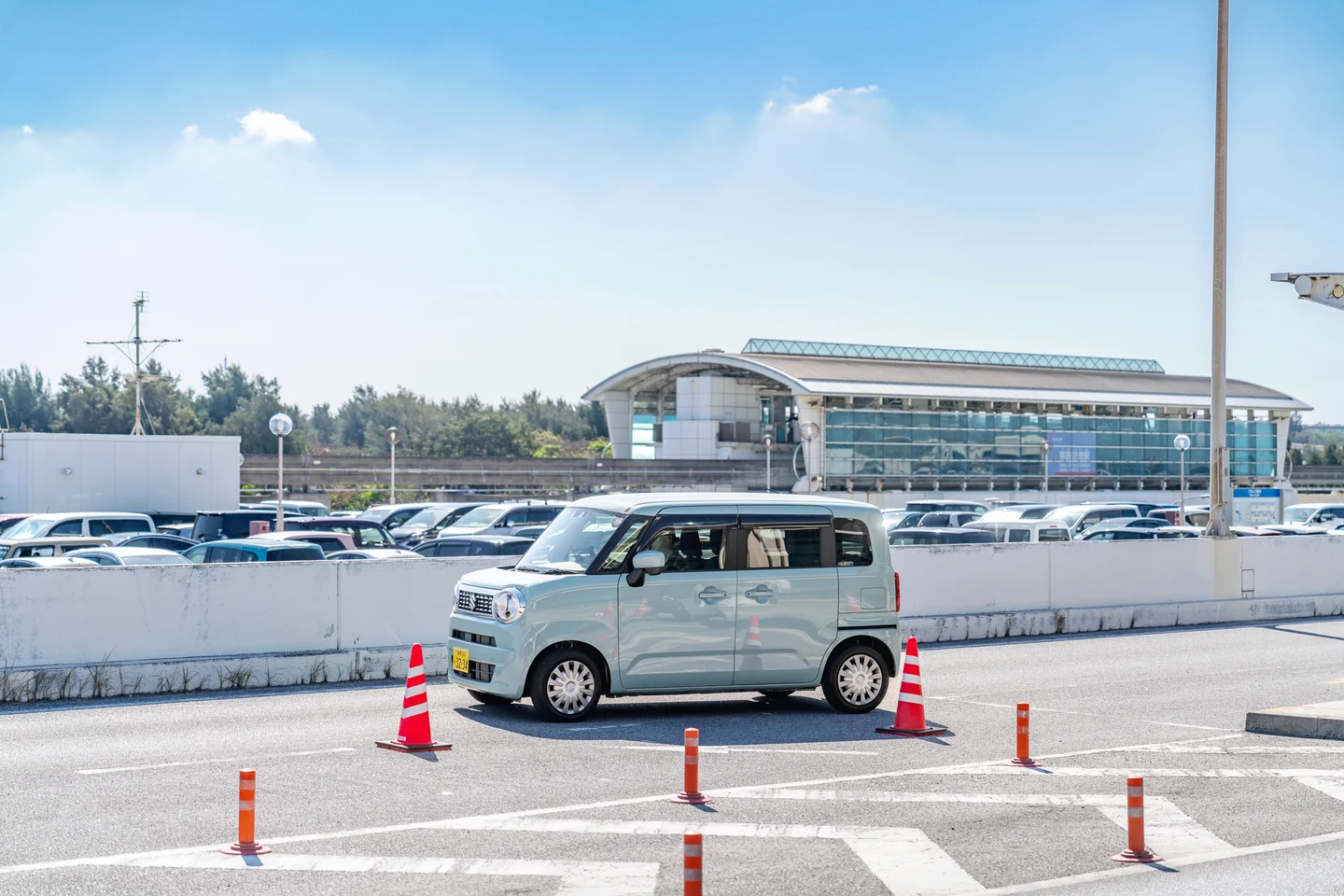
He’ll take you back to near Exit 6 on the 3rd floor of Naha Airport in Okinawa. The 3rd floor is where you check in for your flight, so it’s convenient to get out here. Unload your luggage and say bye-bye.
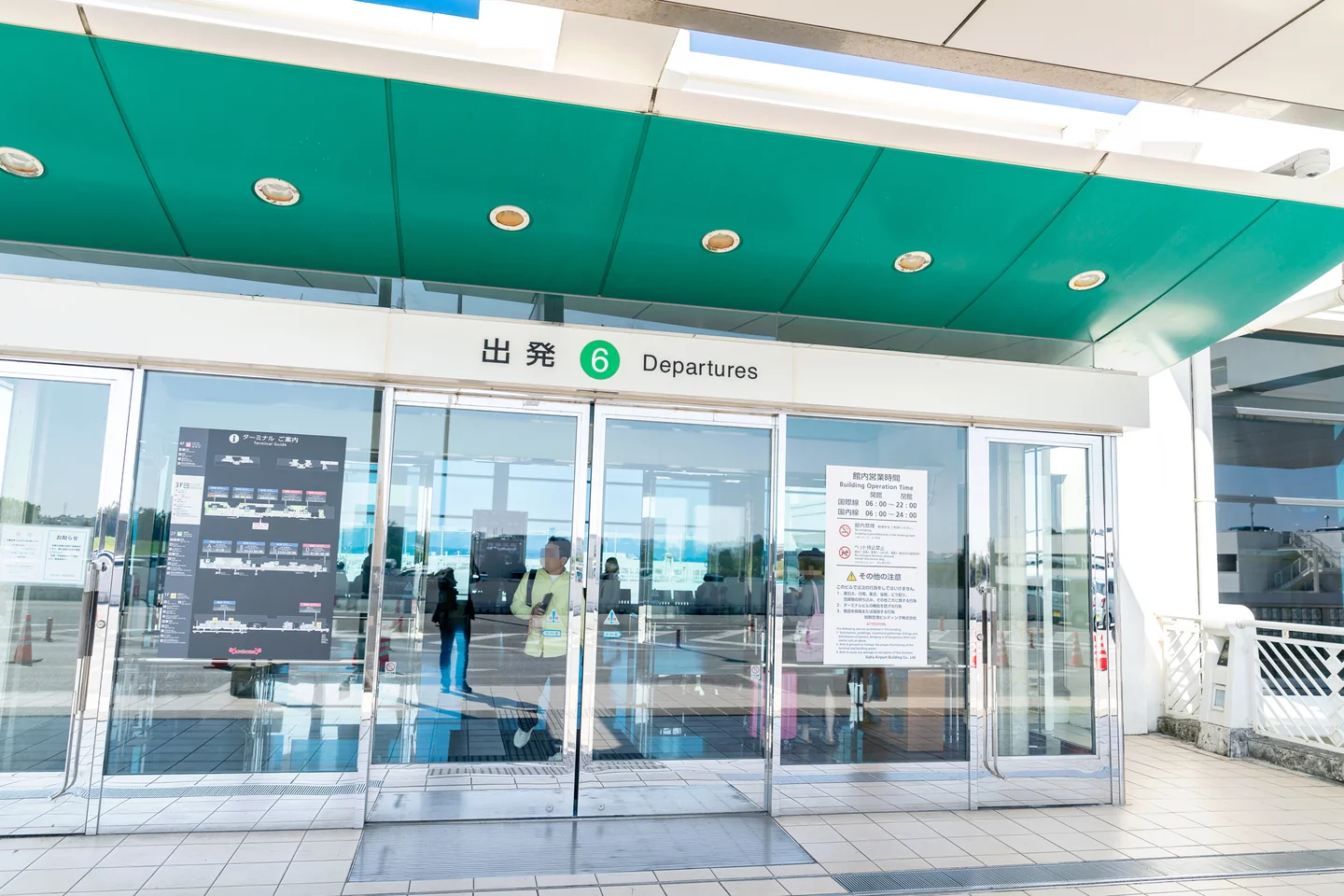
Now just head inside, catch your flight, and go home! Easy as that.
I hope you have an injury-free trip to Okinawa, enjoy the water, and make it home safely.
Overall, maybe because this rental company is just starting out, the prices are very low for the options and condition of the cars. Korean-run companies and big rental companies usually charge high prices for no reason, after all.
- When I rented it in March 2025, two days including insurance cost 14,300 yen on weekdays or 15,300 yen on weekends. Three weekdays cost 21,450 yen. The company changes rates between peak and off-peak seasons, so check the price for your dates.
- One infant seat is free. From the second seat onward, baby seats cost an extra 1,100 yen each and child seats 550 yen each.
- Bring your original international driving permit. They check it on the spot and will not accept a photocopy or a Korean license with English text.
- You drive from the airport to the office while the Korean owner explains what to watch out for in Japan. Someone with a Japanese license has to sit in the front passenger seat, so lessons work well when there are two of you. With a larger group, the owner picks you up in a bigger car, leaving less time for a lesson.
- Go out through Exit 6 on the 3rd floor of Naha Airport and coordinate your location with the owner on KakaoTalk. The car will be one of those parked in a row beside the roof across the road. Although the airport Wi-Fi is unreliable, I found the free Wi-Fi worked well near this exit.
- The rear doors are power sliding doors that open automatically with a light pull of the handle. There are USB Type-C and Type-A charging ports, and pulling the strap on the front passenger seat reveals a handy space for snacks.
- Return the car with a full tank to the place where you signed the contract. After checking its condition, they will drive you to the airport. If there is a spare seat, you can go in the same car without unloading your luggage. You can also get out at a nearby monorail station.