Toyota Harrier: A Midsize Rental SUV Review in Okinawa
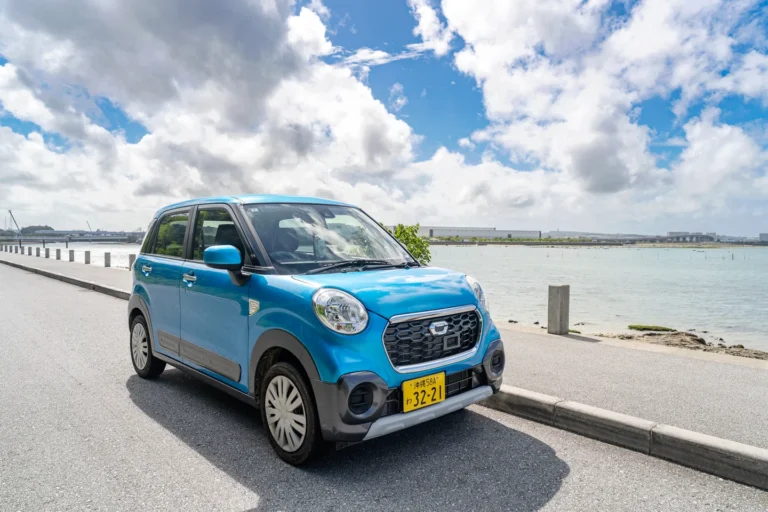
Driving the Toyota Harrier along Okinawa’s coastal roads
Haisai! I’m CULT.
Today’s Okinawa rental car is.. the Toyota Harrier, which was on promotion when I rented it in September 2025. The reason for the discount was pretty funny.. They’d just bought loads of new cars, their parking lot was bursting at the seams, and they needed to get cars out on the road fast. So they were renting out the Harrier for 7,800 yen a day.. A ridiculous price -_-;;
The Harrier is a really good car, you see? A midsize SUV with almost every option. About 90% of the full package.
To get straight to the point.. it’s a really good car. I didn’t check closely, but it was a recent model, either a 2022 or 2023. Take the opportunity to enjoy Okinawa in a nice car 😀
Pickup and Return Transfers
They meet you at the airport and take you to the office, then drive you to your preferred destination after you return the car.

First.. I’ll leave the booking details at the bottom.
After you book, they pick you up at the airport. You usually meet on the 3rd floor at Exit 4, and the rental office is close to the airport, so the ride is quick. The operator is Japanese but carries a dedicated translation device, and you communicate through KakaoTalk, so it’s no trouble. If they can’t come to pick you up.. take a taxi and hand in the receipt at the office for a cash reimbursement.
You return the car to the same office, and they’ll drive you to the airport or Akamine monorail station afterward. They can also pick you up at Akamine Station if one driver goes there.
For example, if you spend your first night in Naha and rent a car the next day, you can get picked up at Akamine Station, collect the car at the office, then meet up with the rest of your group. Delivery in Naha is a steep 9,800 yen. White One Rent-a-Car is a better option for delivery and hotel returns.
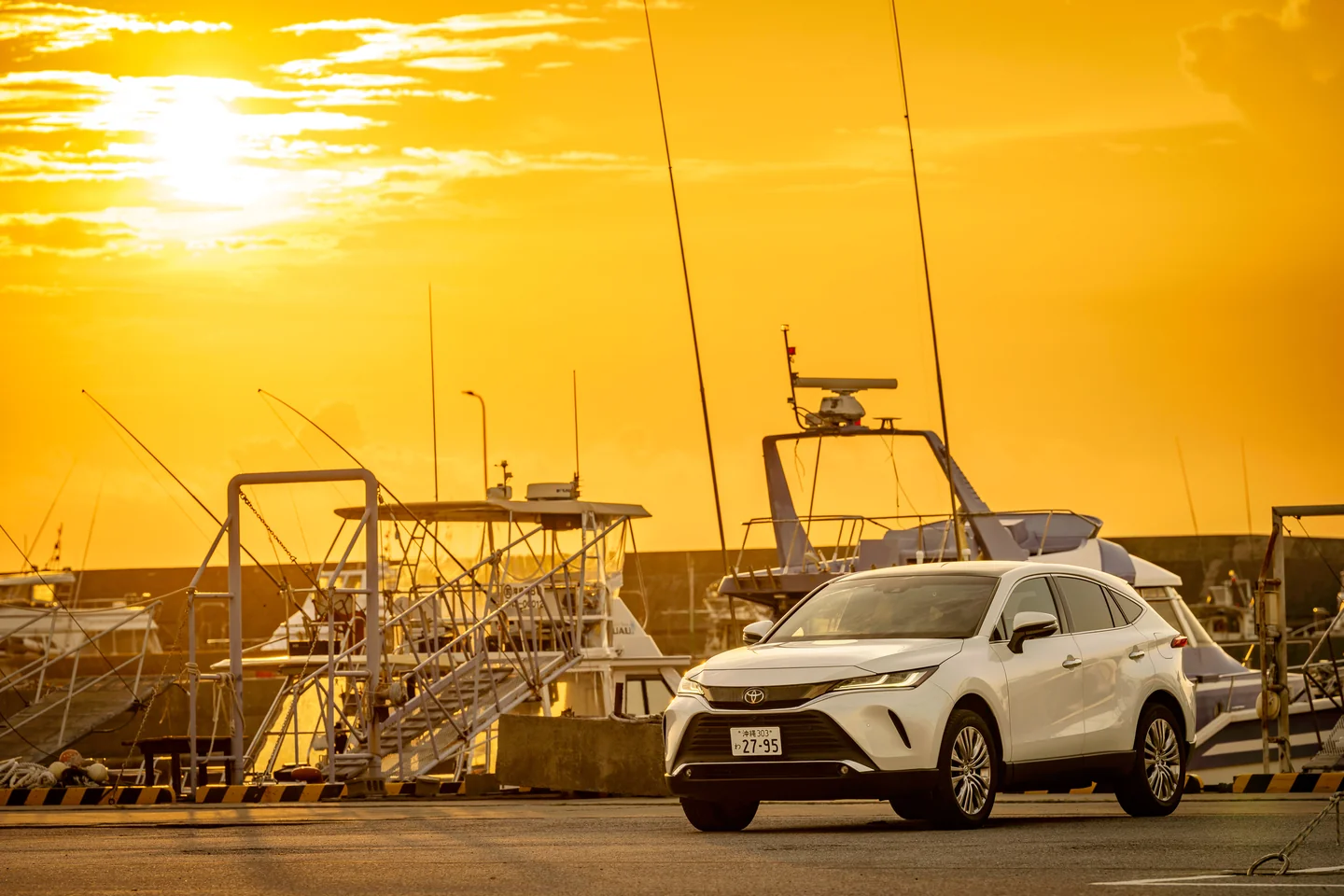
Toyota Harrier at a Glance
After driving it in Okinawa, my verdict is that it’s a really good car.
Details
A Look Inside
It has almost every option, though I like some more than others.
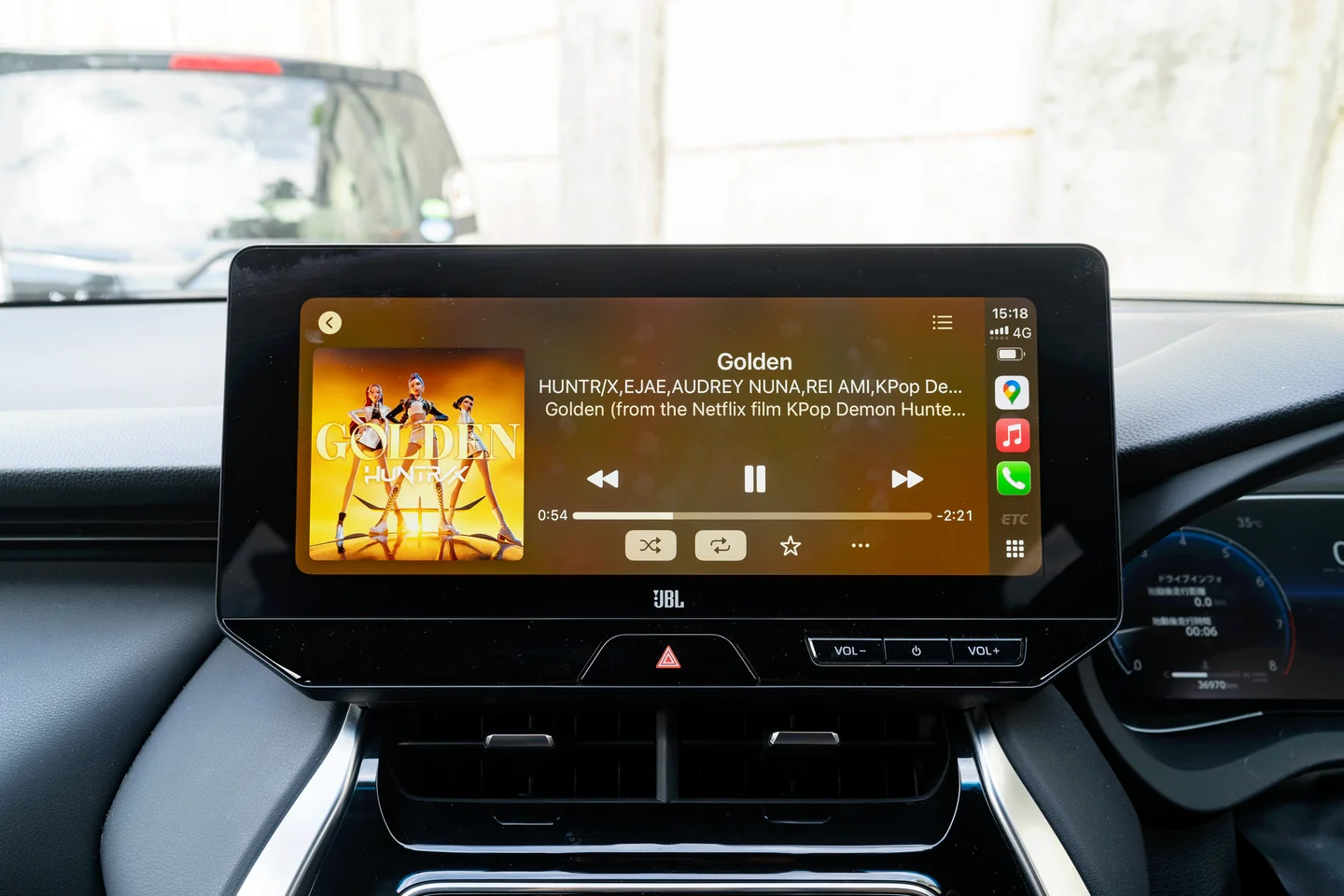
I’ve picked up the car. The JBL sound system catches my eye first. You usually find this in Toyota’s higher-end models. It supports Google Auto and Apple CarPlay, which is really convenient.
When looking at rental cars in Japan.. ignore that “Korean-language navigation!” nonsense. Korean-language navigation is utterly useless.. What matters is whether it supports Google Auto and Apple CarPlay.
So what if the navigation is in Korean? Can you type in Japanese? Only the display is in Korean; you still have to enter searches using Japanese spellings. I can type those myself, but this blog is in Korean, so I don’t recommend it. Japanese people read Cultravel too, so I word things differently here. Korean-language navigation is of no use whatsoever to Koreans.
What matters is always whether it supports Google Auto and Apple CarPlay.
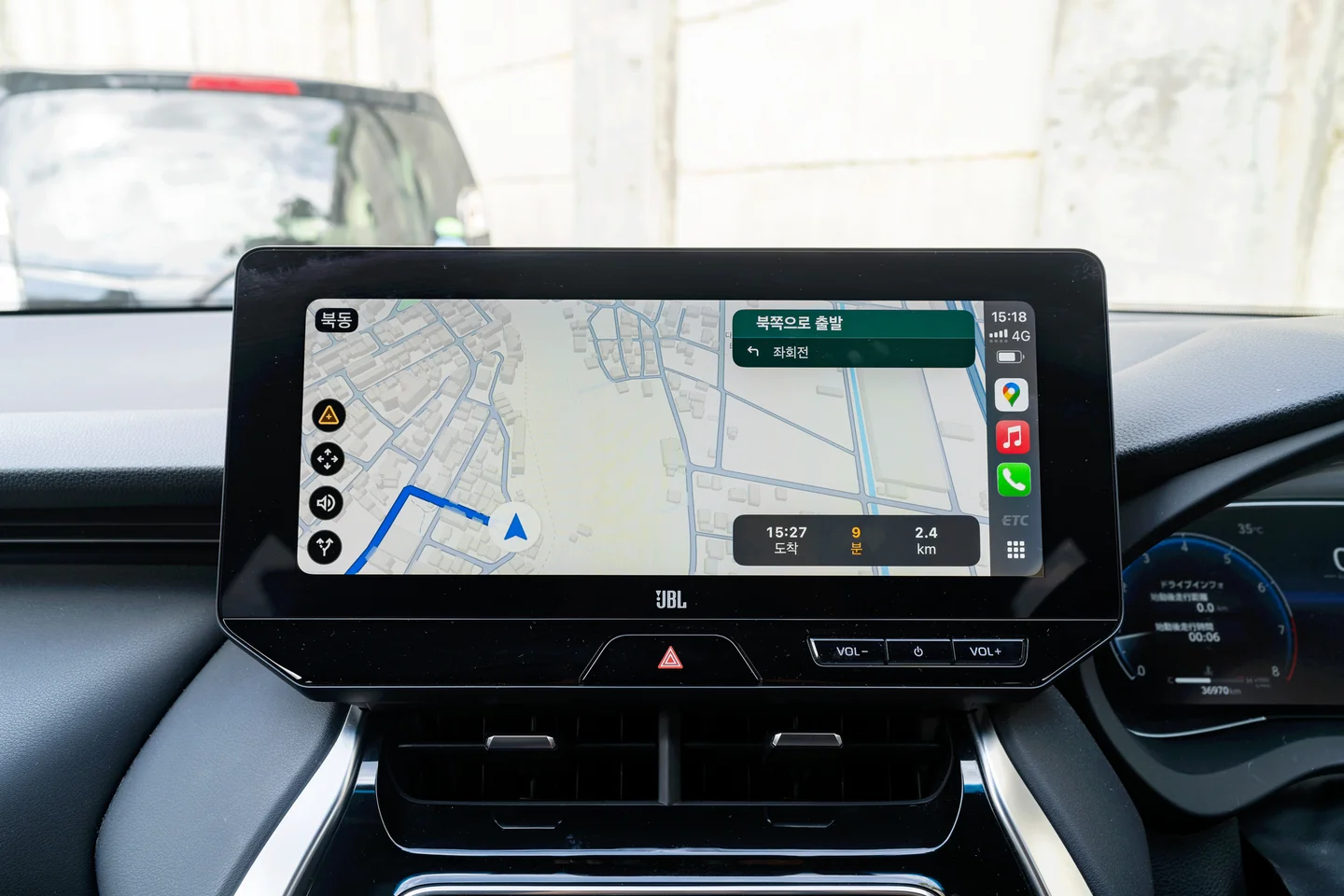
You connect your smartphone to the car via Bluetooth. Then your phone’s Google Maps information appears on the screen. You can enter destinations on your phone and use the familiar controls. Of course, even though this is a Japanese car, it displays everything in the language set on your smartphone. That’s the biggest advantage.
I thought all Koreans knew about Google Auto and Apple CarPlay.. Turns out they don’t. Maybe because so many use T Map -_-;;
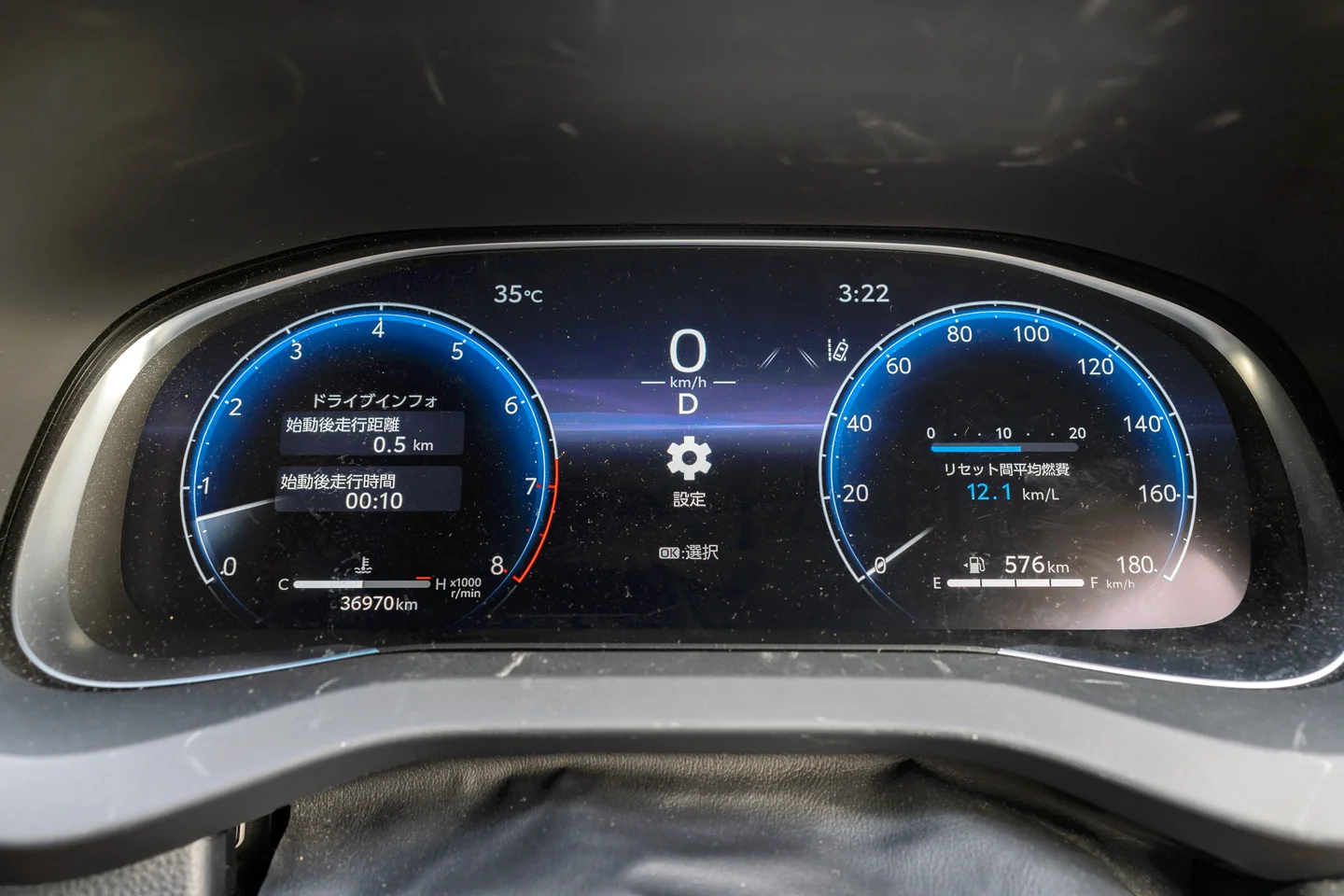
The car has done about 37,000 km.. So it’s new. By my standards, anything under 100,000 km is new. Over 100,000 km, and it’s had a bit of use.. At 200,000 km, maybe it’s time to start thinking about replacing it? At 300,000 km, time for a replacement? That’s how I see it.
Average fuel economy of 12.1 km/L is pretty good for a midsize gasoline car.
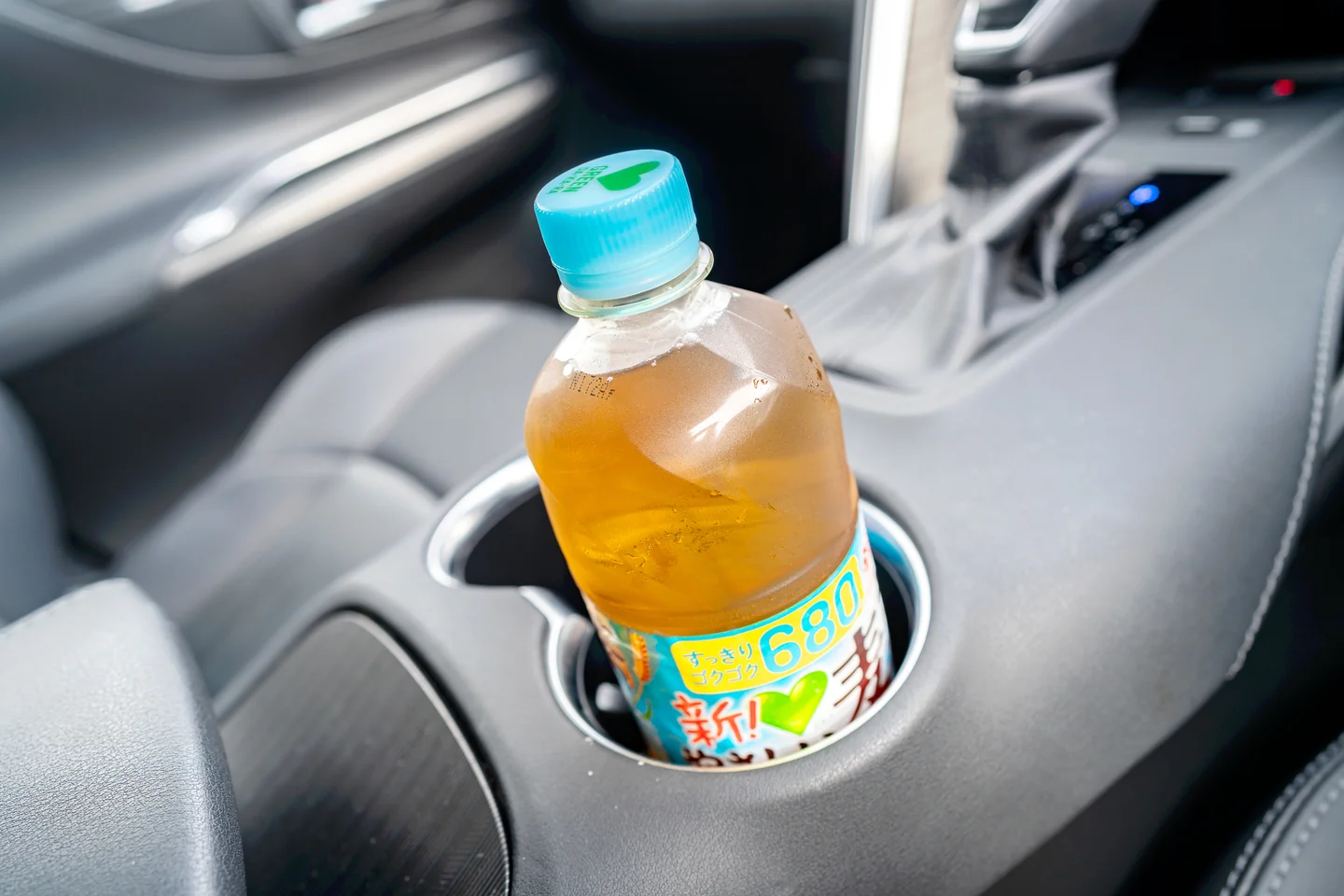
Sadly, it lacks that cutting-edge invention: cup holders in front of the A/C vents. The air conditioning is so powerful that.. I can live with it. Still, a bit of a shame..
I didn’t take a photo, but it also has a panoramic sunroof. Number 2 on my list of the most useless car features is a convertible roof, and number 1 is a panoramic sunroof.. Anyway, it does have a panoramic sunroof.. but I hate them so much that I paid it no attention.
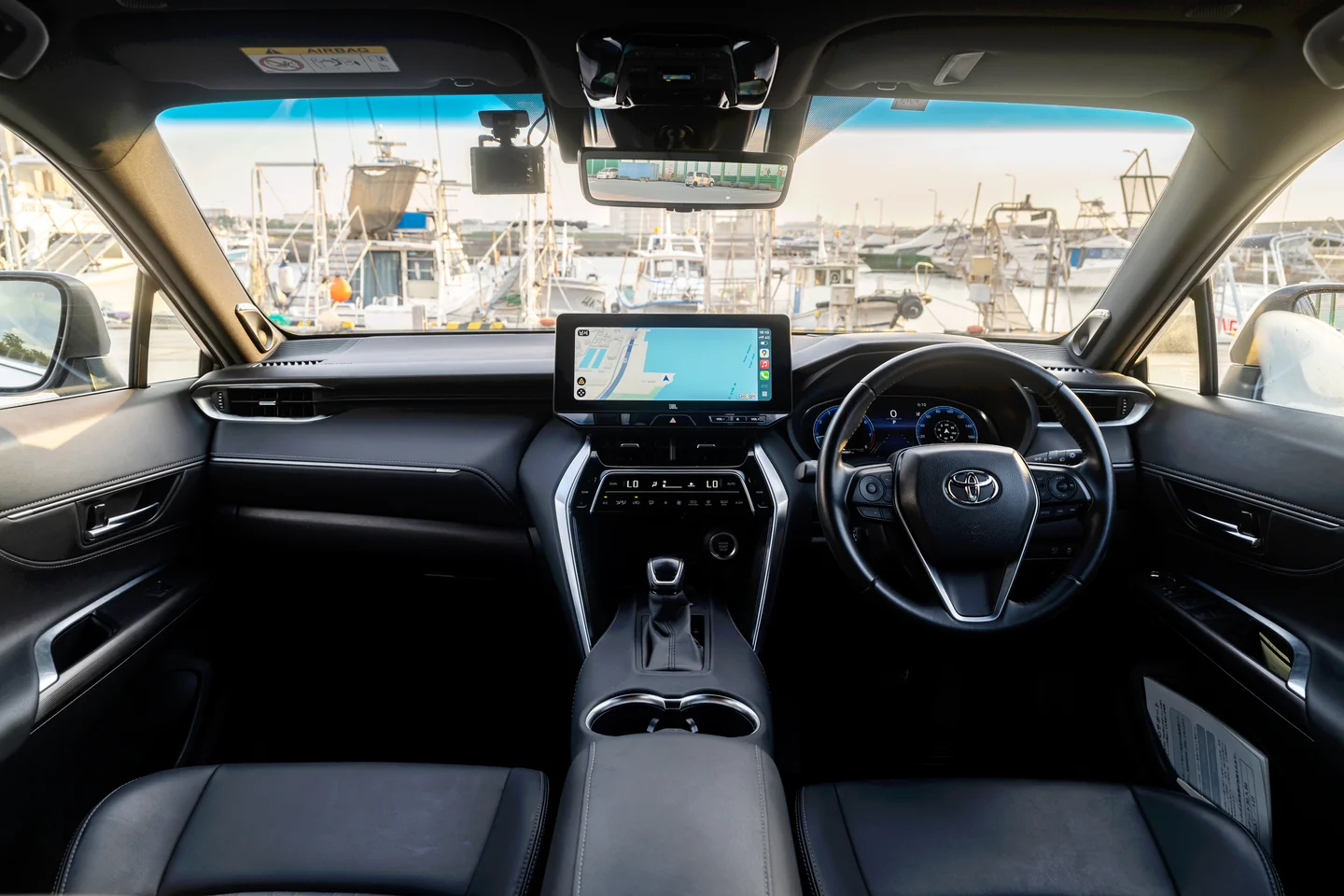
Here’s the overall view. I’ve been driving it around a bit.. so it’s a little messy.
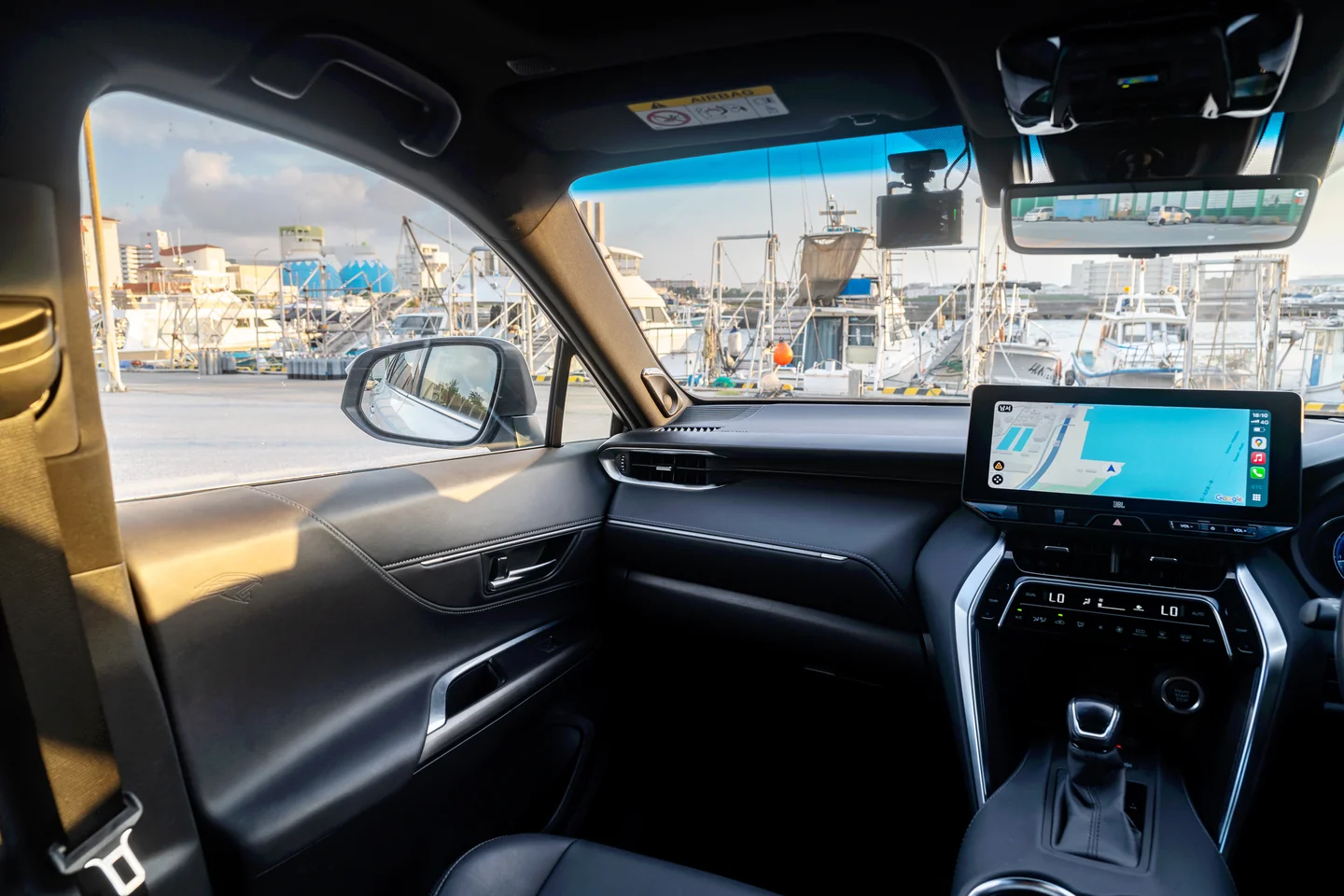
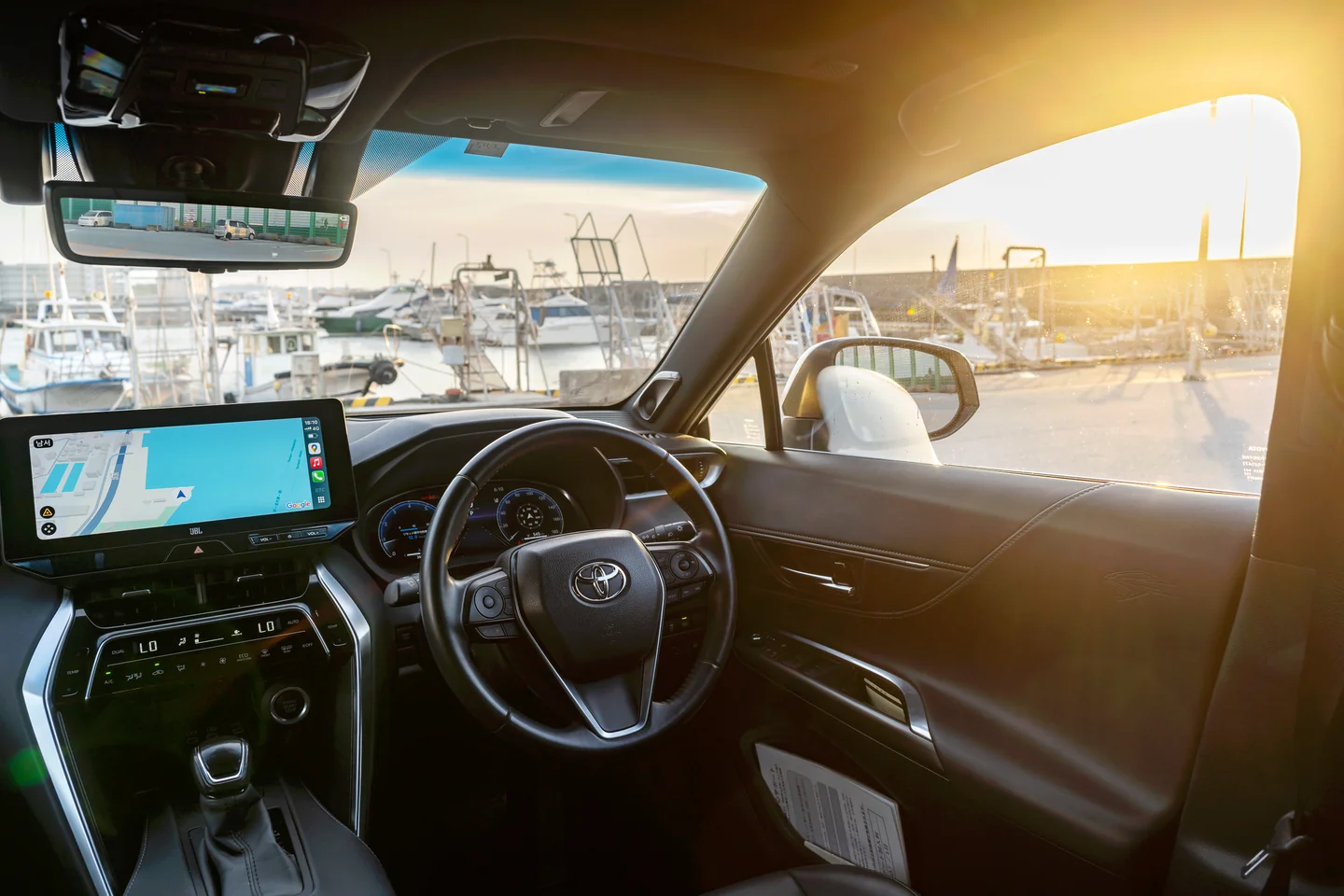
Nothing else particularly stands out. I’ve got nothing to say. It’s a good car, but the cup holders are ordinary, and it feels a little ordinary overall.. There are also two USB-C fast-charging ports in the front and two in the back. No USB-A ports, so keep that in mind 😀
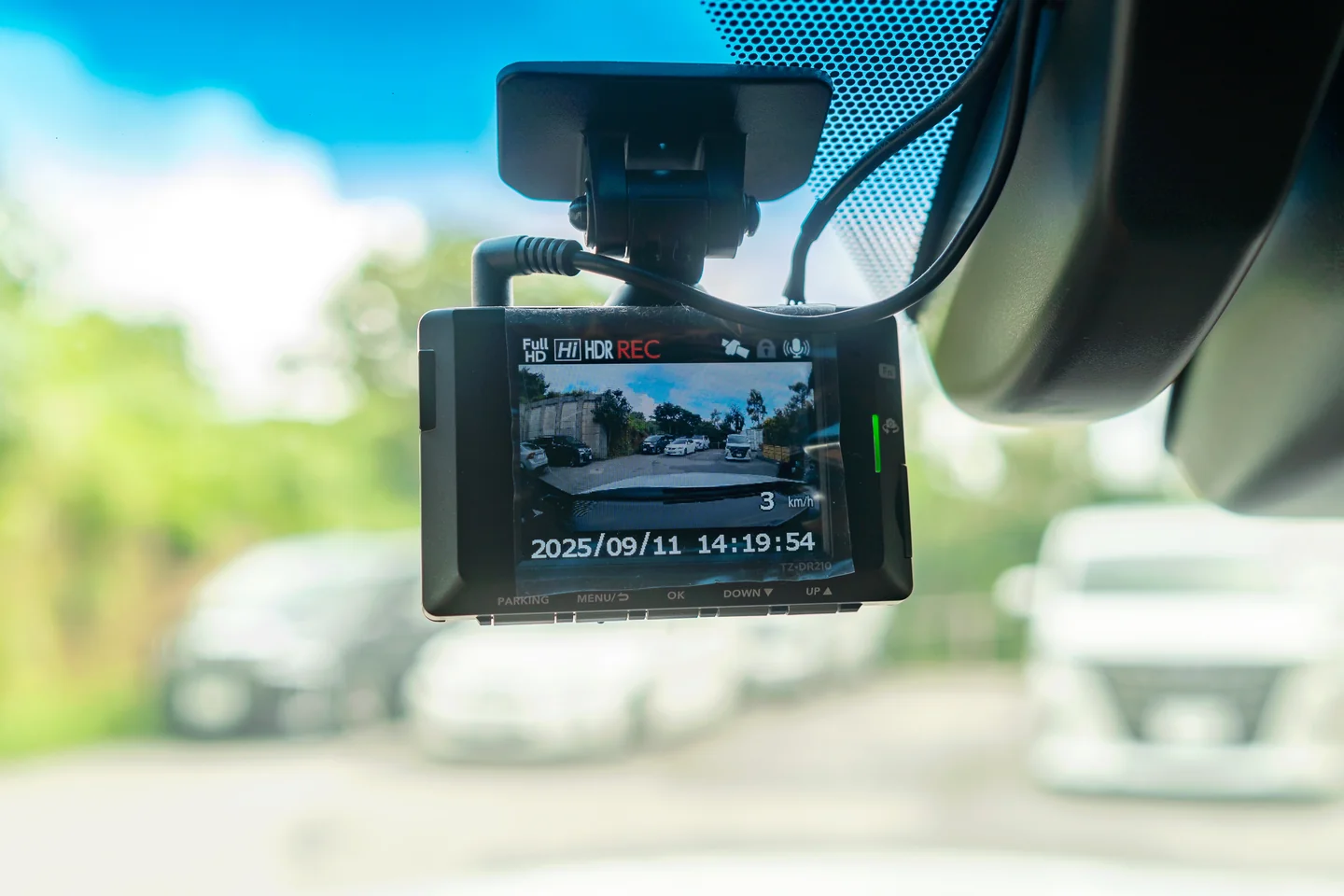
The car also has a dashcam. Some rental companies provide a dashcam but take out the memory card, you know? They expect you to use your own.. But here it’s all installed. If there’s an accident, you need to work out who’s at fault.
On a side note, putting together what I’ve heard from the various rental car owners I’ve met.. they say Koreans generally drive rather strangely. How should I put it.. There are quite a few reckless drivers.. So, yeah..
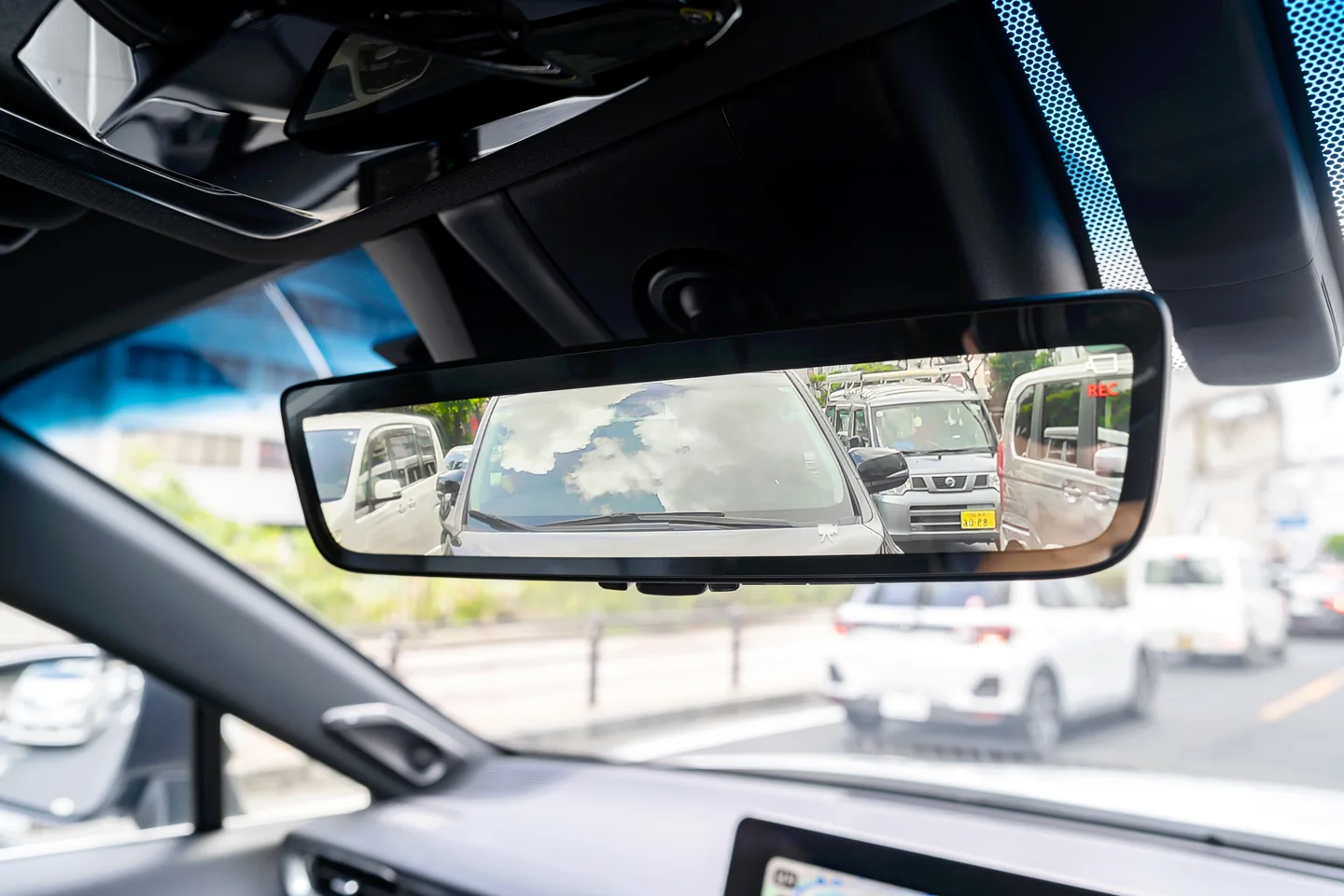
The rearview mirror is.. digital. I’m not keen on this feature either, because I can’t judge distances accurately. When I drive, I keep an eye on cars both behind and beside me. You can also use this monitor’s rear camera and 360-degree surround view to make parking easier.
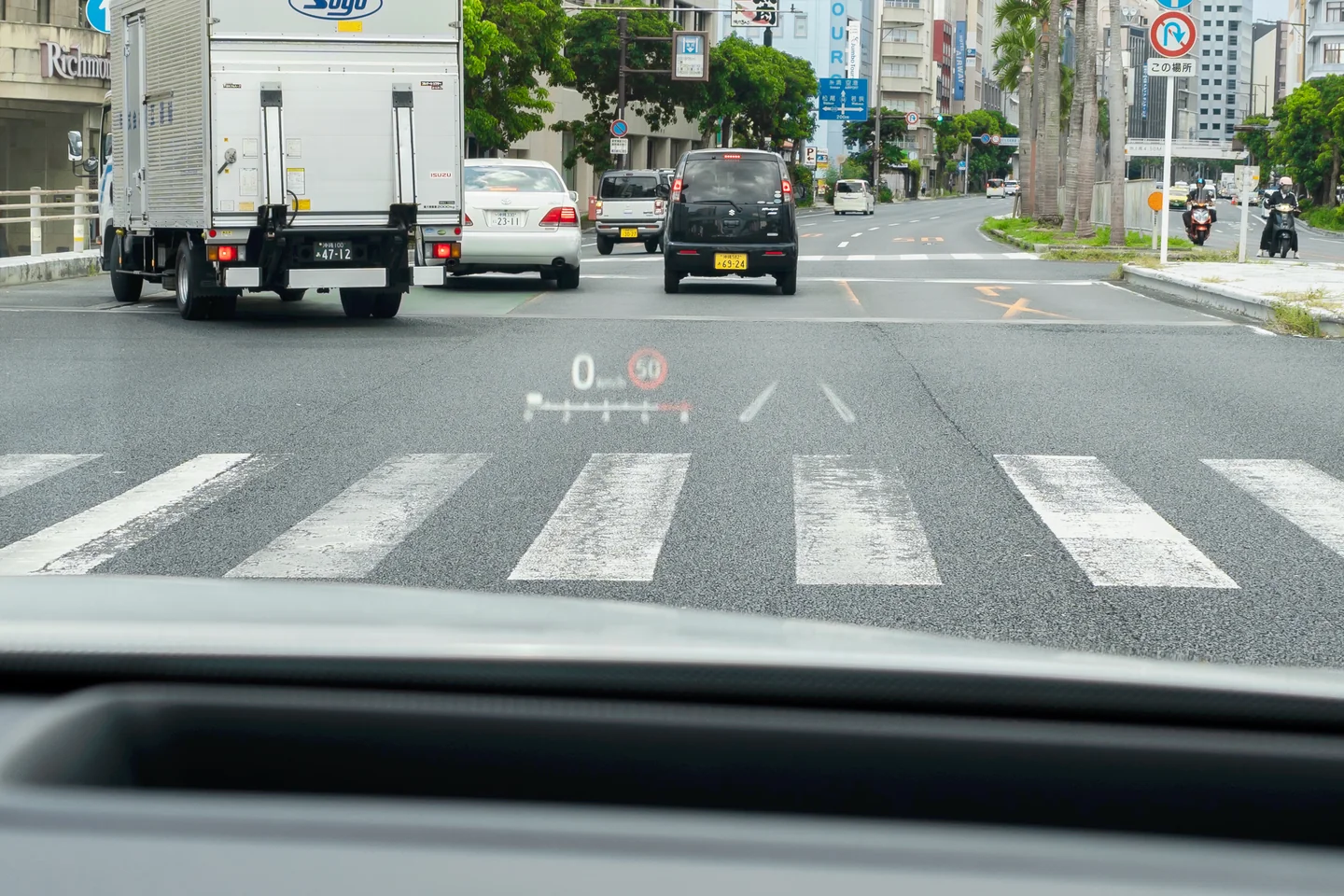
There’s also a head-up display. I should have focused the shot properly, but I focused on the wrong spot. As the lane markings on the right suggest.. this car beeps if you wander out of your lane. It’s a lane departure warning system, a useful feature for Koreans.
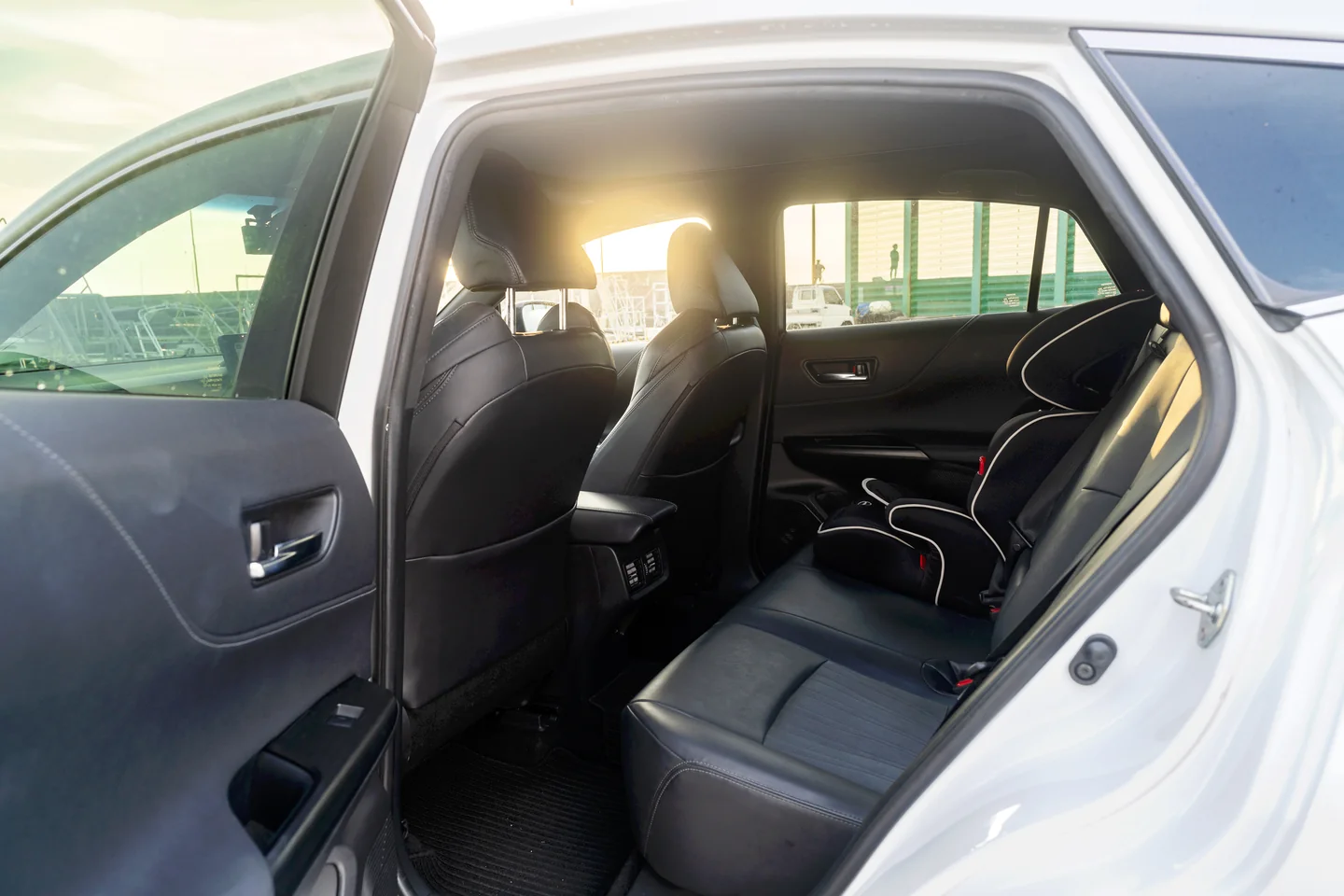
Here are the rear seats. Since the car is bigger than the likes of the Toyota Yaris Cross, I think three people could sit in the back comfortably.
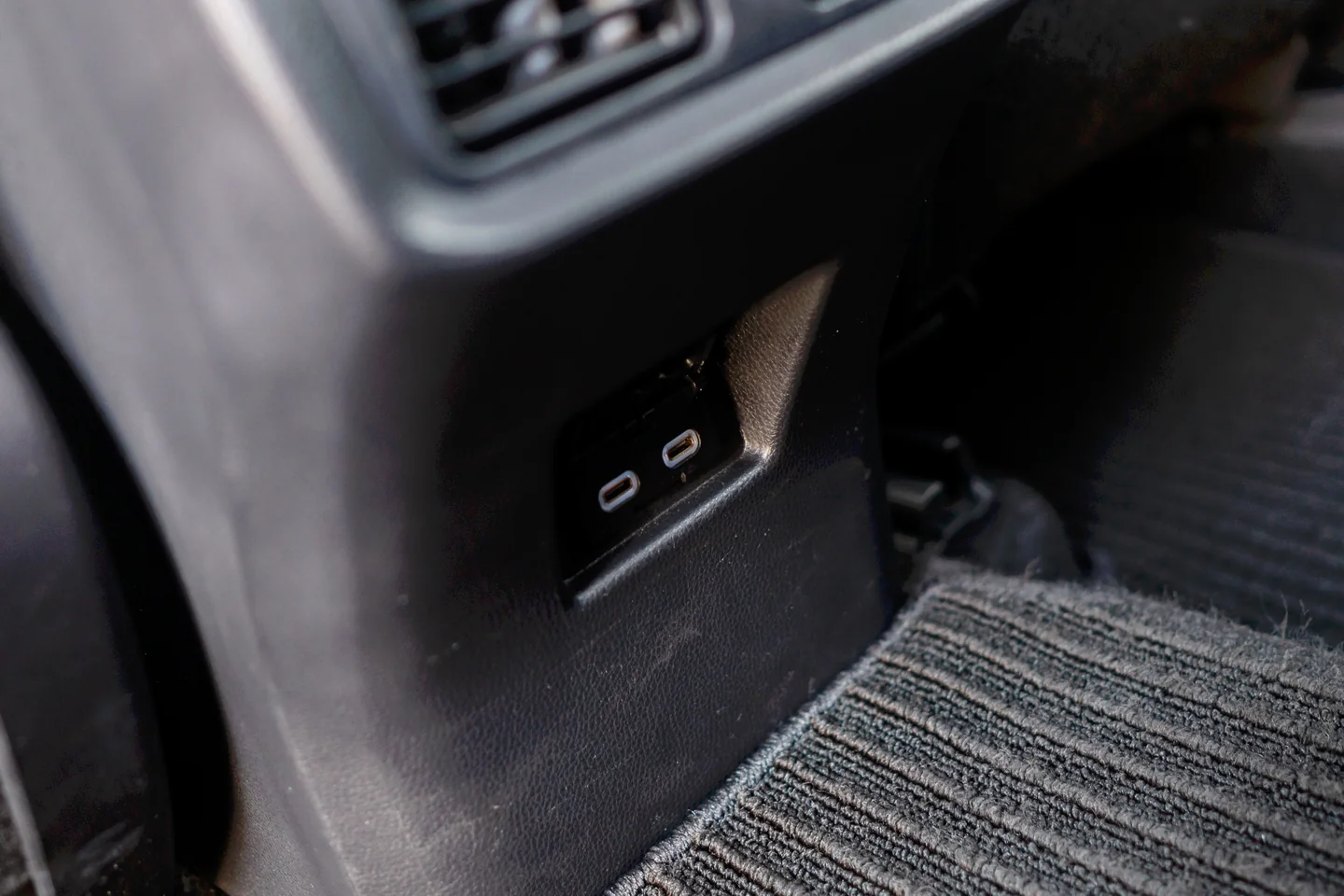
There are two USB-C charging ports in the back too. If you’re renting this car for a trip around Okinawa.. bring a USB-C charger!
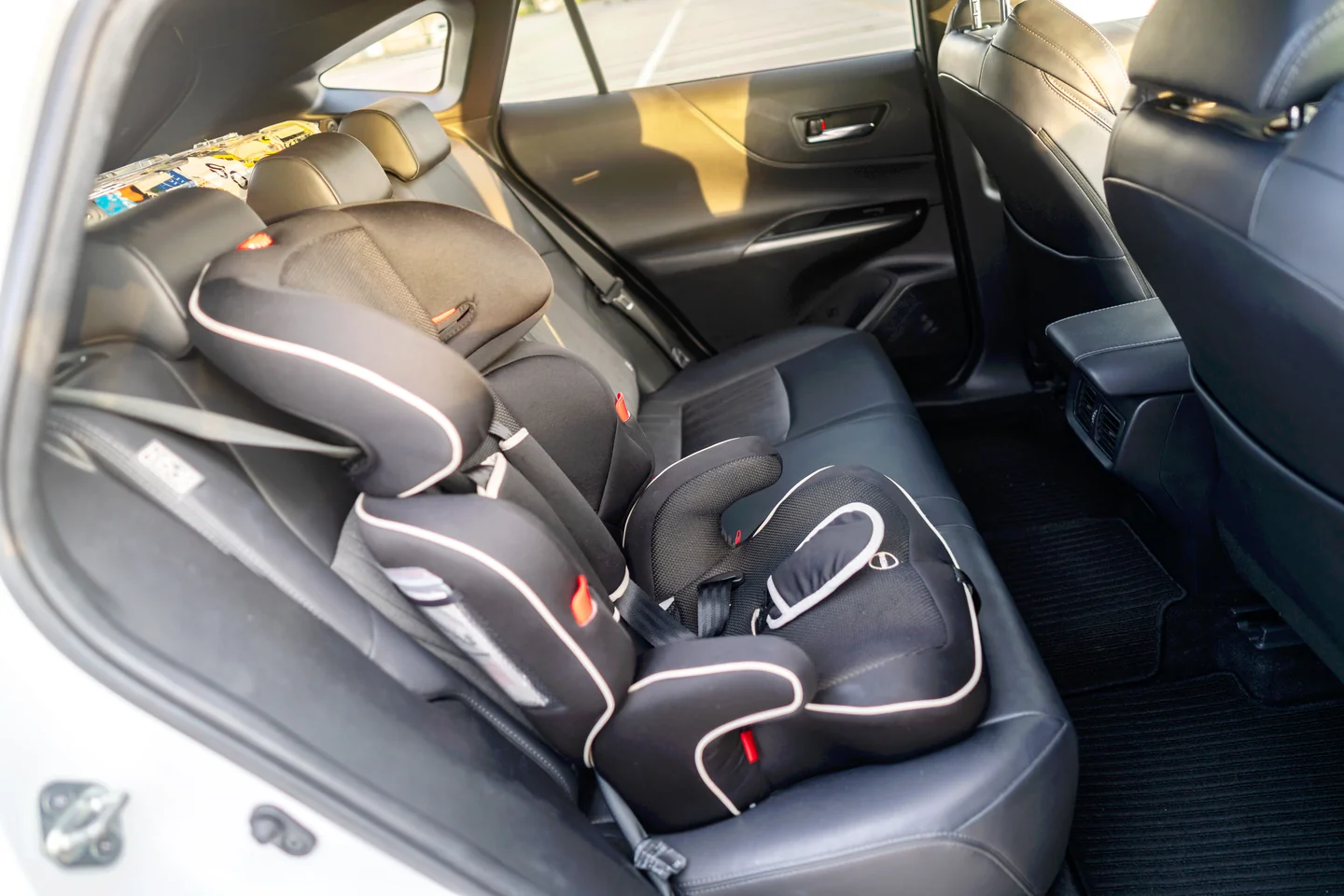
I asked to borrow a child car seat for free so I could take some photos. I told them I wouldn’t be using it.. This one attaches to the anchors behind the seat. A bit of a hassle to install.. So ask the staff to fit it when you pick up the car.
Trunk Capacity
I didn’t have to play Tetris every time I loaded luggage, as I would with a smaller SUV.
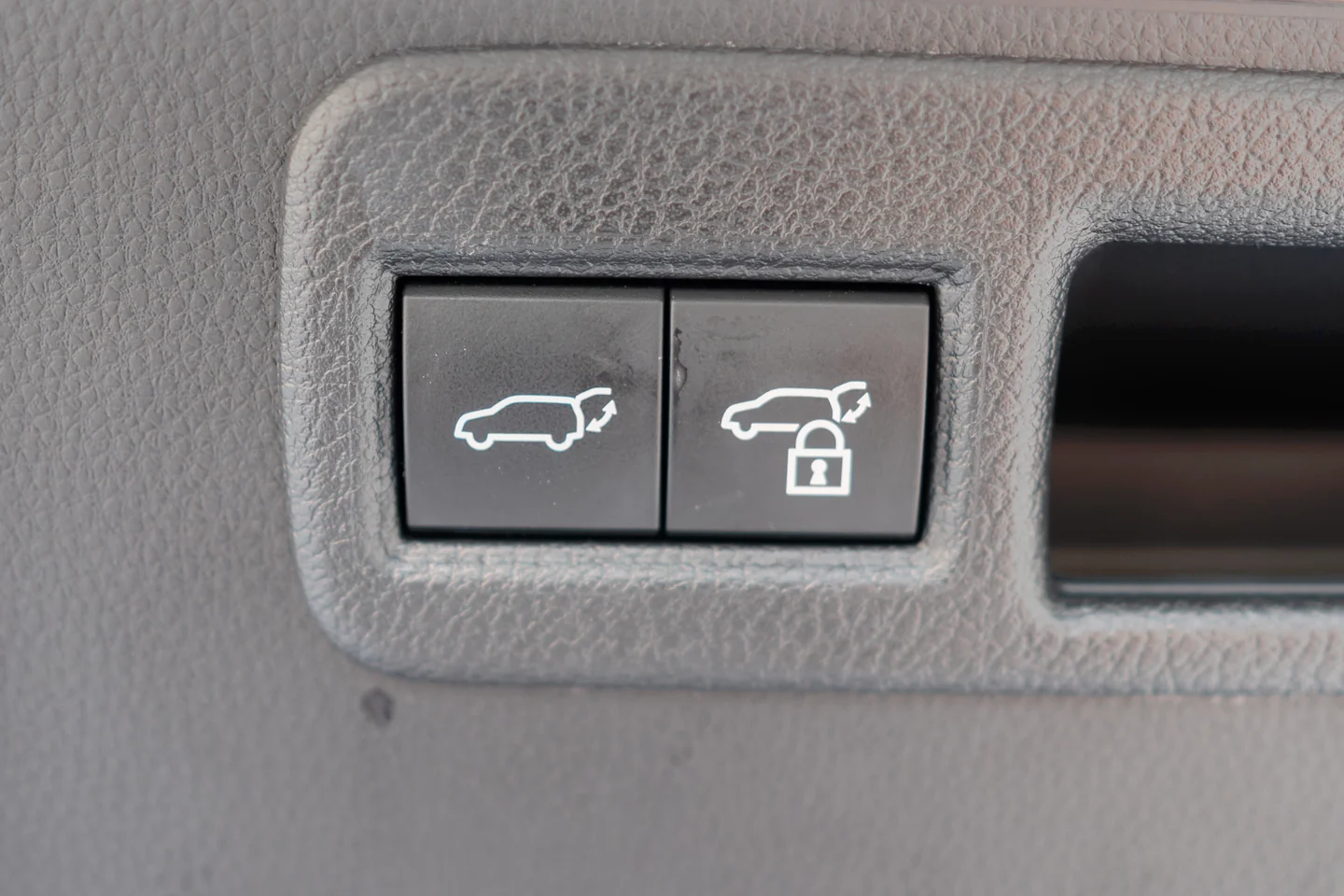
This car has a power tailgate. The kind that opens and closes the trunk at the push of a button. I’m not keen on this feature either. It opens and closes so slowly.. It’s just frustrating.. Kids can’t open the trunk themselves.. so it’s a useful feature if you have kids.
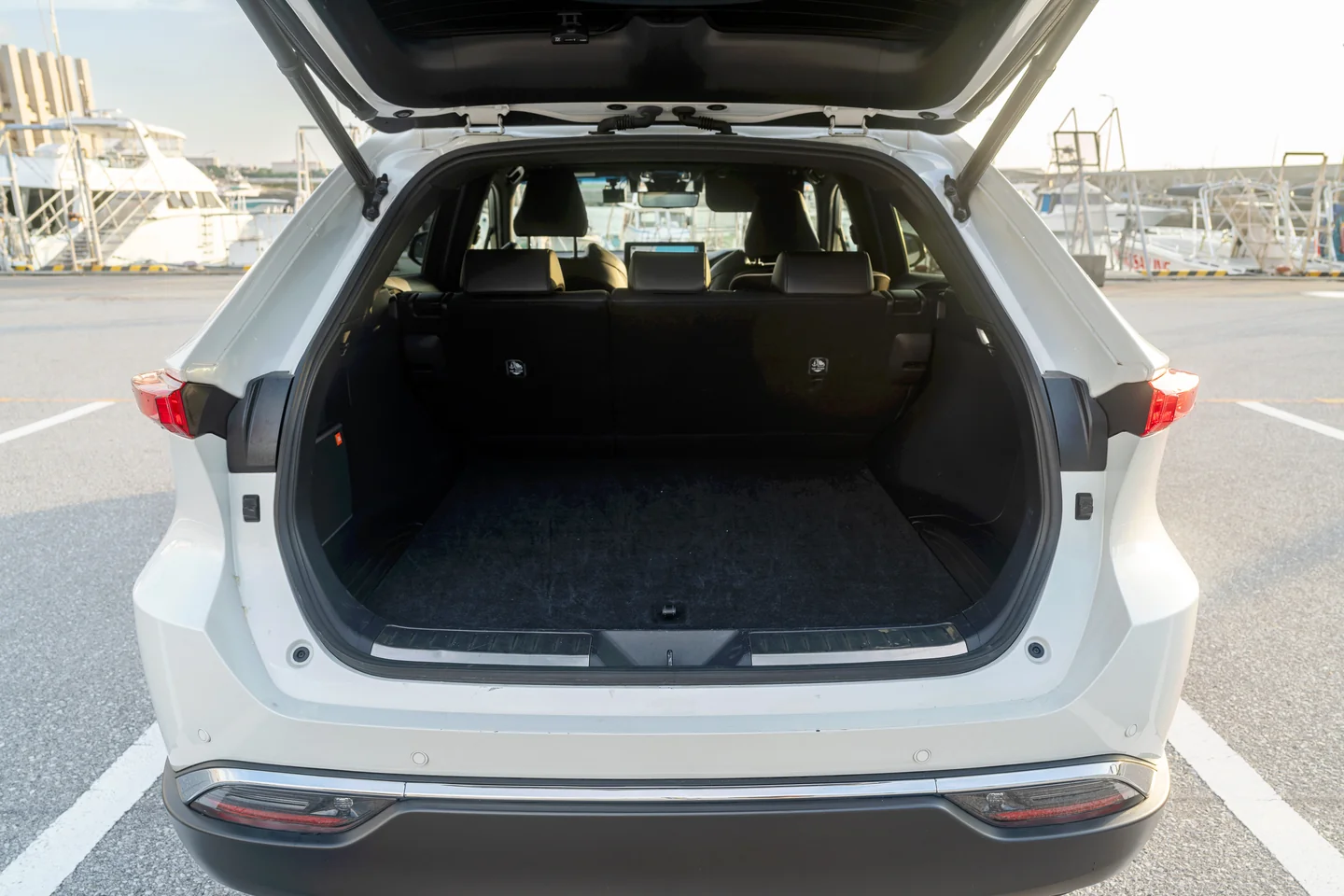
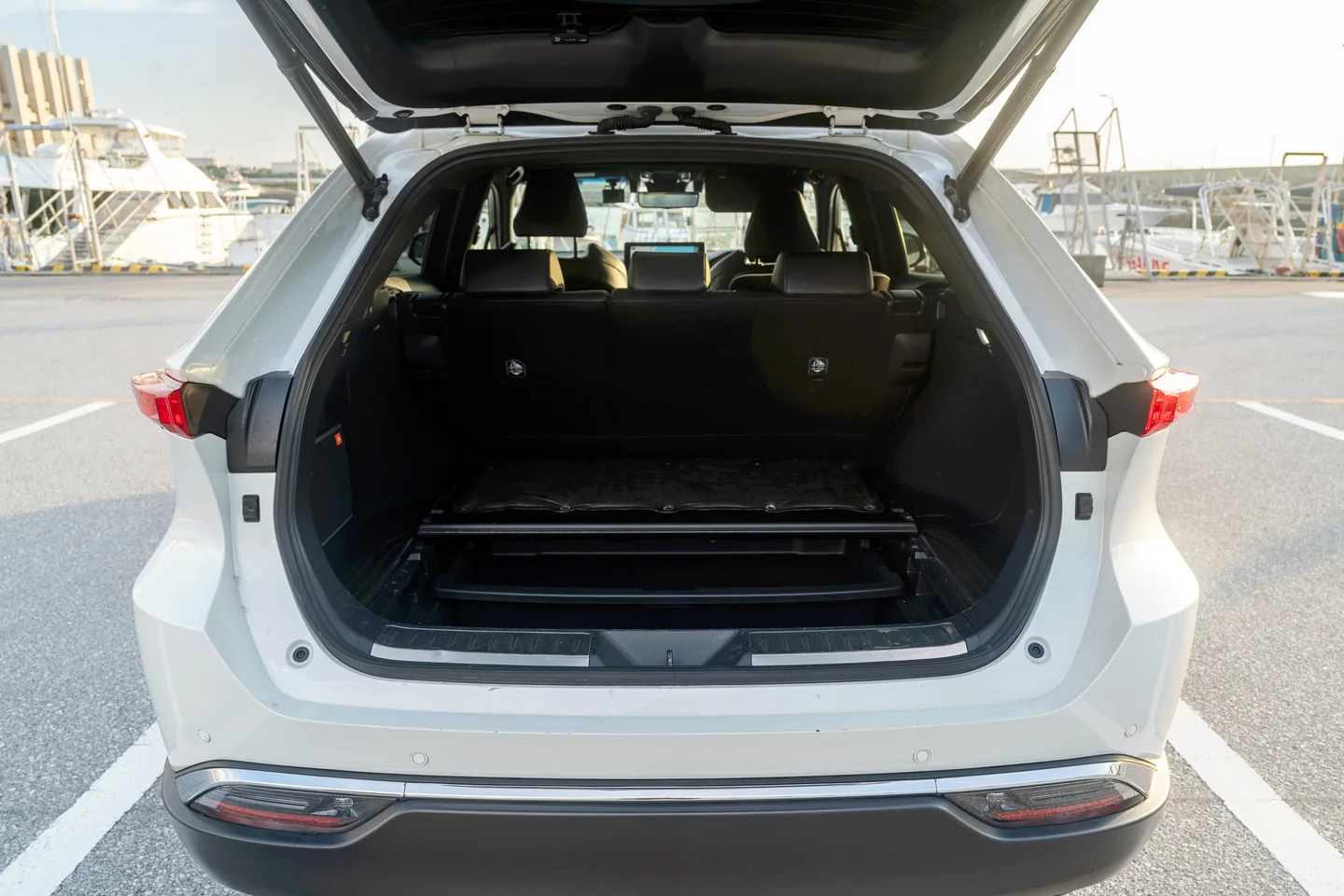
As I said in the title.. the Toyota Harrier is a midsize SUV. It’s bigger than the Yaris Cross or Toyota Raize. With a Yaris Cross or Raize, you always have to play a good game of Tetris to fit much luggage in.. With the Harrier, you can just chuck it in.
The Harrier was also designed with golfers in mind, so you can expand the trunk to fit golf bags upright.
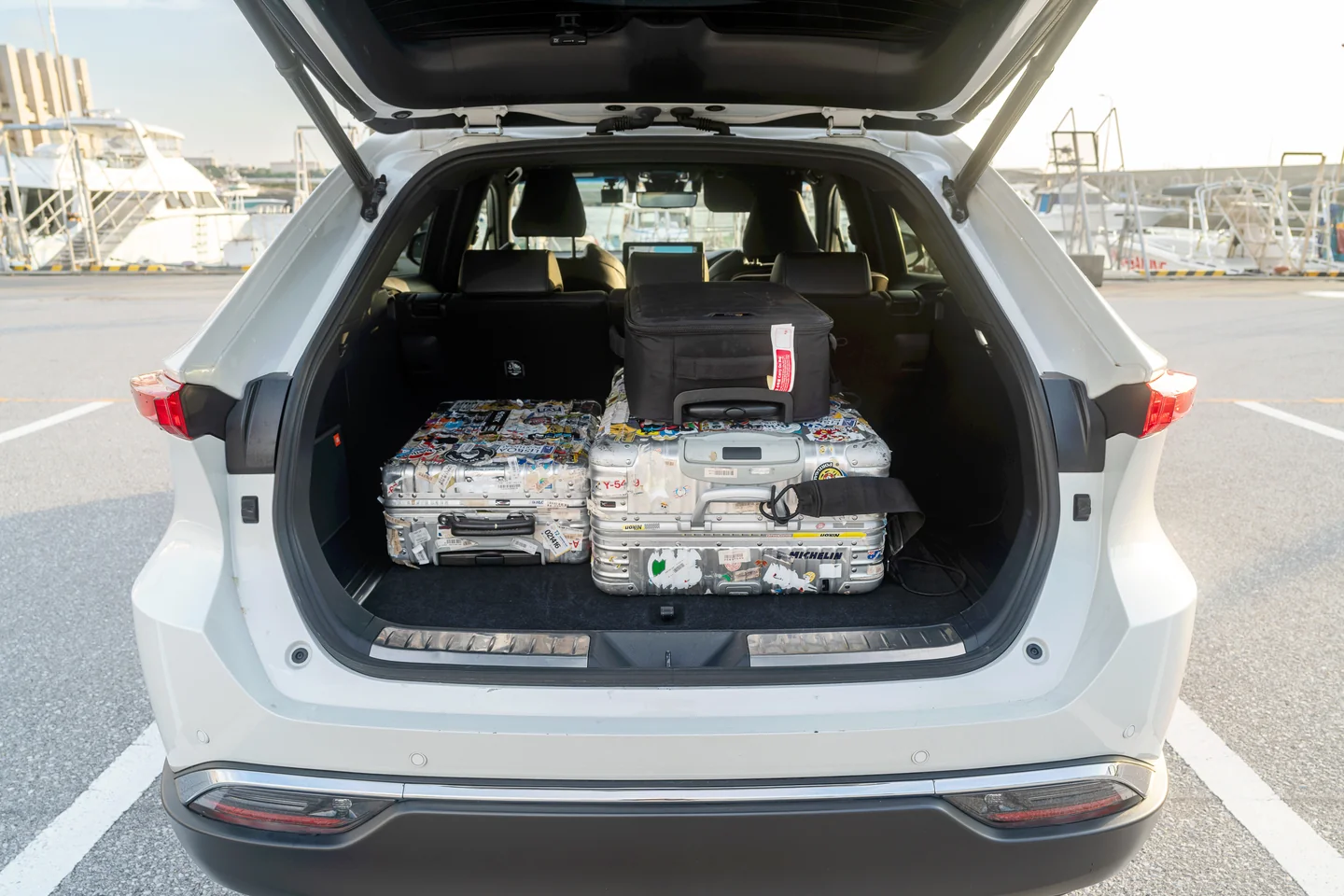
It’s a five-seater, so if five adults bring five 20-inch suitcases, there’s quite a lot of space left over. Four 20-inch carry-on suitcases and one large 28-inch suitcase fit with no trouble at all, too. Koreans tend to bring several small suitcases rather than large ones to Okinawa.. There’s enough space to chuck in about six small suitcases and a stroller.
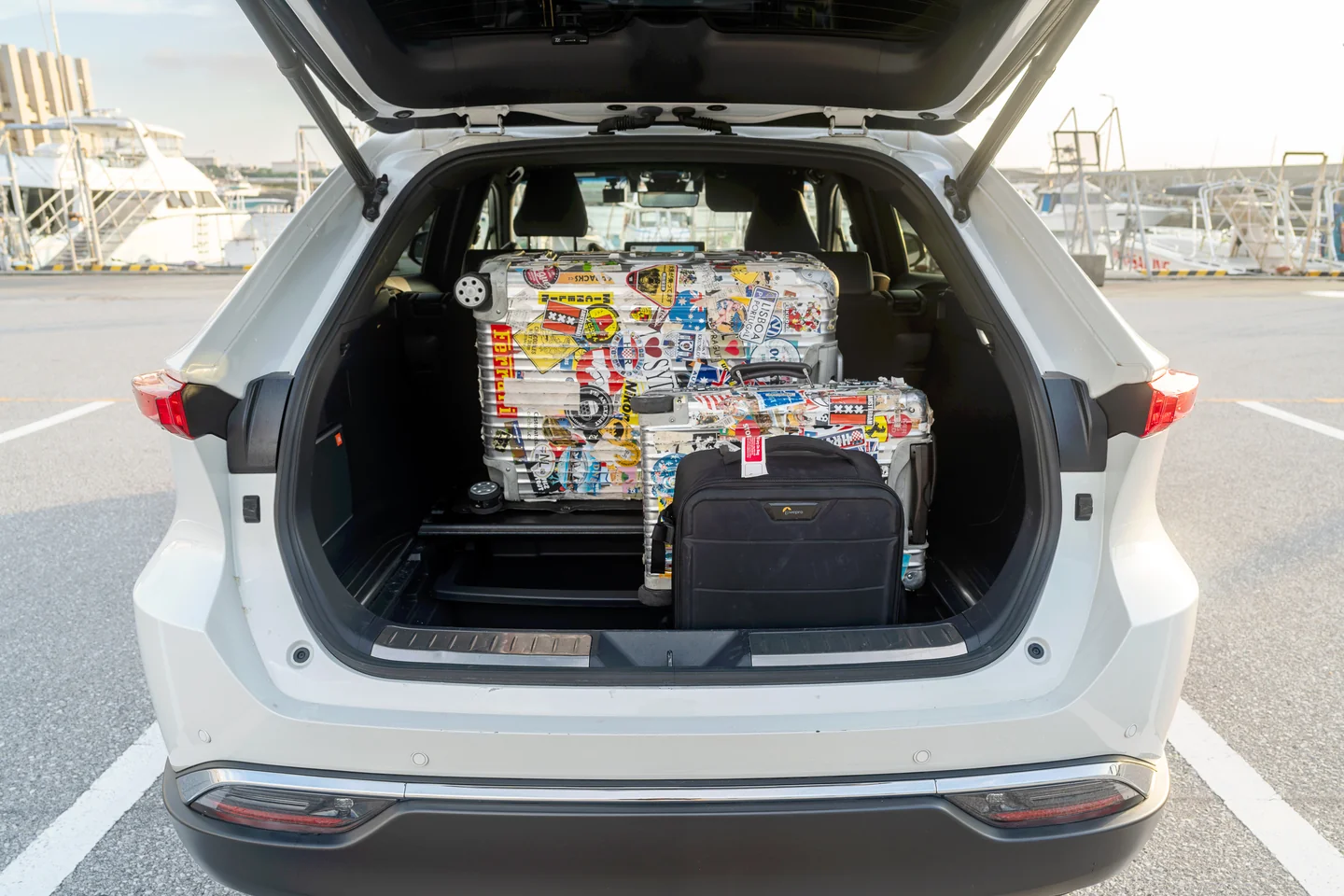
Use the space made for fitting golf bags upright.. and you can get even more in. If all five people bring a 28-inch suitcase each, you might have a problem, but if everyone sticks to around 24 inches, it’s fine. To give you a rough idea, 28 inches is the largest standard suitcase size. The largest carry-on is 20 inches. Anything over 28 inches.. is for moving abroad.. And I’m guessing you’re not moving to Okinawa..
Anyway.. it’s a big car!
Driving Impressions
I found the acceleration smooth and the surround-view camera handy for parking.
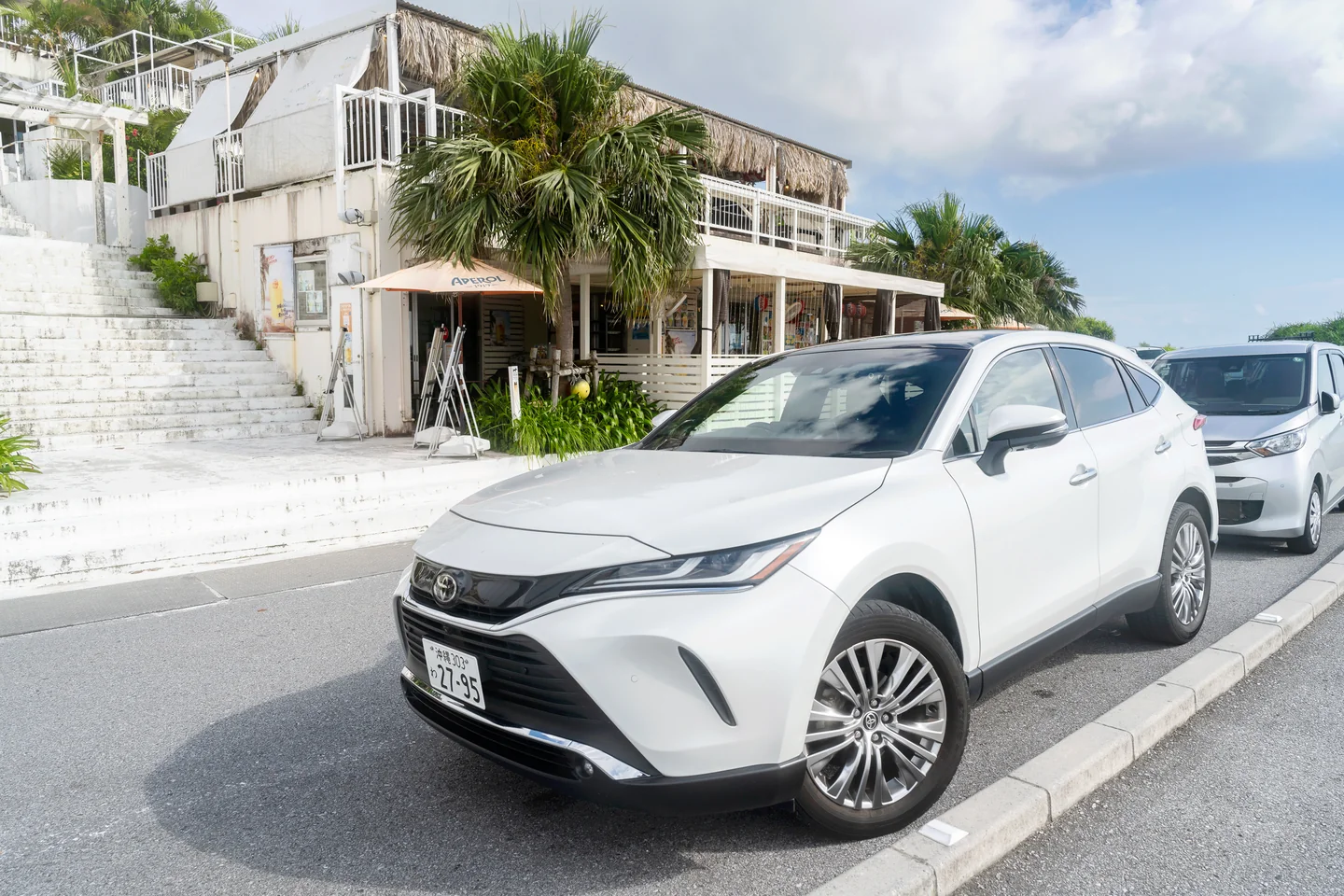
My first impression of driving the Harrier: it accelerates well. Maybe because it’s an expensive car in a high trim level, but it picks up speed smoothly when you press the accelerator. Naturally, it accelerates better than the Yaris or Yaris Cross that are so popular with Koreans. It’s a model higher up the range, after all.
On the expressway, I deliberately drifted out of my lane when there were no other cars around, and it gave me a warning beep, which was good. Seven out of ten rental car accidents involving Koreans in Japan happen when they drift too far left and smash the left side mirror. I think lane departure warnings might help reduce those accidents.
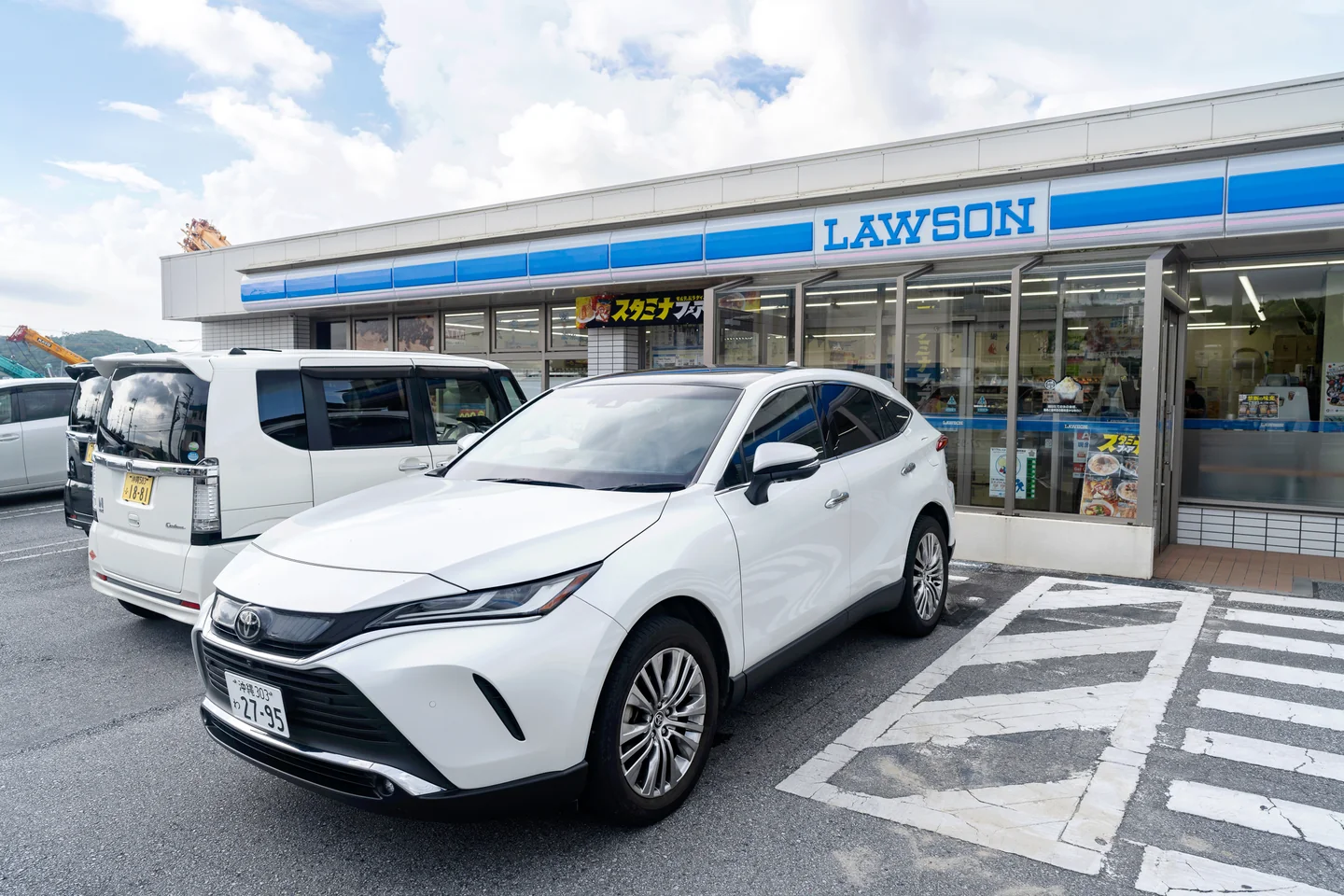
Well.. a rear camera is a given in a car like this. I was also impressed that it warns you if a child or someone else suddenly appears behind the car, and the 360-degree surround-view camera makes parking easy. Japanese parking lots.. are tight. That’s why I generally recommend kei cars for novice drivers, but the surround-view camera makes this car easier to park.
Unlike the new 2025 Toyota Alphard, this car also has no rental restriction excluding drivers who’ve held their license for less than 5 years.
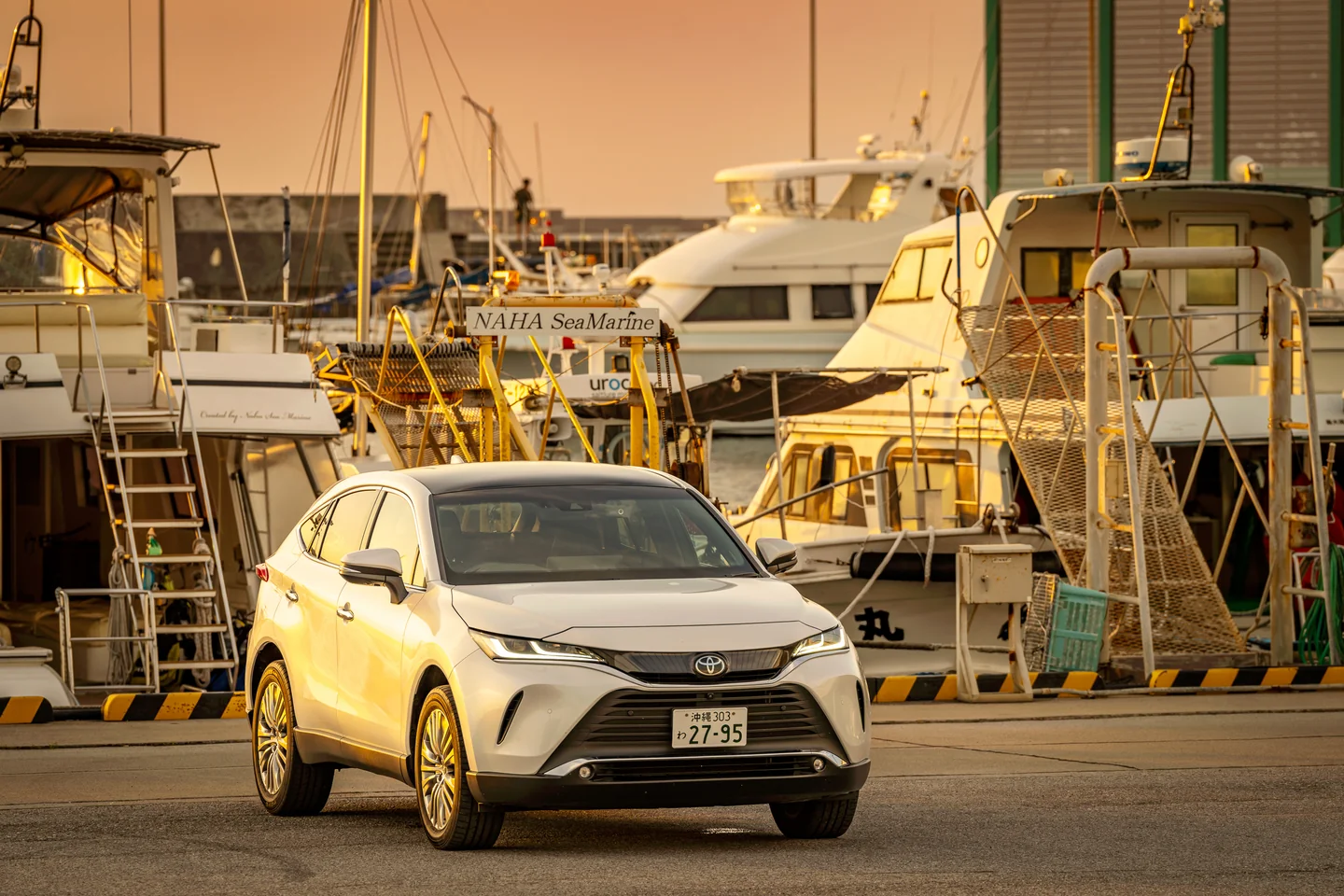
The Harrier isn’t a particularly common rental car, so it feels a little more special. The Yaris Cross is the most common small SUV, but its trunk is small. Since the Harrier was on sale when I rented it and the price difference wasn’t that big, I thought it was a good chance to try one.
Refueling and Returning the Car
Fill the tank before returning the car, and keep the receipt too.
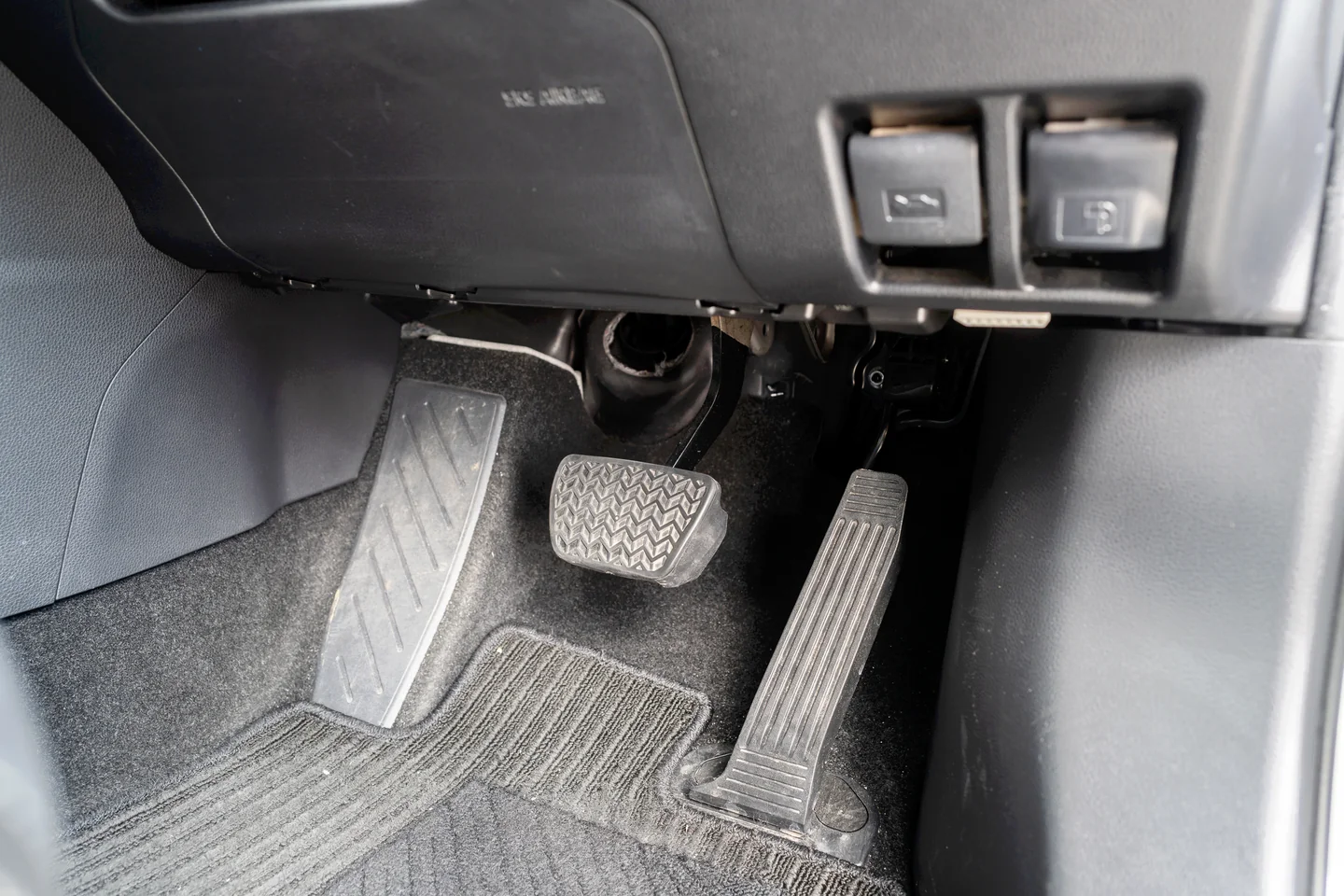
Of course, you need to return the car with a full tank. The fuel door release lever is on the right, toward the top of the lower area beside the driver’s seat. Check carefully before pulling it, because accidentally opening the hood means the hassle of closing it again.

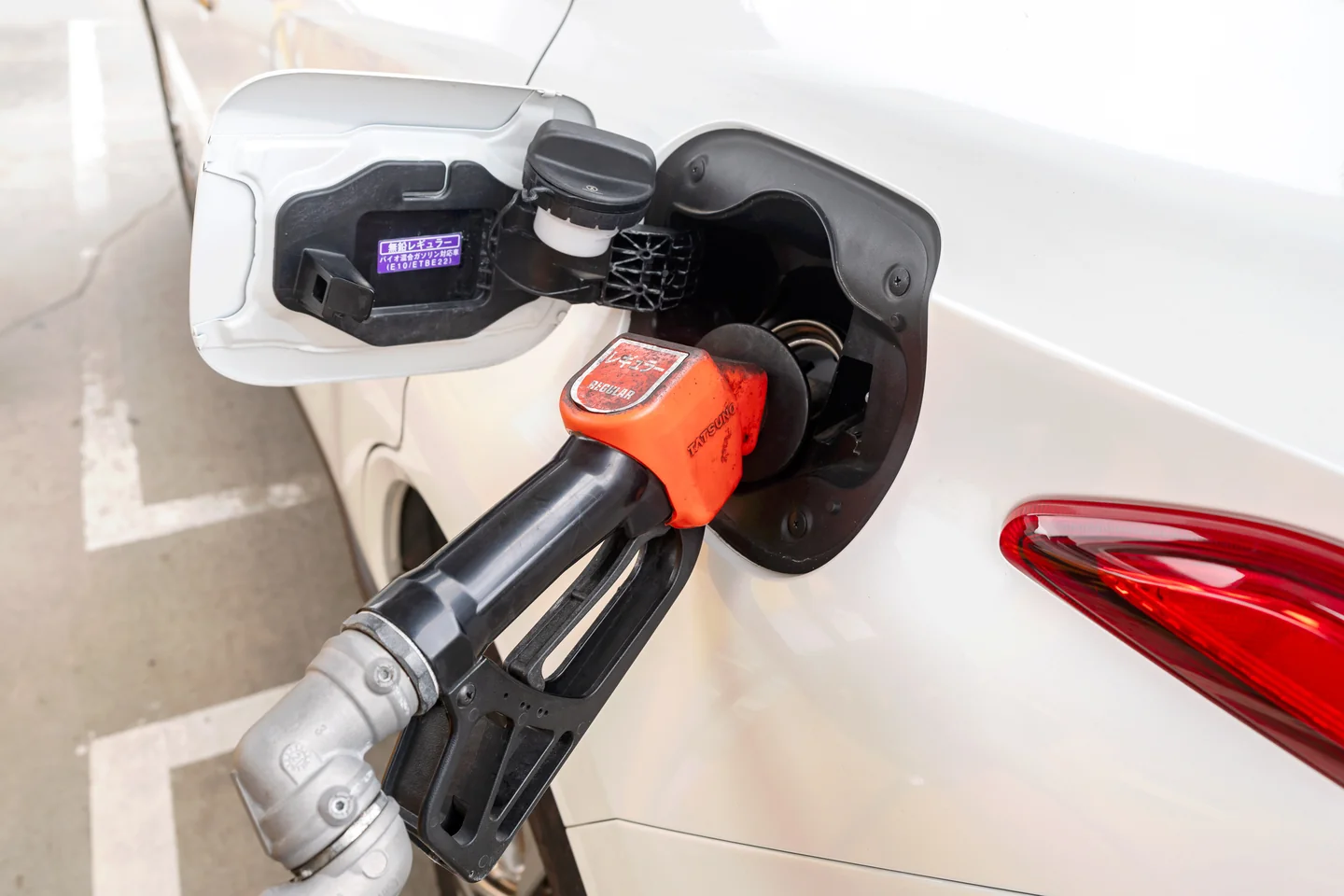
Of course, this car runs on gasoline. In Japan, choose regular and use the red nozzle.
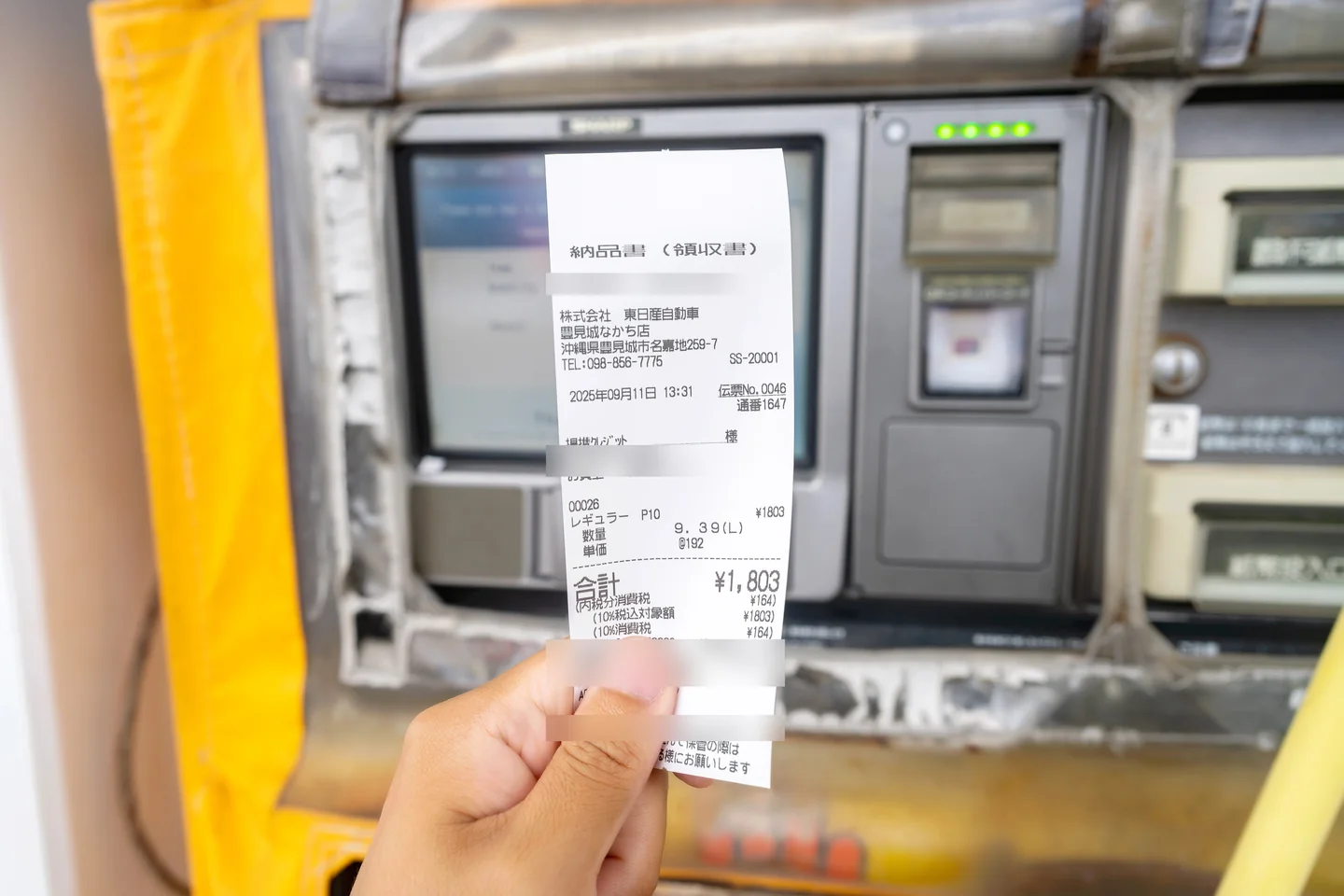
Keep your fuel receipt rather than throwing it away. Rental companies often check it when you return the car.
My bill came to 1,803 yen, and I spent almost all my time driving around southern Okinawa. I used the expressway twice and drove a lot of winding coastal roads for reporting work, which tends to hurt fuel economy a bit. Still, I averaged over 14 km/L, so even a trip up north in this car shouldn’t leave you with a huge fuel bill. I’d expect fuel to cost around 3,000 to 5,000 yen for 3 nights and 4 days visiting Okinawa’s main sights.
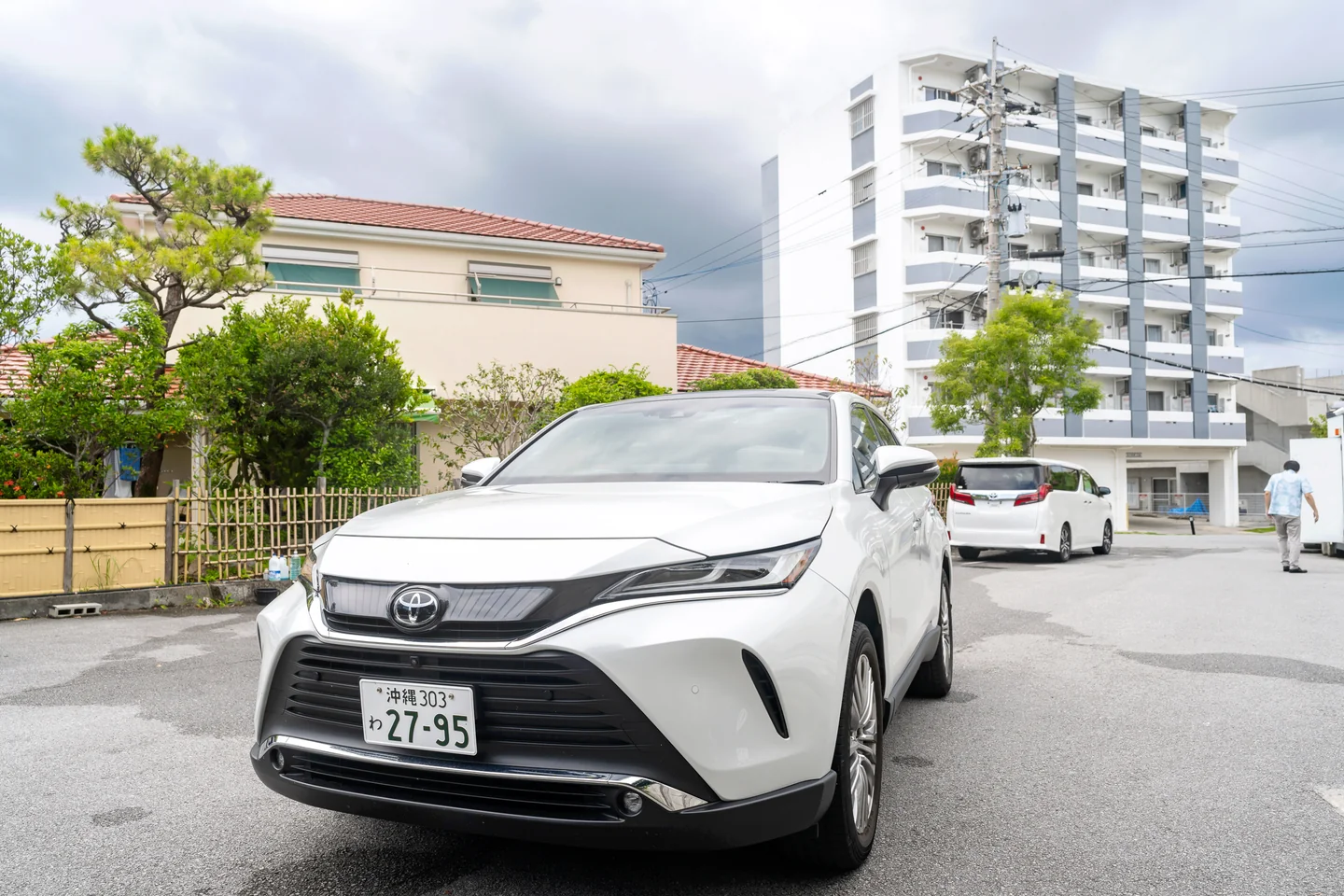
Return the car to the office where you picked it up. They do a quick check, confirm you’ve refueled, and take back the key. Then they ask whether you’d like a ride to the airport or Akamine monorail station, and you choose whichever suits you.
If there’s room for one more person in the car, you head straight to the airport without unloading your luggage. Convenient for you, too. If there isn’t room for one more person, you transfer to a larger vehicle.
Booking and the Price for 3 Nights and 4 Days
It was on promotion when I rented it in September 2025, so check the price when you book.

Here’s the booking link
When I rented it, the discounted daily rate was 7,800 yen. Insurance was a little steep at 2,490 yen a day. That brought the daily rental cost to 10,290 yen. If that sounds expensive, how can I put this.. You know the big-name rental companies in Okinawa? At this price, all you’d get is a small car with a fairly unimpressive set of features. This is a midsize SUV, people, midsize, with almost every option!
The quoted total over Chuseok for 3 nights and 4 days, calculated as 72 hours, was 33,360 yen.
However.. booster seats, infant seats, and child seats cost 1,430 yen and weren’t included in the discount, so they were a bit expensive. This company only rents out nice cars to begin with, so all its services are expensive.
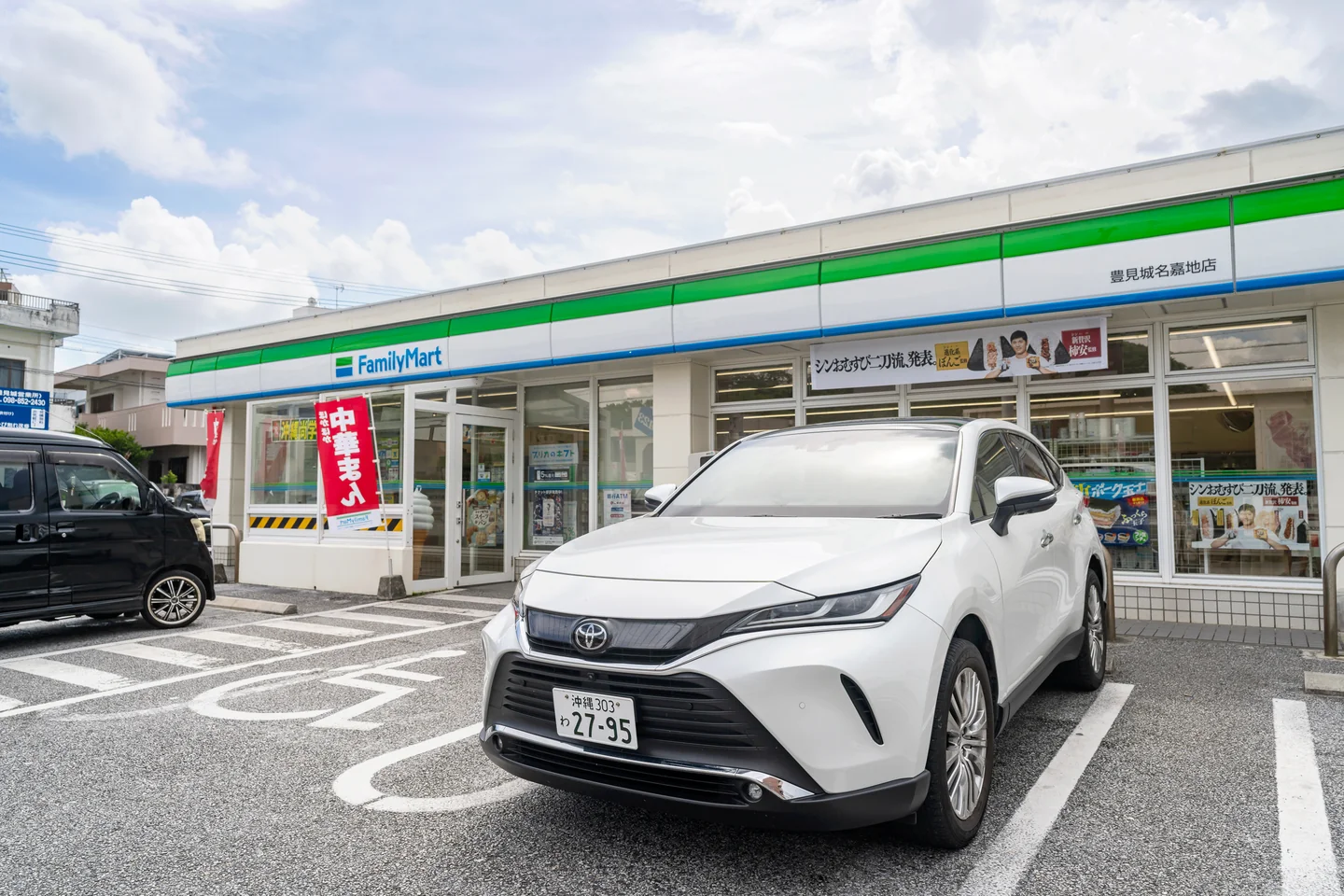
I’ll leave it there for now and be back tomorrow with more Okinawa travel information. Mata yasai
- The car I rented had two USB-C fast-charging ports in the front and two in the back. There were no USB-A ports, so bring a cable that connects to USB-C.
- If the company can’t come to pick you up, take a taxi to the office. Hand in your taxi receipt there, and they’ll reimburse you in cash.
- Yes, they can pick up one driver at Akamine Station too. You collect the car at the office and then meet up with the rest of your group.
- The staff member was Japanese but carried a dedicated translation device. We communicated through KakaoTalk, so it was no trouble.
- The seat I borrowed for photos attached to the anchors behind the car seat. It was a bit of a hassle to install, so ask the staff to fit it when you pick up the car.
- The car I received had a memory card in the dashcam. There was no need to put in my own.
- If there’s room for one more staff member, you head to the airport in the rental car without unloading your luggage. If there isn’t a spare seat, you transfer to a larger vehicle.