Noodles and tonkatsu
Hello, this is CULT.
Today I’d like to talk a bit about a place called Guksurang Donggaseurang, which I stopped by briefly after going to check the cherry blossom bloom status at the end of last March before the Jinhae Naval Port Festival. The reason I’m posting this so late is… I’ve been developing various plugins and AI features to make writing more convenient, and now that they’re almost finished I wanted to try a test post.
You might think I’ve forgotten everything since the photos were taken a long time ago, but that’s not a problem because I already wrote a post on Naver Blog in the past. You can also check the original post on [Naver Blog].
Where to find noodles and tonkatsu
Guksurang Donggaseurang is located near the cherry blossom path by Gyeonghwa Station. It’s an easy walk, a nice place to pop into after enjoying the cherry blossoms. Because it’s a busy season during the cherry blossom festival, they reportedly don’t close at all during the festival. [Naver Map] — you can check it there if you need 😀
They’re closed every Sunday. Opening hours are daily from 11:00 AM, last order at 7:30 PM, and break time is between 4:00 and 5:00 PM. You’re probably reading this because you’re searching for the 2027 cherry blossom festival, right?
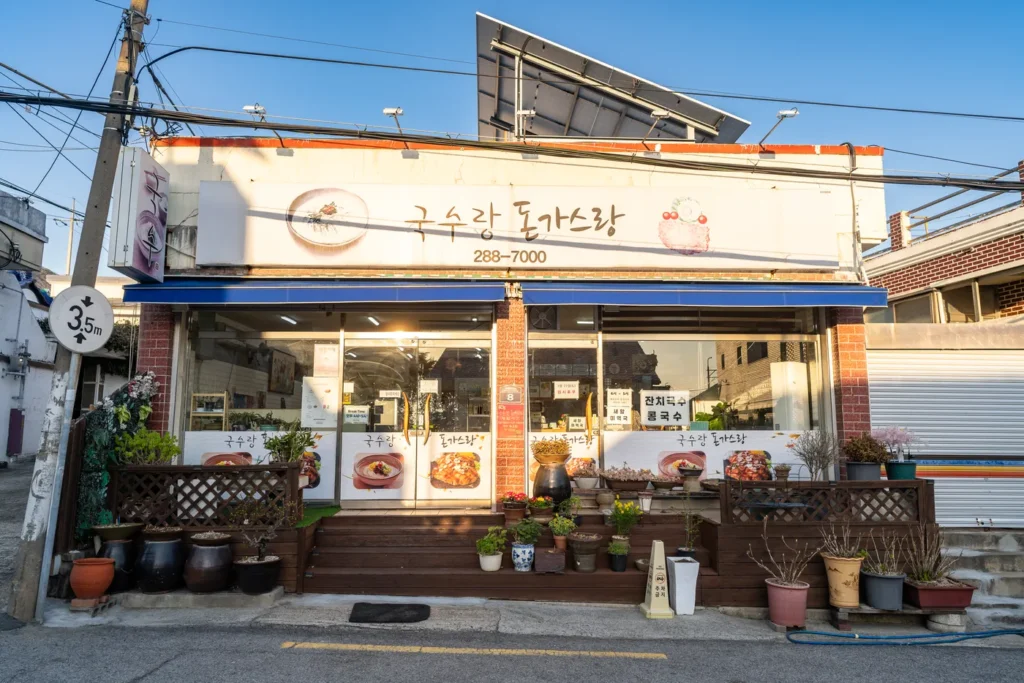
This is the storefront. It feels like a typical shop in a provincial Korean town, and since about 80% of readers of this blog are foreigners rather than Koreans, I’ll add this note. Some of you might think I chose an odd title for the post, but the business name really is Guksurang Donkaseurang. It should be written as donkatsu, but older Koreans spell foreign words a little differently than the current generation.
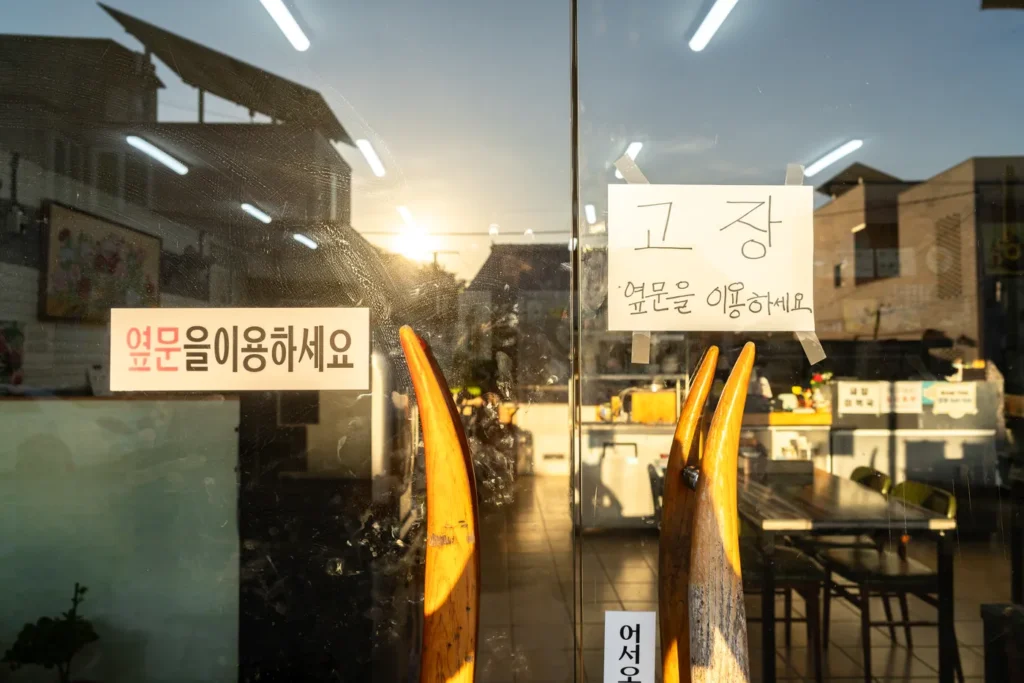
On my first visit this was really amusing. The left door had a sign that said “Please use the side door.” The right door had a sign that said “Out of order — please use the side door,” so I paused for a moment wondering which door I should use. It felt like when I was a kid and mixed up “Push” and “Pull.”
The correct answer is to use the left door. I used this as a quiz for a Japanese friend who was studying Korean.
I would show the next photo and ask, “Which door should you use?” That kind of question.
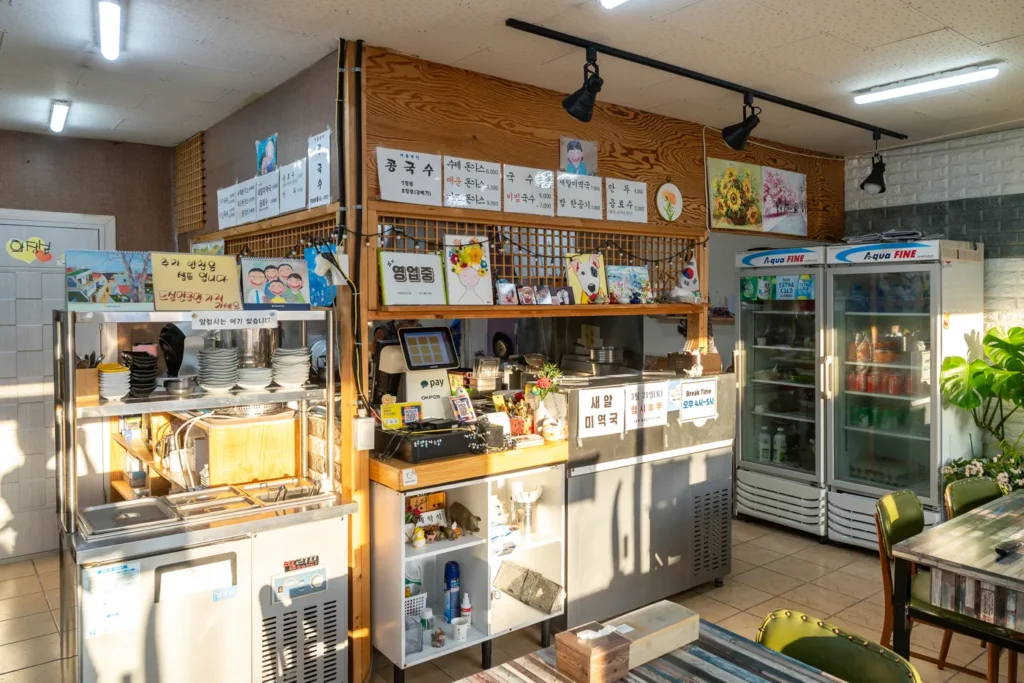
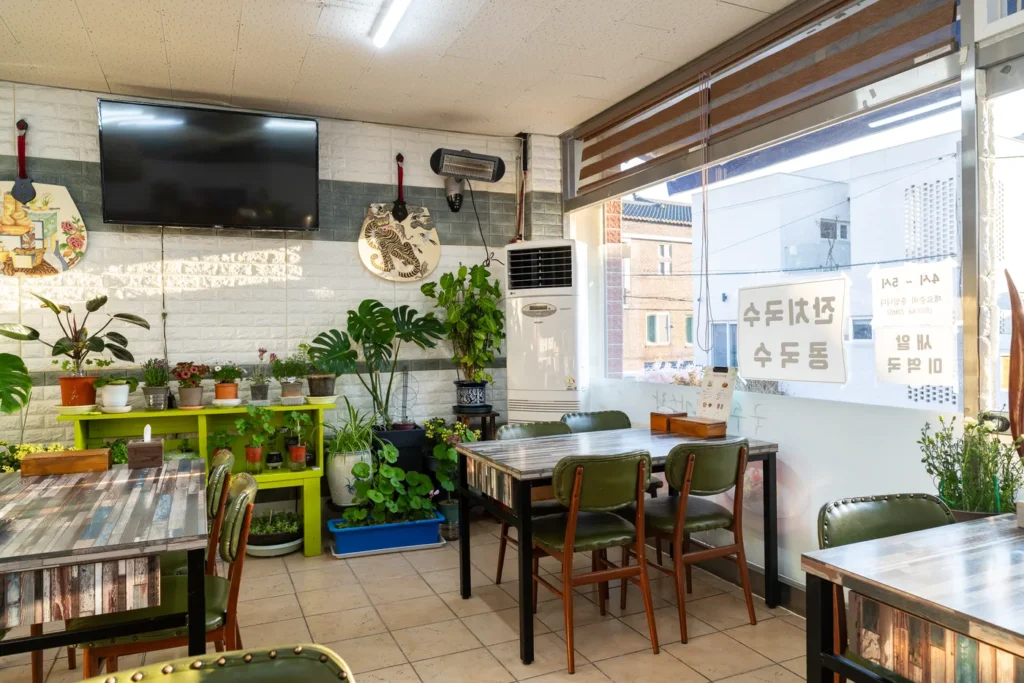
Here’s the inside of the restaurant.
It’s a familiar sight for Koreans, but quite unfamiliar to Europeans. Some things are almost the opposite of what you’d find in the West, and it feels like a scene you might have seen in a Netflix drama.
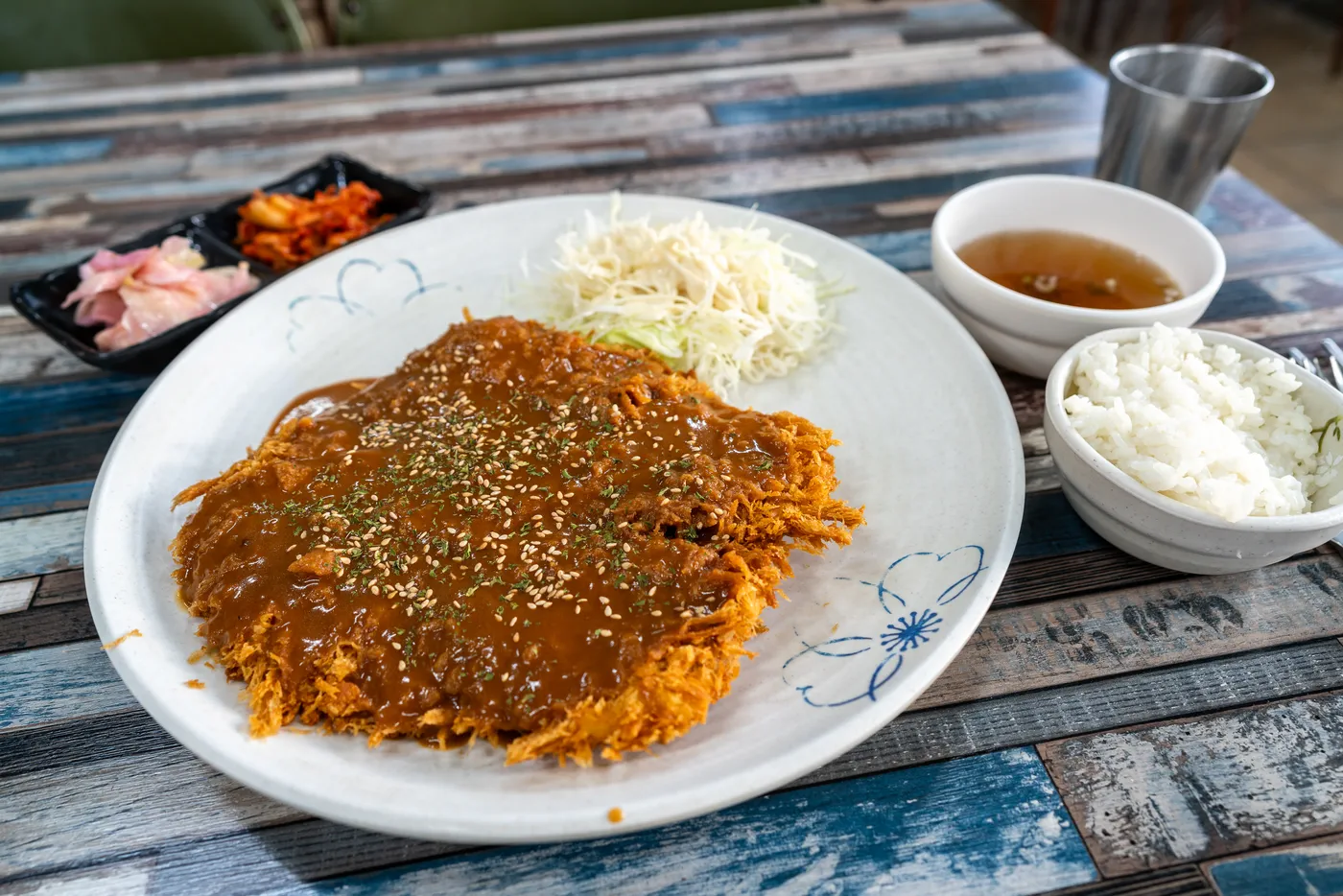
Handmade Tonkatsu
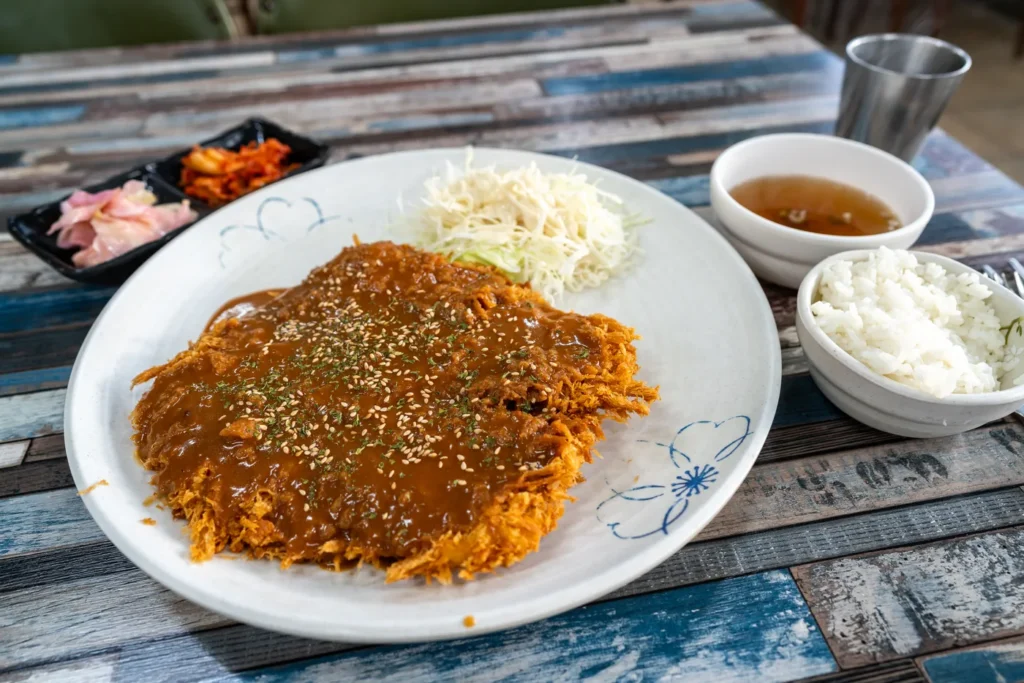
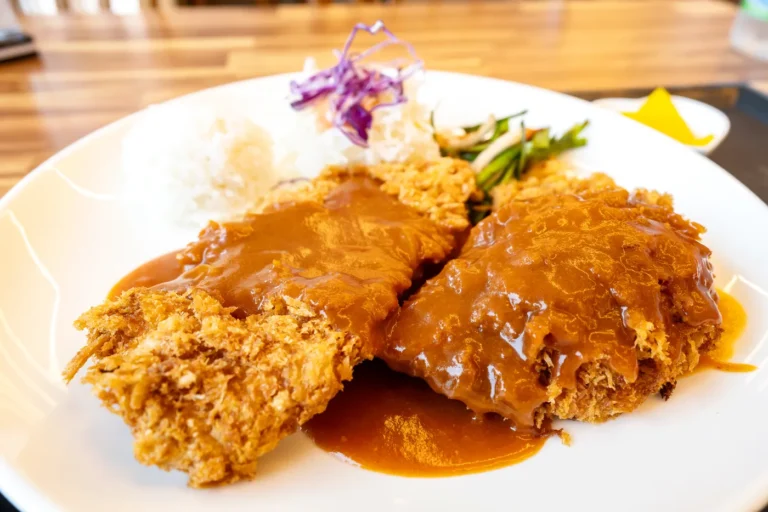
This is a handmade donkatsu. If you describe it to Japanese people as Korean-style tonkatsu they usually understand right away; to Western Europeans, calling it a Korean-style cutlet works, and to Eastern Europeans, describing it as a thick Korean-style schnitzel is probably the best way to explain it.
When I lived in Europe I either made it for my European friends or we ate it together at Korean restaurants, and everyone liked it. If you’re traveling to Korea, be sure to try it at least once.
For those of you from Korea reading this, the selling point is that it’s 8,000 won.
When I first came here I thought, “Handmade donkatsu for 8,000 won? No way.” But the texture is definitely that of a handmade donkatsu.
The price is really cheap and the flavor is good, so I liked it. These days the cheapest kebab in Europe is about €6, but does a kebab really fill you up? This costs around €5.50 and it does fill you up.
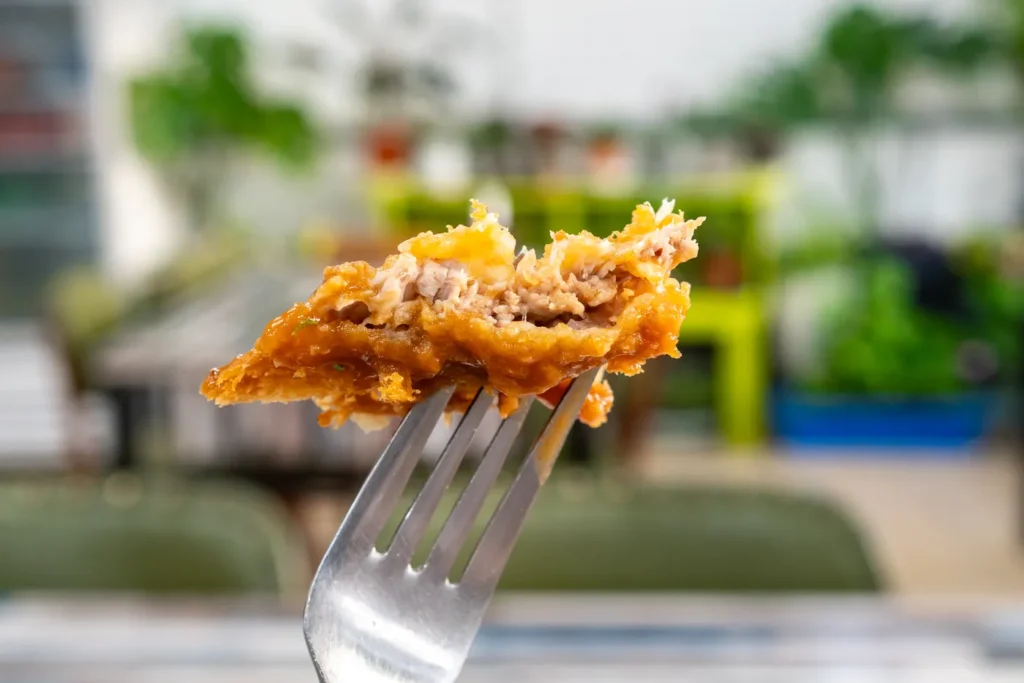
The meat is thinner than Japanese tonkatsu, but thicker than Portuguese cutlets or Austrian schnitzel. One difference from Japan is that Japanese tonkatsu is served already sliced, while Korean pork cutlets are not cut up like cutlets or schnitzel. Also, they don’t serve lemon. Well… since the meat doesn’t have any off-odor, lemon isn’t really necessary. Because Koreans strongly dislike any unpleasant smell in meat, the cooking process already removes those odors.
Bibim-guksu
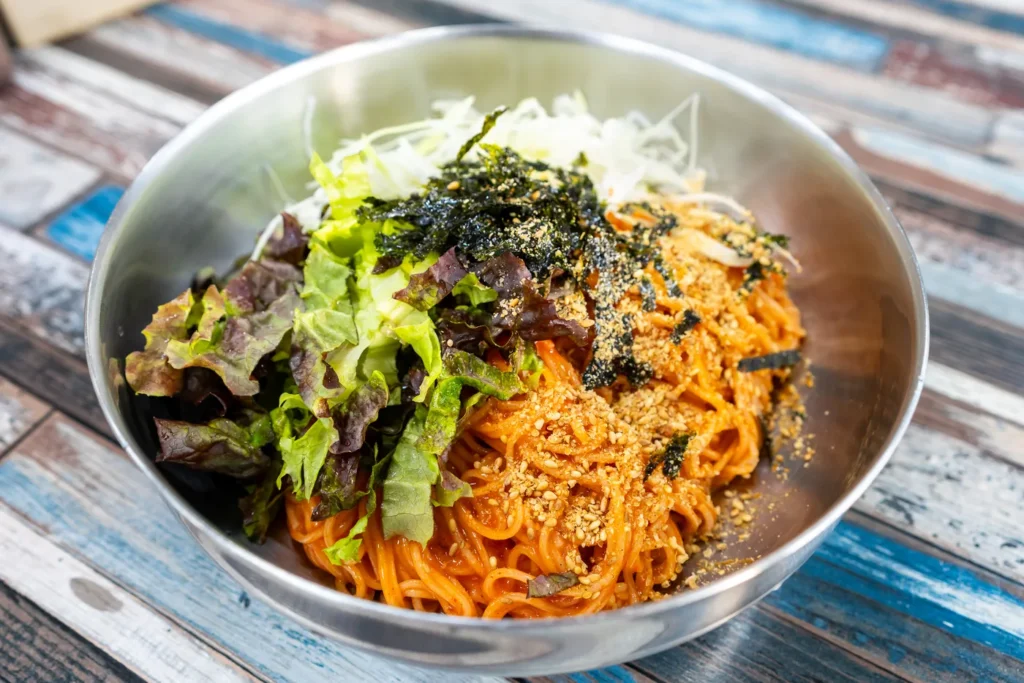
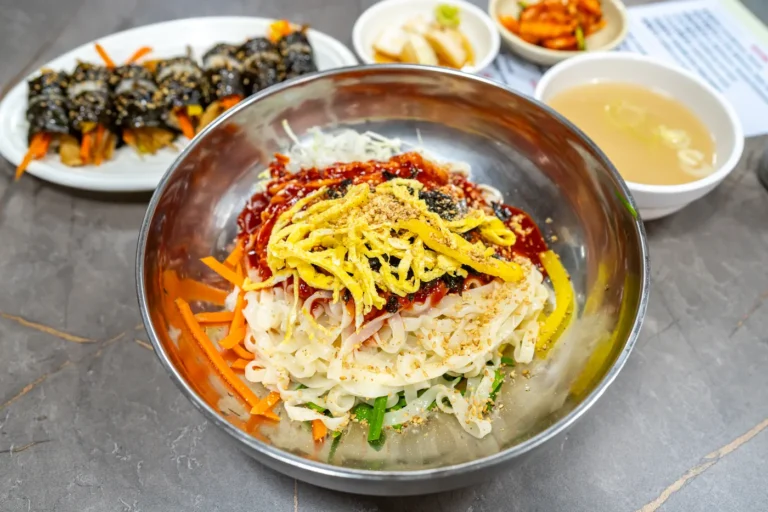
Next is bibim guksu (spicy mixed noodles).
I personally love noodle dishes, but most Japanese people find it too spicy to eat, so I recommend it to Westerners who are comfortable with something like Tabasco hot sauce.
It’s often hard to explain the concept of mixing noodles with a sauce to Westerners, but at noodle shops and tonkatsu restaurants the bibim guksu is already served with the noodles and sauce mixed together, so you don’t have to worry about that. For Koreans this bibim guksu is just an everyday meal, but for Japanese people or Westerners it can be too spicy to handle. The bibim guksu costs 6,000 won, roughly €4 or ¥650.
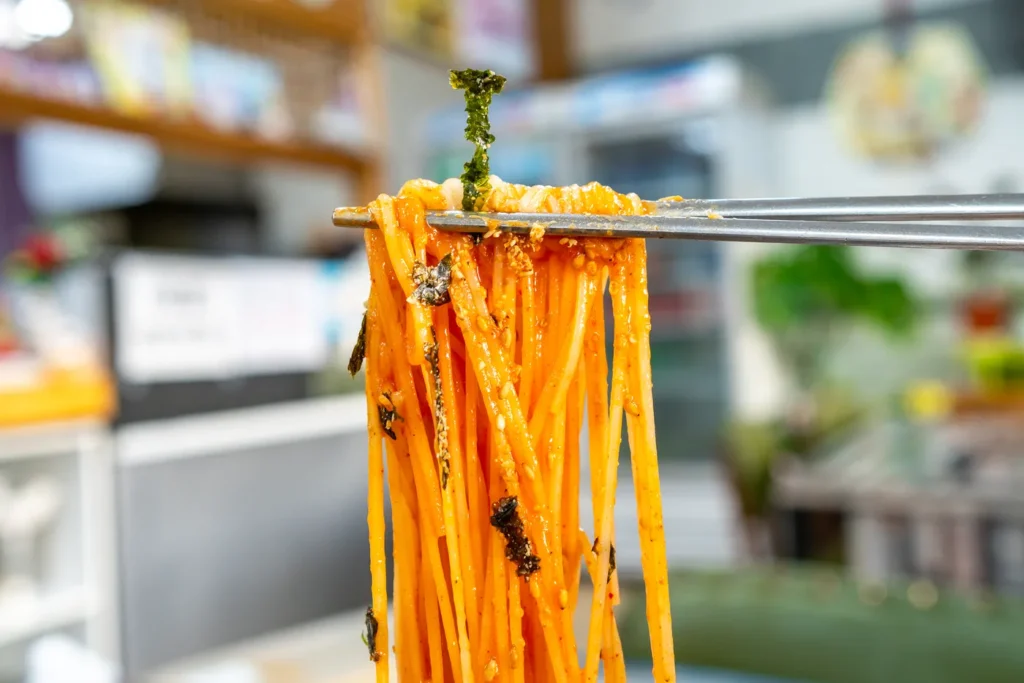
Usually in Korea, when you order bibim-guksu the sauce doesn’t come mixed in like this, so you should be a bit… careful when ordering at other places. I’ve lived abroad for 13 years, and even if I show my European friends how to toss the noodles, they just don’t get it. For them the sauce sits on top of the noodles and they eat it as it is.
A few days ago a friend came to visit me in Prague and we ordered pizza to share, and as a side we also ordered Bolognese pasta, you know? In Korea Bolognese pasta usually has the noodles laid on the bottom of the bowl with the sauce on top, right? You’re supposed to mix it yourself, but this friend, as expected… ate the sauce from the top and tried to eat the pasta noodles separately..
Somehow this has turned into a post comparing foreign culture and Korean culture 😀
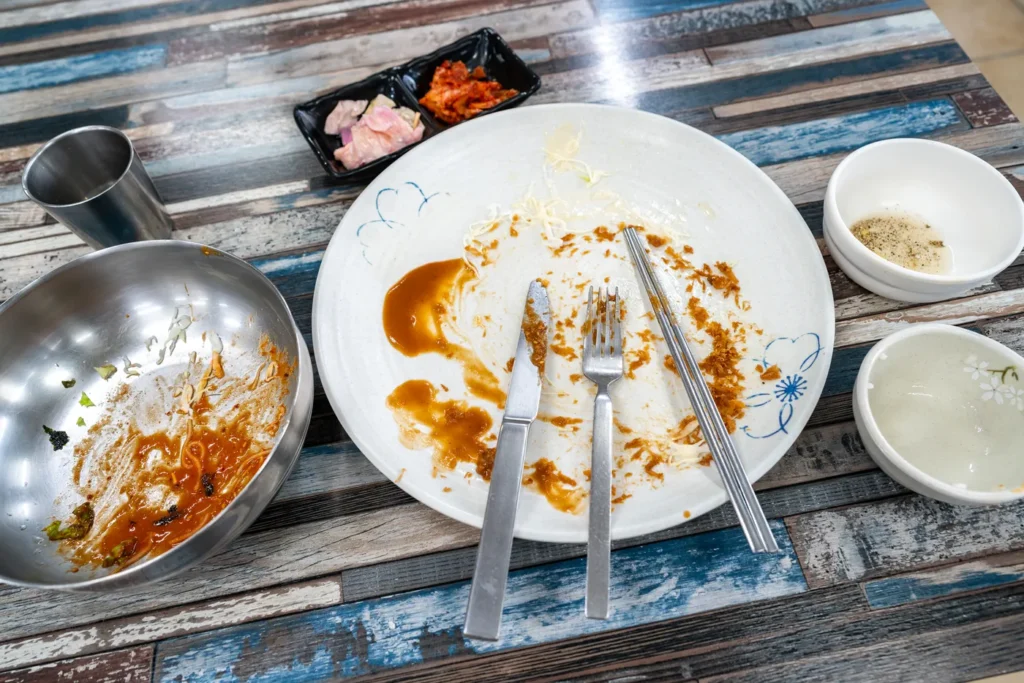
Anyway, it was delicious. Eating both dishes at once made me feel like my stomach would burst — I’m so full. For the record, the kimchi is made in-house at the restaurant; it’s not from China. I planned to finish the kimchi too, but when I’d eaten about half of the bibim-guksu and the donkatsu… could I really finish it all? It was tough, so I gave up on the kimchi.
Final thoughts
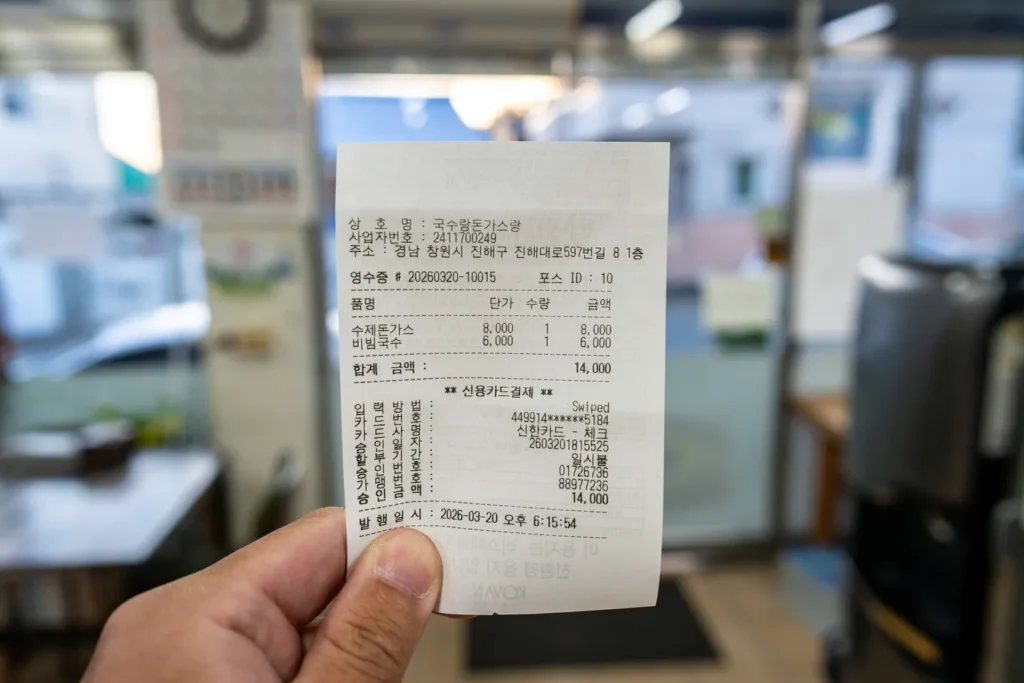
In Korea, I probably should attach receipts when I write posts like this, but since this blog wasn’t made for Koreans anyway… I’m not sure if I’ll keep doing it. Anyway, after a long time I was able to eat my fill for 14,000 won. I finished 13 years of living abroad and it’s now been three months back in Korea, and I think this might be the cheapest meal I’ve had in the Gyeongsangnam-do area.
Today I’m leaving this post to test various plugins. It still needs more development to be as convenient and fast for writing as Naver Smart Editor… but its performance and AI features are overwhelmingly better, so I want to keep improving it. The reason I’ve been laying low lately is that I’ve been spending all day every day building something.
I’ll be back soon with local travel info.