Tongyeong Chungmu Kalguksu
Hello, I’m CULT.
Today I’d like to talk a bit about Tongyeong Chungmu Kalguksu, which I personally like. I’ve added and applied several features to my blog, and since I’m kind of testing them, the writing style might be a little different than usual—please bear with me.
Also, one reason Tongyeong can be a bit awkward for family trips with kids is that there aren’t many restaurants kids would enjoy, but I’ve prepared a few kid-friendly places as well, so I’ll let you know as soon as the new feature testing is finished.
Location of Tongyeong Chungmu Kalguksu
The location of Tongyeong Chungmu Kalguksu is inside Jungang Market, right next to the Dongpirang Mural Village. [Naver Map] You can check it there. The restaurant is open daily from 10:30 AM to 8:00 PM, and I pass by almost every day — I’ve rarely seen it closed for public holidays.
It’s located inside the market and there are three public parking lots nearby. However, since it does attract some tourists, public parking can be limited on weekends and public holidays, so check in advance.
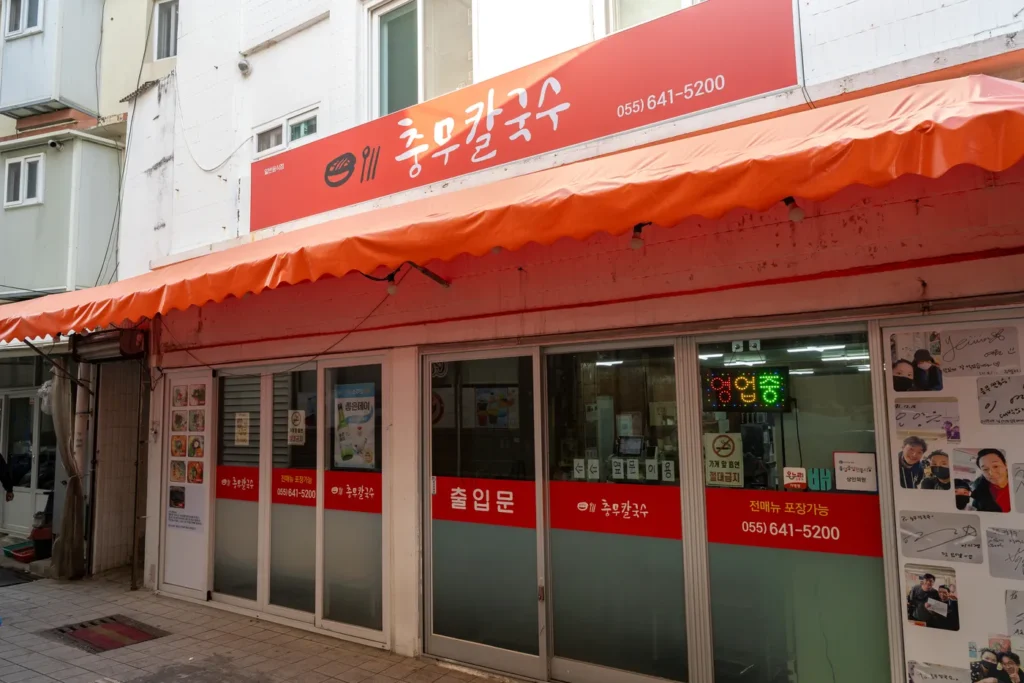
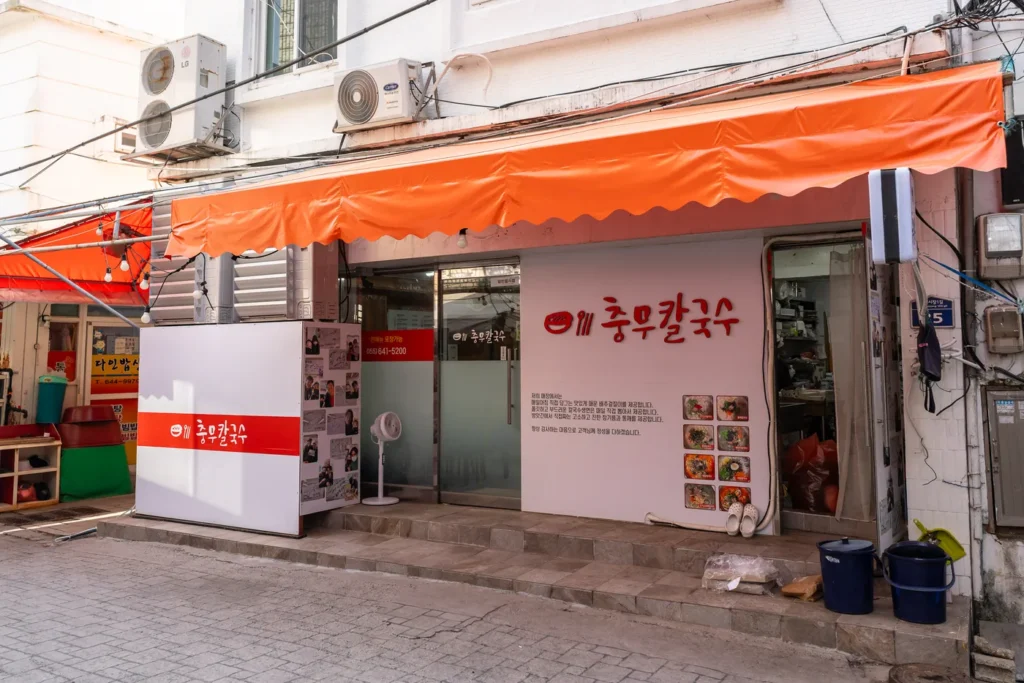
This is what the exterior of the Tongyeong Chungmu Kalguksu restaurant looks like. It’s not a large building, but because the entire first floor is used as the shop, you can enter through either the main or the rear entrance. If you’re using a wheelchair or a stroller and find the entrance step inconvenient, you can go around to the opposite side of the building to enter.
Gogigogi Kalguksu
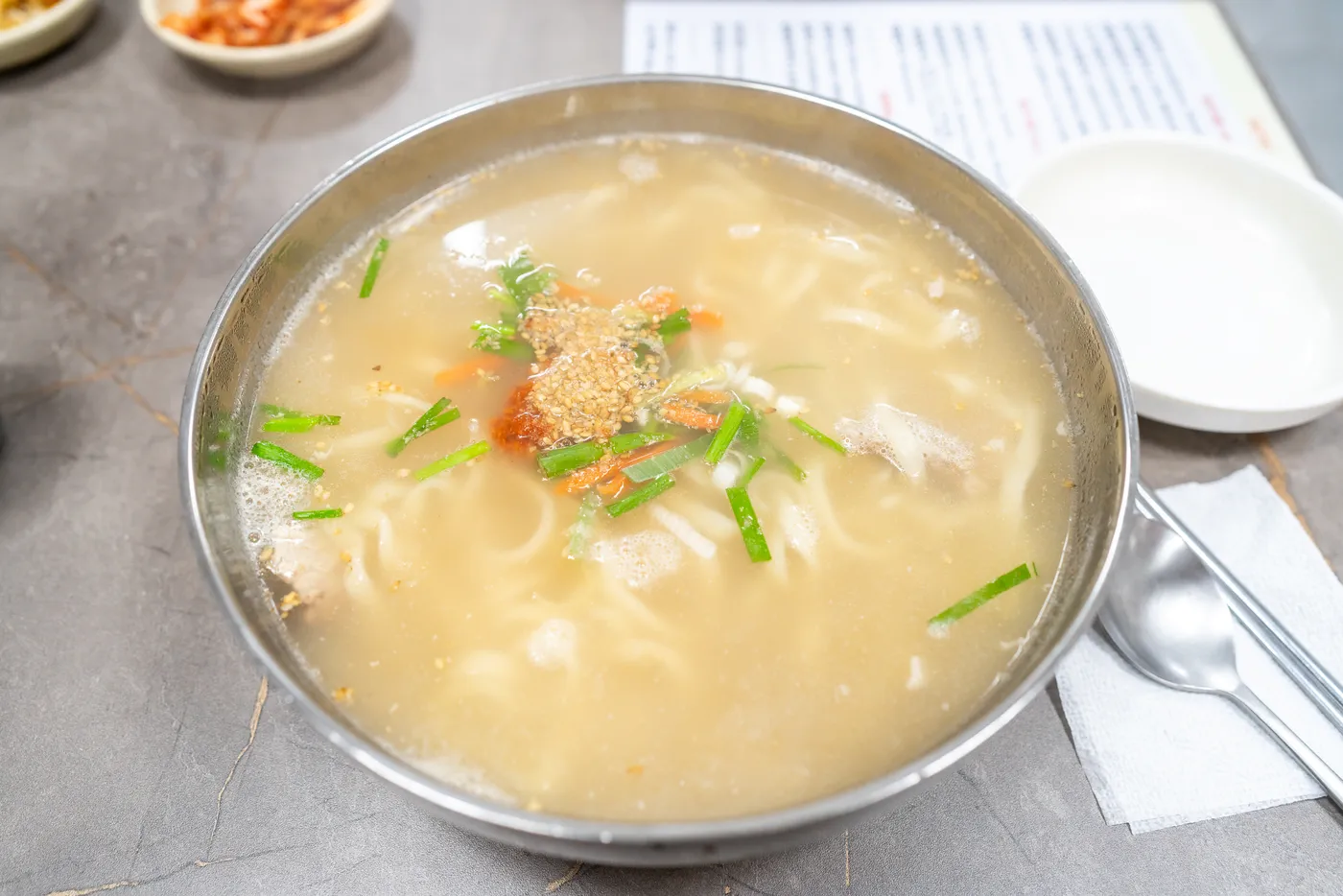
So let’s jump right into the menu.
First up is Gogi Gogi Kalguksu. It costs 9,000 won and is a tasty kalguksu — the meat has no off-putting smell and the portions are surprisingly generous. By the way, I’m allergic to oysters, so I can’t eat Tongyeong’s specialty, farmed oysters, and today I’m only introducing dishes that don’t contain oysters.
Accordingly, this Gogi Gogi Kalguksu also does not contain oysters.
The highlight is its mild, clean flavor, and this is a non-spicy kalguksu that Japanese people and Westerners can enjoy without any difficulty. Of course, kids could probably eat it easily, but I think the portion might be a bit large for very young children.
Bibim Kalguksu
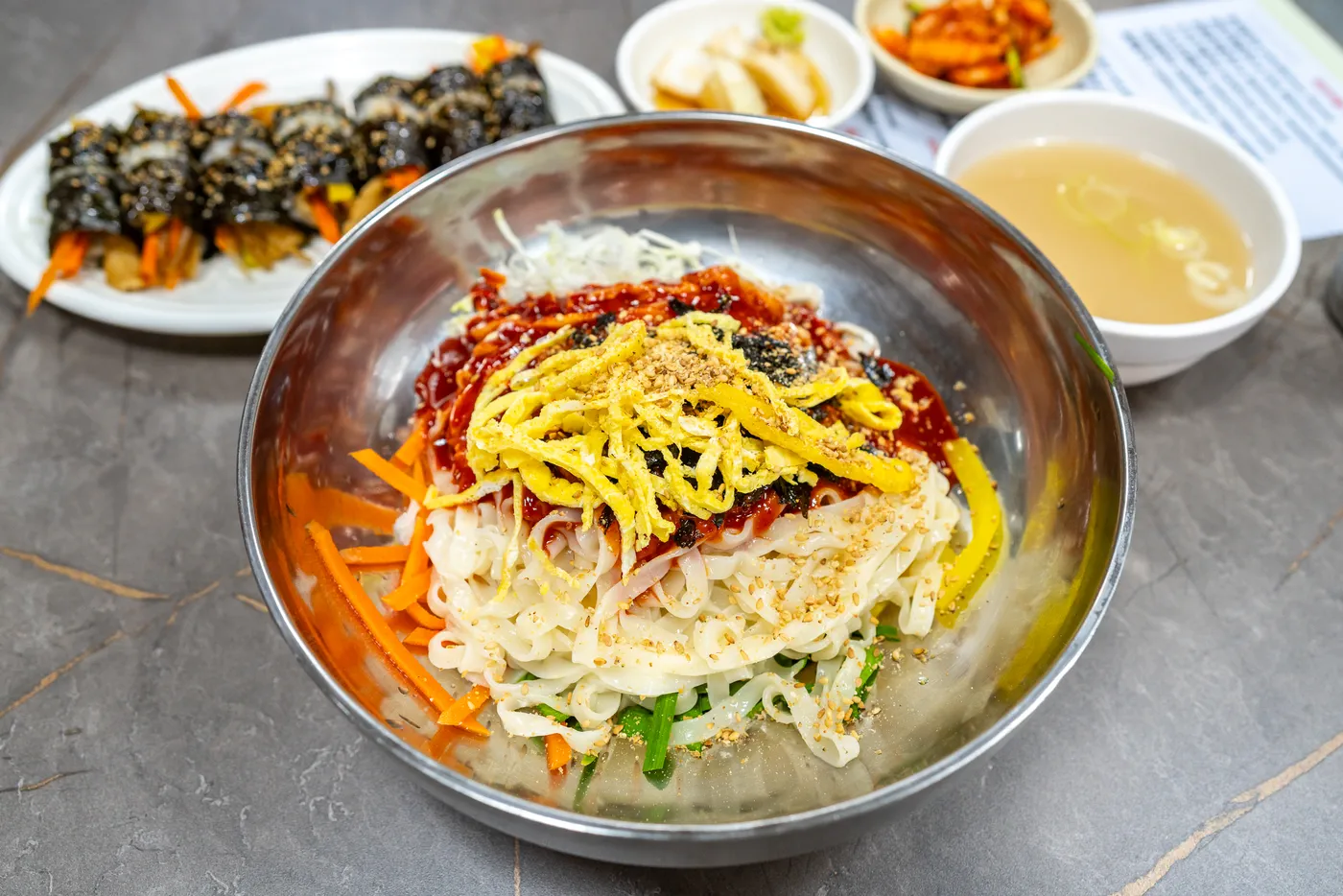
Next up is Bibim Kalguksu. The price is 8,000 won
It’s a kalguksu I personally like. Fair warning: this is quite spicy for Japanese people or Westerners. It’s a brothless kalguksu with a cool, refreshing taste, so it’s perfect for summer.
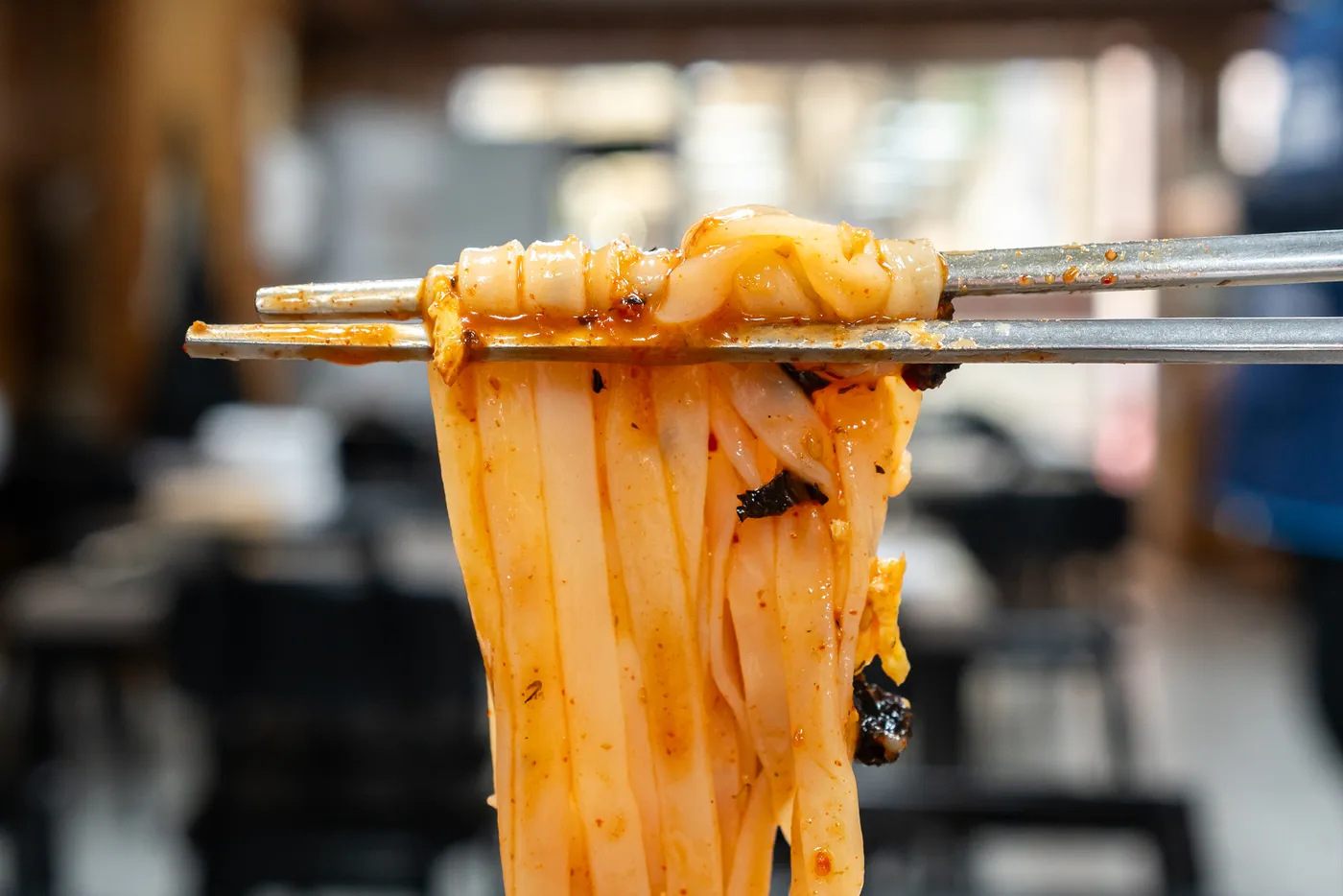
Koreans don’t think much of it, but when I show the photo to my Japanese friends they say it looks spicy even at first glance. On a Japanese spicy-ramen shop’s 1–5 heat scale, it’s about a level 3.
Also, this bibim kalguksu doesn’t contain oysters, so people with oyster allergies can eat it without worry.
Chungmu Kalguksu
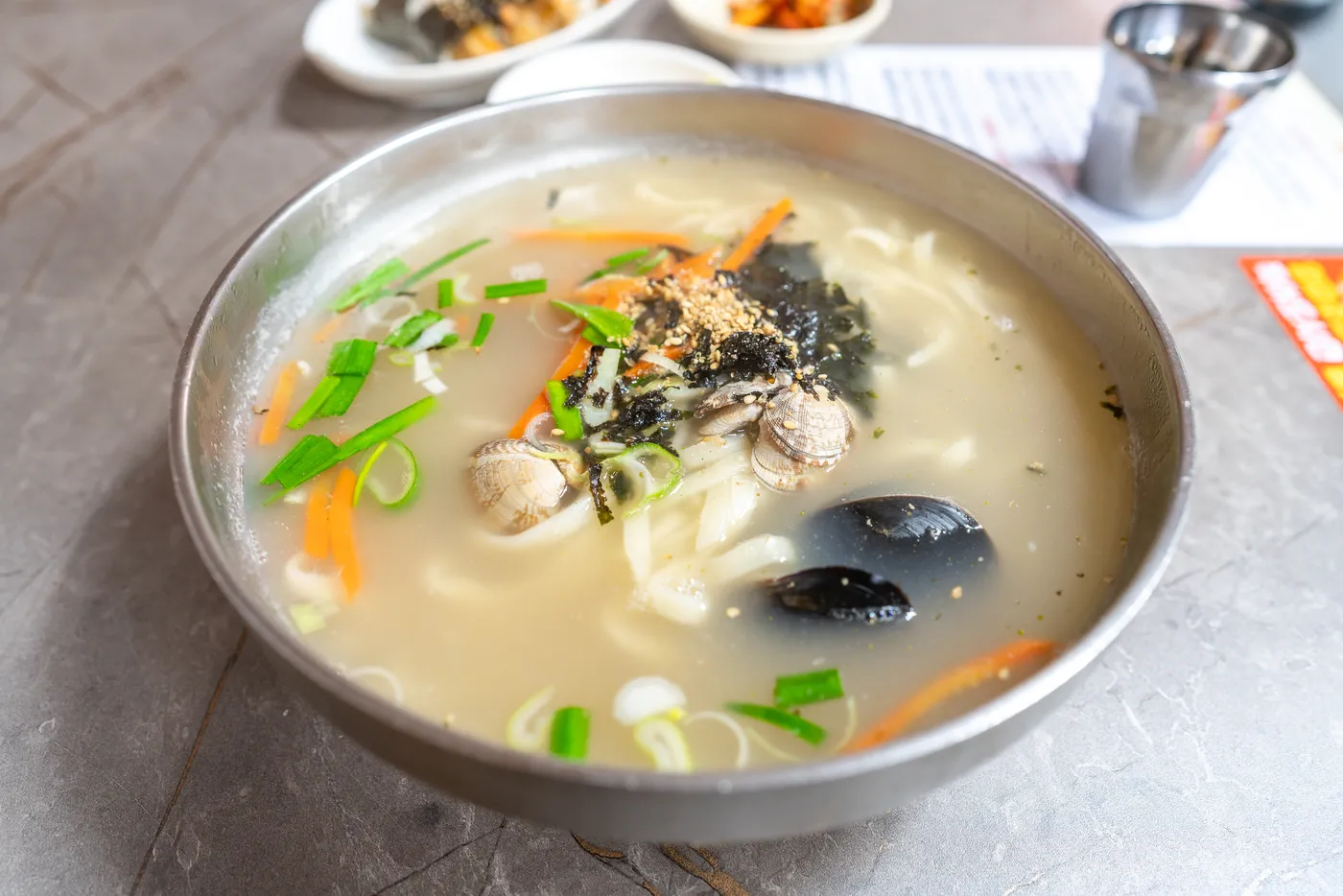
This is Tongyeong Chungmu Kalguksu’s signature dish, the Chungmu Kalguksu. The dish shares the restaurant’s name. Price: 7,000 won.
It contains seafood like clams and mussels, but it still doesn’t include oysters. So it’s the most basic, budget-friendly Kalguksu you can enjoy. Personally, I find picking clam and mussel shells tedious, so I prefer a meatier Kalguksu. You can enjoy a refreshing broth and a filling meal for the price.
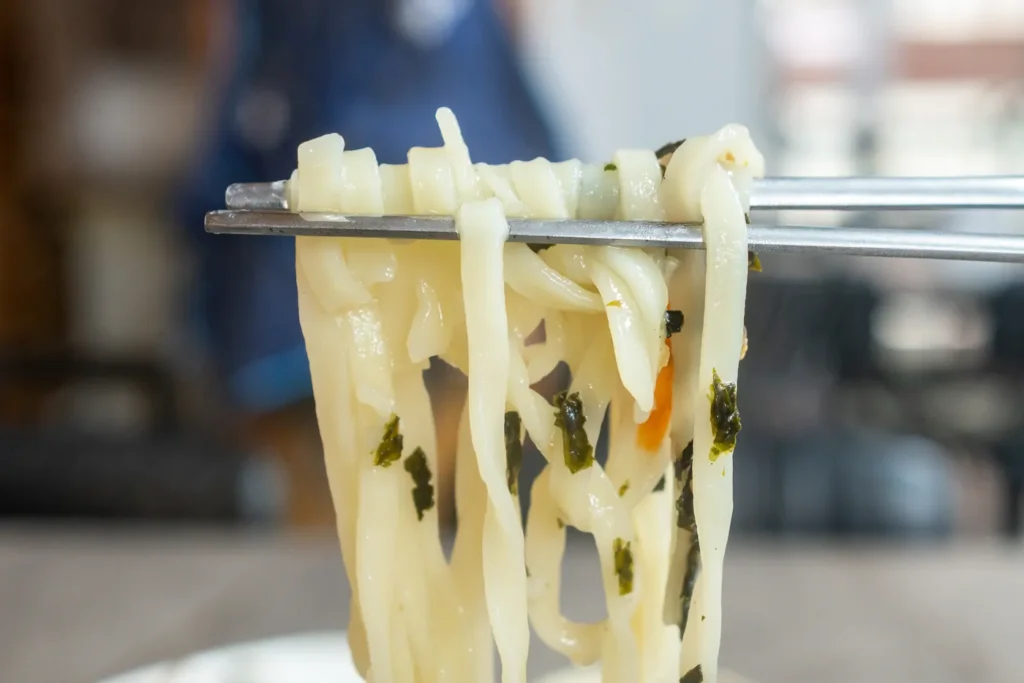
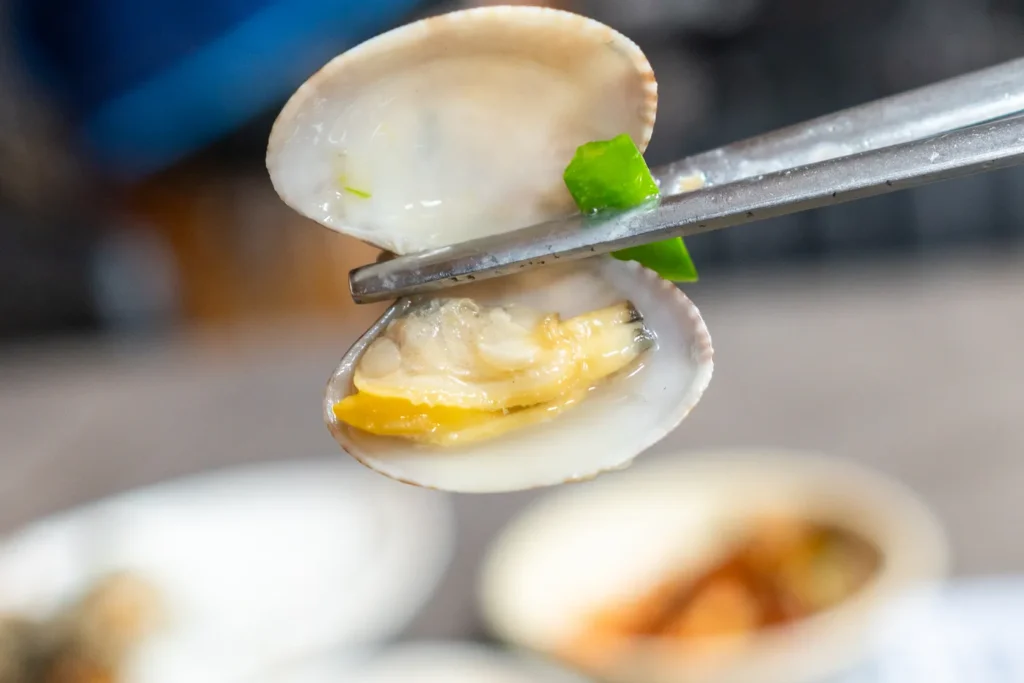
The difference from Gogigogi Kalguksu is that it has a very subtle spiciness. It’s so mild that Koreans wouldn’t notice, and since I’ve lived abroad for a long time and know at what point Japanese and Westerners start calling something spicy, a Japanese person who can’t eat any heat at all would say this is spicy.
In Korea, if you called this spicy… you’d be teased all over town.
Chungmu Gimbap (Mini Gimbap)
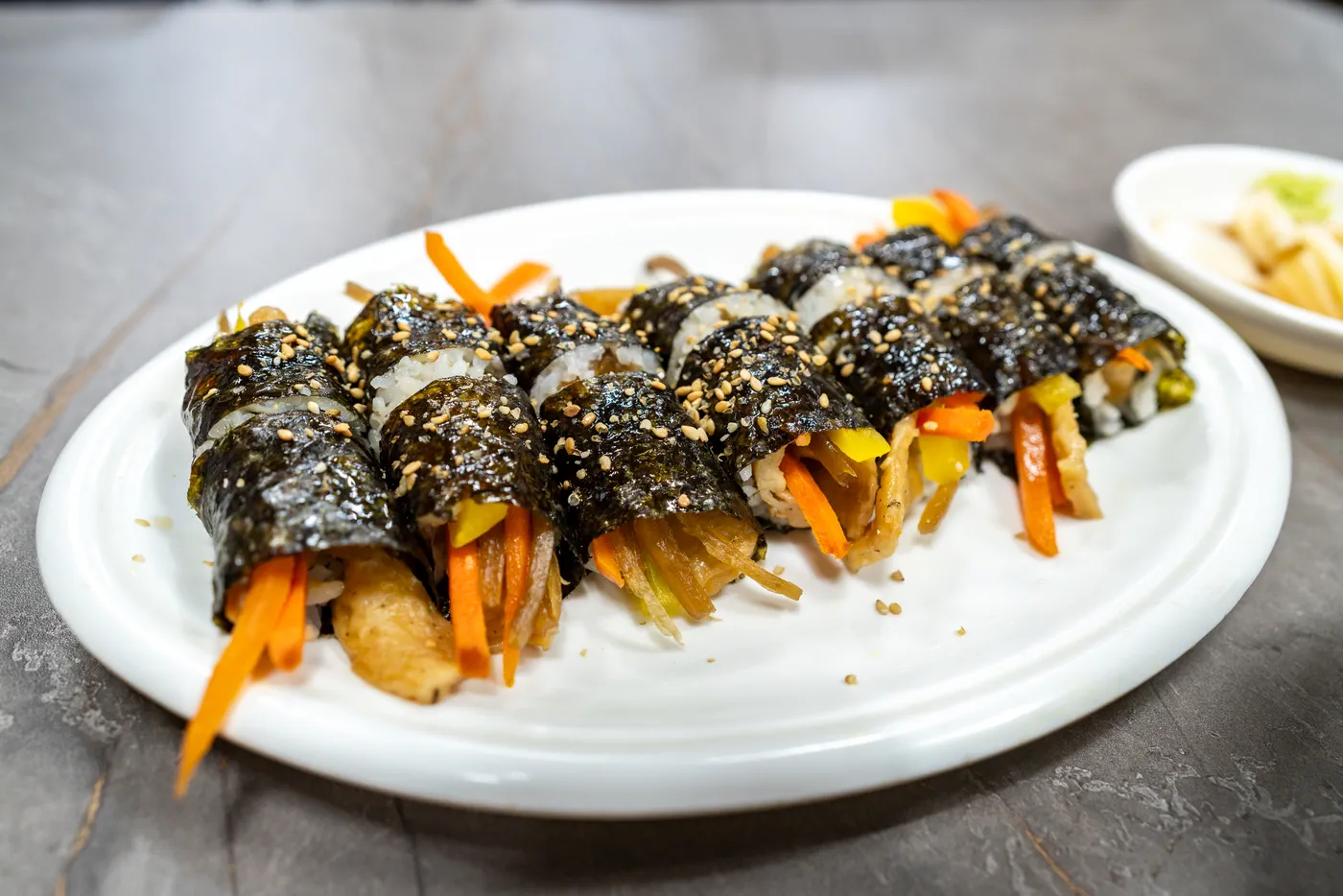
Next is Mini Gimbap. 5,000 won
In big cities like Seoul or Busan it’s known as Chungmu gimbap, but since I live in Tongyeong, everyone I meet always asks, “What’s good around here? What food would kids like?” I hear that all the time, and when I use the term Chungmu gimbap I often get the response, “What’s that?” So my conclusion is that the term Chungmu gimbap is for outsiders, and locally people tend to just say gimbap or mini gimbap more often.
It’s one of my personal favorites.
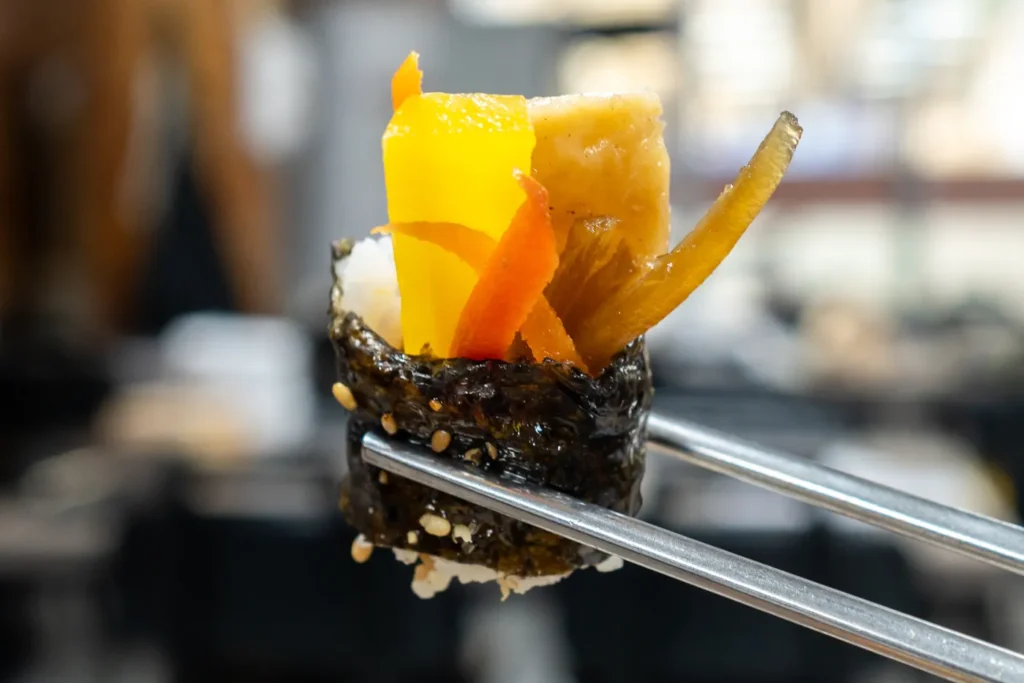
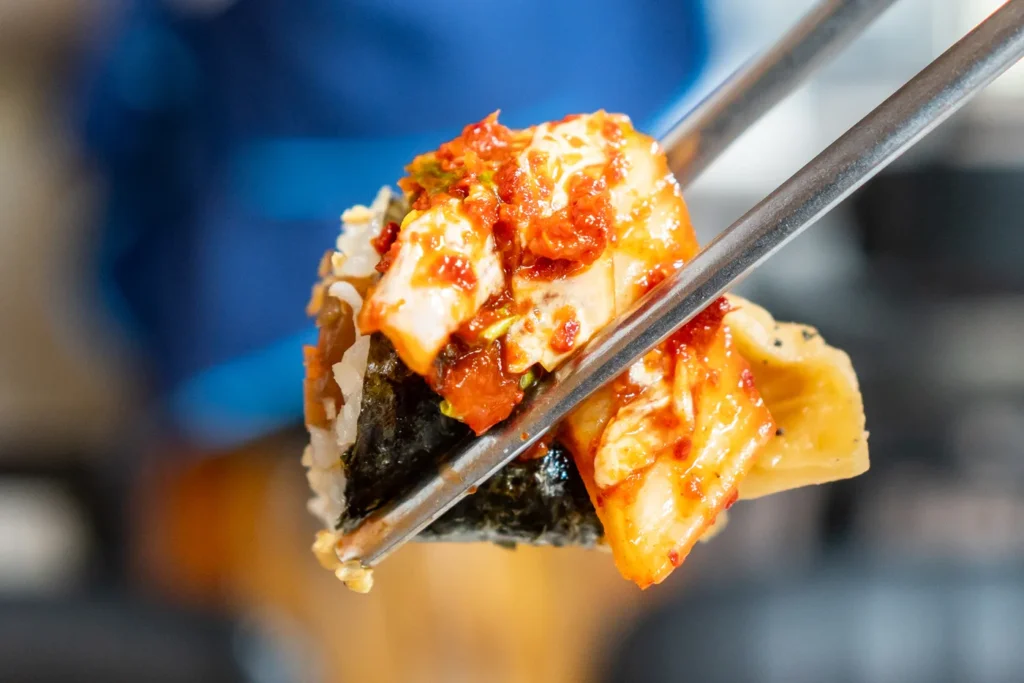
In Japan it’s called maki, and in Europe it’s called a roll — but rolls tend to be quite expensive in Europe, right? If you’re visiting from the West, enjoy them while you can. Prices here are much cheaper, and this is better than the rolls at most European sushi restaurants.
If you’re from Japan, think of it as a slightly special kind of gimbap.
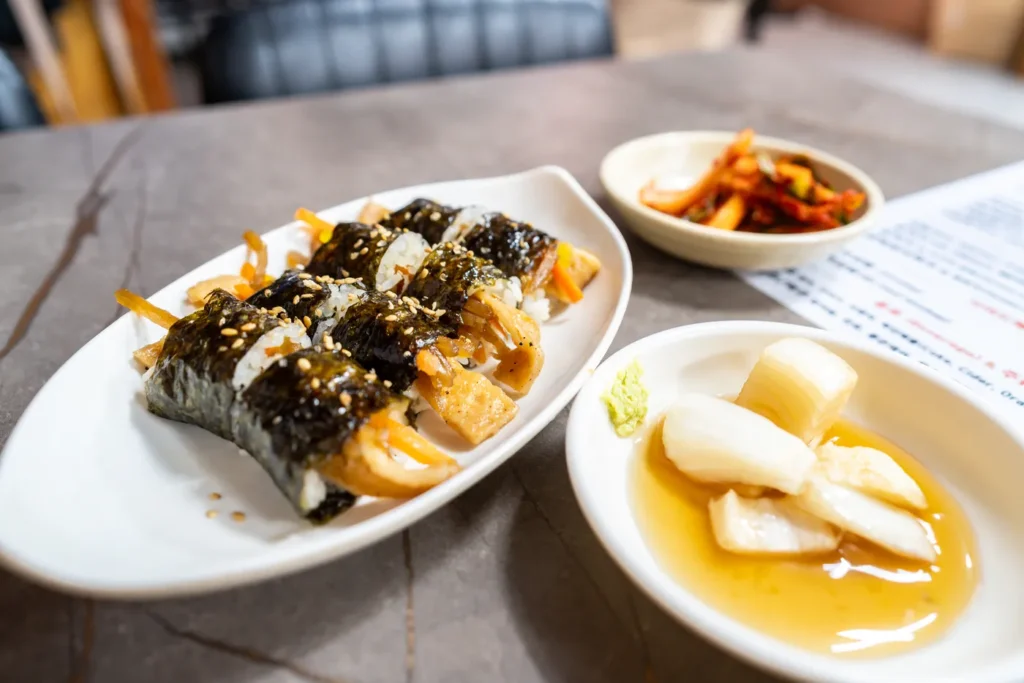
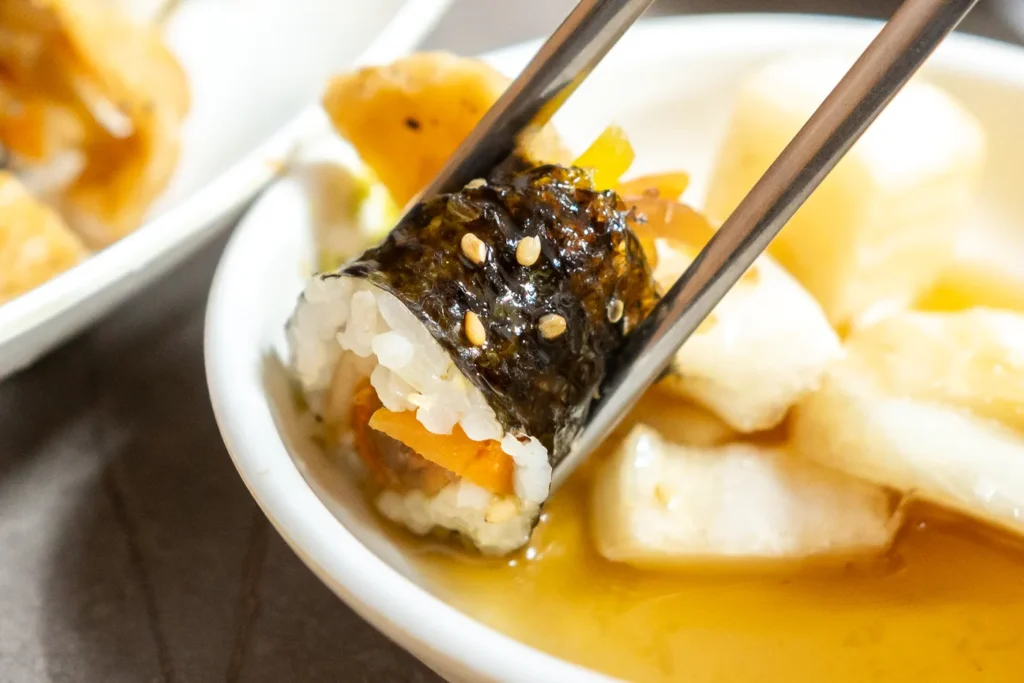
The dish comes with an onion sauce and geotjeori made that day. If you like spicy food, enjoy it with the kimchi; if you can’t handle spice, have it with the onion sauce. I eat the geotjeori with my kalguksu and enjoy the mini gimbap with the onion sauce.
Conclusion
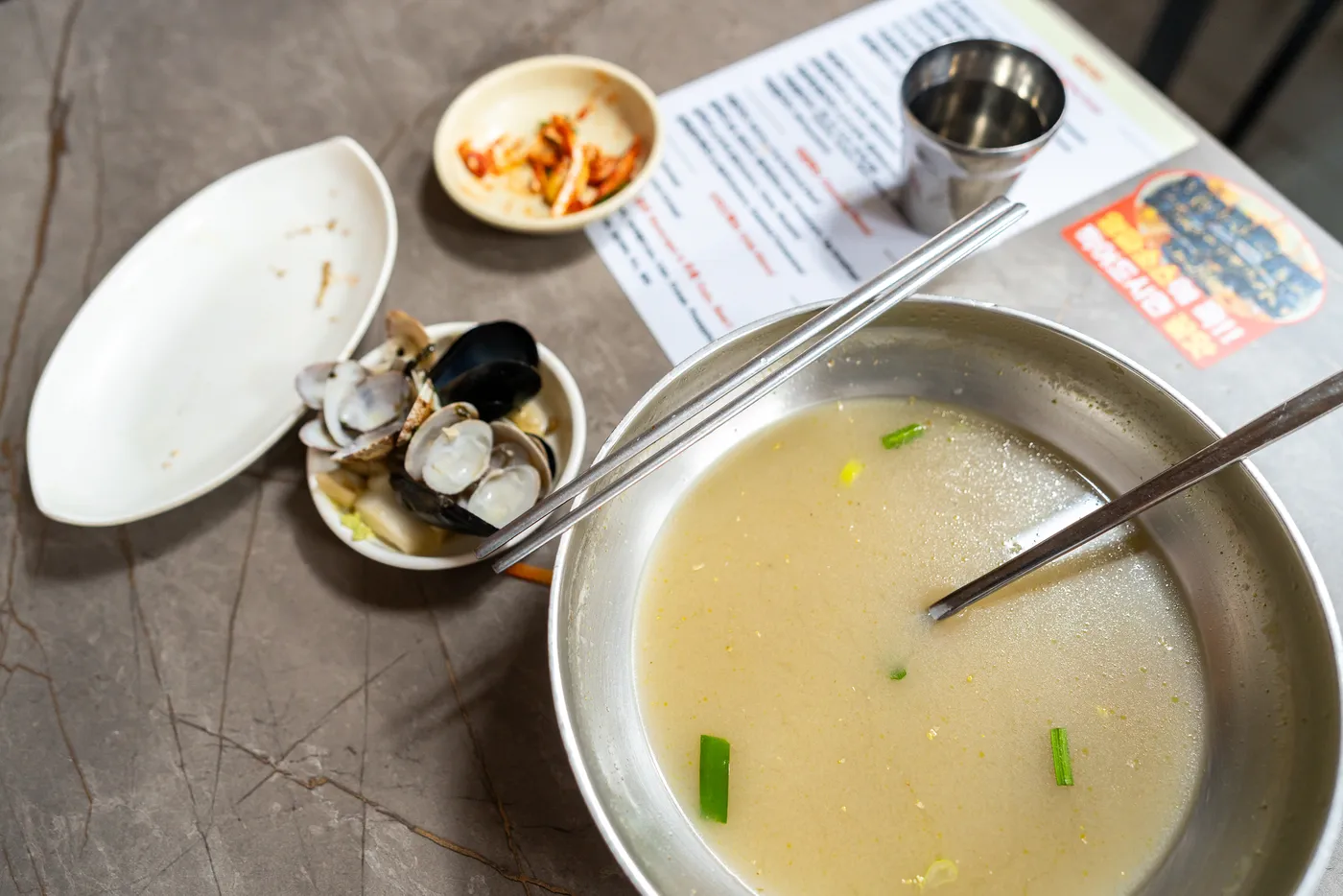
I often stop by the Tongyeong Chungmu Kalguksu restaurant as I pass by. There’s a banchan shop near the restaurant, and since I visit that shop often, I sometimes drop in to the restaurant while I’m there. Living in Tongyeong, what I’ve noticed is that there are many places where you can eat well and cheaply, which I really like. This restaurant is no exception.
On this blog, about 21% of visitors are Korean and the remaining 79% are foreigners, so I try to highlight places that foreigners would enjoy first — for that reason I think this restaurant is a good fit.
All in all, I recommend it to Koreans who like kalguksu, to families with kids who can’t eat spicy food, and of course to foreigners.
This post is experimenting with several features, so I’ll finish it soon and come back in a better form 😀