Delica D5: A Family Rental in Okinawa
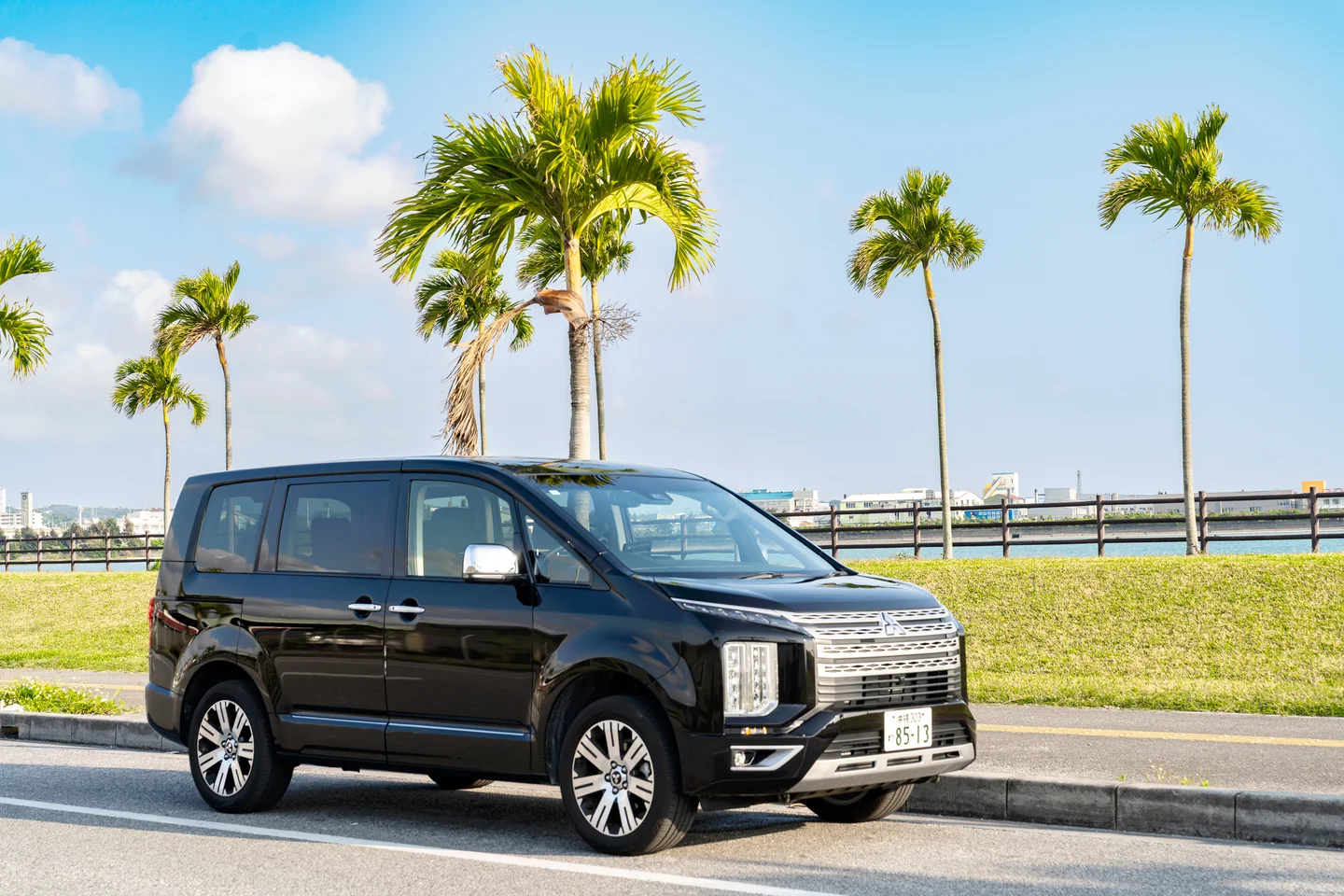
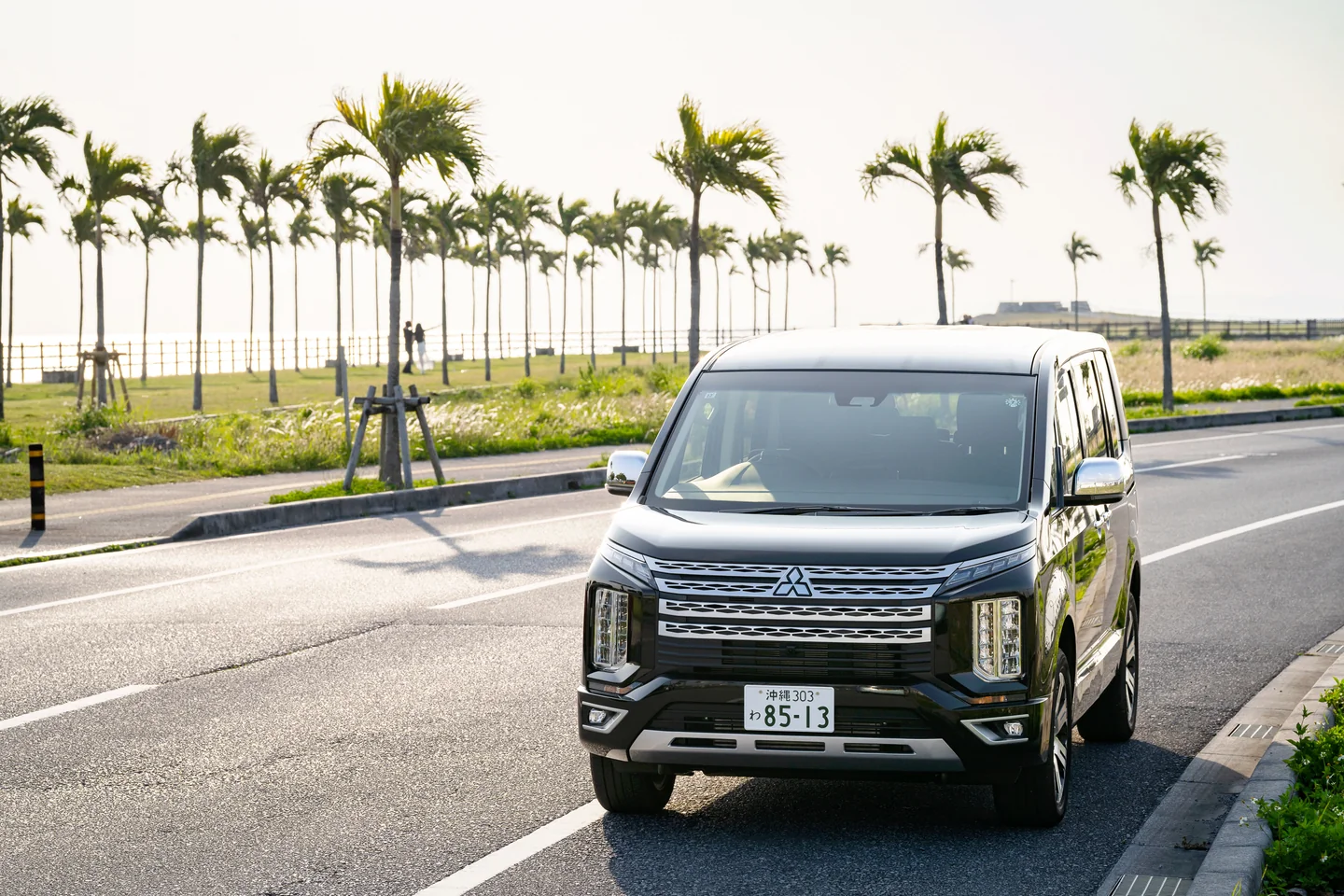
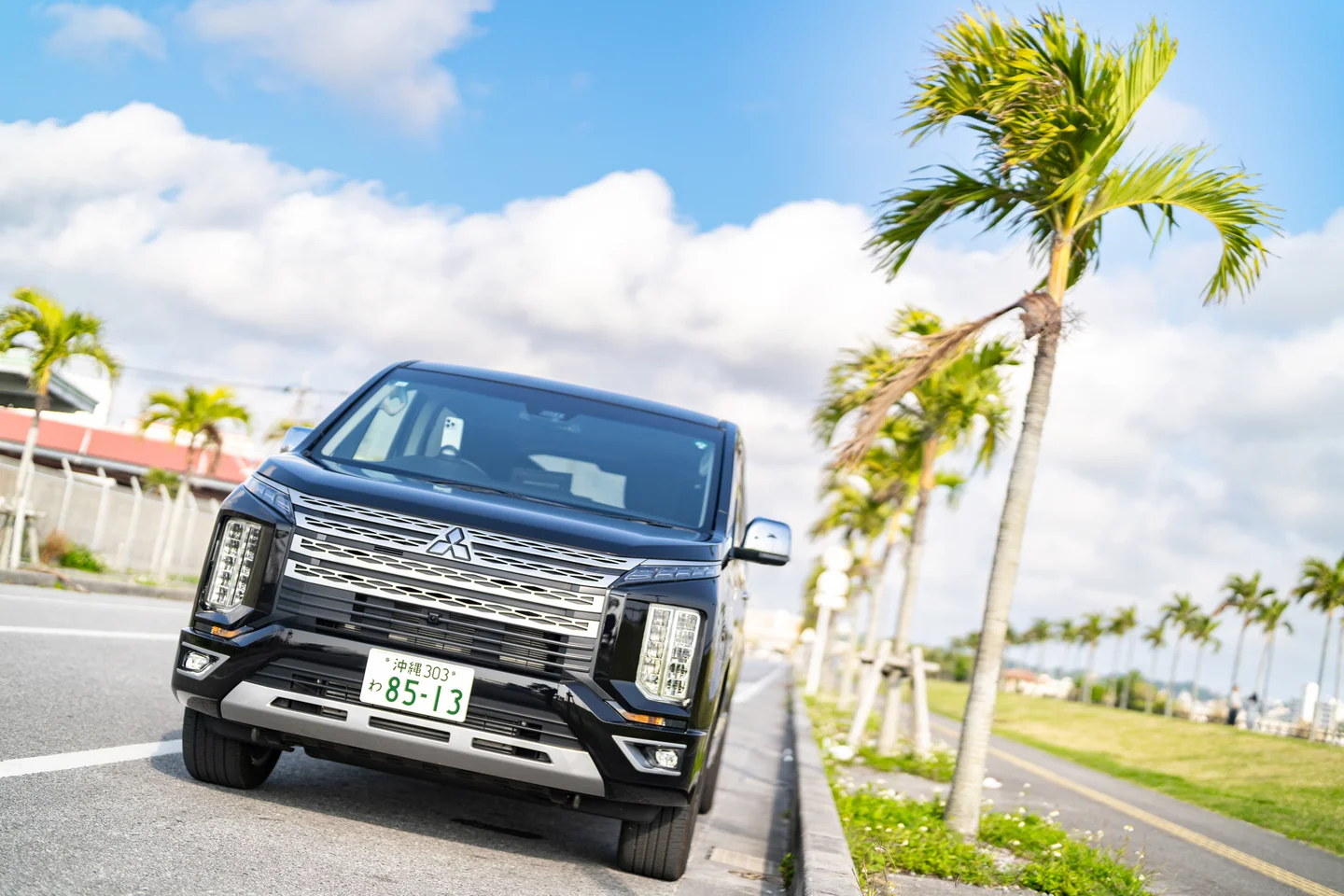
A rental car for family trips in Okinawa, on a palm-lined road
Haisai! I’m CULT.
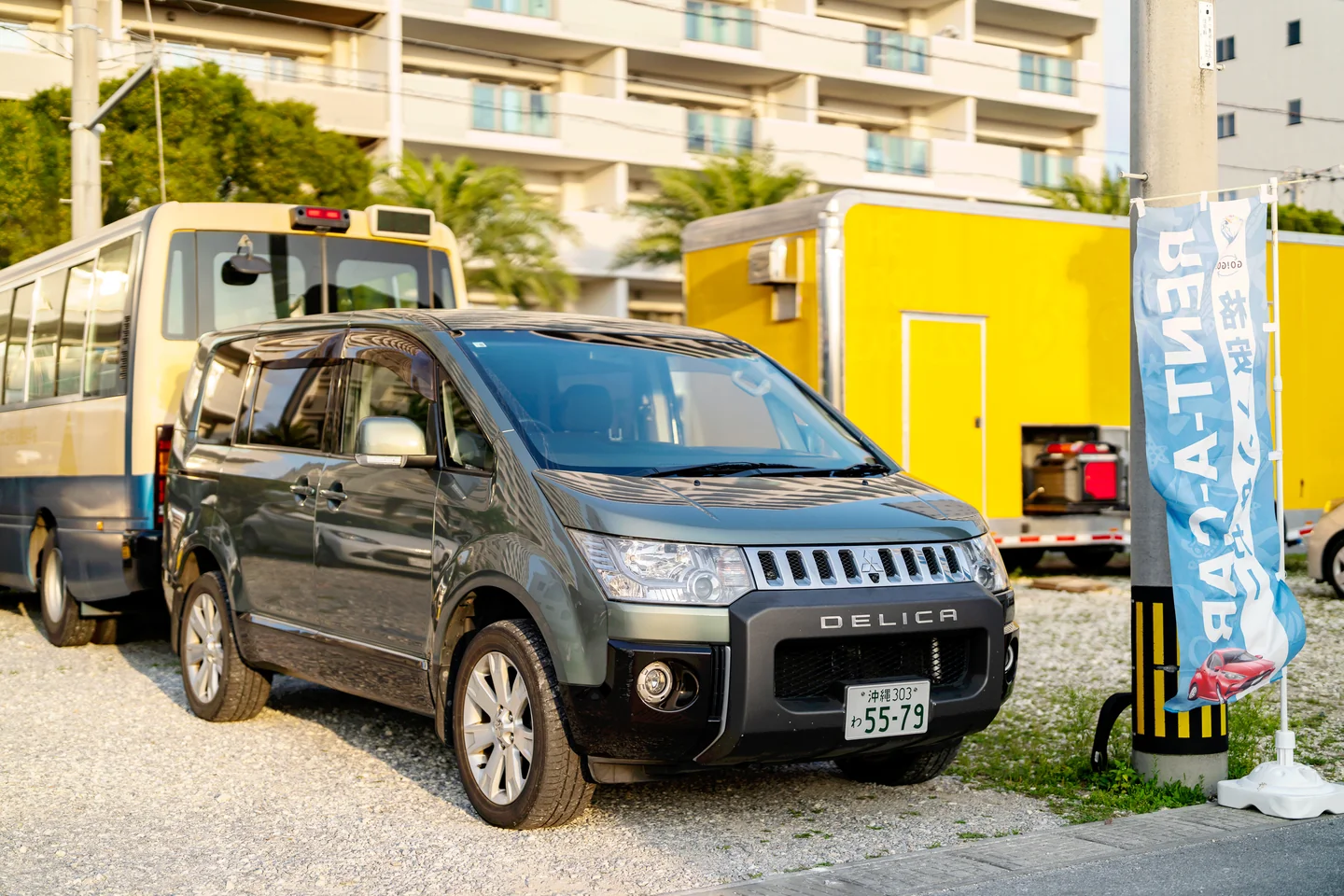
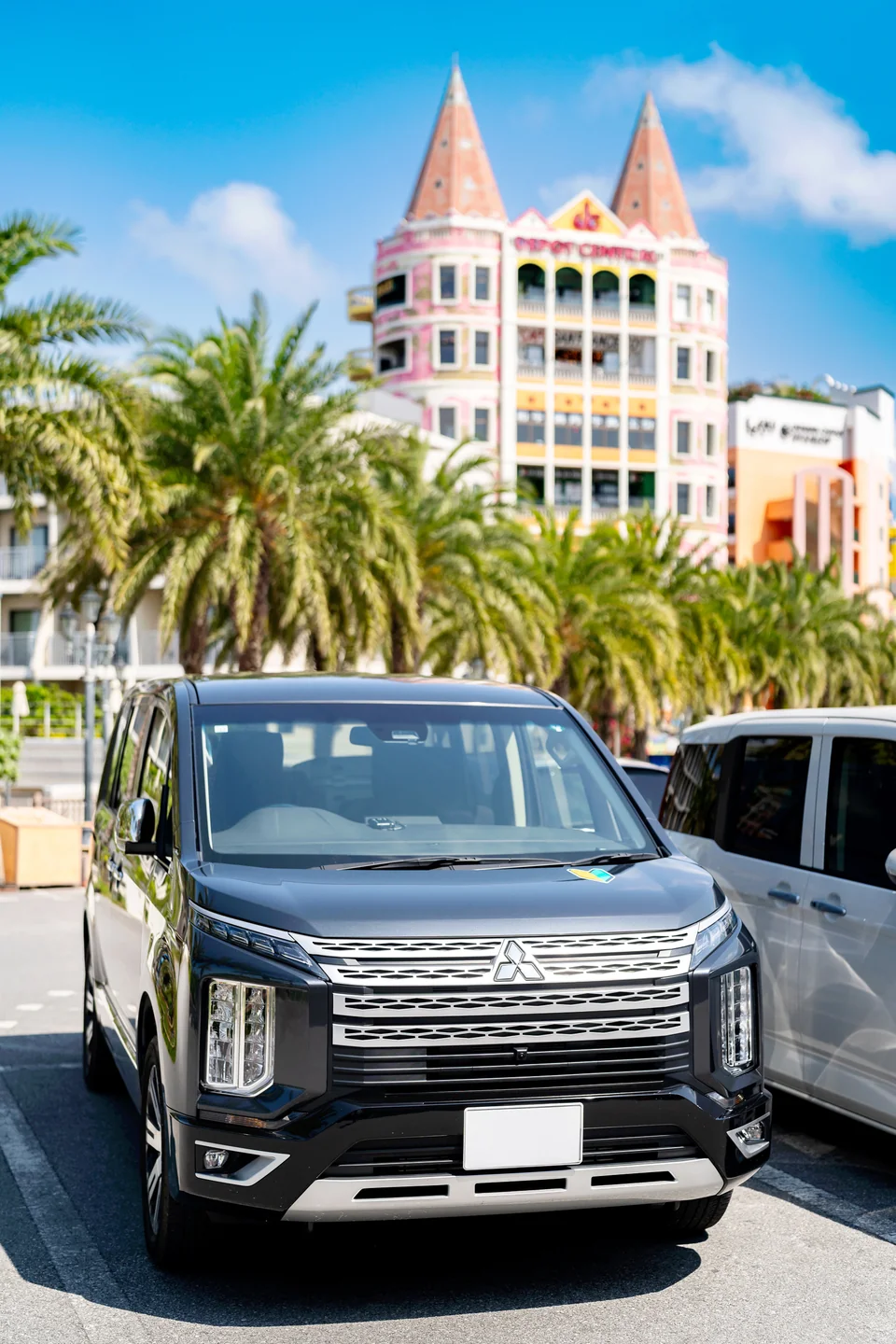
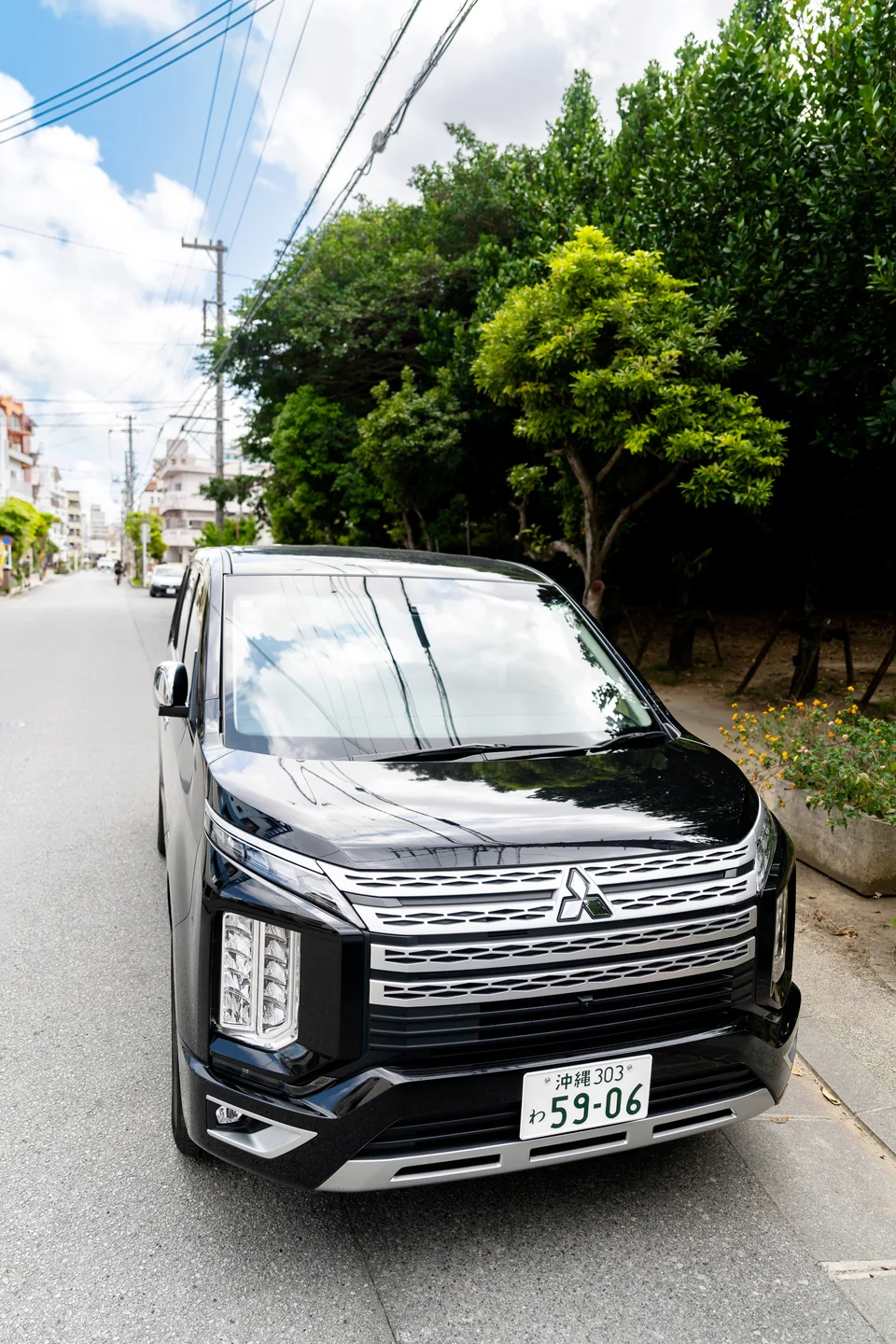
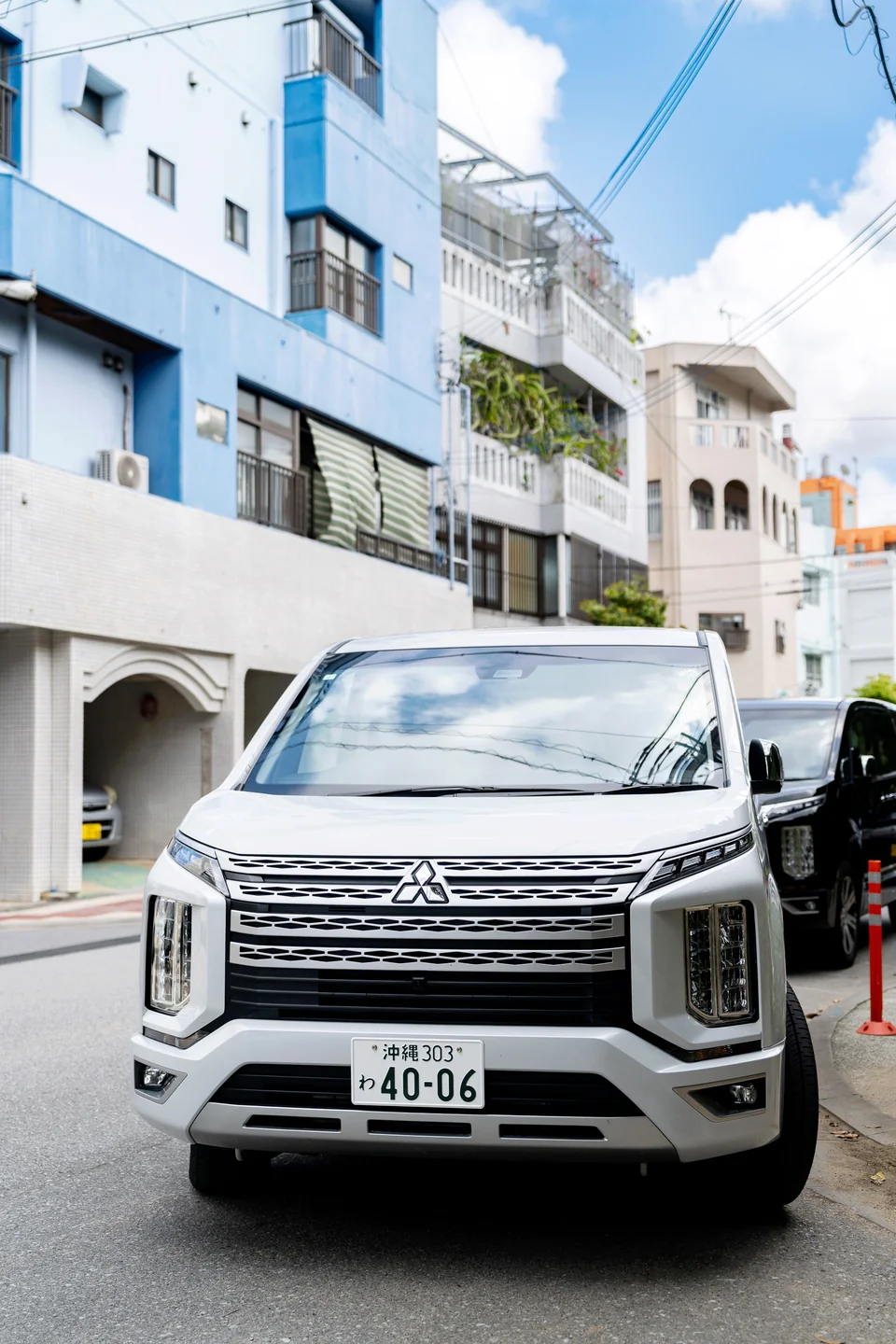
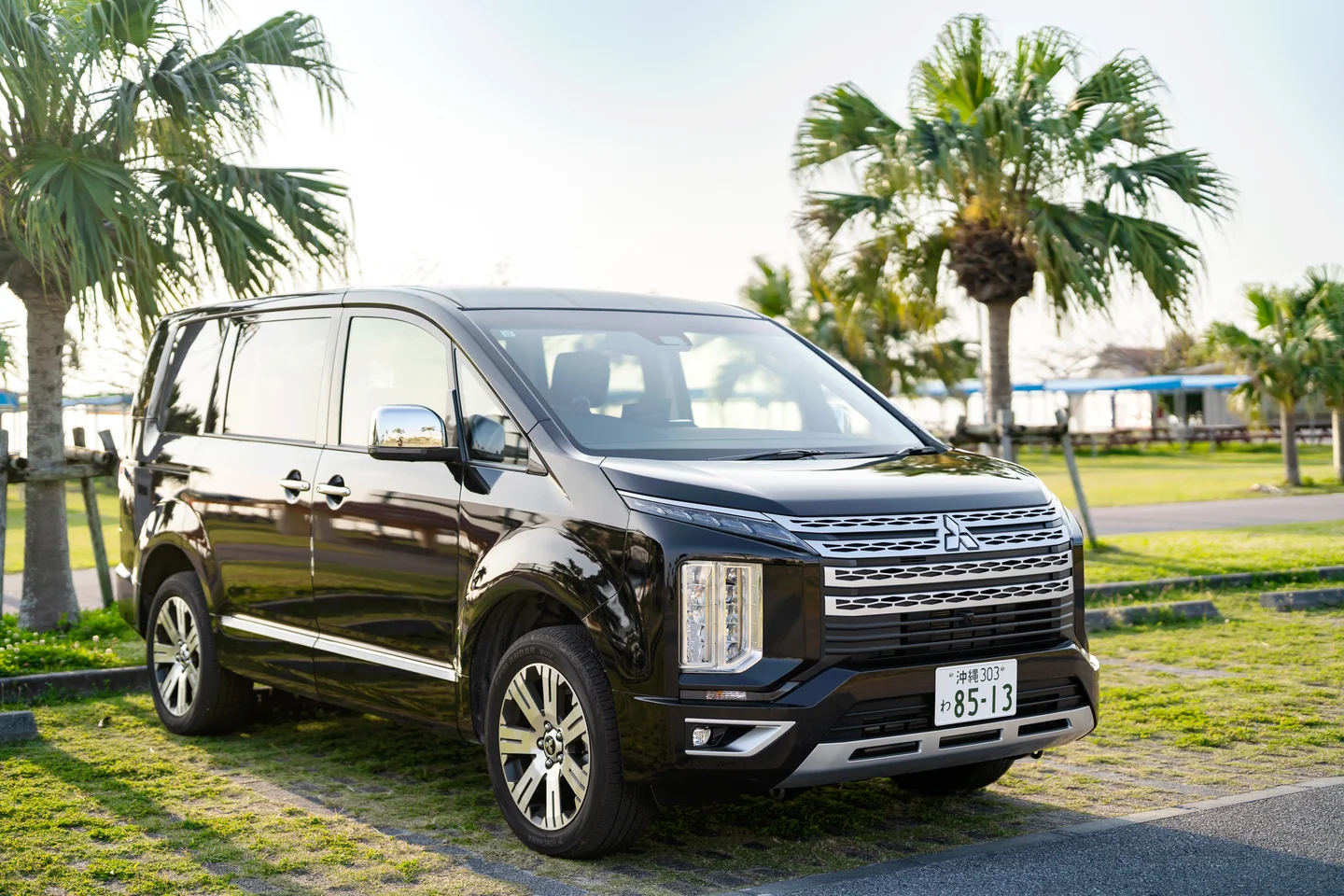
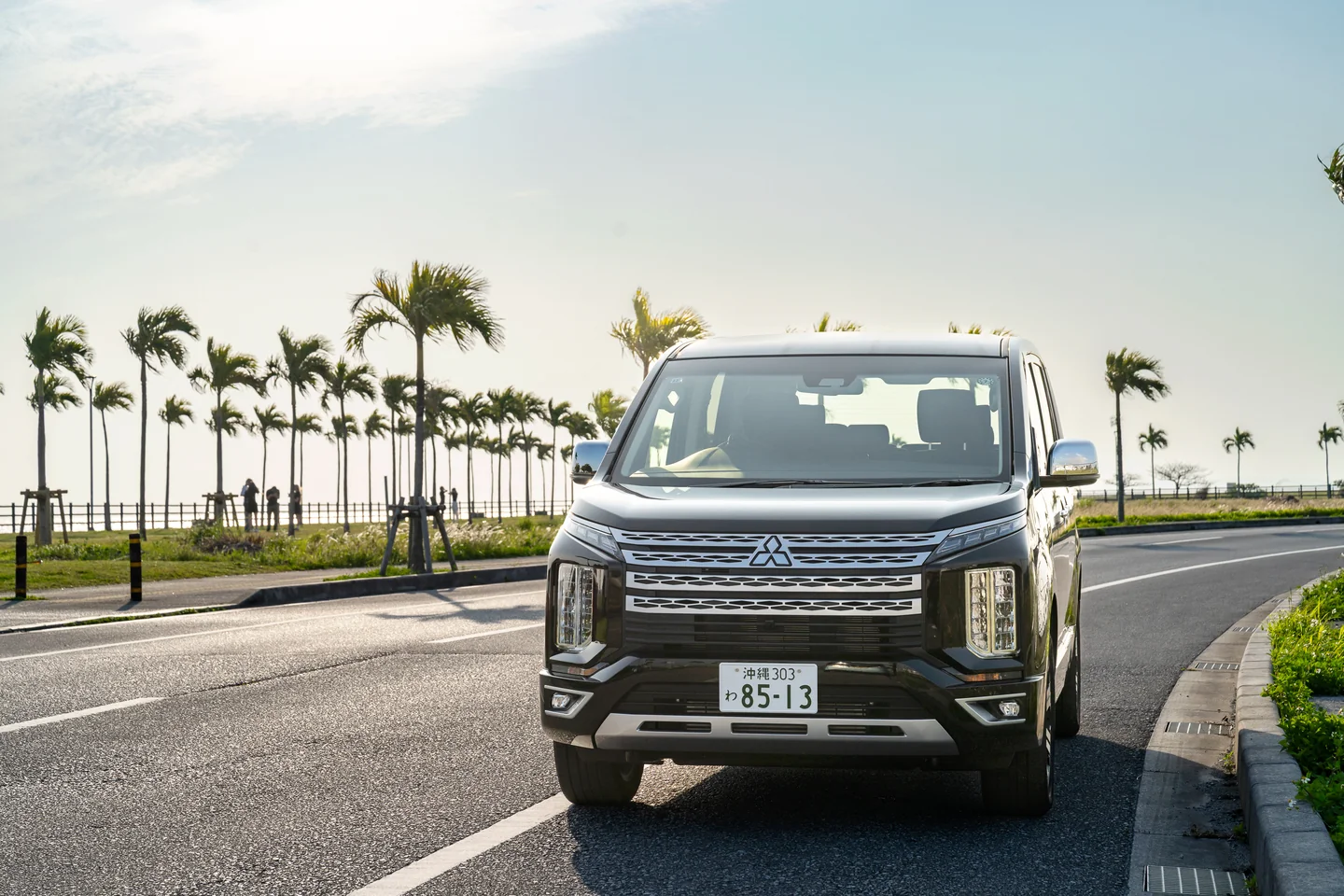
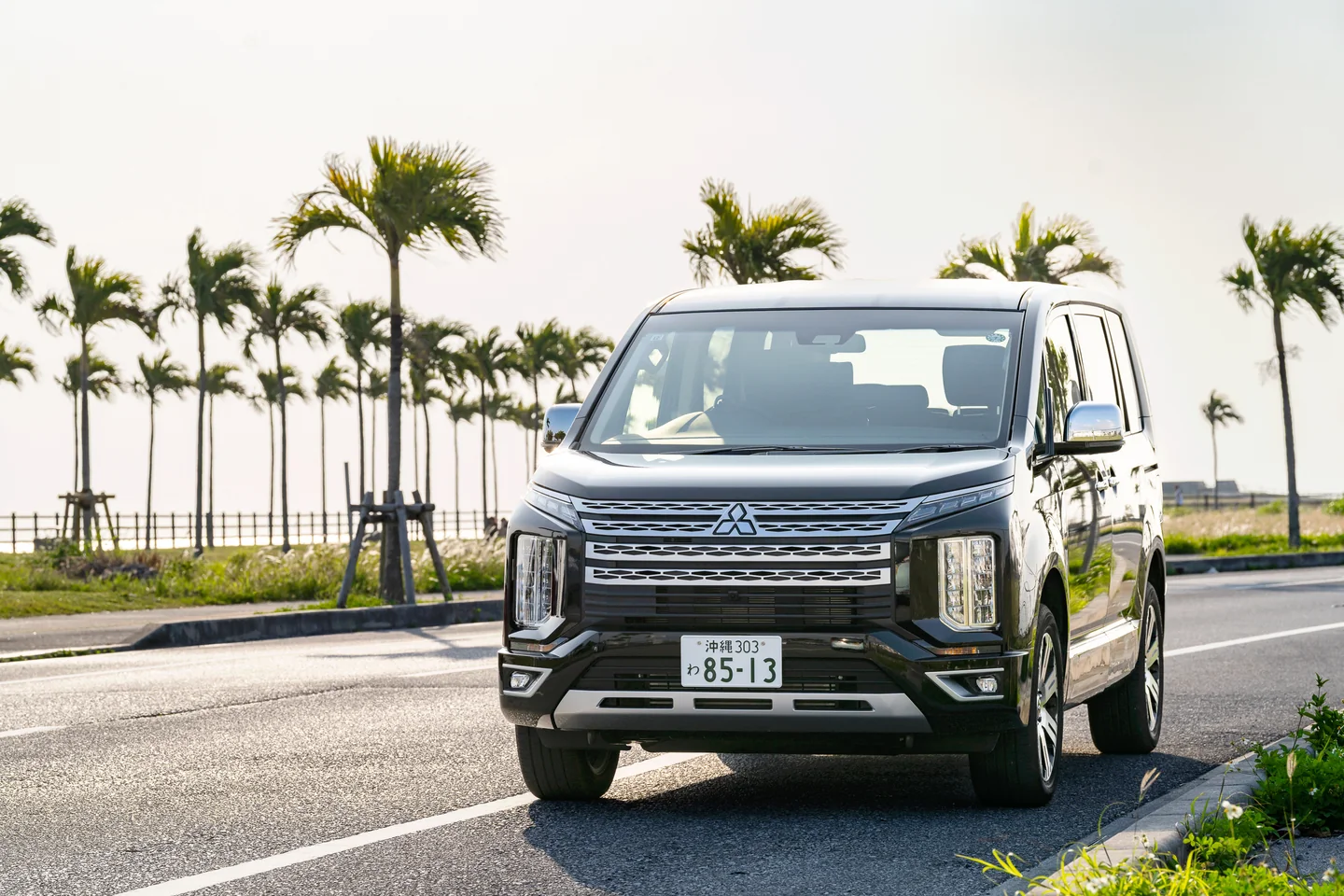
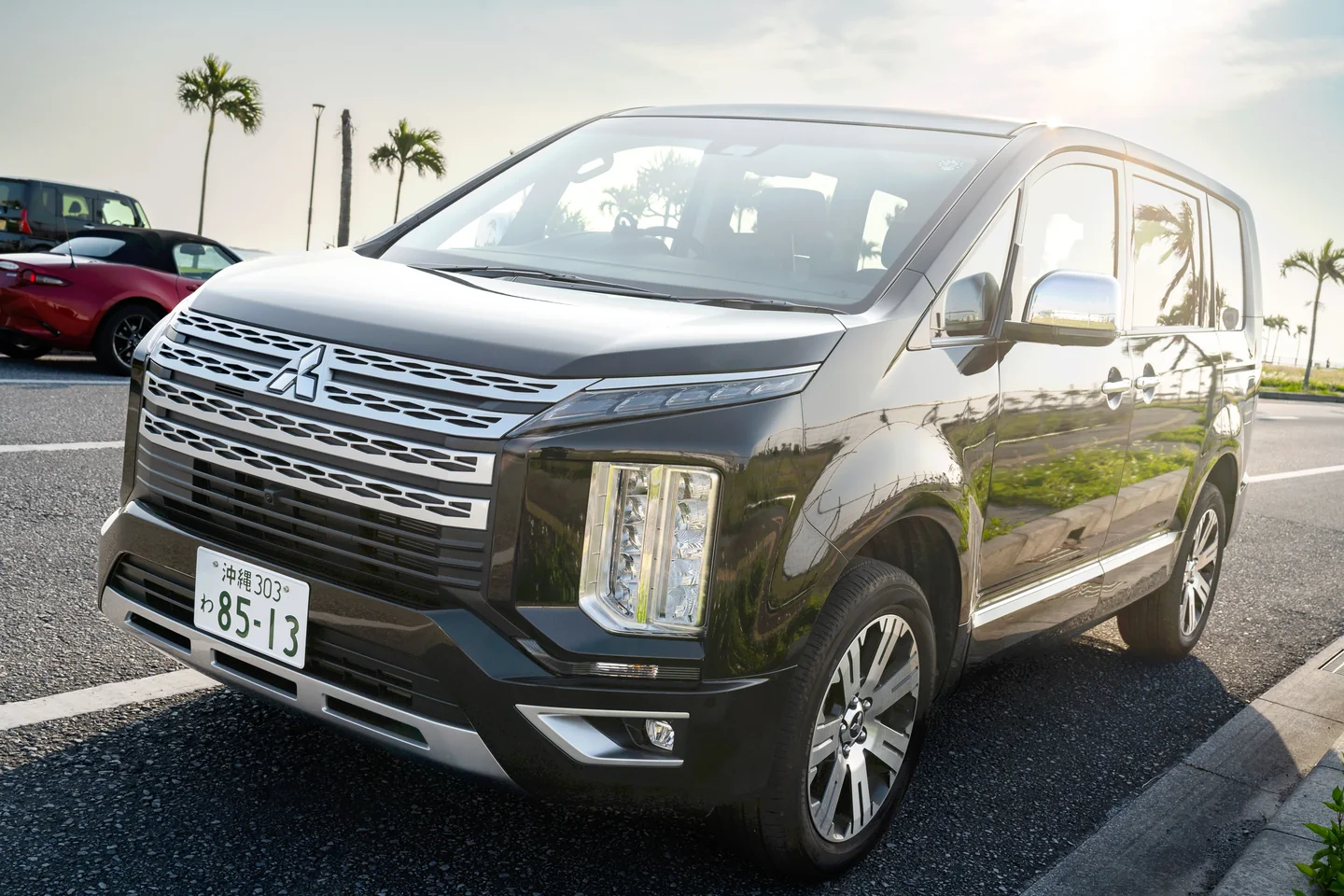
Okinawa’s peak travel season is gradually approaching. Beaches are starting to open, and lifeguards are being stationed to keep everyone safe. Which means it’s also the time when lots of you will be visiting Okinawa. So today, let me introduce the Delica D5, a rental car well suited to family trips in Okinawa. You could even call it the ultimate family car.
When I heard Kintaro Rent-a-Car had just bought a new Delica D5, I quickly asked if they could lend it to me for a drive.
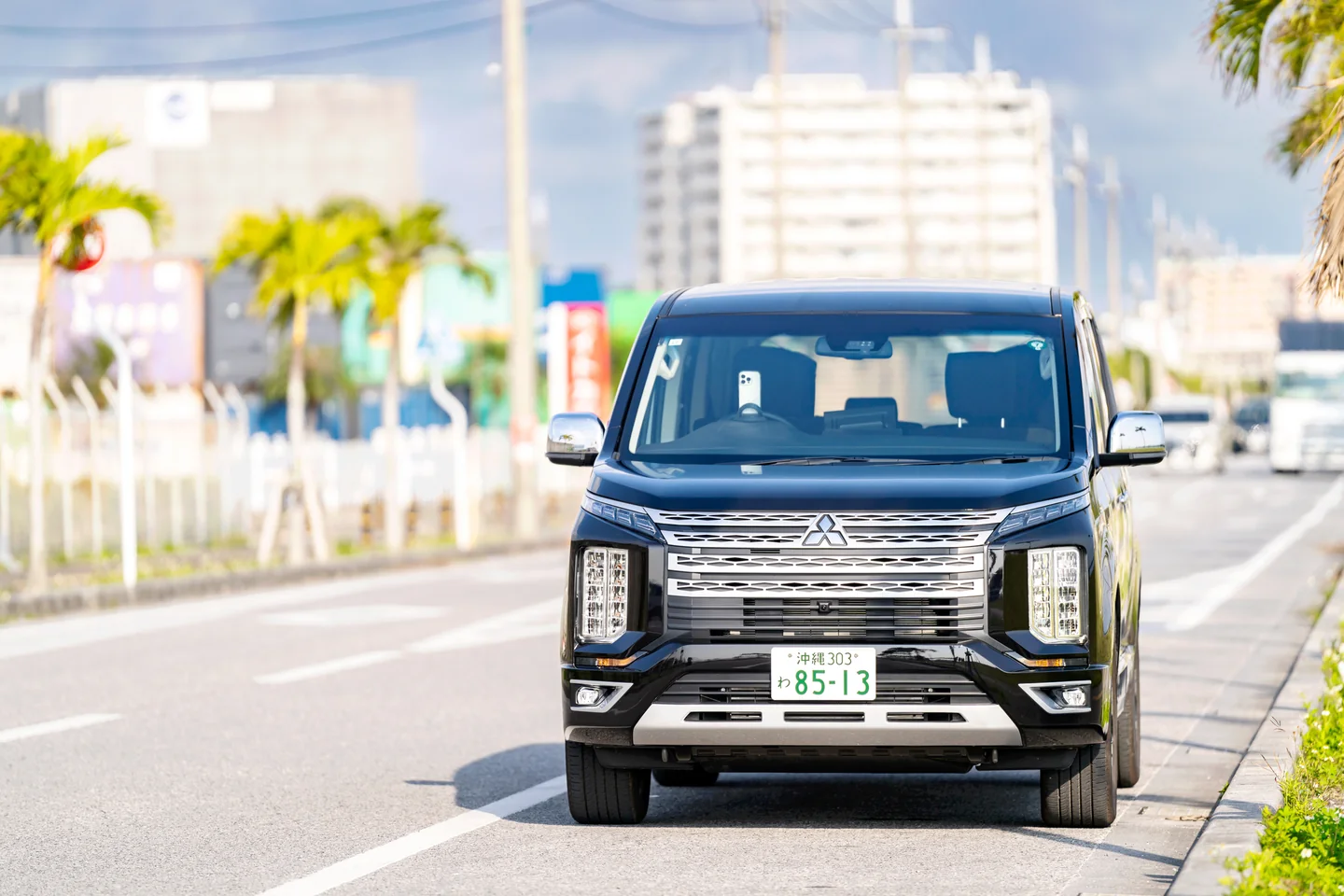
Mitsubishi Delica D5 Summary
It seats 7 as standard, with more luggage space when you fold the third row.
Details

Company: Kintaro Rent-a-Car (Korean-run, with Korean staff, etc.)
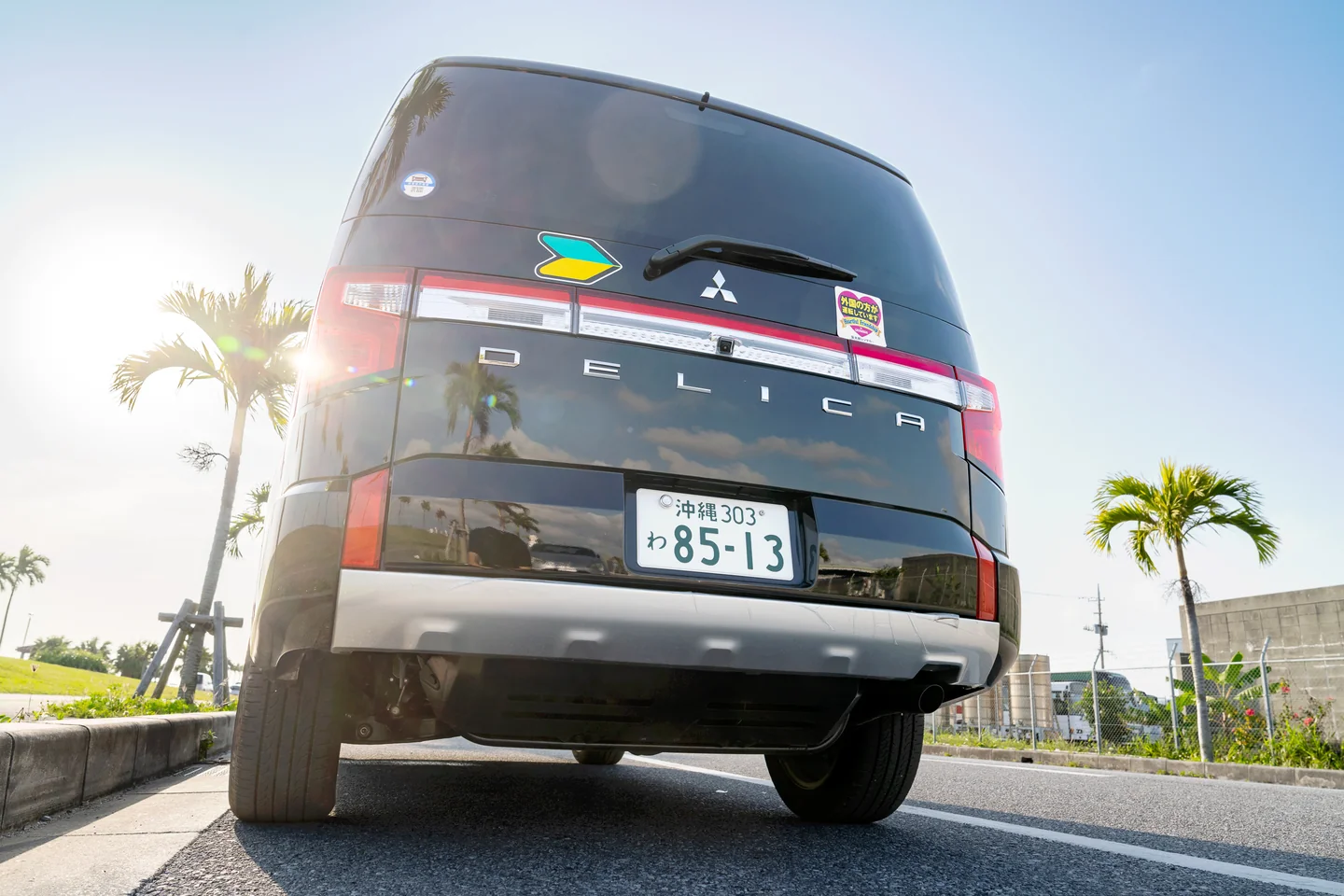
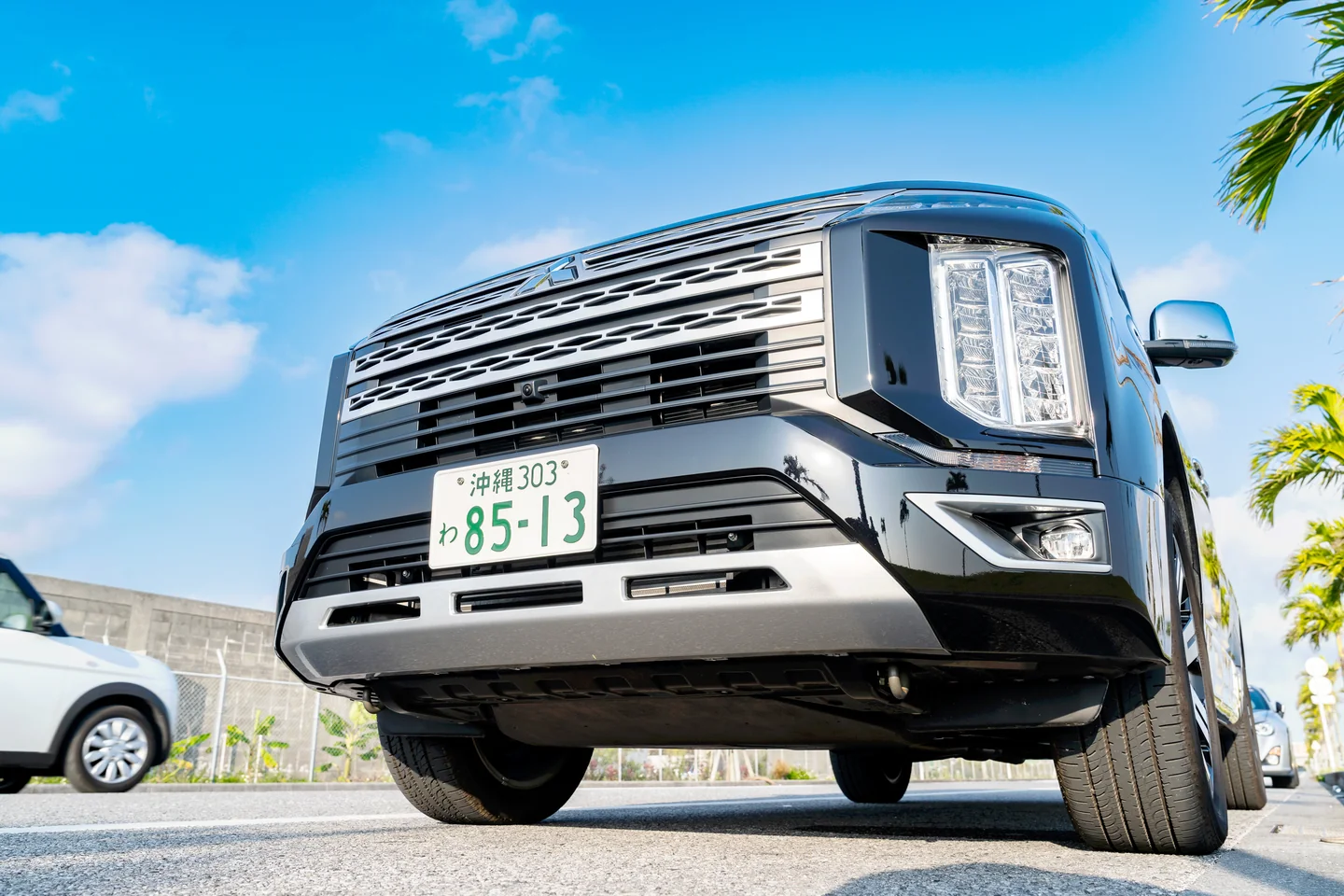
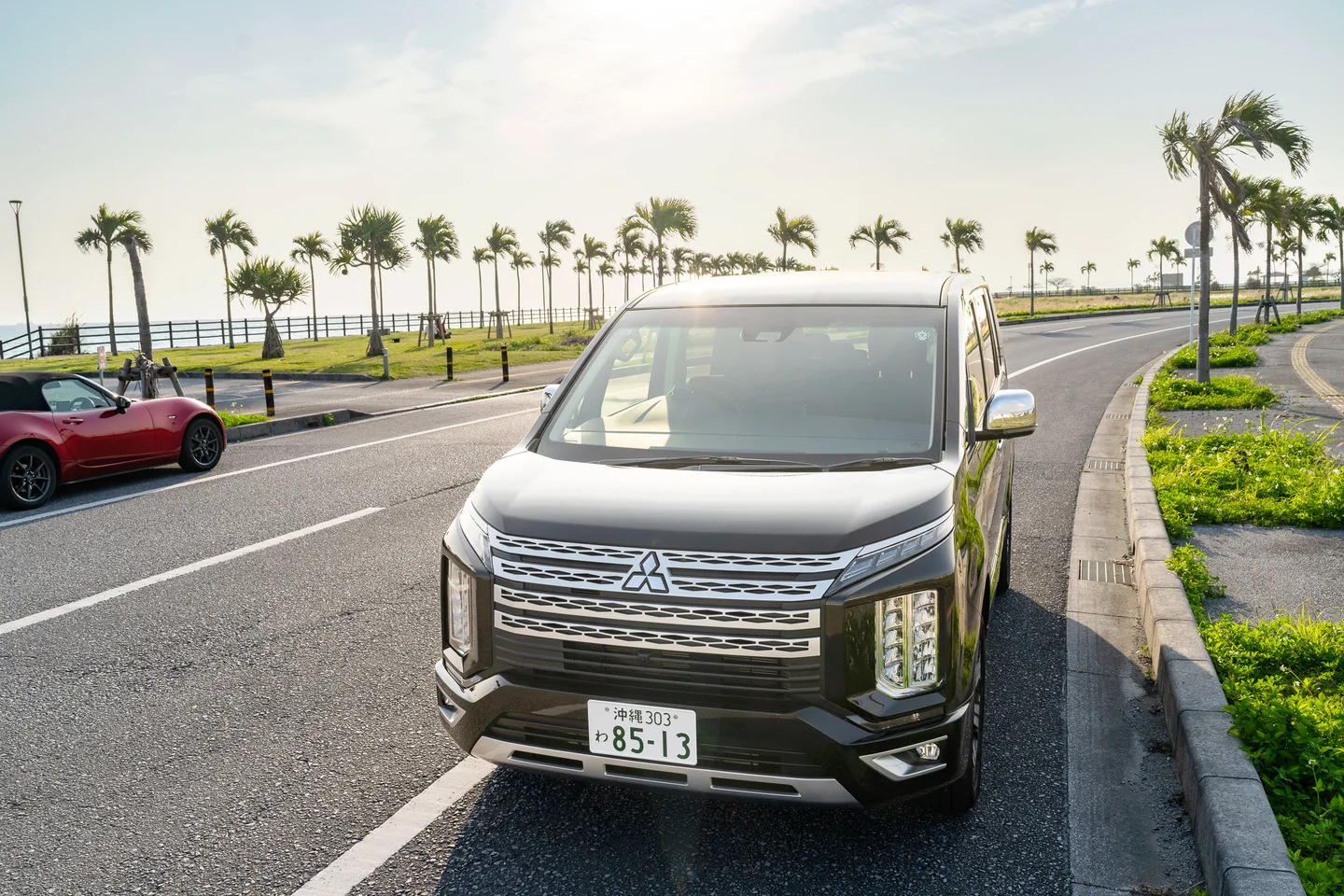
Vehicle: Mitsubishi Delica D5
Daily rental rate: 10,000 yen including tax, plus insurance at 1,650 yen per day (including NOC)
Optional extras: Pickup from or a ride to a hotel in central Naha: 4,000 yen / Returning the car at a hotel in central Naha rather than the office: 5,000 yen / Stroller rental (for the entire rental period): 1,100 yen / Baby, child or junior seat (for the entire rental period): 1,100 yen
Included: Pickup from Naha Airport and a ride back after returning the car, with transfers to and from the monorail’s Akamine Station available instead
Airport pickup: Exit 6 on the 3rd floor of Naha Airport
Driving lesson: A Korean staff member gives you a short lesson on things to watch out for when driving in Japan, such as unprotected right turns.
Please note: You may be refused this rental if they feel your driving is so poor that you are likely to cause an accident.
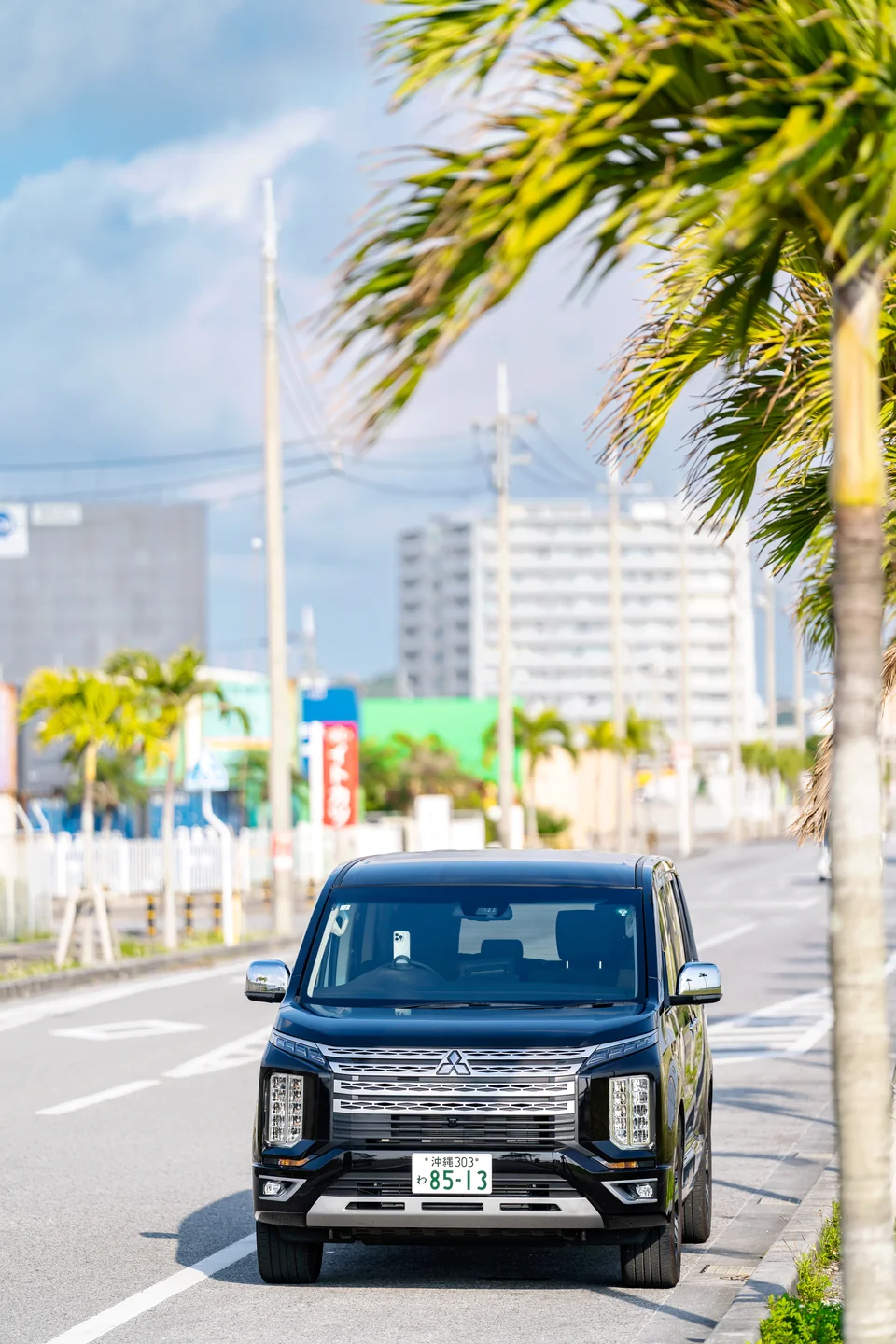
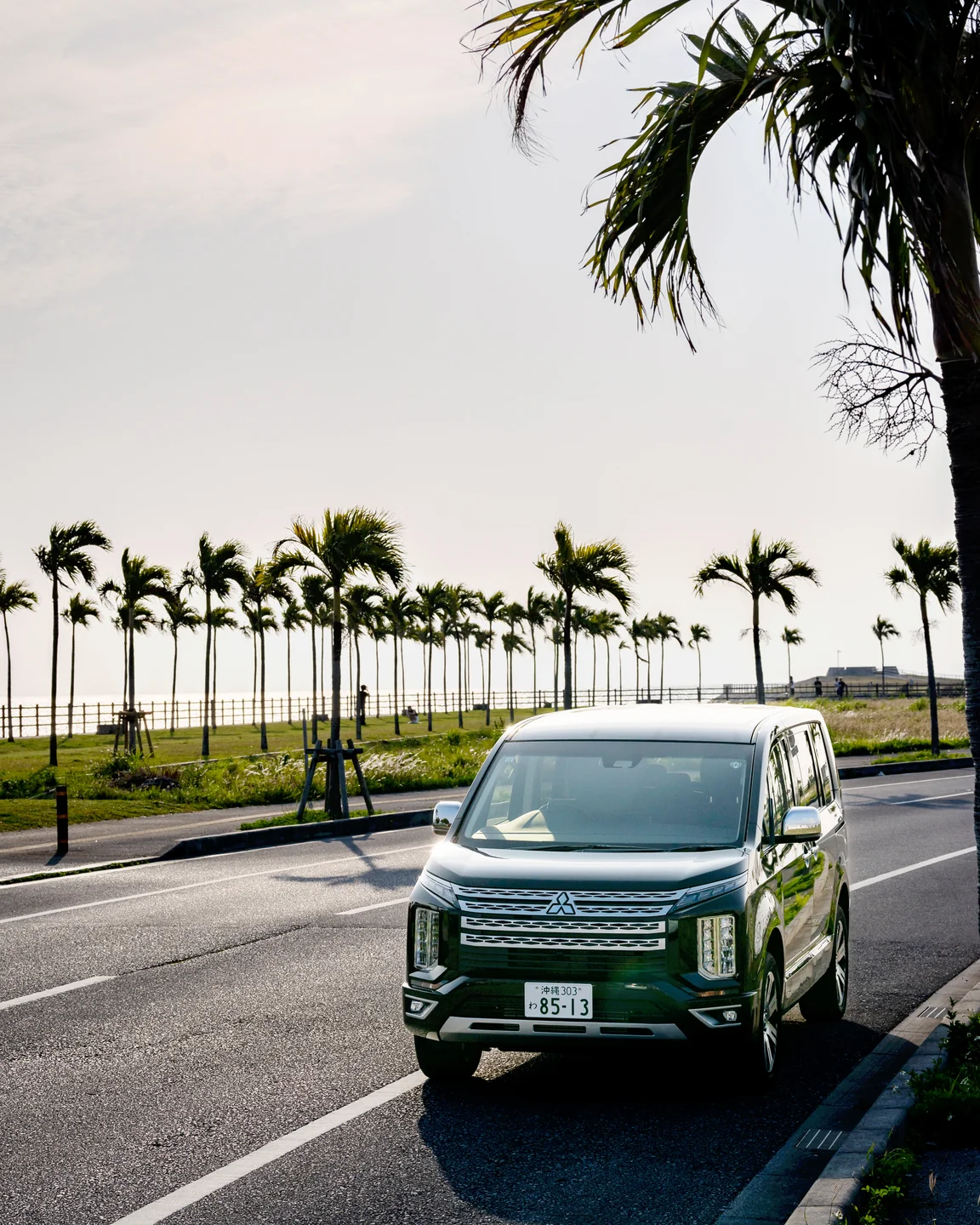
These days, I’m constantly meeting rental car company owners in Okinawa. So I’ve gained a pretty.. comprehensive picture of how rental prices are set here, how Korean drivers get into accidents, and what patterns they tend to follow. I keep asking around whether anyone has a Delica D5 sitting idle. Which also means I’m well aware that demand for the Delica D5 exceeds supply.
First of all, this is a family car. In Korea, it would fill the same role as the Kia Grand Carnival. The prices and specs are similar too. But Grand Carnival owners tell me.. this is better than the Grand Carnival. Well.. if it were exported to Korea, it would cost far more than the Grand Carnival, so the comparison gets tricky. The other catch.. Korea is a graveyard for Japanese car brands..
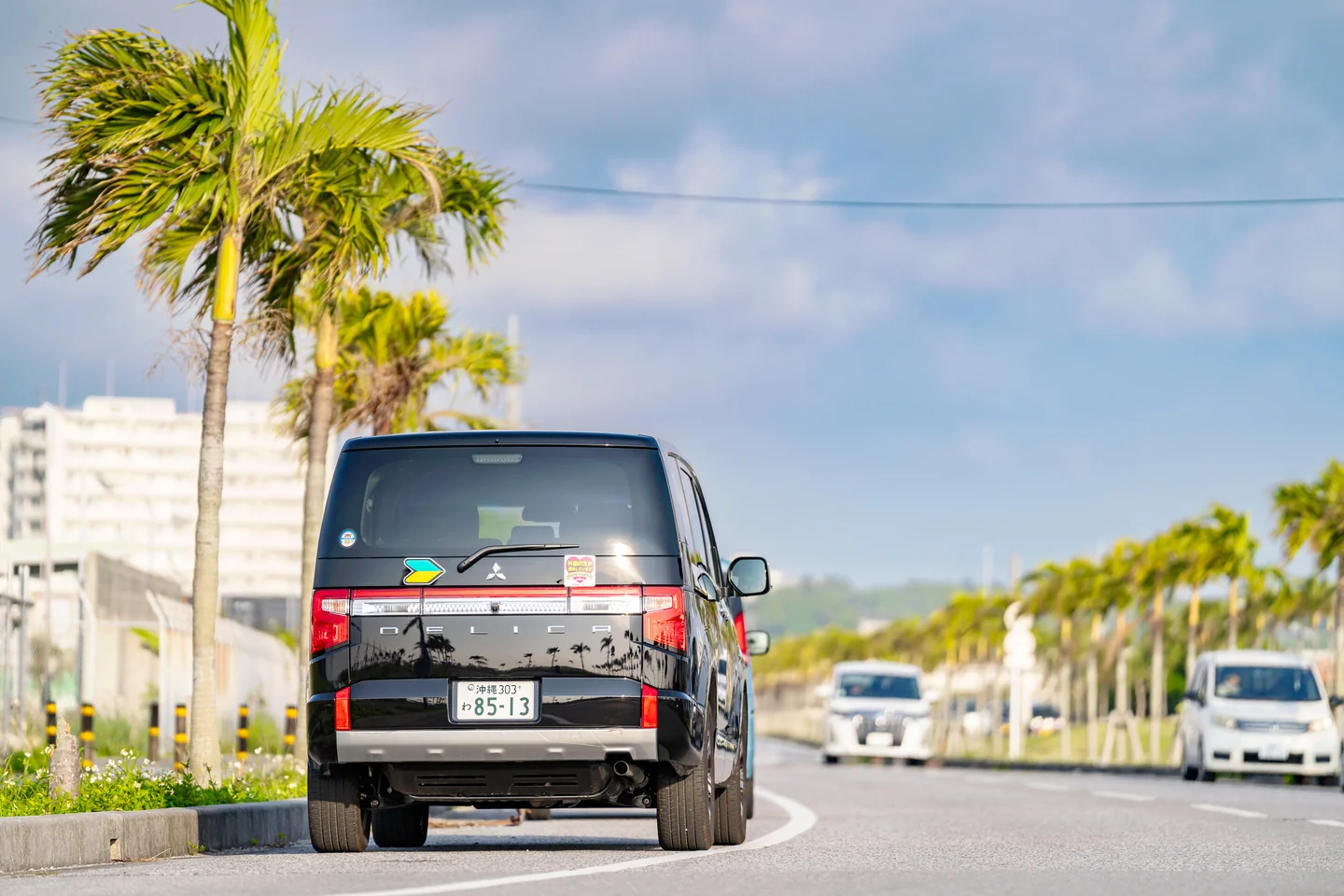
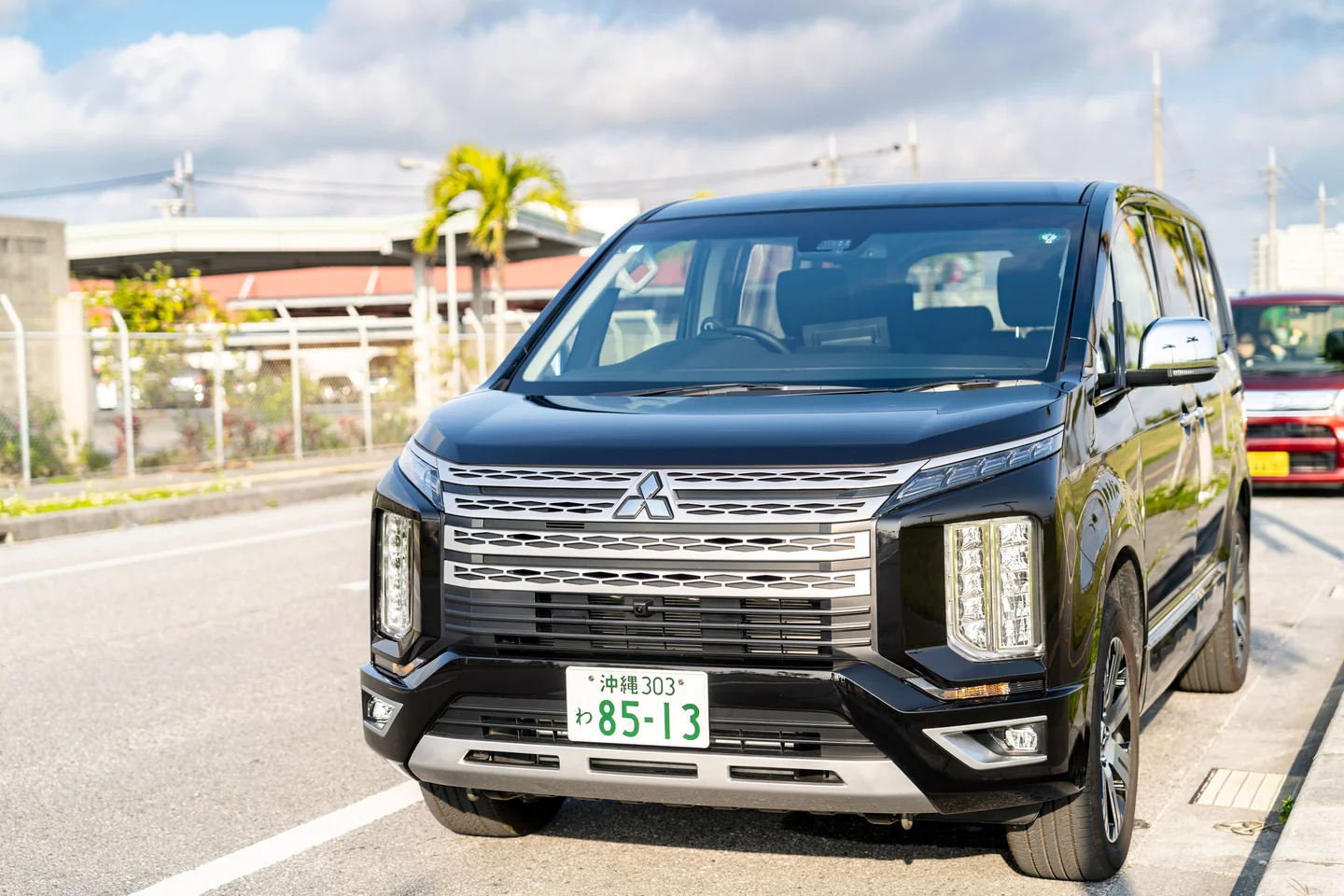
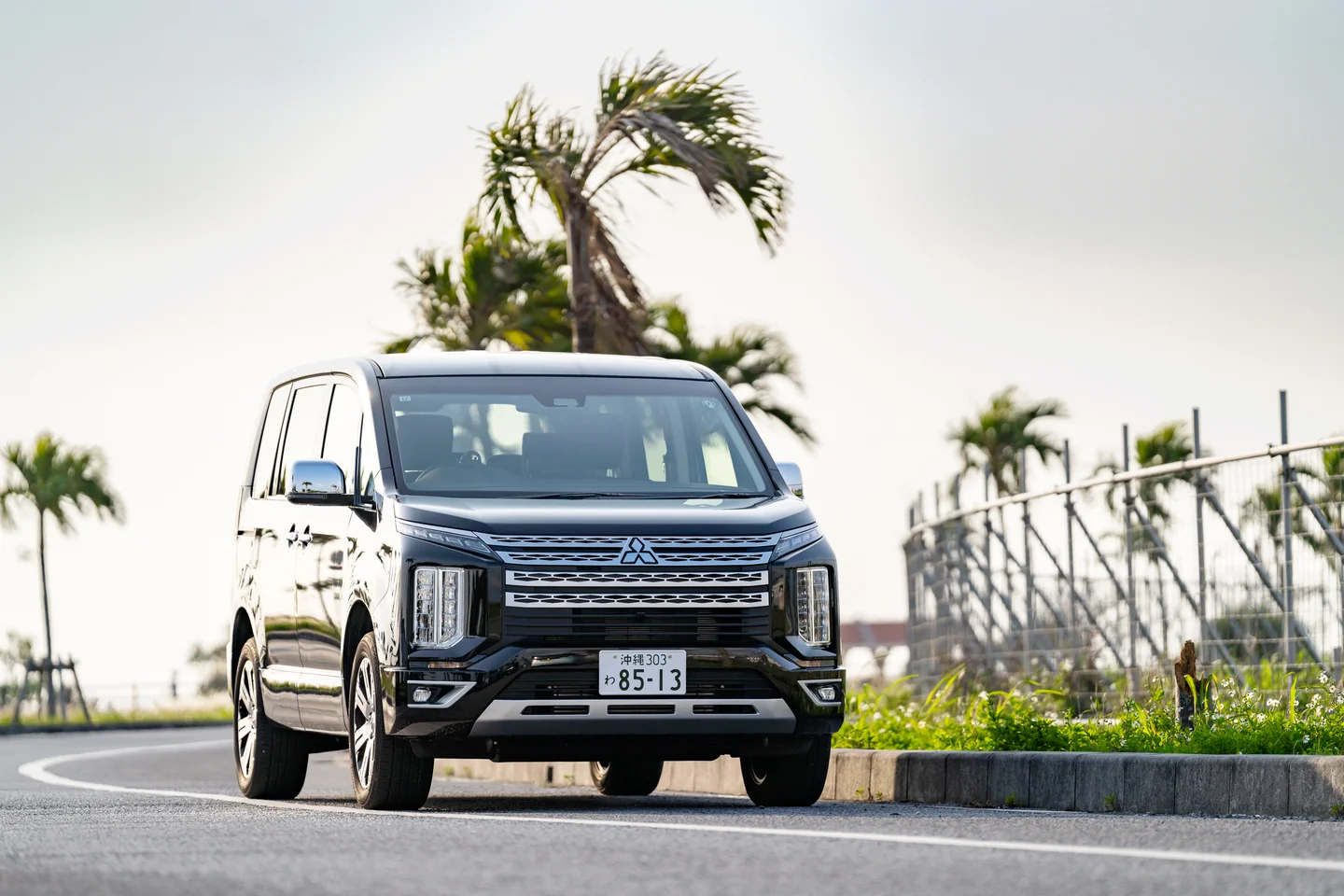
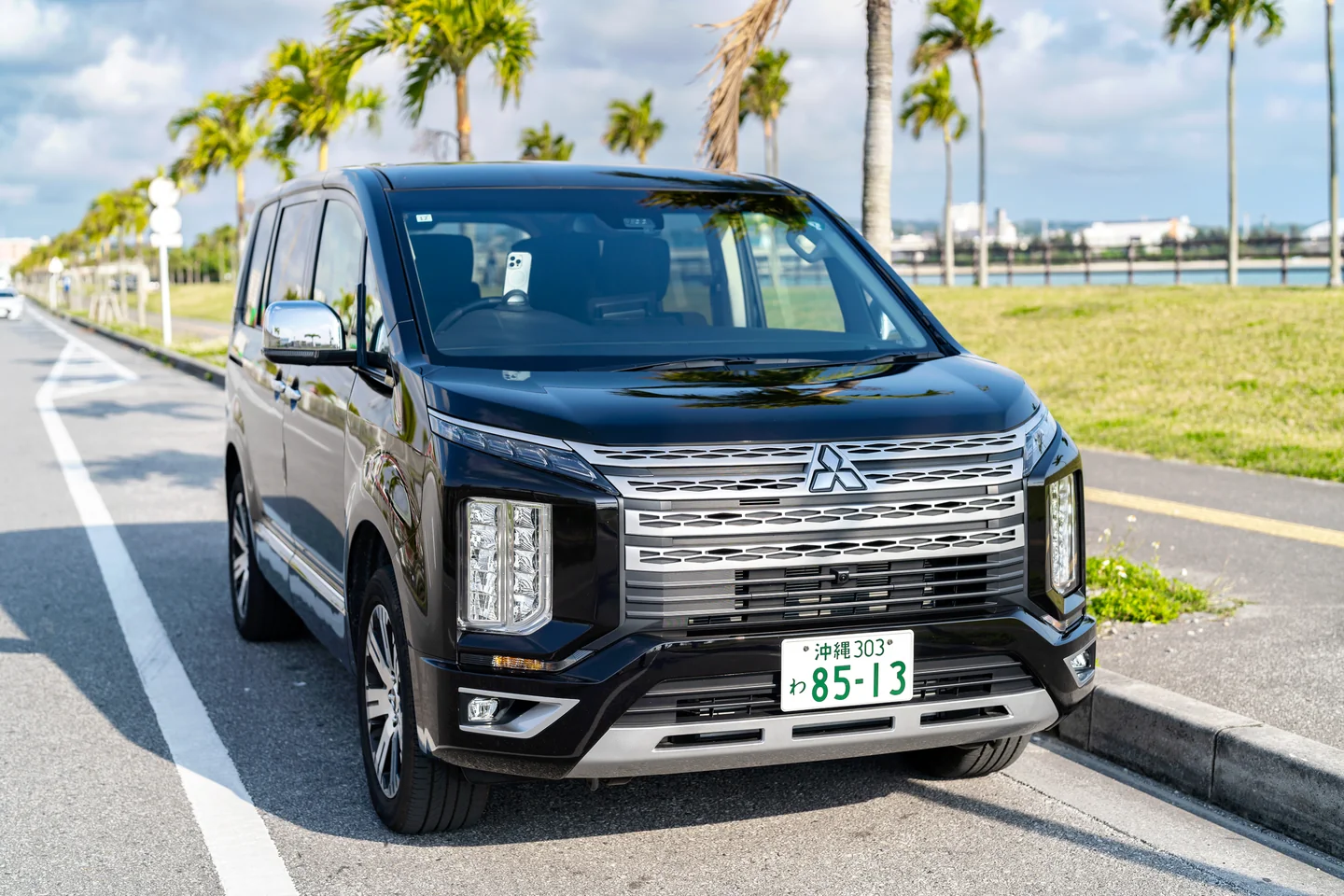
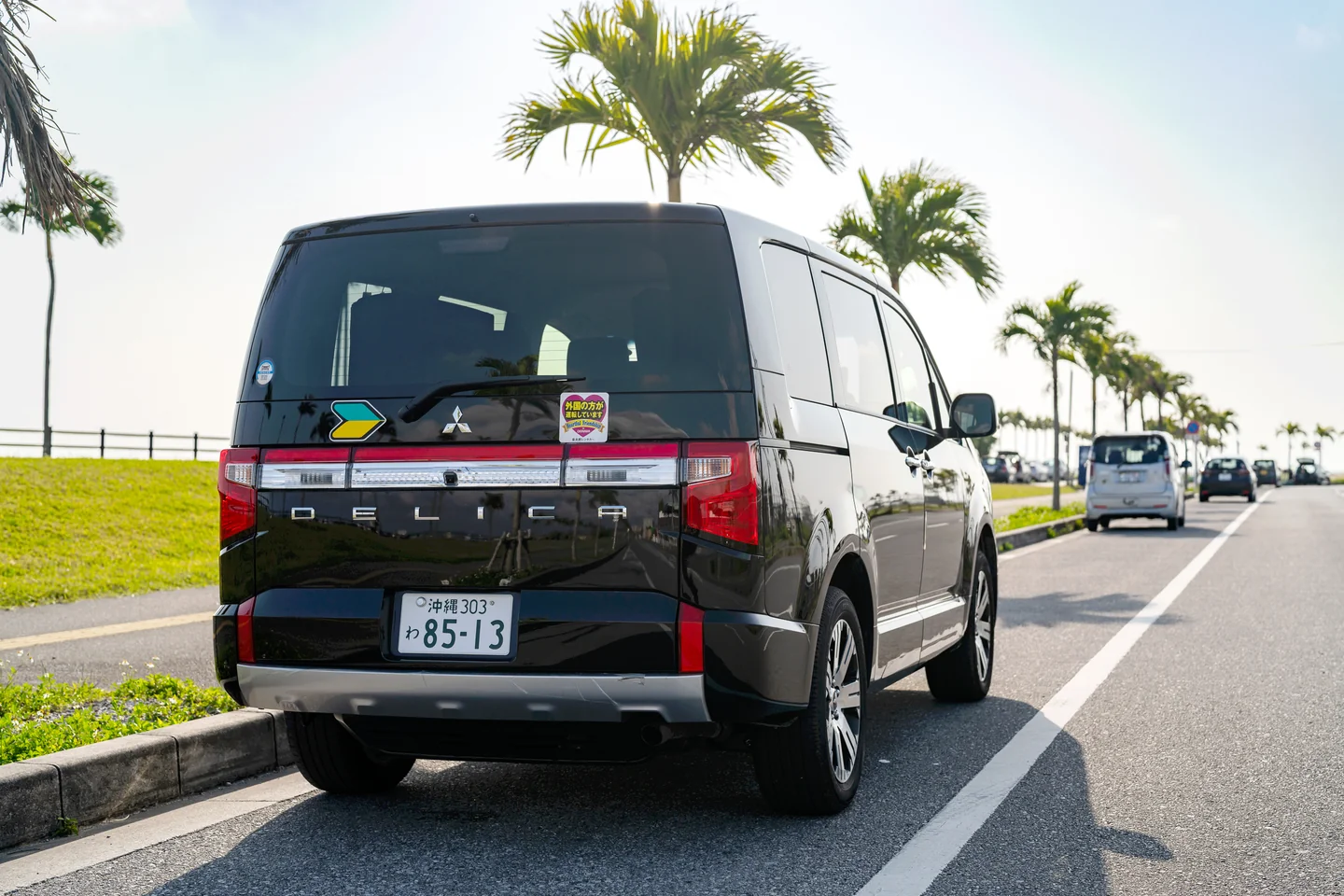
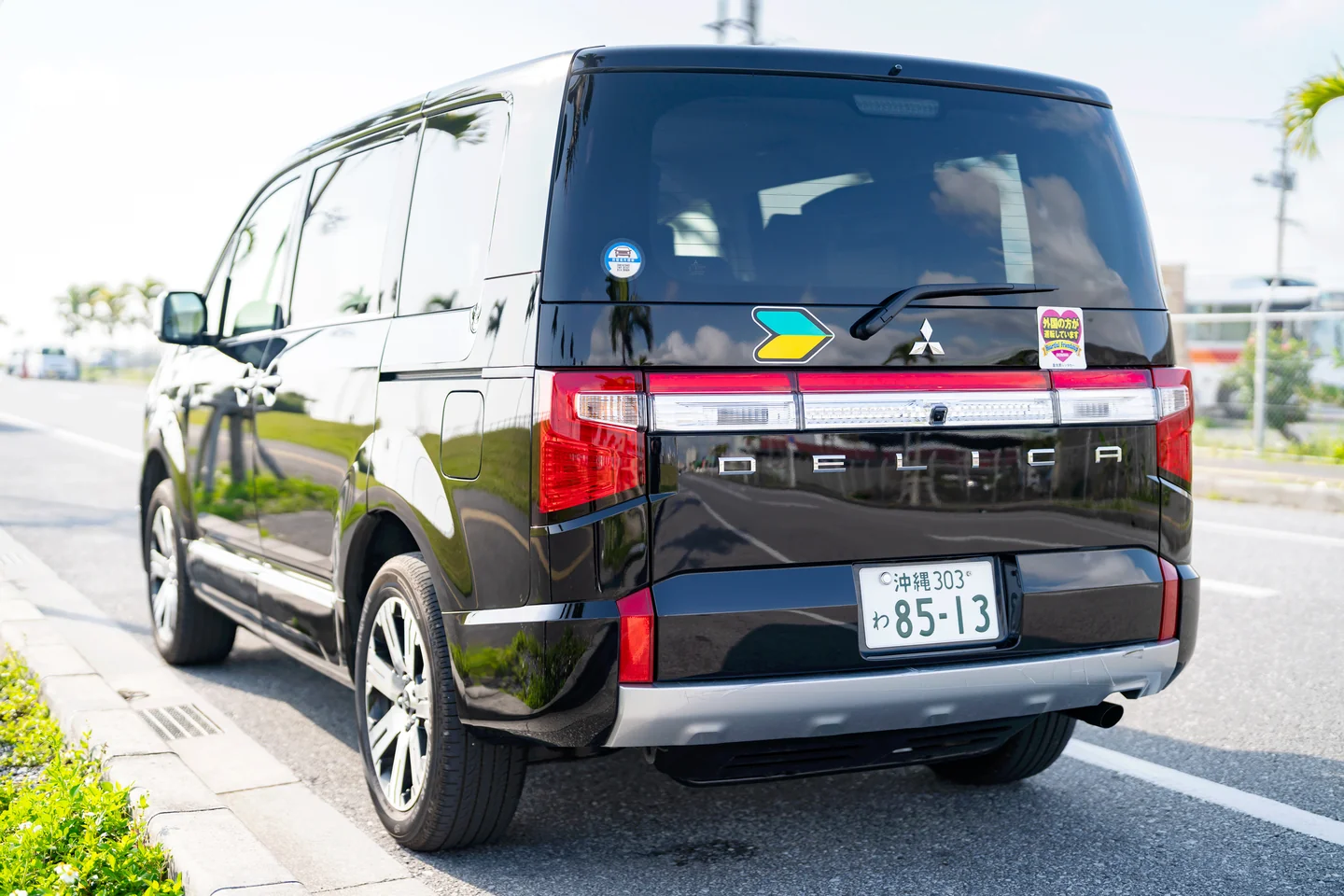
Dimensions: Length: 4,800mm / Width: 1,795mm / Height: 1,875 / Wheelbase: 2,850mm
Drivetrain: 2,200cc / Switchable between 2WD and 4WD, 8-speed automatic transmission, diesel
Capacity: Seats 7 as standard, with room for about 4 carry-on suitcases; folding down the rear third-row seats greatly increases cargo capacity.
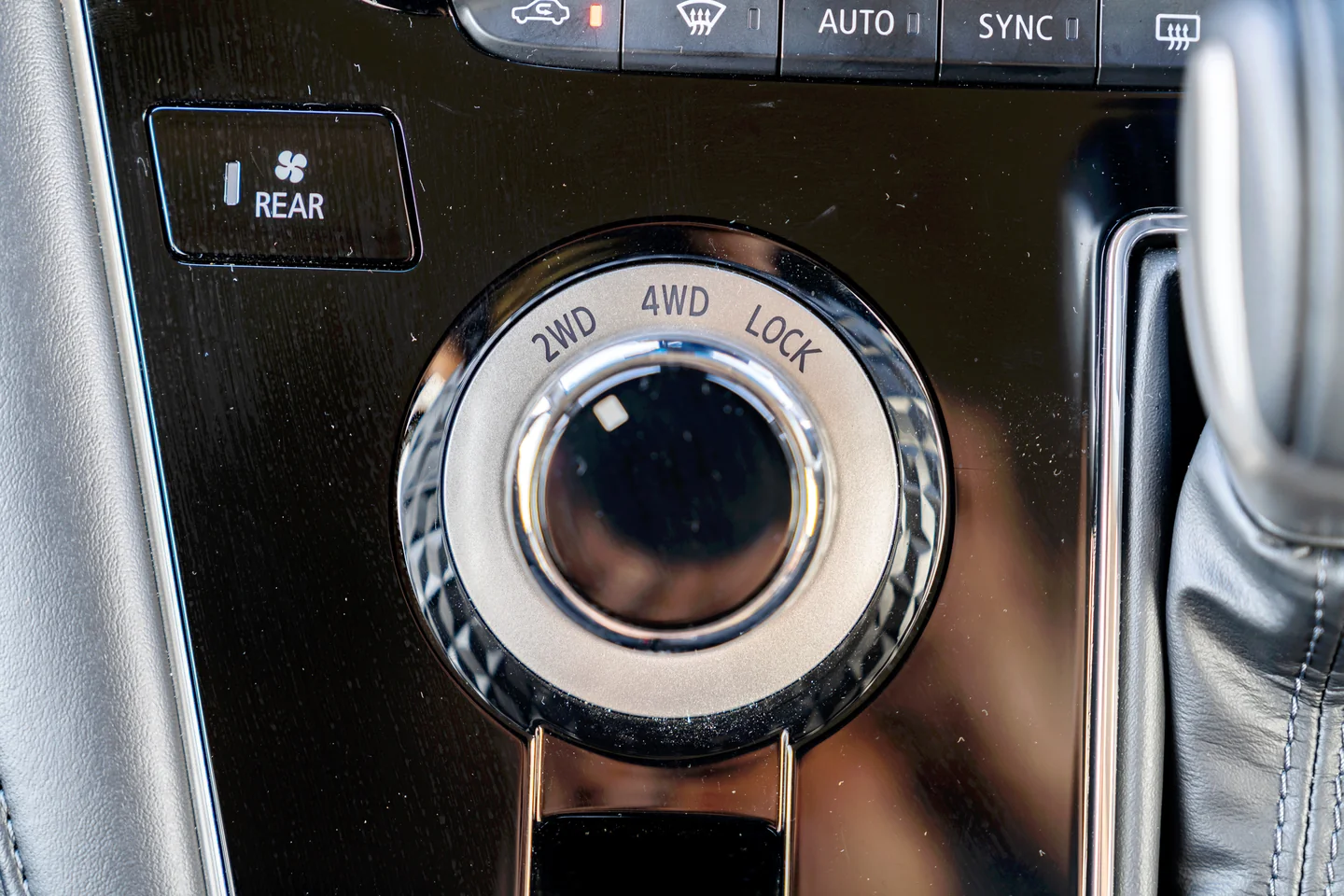
The most interesting thing about this car.. you can switch between 2WD and 4WD.
You don’t get this sort of thing in Korea, do you? I think it’ll be quite a fun experience for anyone who enjoys driving. But I keep it in 2WD the whole time. Can’t justify the fuel cost.. There’s really no reason to use 4WD around Naha. Most of the area is flat, and I never felt short of power in 2WD. You have to keep climbing uphill if you head up north to somewhere like Cape Hedo, so perhaps you’d need it then?
It might also suit anyone thinking, I’ve never driven a 4WD vehicle. I’d like to try it this time. Switching to 4WD certainly makes the car feel much heavier to drive. I also feel as though it doesn’t turn as sharply.
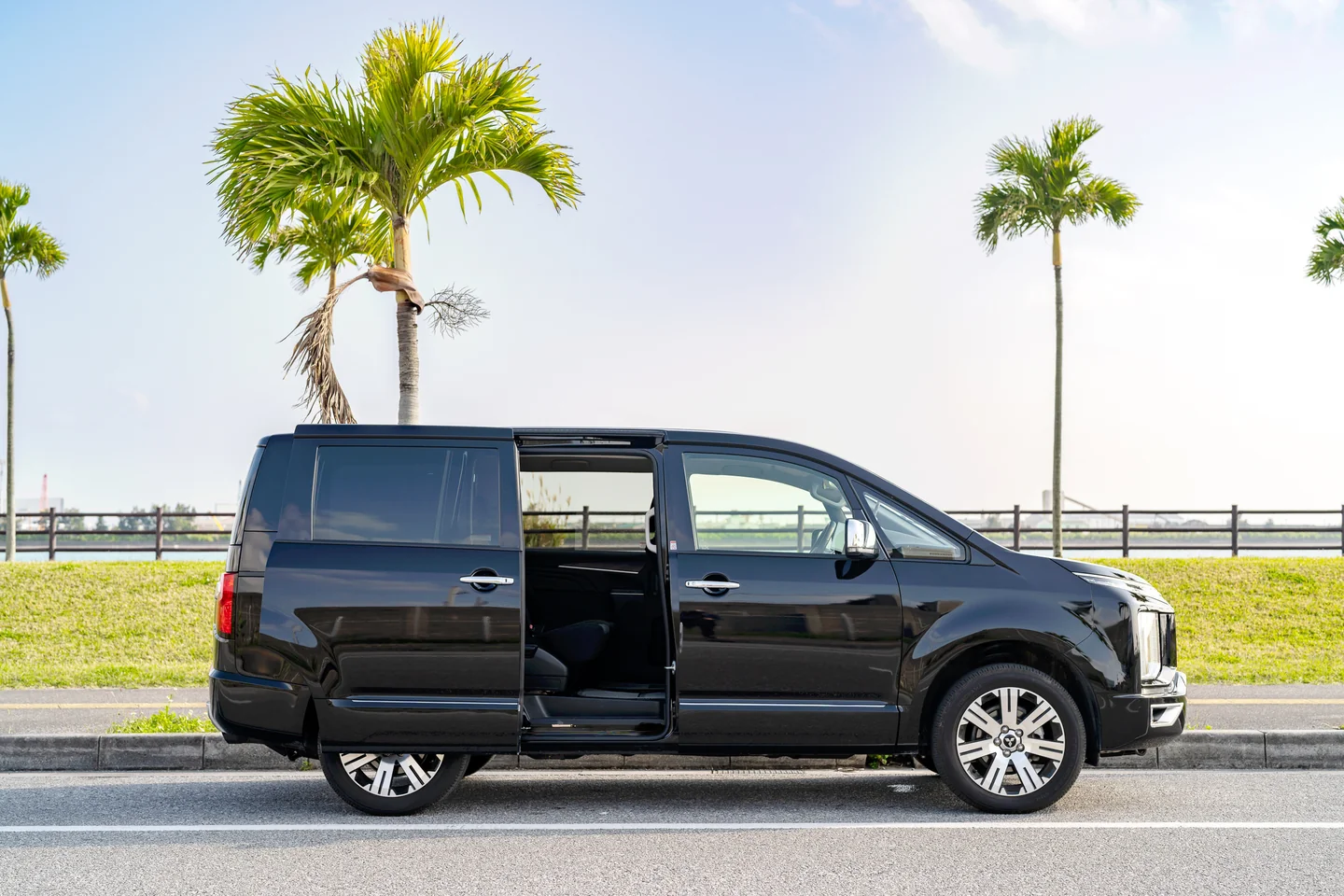
Let’s take a closer look at the car.
The rear seats have power sliding doors. Just give the handle a pull and they open automatically. As far as I know, power sliding doors are standard on the Delica D5. The bare-bones versions of boxy kei cars.. don’t have these.
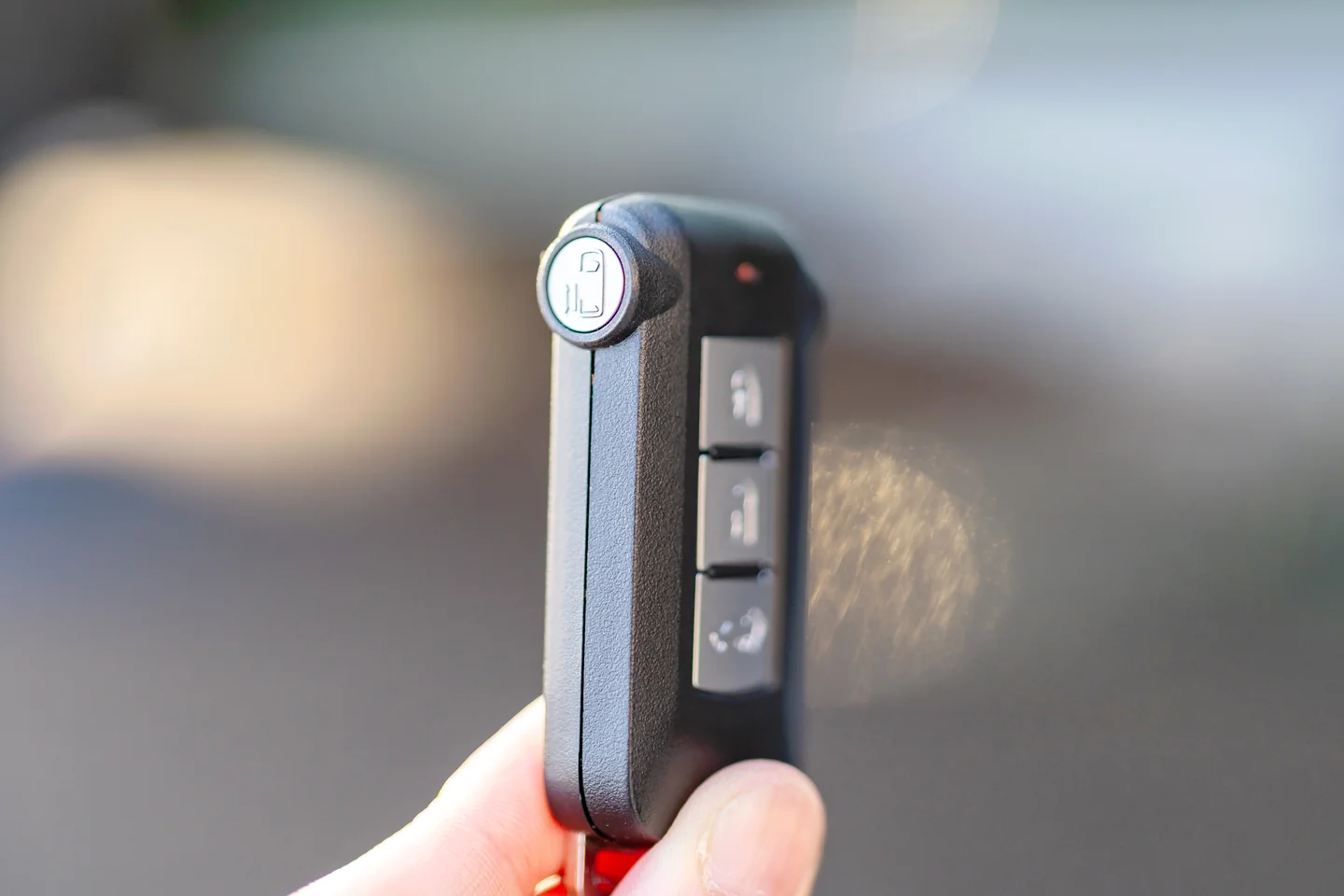
You can control the power sliding doors with the key. Older people or children in your group might not know how they work. You can also control the power tailgate with the key.
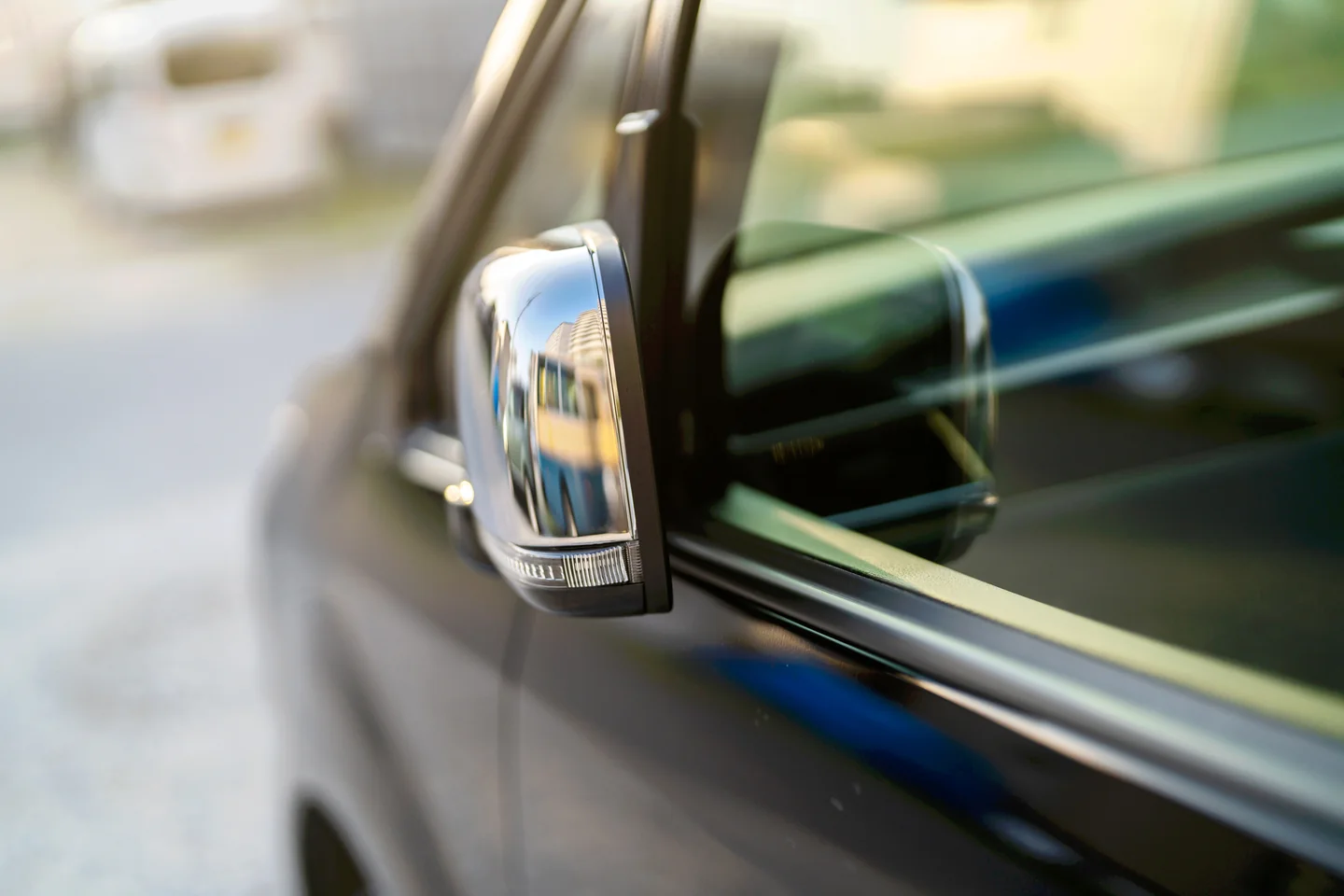
The side mirrors don’t fold just because you switch off the engine. You need to press the lock button on the key. Unlock the car and they unfold again.
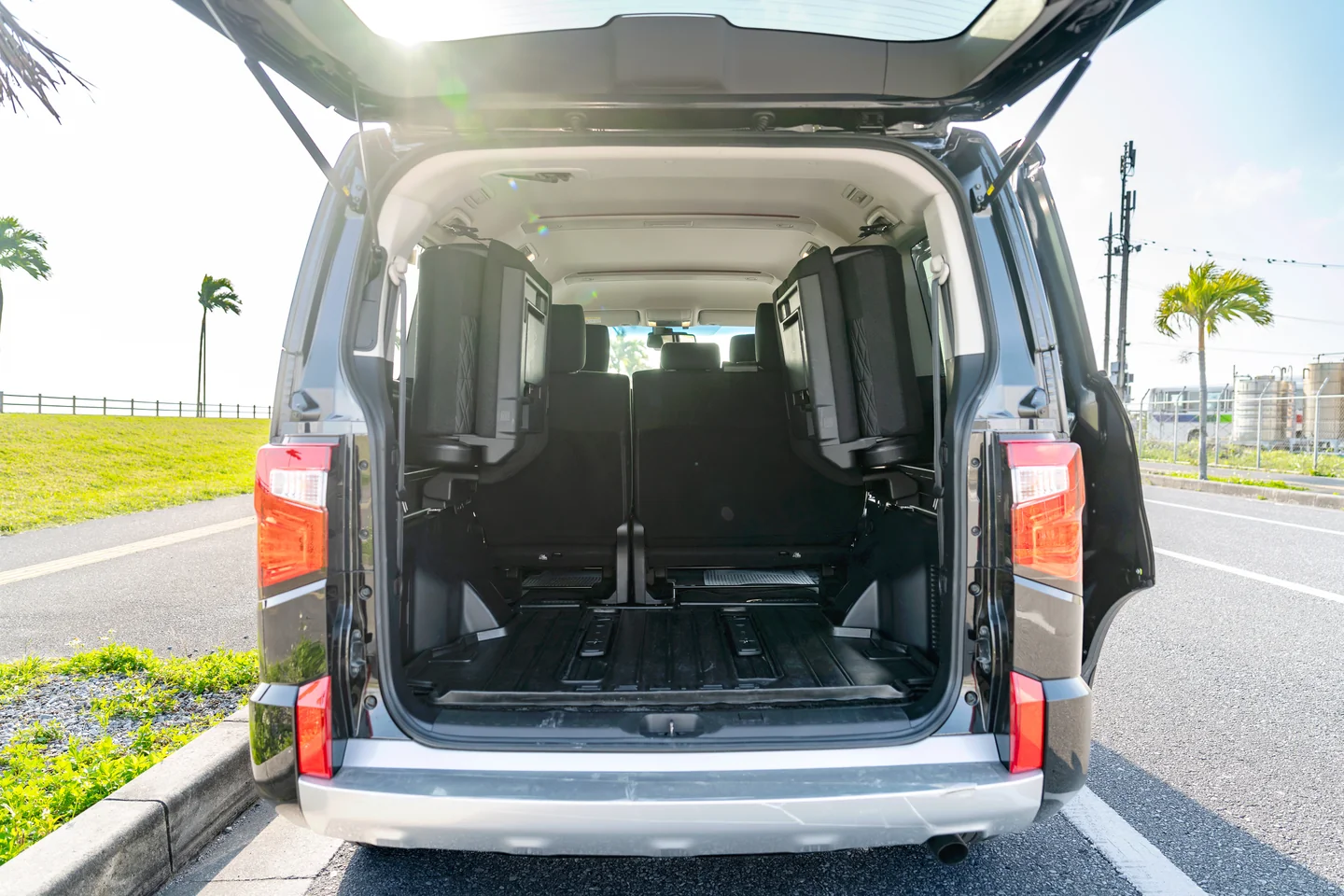
This is what it looks like with the rear third-row seats folded out of the way. It seats 7 as standard, but if you have little luggage, you can fold the rear seats away to increase cargo capacity. With all 7 seats in use, it fits 4 carry-on suitcases. In the 5-seat configuration, there’s room for loads of luggage if you’re good at Tetris.
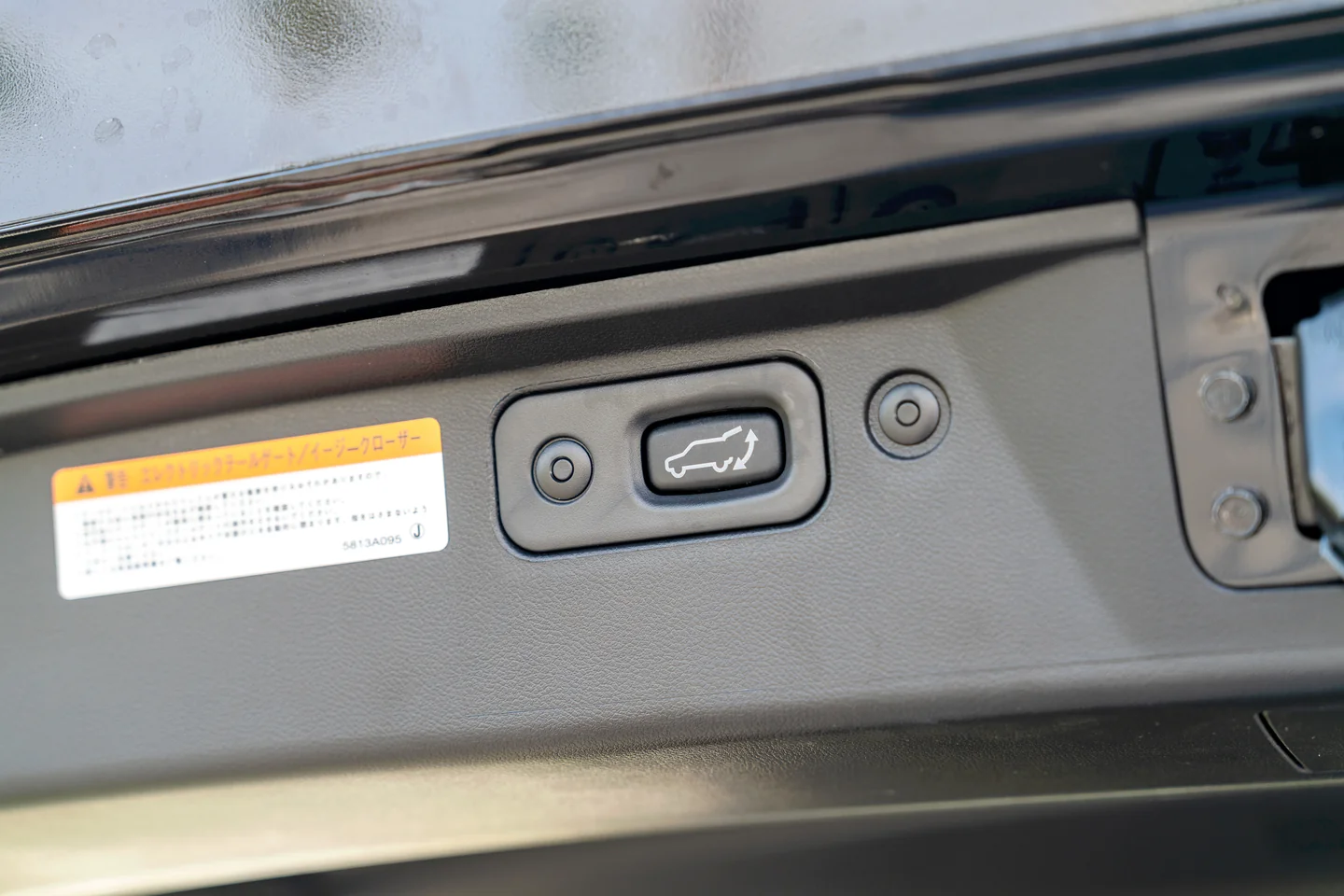
With the tailgate open, you’ll find the power tailgate button overhead. Hold it for about 2 seconds to operate it. There’s an obstacle detection sensor, so it stops if something is in the way.
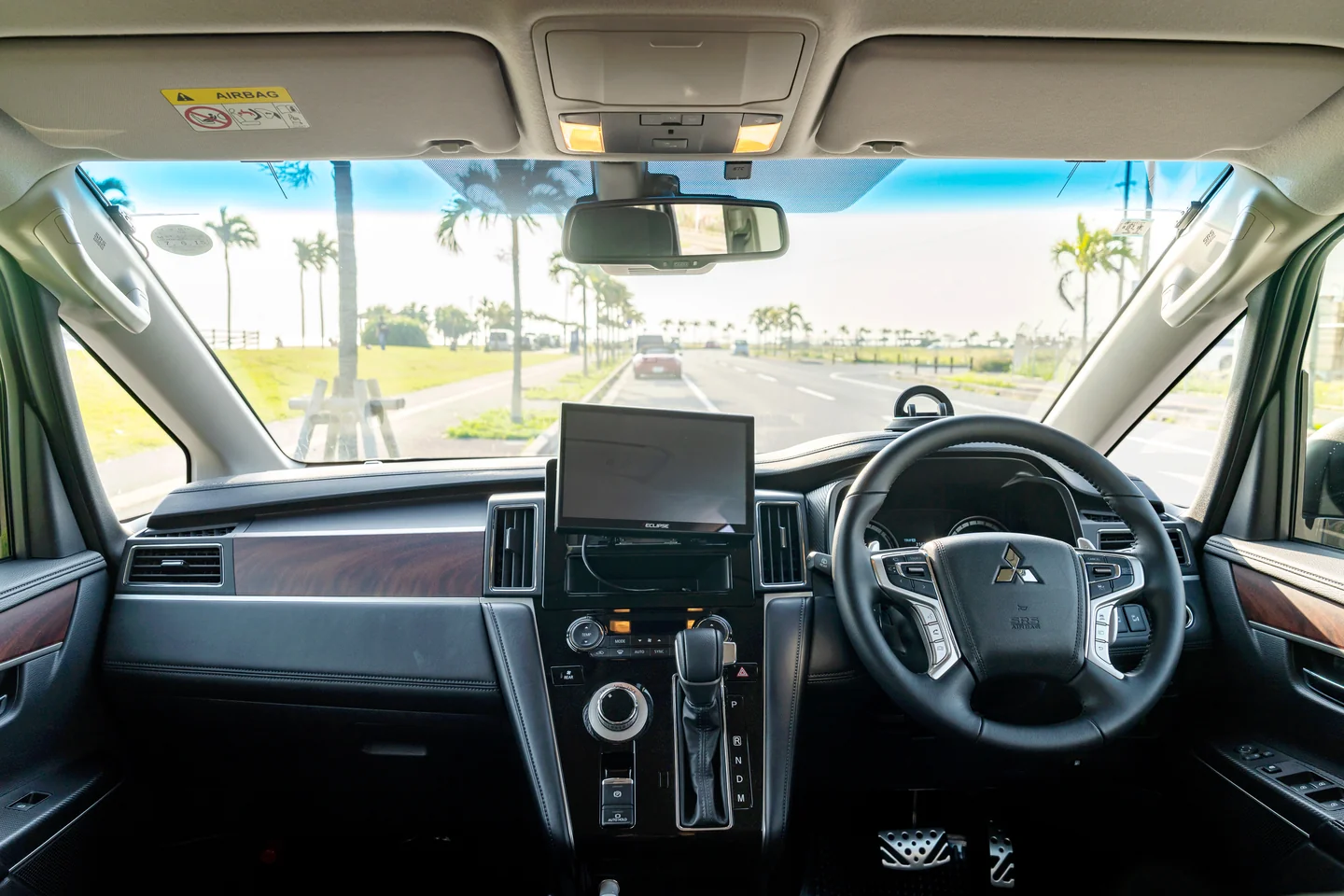
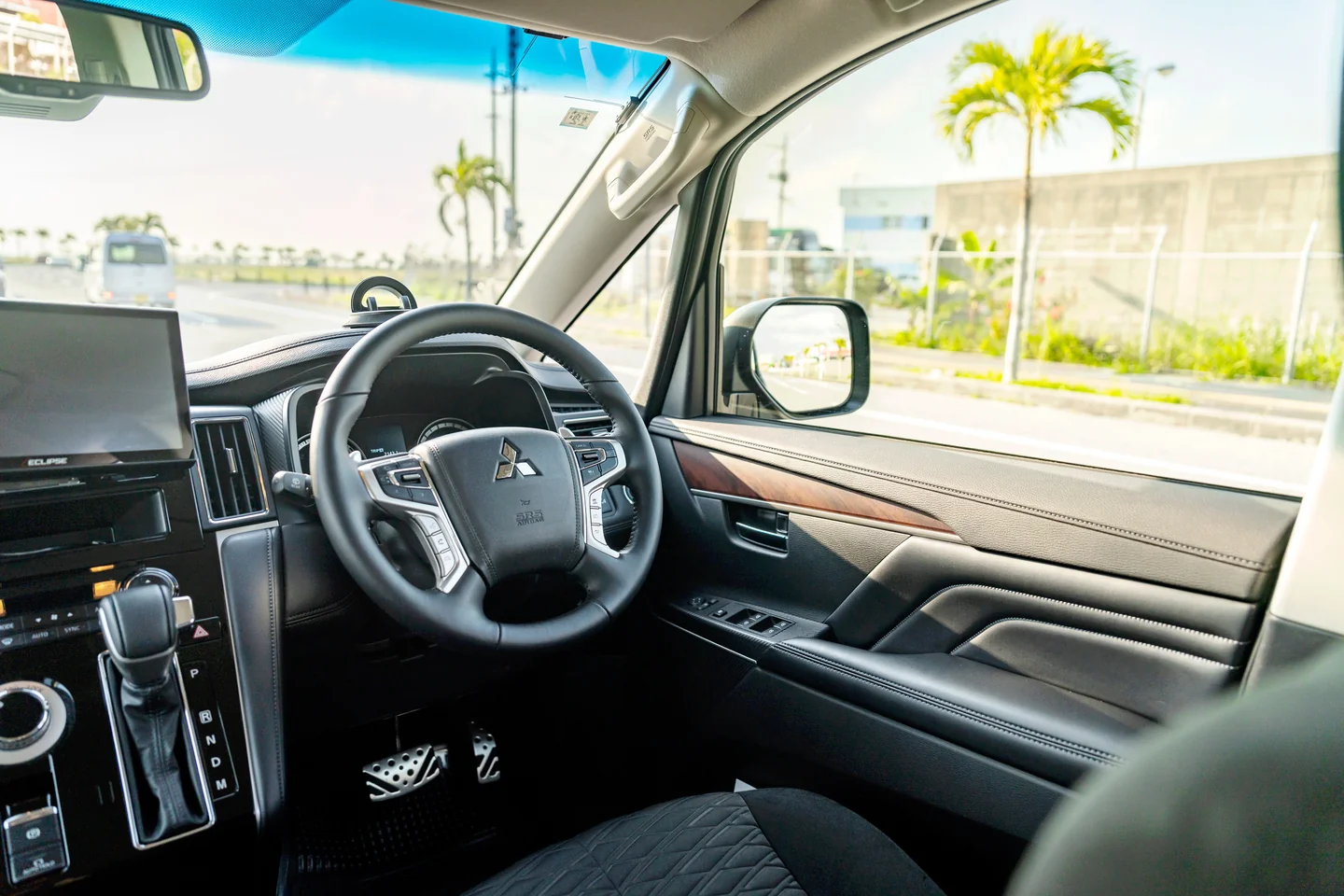
Here’s the full view of the driver’s area. Let’s look a little closer.
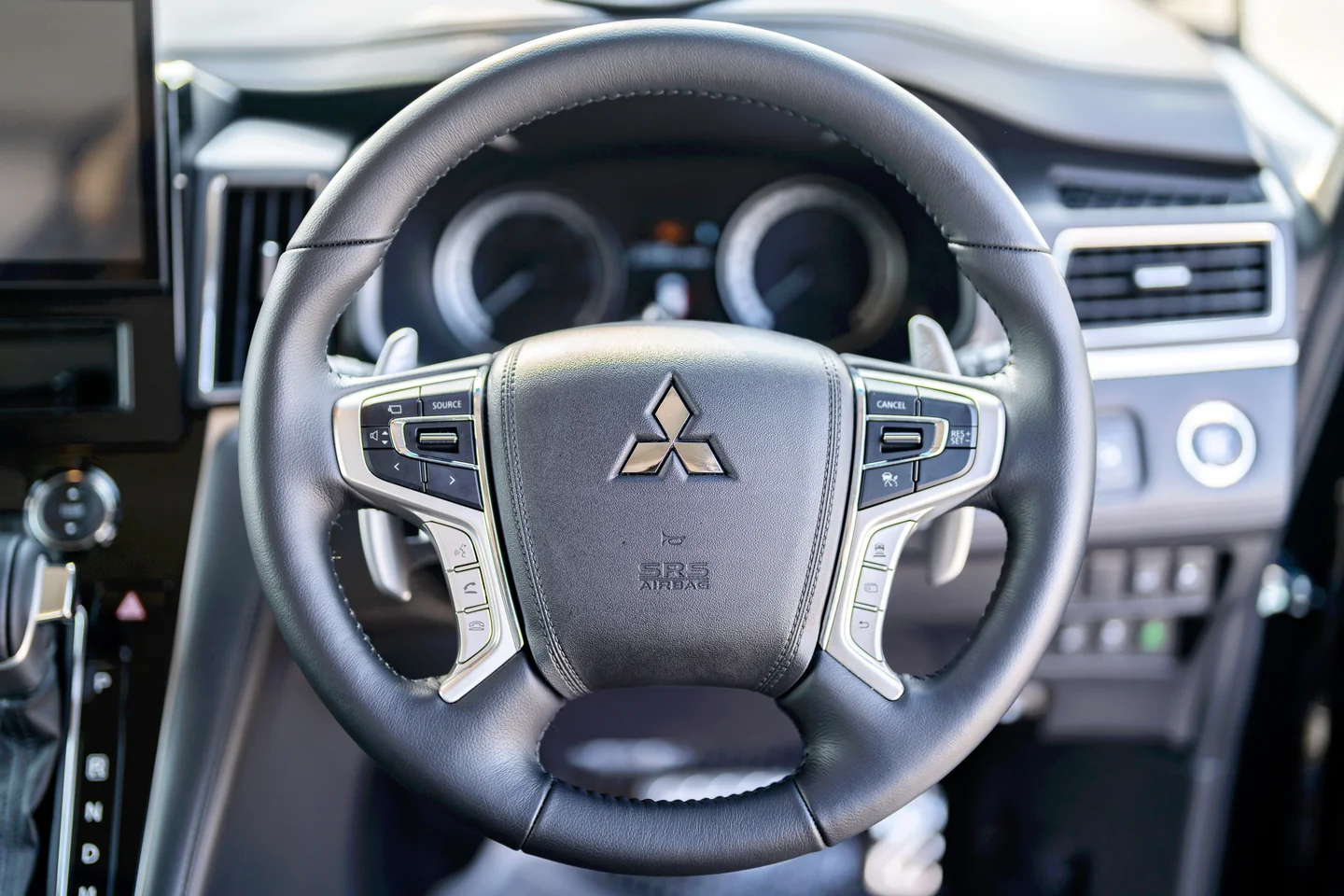
Here’s the driver’s area. Sadly, the left and right buttons on the left side of the steering wheel are audio controls.
The only modification a friend made to his car that I thought was cool was turning those buttons into left and right turn signals. Could they possibly come like that from the factory? I wondered. But no, of course not.
⁉We’re approaching the age of self-driving cars, so why do we still have to use a stalk for the turn signals? Surely buttons would do?
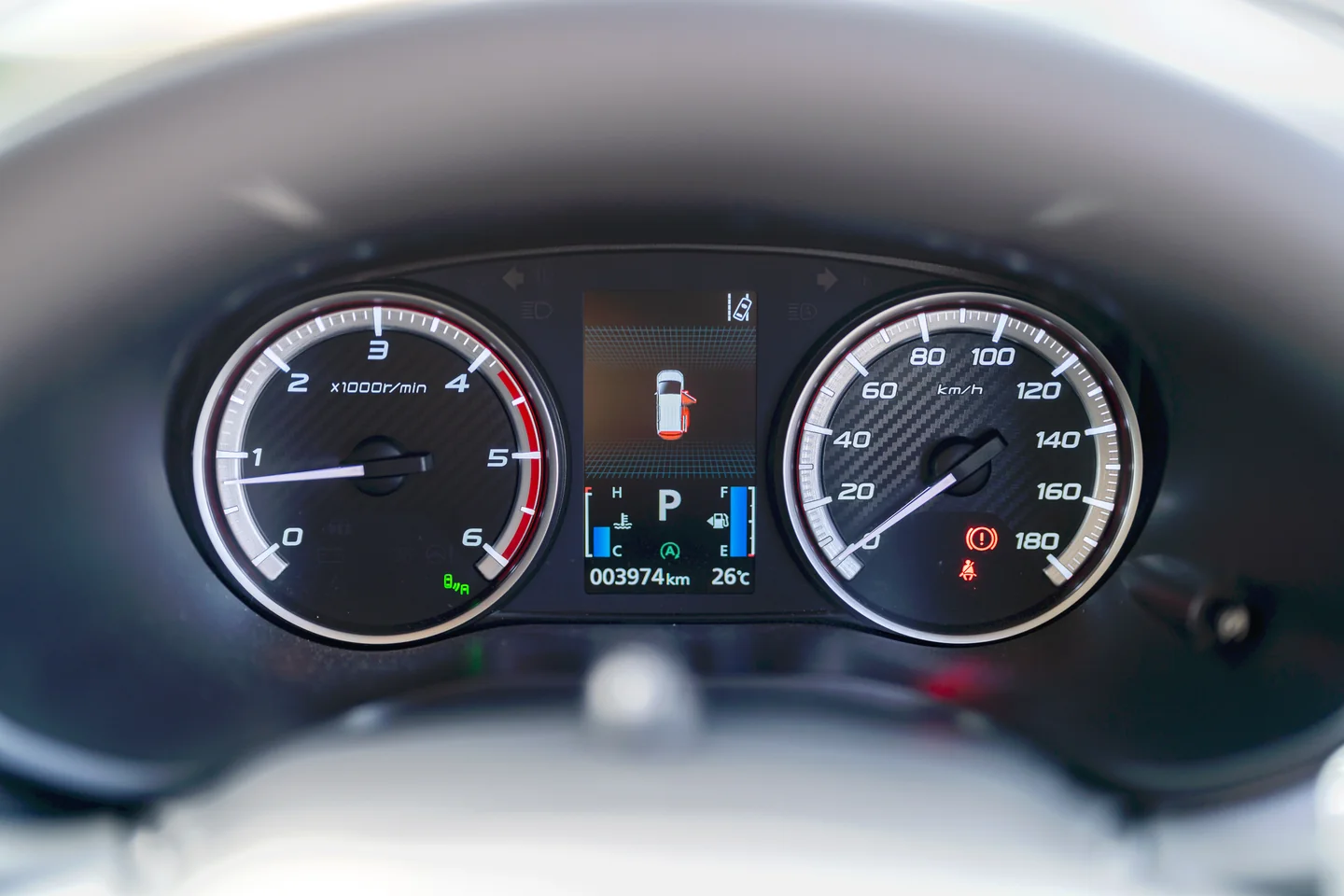
It’s a new car with 3,974km on the clock.
Okinawa is tiny.. Even if you drove around the whole island, you’d cover around 600 km. Which means.. this car has only been rented a few times. Though it’s no secret it had an accident on its very first rental.. I’ll tell you about that later.
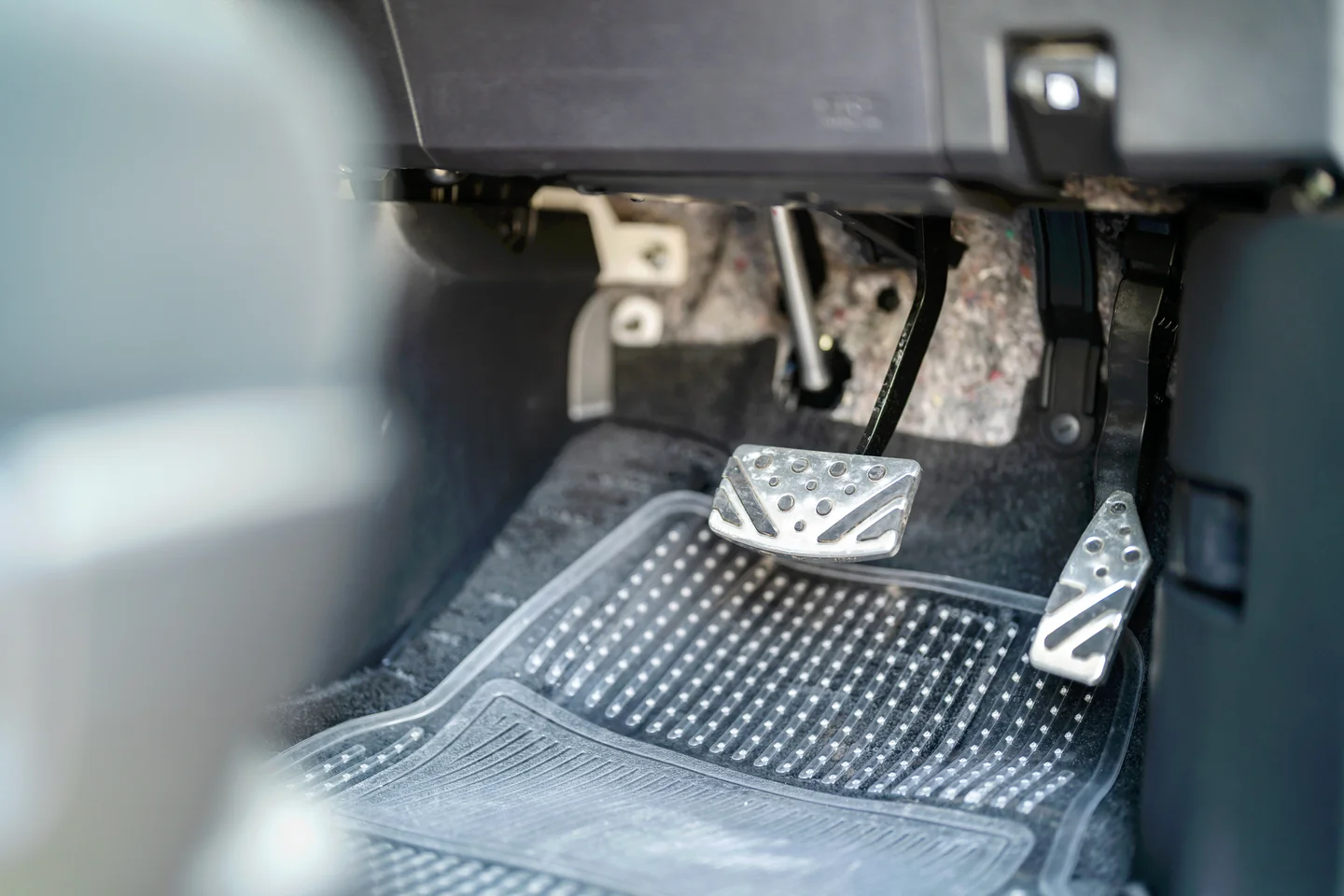
Japanese cars usually have 3 pedals, but this one has 2.
The brake pedal is in the middle, and the accelerator is on the right. Usually, there would be a parking brake pedal on the left, but this car has a button instead.
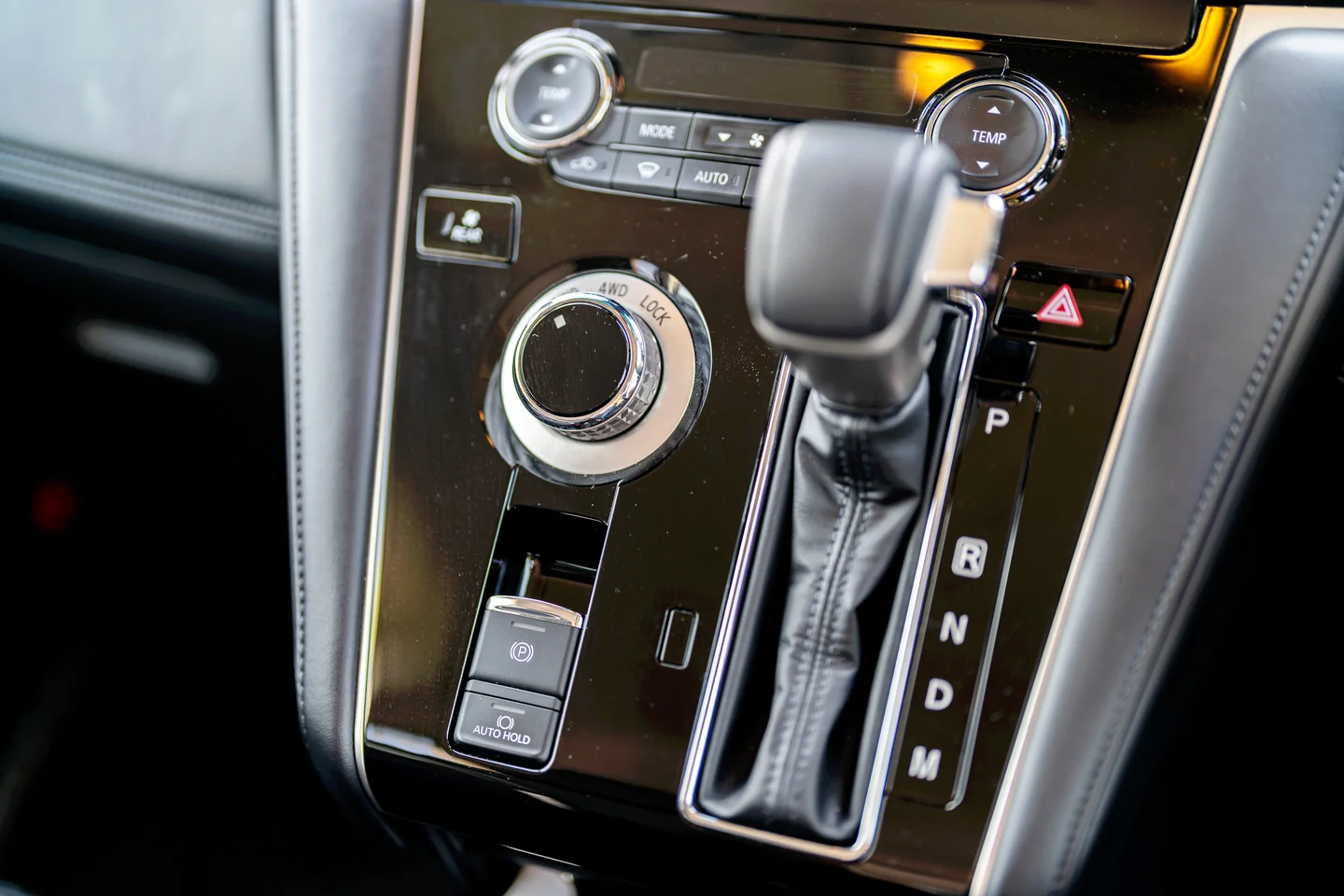
The P button at the bottom of the photo is the parking brake button.
According to the owner.. some customers don’t know this. They press the accelerator with the parking brake on and ask why the car won’t move.
You’ve read this post, so let’s spare you that awkward moment.
Above that is the control for switching between 2WD and 4WD, as I mentioned earlier.
The gear selector has the familiar P (Park), R (Reverse), N (Neutral), D (Drive) and M (Manual) positions.
What’s unusual here is M, the manual mode, which lets you select the gears yourself. It’s an automatic, but you can drive it manually too. With the selector in M, you can change gears using the joystick by your right thumb as you hold the steering wheel.
This is the car I’d buy if I started getting more photo shoot bookings in Okinawa. There are various reasons, but the main one is M mode. It’s fun to drive.
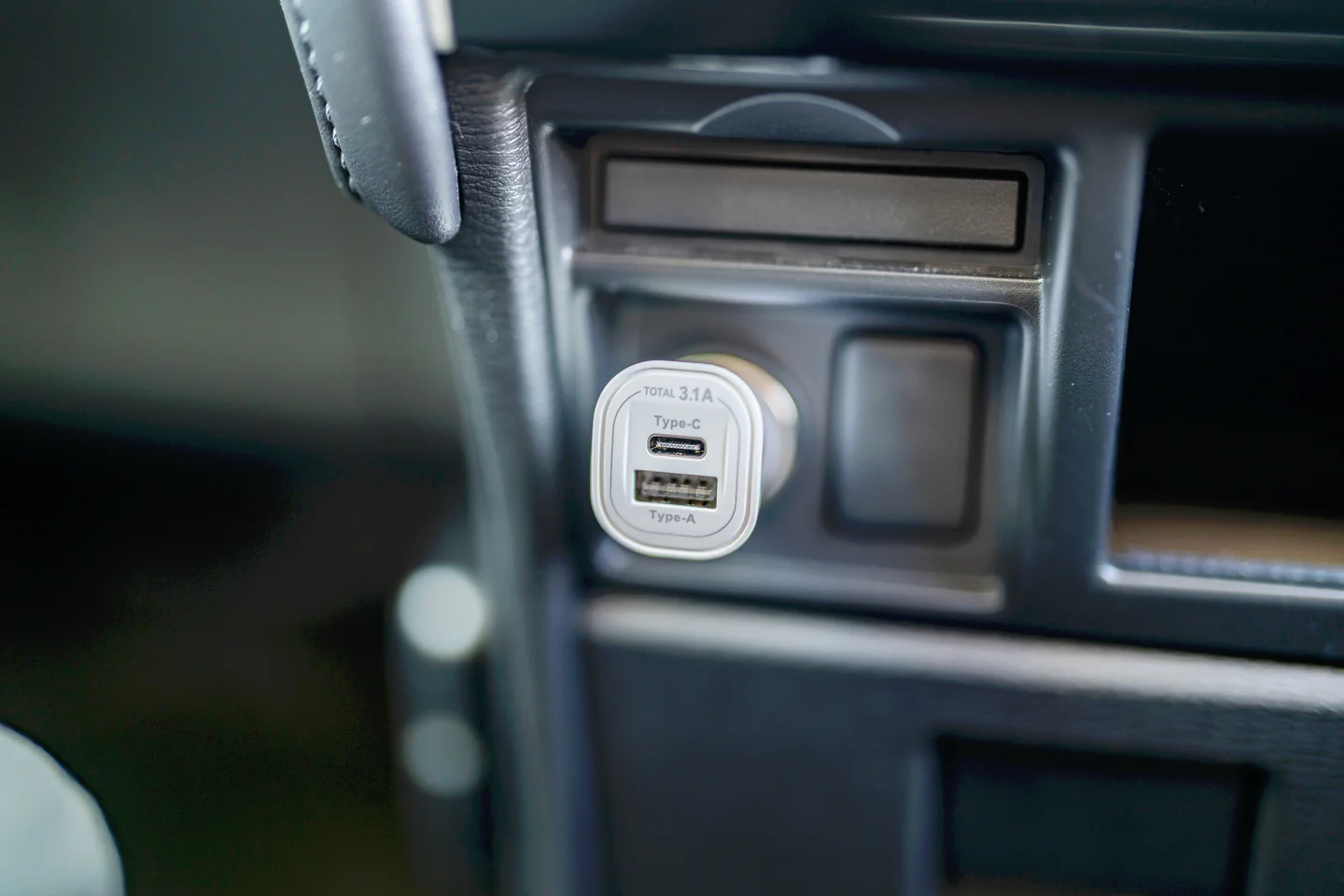
Charging uses the cigarette lighter socket, and a charger like this comes fitted as standard. Maybe because it uses that socket, I couldn’t get fast charging or anything. Hmm.. no.. maybe it’s because of my not-so-smartphone 16 Pro…
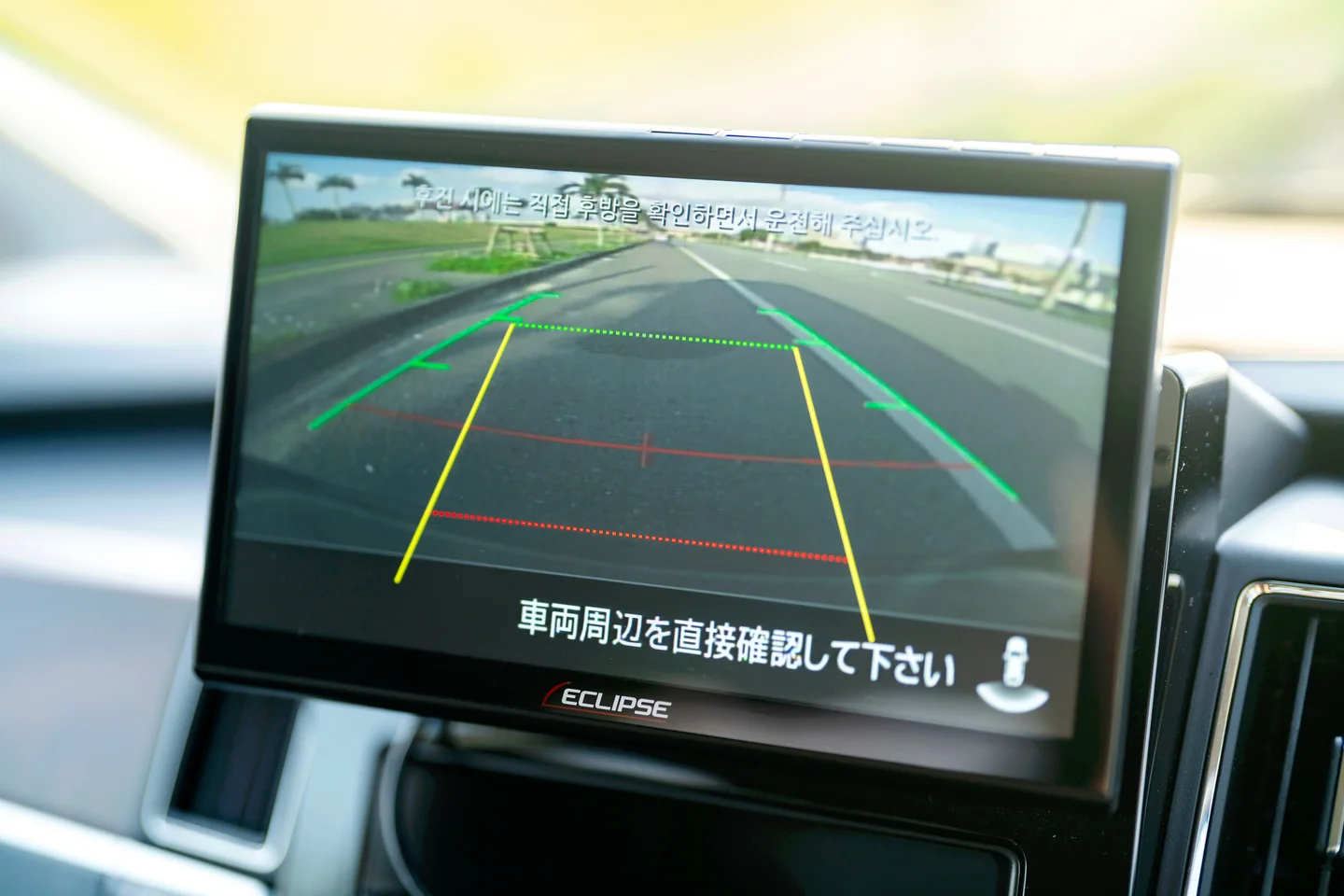
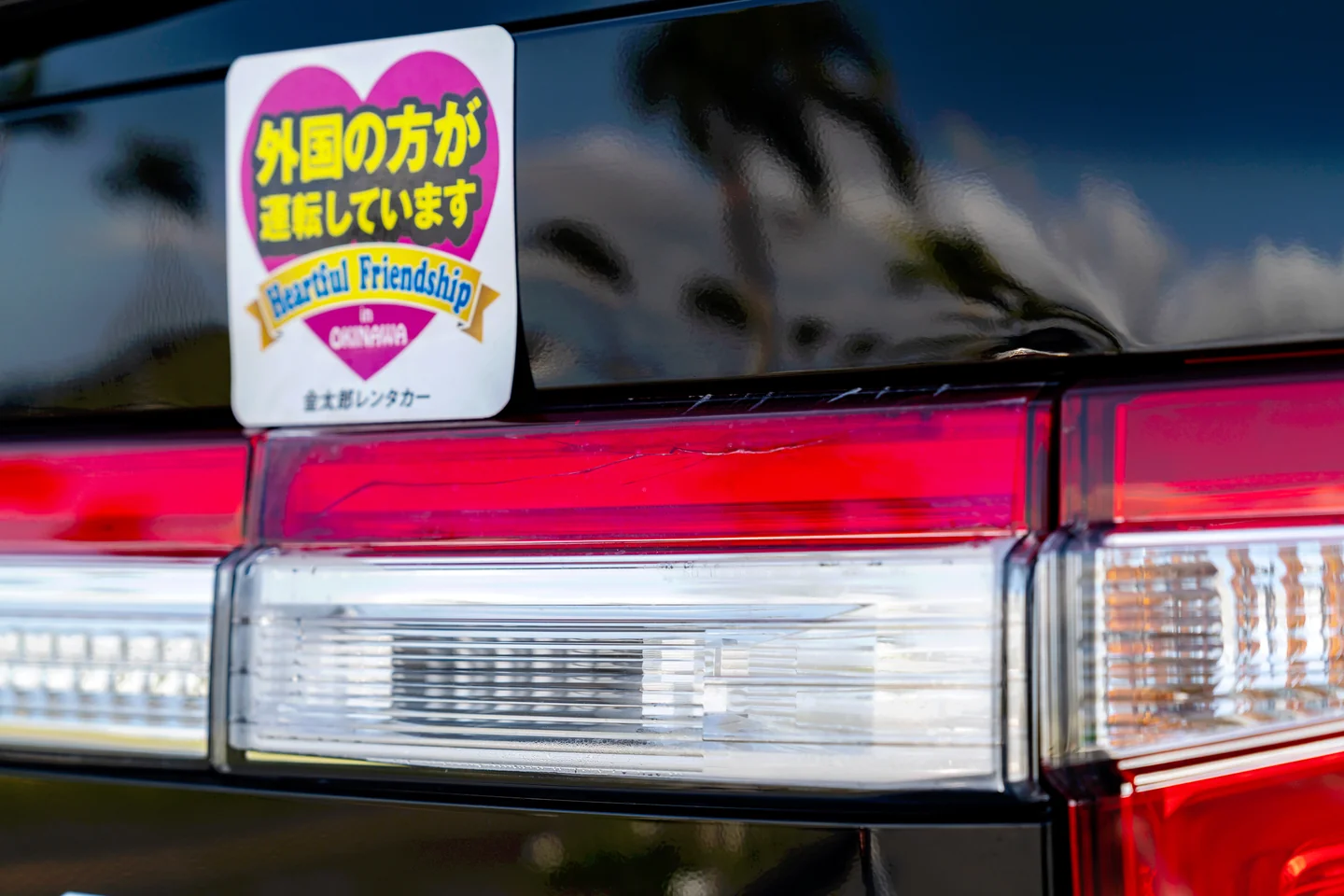
The rear camera doesn’t seem particularly good. And its narrow field of view means you end up with less space than expected when backing into a parking spot. Experienced drivers will probably notice something feels a bit off if they watch the camera while parking in reverse. I feel as though I’ve backed farther in than the rear camera suggests.
The photo on the right shows a headlight that was broken while backing into a parking space.
According to the owner.. they brought the brand-new Delica in one day and rented it out the next.. and it was broken on that very first rental… Quite the initiation, apparently.
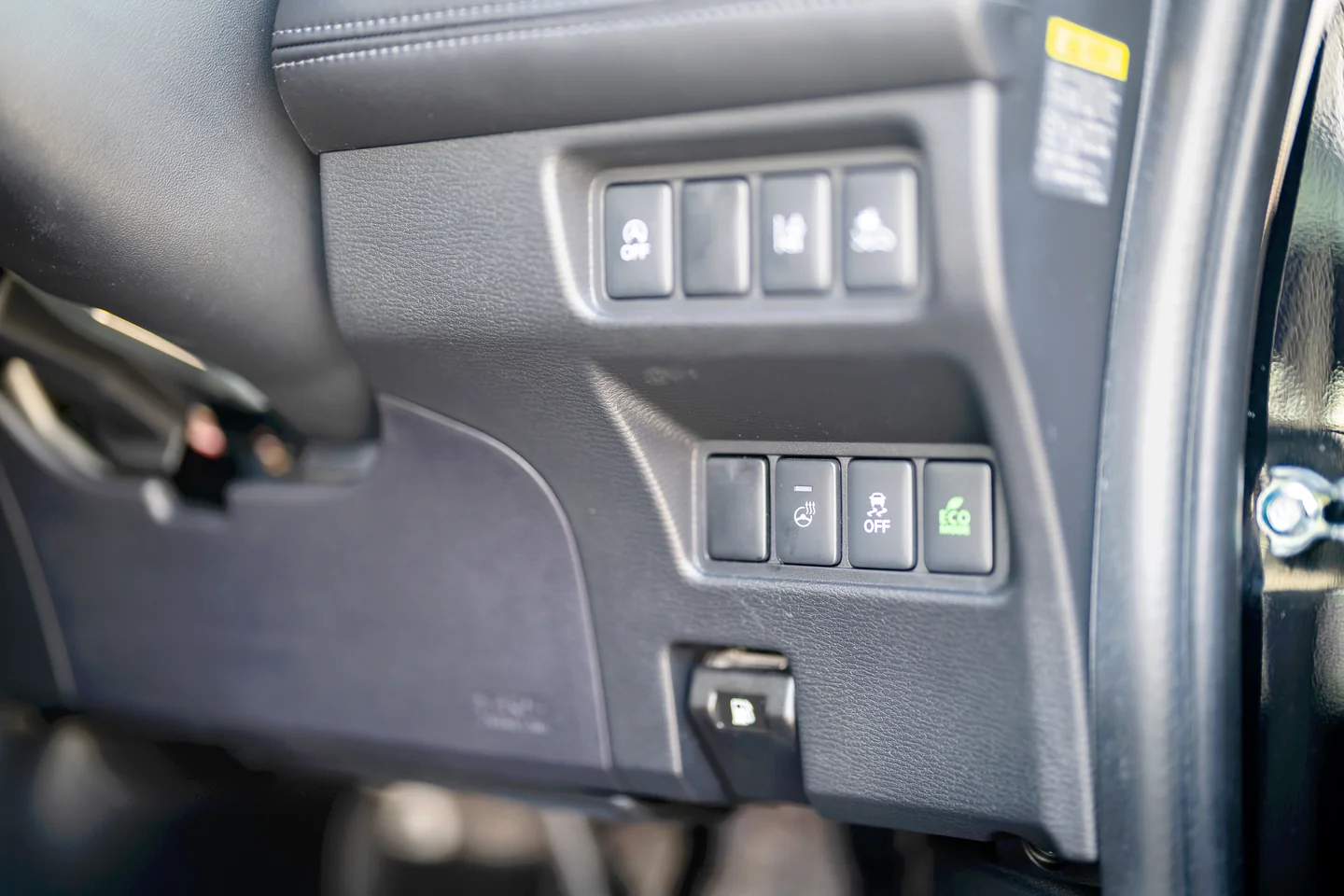
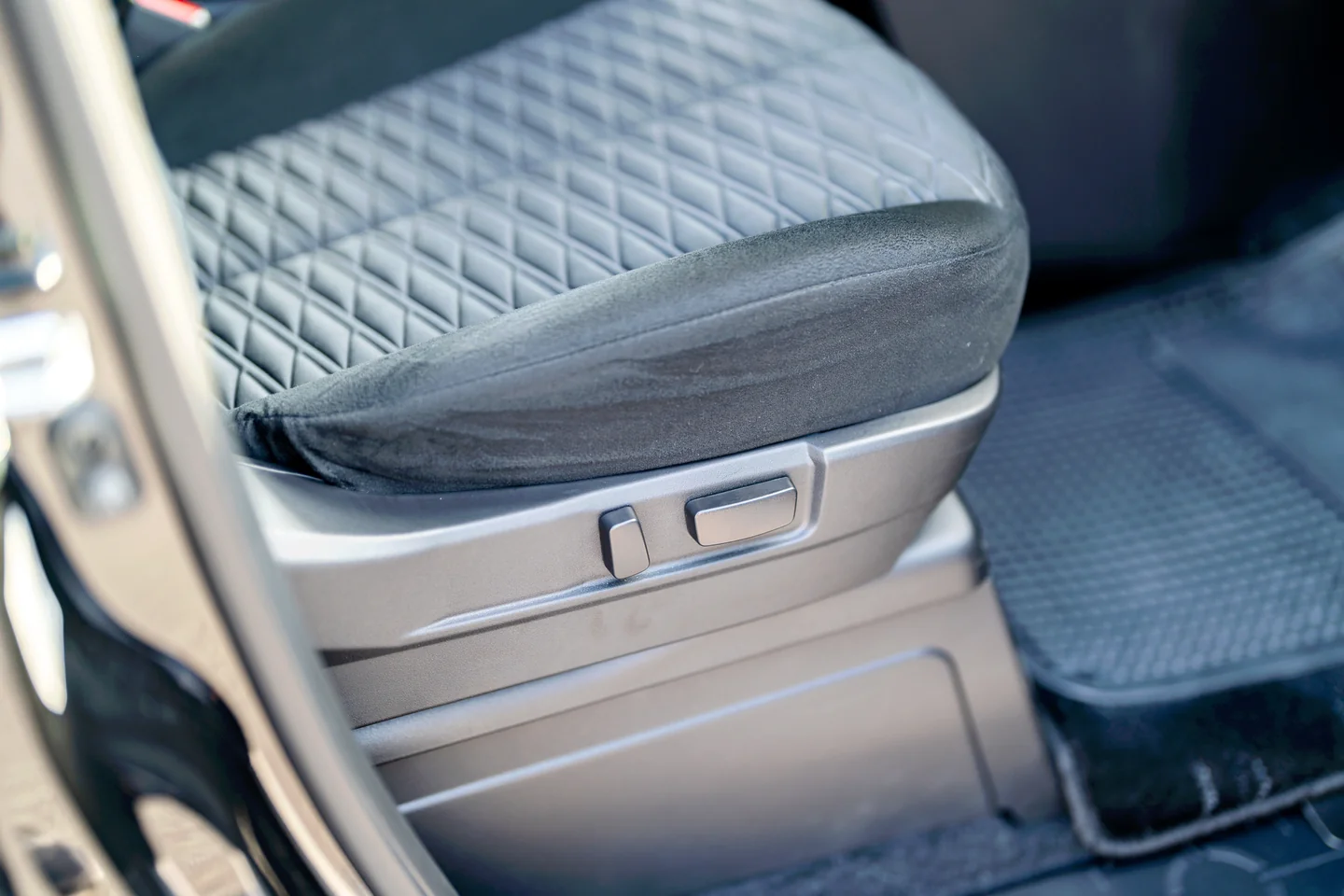
Below the steering wheel.. are buttons for functions you don’t use very often.
At the bottom of the left photo is the fuel door release lever. So many people can’t find it that I have to point it out in every car review.
Also, only the driver’s seat has power adjustment. In the right photo, the left control adjusts the seat tilt, and the right one moves it forward and back.
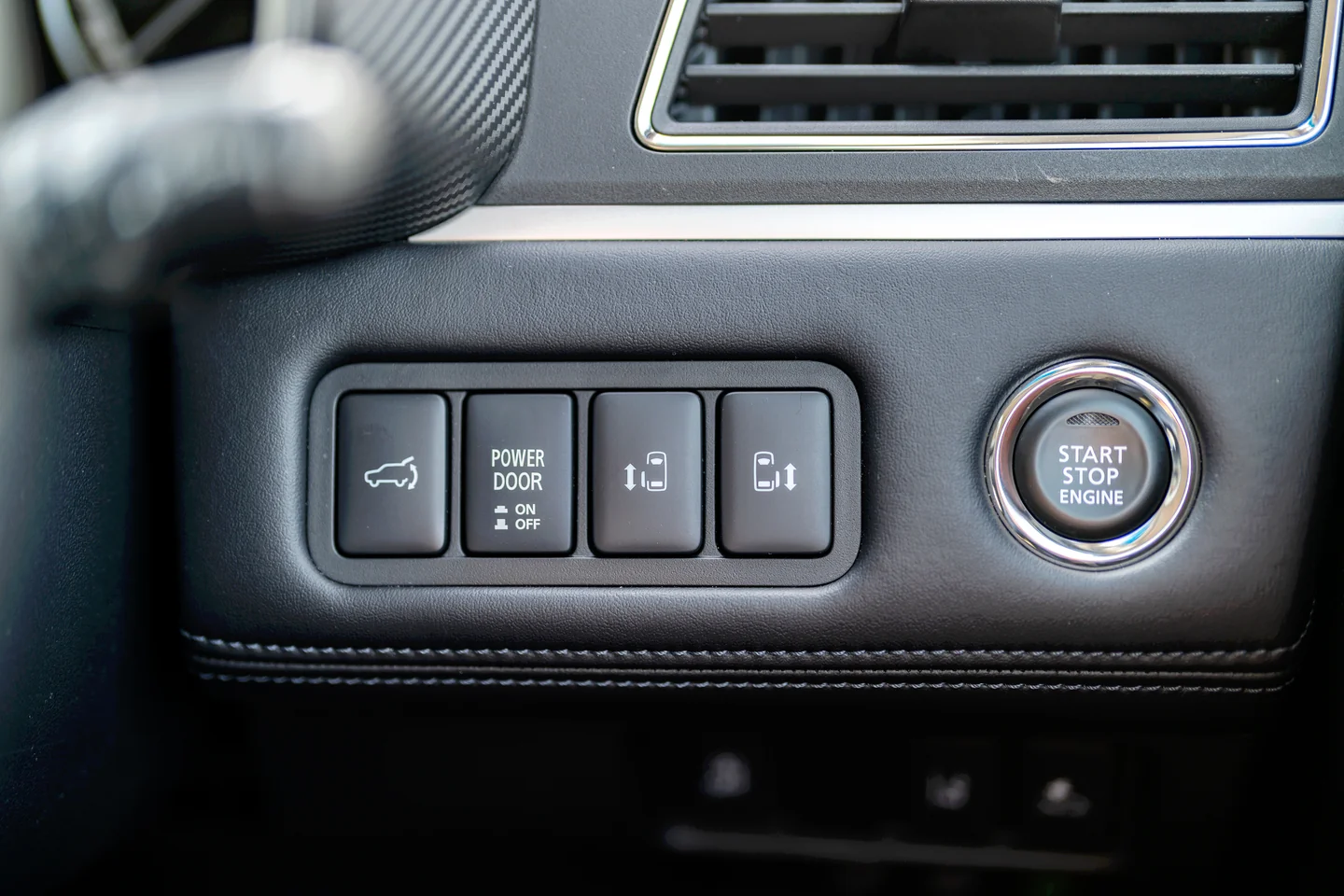
This is the control panel below and to the right of the steering wheel. These controls are related to the doors. As for the start button, well.. you know to press it with your foot on the brake, right?
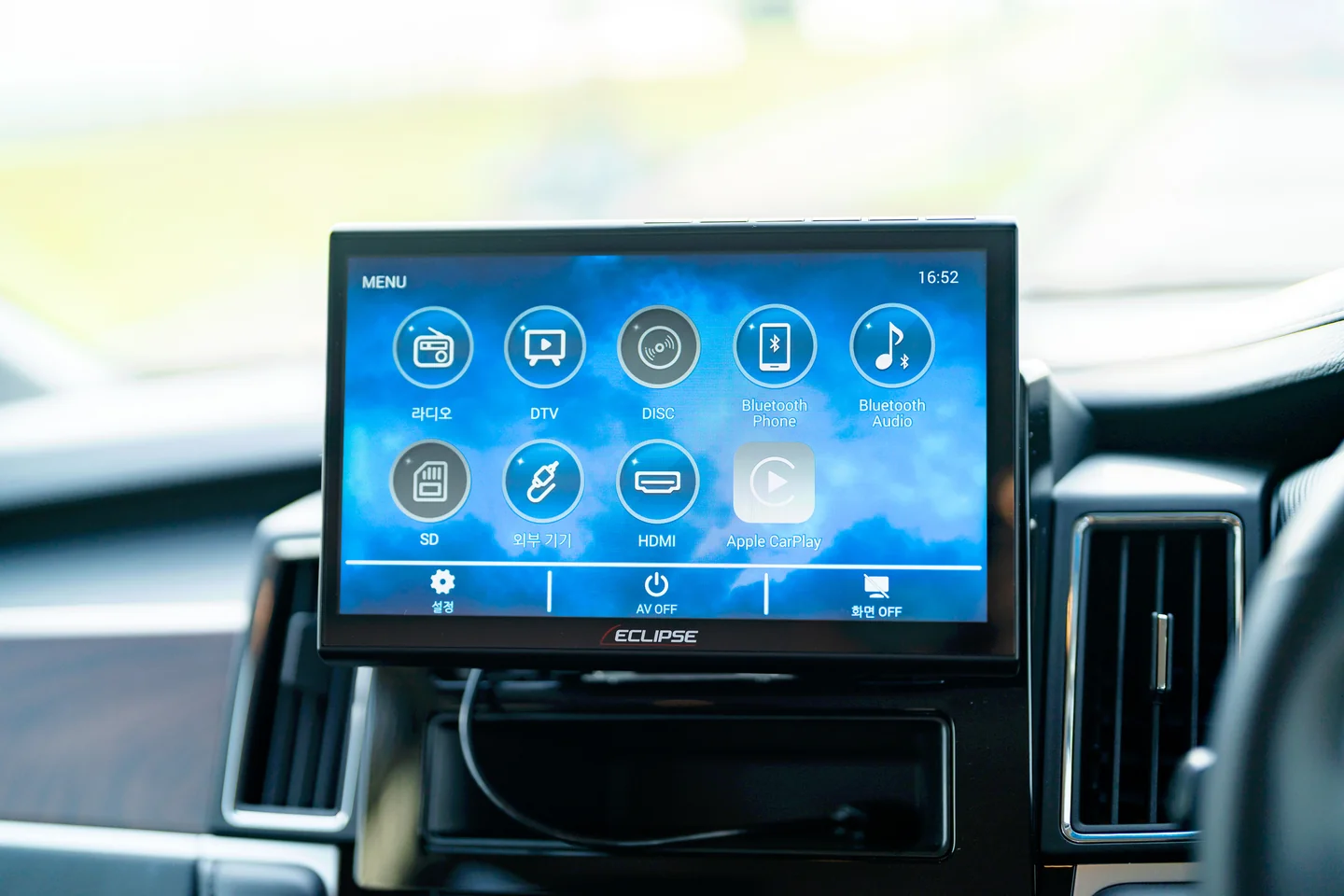
The navigation is set to Korean. A cable comes out underneath it, and you can connect a USB-A drive with videos for the kids and play them.
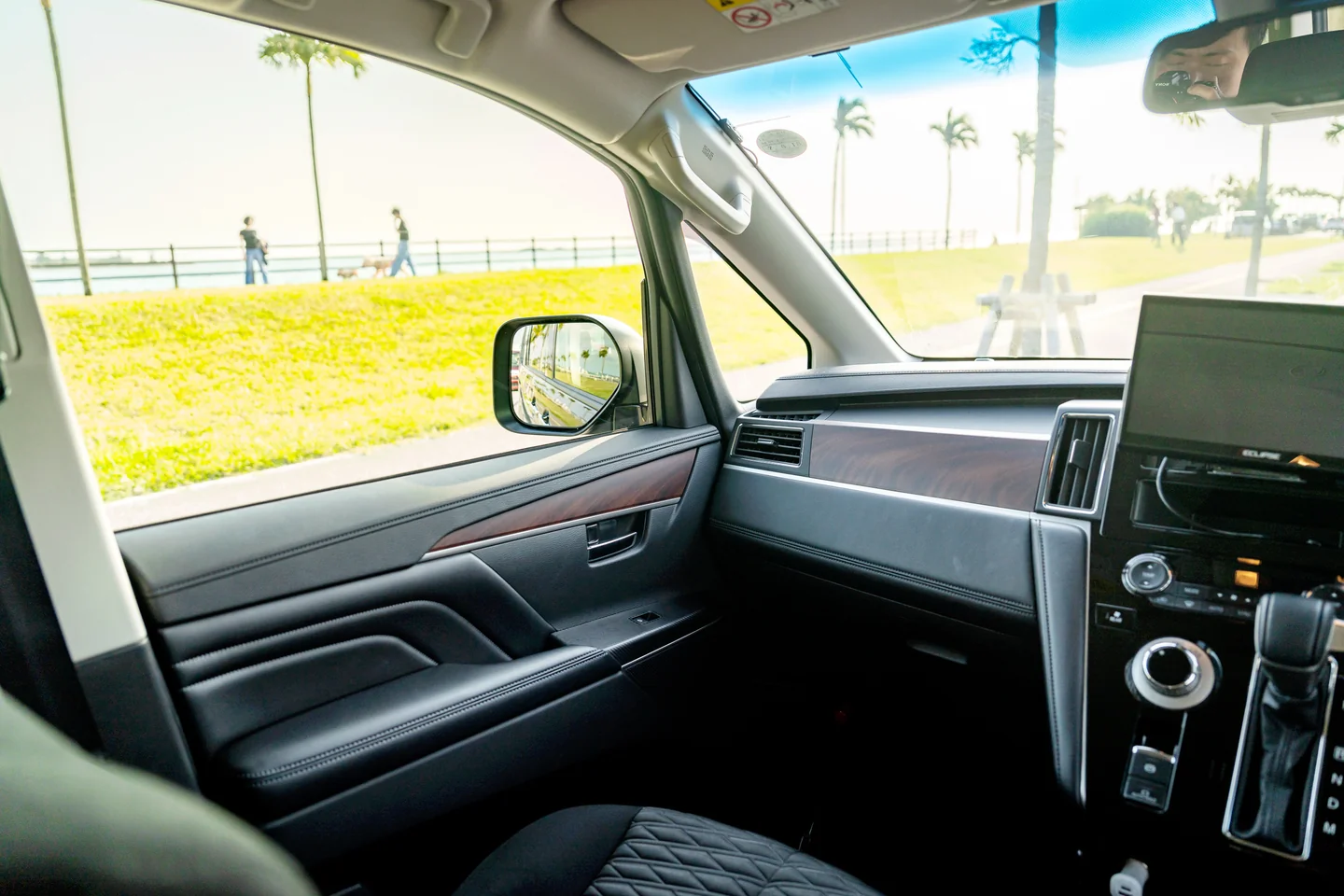
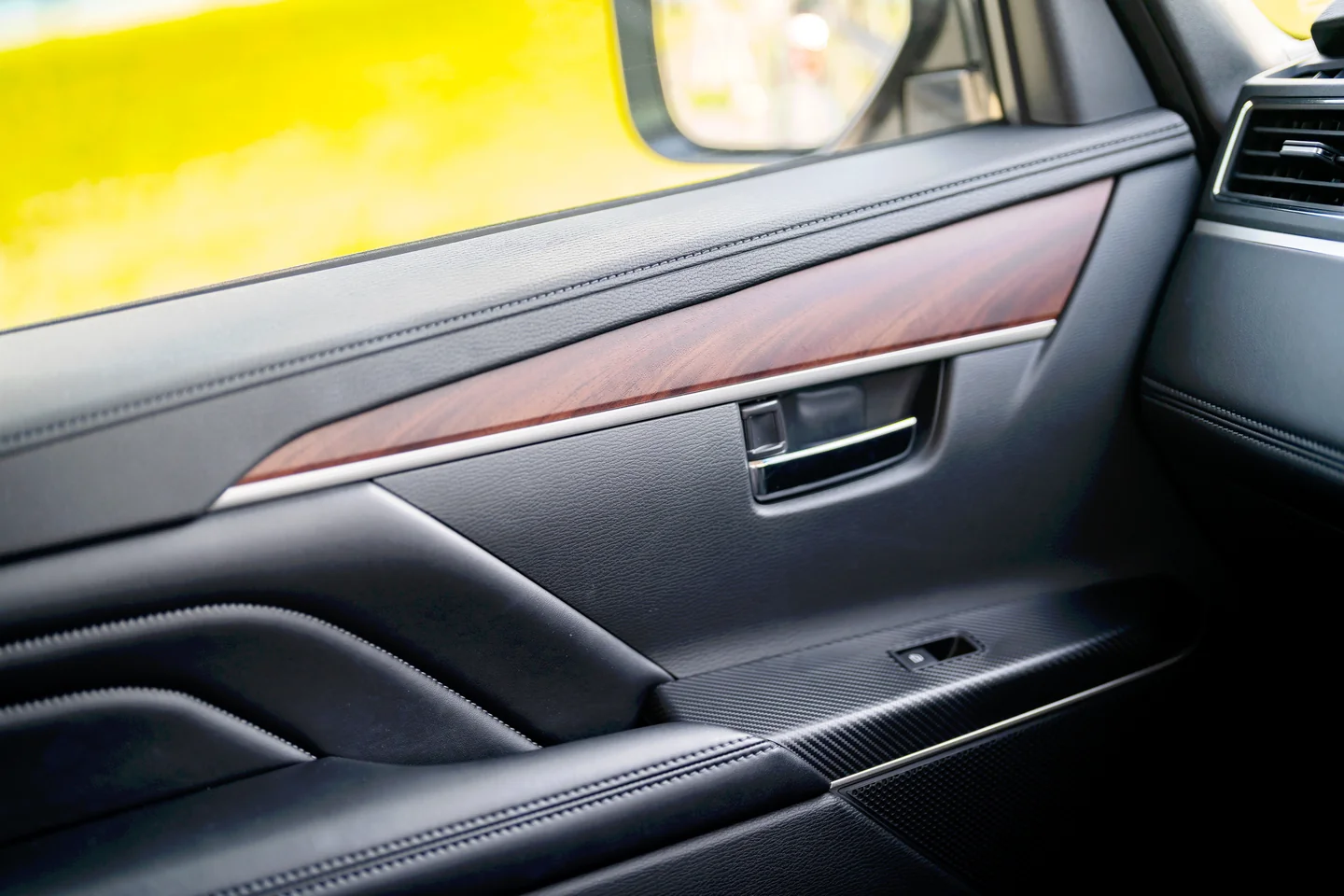
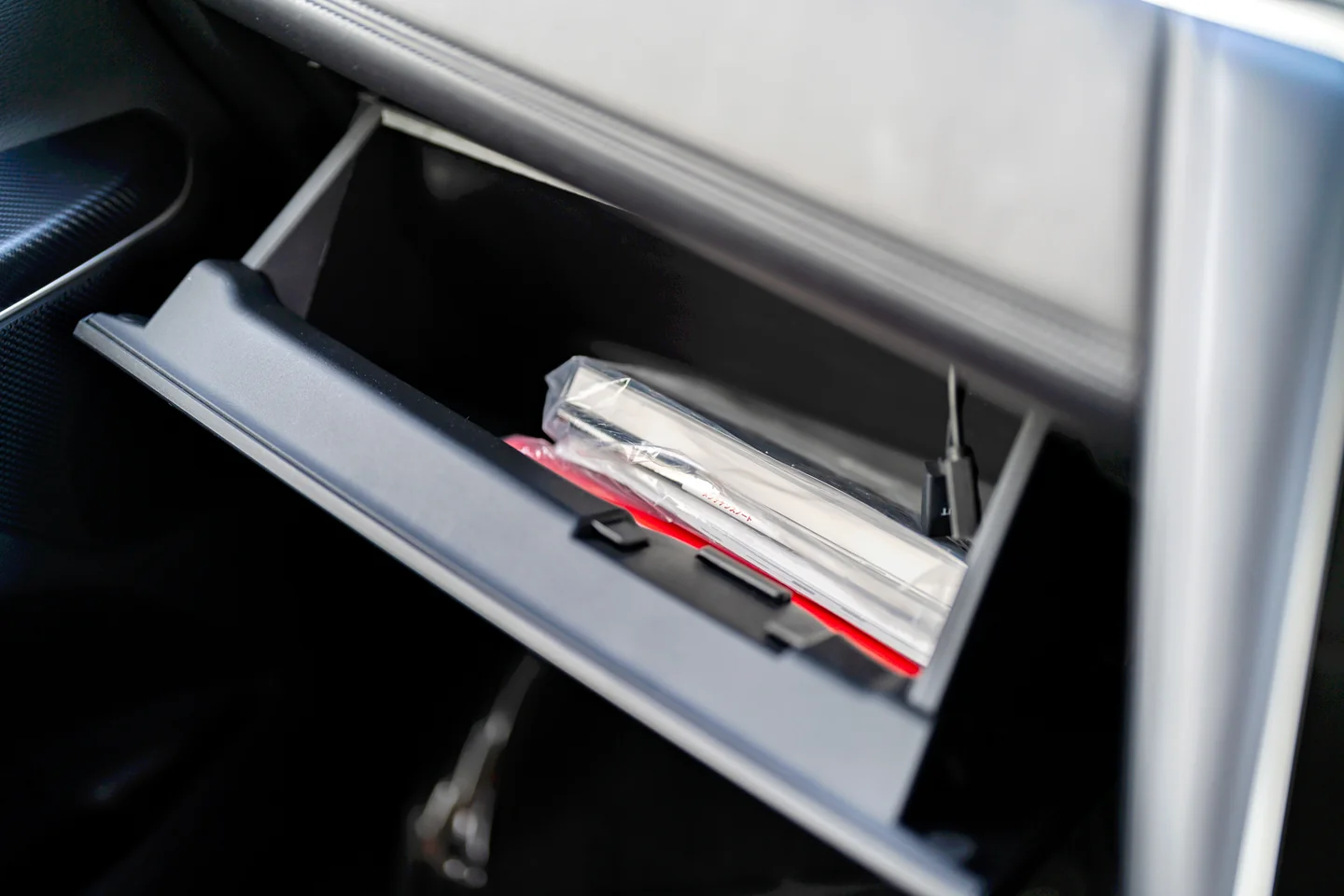
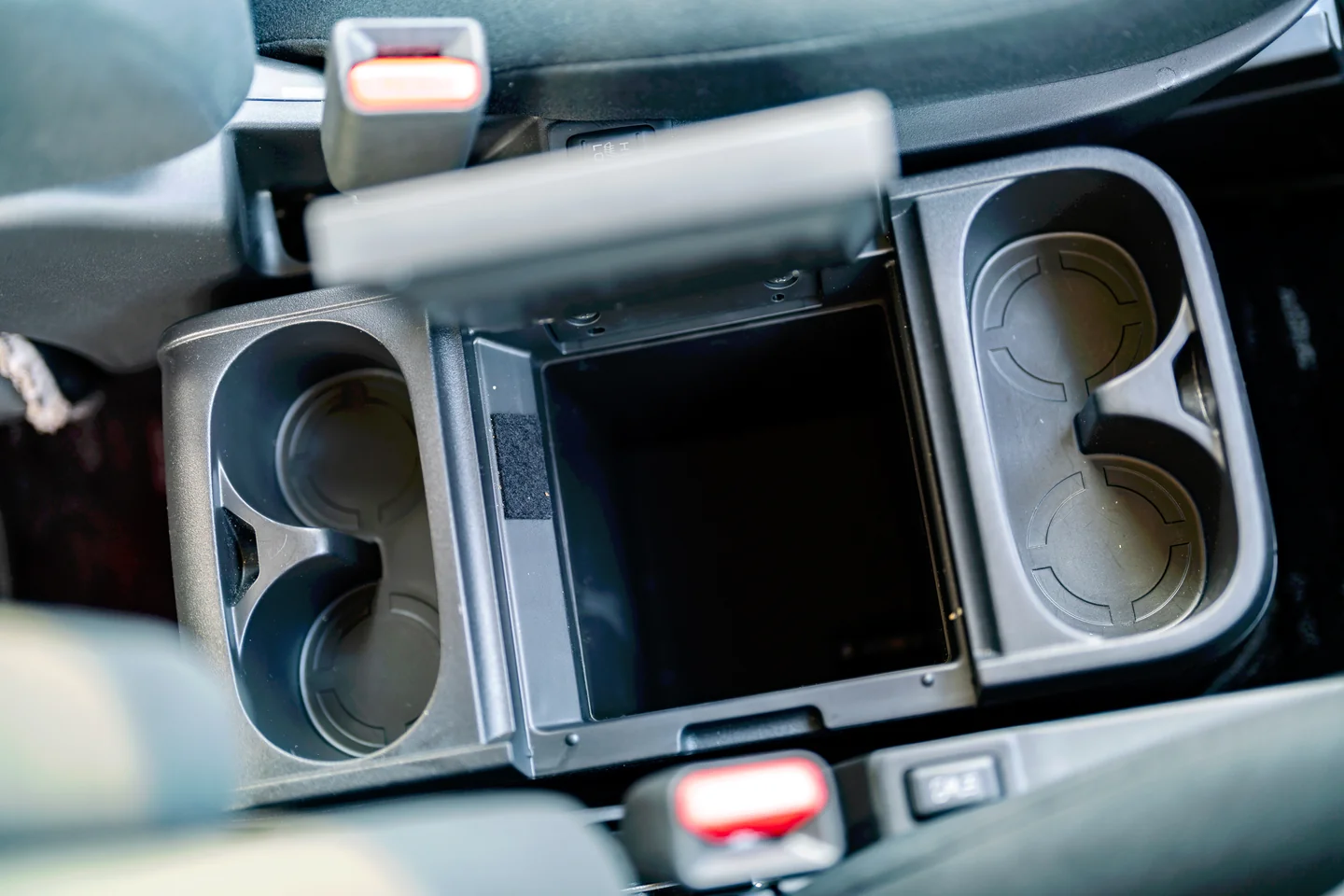
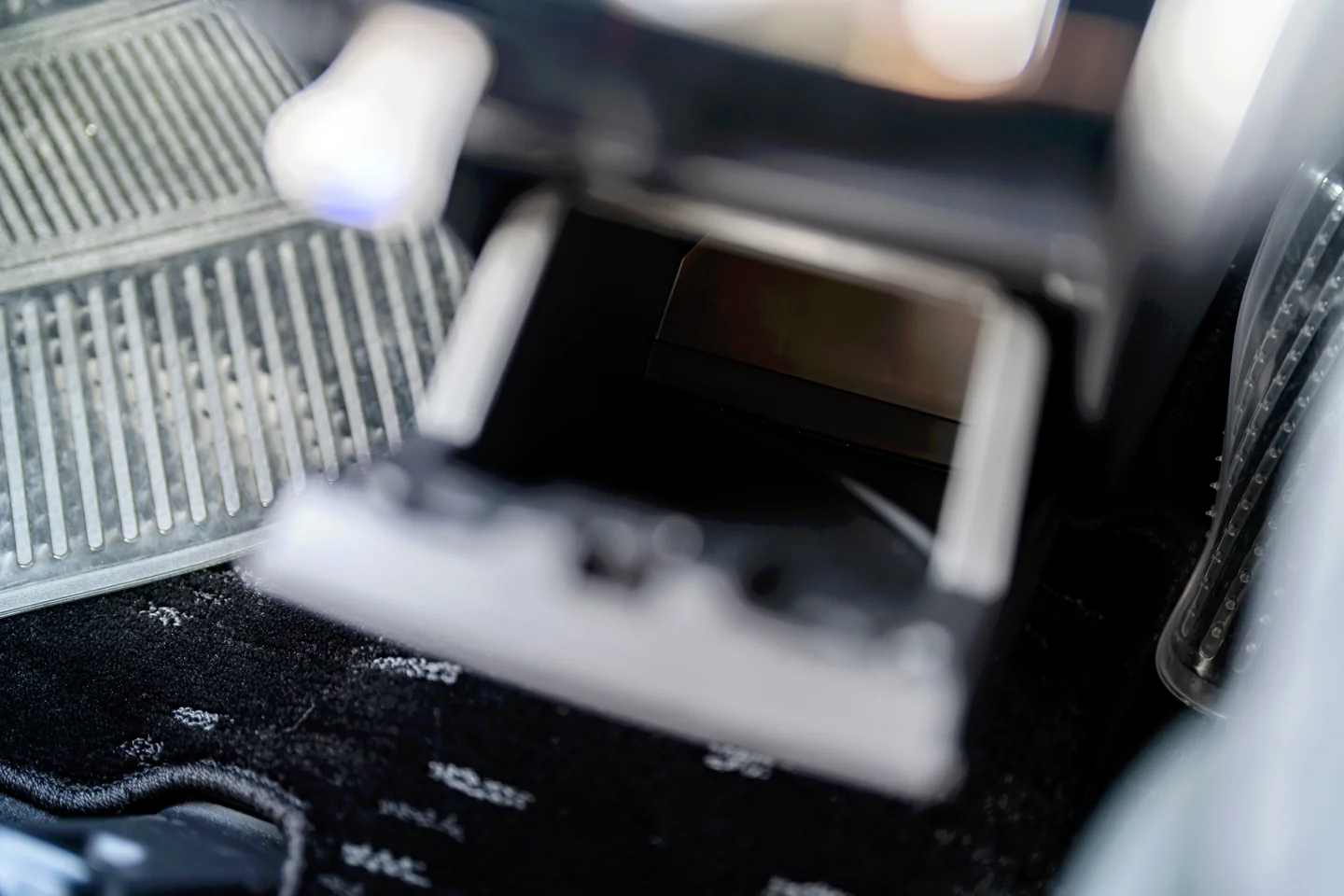
It’s quite a big car, but there’s less room to stash snacks than you’d expect. There are plenty of small storage compartments instead. And that wood-grain design.. BMW uses it a lot, but I didn’t know you could work it in like this.
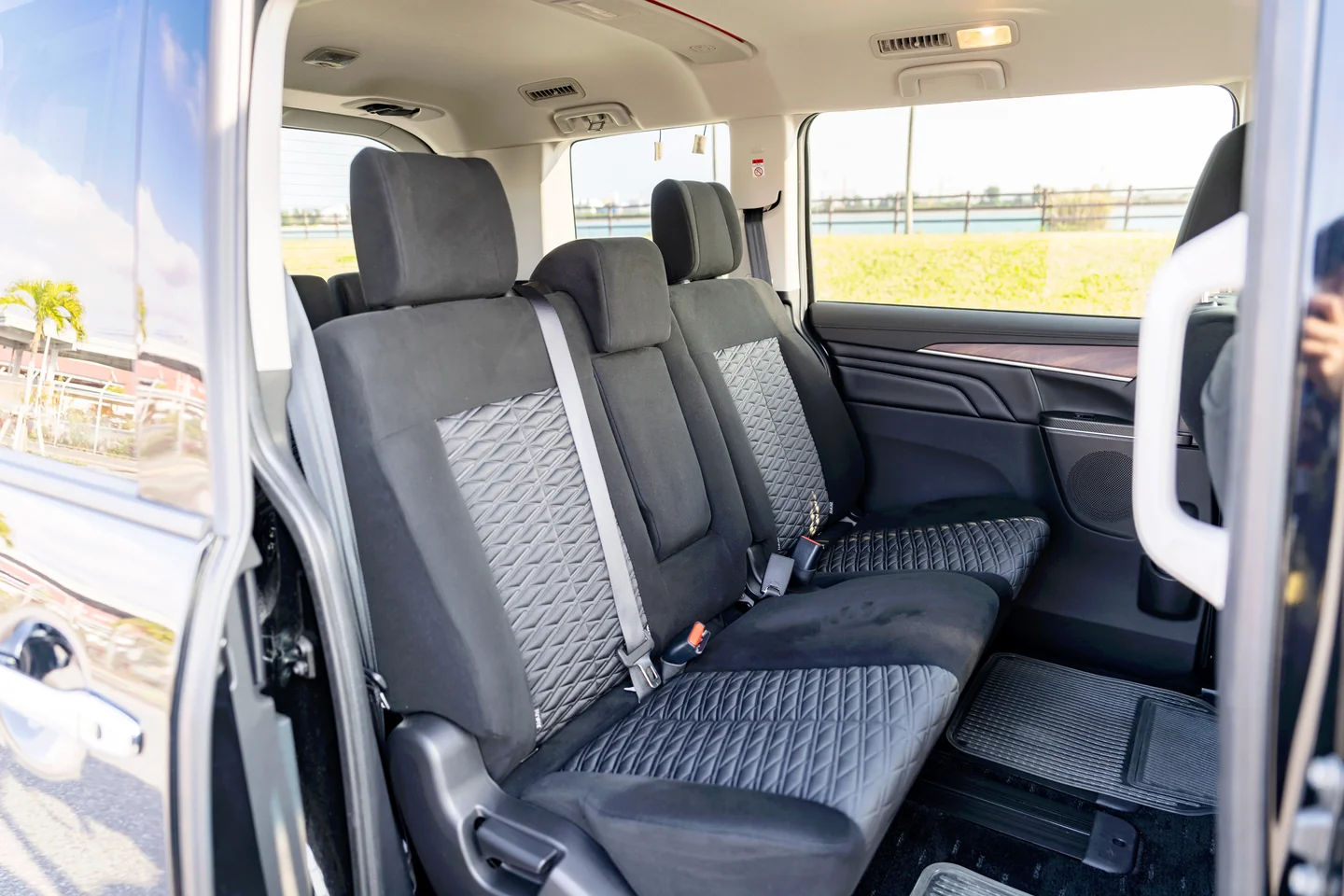
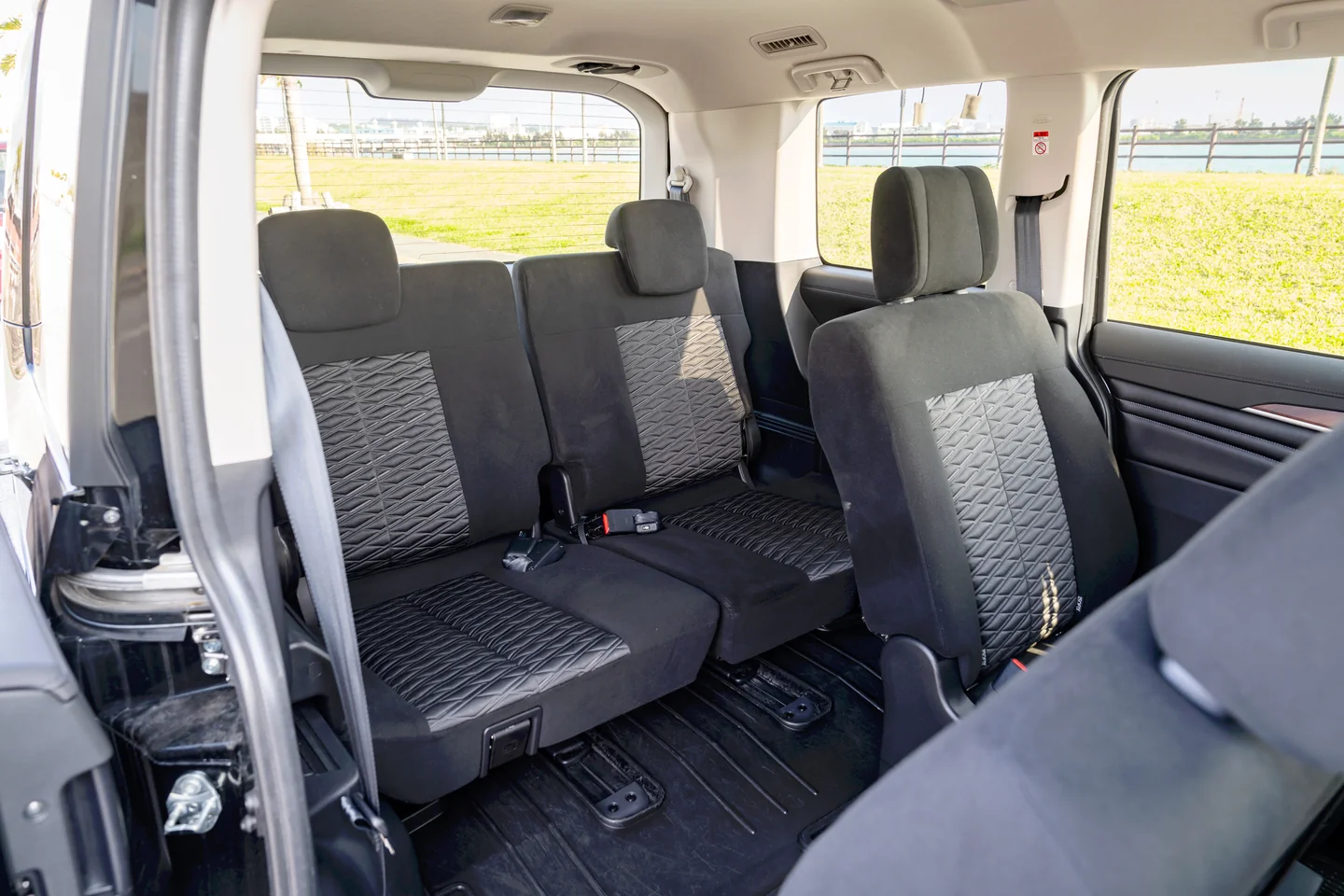
The second row seats 3, and the third row seats 2. These use levers rather than power buttons, but the levers work smoothly, so it’s easy to slide or recline the seats.
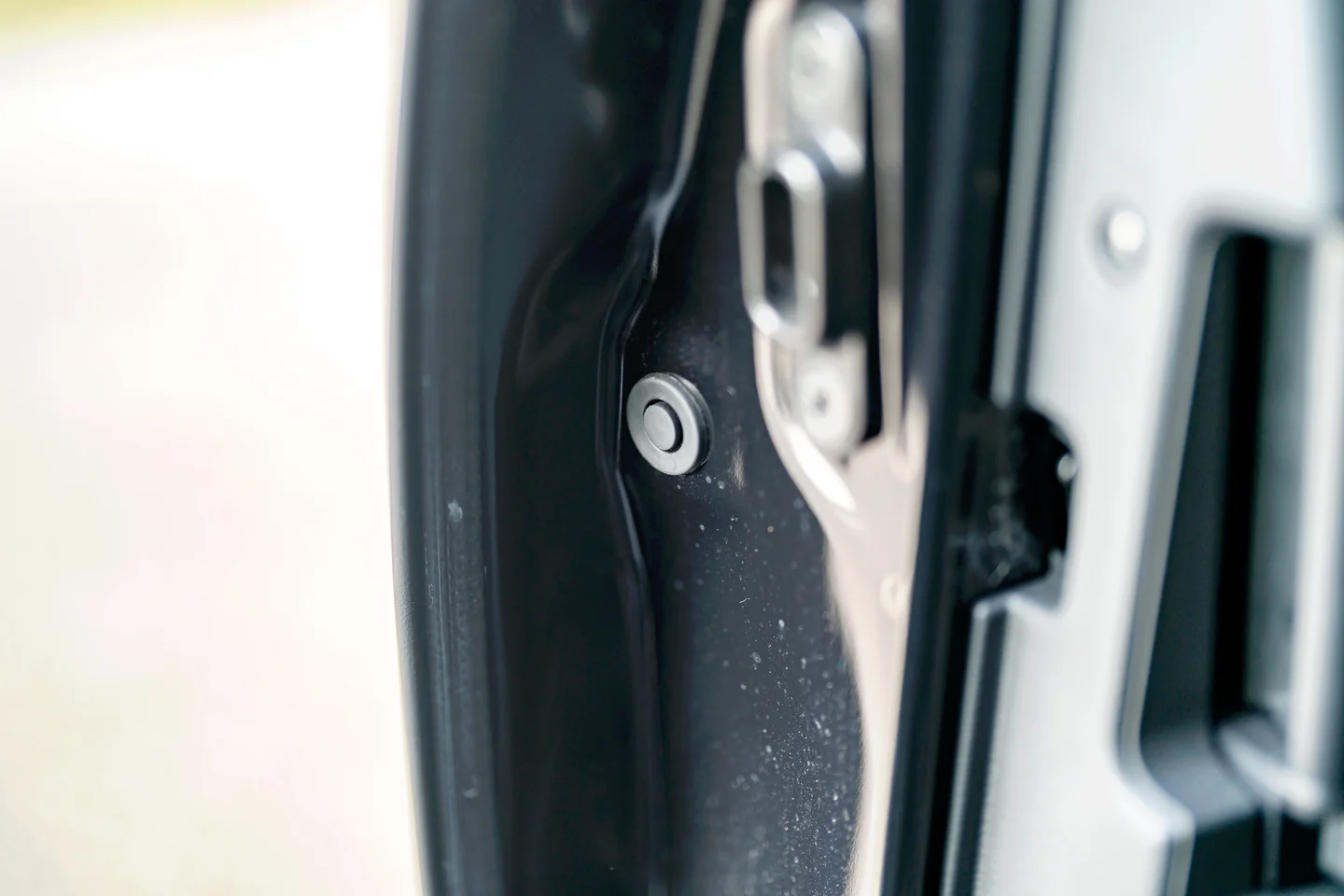
And here’s how you can tell this is a new car.. this part around the rear power sliding door. On cars with power sliding doors, this area usually gets very rusty. The rest of the car is fine, but this bit rusts. Moisture stays trapped here after a wash or rain.. Since this car is new, there’s none of that. Spot-less.
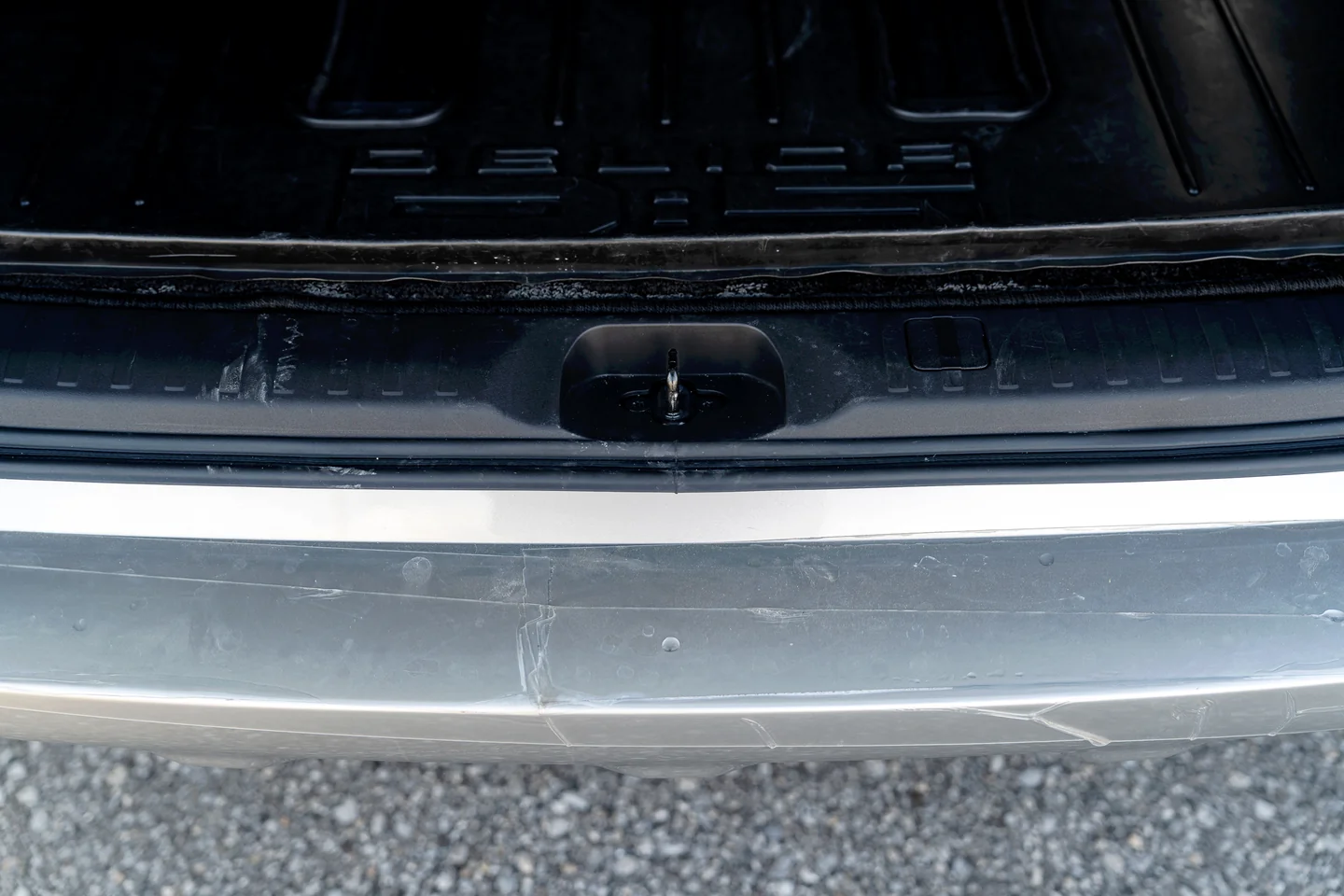
Even though the car is new.. they’ve put clear protective film around the cargo area.
Here’s why.. Travelers keep loading and unloading suitcases. The cases are heavy and keep scraping that spot. This part gets wrecked on every rental car. It’s going to get wrecked anyway.. so they’ve put the film on in advance..
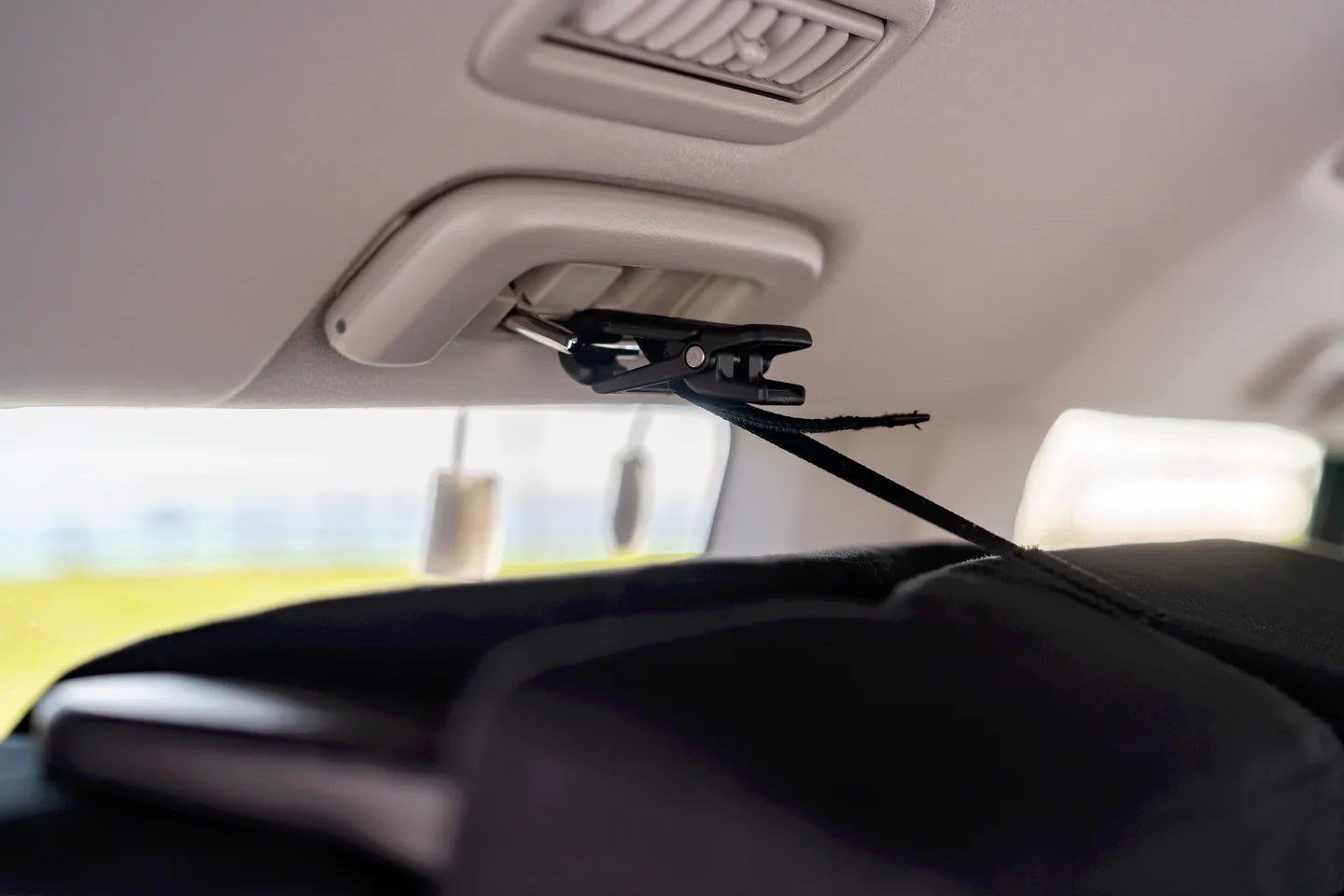
When you fold the rear third-row seats to make room for luggage, secure them on those hooks.
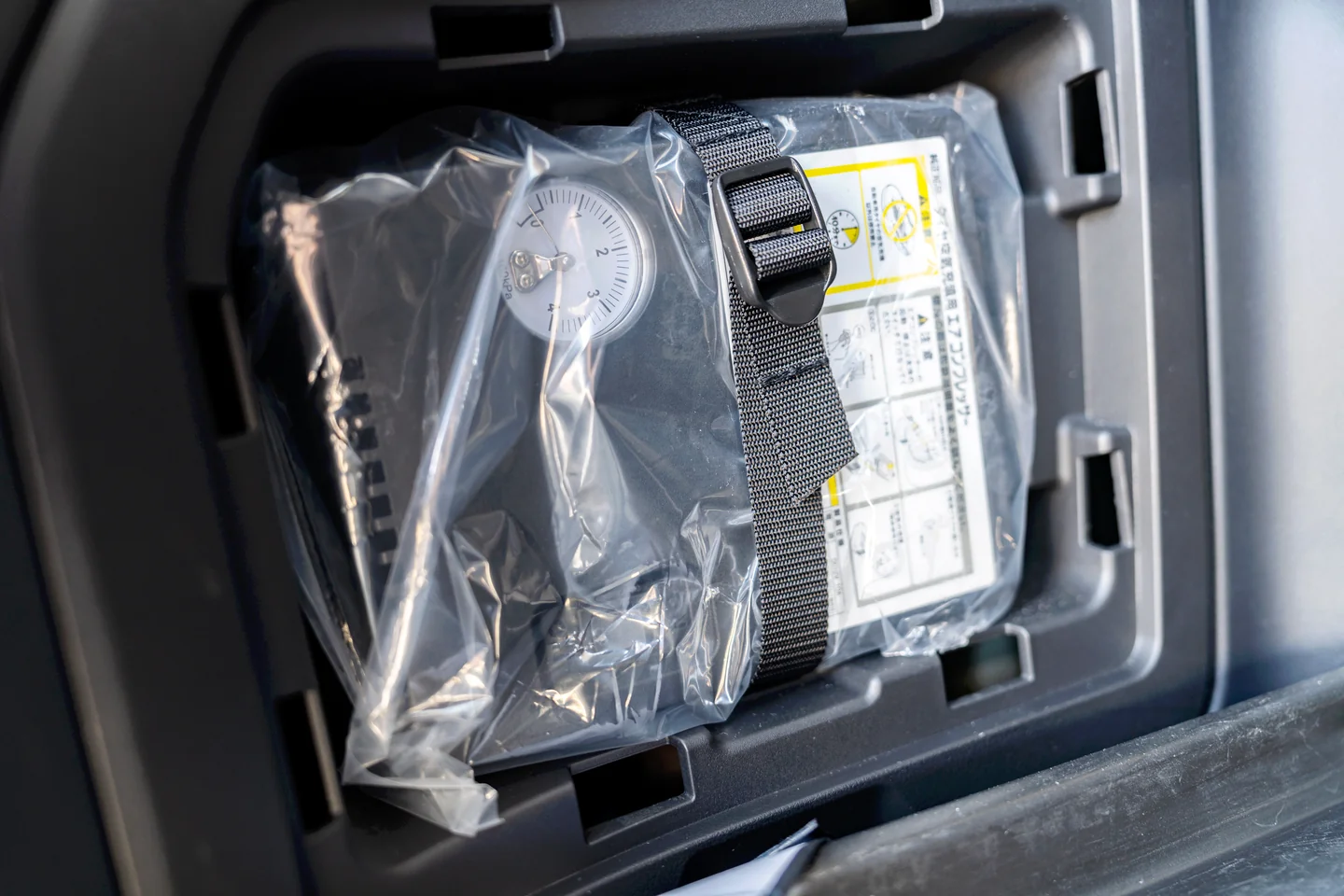
There’s a kit for emergency use if you get a flat tire. I’ve used these a lot, so I know them well. By the way, flat tires aren’t covered by insurance. It’s really just luck.. luck of the draw..
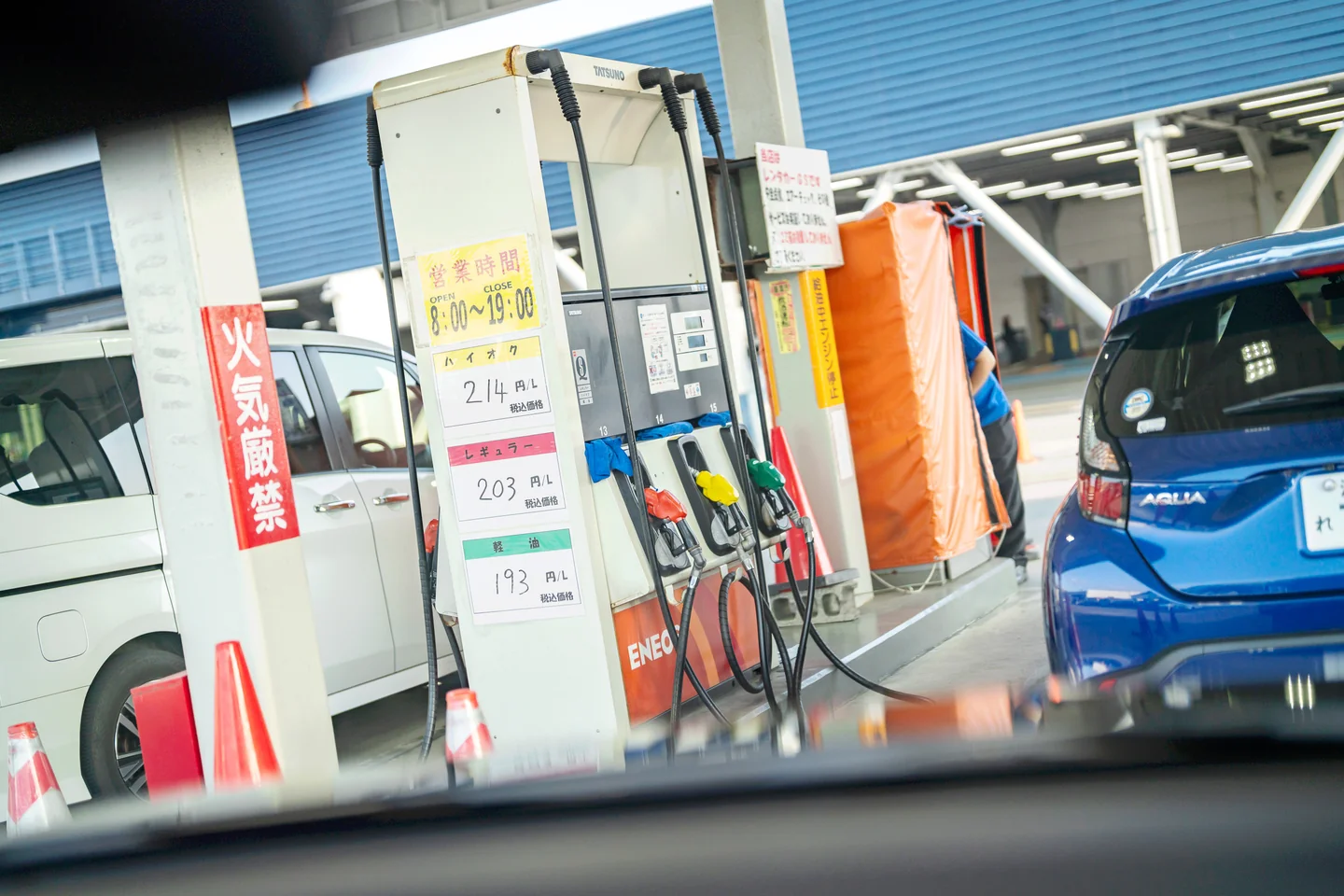
By the way, this Delica D5 runs on diesel.
After reviewing nothing but 660cc cars lately, suddenly reviewing a 2200cc car.. it certainly feels less fuel-efficient. My fuel costs were almost twice what they were with a 660cc car.. This is a staffed gas station, but
it goes without saying.. you need to fill the tank before returning the car. The company always checks this.
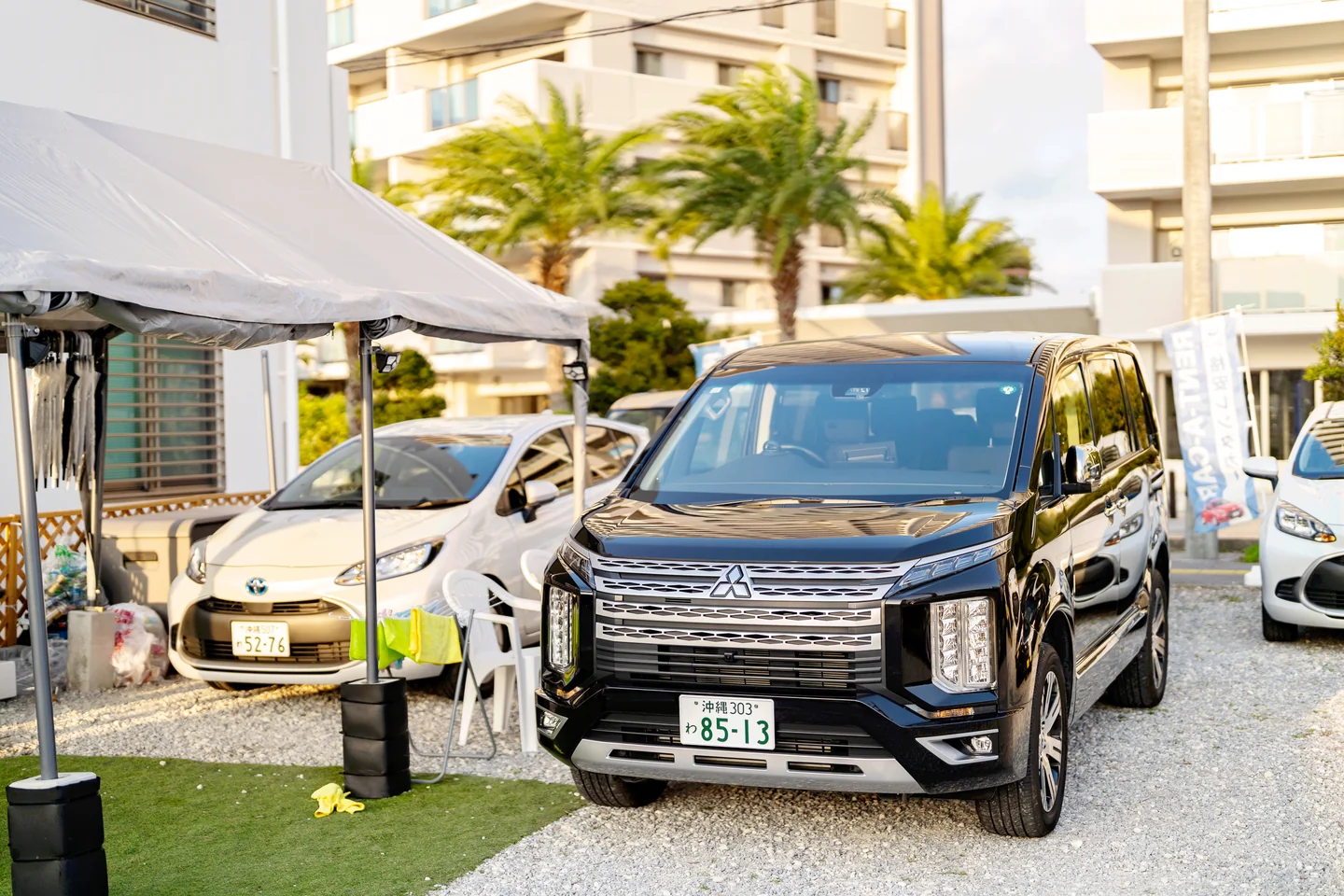
I rented the car from Kintaro Rent-a-Car, but returned it to Woori Rent-a-Car. Their offices are right next door, and they work together.
They check the fuel level and look for scratches or damage. A Korean staff member comes to pick you up, but a Japanese staff member may drive you to the airport after you return the car. You don’t need Korean for that. It depends on the situation, but if there are enough seats, a staff member may drive you straight to the airport without unloading the luggage. If there isn’t enough room for the staff member who needs to drive you, they’ll take you in a large bus or a bigger vehicle.
I also write this post in Taiwanese, English and Japanese, and people from different countries want different things. Many Korean travelers mainly want a car that’s extremely cheap and simply runs. But that’s for spouses, couples and friends traveling together. On family trips, there’s a clear preference for minivans costing around 10,000 yen.
The big companies are just.. expensive for no reason. Korean-run companies often charge a premium too.
I focus on that gap and highlight the low prices offered by small and midsize companies. Renting a car with specs like these from a well-known large company costs at least about 60% more. The downside.. most of the offices are pretty modest, so don’t expect anything grand.
By the way, in my quest to become a true master of Okinawa rental car reviews.. I know the prices at most companies. For a car in this condition, with this performance, it’s the cheapest, hands down. It’s an outstanding family car, just like the Grand Carnival, so I highly recommend it.
- Switching off the engine alone won’t fold them. Press the lock button on the key to fold them, and they unfold when you unlock the car.
- With the tailgate open, the power tailgate button is overhead. Hold it for about 2 seconds to operate it. An obstacle detection sensor stops it if something is in the way.
- This car uses a P button for the parking brake rather than a pedal on the left. The owner said some customers don’t realize this and ask why the car won’t move with the parking brake still on.
- The car I rented was set to Korean. You can connect a USB-A drive with videos for the kids to the cable coming out below the navigation screen and play them.
- According to the information I was given at the time, flat tires weren’t covered by insurance. The car did have a kit for emergency use if you got a flat.
- A Korean staff member briefly explains things to watch out for when driving in Japan, such as unprotected right turns. However, they may refuse the rental if they think your driving is so poor that you’re likely to cause an accident.
- This is a diesel car, so it takes diesel. You need to fill the tank before returning it, and the company always checks the fuel level.