Toyota Voxy: 7-Seat Minivan Rental Review in Okinawa
This is a review of the 7-seat Toyota Voxy minivan I rented in Okinawa. With photos, I cover trunk space, third-row seats, power sliding doors, fuel economy, driving impressions, returning the car, and how to book.
👋 Haisai! I’m CULT.
Today I’m introducing the Voxy, a 7-seat minivan I rented in Okinawa a while back.
I’ve driven lots of different Voxys. The specs are pretty much the same across them. Driving alone with no load, I get about 15 km per liter, and with all seven people on board plus luggage, it comes out to about 8 km per liter.
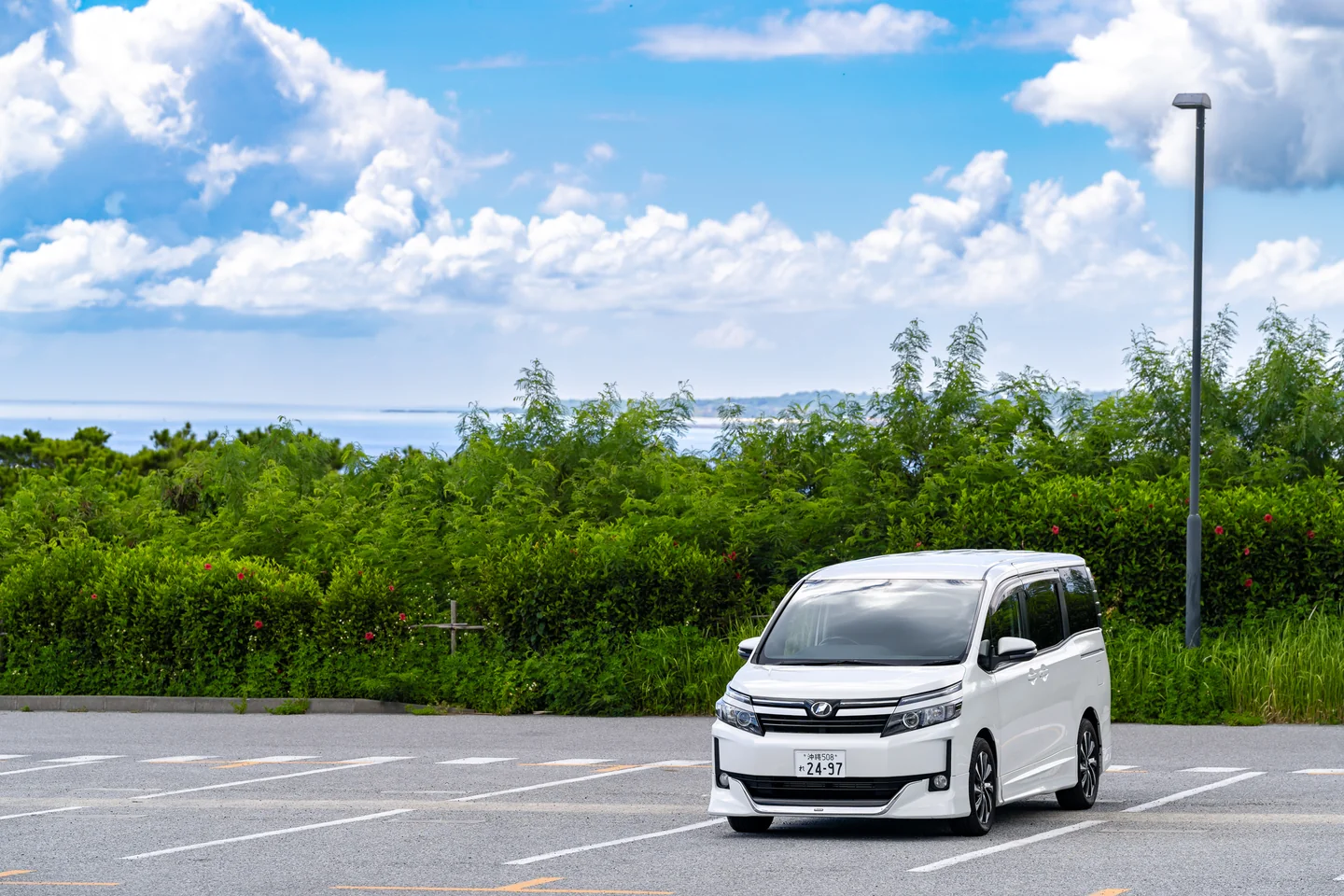
I’ve done so many rental car reviews that I’ve pretty much got the specs memorized by now. This car is a white Voxy, too.
Toyota Voxy Summary
Let’s start with the pros and cons of this 7-seat minivan.
Details
Exterior and Trunk
I started with the trunk, the most important thing when renting a minivan.
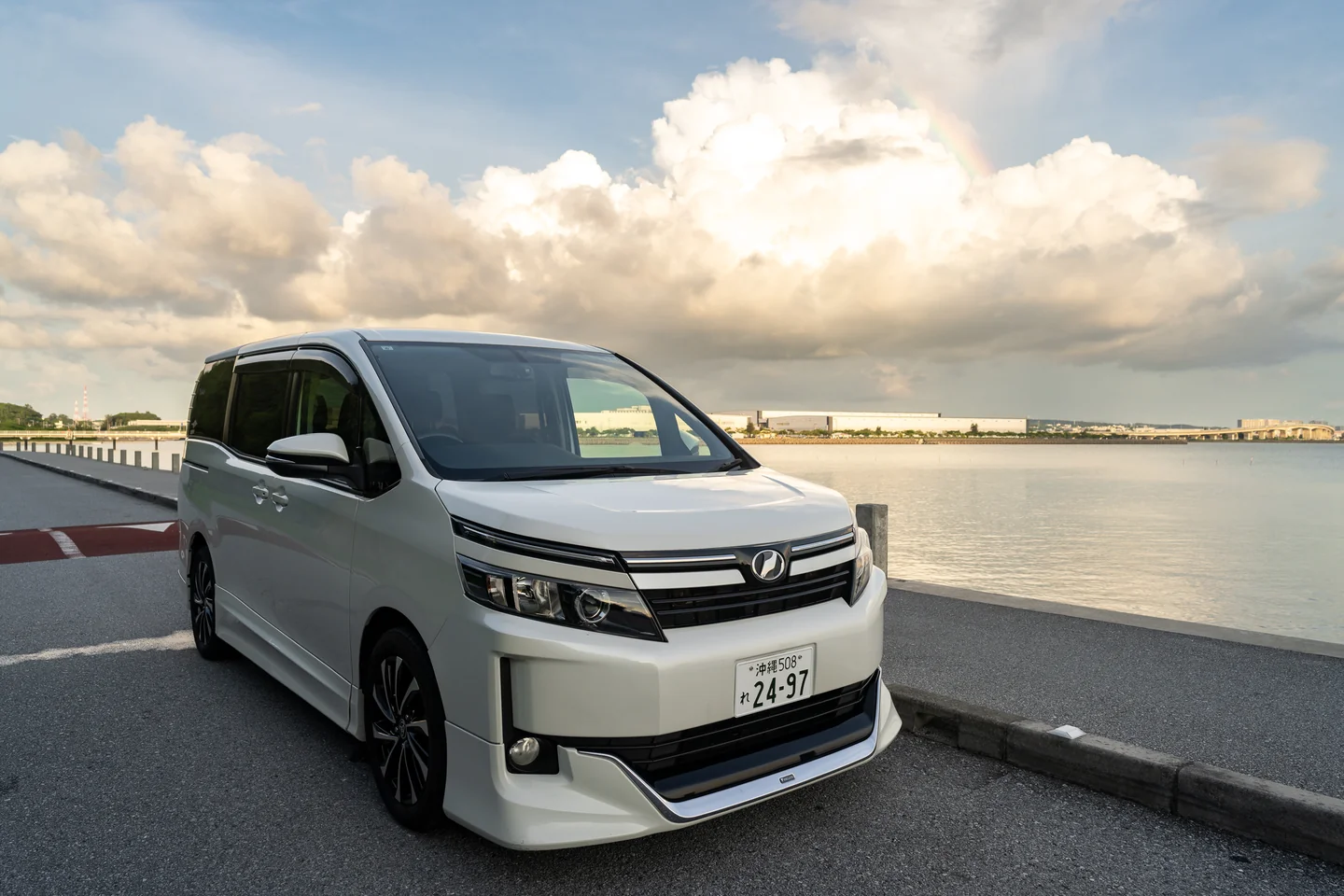
This is what the Voxy minivan looks like.
It’s a good-value family car that shows up on my blog quite often.
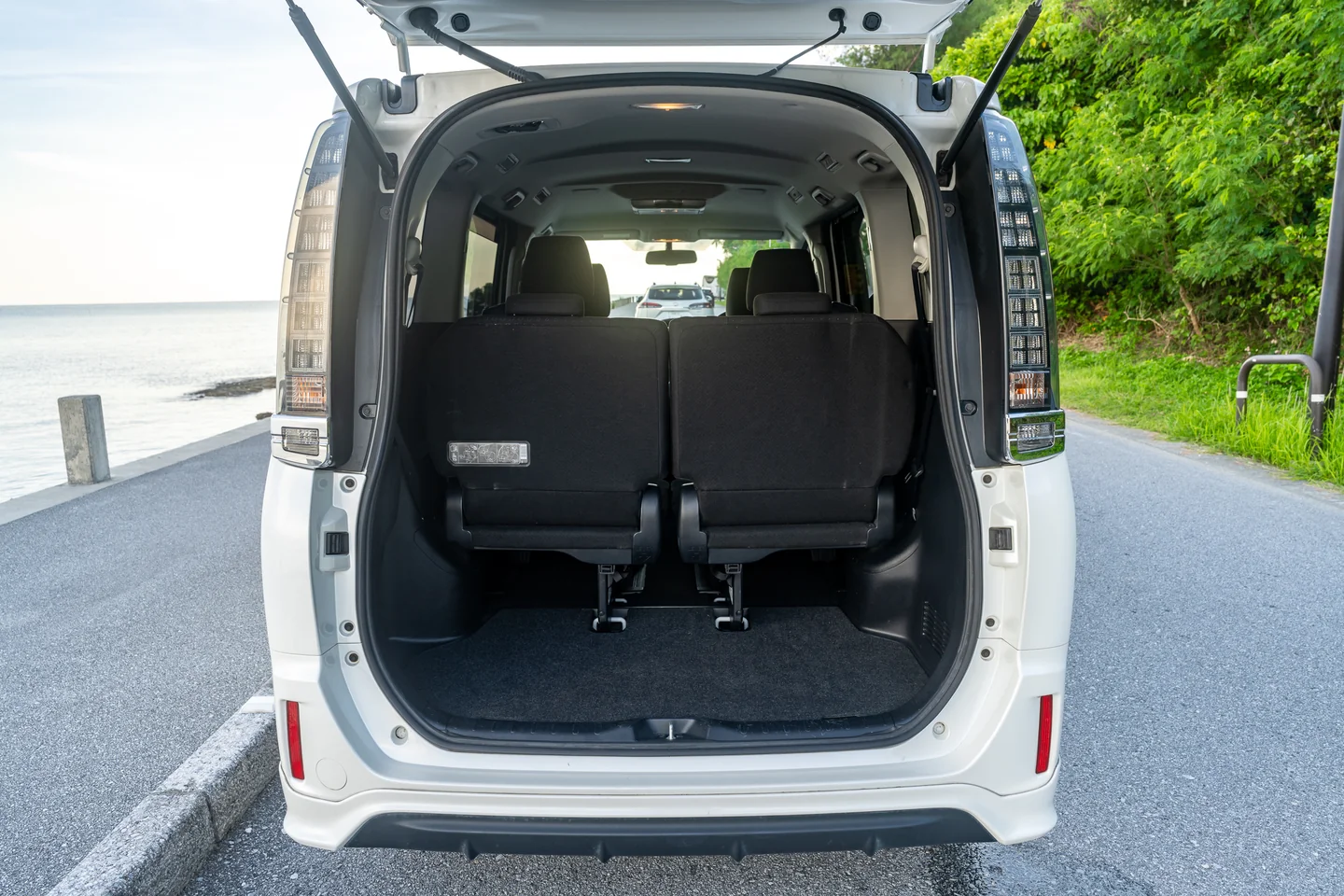
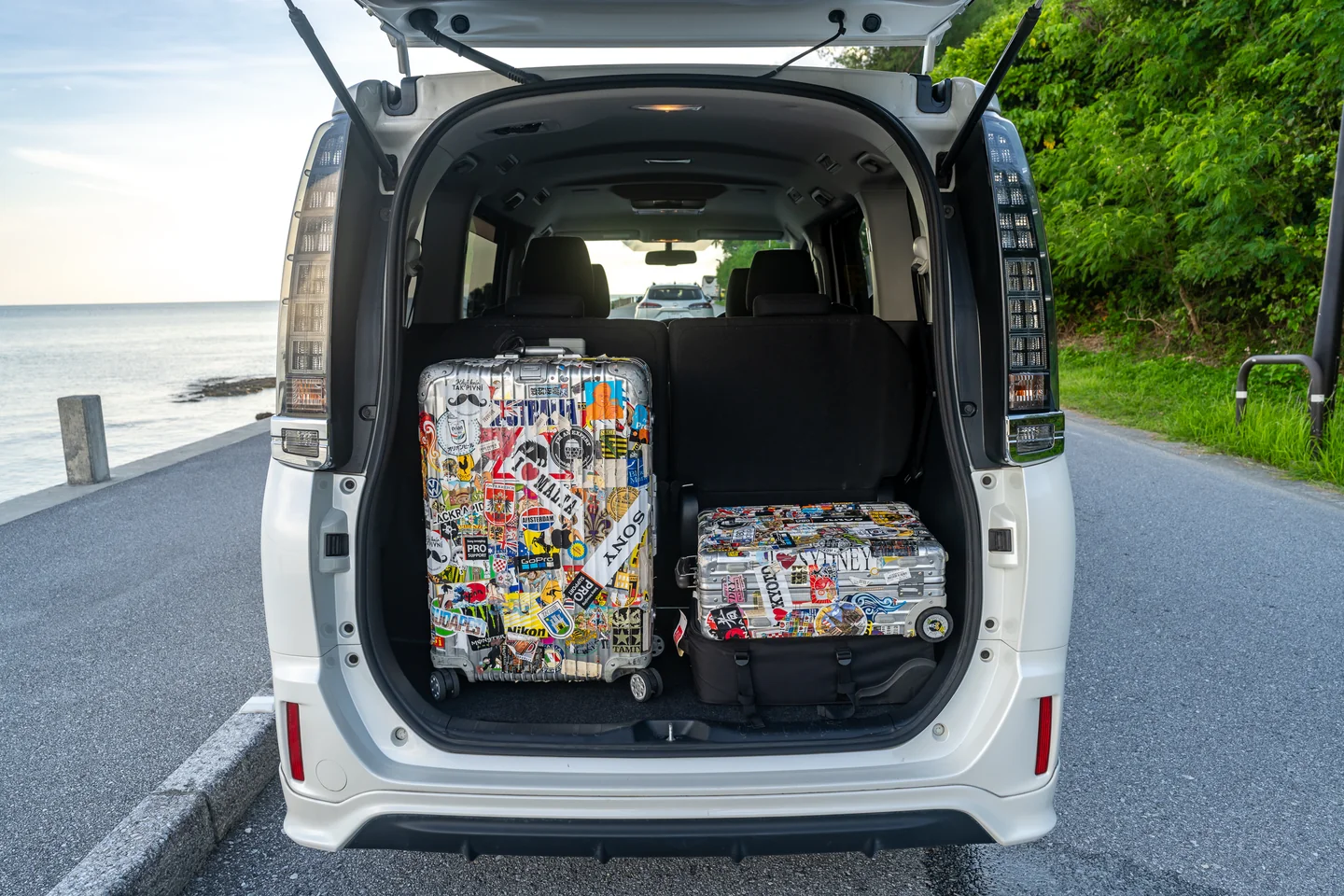
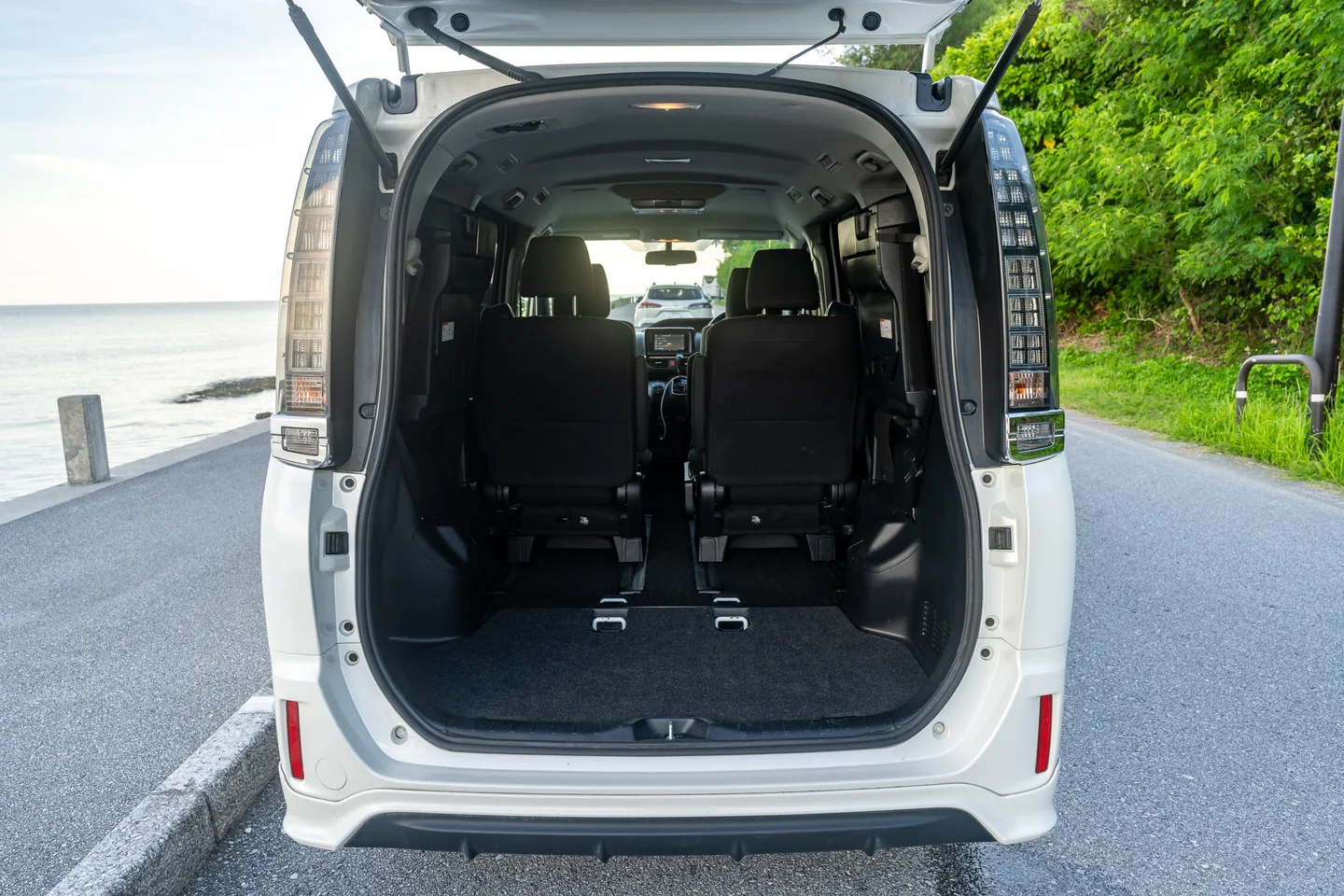
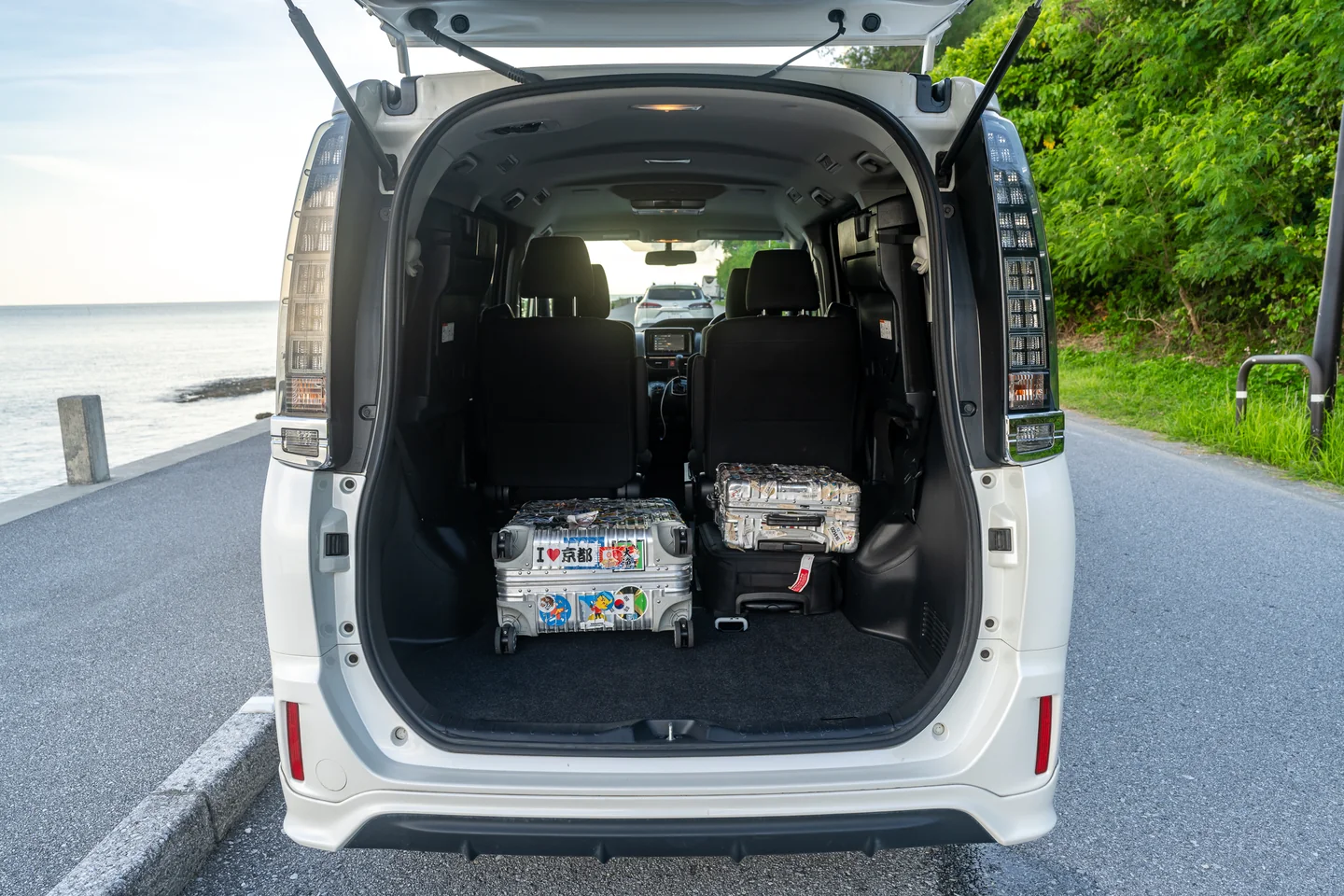
Trunk capacity matters a lot if you’re renting a minivan, so let’s look at the trunk first.
Used as a 5-seater, it’s roomy enough to move house with. That said, if there will be five of you without much luggage, I personally think renting a Toyota Sienta is the better choice.
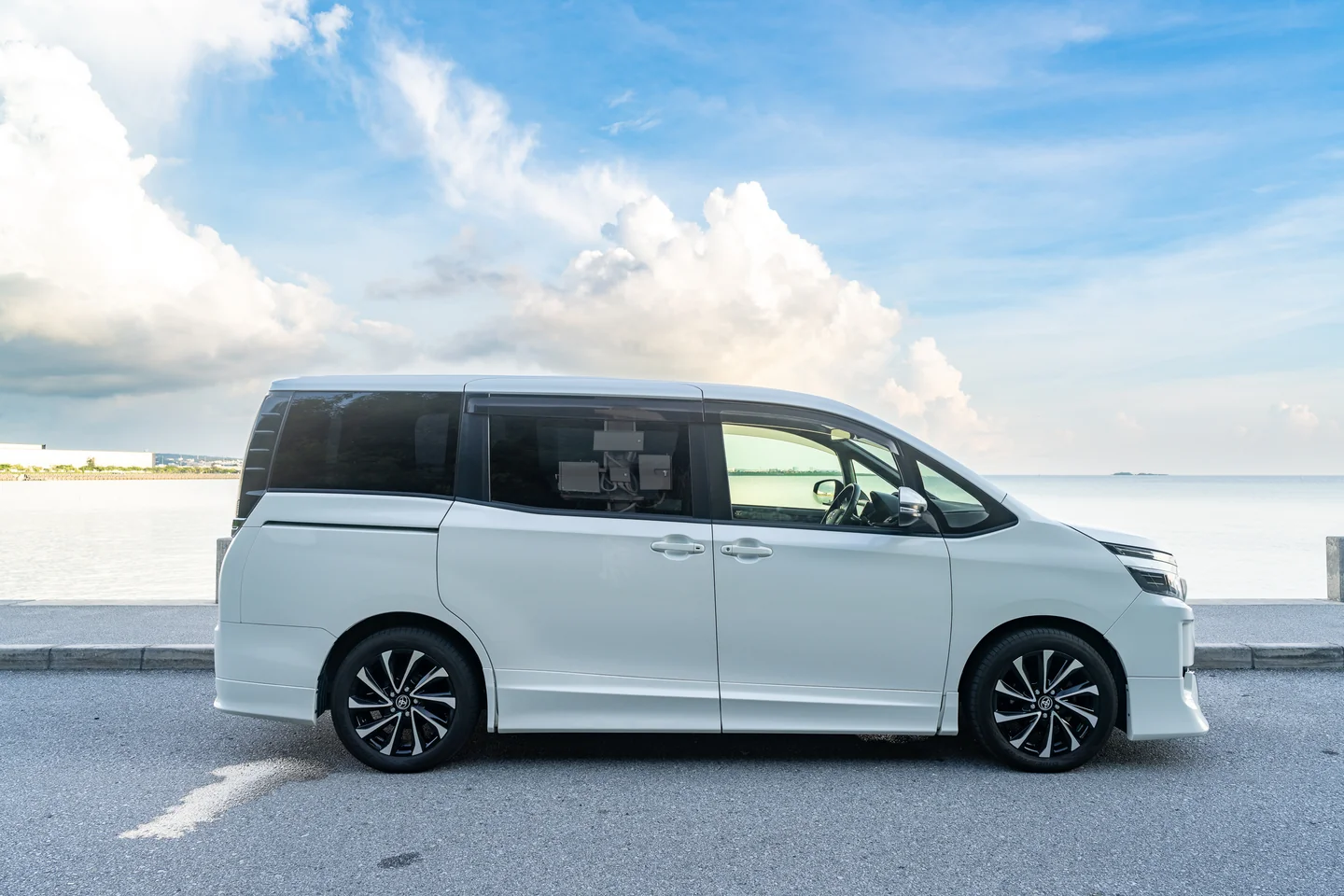
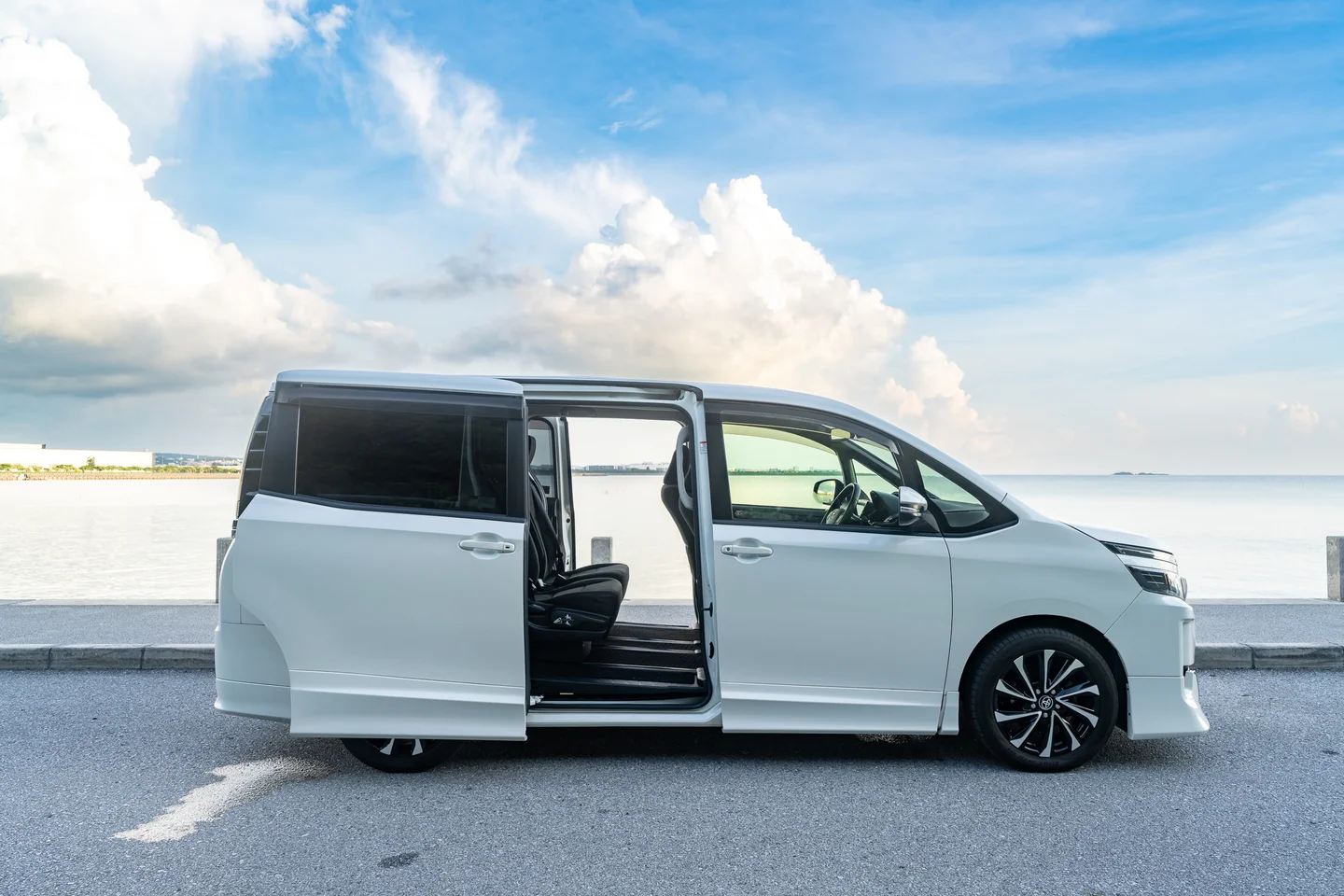
This car has power sliding doors on both sides. On a standard Voxy only the road-side door is power-operated, but adding the option makes both sides power, and this car has that option. If you want both sides, it’s worth asking when you book.
Seats and Driver’s Seat
I checked out the second and third rows, the front seats, and the rear camera.
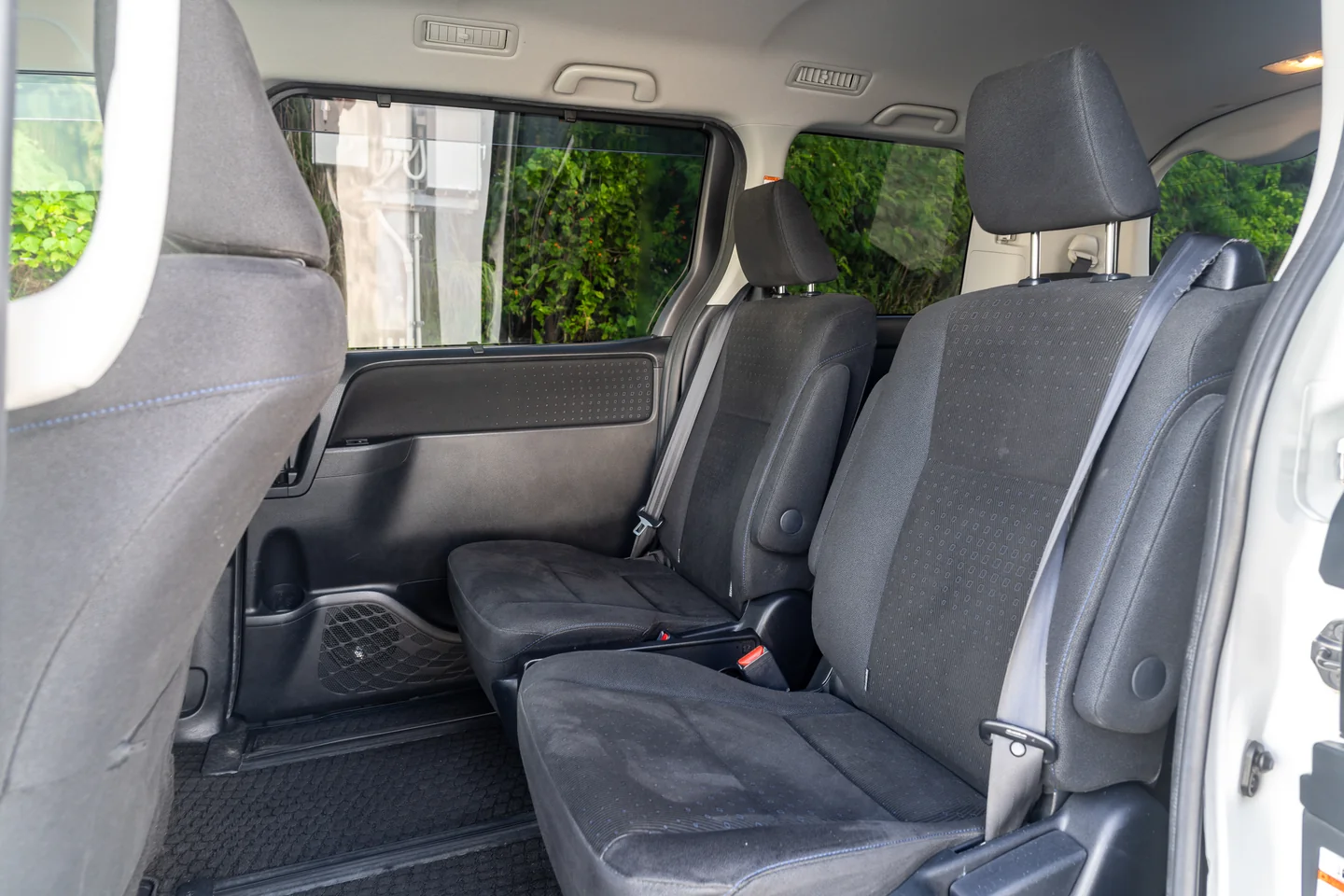
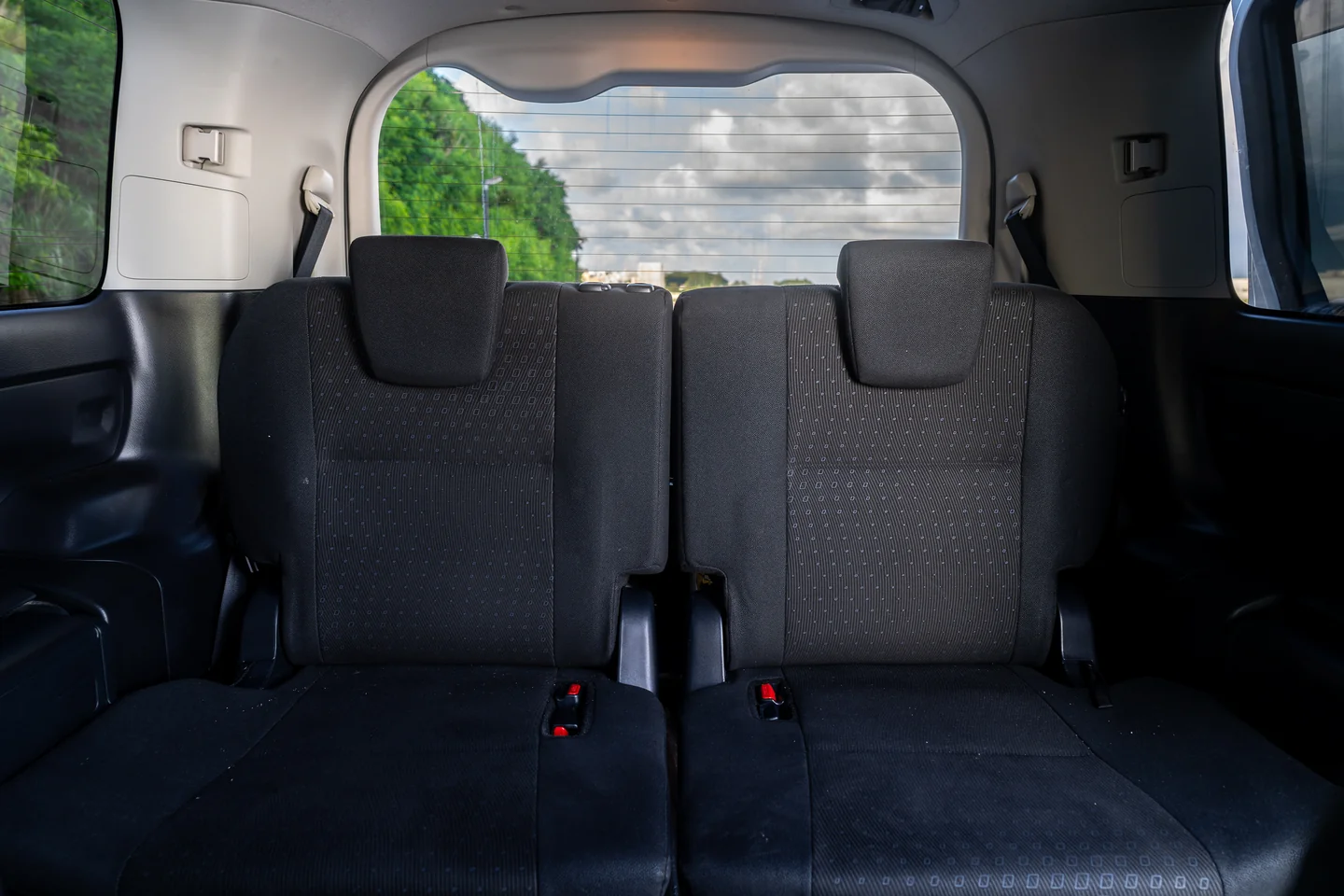
Here are the second and third rows.
The headrests for the third row are in the trunk, and once you attach them, three people can sit in the third row.
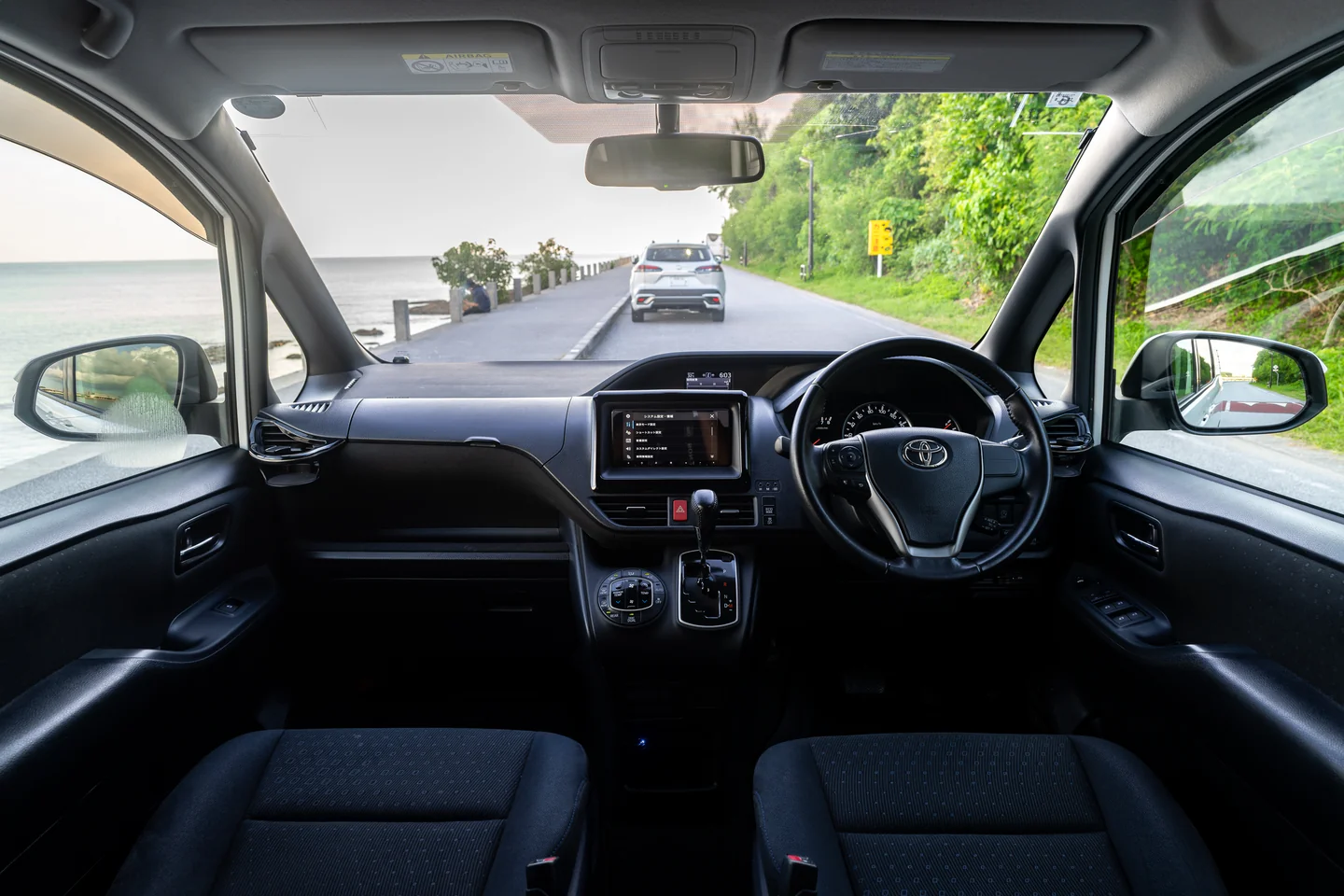
The features aren’t impressive, but they’re just right for a short trip.
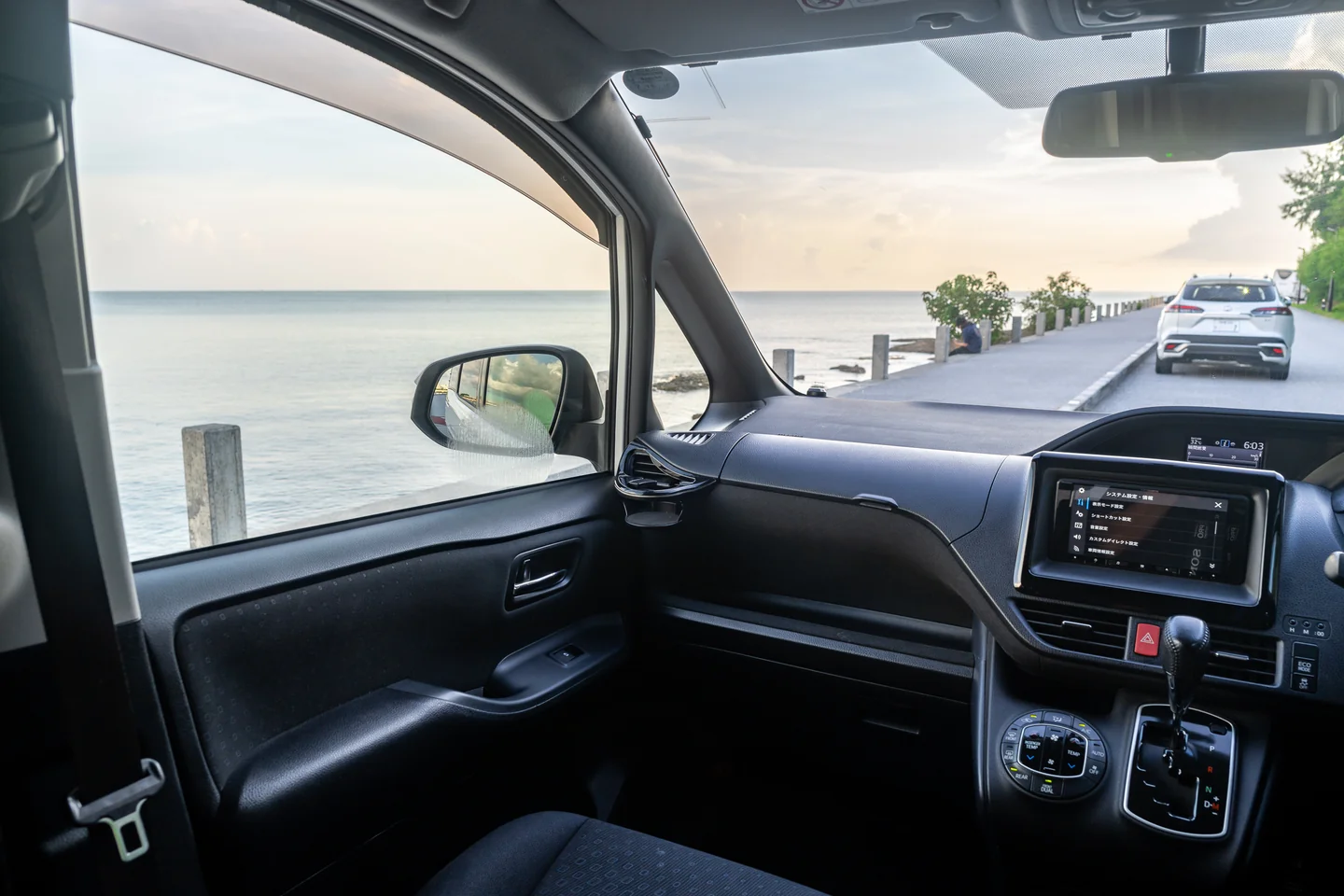
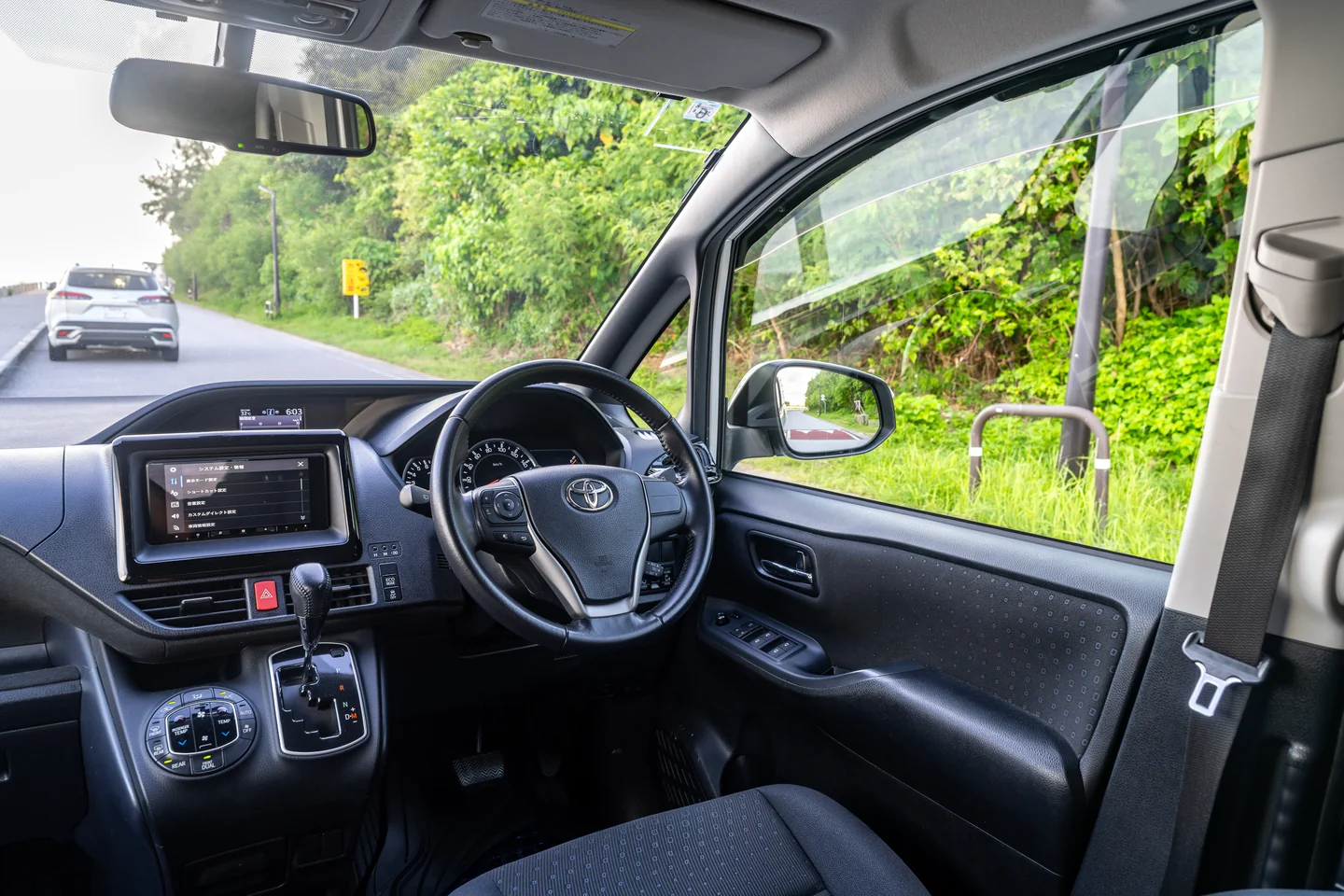
Here’s a look at the front seats, left and right.
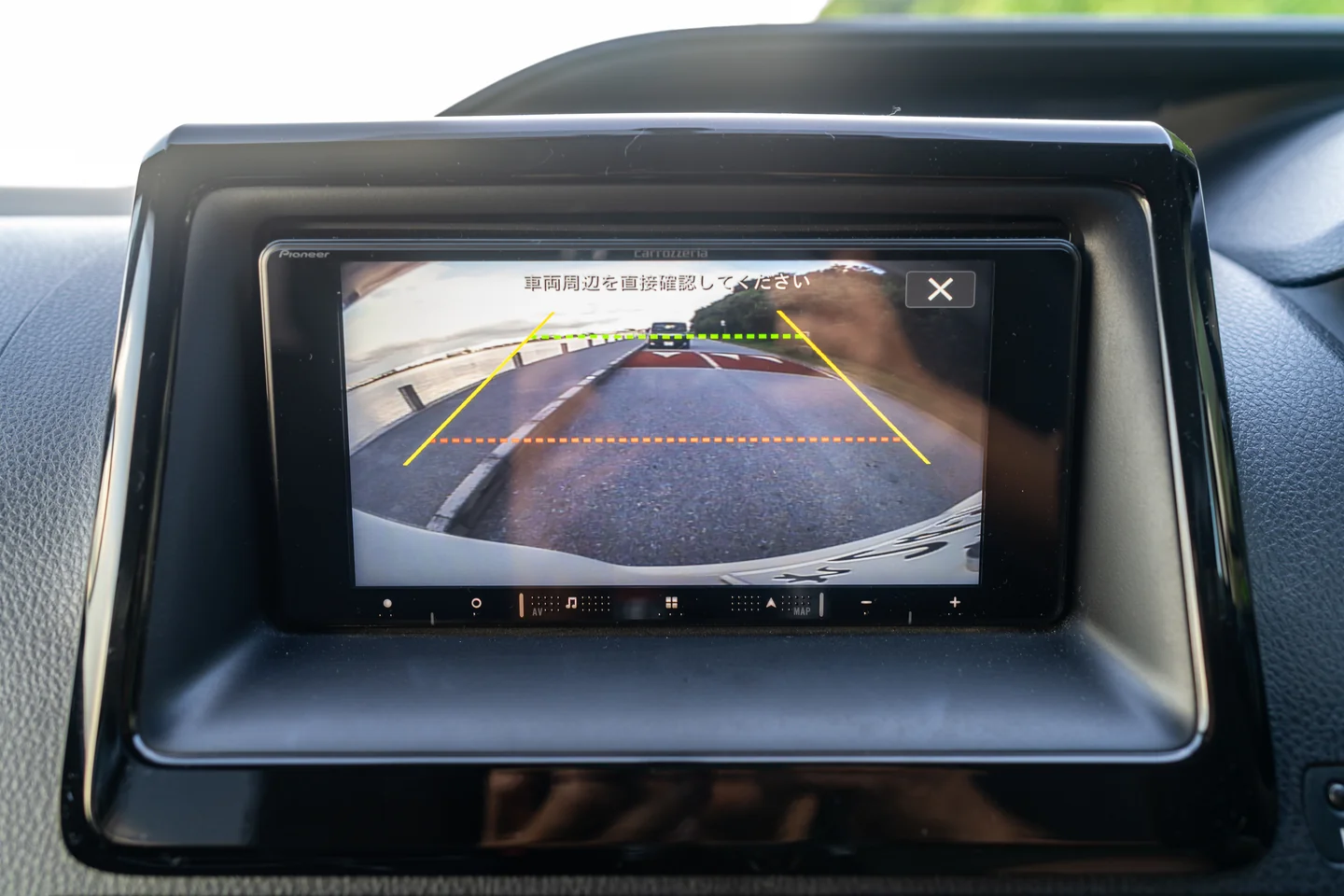
The Voxy is bigger than an ordinary passenger car, so a rear camera makes parking a little easier, right?
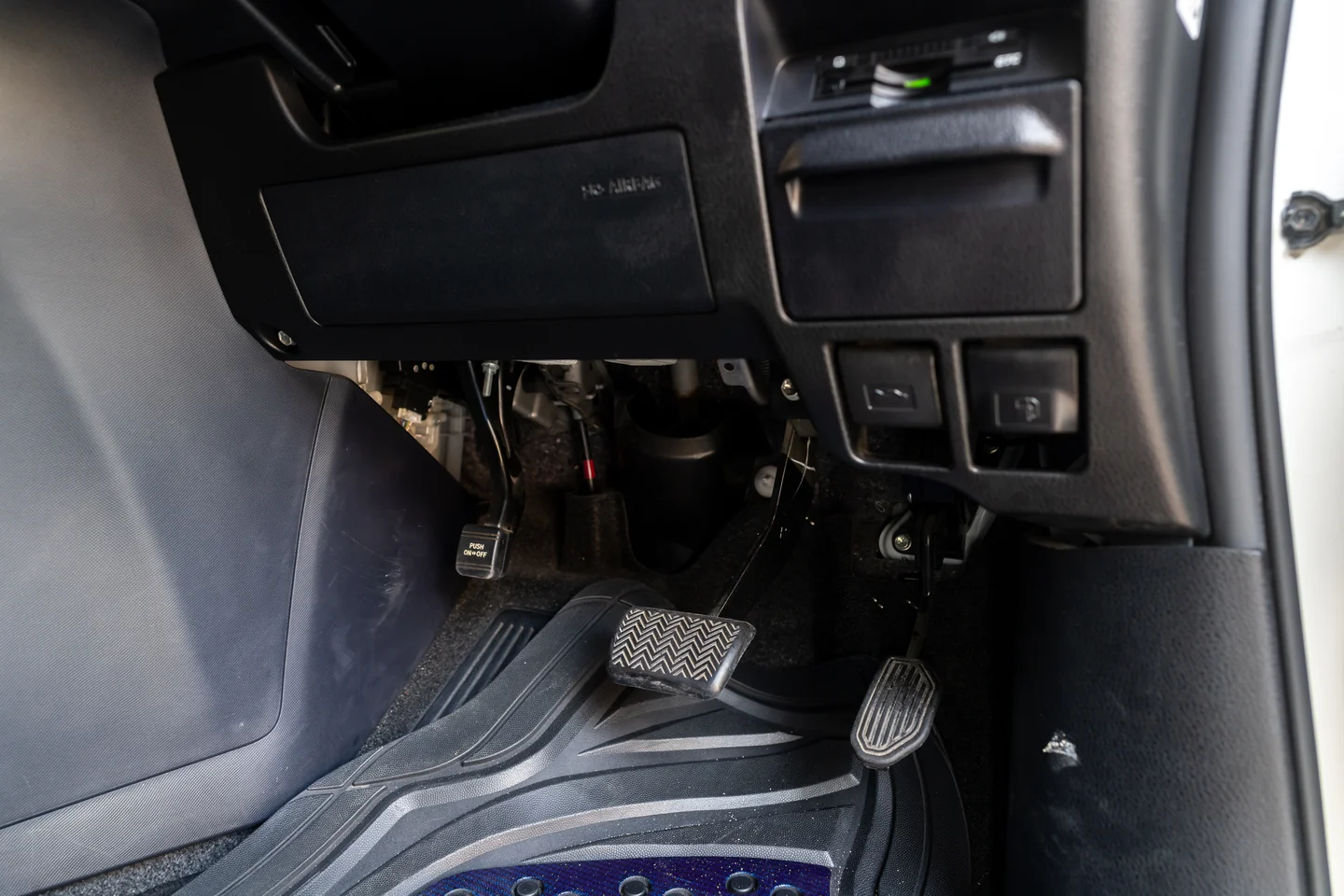
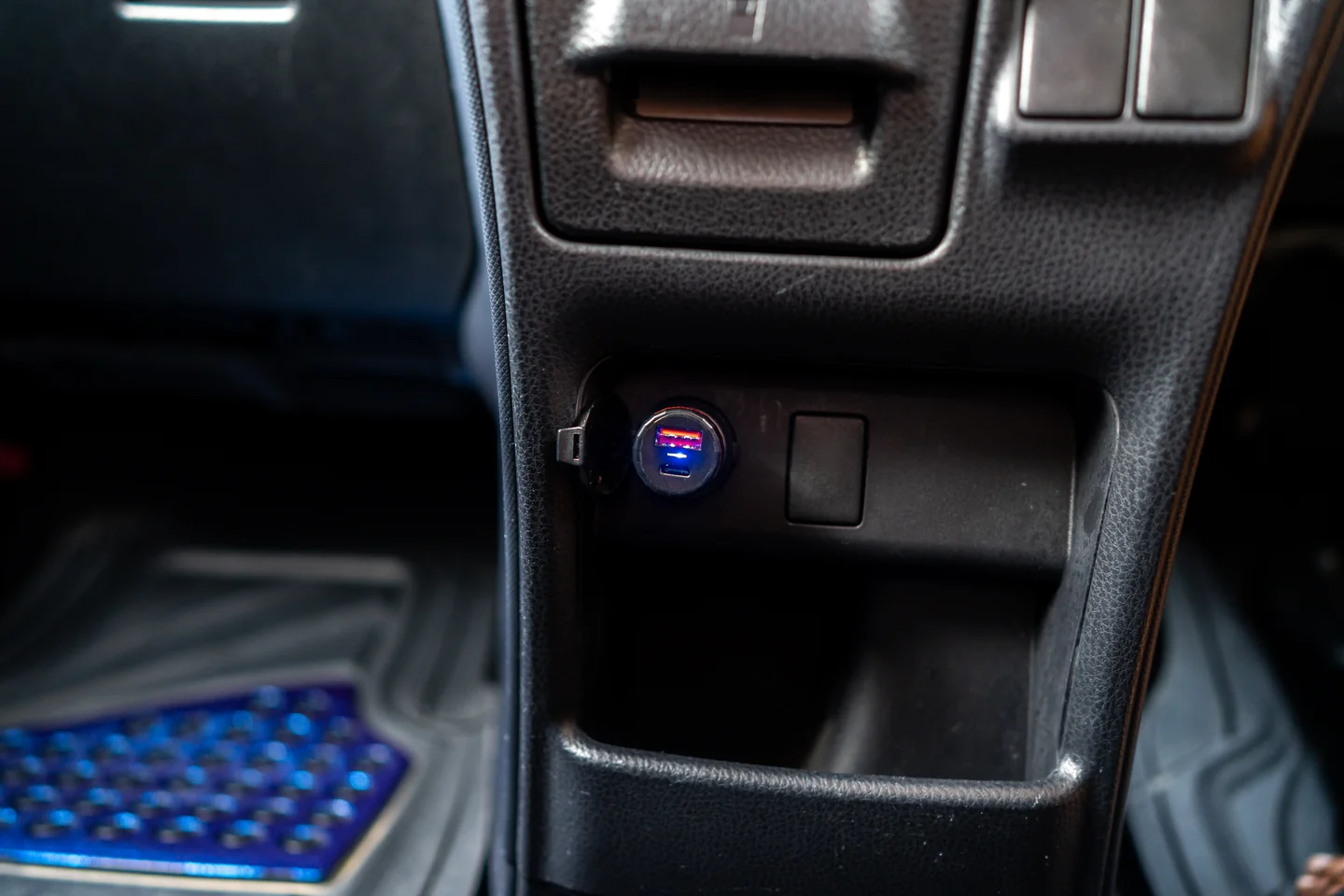
Here’s the area at the driver’s feet.
The parking brake is foot-operated, and there are USB Type-A and Type-C charging ports.
Driving Impressions
I drove to Umikaji Terrace, out on the expressway, and even parked at a convenience store.
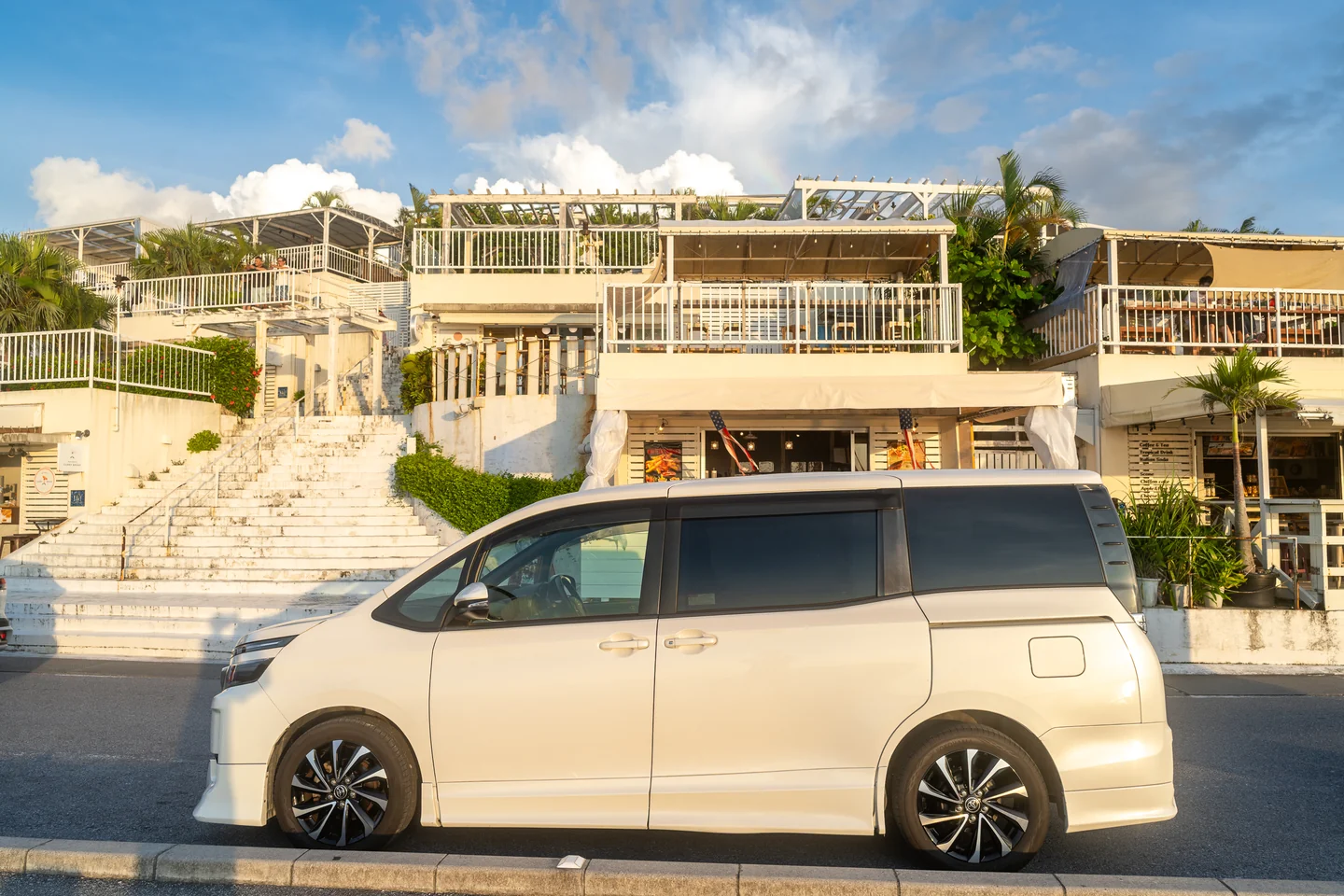
Driving in Japan is very easy.
Still, you always have to be careful on unfamiliar roads. Take it a bit easier, don’t floor it just because the light has turned amber, and drive safely.
Imagine how annoying it would be to have an accident when you came here to have fun.
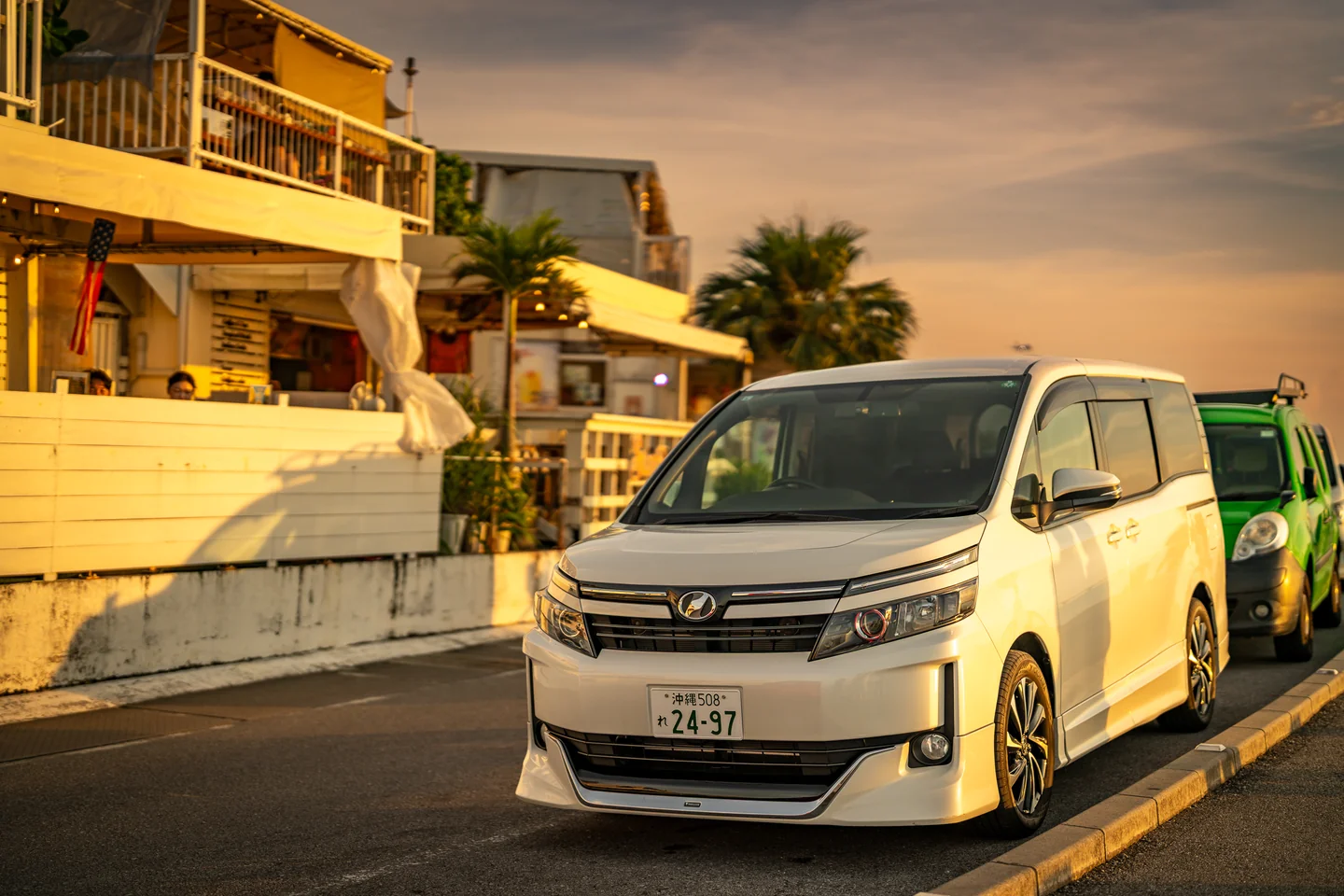
Umikaji Terrace is also a good stop on the first day of your Okinawa trip or on the last day, when you return the car. You have to go in the evening to see the sunset, so the first day is probably the better choice, right?
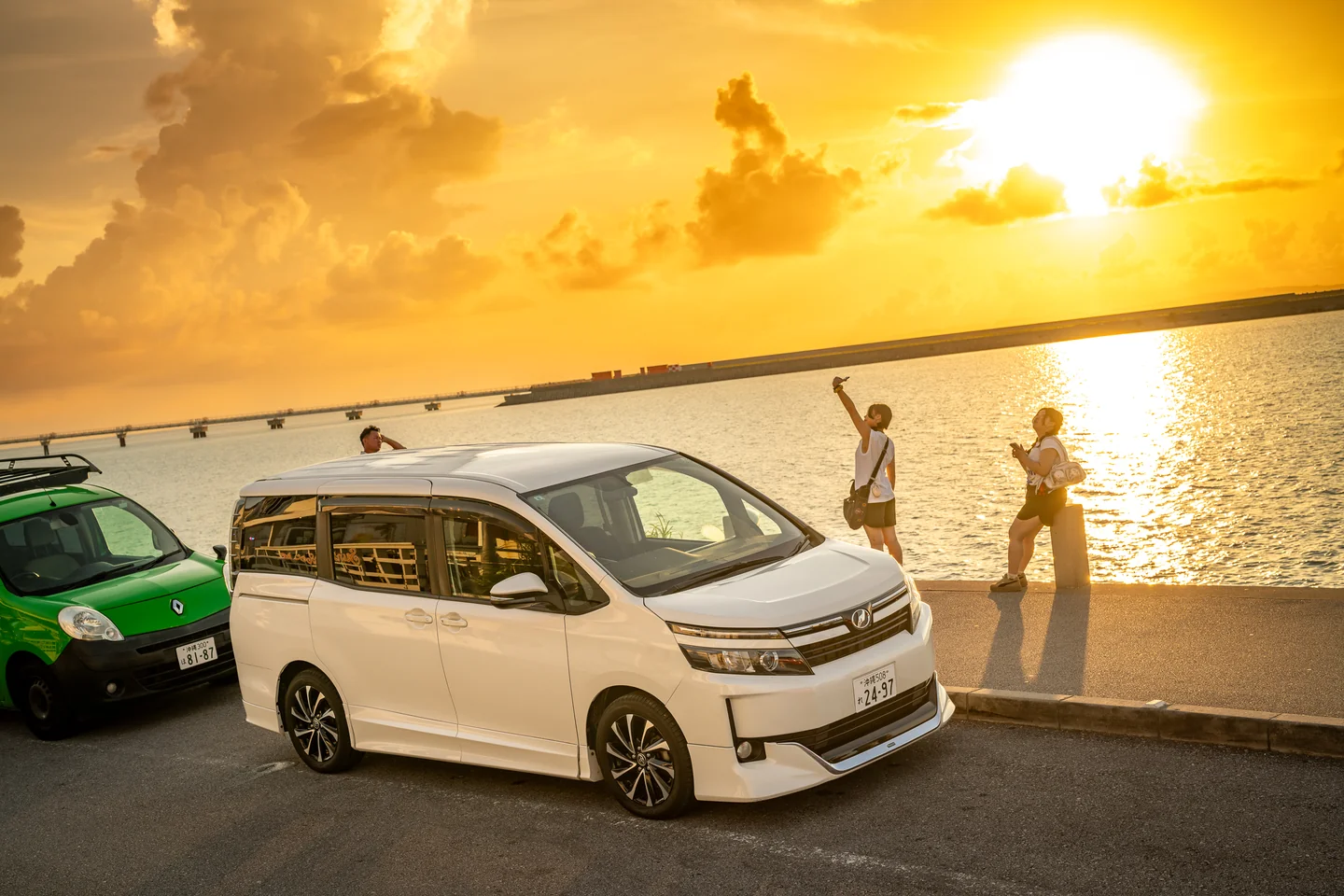
If the lot near the entrance of Umikaji Terrace is full, you have to come over here and parallel park. In Okinawa, you almost never have to parallel park in the first place. Many places are set up to make things easy, but this is private land, so it’s up to the landowner.
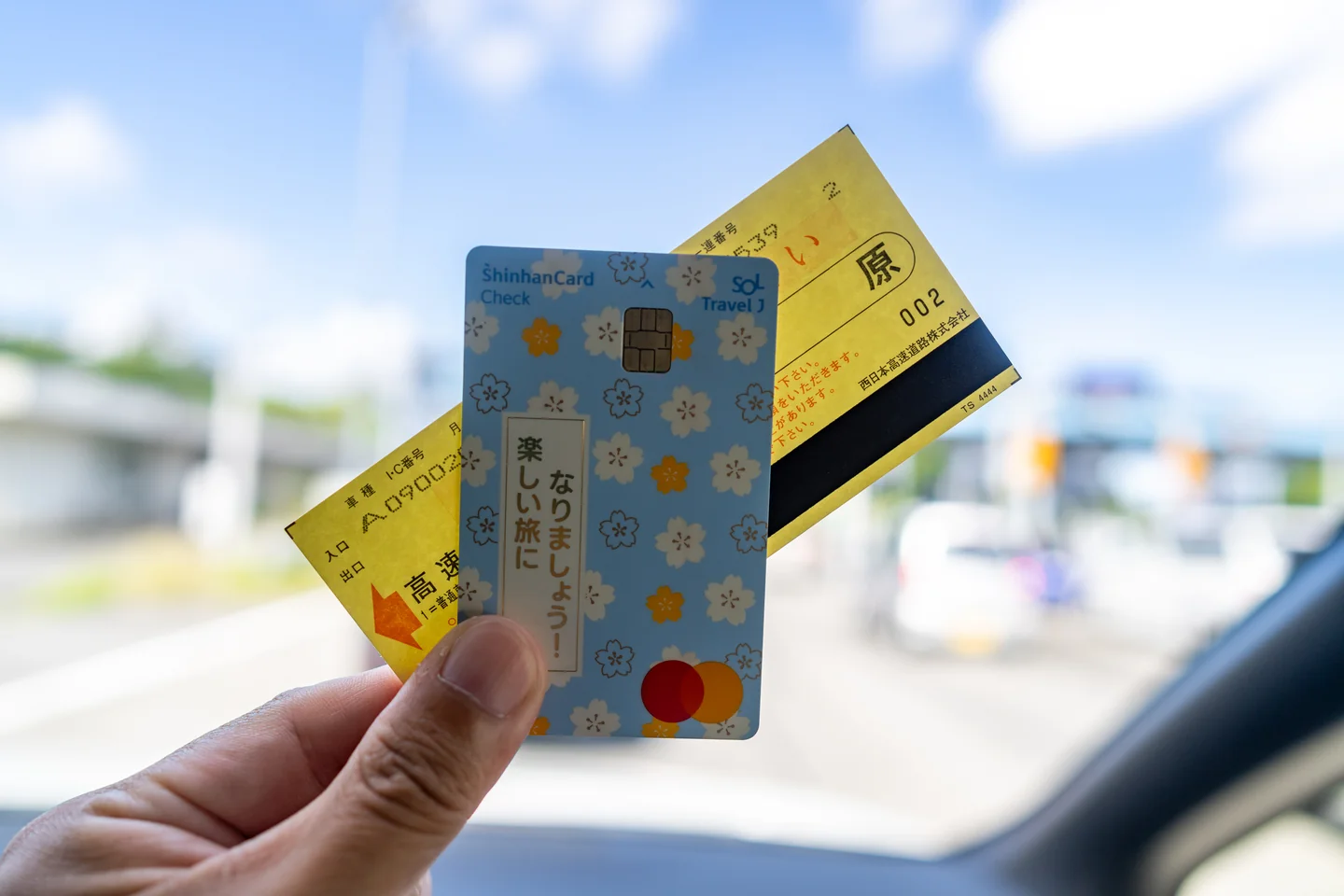
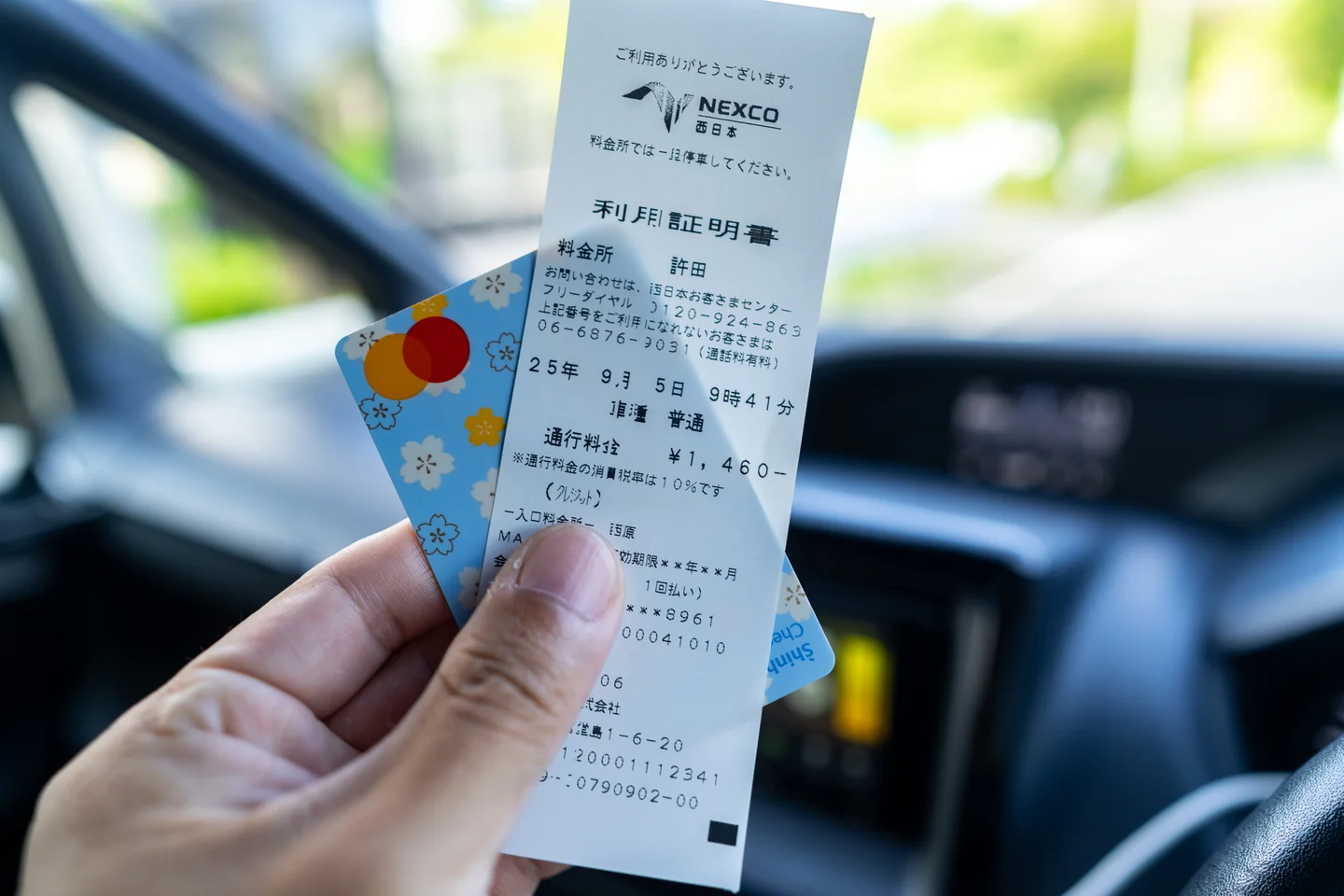
When I used it, the expressway toll heading north from near Umikaji Terrace came to 1,460 yen. I need the receipts for expense accounting, so I make a point of keeping them each time. Tolls vary depending on the route and when you travel, so treat this as a rough guide only.
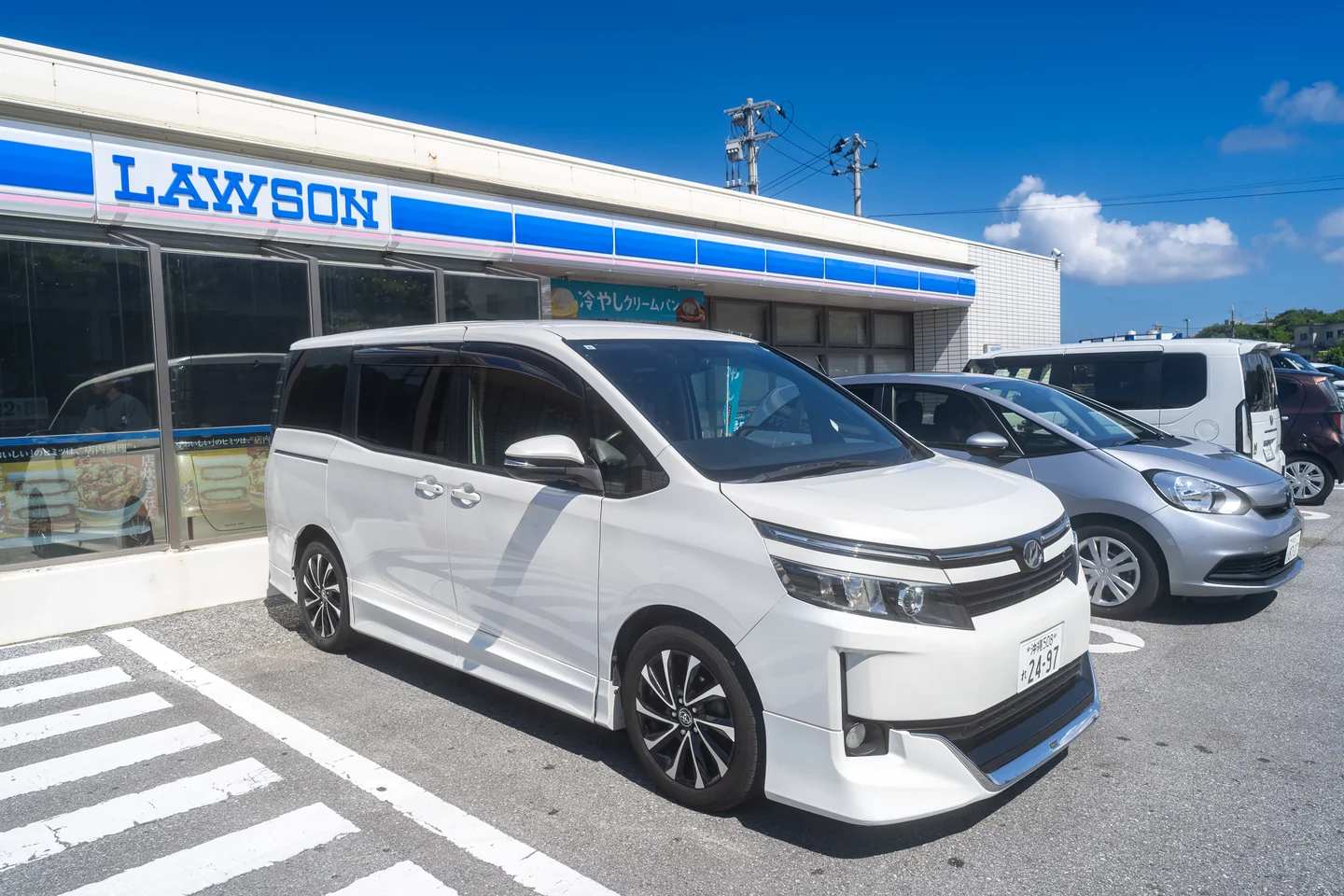
With a minivan, parking will feel a little tight. Parking spaces in Korea are as wide as the Pacific Ocean, so it’s easy there, but Japan’s are a bit narrower than that.
The roads are narrow, and so are the parking spaces.
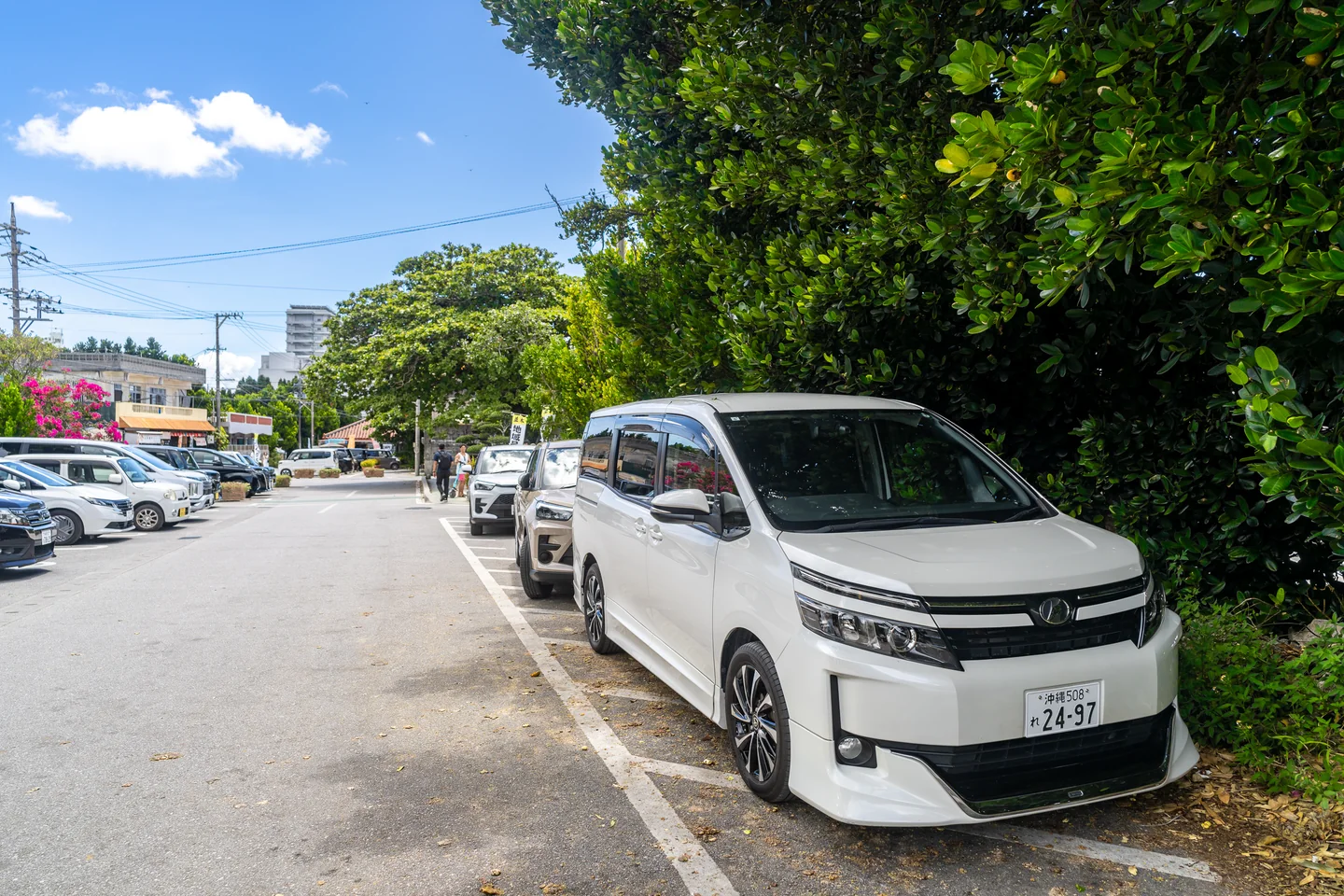
It’s not illegal parking.
It’s an odd space: it has hatch marks, but also a wheel stop for parking.
Return and Booking
Here’s how to refuel and return the car, plus the booking link.
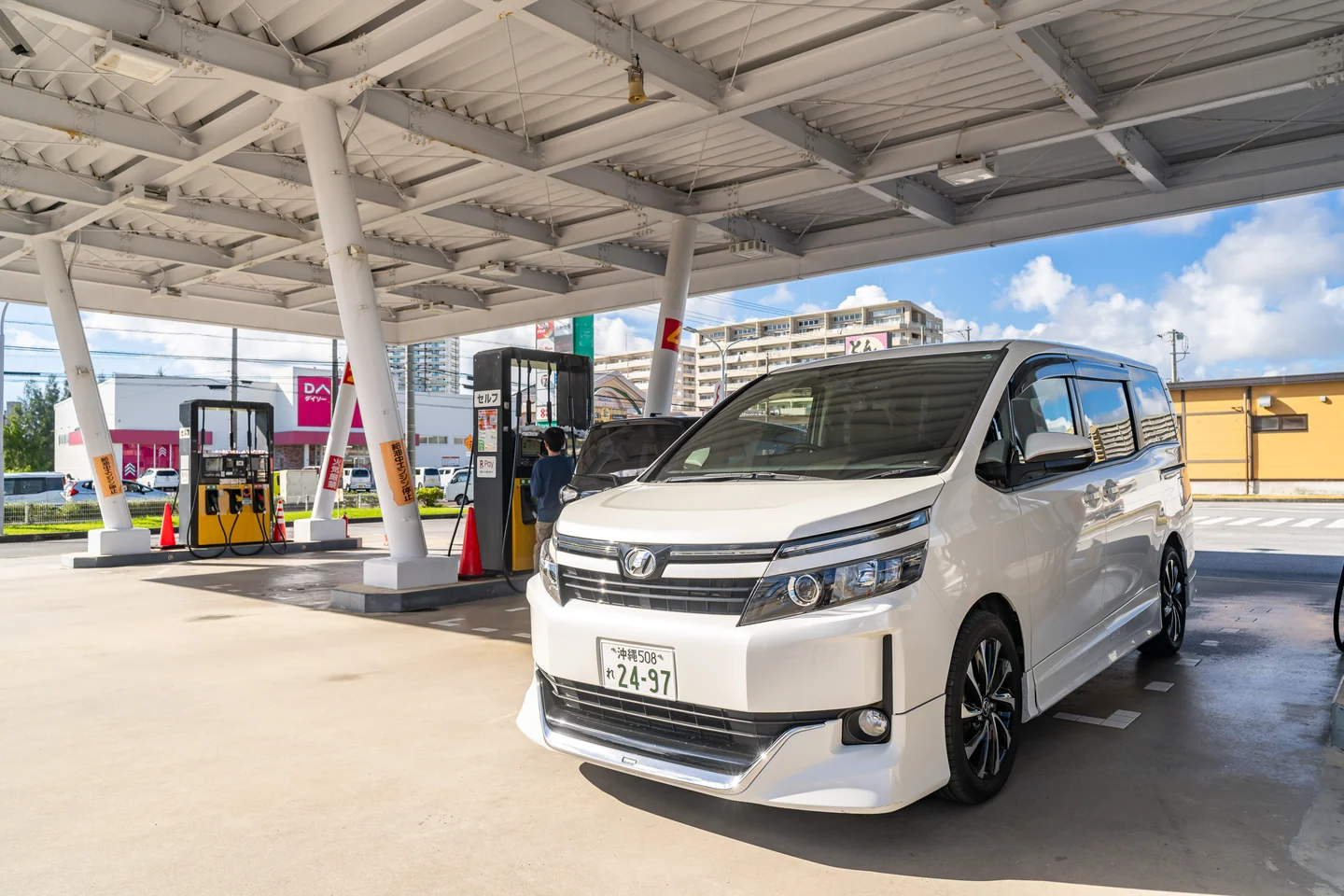
In central Naha, a staff member comes to pick up the car when you return it. If you’re in central Naha, you can also ride the monorail back to the airport, and if you return the car at Akamine Station, they’ll shuttle you to the airport.
You can book with the button above.
After you book, they’ll get in touch. Aosora Rent-a-Car has its own chat system with built-in translation, so communication is no problem.
Anyway, I really hope you have a safe trip. 👋
- It's a 7-seater, so it can carry up to seven people. The third-row headrests are stored in the trunk, and once you attach them, three people can sit in the third row.
- Driving alone with no load, it gets about 15 km per liter. With all seven people on board plus luggage, it gets about 8 km per liter.
- Used as a 5-seater, it's roomy enough to move house with. If there will be five of you without much luggage, though, I personally think the Toyota Sienta is the better choice.
- It depends on the car. On the standard spec only the road-side door is a power sliding door, and adding the option makes both sides power. The car in this post had both sides, so if you want both, ask when you book.
- Yes. The rear camera helps when you park a car that's bigger than an ordinary passenger car.
- Parking spaces at places like convenience stores are a little narrower than in Korea, so it can feel a bit tight. Make use of the rear camera.
- You can book on the Voxy booking page of Aosora Rent-a-Car. Aosora Rent-a-Car has its own chat system with built-in translation, so communication is no problem.
- In central Naha, a staff member comes to pick up the car. You can ride the monorail back to the airport, or return the car at Akamine Station, where they'll also shuttle you to the airport. Refuel before you return it.