
Toyota Prius α: Good-Value Hybrid Rental Review in Okinawa
This is a review of the Toyota Prius α hybrid I rented in Okinawa. With photos, I cover trunk size, measured fuel economy of 20 km per liter, cup holders, pickup and return, rates, and how to book.
👋 Haisai! I’m CULT.
Today’s Okinawa rental car review is.. the Prius α. This is about a car I used in September 2025. Not just a Prius, but the α.. so what’s the difference from a regular Prius? The trunk size. The α has an extended sportback body, so its trunk is much bigger than a regular Prius’s. And since it’s a Prius.. of course the fuel economy is superb. I get about 20 km per liter, and when you drive it, you’ll probably get 13-15 km per liter even without trying to maximize fuel economy. There’s no worry about fuel costs, it’s a bit cramped with five adults, but still manageable, and the trunk is big, so you needn’t worry about luggage.
It competes with the Honda Shuttle Hybrid I introduced earlier. The Shuttle has a slightly nicer trim level, but the Prius α gets slightly better fuel economy.
If you’re thinking, “I don’t need a flashy car. A bit worn is fine as long as it has good fuel economy and fits lots of luggage,” then the Prius α or the Shuttle Hybrid is the answer. I’ve put the rates I paid at the time in the booking section at the bottom. The company may change which dates count as peak or off-peak season, so be sure to check when you book.
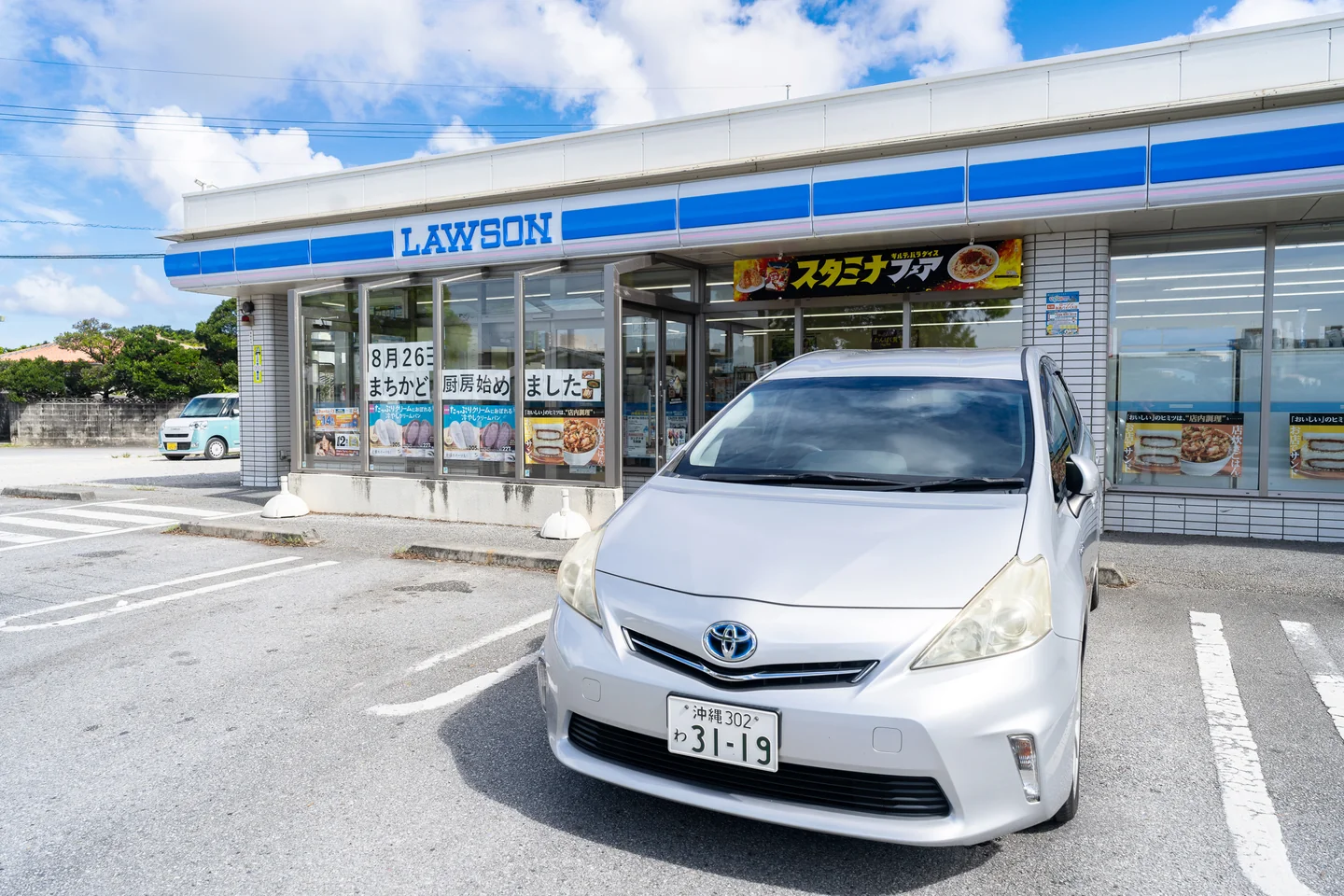
Toyota Prius α Summary
Rates, fuel economy, and trunk space at a glance.
Details
Car Pickup and Return
How hotel-front delivery and pickup near the airport work.
First, once you’ve booked, car pickup in central Naha happens in front of your hotel, in the hotel parking lot. A staff member brings the car to you and comes to take it back when you return it. When I used it in September 2025, delivery and return within central Naha were free, American Village had a 5,000 yen delivery fee, and northern Okinawa was 10,000 yen. Larger vehicles cost a bit more. The company adjusts its fees from time to time, so they can change; check when you book.
After you book, they get in touch, and Aosora Rent-a-Car has its own chat system with built-in translation, so communication shouldn’t be a problem. When I used it, the staff member was a Japanese person who doesn’t speak Korean, but they tried hard to use standard Korean in our translated chats, and sometimes when I used dialect or slang, they’d contact me to ask what it meant..
There’s no airport pickup, only airport drop-off.
What I mean is.. they don’t offer a pickup service at the airport, so you take the monorail one stop out to Akamine Station to get your car. That’s the fastest way to pick up a car, so if it’s your second time in Okinawa or you don’t have much luggage, it may actually be quite a convenient way. Why is it like this? Because Okinawa has way too many rental car companies, and if they all did pickups and drop-offs inside the airport, the airport would get too chaotic. So rental car pickups and drop-offs are prohibited by law on airport grounds. It has to be done outside the airport area. The airport send-off means that when you return the car, staff drive you to the airport; they don’t collect the car at the airport.
To sum up,
If you don’t need a car from the first day in Okinawa, and you’ll stay at a Naha hotel and need a car on another day, hotel delivery is your answer.
If you know how to ride the monorail, go one stop from the airport, get off, and pick up the car there.
By the way, the monorail is easy to get on and off. You can pay by credit card. Samsung Pay, Google Pay, and Apple Pay all work. Just tap your card like riding the subway in Korea, ride the monorail one stop from the airport, and get off. It’s closer and quicker than Incheon Airport. Airport > Akamine Station, 3 minutes
One tip.. you need to hold your card on the touch reader for about 3 seconds for the payment to go through properly. It doesn’t respond lightning-fast like in Korea.
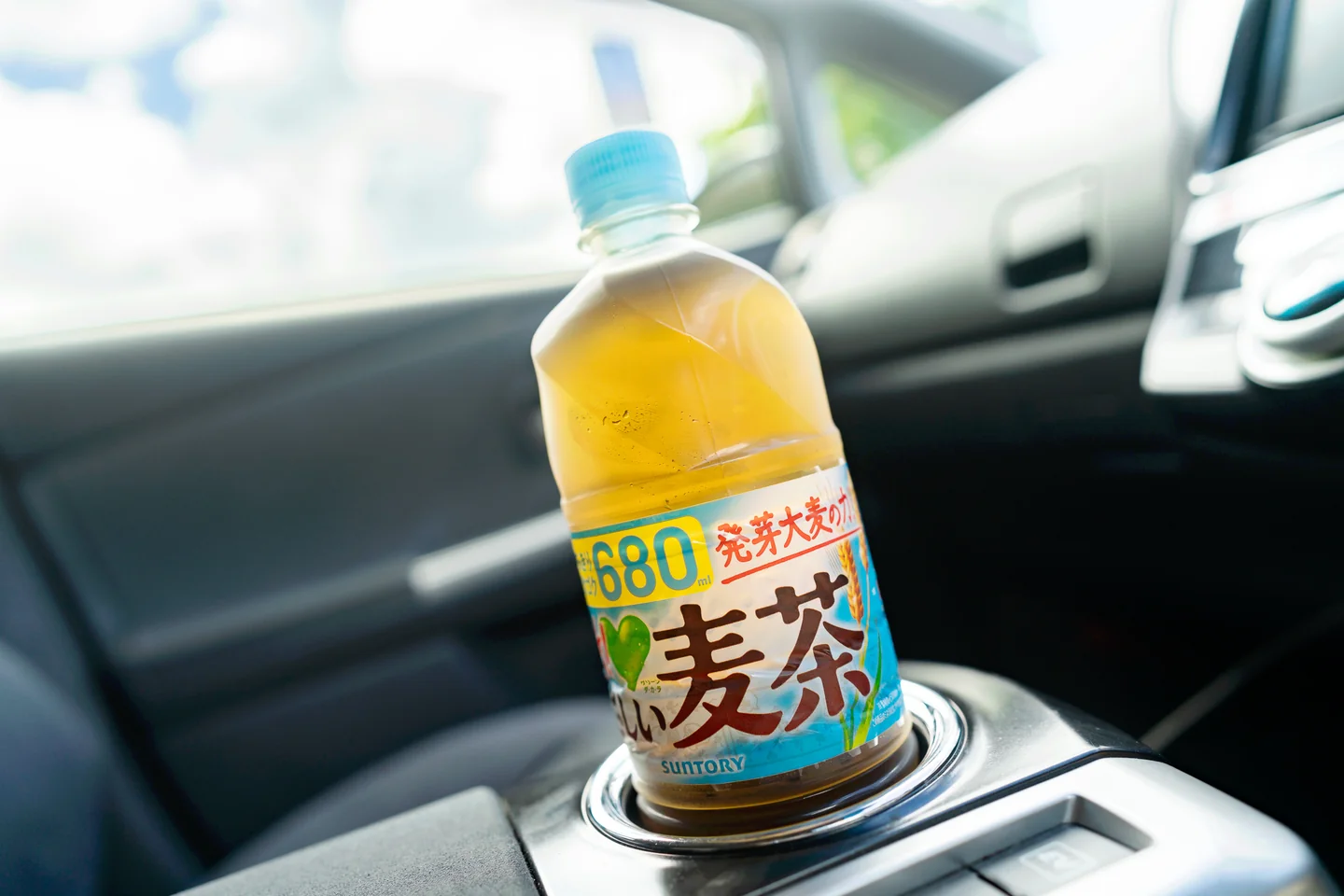
Have I explained too much.. Then shall we start talking about the Prius α? Starting with the cup holder.. this is barley tea. It’s tasty. Don’t just stick to plain bottled water, try at least a cup of barley tea..
Looking Inside the Car
From the cup holders to the hybrid panel, I checked every corner.
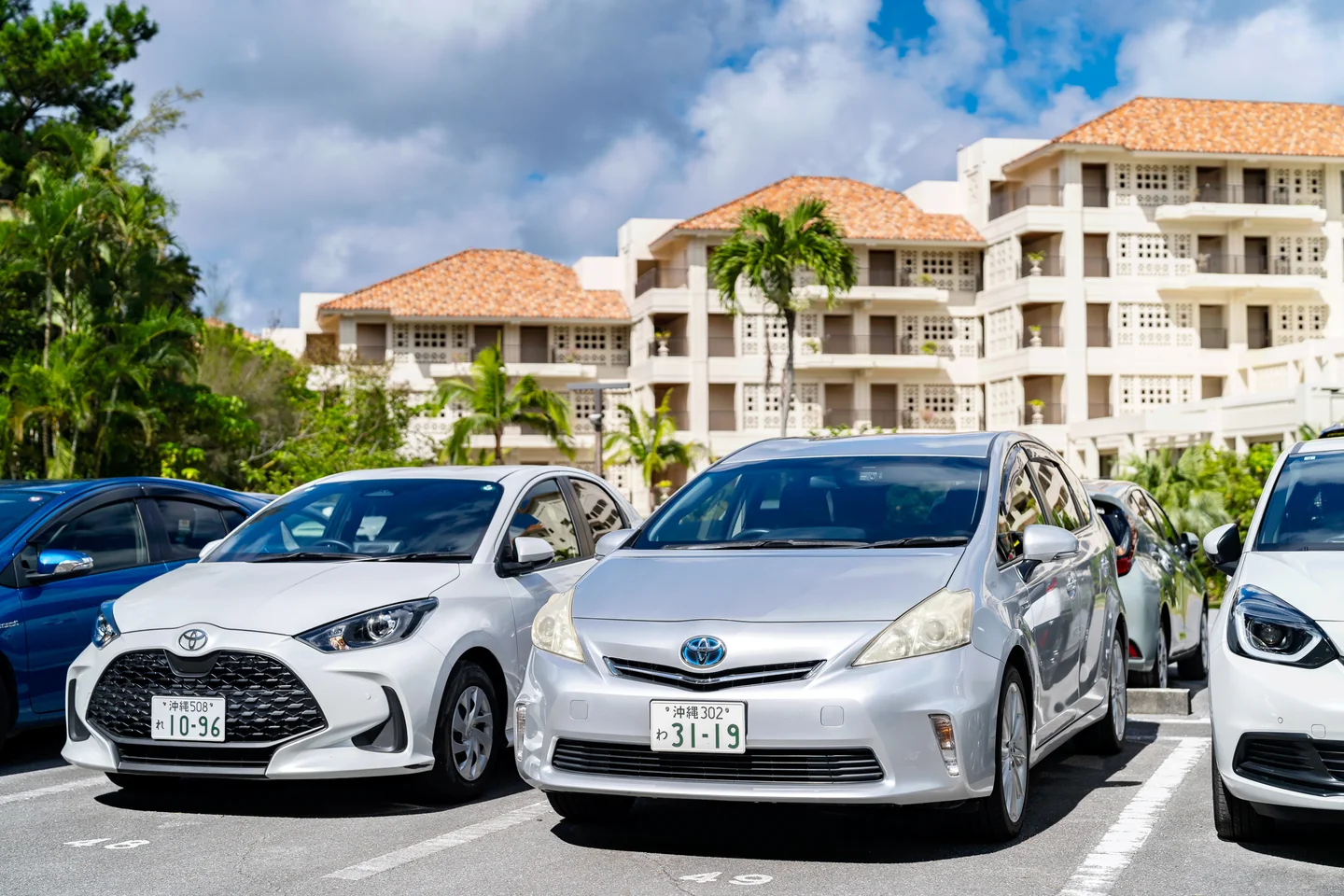
Now, let’s take a look inside the car.
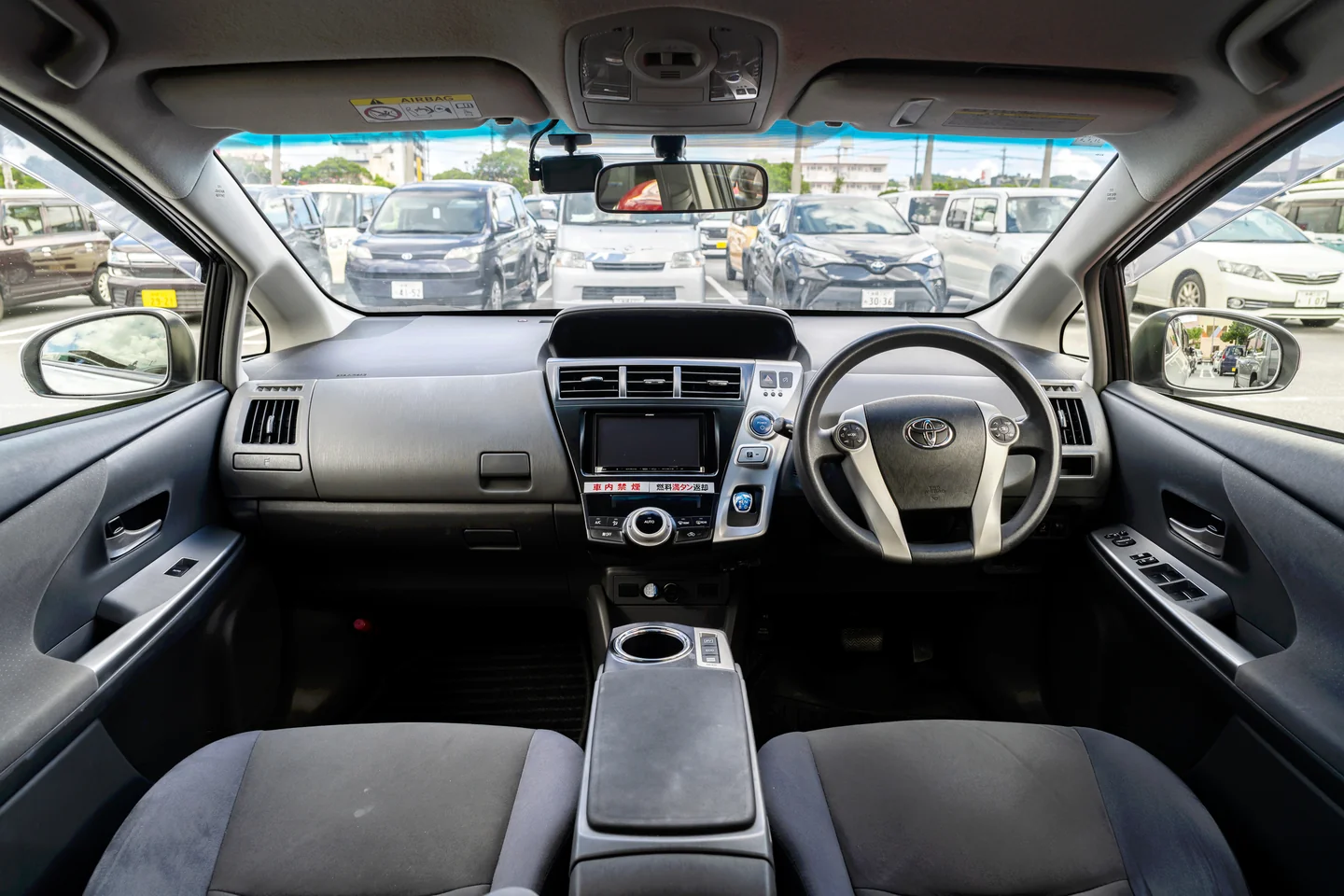
This is the front seat area. Since it’s a car with some age on it, it doesn’t have a shiny, flashy feel. This is really a car you rent for its value for money.. I’d guess the only cheaper way to take a family of five on a trip is probably the Shuttle Hybrid I reviewed last time? With a car this big at this price, hmm.. I wonder if there’s any reason to pick another car.
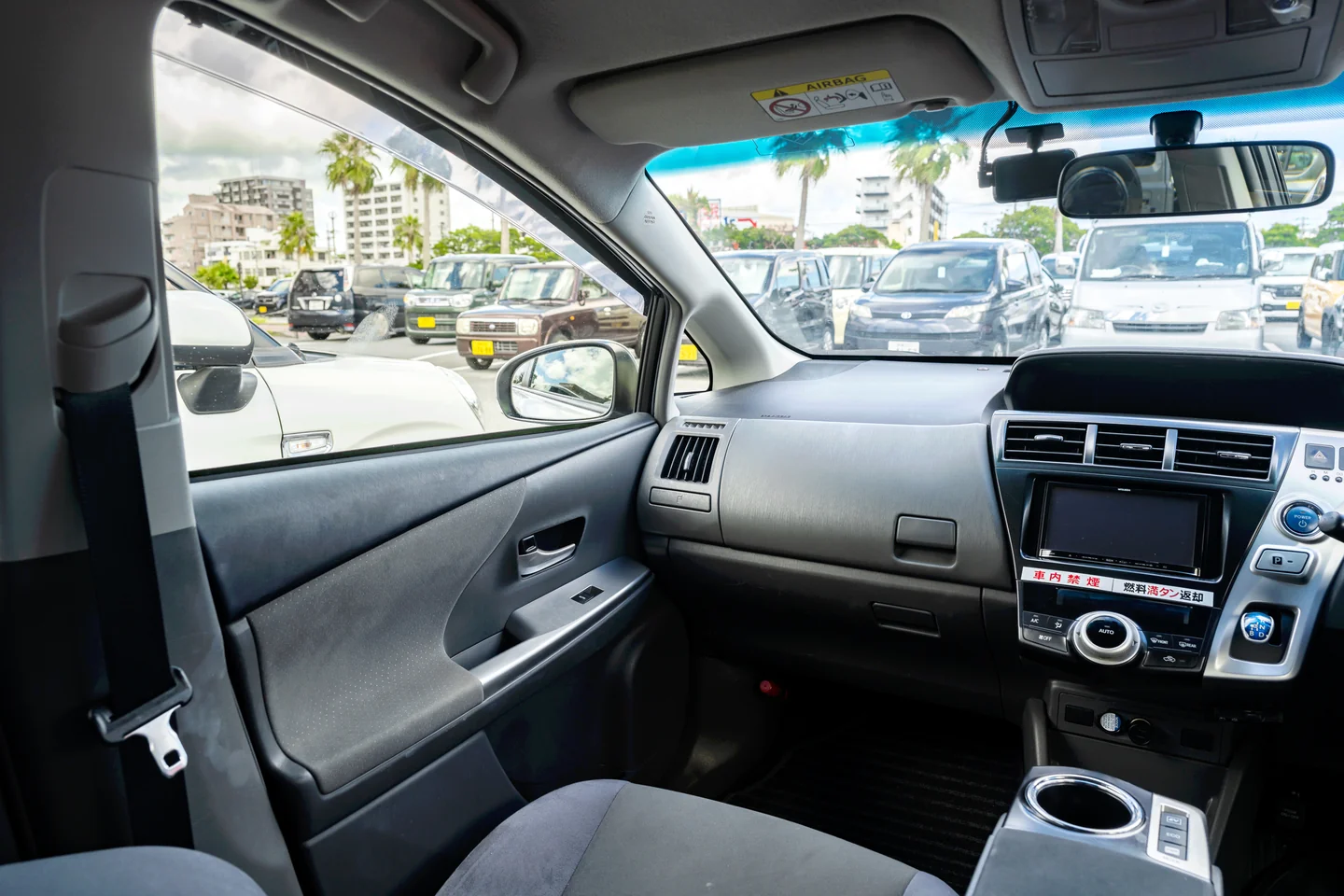
An ordinary passenger seat.. but it has a cup holder by the window, which the driver’s seat doesn’t. I think it’s important to see the cup holder at the edge of my vision when I drive. When I drove in Prague I hardly drank anything, but Okinawa is always hot.. so I always drive with something to drink. That’s why cup holders are very important.
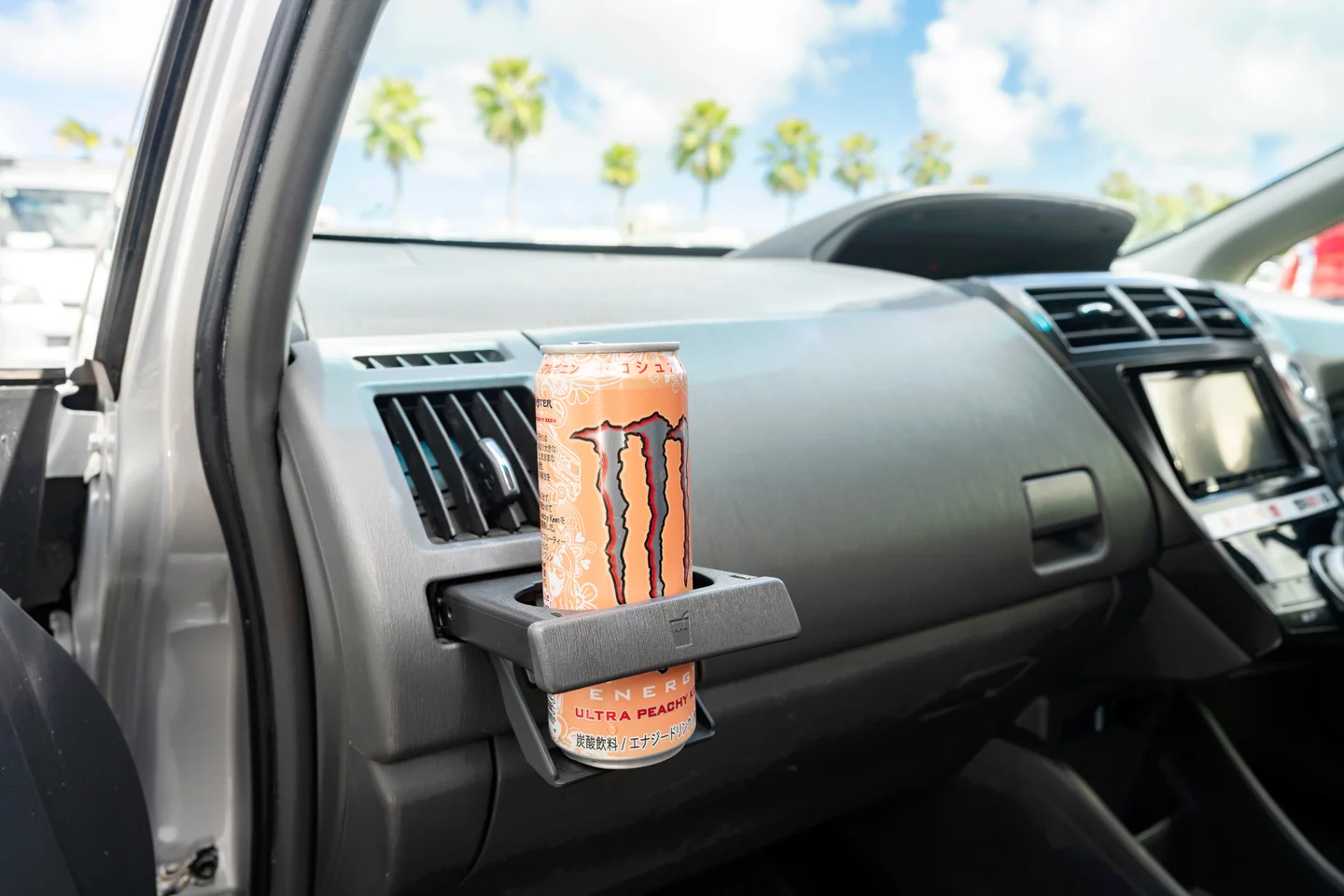
A cup holder really should be in front of the A/C vent.
Because.. if you have some of your drink left over.. and you step away for a bit, the drink gets piping hot. Direct airflow from the A/C cools it down somewhat. That’s why I love cup holders in front of the A/C. The passenger seat has one, but..
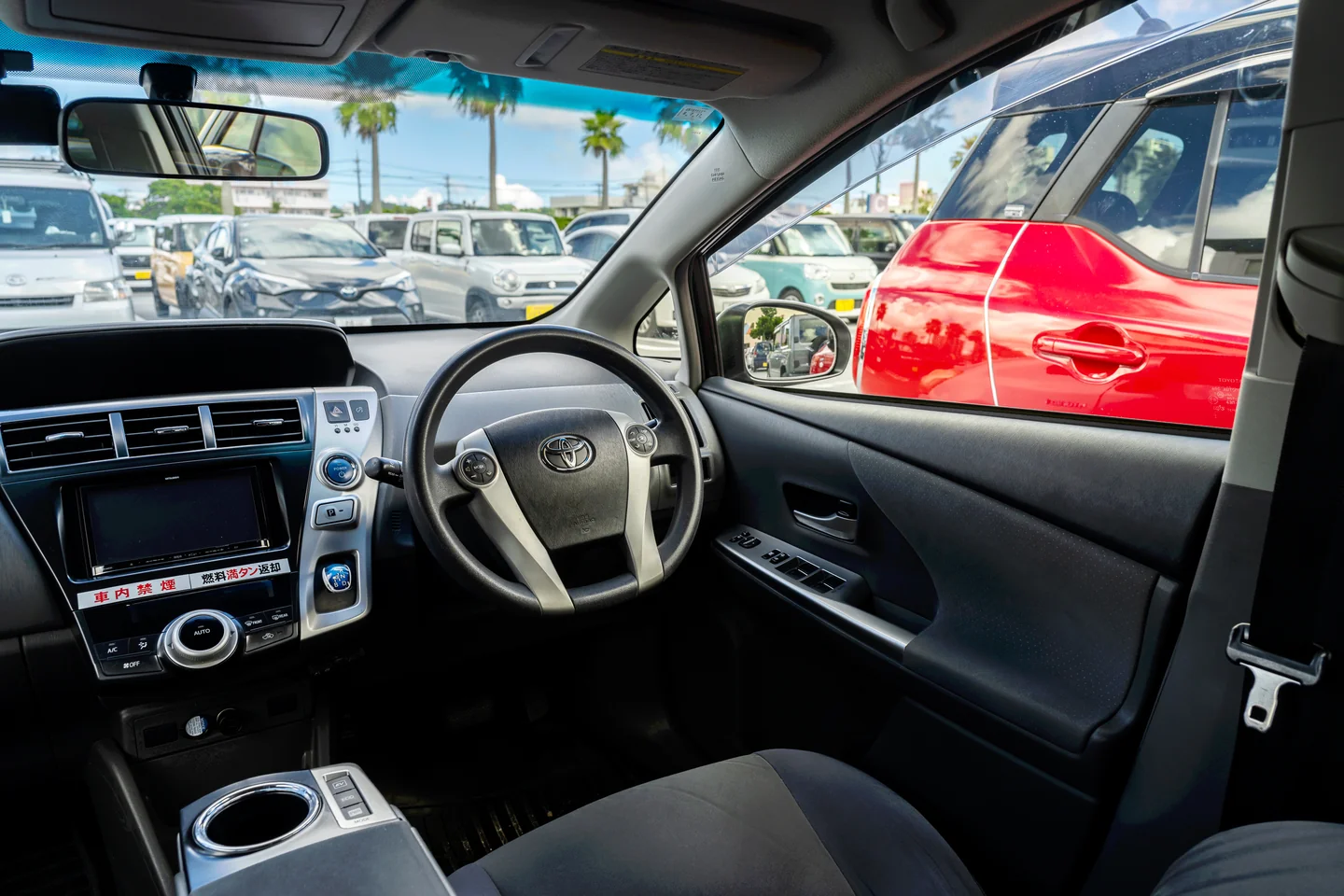
The driver’s seat doesn’t have one. What a shame…
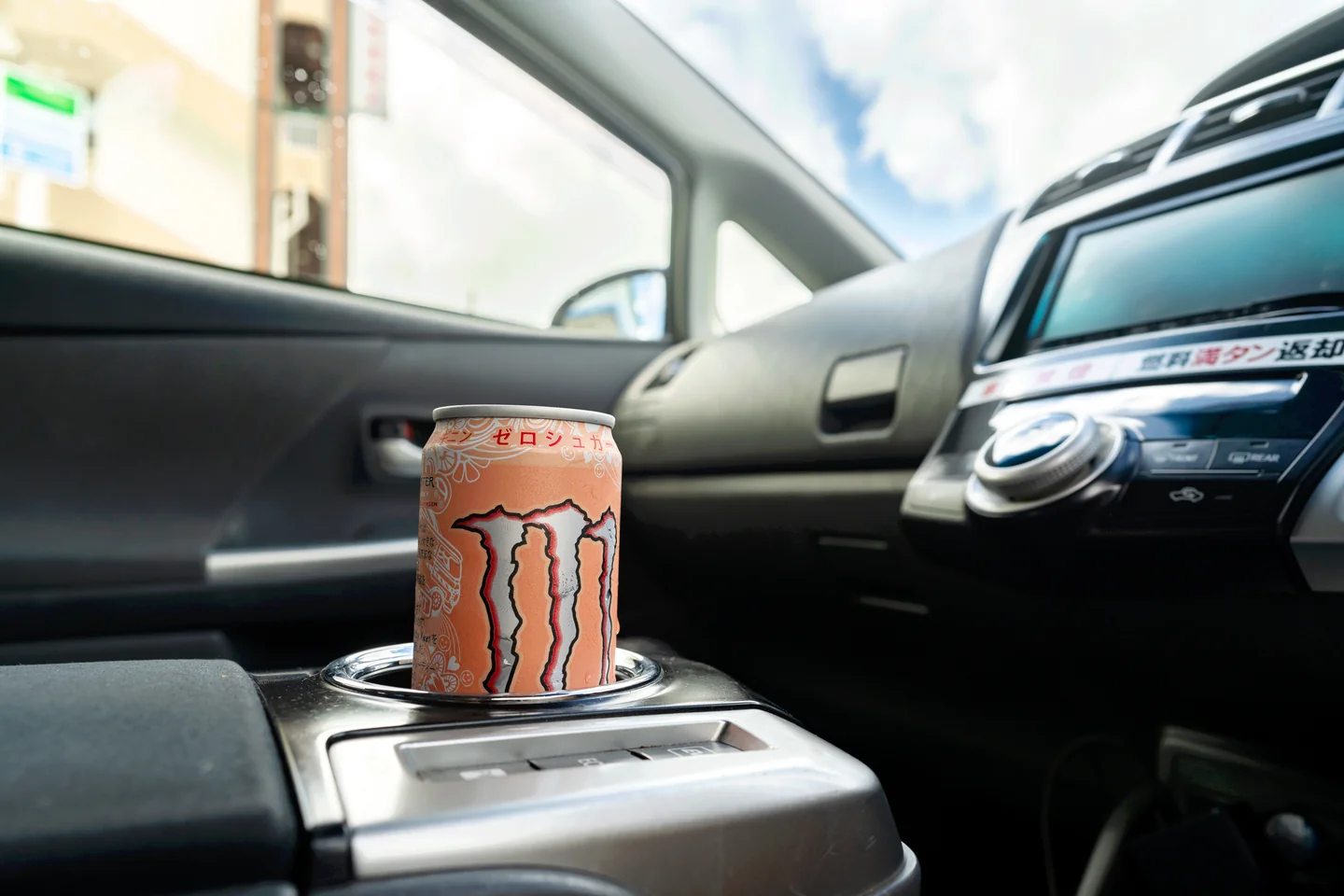
The driver’s cup holder is on the left. A bit disappointing, but since it’s cheap..
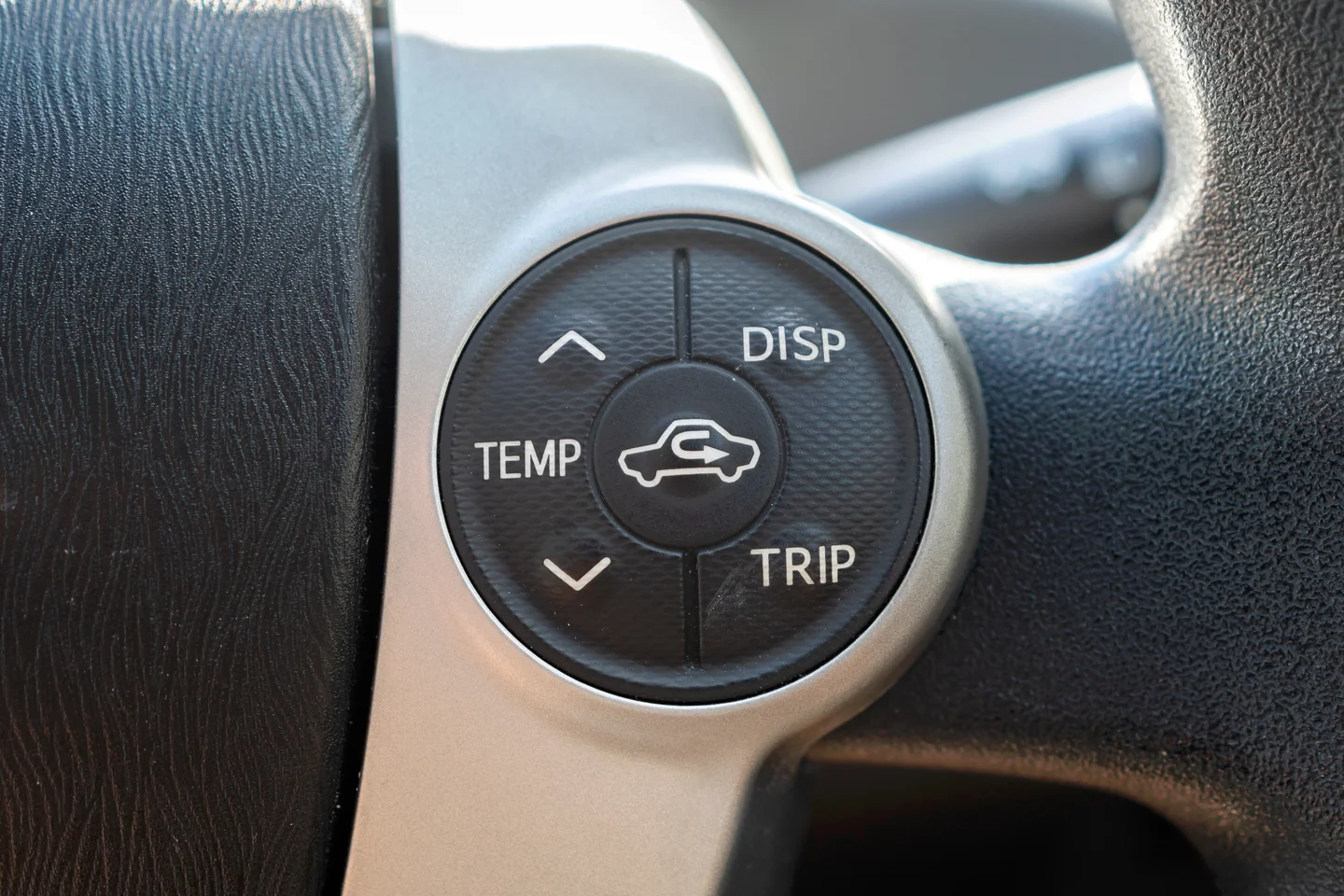
This car’s DISP button is on the steering wheel. You can use it to check how many kilometers you’ve driven in the rental car. Select Trip A or B, then press and hold the DISP button to reset the trip distance to 0 km.
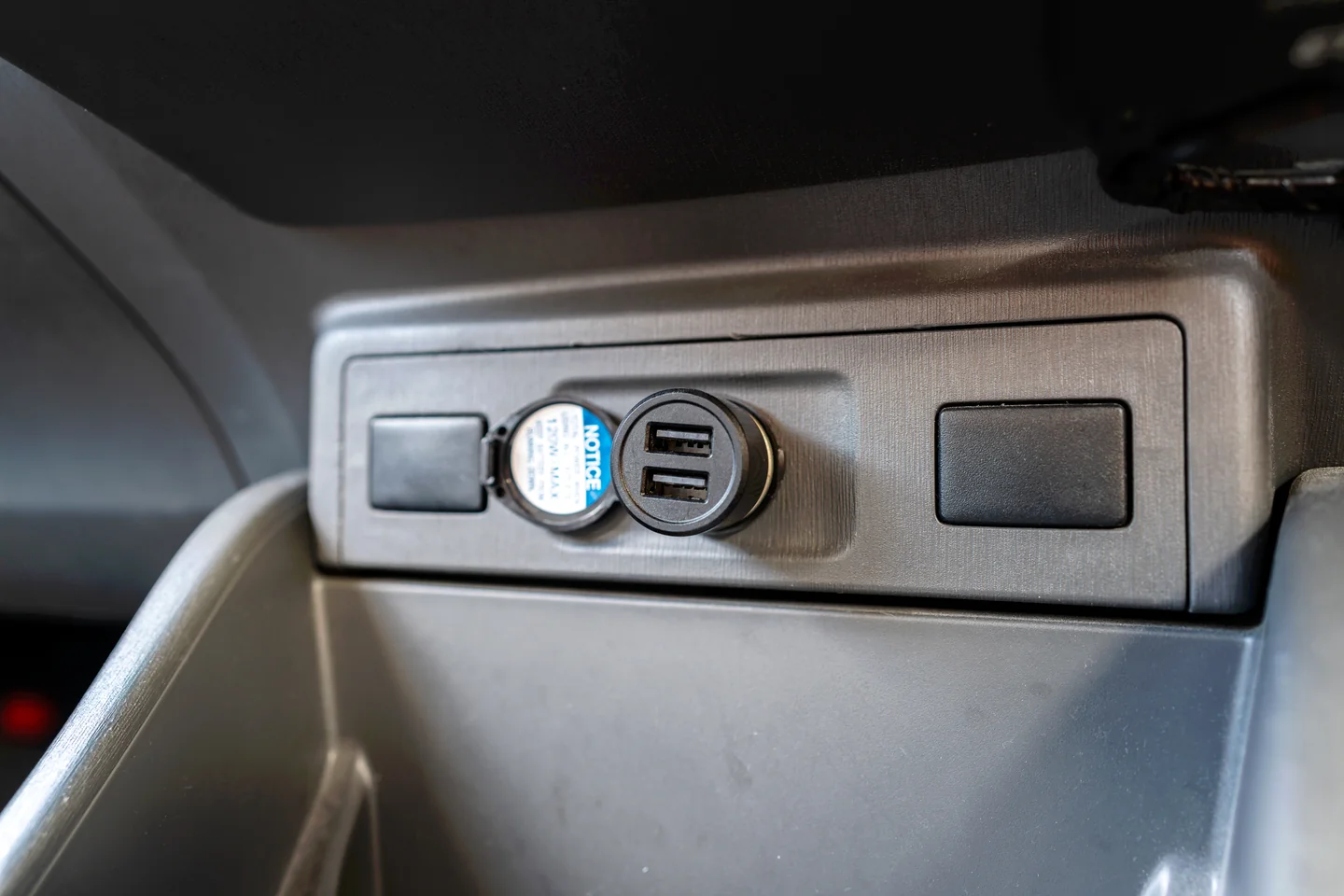
You can charge two devices over USB Type-A. The output is low, so with the navigation on, an iPhone 16 or a Galaxy Z Flip7 barely charges. The battery doesn’t drain, though. It feels like about 1% per hour. Hey, not draining is something! ~_~
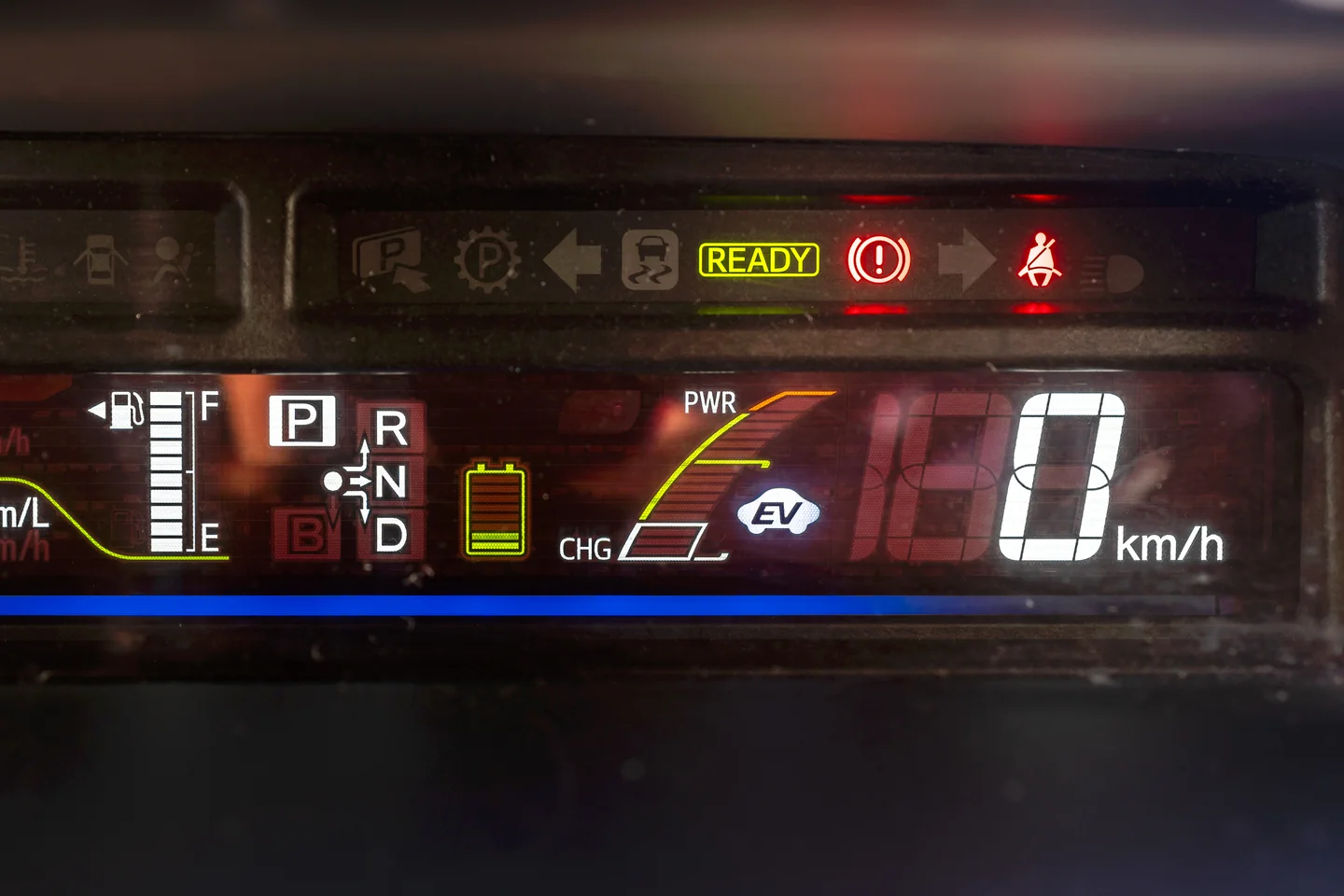
This is the hybrid system panel.
A hybrid runs on RPM, so RPM matters for EV mode to kick in. When accelerating on flat ground at around 10-20 km/h, EV mode kicks in, and once RPM goes past a certain level it switches to gasoline mode. On a downhill stretch of expressway, EV mode can kick in even at around 70 km/h. The regenerative braking feel is mild, so you don’t need to worry about the awful regenerative braking of Korean electric taxis.
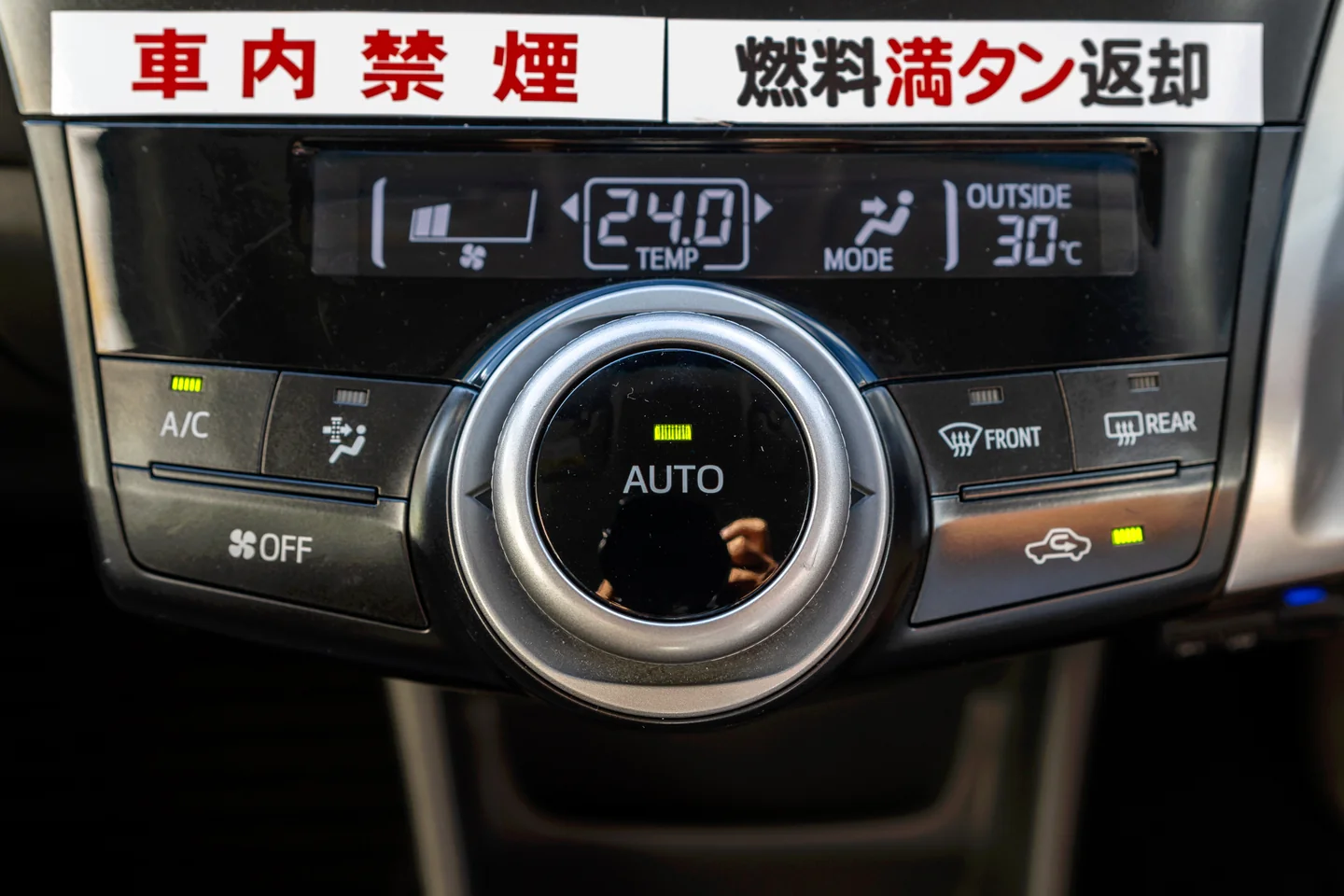
You set the air conditioning with dials. Going left to right, the left dial is for fan strength, the center for temperature, and the right for where the air comes out.
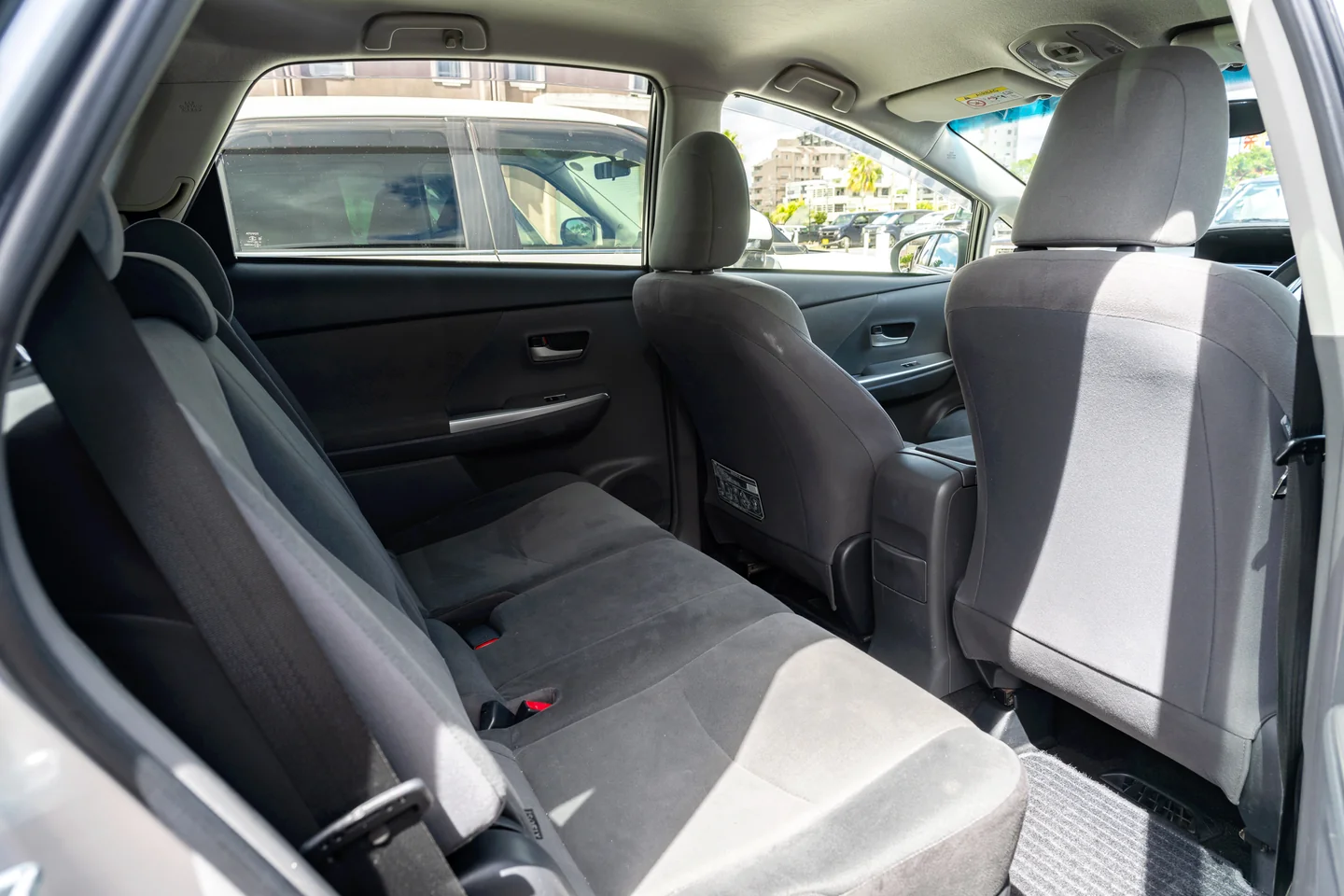
Three people can sit in the back seat. You can of course give up one seat to make more luggage space, but there’s no need, since the trunk is big.
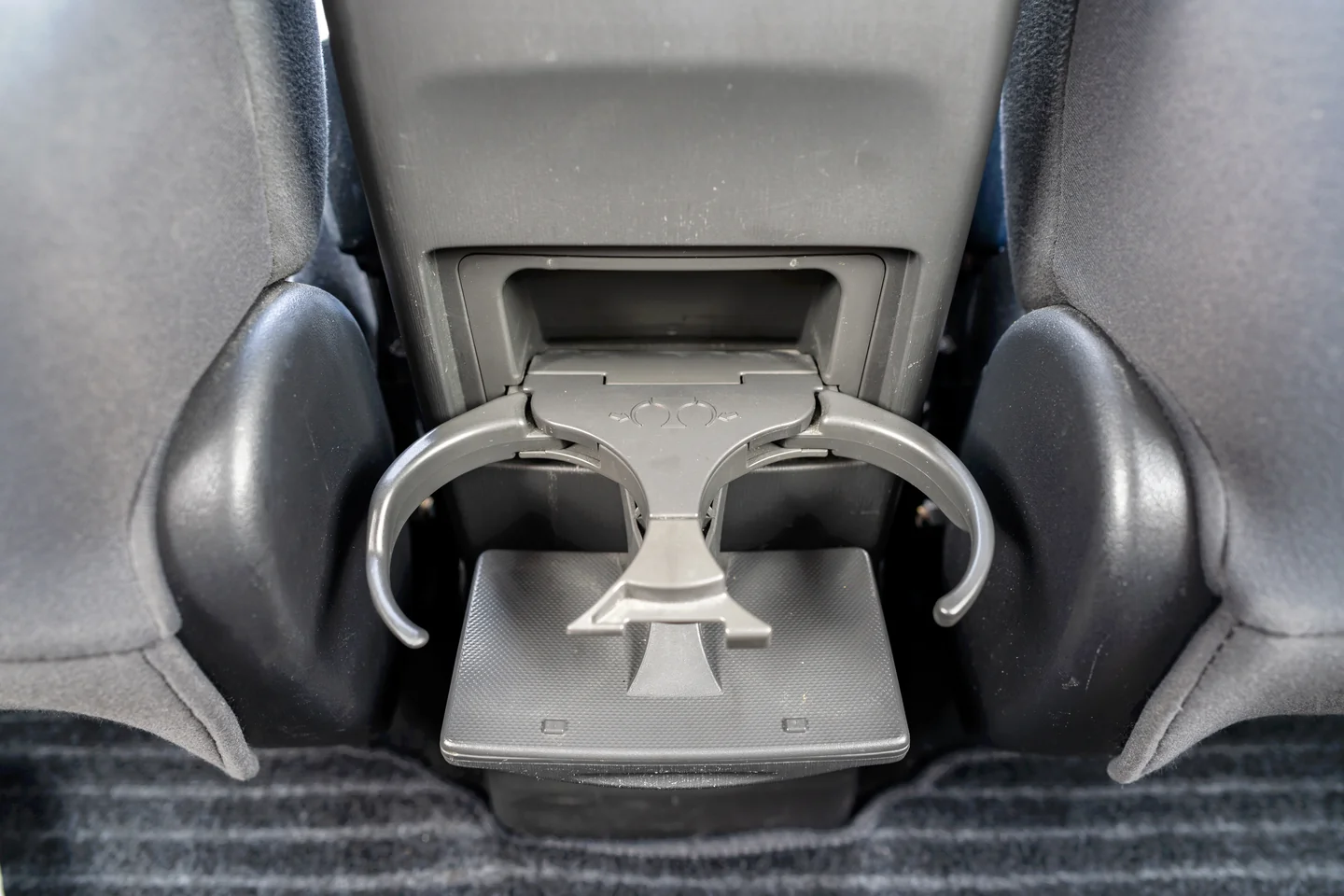
These are the rear cup holders. Three people ride in back but there are only two, which is a little disappointing.. one person has to use the door cup holder.
Trunk Capacity
I loaded suitcases to check the capacity.
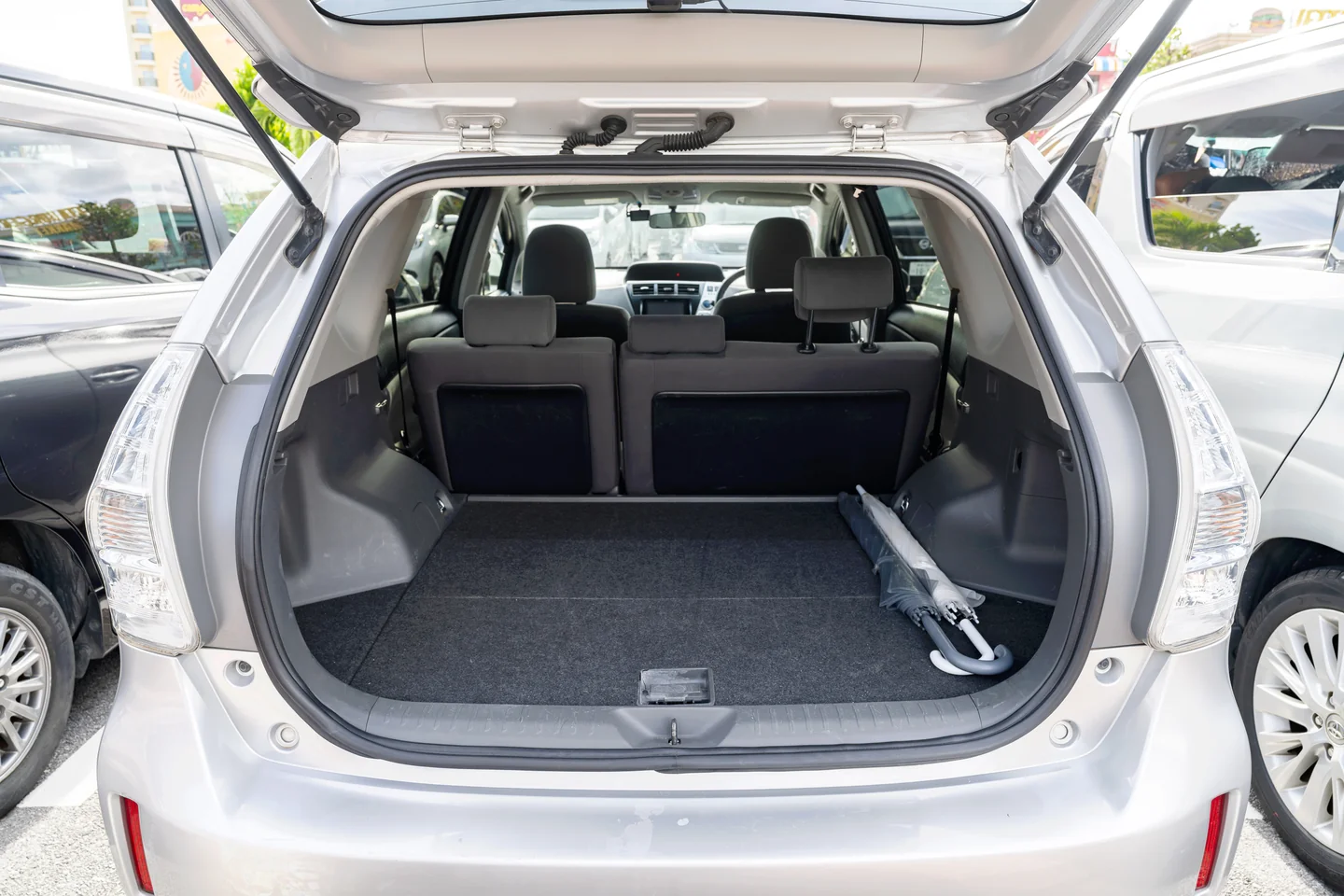
First, the trunk.. it’s obviously big just by looking at it. It’s almost mid-size SUV class.. about on par with a Toyota Harrier. Huge.. This is a car whose whole concept is a big luggage space, after all.
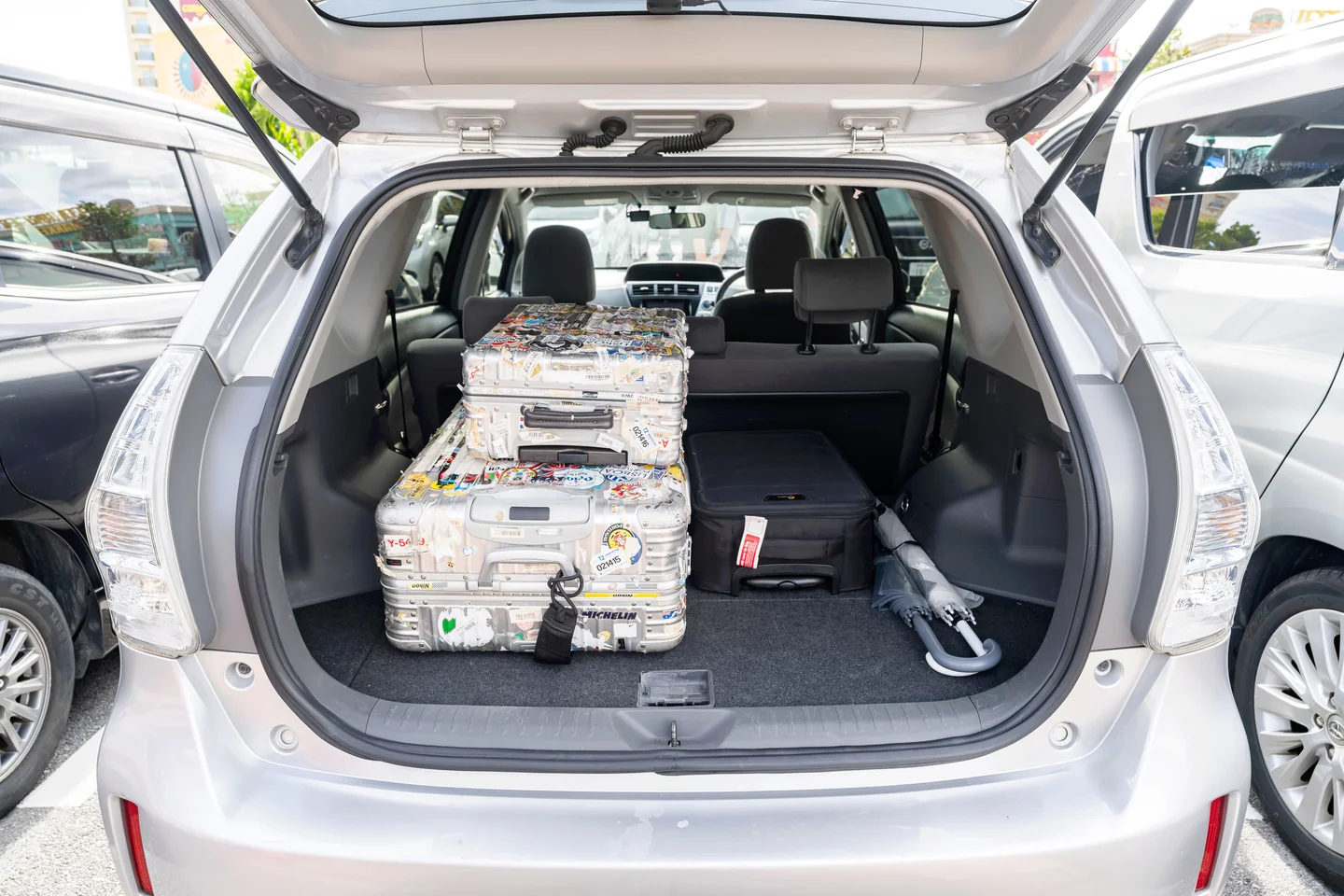
Five adults can each bring one suitcase, and they’ll all fit without much careful packing. If all five bring 28-inch suitcases, though, fitting them in would be a bit of a Tetris challenge.
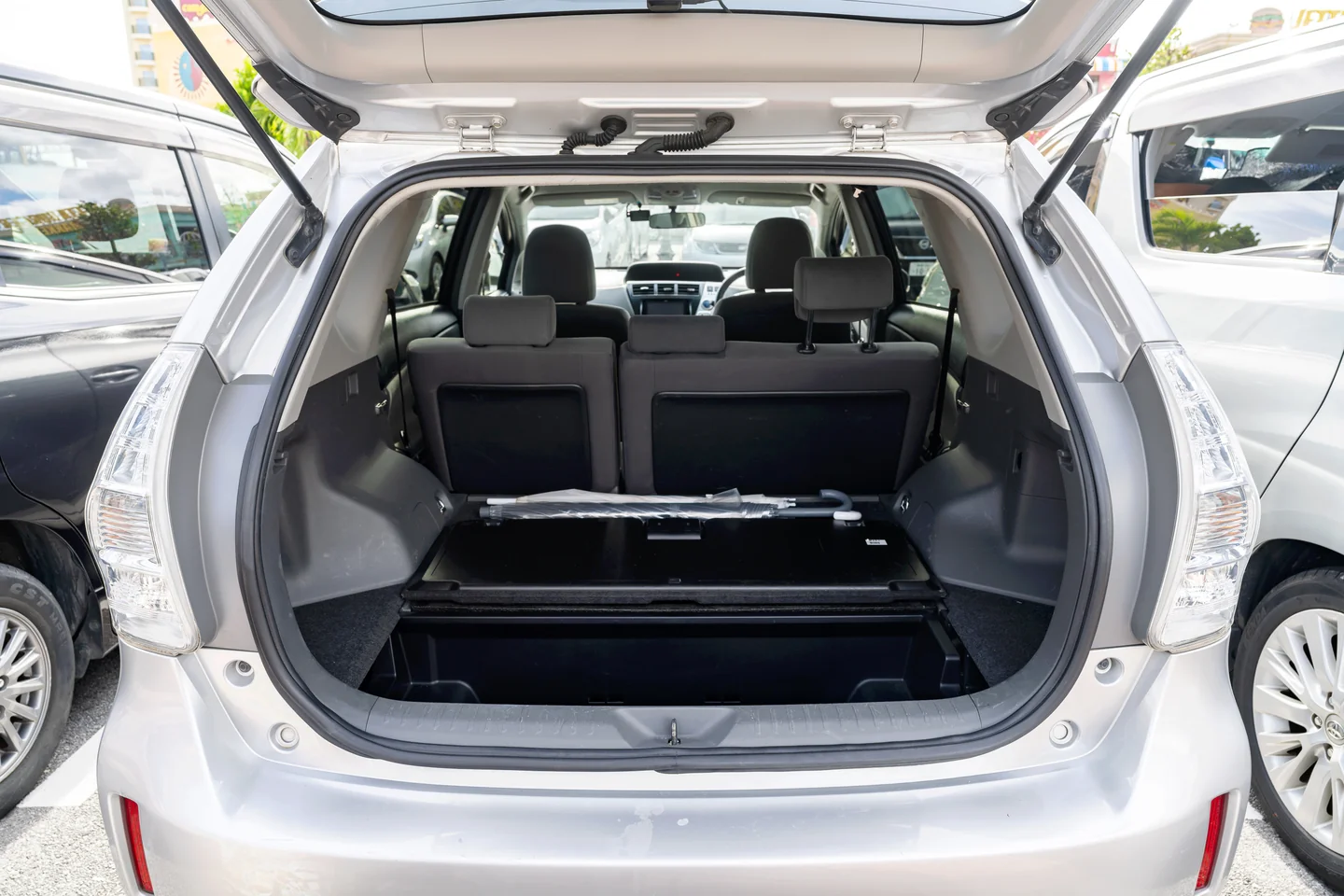
You can also expand the golf bag storage space to fit more luggage. Well.. do five people traveling really need a trunk this big?
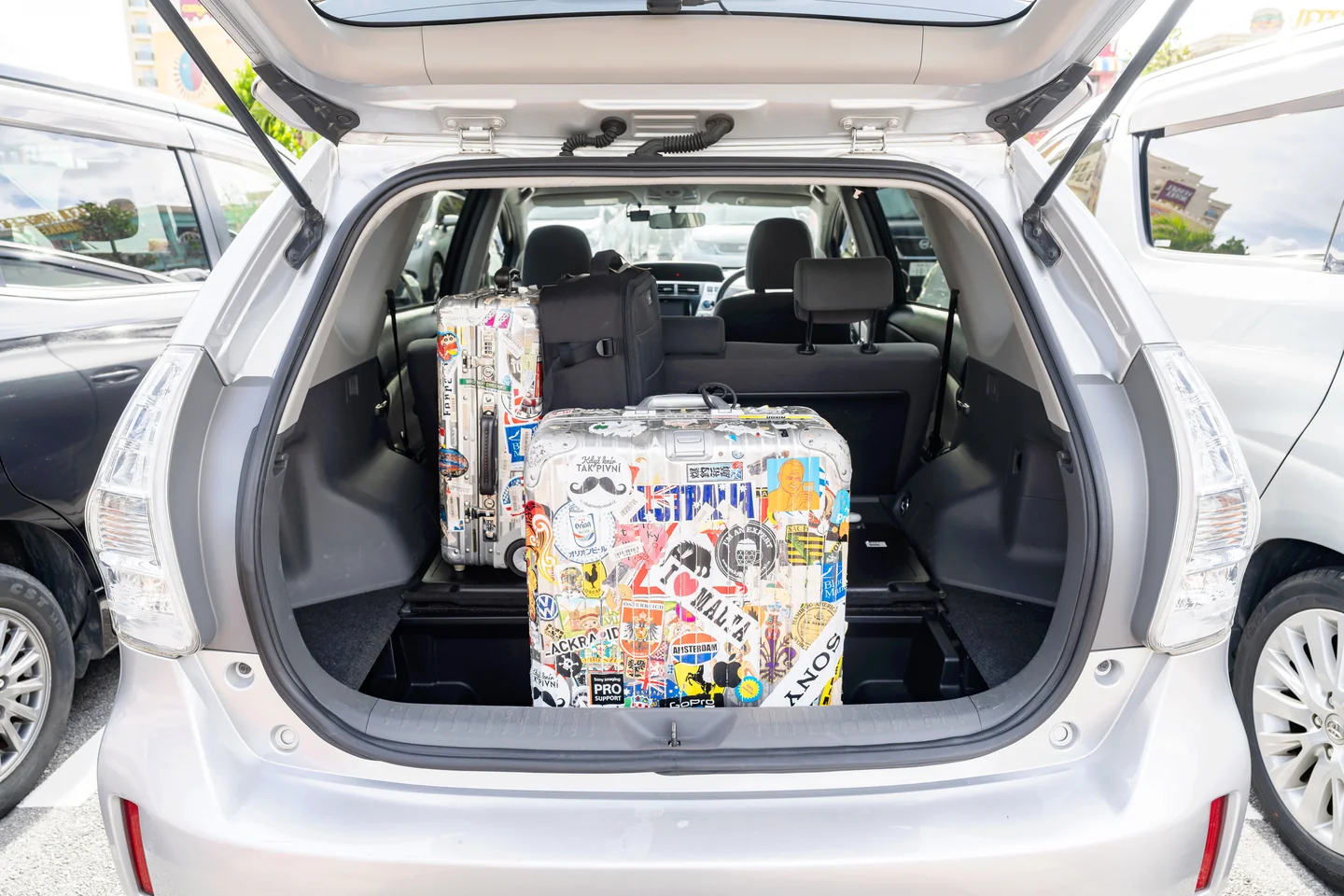
Two cabin-size suitcases fit upright on the left, right? You can see with your own eyes that four can stand upright, and it’s clear that 6 to 7 20-inch suitcases would be no problem. A baby’s folding stroller usually shrinks to about the size of a cabin-size suitcase when folded, so if you’re traveling with a baby, there’s less need to worry about fitting the stroller in.
Well.. small cars like the Yaris or Aqua, or kei cars, always run into luggage space problems, so if you have lots of luggage, I think the Prius α is a good pick.
Driving Impressions
Hybrid driving feel, convenience stores, and expressway use.
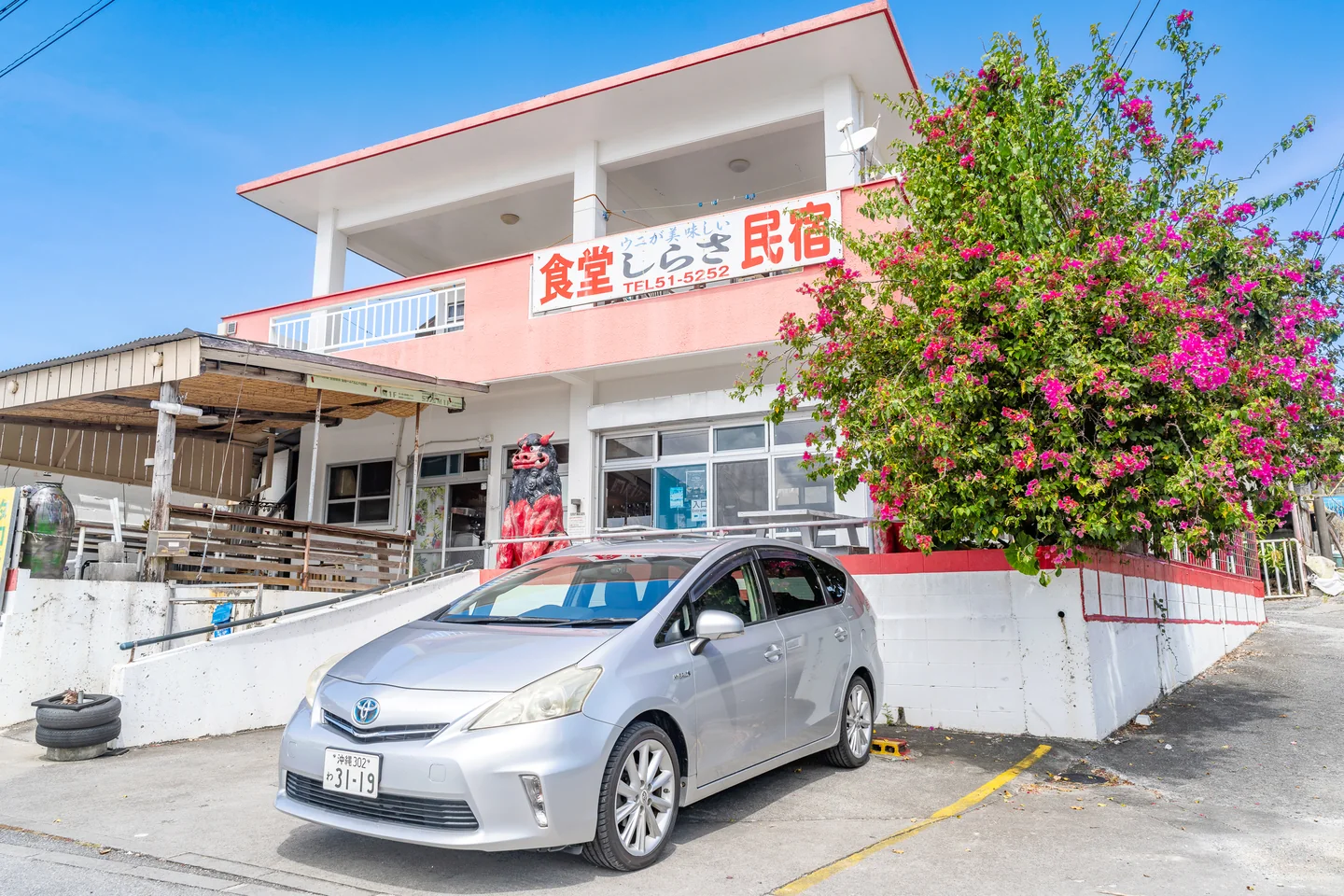
As you’d expect from a pioneer of hybrid cars, it’s pleasantly smooth to drive. I mean.. that annoying regenerative braking feel is very slight. Getting EV mode to kick in takes a little practice, but maybe because of that, people who have never driven a hybrid may find driving it fun. It could be a chance to understand the RPM concept a bit better. You don’t need to know it, but if you keep thinking about it while driving, you end up thinking about how the hybrid mechanism works.
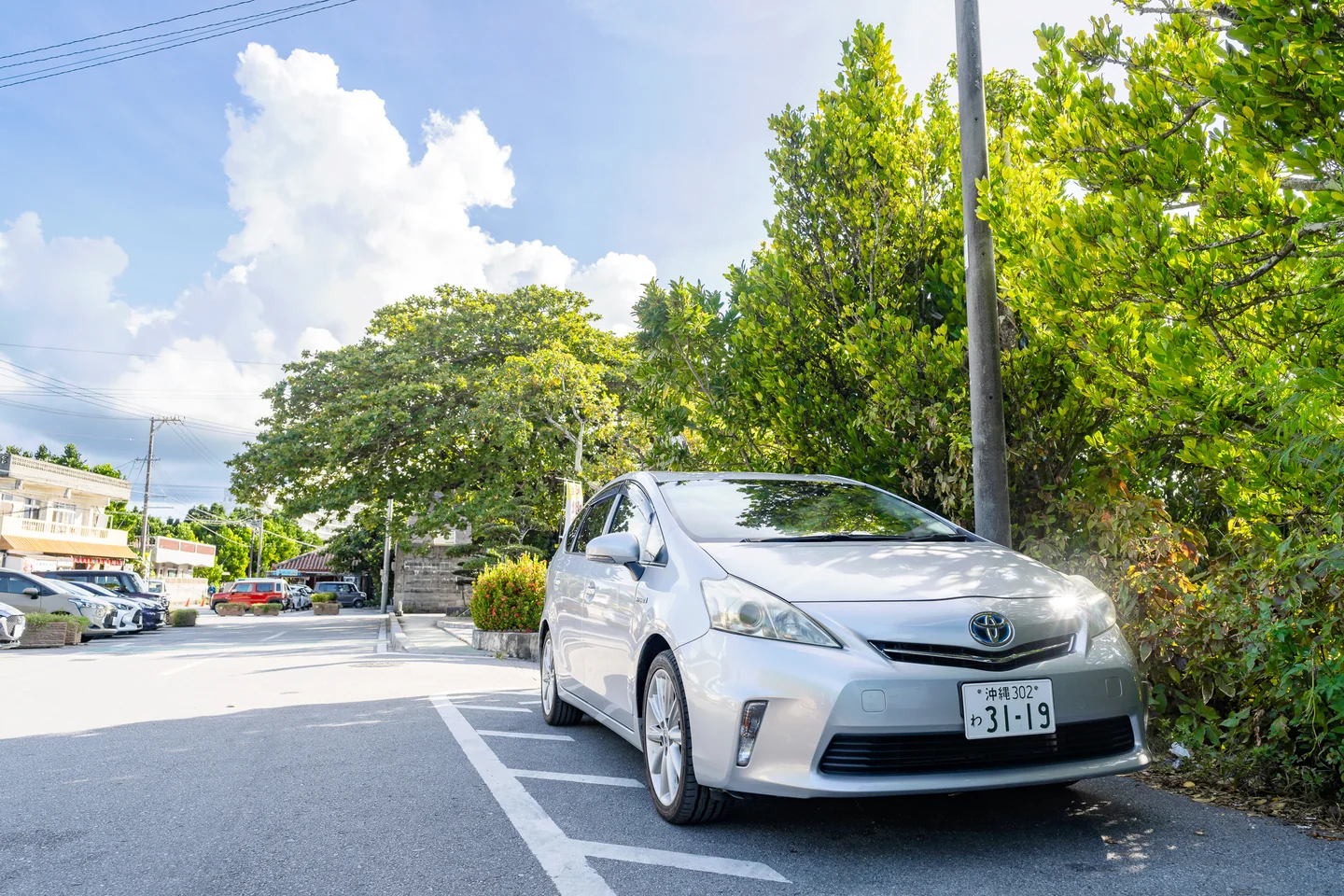
Above all.. the fuel economy is good, so I made two trips to northern Okinawa and two to American Village with this car. I used it for 4 nights and 5 days in total, and I think it was quite good. Oh, by the way, I’m a regular customer, so I get a bigger discount than you would.
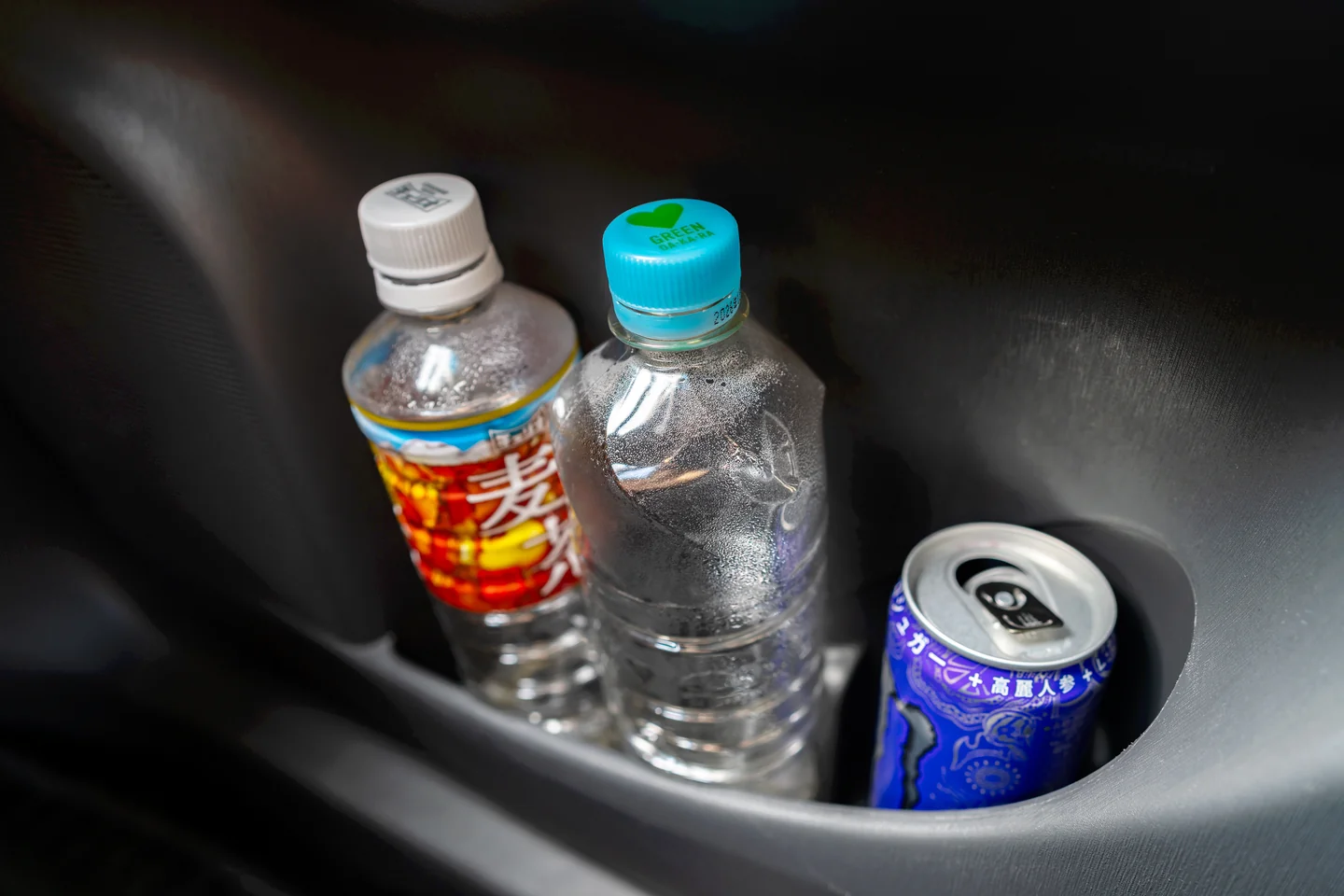
My photo shoot schedule was so busy.. trash just kept piling up in the car. I took the interior photos on day 5 too -_-;;
I did give it a quick tidy, but there was only so much I could do about the mess..
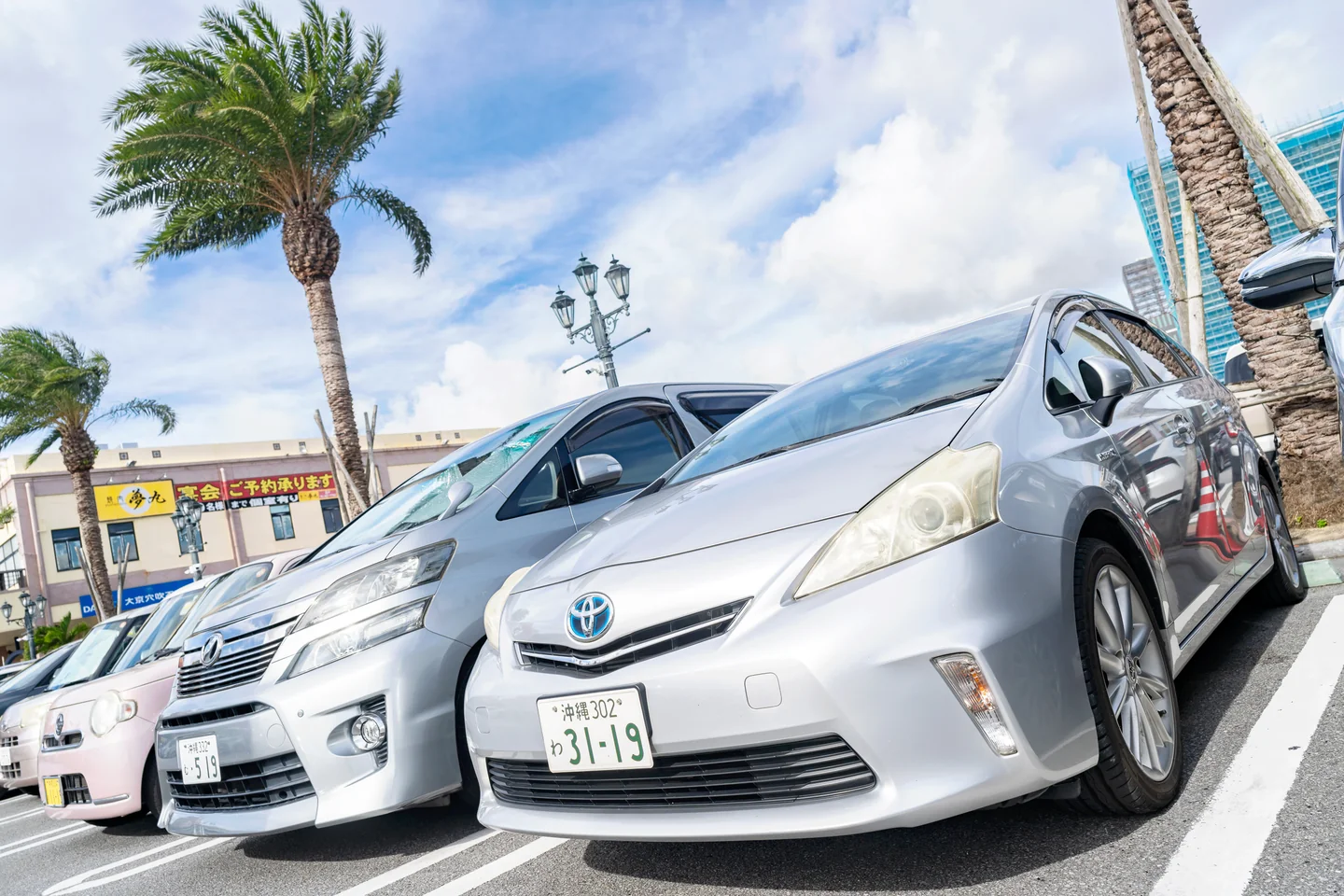
When I lived in Okinawa, after Kokusai Street, the place I went most often was probably American Village. I visited 3-4 days a week for shoots. I’d actually like to photograph the car with American Village’s colorful buildings in the background, but the parking is chaos..
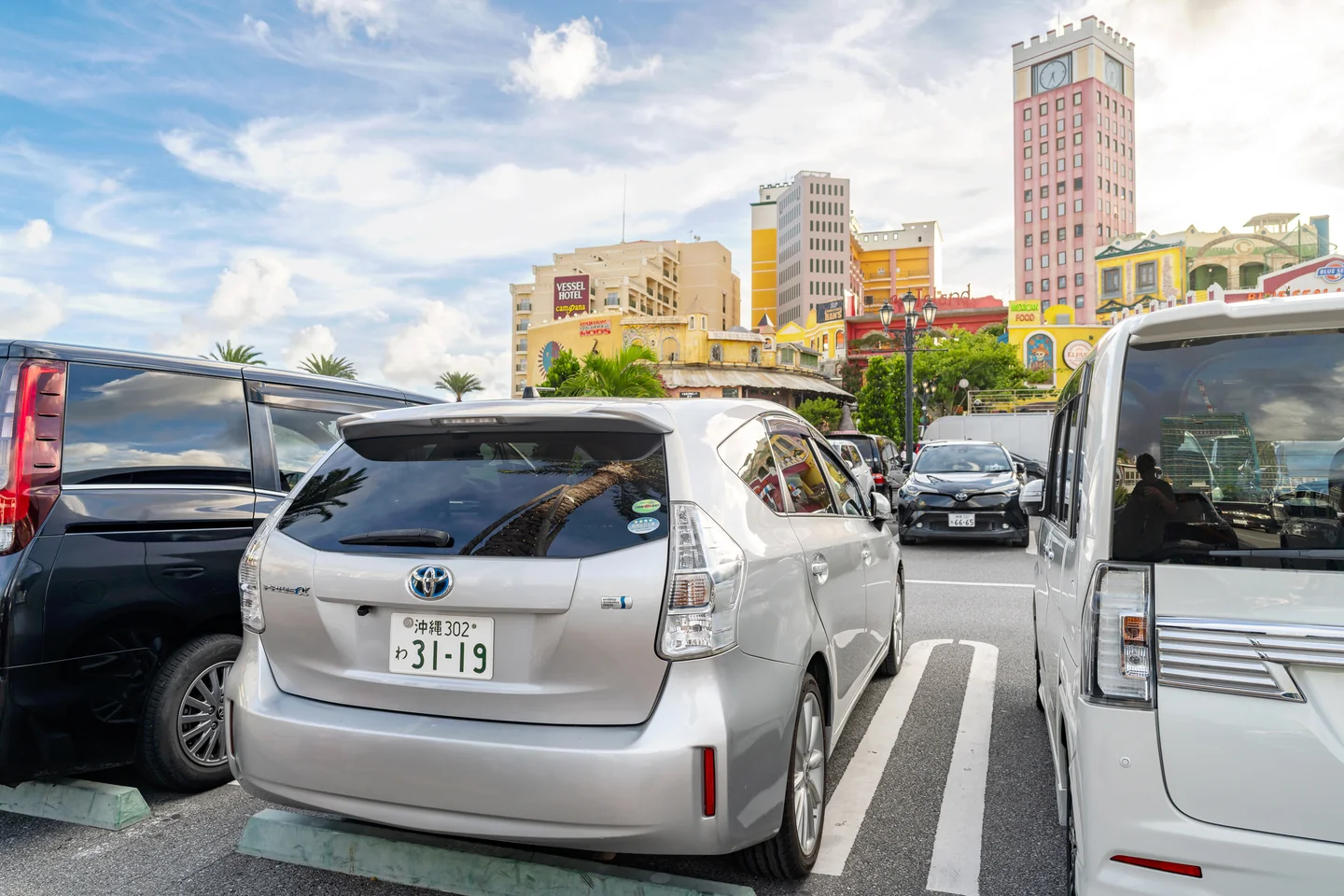
So I’ll leave you with the sportback’s rear view. The hybrid badge is striking. Also, I forgot to take a photo, but it has a rear camera.
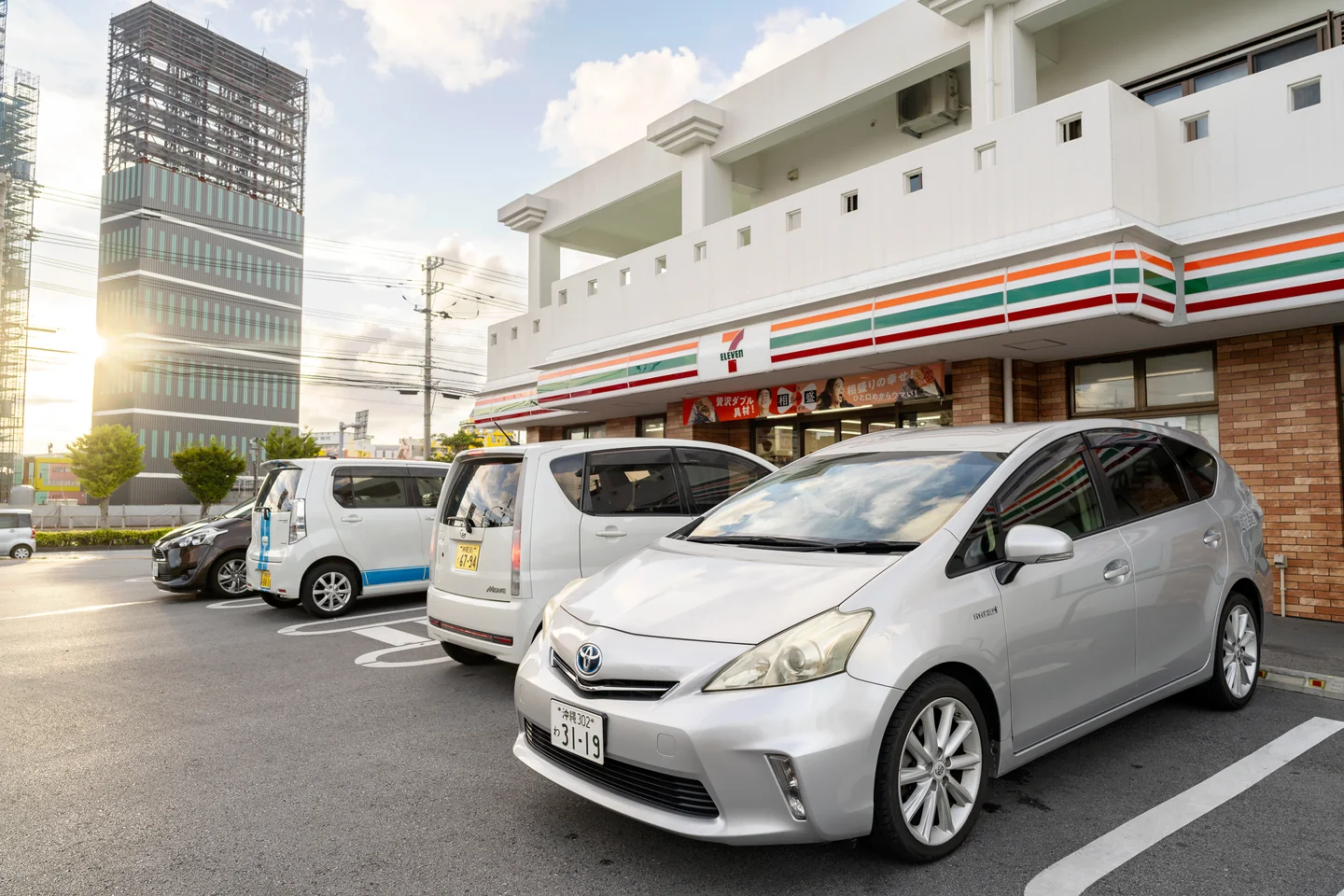
Whenever I do a rental car review, I really want to include a convenience store photo. Because.. cup holders always come up in my reviews. To photograph a drink, I have to go to a convenience store.. so while I’m at it, I include convenience store photos. It feels so Japan, doesn’t it? 😀
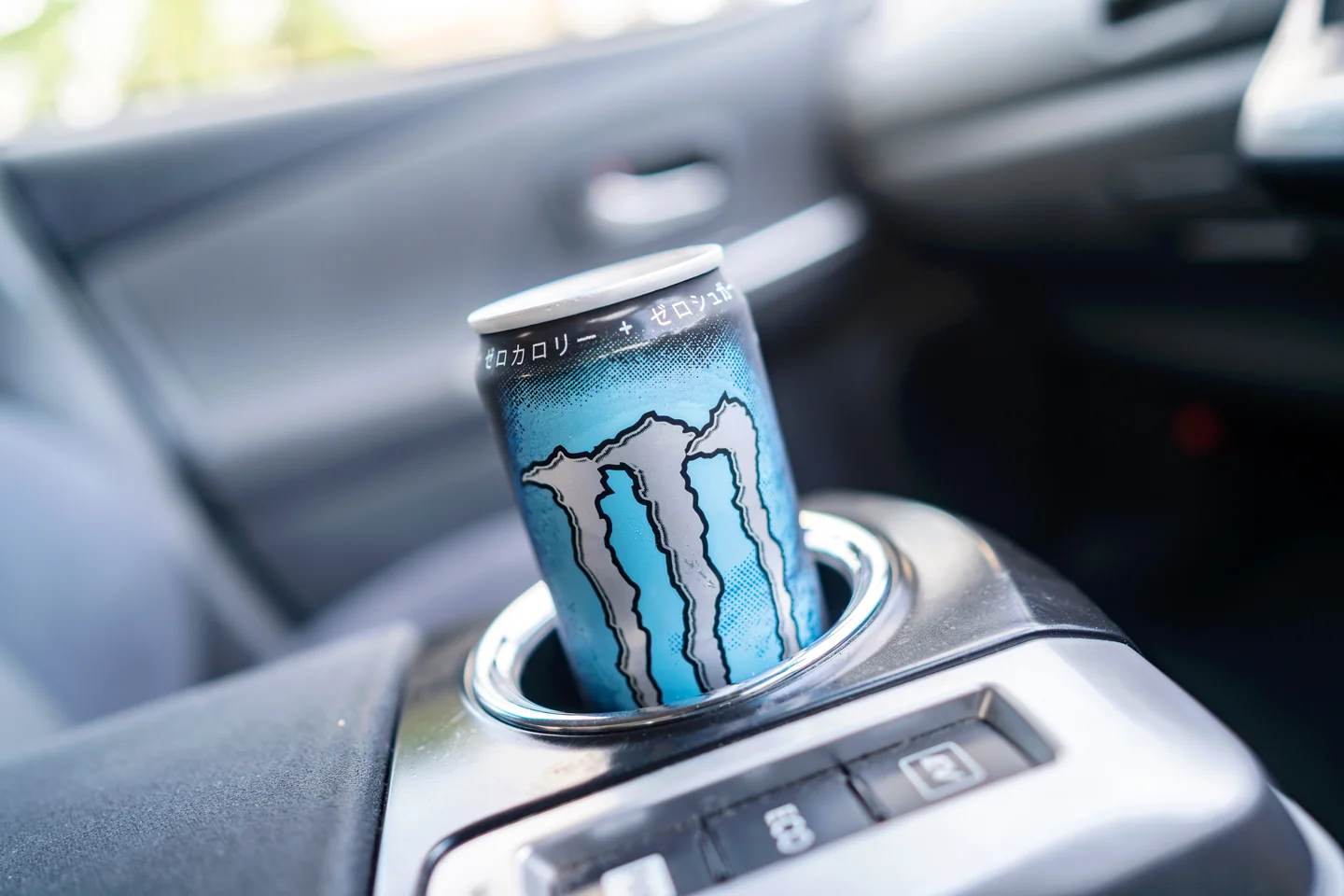
My everyday drink is Monster Energy. I only drink the zero-sugar ones. When I shoot at Bisezaki in the morning, if I drive without having one, I get so tired, so driving feels different with and without it.
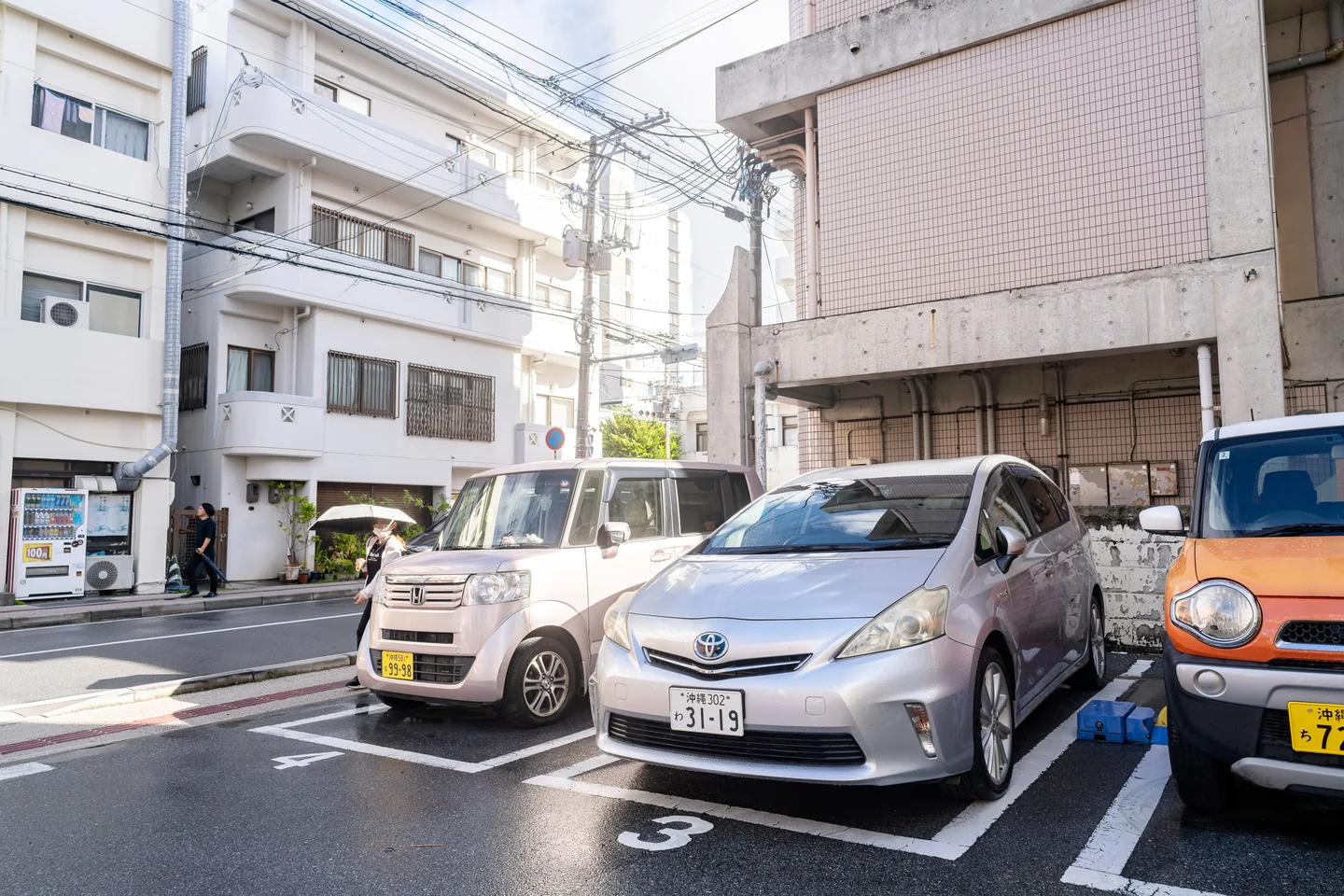
It’s an extended sportback, but parking isn’t hard. Of course, when it comes to easy parking, kei cars are the best. If you’ve driven something about the size of a Hyundai Avante (Elantra), parking is really easy.
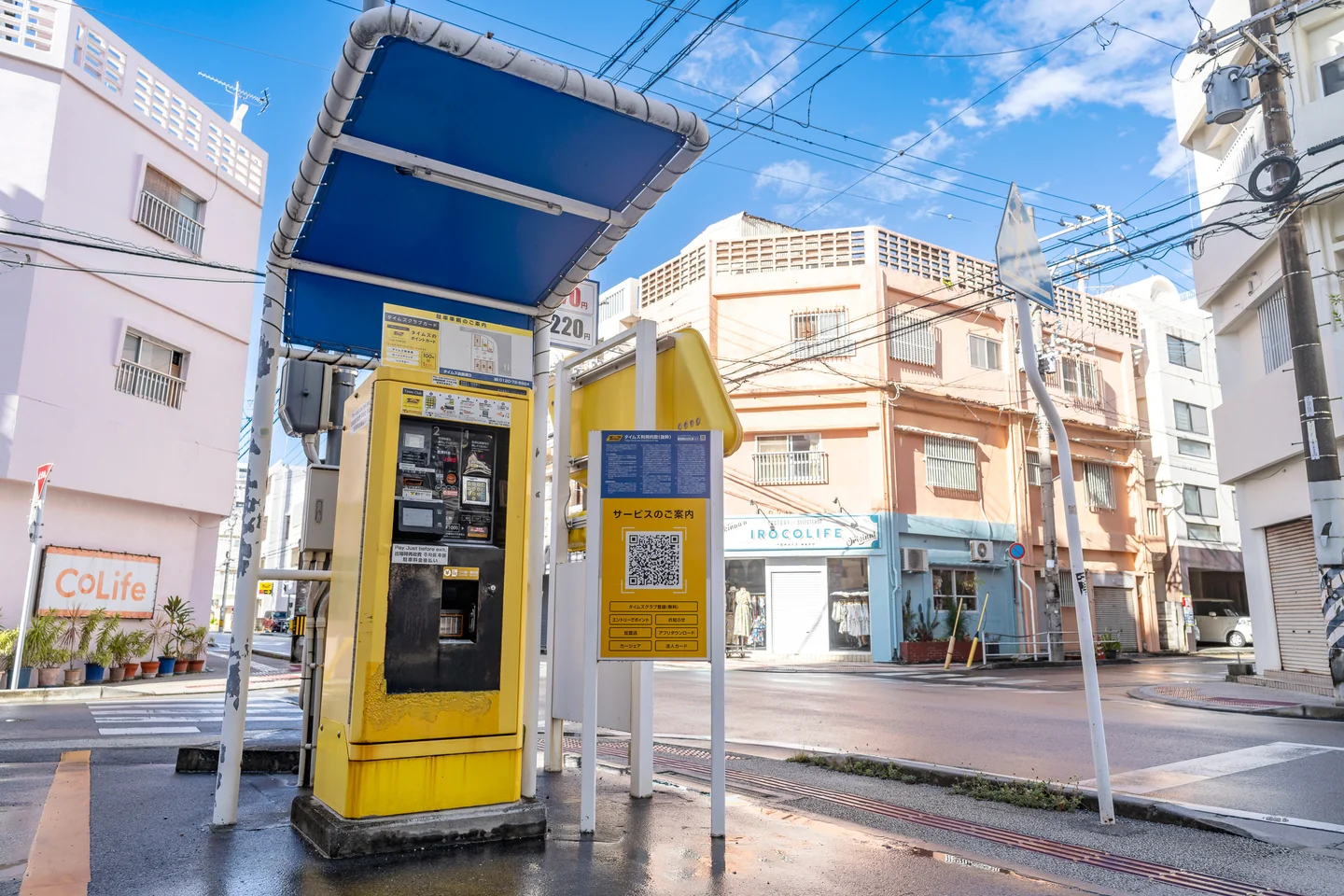
Paid parking lots.. there’s a 0.0001% chance one takes credit cards.. but don’t get your hopes up.
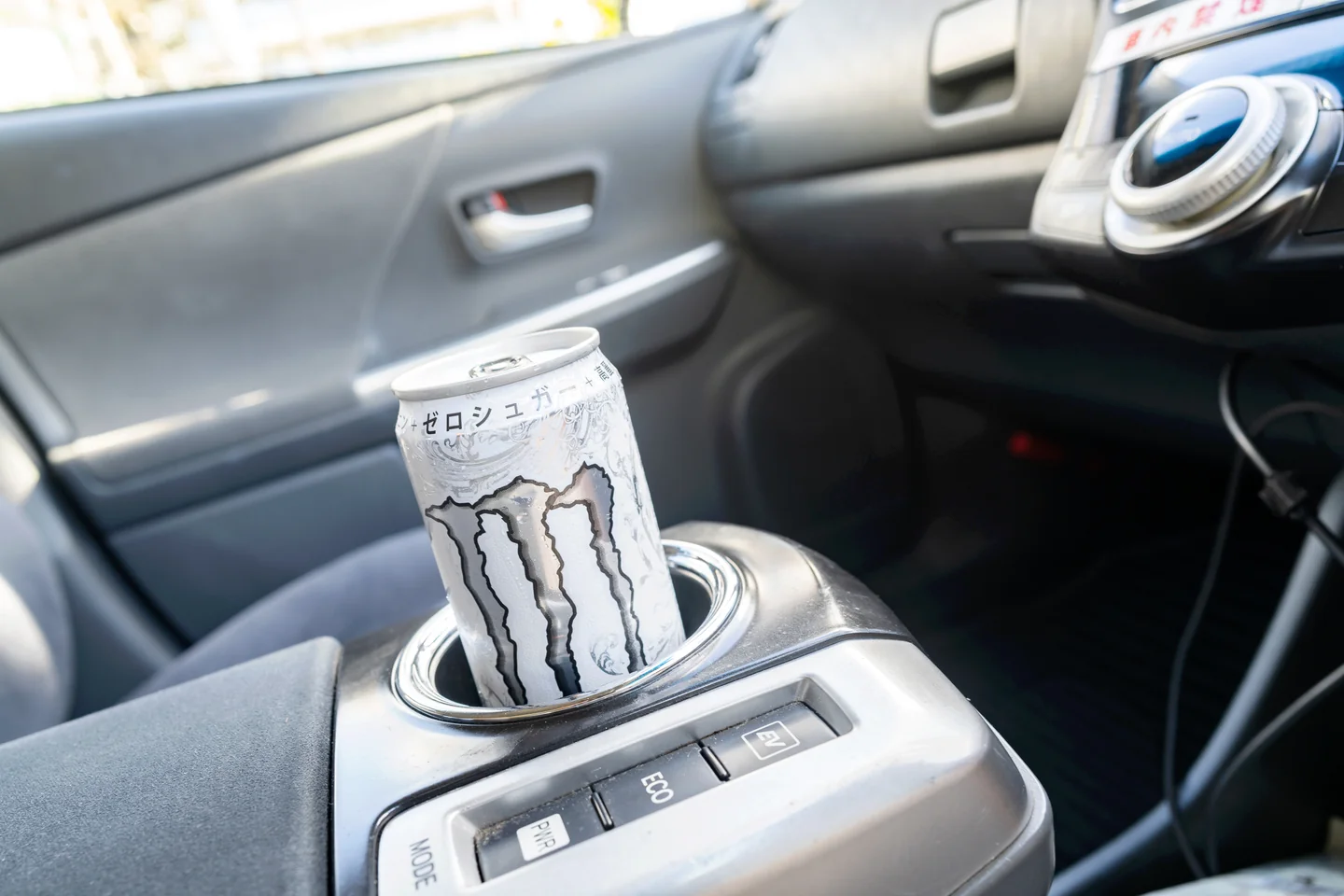
Another day, another energy drink for the shoot. Because I have to drive on the expressway.
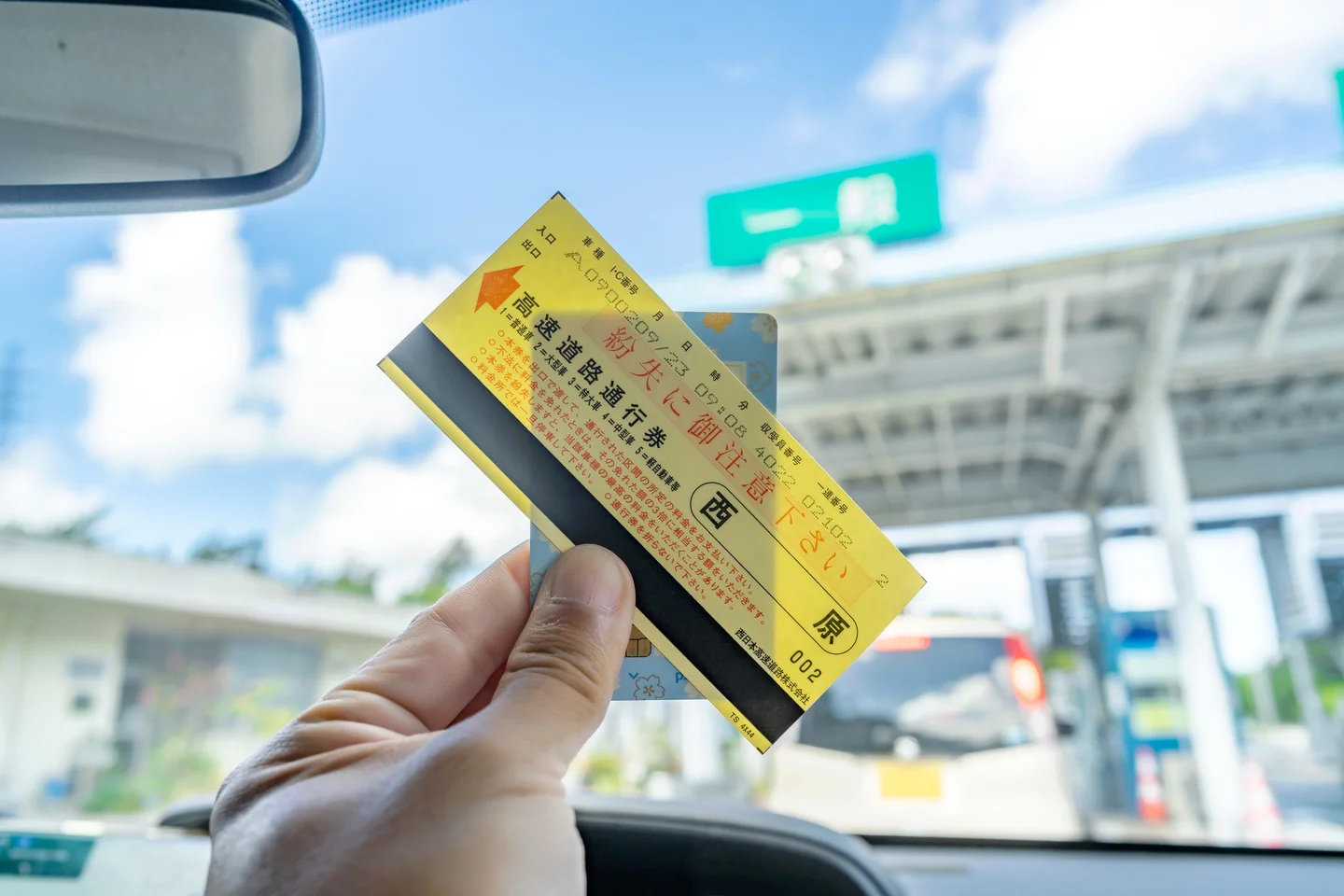
At this point I still couldn’t get an ETC card. You can get a discount with one, but I could only get a Japanese credit card in my second year of living in Japan, and you need a Japanese credit card to get an ETC card. So I used paper toll tickets at the toll gates like this. At the toll gate, go to the green lane, pull a ticket, and use the expressway.
If you’re a confident driver, then on your first time in Okinawa, don’t take the expressway; travel on Route 58. You can feel Okinawa’s charm. If you’re on your second trip or beyond and you’re a beginner driver, taking the expressway is also an option.
And for night driving, I generally recommend the expressway.
Because.. on national roads, too many cars drive around at night with their high beams on, which makes driving annoying. Even when I have time to spare, because of the high beams I always take the expressway for night driving.
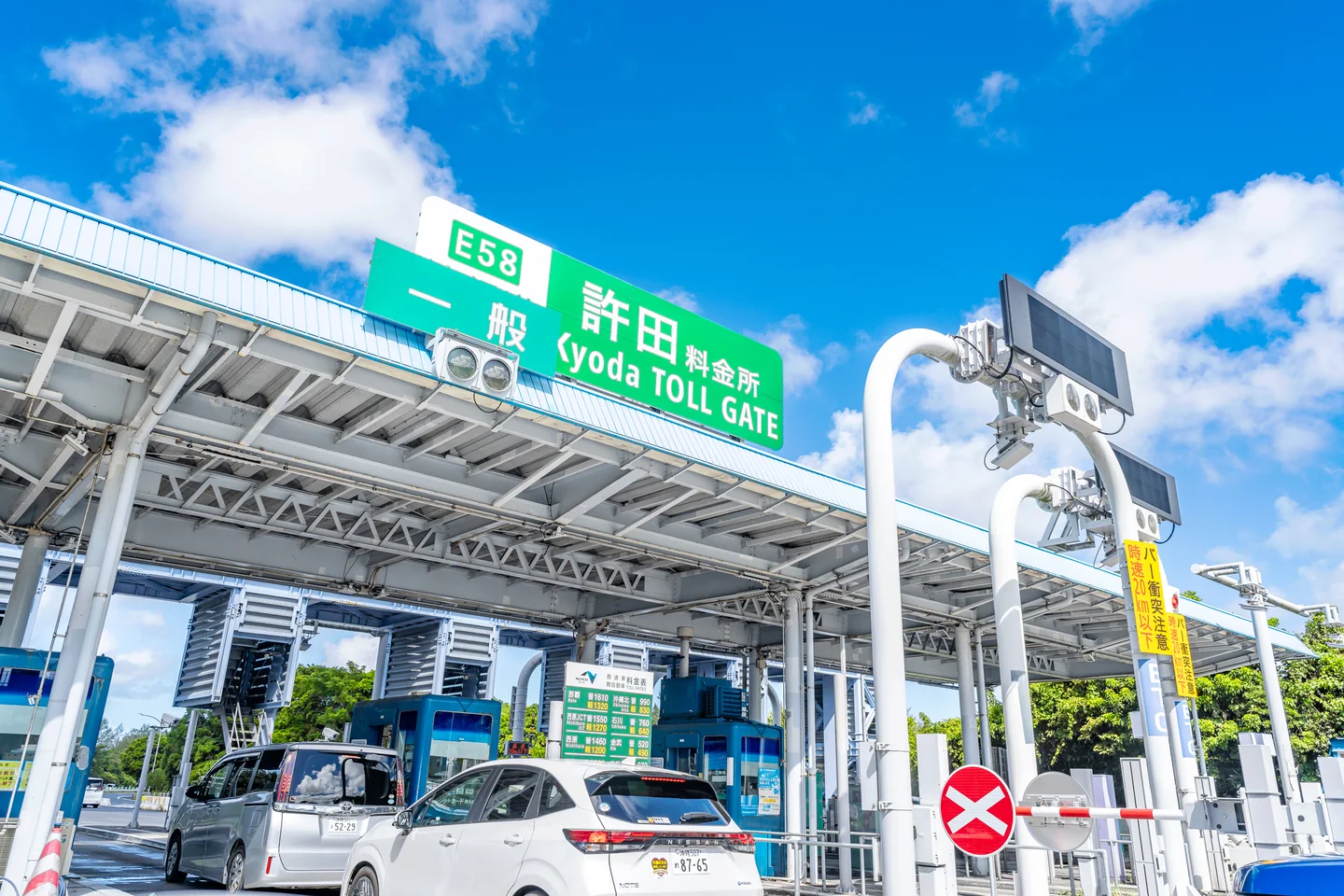
The Kyoda toll gate, which I passed at least 2-3 times a week.. just a little further in is the Kyoda service area. The Kyoda service area is famous for its tasty restaurant, and it sells Okinawan specialty goods and more. When I went, they were selling Churaumi Aquarium tickets 160 yen cheaper, so with several people you could save a few thousand Korean won more. Above all, if you buy your Churaumi Aquarium tickets at the Kyoda service area before heading there.. you don’t have to wait in line at the aquarium ticket counter in peak season or on weekends.
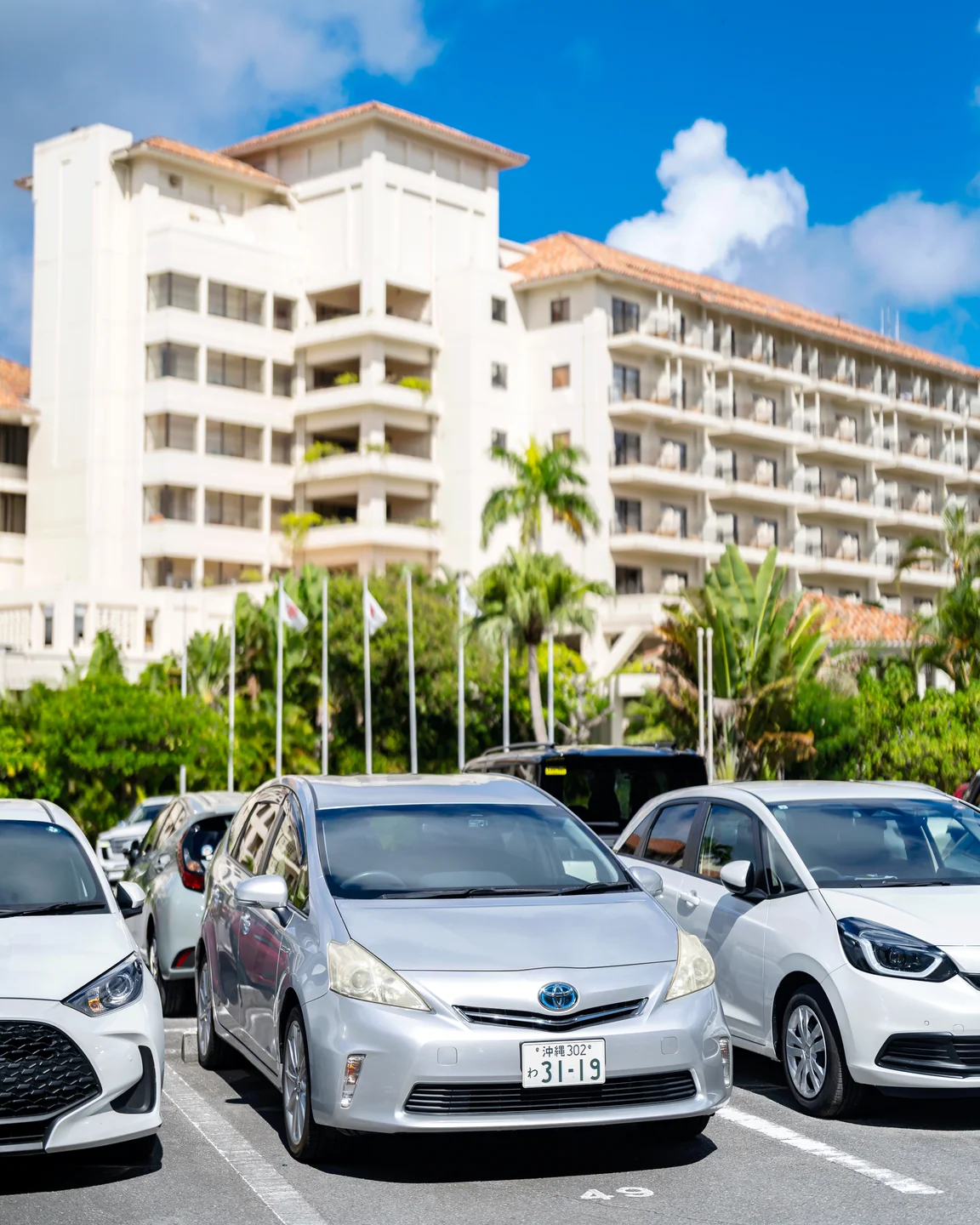
While driving, thinking about the EV mode mechanism is kind of fun in its own way. Like what engine speed to maintain, and on expressway downhills, if there’s no car behind me, I take my foot completely off the accelerator. Battery charging time~
Even if you floor it, it only saves you 10-15 minutes getting from southern Okinawa to northern Okinawa. Drive safely. Safety is the most important thing.
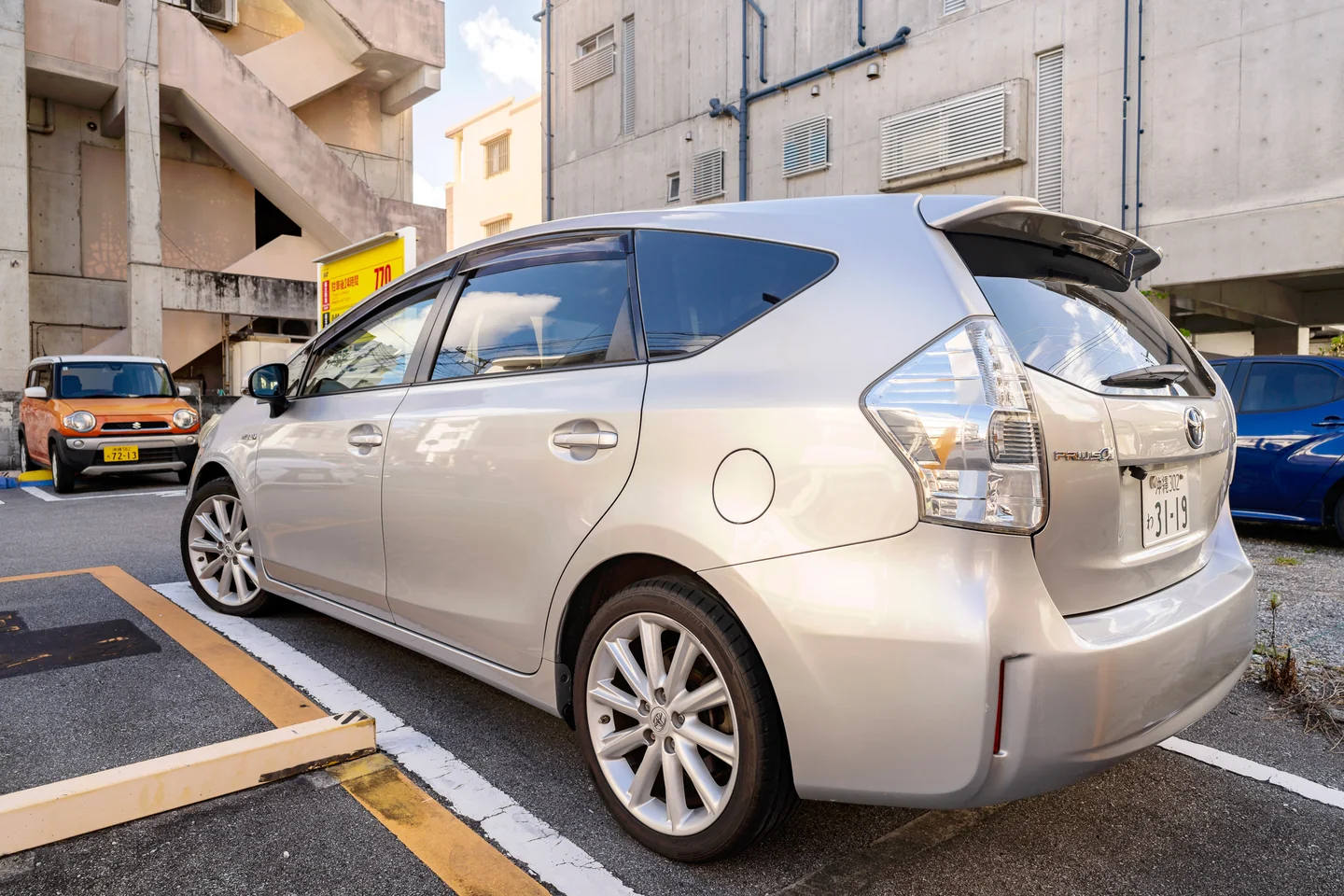
I also carry my shoot gear cases in it, and I’ve even loaded a bicycle. There’s enough room for two suitcases plus a bicycle.. so I prefer the Prius α or the Shuttle. They have big capacity, amazing fuel economy, and above all the rental cost is cheap 😀
If you want a nice-looking car to photograph, this isn’t the one I’d recommend; it’s one I recommend to people who care about value and want to try a frugal trip.
Refueling and Returning
How to use a self-service gas station and the actual fuel economy.
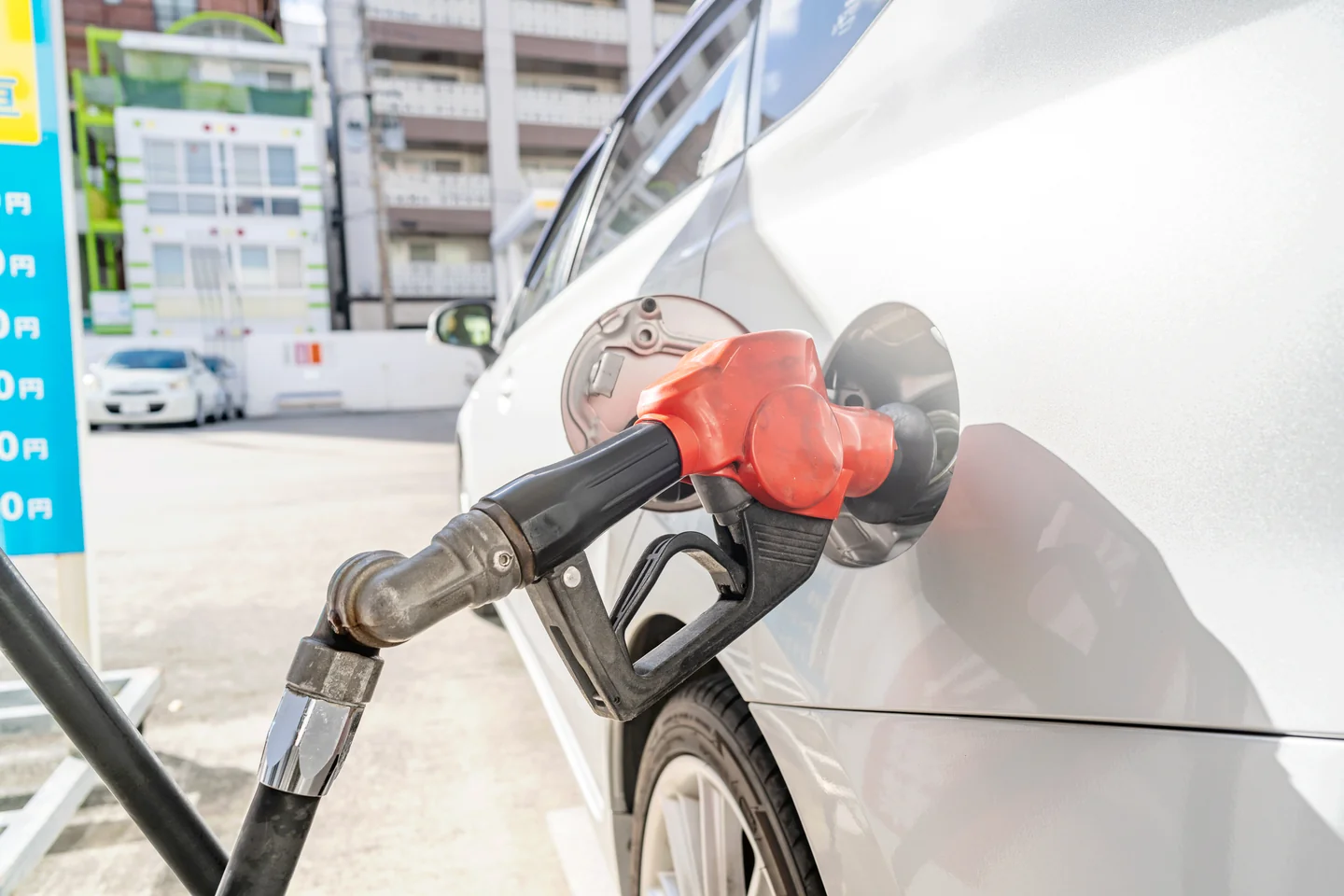
You have to refuel at a self-service gas station before returning the car. Well.. it’s not necessarily fully unstaffed just because it says self-service. There’s always a staff member at the gas station, so if you don’t know how, you can ask. The refueling steps are below, and it’s not very difficult. Just dodge every prompt asking whether you want to collect points, press the card icon, insert your card and take it back out, fill up with gasoline using the red nozzle, and put the nozzle back where it was.

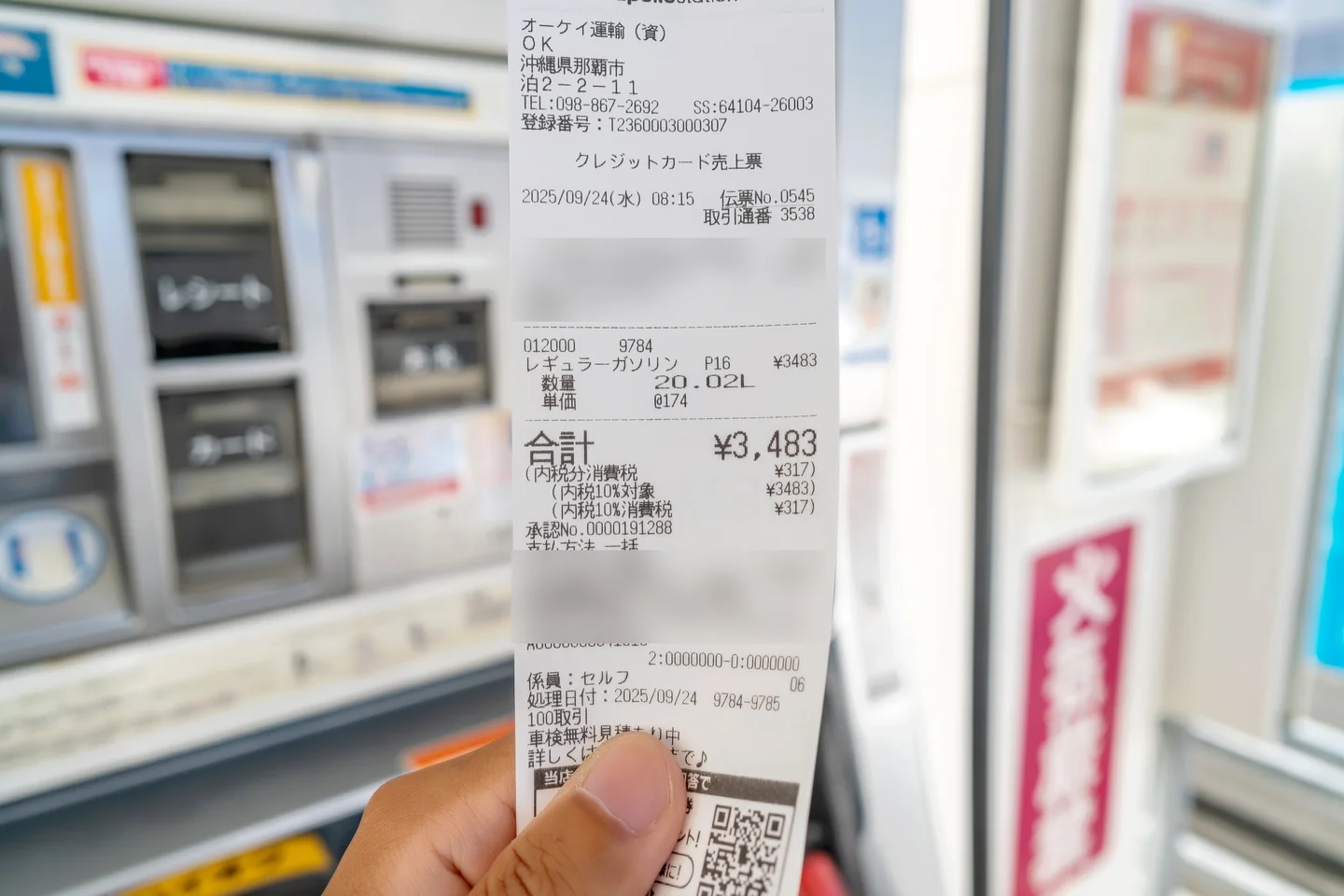
The total fuel cost came to 3,483 yen. I went to northern Okinawa twice and American Village twice. From my place, a quick trip to shoot Bisezaki and back usually racks up about 160 km, right? That seems to roughly match the distance. The amount pumped was 20 liters.
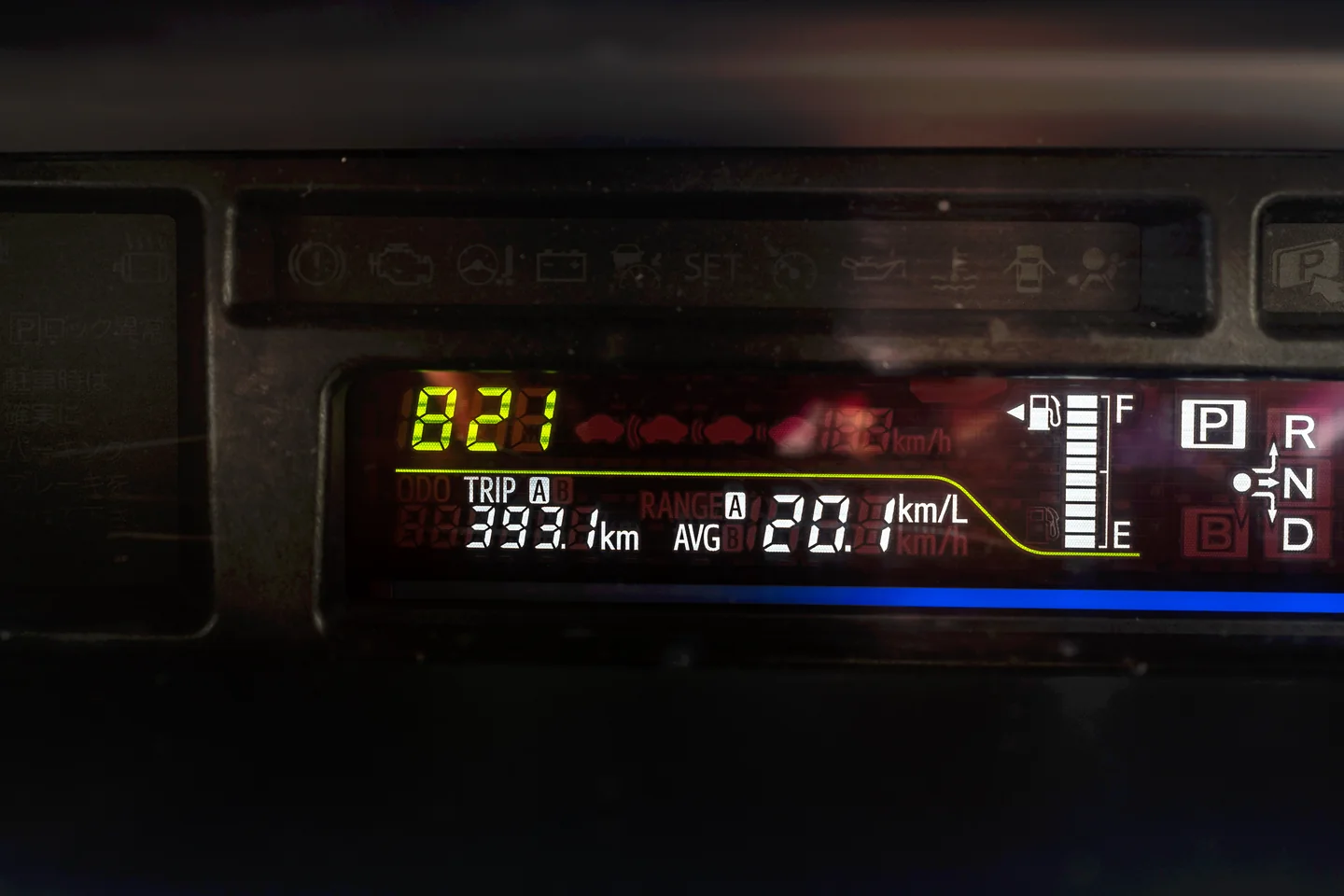
Since I reset Trip A, which I mentioned at the start, before using the car, it shows that I drove 393 kilometers. It roughly matches the fuel cost. The rental company staff probably used a bit of fuel too, washing and delivering the car.
Fuel economy comes out to 20.1 km per liter. When I did a lot of driving in northern Okinawa it hit up to 23 km per liter, but once I got back to Naha, the fuel economy dropped fast. Naturally, you have to brake often.
The car size is fine, and the rental cost is cheap, so I recommend it to people who want a frugal trip. It’s far from sparkling clean and flashy, so keep that in mind.
How to Book
Rates at the time I used it and how to book.
You can book with the button above.
When I used it in late September 2025, the base regular-season rate was 6,000-6,400 yen per day, rising to the 8,000-9,000 yen range in peak season (usually May through September). For insurance, basic insurance was 1,100 yen per day, plus 1,100 yen for NOC, which compensates for towing and the rental company’s lost business after a vehicle accident, for 2,200 yen, so the daily rental cost at that time came to 8,600 yen. Peak and off-peak seasons change whenever the company sets them, so prices aren’t fixed. Enter your dates on the booking page to check.
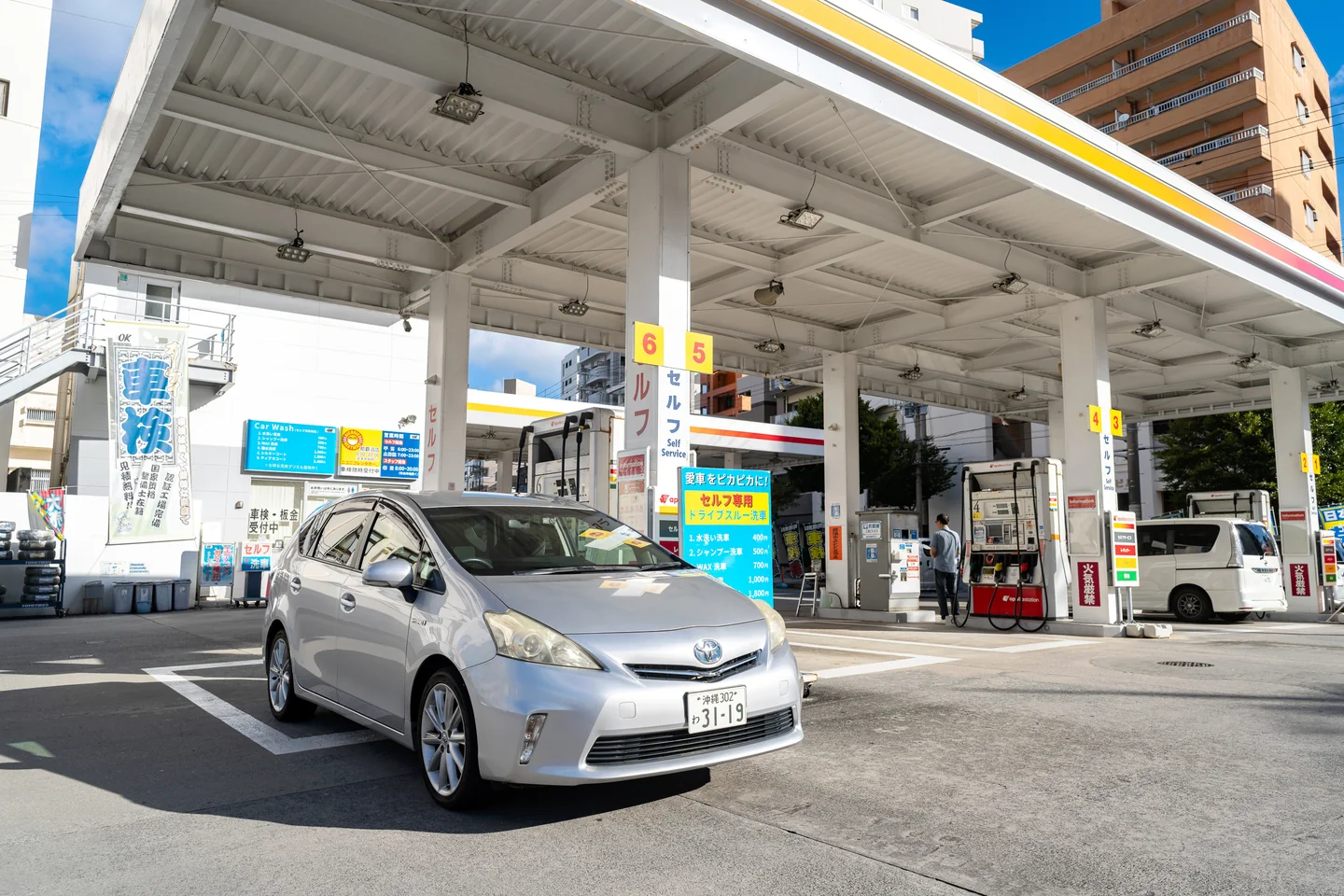
That’s all for today. I’ll wrap up here and plan to do another Okinawa rental car review before long. See you again, Mata yasai 👋
- The trunk size. The α is an extended sportback, so its trunk is much bigger than a regular Prius's. It felt comparable to the Harrier, a mid-size SUV.
- Over 4 nights and 5 days, I drove 393 km and put in 20 liters, which came to 20.1 km per liter. It reached 23 km per liter in northern Okinawa and dropped in central Naha. I figure an average driver would get 13-15 km per liter even without trying to maximize fuel economy.
- Yes. There's room for one suitcase per person, and even 6 to 7 20-inch cabin-size suitcases fit. If all five bring 28-inch suitcases, fitting them in becomes a bit of a Tetris challenge.
- Three people can sit in the back seat, and the trunk is big, so there's plenty of room for a folding stroller.
- In central Naha, staff deliver the car to the front of your hotel or the hotel parking lot, and pick it up when you return it. In September 2025, delivery and collection in central Naha were free, but the rental company may change its fees. There's no pickup at the airport, so you have to take the monorail one stop to Akamine Station to get the car.
- You can pay with a credit card or with Samsung Pay, Google Pay, or Apple Pay. It takes 3 minutes from the airport to Akamine Station, and you need to hold your card on the touch reader for about 3 seconds for the payment to go through properly.
- When I used it in late September 2025, the regular-season rate was 6,000-6,400 yen per day and the peak-season rate was in the 8,000-9,000 yen range, with basic insurance at 1,100 yen and NOC at 1,100 yen. The company may change which dates count as peak or off-peak season, so enter your dates on the booking page to check.
- At the self-service gas station, skip every prompt about collecting points, press the card icon, and then fill up with gasoline using the red nozzle. A staff member is always on site, so ask if you're not sure. Return the car with a full tank.


