Nissan Note: Across Okinawa and Back in a Purple Rental
A purple Nissan Note driven from southern to northern Okinawa
Haisai! I’m CULT.
Today, I’m reviewing Orix, one of Okinawa’s car rental giants! I usually rent from small and medium-sized companies. They’re cheaper and, above all, quick. Even with a medium-sized rental company.. there’s a lot of needless waiting around as a customer.
How do I know this so well? I used to meet people all the time for photo shoots. When clients ran late.. unless their child had suddenly started crying or fallen asleep, 99% of the time it was because collecting the rental car took too long. All the famous big companies are like that. Queue up, wait, fill out forms, and they would arrive 1–2 hours later than planned.
Still, being a big company, it was easy to get to. And a major company doesn’t pull shady tricks. The downside is the price.. it’s pretty expensive.
Nissan Note Summary
Its small size made parking easy, but driving it revealed some annoyances.
Details

I chose from the cheapest category, but a 23-hour rental cost 14,700 yen. I found that going over to 25 hours would cost 22,000 yen, and going beyond 48 hours would cost roughly 30,000 yen. It seemed they charged in increments of about 8,000 yen per day, including insurance.
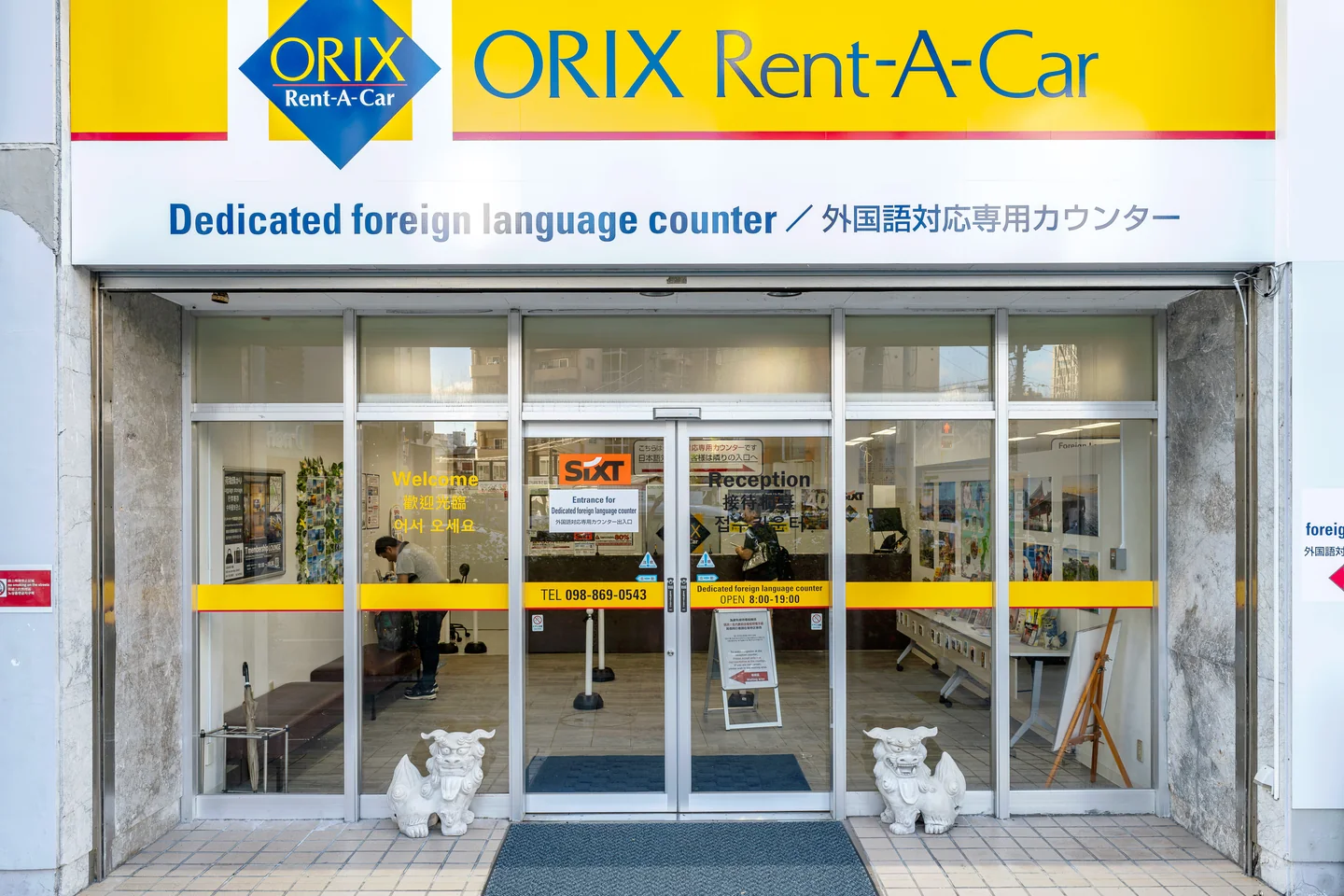
I took this photo the day before. My booking was for 11 a.m. the next day, so I arrived around 10:50 a.m. There were 13 people waiting inside, and they all seemed to be Taiwanese. The 6 people checking in ahead of me were all Taiwanese, which was easy to tell from their Taiwanese passports. It was a good chance to get a sense of what Taiwanese customers needed.
They explain all sorts of things, including how to drive in Japan and the restrictions.
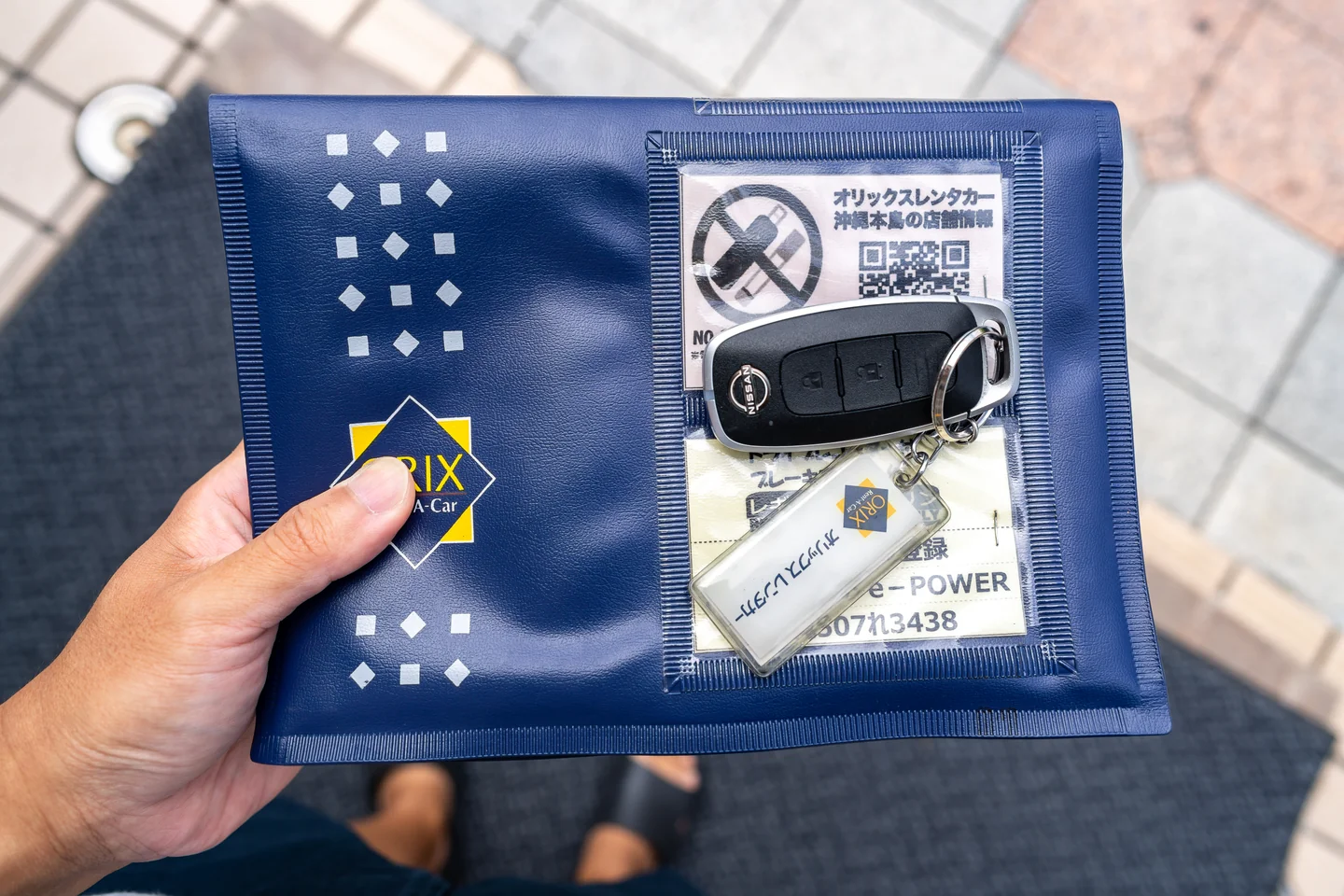
My reaction was.. jackpot for content? Something like that. So.. using Orix was a good opportunity to broaden my perspective. And the key is.. Nissan, then. The model is a Note. There are brief instructions in the manual, but they don’t explain anything separately. Once you have the key, you’re on your own.
I sometimes step in to hand over rental cars when a company has no staff available to help Korean customers, you see? When I do, I give them a quick demonstration of how to use the car. You don’t get that with the big companies.
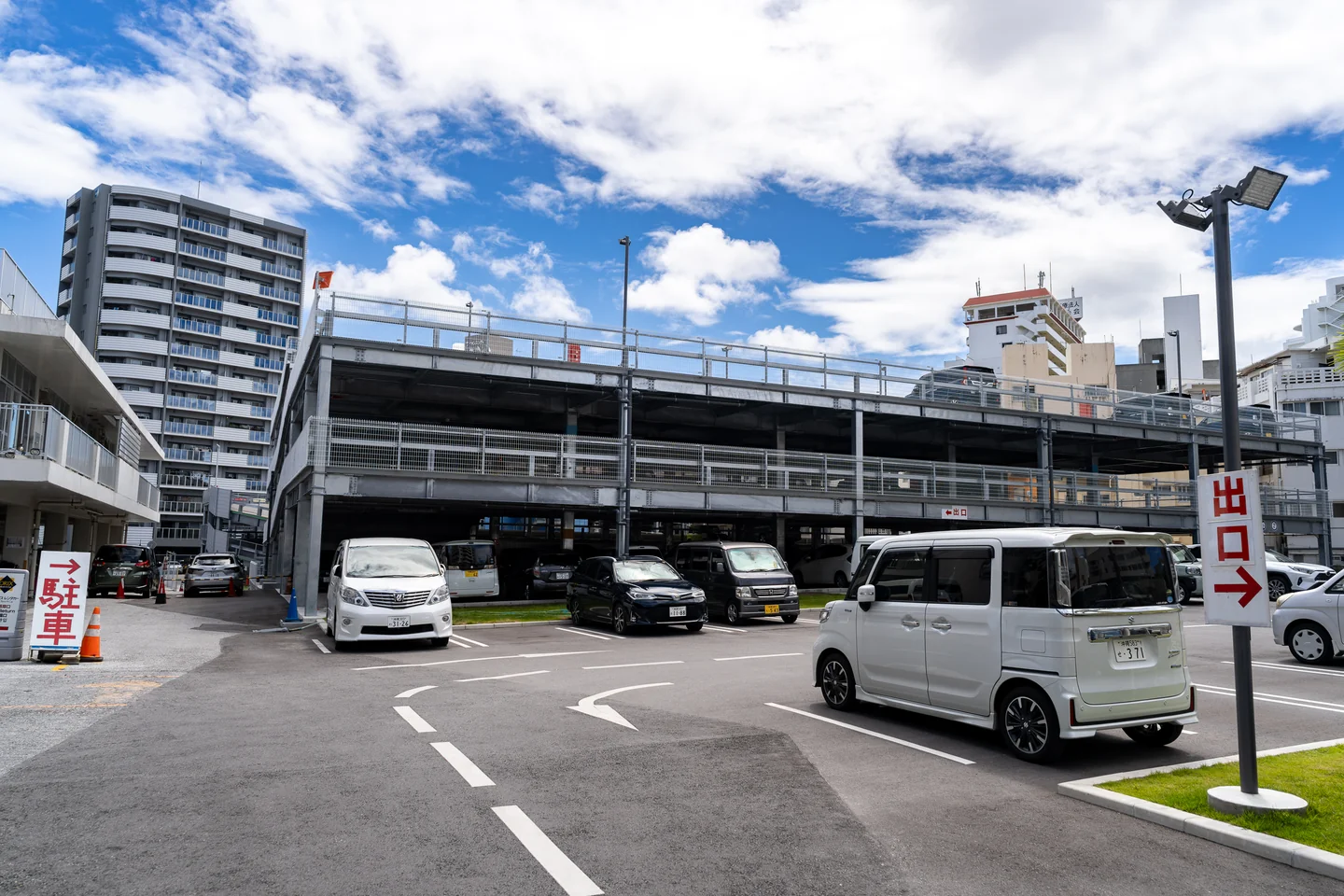
They mark where to go on a sheet of paper.. but this is right outside my home, so of course I know the way.
So I just.. played dumb and looked a bit lost. A staff member came over, looked at my stack of paperwork, and told me which way to go. You pass my test.
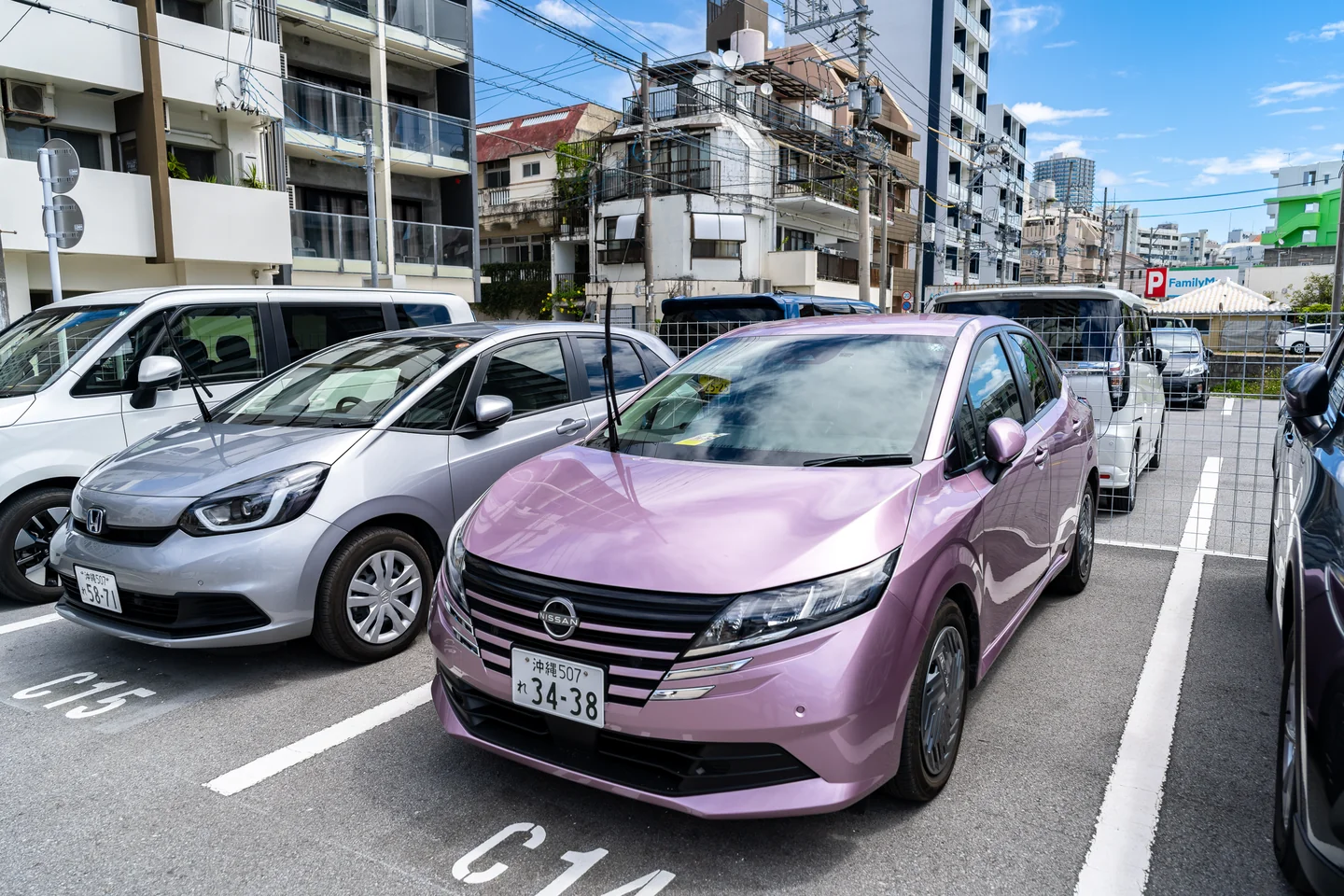
Hmm.. the car is purple.
Walk all the way around the car and take a quick video of the whole thing. A big company probably won’t pull any shady tricks, but just in case.
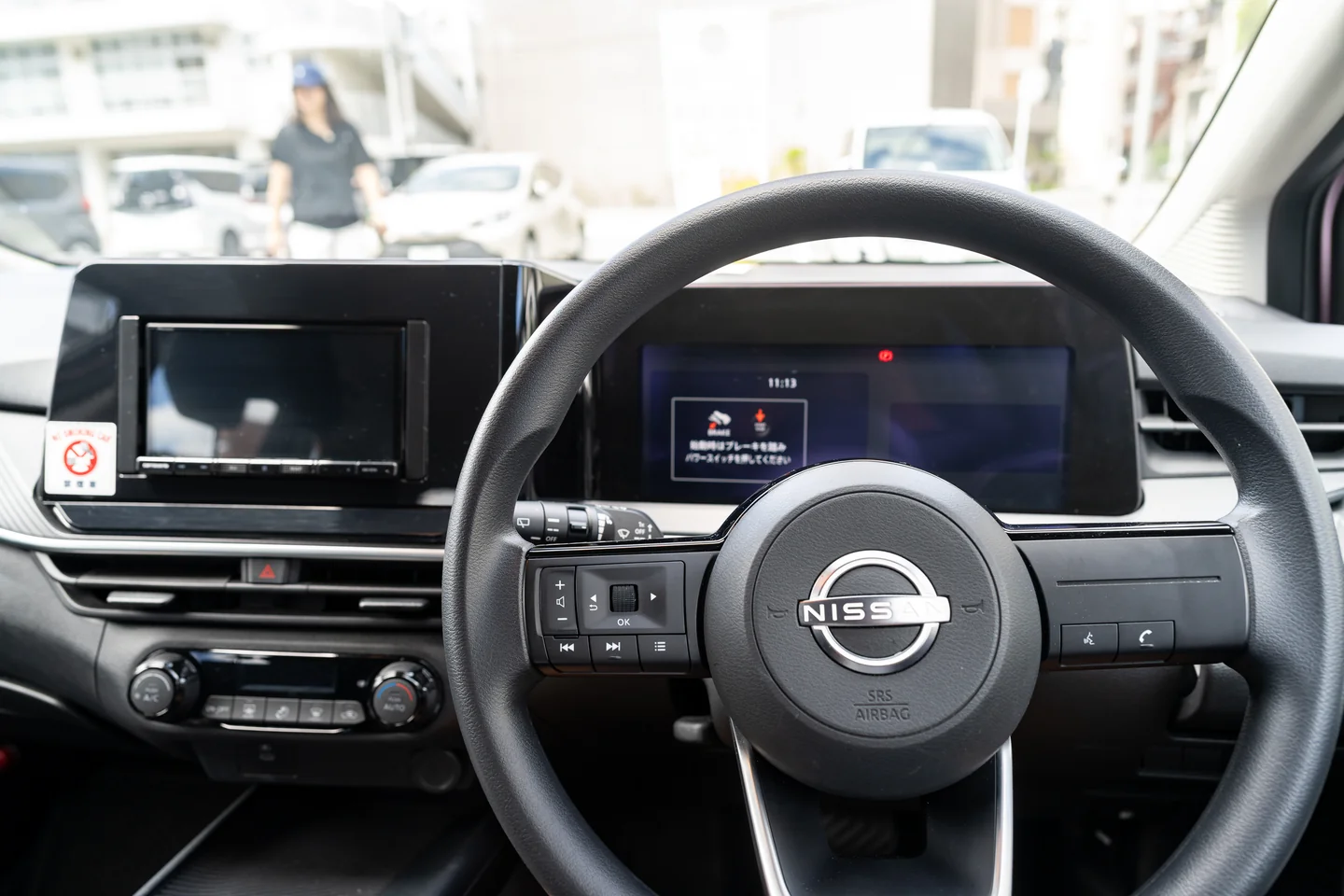
It’s a Nissan, so I’m already nervous.
You know Nissan’s older cars? The ones from a few years back? Those are fine, but all their recent cars are bad. You hear in the news that Nissan is struggling, that it might or might not be bought out? It’s simply because their recent cars suck.
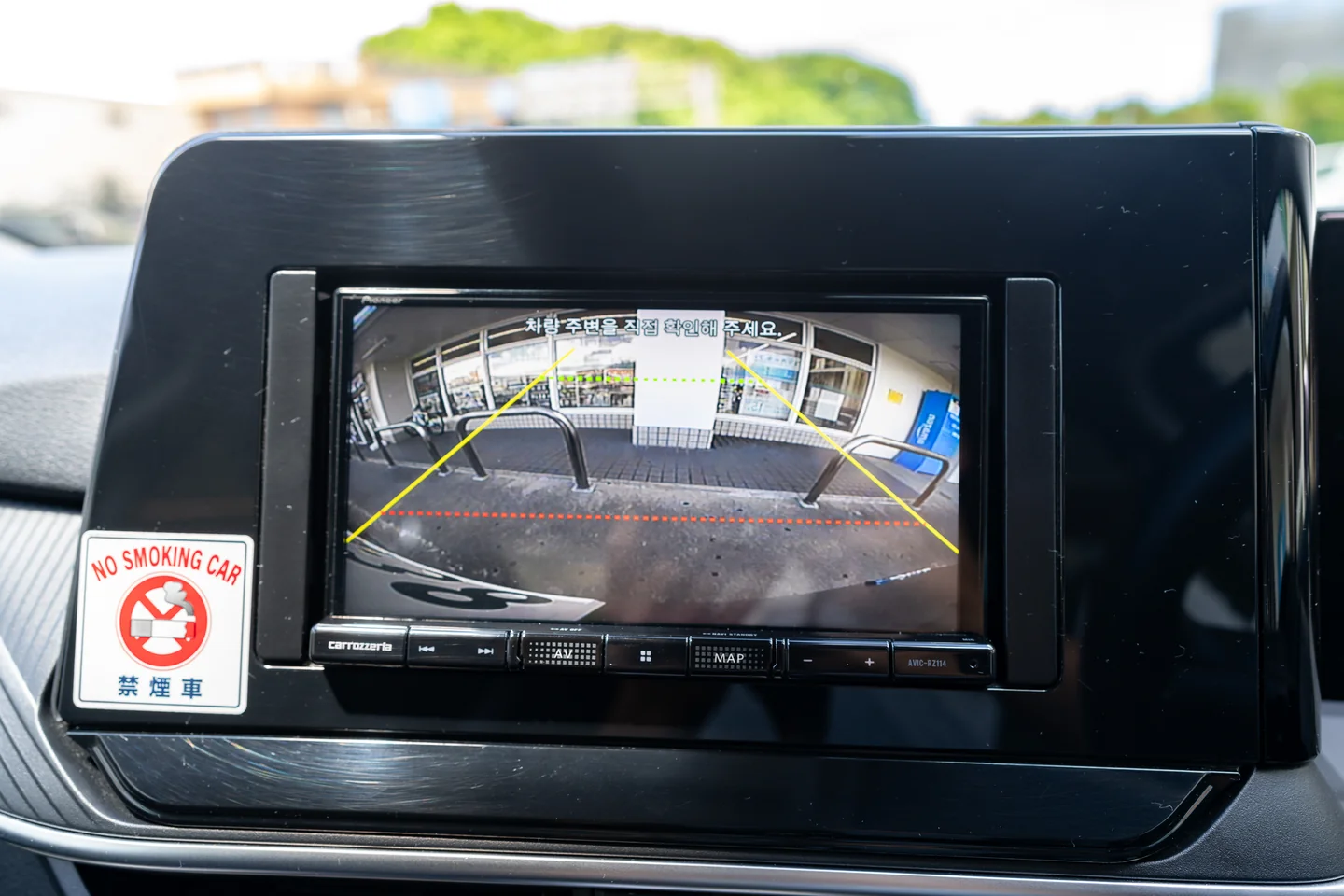
The rear camera image is clear enough for parking without any trouble. The car is small, so parking is easy.
You can switch the display to Korean, but you have to type in English or Roman letters. Google Maps is obviously much more convenient.. and there’s a CarPlay button in the car.. but CarPlay doesn’t work. All you can do is play music through the stereo via Bluetooth. Basically, this car is only convenient for Japanese drivers.
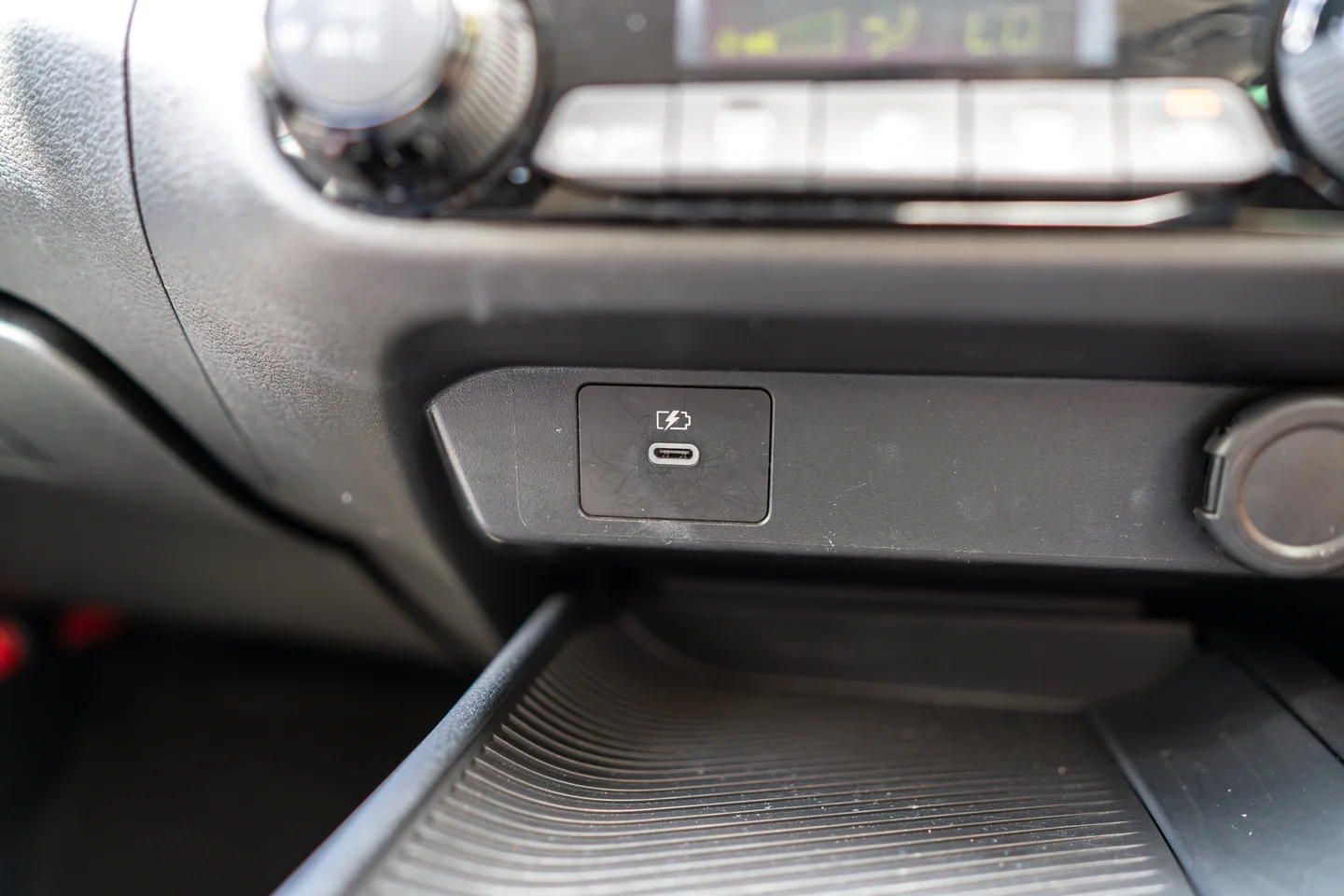
My cable was USB-A to USB-C, so I couldn’t charge my phone at all while driving. If I’d known the car model in advance, I could at least have come prepared..
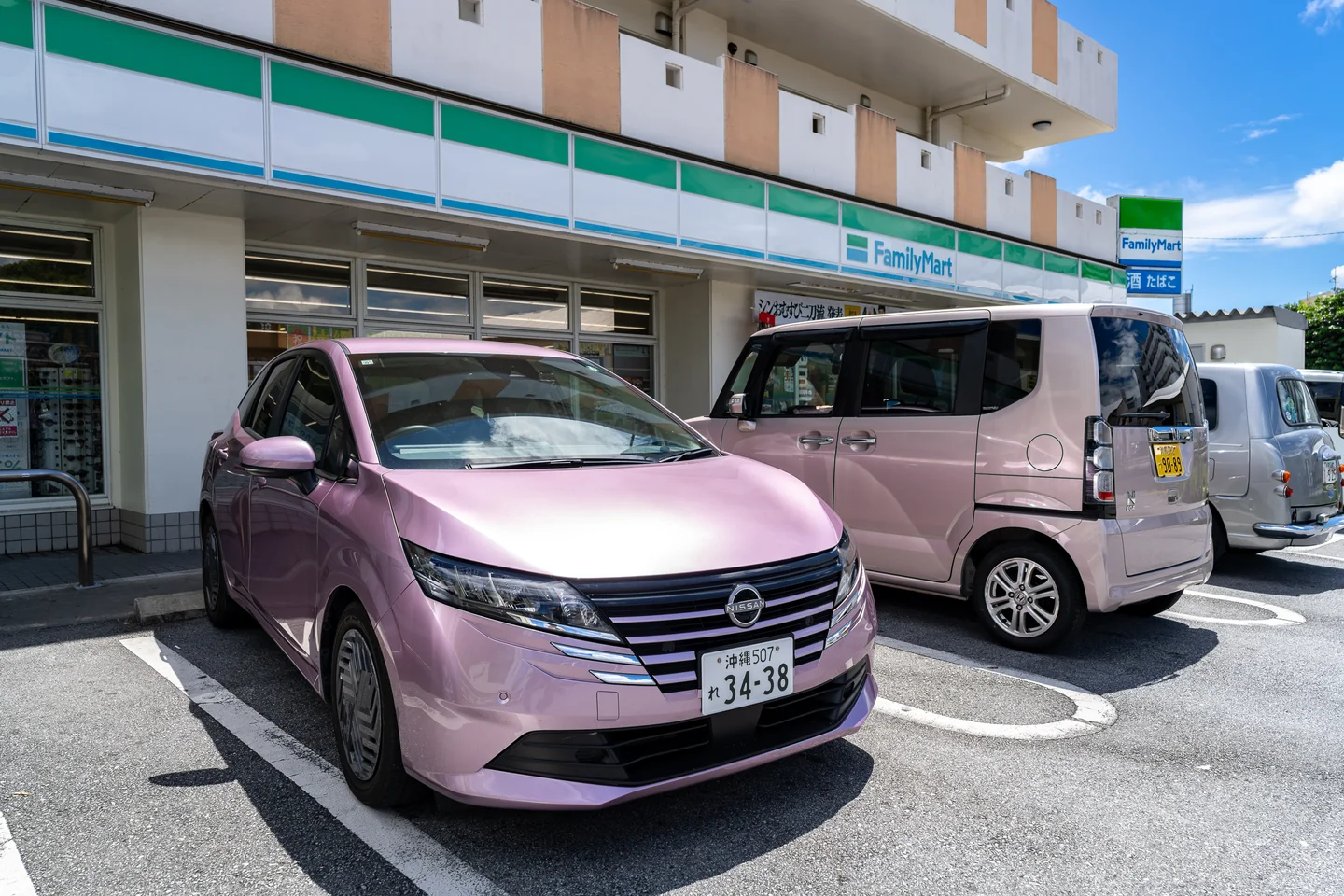
It does look kind of pretty from this angle, but it certainly stands out.
A Look Inside
The A/C was strong enough to make me cold, but even entering a destination on the Korean navigation was a hassle.
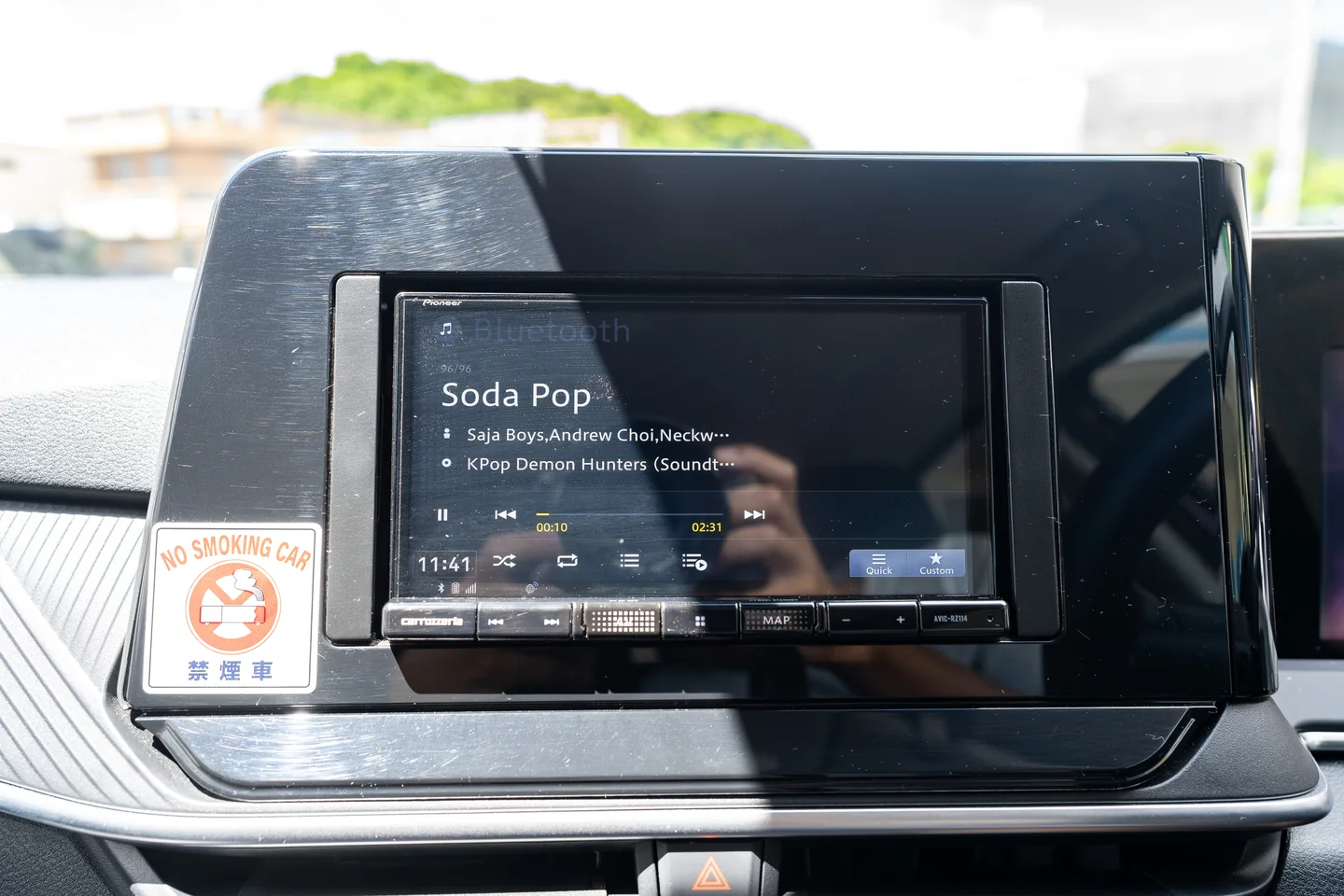
All you can do over Bluetooth is use the stereo. But why on earth put in a CarPlay button when it doesn’t even support it? -_-;;
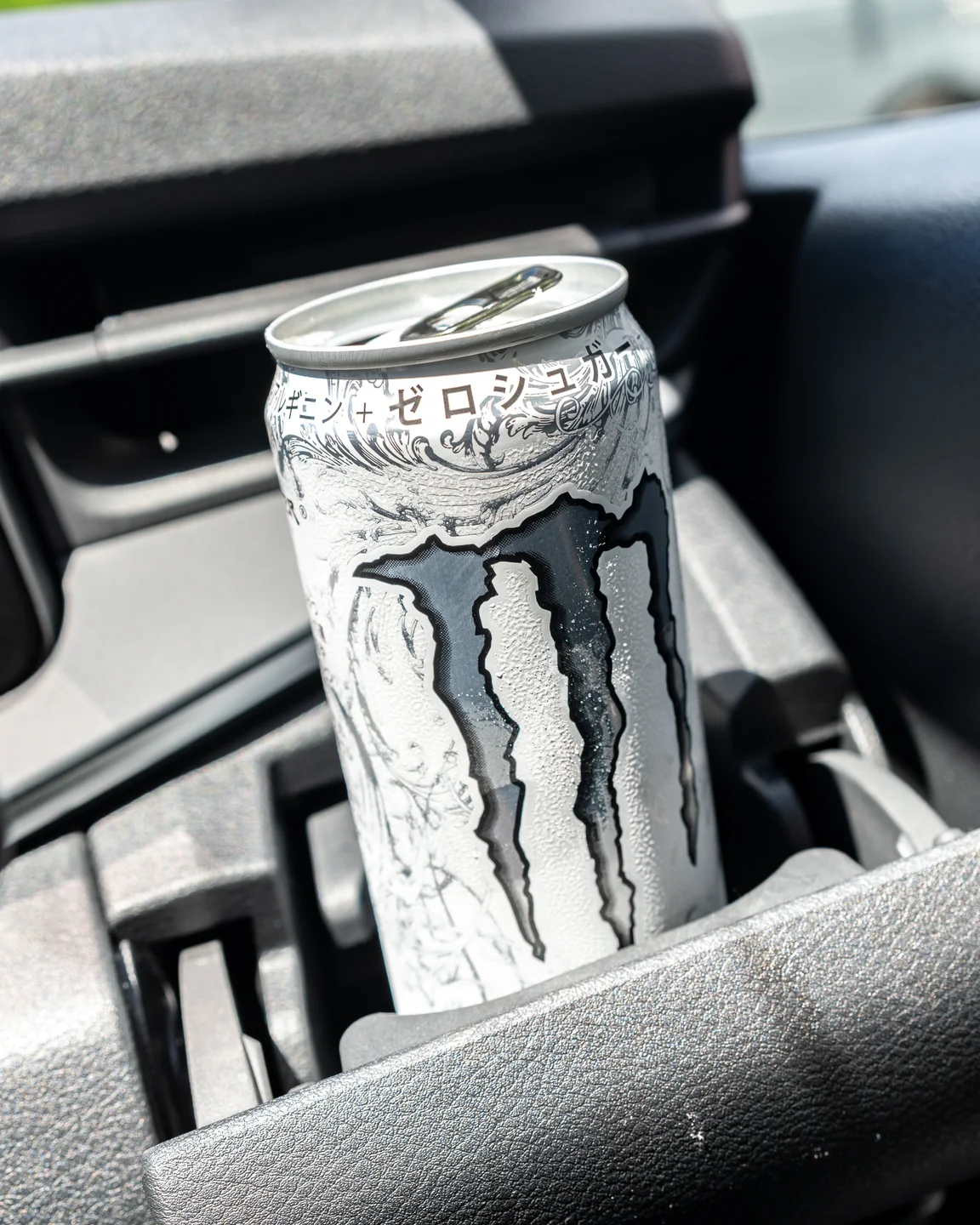
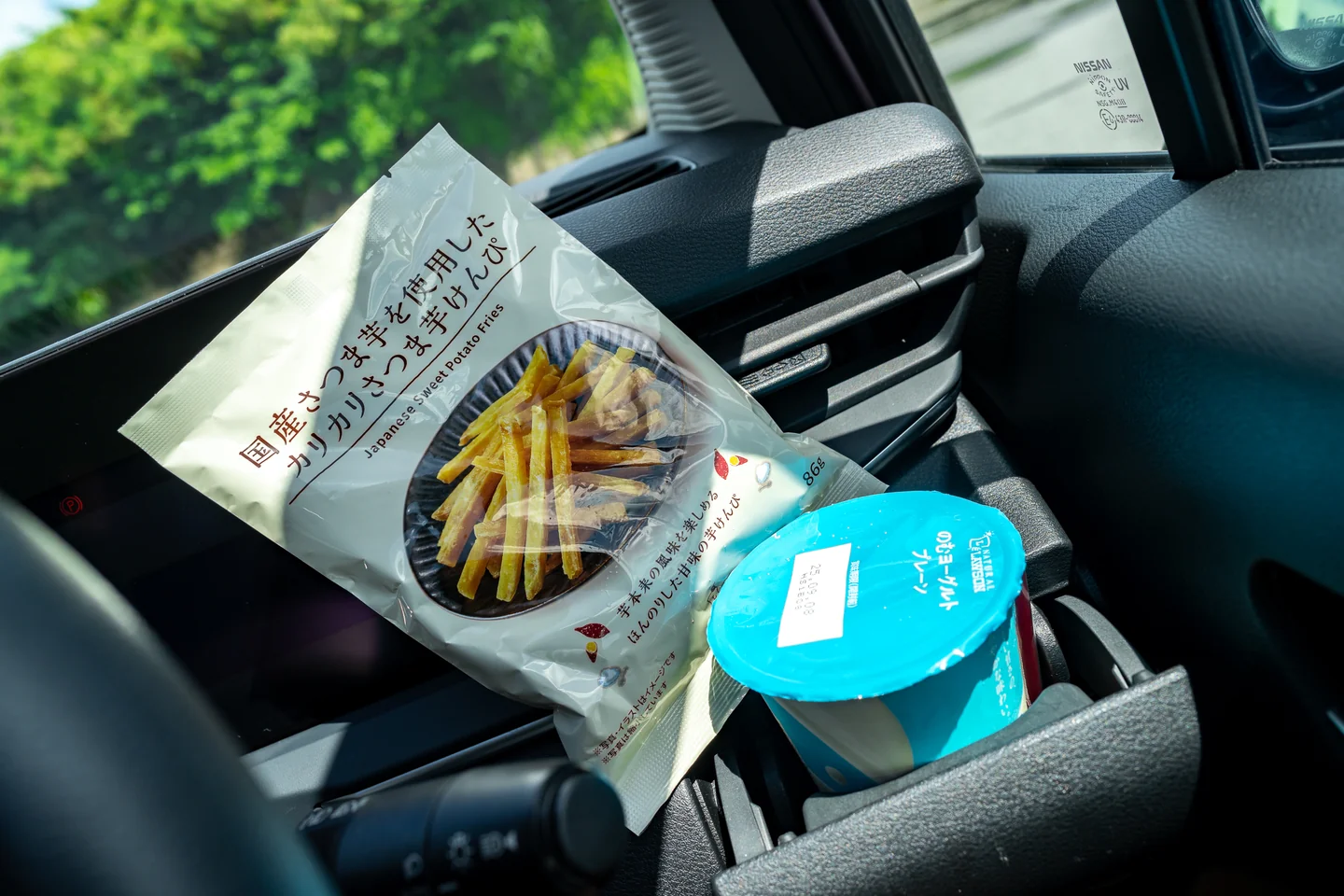
It also comes with a state-of-the-art cup holder system.
One thing about this car.. the A/C is incredibly powerful. It’s 33°C outside right now, but with the A/C on full blast, I was cold.. And since the air blows from directly behind the cup holders, your drinks stay cold. If you’ve got an awkward little bit of your drink left while driving.. just rest it there and drive for a bit, and it’ll soon be cold again.
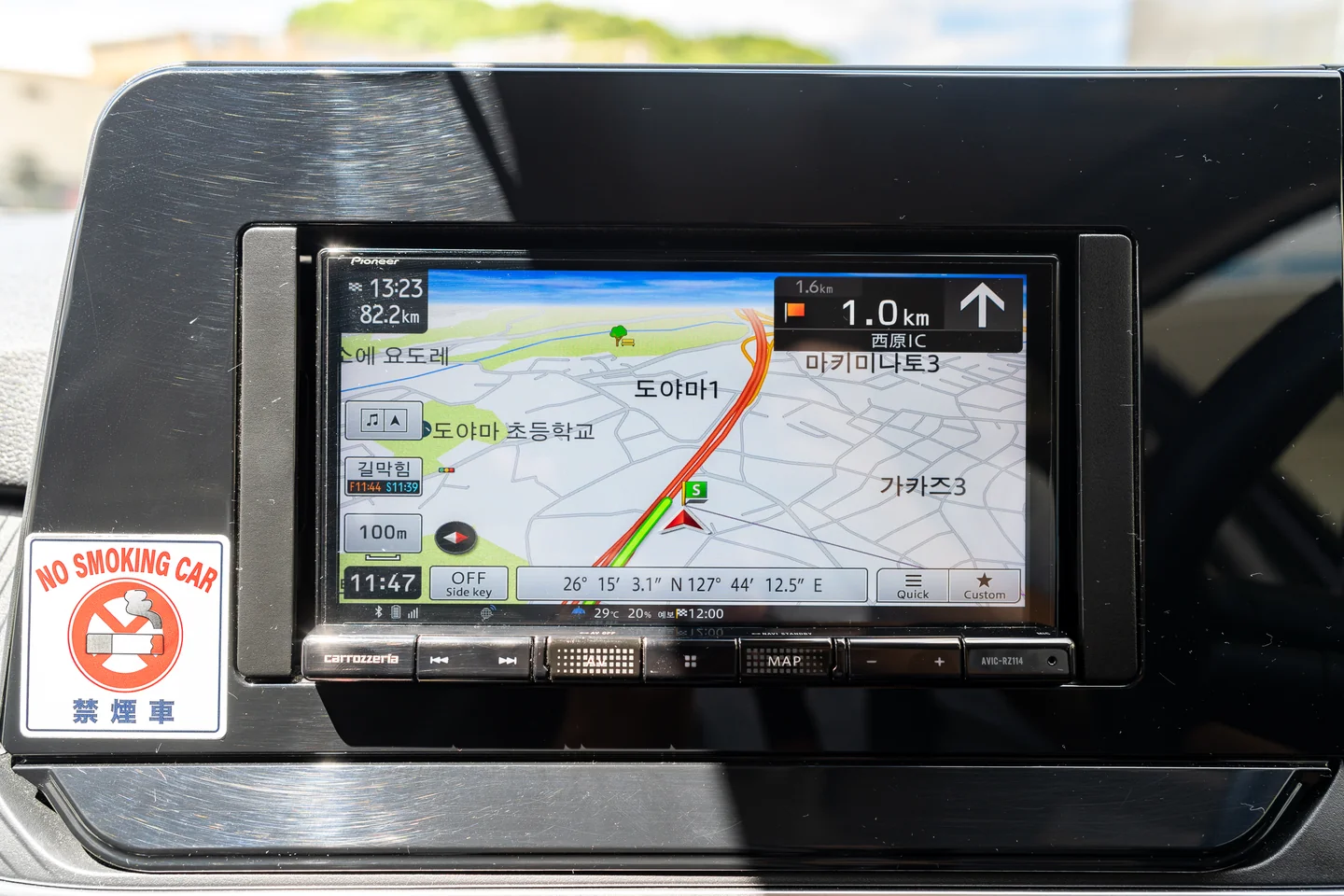
Korean navigation that’s utterly pointless.
I had to be out all day with no way to charge my phone, so I had no choice but to use the built-in navigation. You have to type in Roman letters, which will be a huge hassle for anyone renting a car in Japan for the first time. That’s why I always say.. don’t bother looking for Korean navigation when renting a car, because it’s useless.
Open Google Maps.. look up the address, then type it in. What is this, the Dark Ages..
For starters, the navigation responds slowly. While driving, I often couldn’t tell whether I should turn right at this light or the next one. And it has no real-time system like Google Maps to tell you there’s an accident ahead and reroute you.
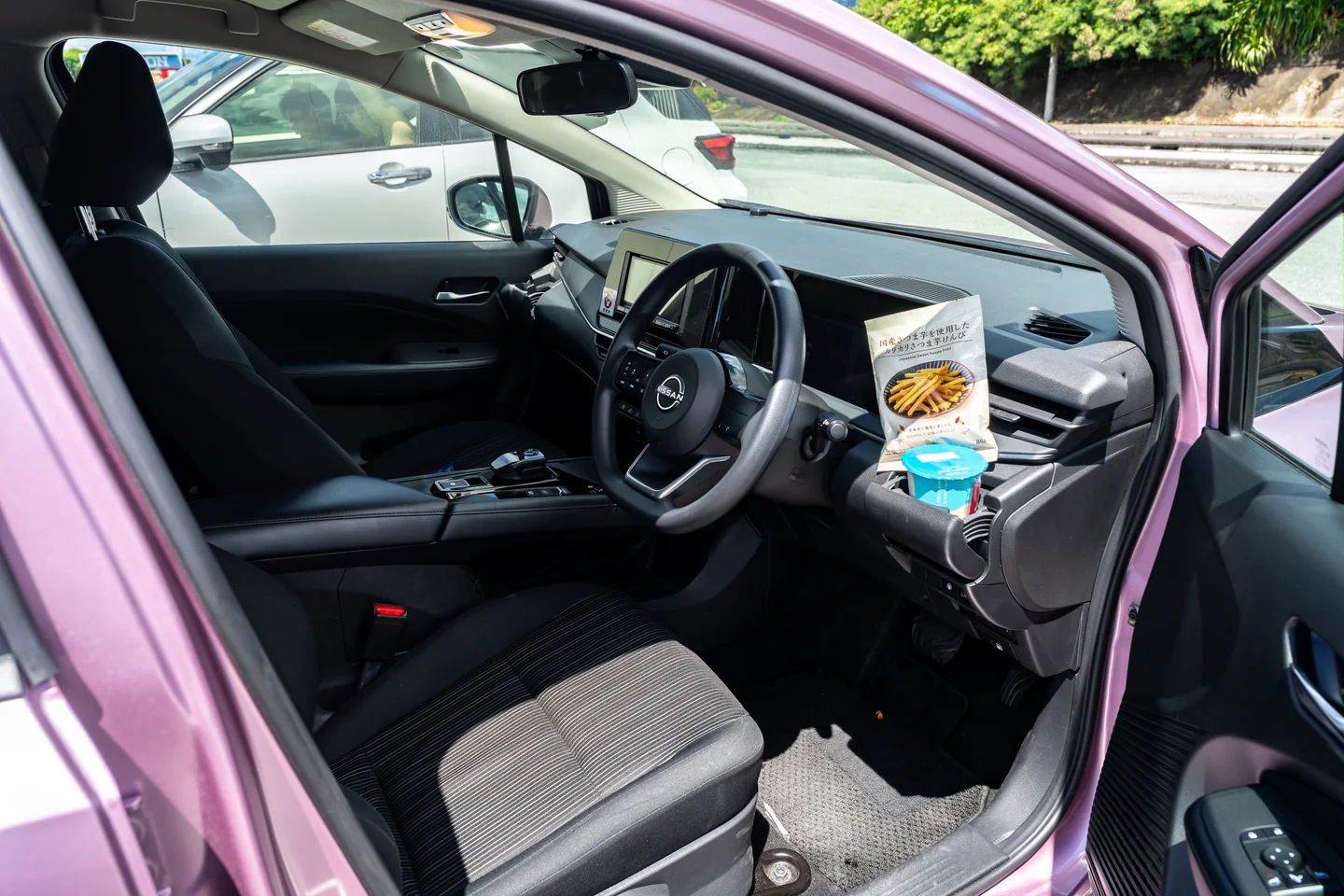
This is what it looks like inside. In Japanese cars, even someone who’s 190 cm tall can drive a kei car comfortably, but Nissans feel a bit.. as though they’re sized for Japanese people.
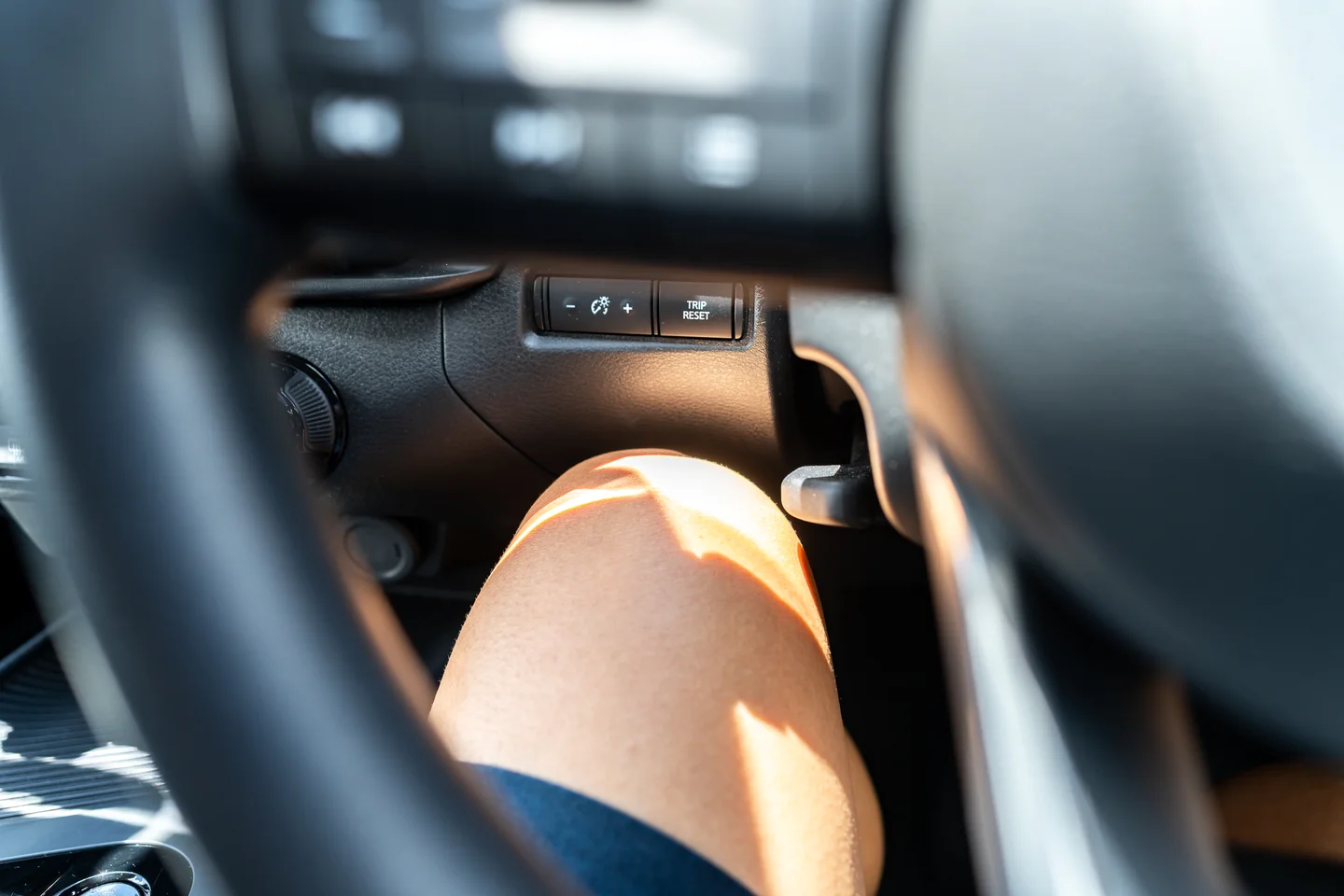
I drive sitting upright at 90 degrees with the seat pulled forward. My knees touch the interior, which is uncomfortable. Even I find it uncomfortable.. so anyone taller than me would need to move the seat farther back to drive. But this.. seems to be a recurring problem with Nissans. It feels as though they don’t consider exports or foreign drivers at all..
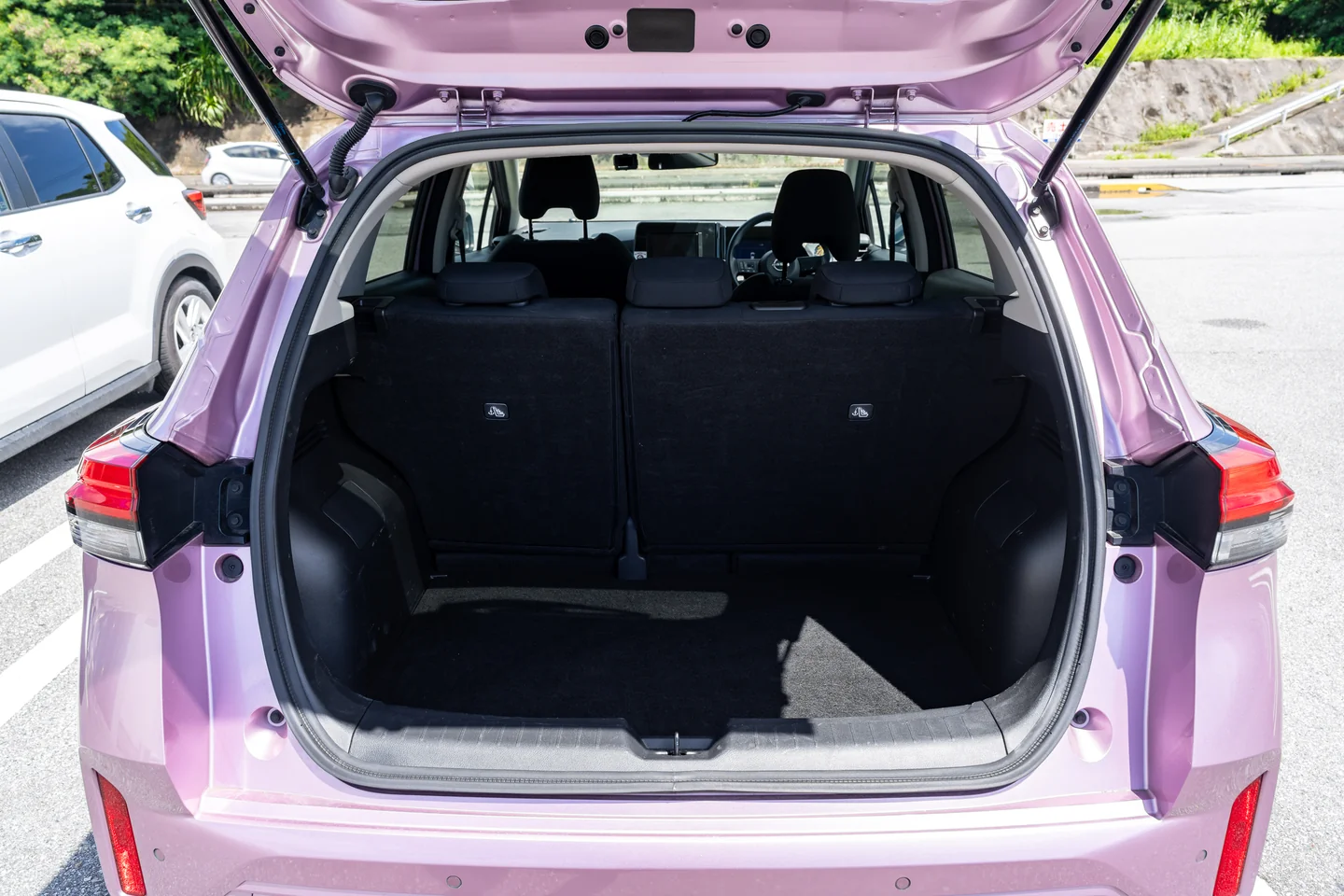
Just eyeballing it, it looks big enough for one 28-inch suitcase and about three 20-inch carry-on suitcases.
It seats 5, and you can travel with 5 people if everyone brings small suitcases. If even one person brings a big suitcase, it’s a disaster. Still, the trunk space is about the same as the Toyota Aqua’s.
On the Road
I was busy that day, so I took the expressway both ways between the south and north, but the car slowed sharply every time I lifted off the accelerator.
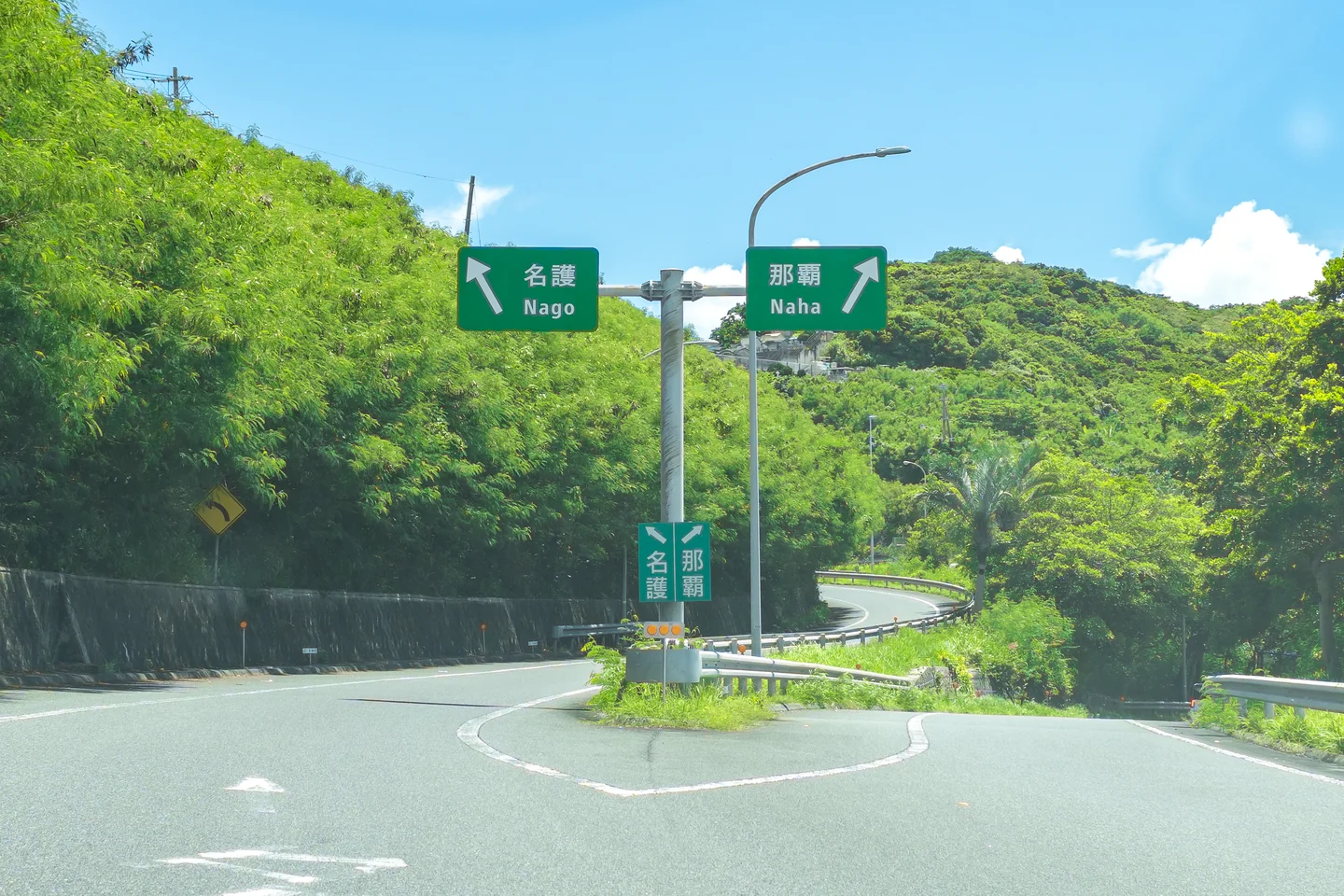
I was.. extremely busy that day, so I took the expressway both from south to north and from north to south.
If you take the expressway, you’ll pass through Nishihara tollgate, with a left-right fork immediately after it. You need to go left toward Nago. I’ve heard that loads of people go right and end up back in Naha -_-;;
That just wastes your time and 260 yen, so make sure you take the left fork immediately after the first tollgate.
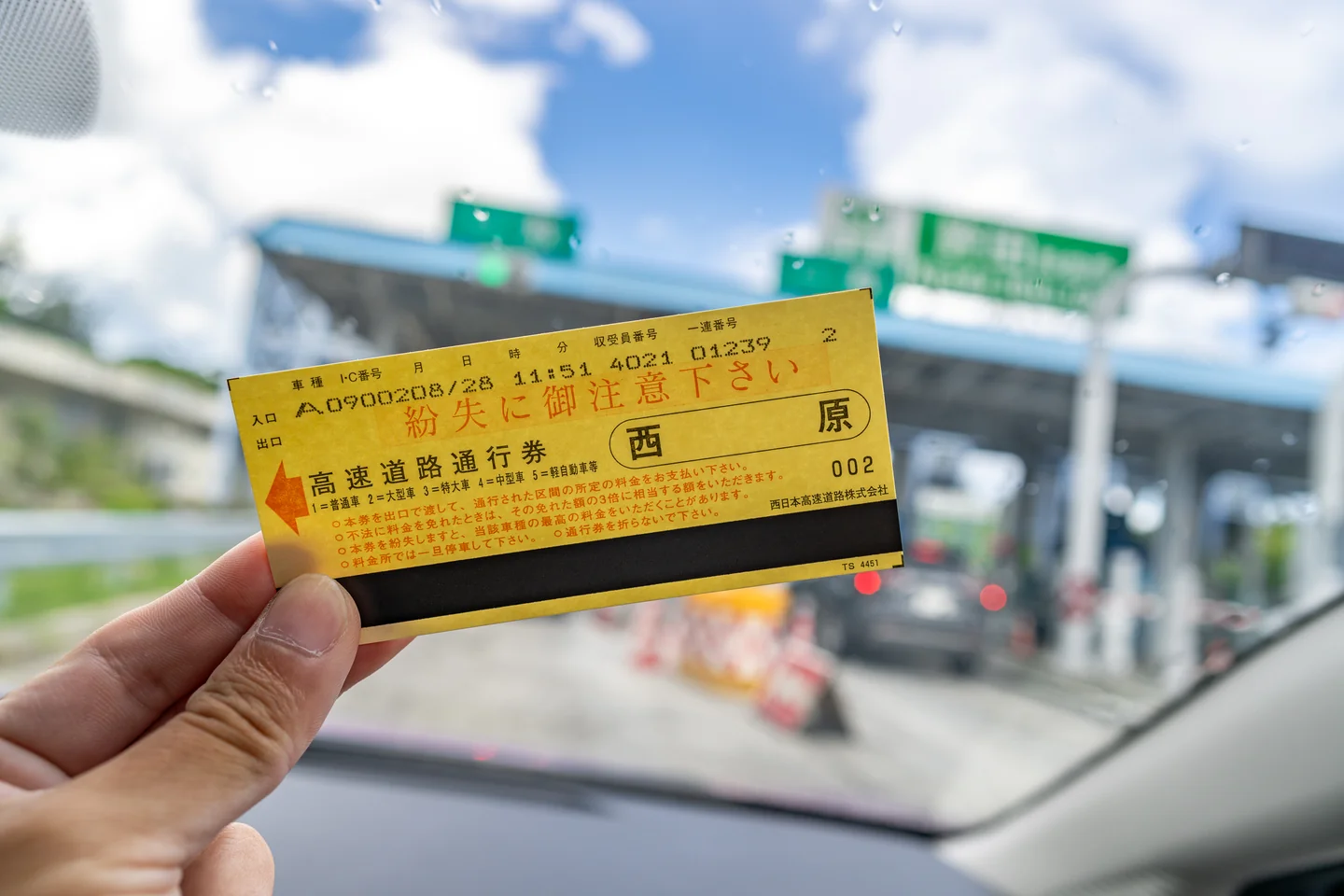
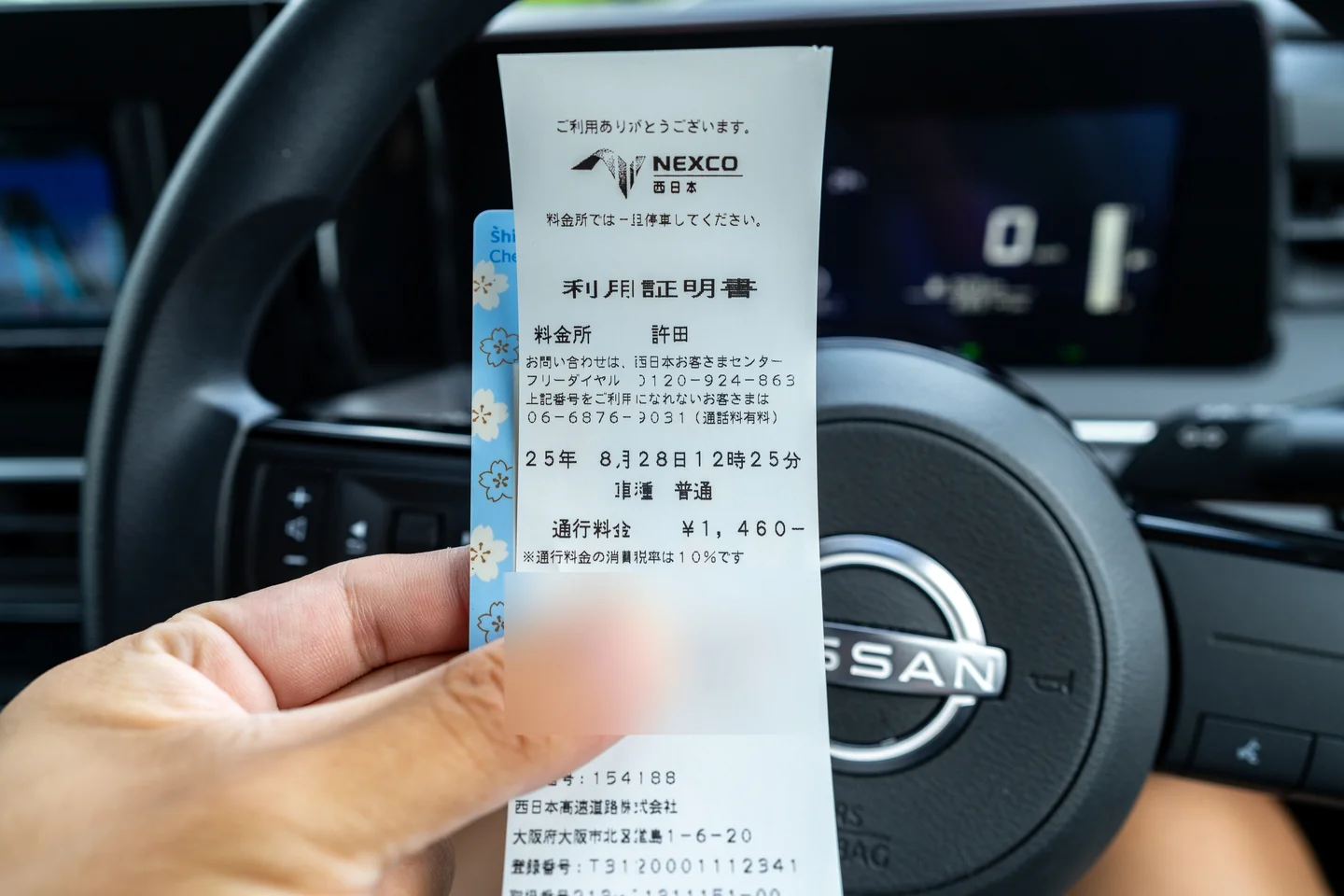
Expressway tolls in Okinawa are expensive too. I was short on time that day, so I used the expressway for the entire round trip. Two payments of 1,460 yen each,
But I do wonder whether first-time visitors to Okinawa really need to take the expressway. I always say, there are so many beautiful places, so why take the expressway and skip them? It makes me wonder what they came here for.
I was busy with work, so let’s say I had no choice.. Plenty of people come for a second or third visit or more, and for them it’s fine.
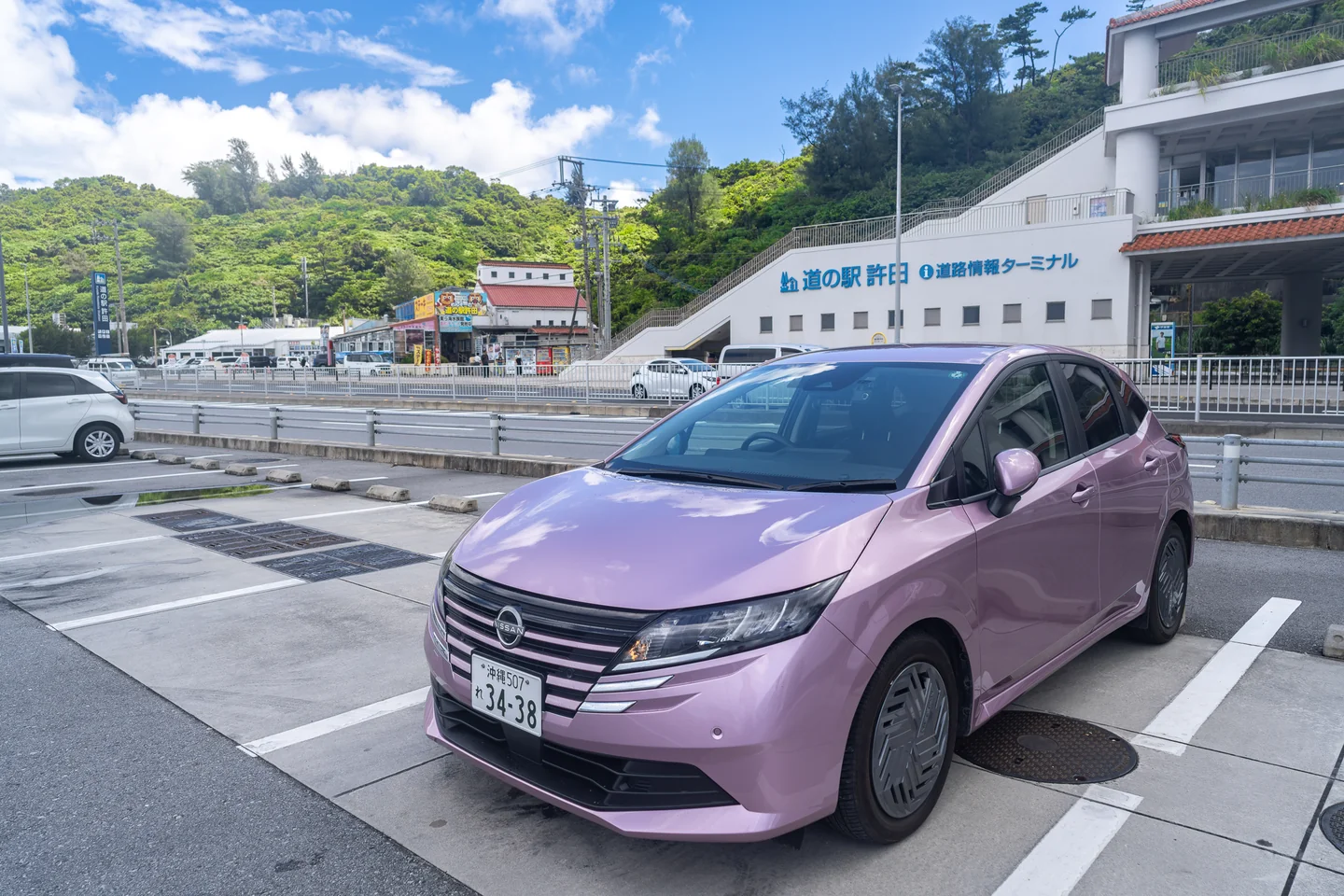
Once I photograph the steak at Kyoda service area today, I’ll have all the material for my Kyoda feature. So I stopped by briefly. You can buy Churaumi Aquarium tickets here at a very slight discount. Above all, the food at Kyoda service area is good.
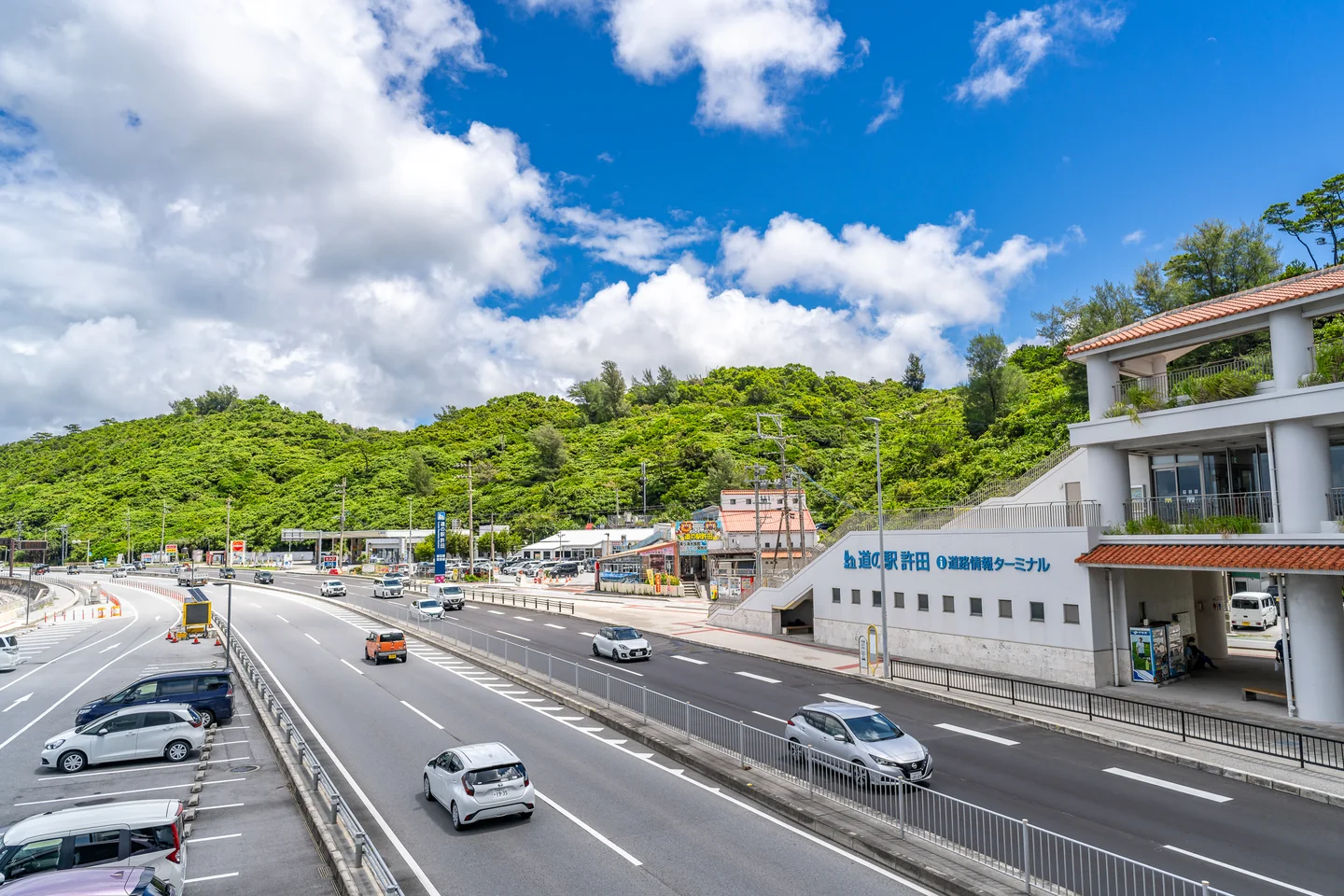
If you’re heading north from the south, you have to cross the pedestrian bridge like this. The bridge has an elevator, so you can get across with a wheelchair or stroller without any trouble. If it’s your first time here, you might be a bit tired, so stop for a bowl of Okinawa soba.
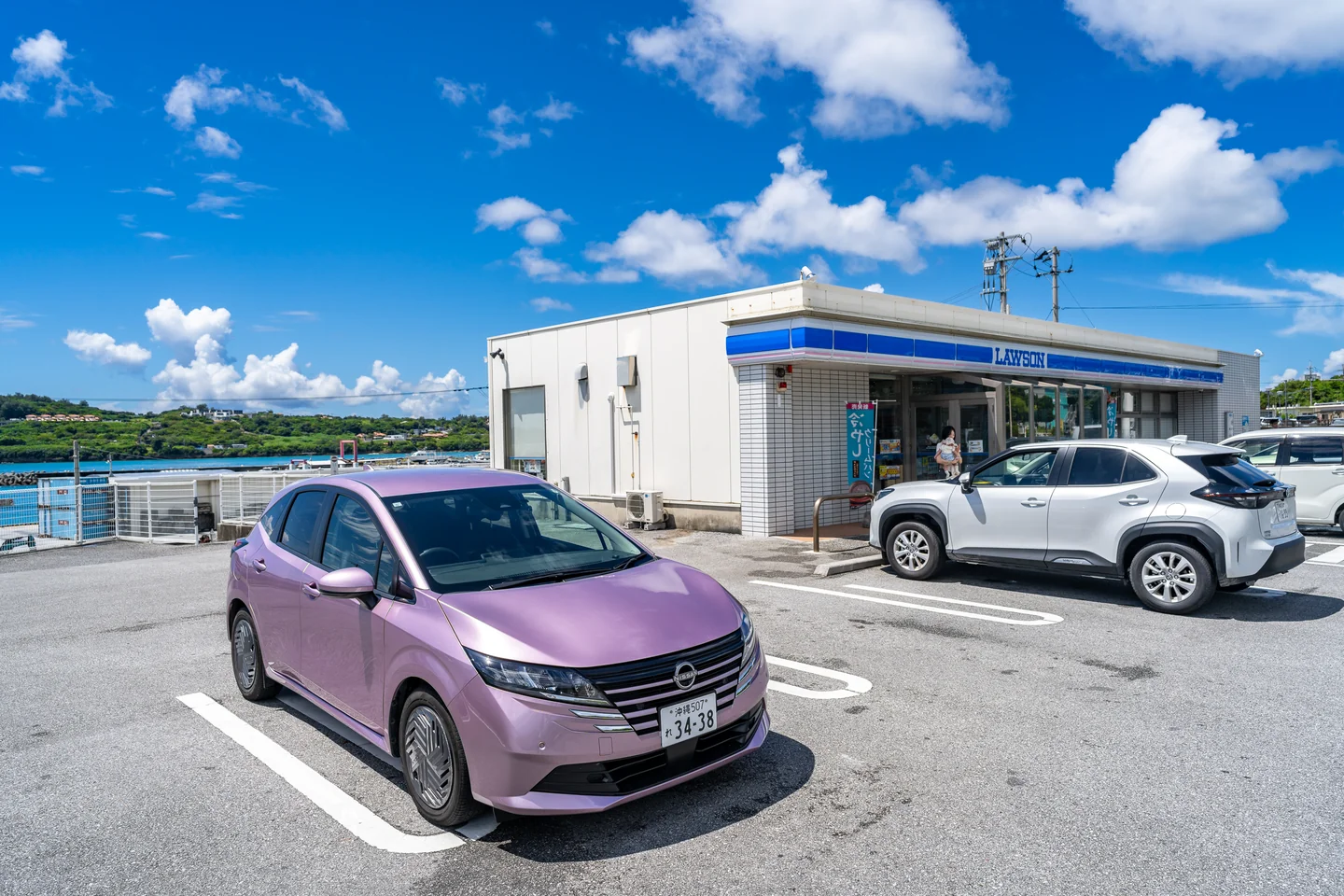
Let me talk a bit about the driving experience.
This car is neither a full hybrid nor an electric car. It has a basic hybrid system, but the regenerative braking is stronger than in Seoul’s electric taxis. What I mean is, if you have a baby riding beside you, they might get carsick and throw up.
The regenerative braking is so strong that, depending on the situation, you can practically drive without using the brake pedal. Lift off the accelerator.. and the speed drops like crazy. It even slows down going downhill.
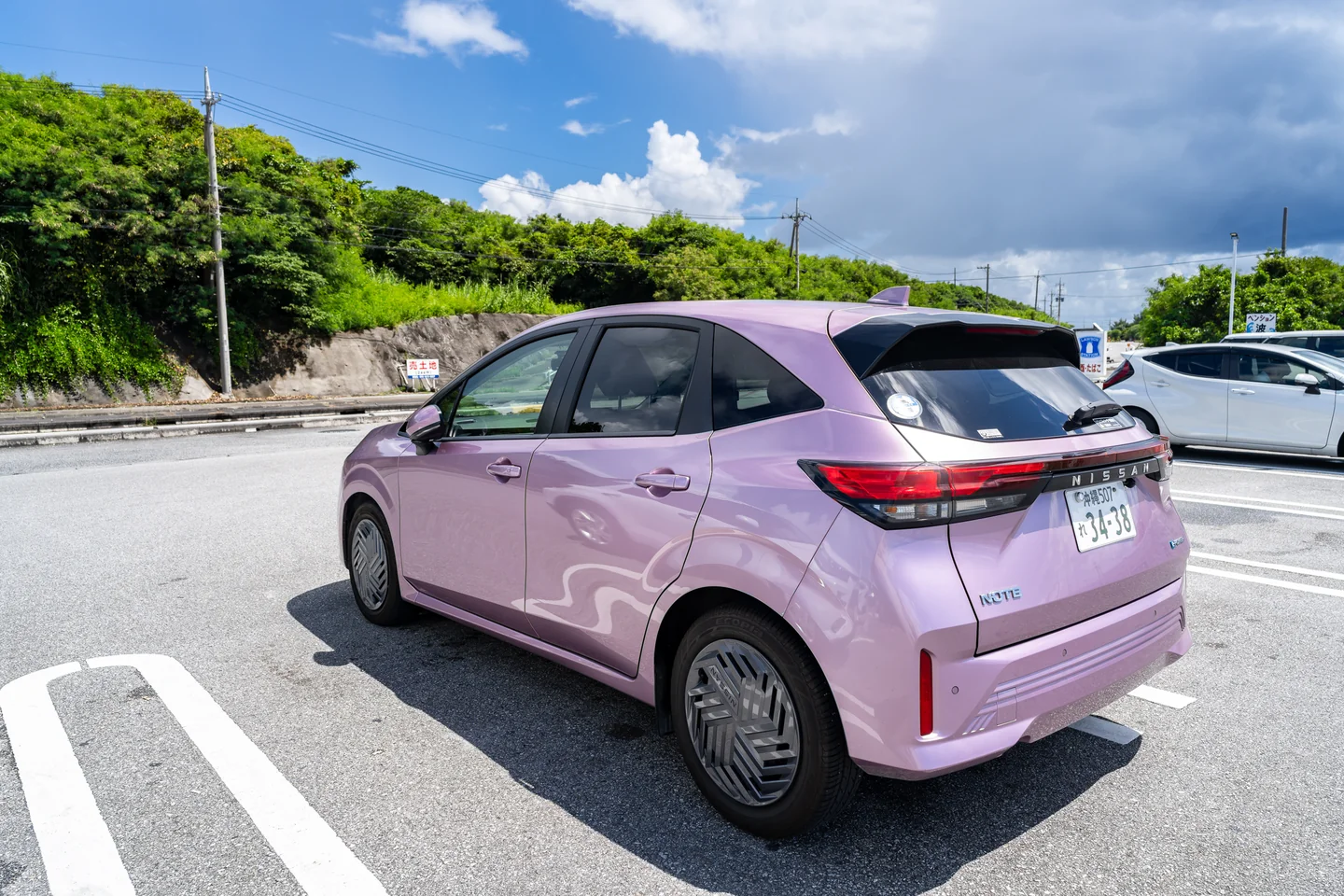
Older Nissans leave me thinking, this is well made, pretty decent. But something about their recent cars feels really off.
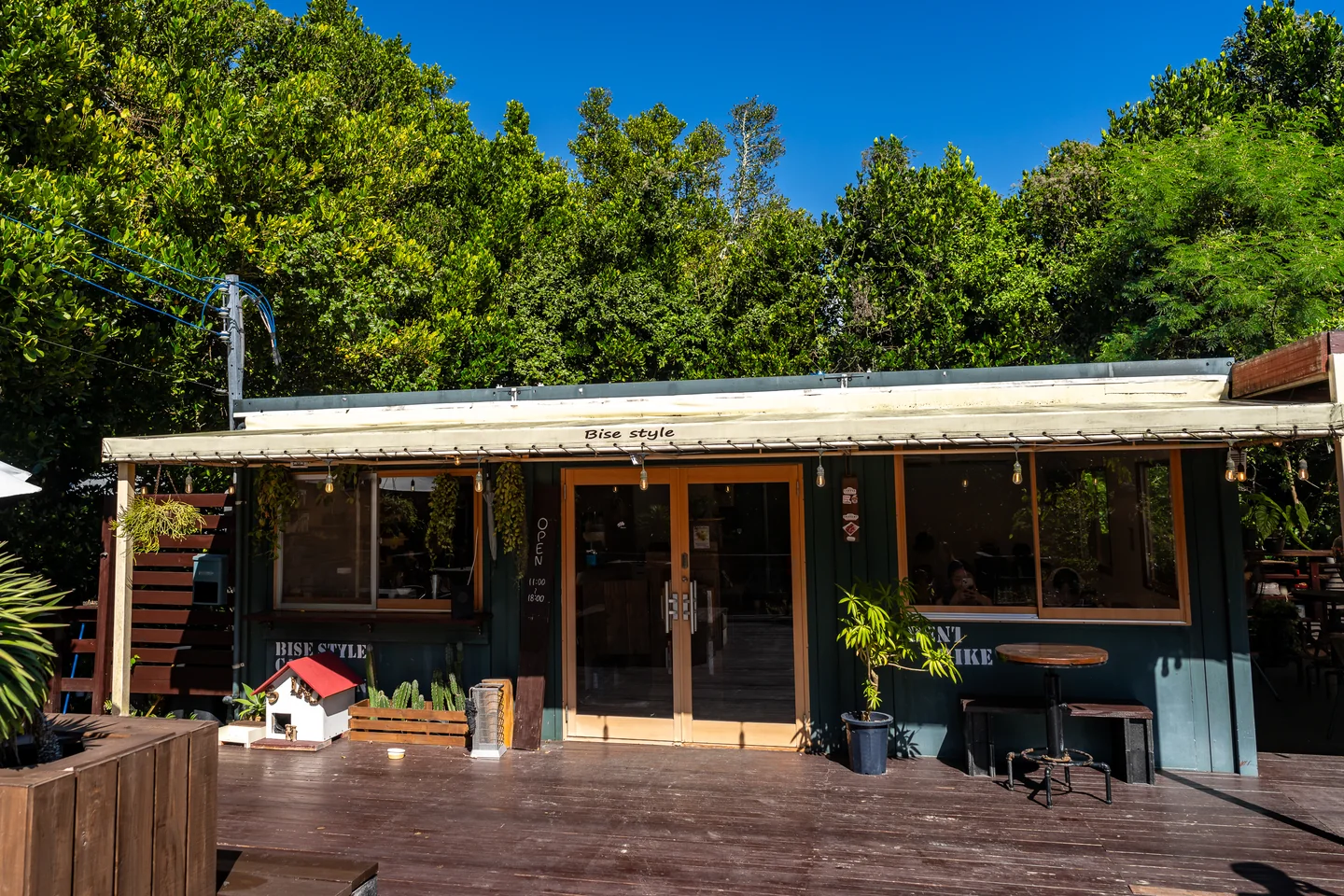
Anyway, I reached the north and finished the photo shoot at Bise Fukugi without any trouble. It was pretty hot that day too. The weather was also really nice. There were occasional showers, but nothing worth worrying about,

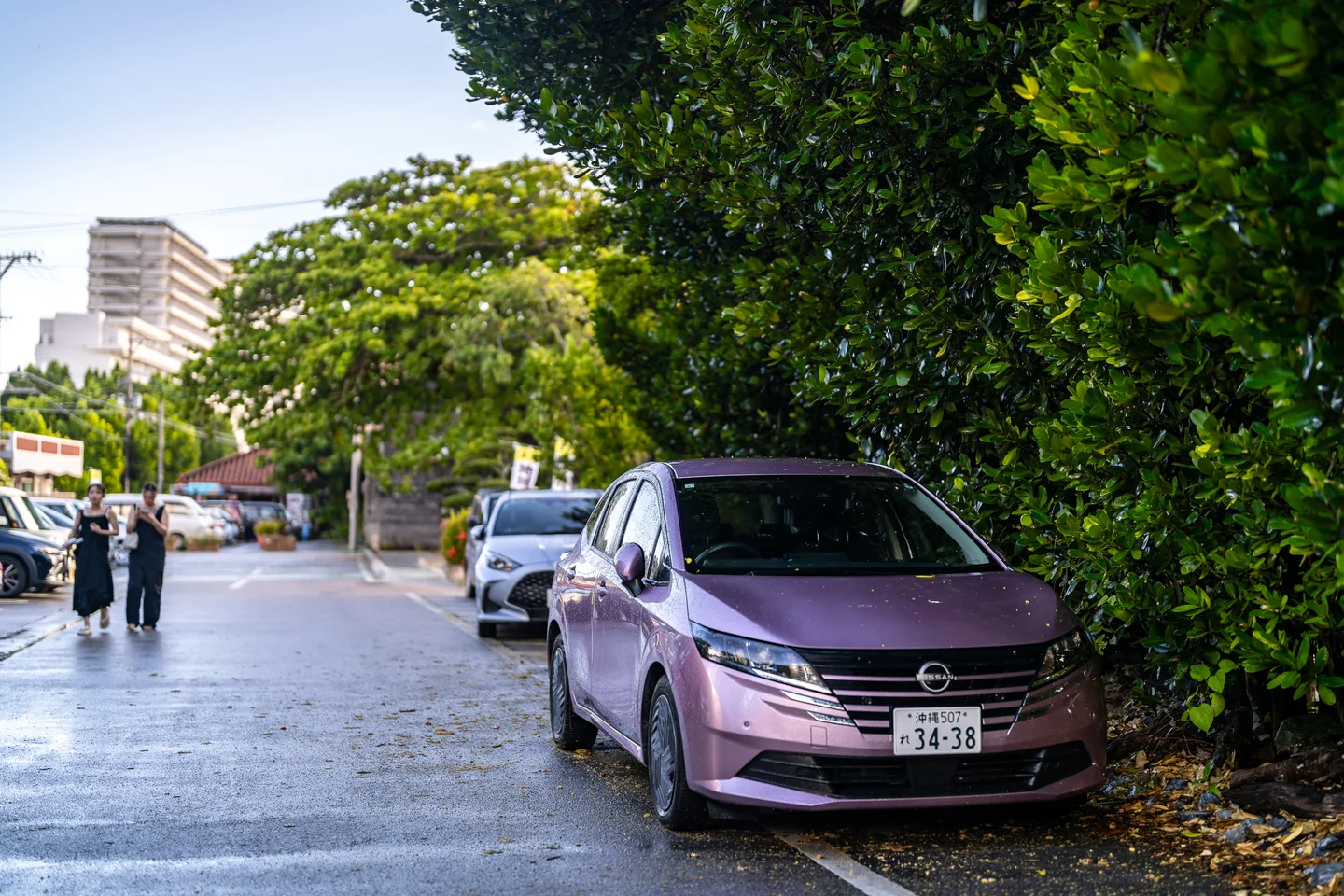
It’s August.. and the leaves are falling. There are still two months of summer left.. and suddenly the car looks ready for autumn.. I was busy that evening too, so I took the expressway to get back down south quickly.
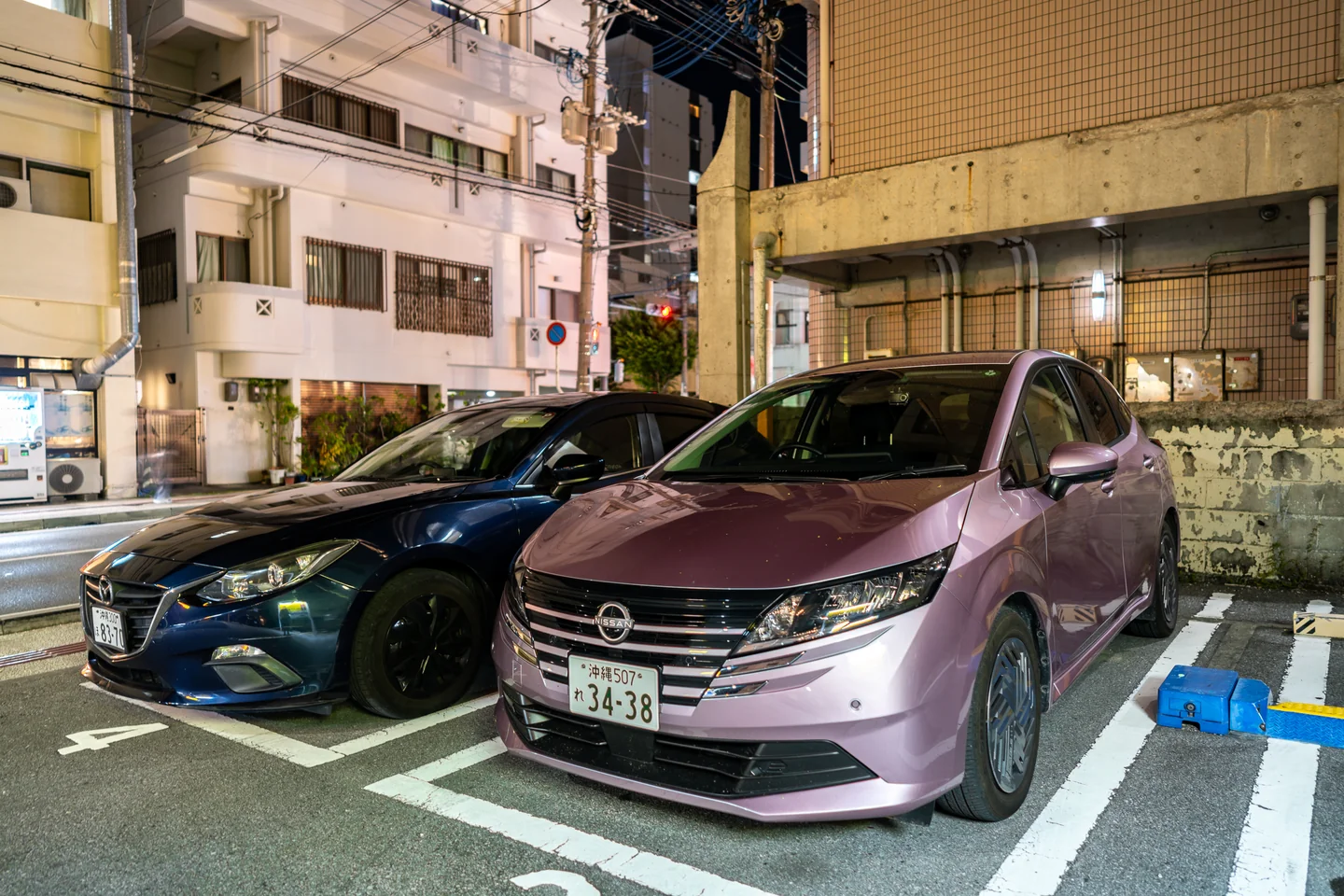
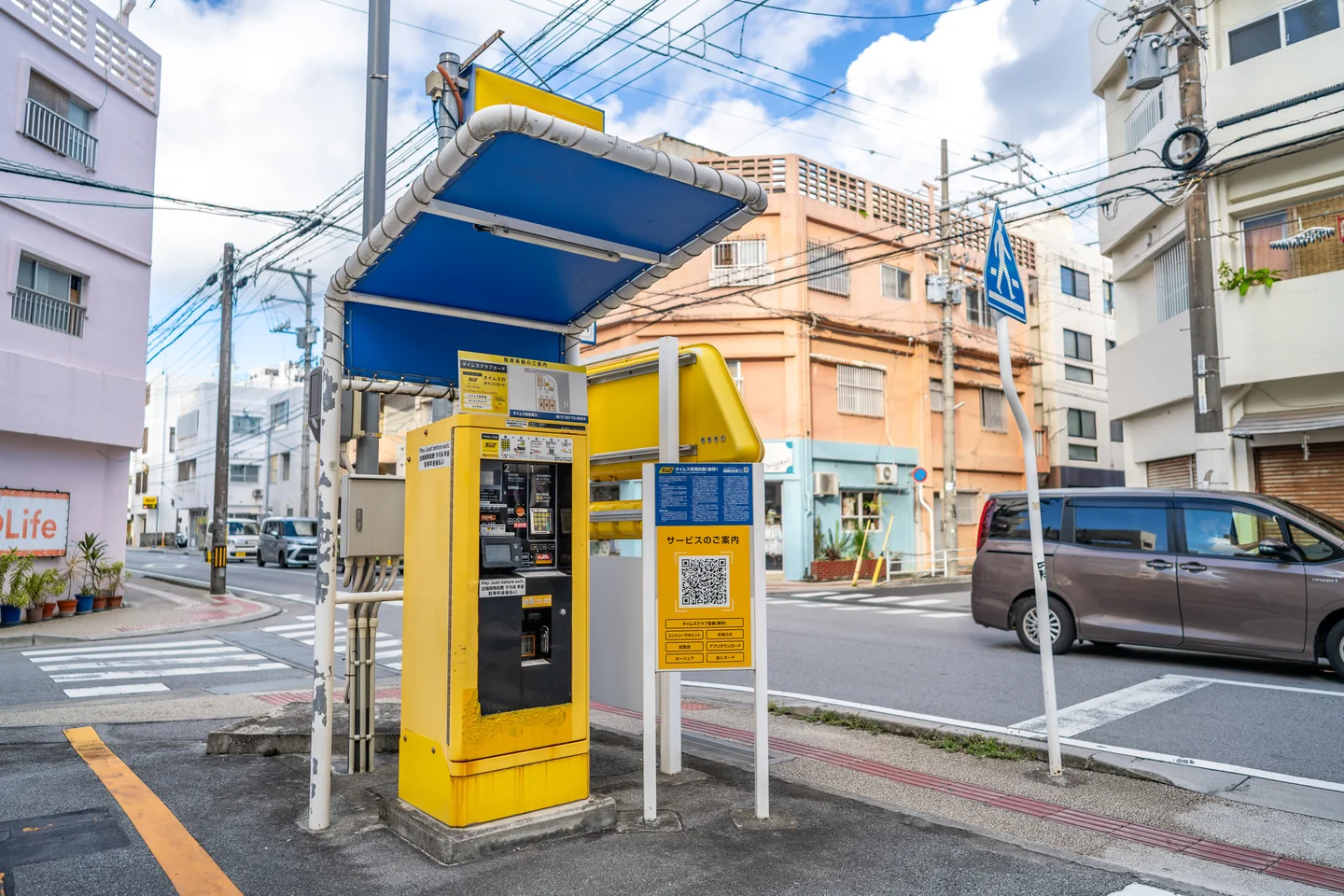
I parked in a paid parking lot near home. I didn’t need the car from the evening onward, but the branch closed at 6 p.m., and it was almost 9 p.m. when I got back to Naha, so I parked it elsewhere. Again, it was fairly easy to park. This parking lot is a bit tricky to get into, though. It takes 7–8 maneuvers in a Toyota Alphard, about 4–5 in the Note, and 2–3 in a kei car.
Refueling and Return
After the round trip from south to north, I filled the tank before returning the car.
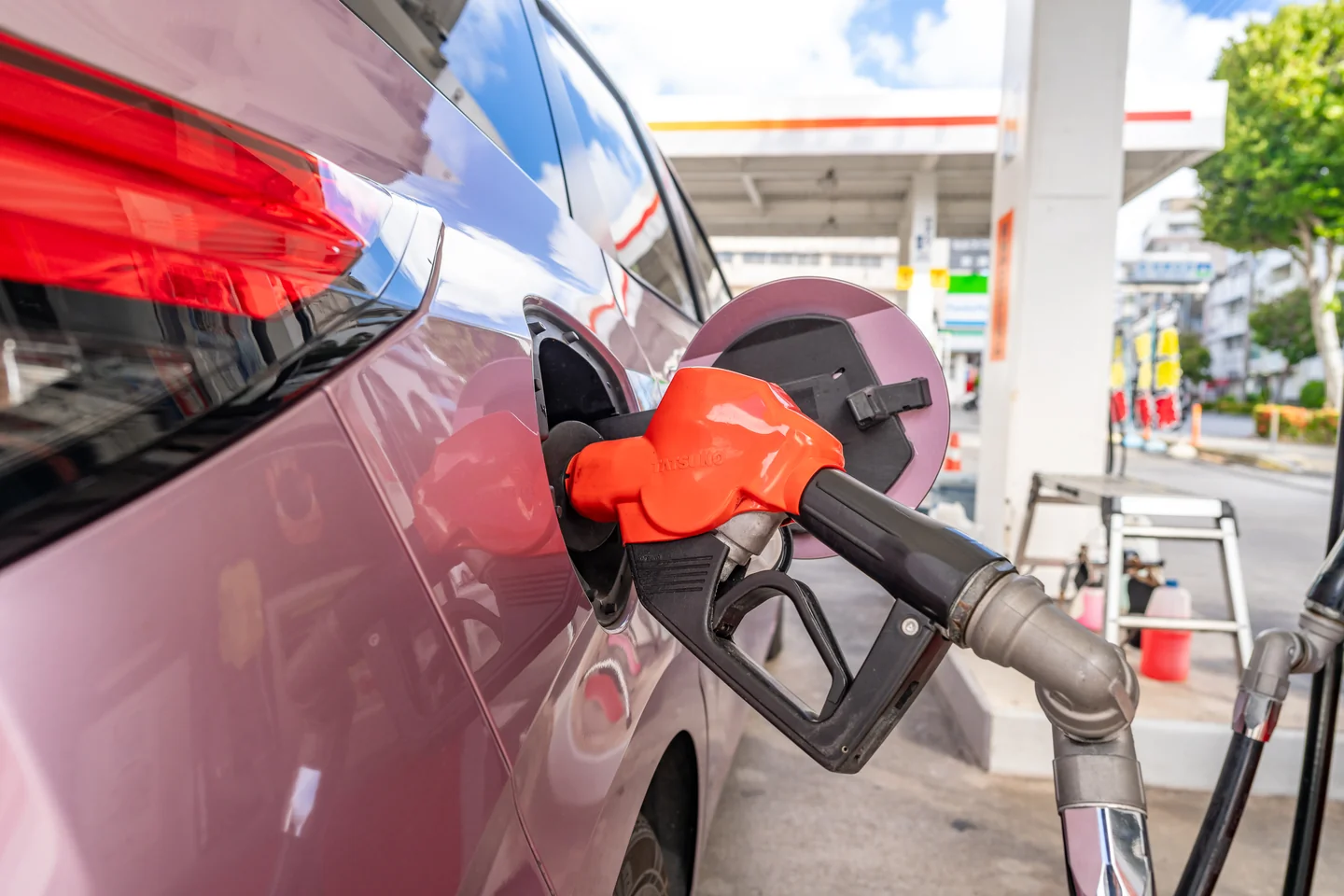
Of course, you need to fill the tank before returning the car.
Return it without refueling and you’ll be hit with a huge fuel bill. From the rental company’s perspective, if a customer brings the car back without refueling, a staff member has to leave their post and take it to a gas station. They charge you for all of it: the labor, transport, and fuel. It’s pretty expensive.
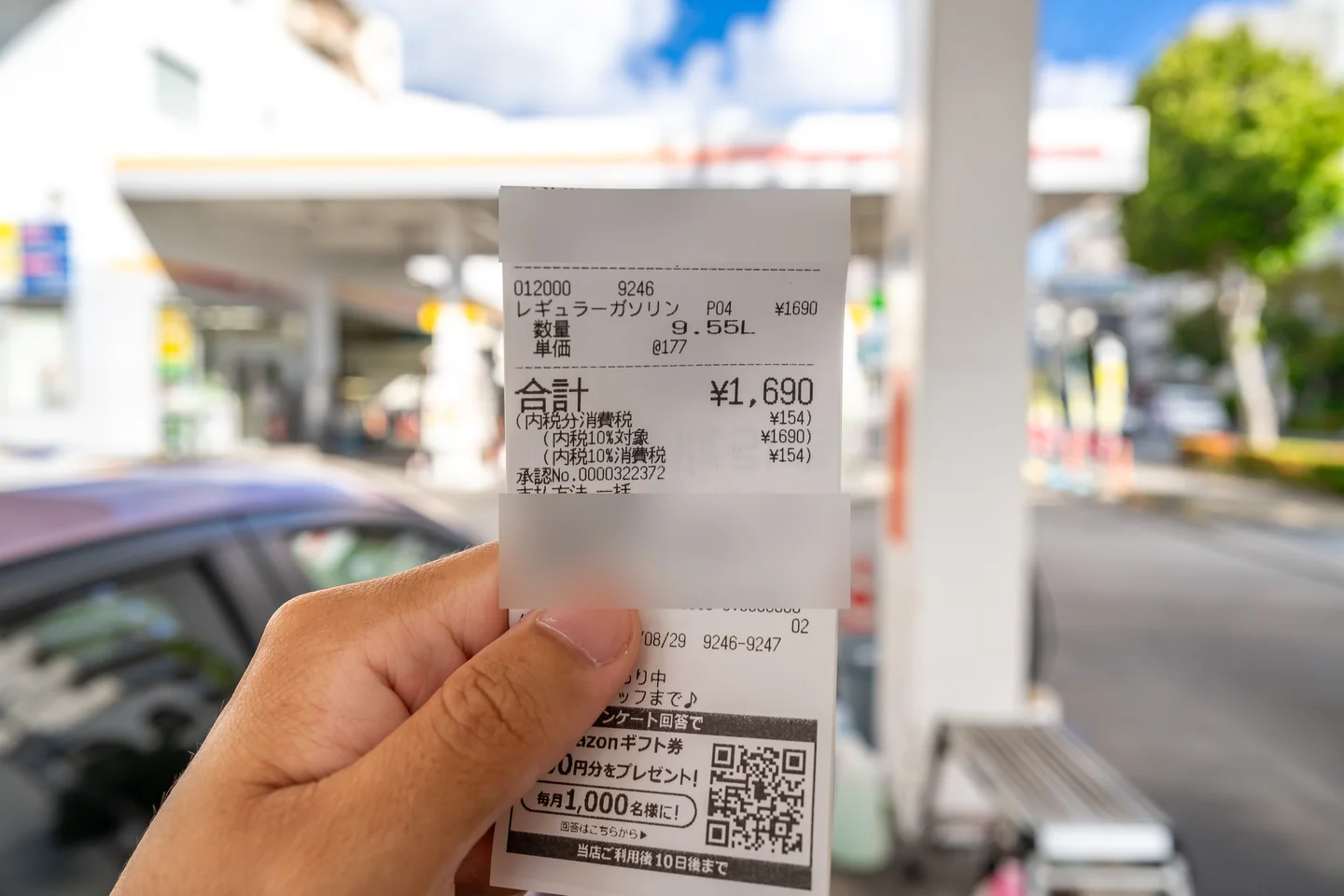
I drove from southern to northern Okinawa and back.. on the expressway, and the fuel came to 1,690 yen in total. I used 9.55 liters. That’s about the same cost as the Honda Shuttle, which I drove only on regular roads and took to more places. The Shuttle really is good..

Returning the Car and Final Thoughts
The return at the Miebashi branch was quick, and the service was decent.
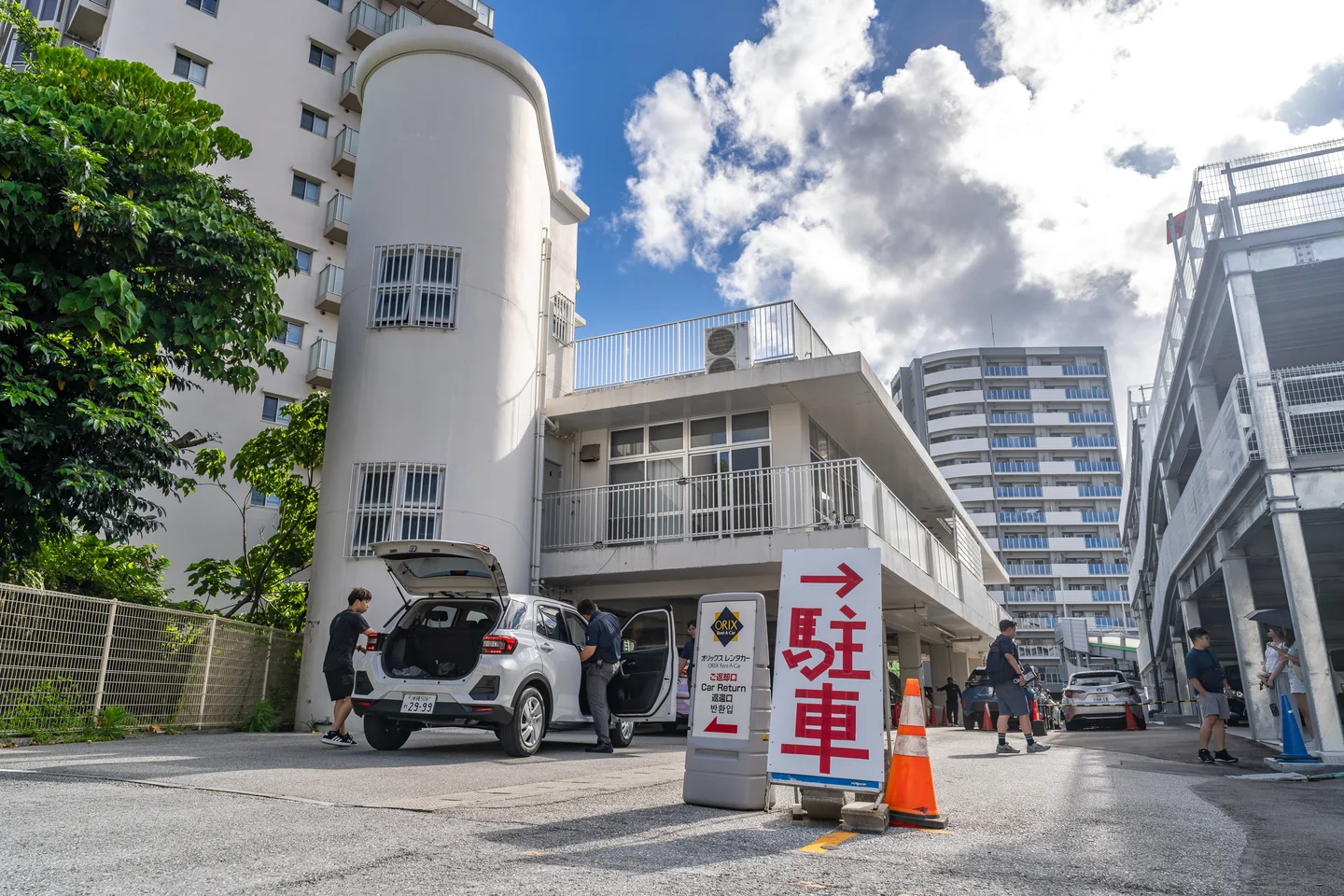
I returned the car to the same Miebashi branch. They gave it a quick check, and the return was done in no time. There were loads of Taiwanese customers there when I returned it too. Nothing difficult about it 😀
Overall.. it was a bit expensive, but the service was decent. The central location makes it convenient if your trip is based around Kokusai-dori. You do have to make your own way to and from the airport on the monorail, though. Well.. the monorail is easy and quick.
The service was decent, but I had to end up with a Nissan.. Apart from that, it was fine!
- From a look inside, it seemed big enough for one 28-inch suitcase and about three 20-inch carry-on suitcases. With 5 people, everyone would need to bring only small suitcases.
- The car I rented had a USB-C port, but my cable was USB-A to USB-C, so I couldn't charge my phone. If I'd known the car model in advance, I could have brought the right cable.
- I sit upright at 90 degrees with the seat moved forward, but my knees touched the interior, which was uncomfortable. Anyone taller than me would need to move the seat farther back.
- Take the left fork toward Nago immediately after the tollgate. The right fork takes you back toward Naha, so check the directions as soon as you pass through.
- If you're heading north from the south, you need to cross the pedestrian bridge. It has an elevator, so you can cross with a stroller or wheelchair.
- They add the staff member's labor and transport costs for taking the car to a gas station to the fuel bill. You're paying for more than just fuel, so it gets pretty expensive. Fill the tank before returning it.
- You need to make your own way to and from the airport on the monorail. I found it easy and quick to use.