Kia Flex referral code: 6-Month Niro Hybrid Use and Return Review
The Kia Flex referral code (friend invite code) is QF5hcx9skJ. Enter it when you sign up in the app and you get 10% off when you subscribe for one month or longer. This is my review of using a Kia Niro Hybrid (2nd generation) for 6 months and returning it, covering real-world fuel economy of 30 km/L, repair costs, and the return process.
Hi, I’m CULT.
I’ve gathered the story of the Niro Hybrid I rented from Kia Flex right after arriving in Korea into one post, from the one-month review to the return review six months later.
I benefit too when you sign up with this code. When any of you enters my code, I get 10,000 KRW off. So I’ve written up the pros and cons exactly as they are, based on what I felt using the car myself for 6 months.
Kia Flex Summary
Here’s the referral code, pricing, and pros and cons at a glance.
Details
Kia Flex Referral Code and Benefits
A rundown of how to enter the code and what the subscription costs.
Kia Flex is a service for subscribing to a car through an app. As far as I know, you sign up and enter the code in the app (I understand there is no web sign-up). If you enter the friend invite code QF5hcx9skJ when you sign up, you get 10% off when you subscribe for one month or longer.
The cars range from the Niro to the Carnival, and for 1 month the price varies by model, from just over 600,000 KRW to just over 1,000,000 KRW. You can check exact prices in the app. According to the official introduction page, the Monthly subscription can be used for anywhere from 15 days to 540 days.
It was easy even for someone like me who hasn’t been driving in Korea for long, and even more so for foreigners who will be living in Korea for less than a year. If you have a visa and have already gotten a Korean driver’s license, I don’t think there’s a car rental service as good as this one. Be sure to check the terms of use and license requirements in the app.
Pickup: I Had the Car Delivered to Incheon Airport
I had a lot of luggage, so I chose vehicle delivery.
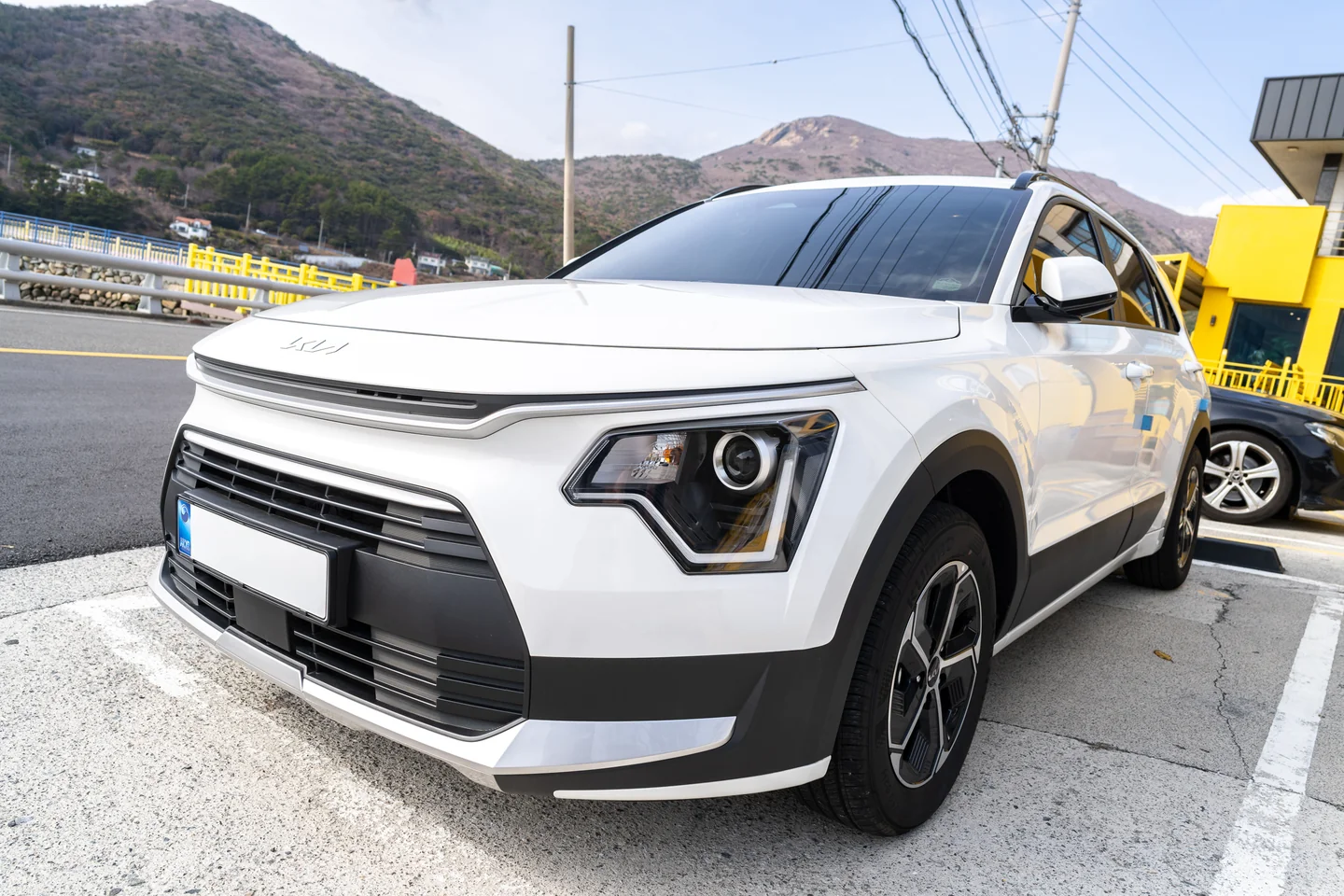
I arrived at Incheon Airport on February 25 and arranged to have the car delivered there. The garage for the Seoul metropolitan area is in Gangseo-gu, near Gimpo Airport, so a 40,000 KRW delivery fee applied to get it to Incheon.. but I had so much luggage that having it delivered was far better.
According to the official introduction page, as of October 2026 the service areas are the Seoul metropolitan area (Seoul, Gyeonggi Province, Incheon), Busan, Daejeon, Sejong, Gwangju, and Daegu.
I picked the car up at Incheon Airport, but.. there are no photos because.. as I said, I had so much luggage that I wasn’t in any position to do anything.
The rental process wasn’t particularly complicated either, and I didn’t really talk with the delivery driver. Exterior photos of the car had been taken beforehand, and they just handed me the key, I signed on a smartphone, and that was the whole handover. Super simple..
One-Month Review: Fuel Economy and Comparison with Japanese Hybrids
I checked the fuel economy while driving 2,011 km in a month.
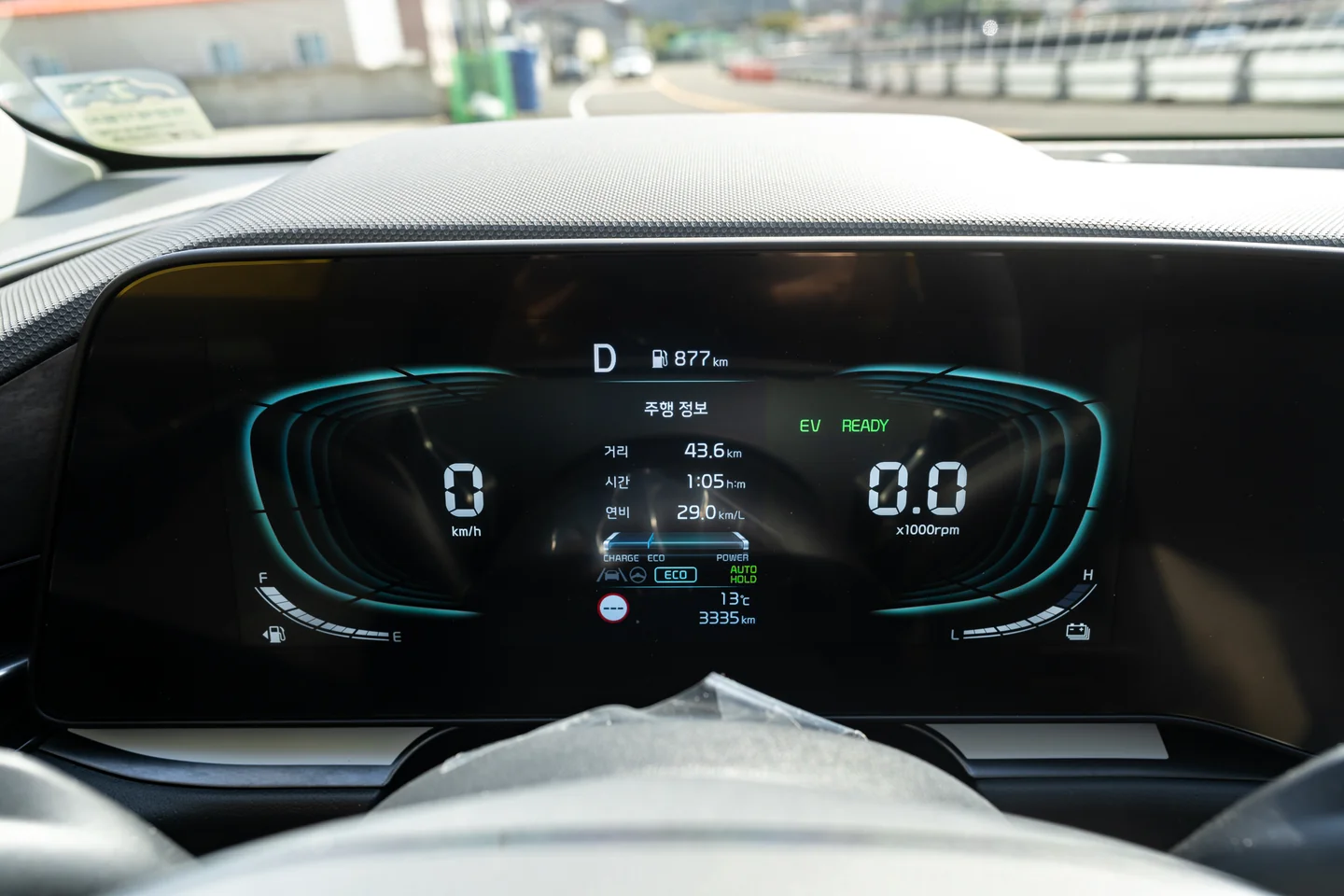
I drove around Geoje Island for a while to look for suitable photo shoot locations.
When I first got the car, it had 2,600 km on it.. so basically a new car. Well.. my standard for a new car is 100,000 km. It’s a car that has never had an engine oil change.. and after driving it for a month.. it definitely feels like the car is taking on my driving habits.
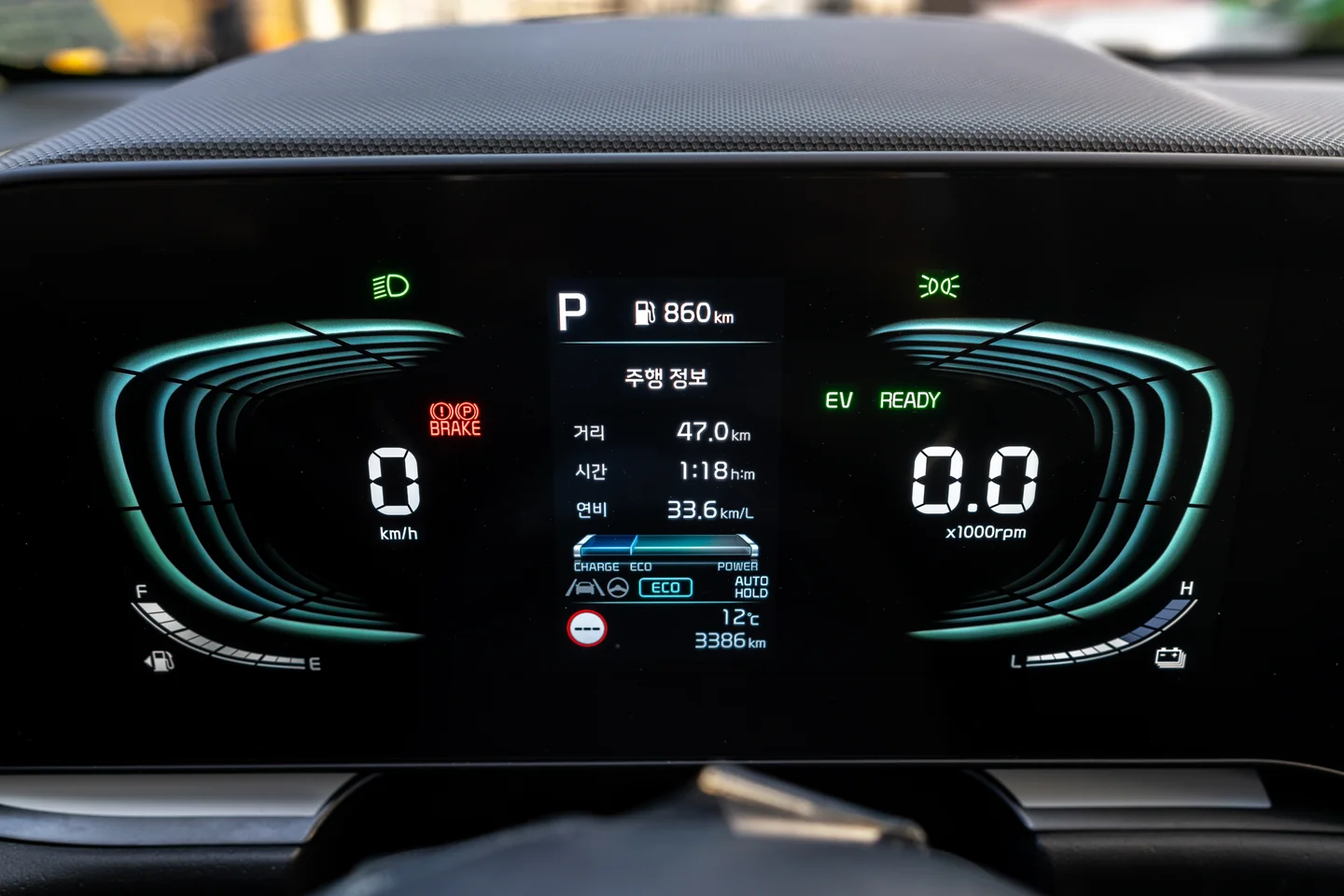
At first.. it took driving at 40-50 km/h just to get up to 30 km per liter.. I think it may partly be because I’ve gotten used to a parallel hybrid.. but now I easily hit 30 km per liter after only 20 km.
Honestly.. I have a lot of complaints about this fuel economy too. I brought it up in the Niro owners’ online community and got a bit of flak.. but in my defense.. when I lived in Japan, the cars I drove every day were Toyota and Honda series-parallel (power-split) hybrids, you see? Those get 35-40 km per liter and so on, so..
There are pros and cons.. series-parallel hybrids have insanely good fuel economy, but the downside is that fuel economy at highway speeds is really bad. Hyundai and Kia parallel hybrids can never beat Toyota or Honda fuel economy at low speeds or under 80 km/h.. but at higher speeds it’s a different story. Like once you’re past 100 km/h.
I’ve done a lot of photo shoots with the families of Hyundai and Kia expat employees, and we’ve talked about all sorts of things.. they told me, honestly, it’s true that Hyundai and Kia fall about 10% short of Toyota and Honda in fuel economy. But to me it feels like a 20% difference.
A 5th-generation Prius cruising steadily at 80 km/h on an Okinawa expressway gets about 28 km per liter. But if I speed up to 100 km/h, the fuel economy drops right down to 22–24 km per liter.. But the Niro I drove would not drop below 25 km per liter, no matter what. It stayed at 25–26 km per liter.
To sum up..
Japanese hybrids: you can get 35-40 km per liter if you only drive on national roads under 70 km/h.
Korean hybrids: at a disadvantage at low speeds, but at an advantage on expressways.
Watching how people in Korea drive.. everyone’s in a hurry.. so I think Korea’s parallel hybrids are better than Japan’s series-parallel hybrids. Or.. a really cheap one, a series hybrid, is good too.
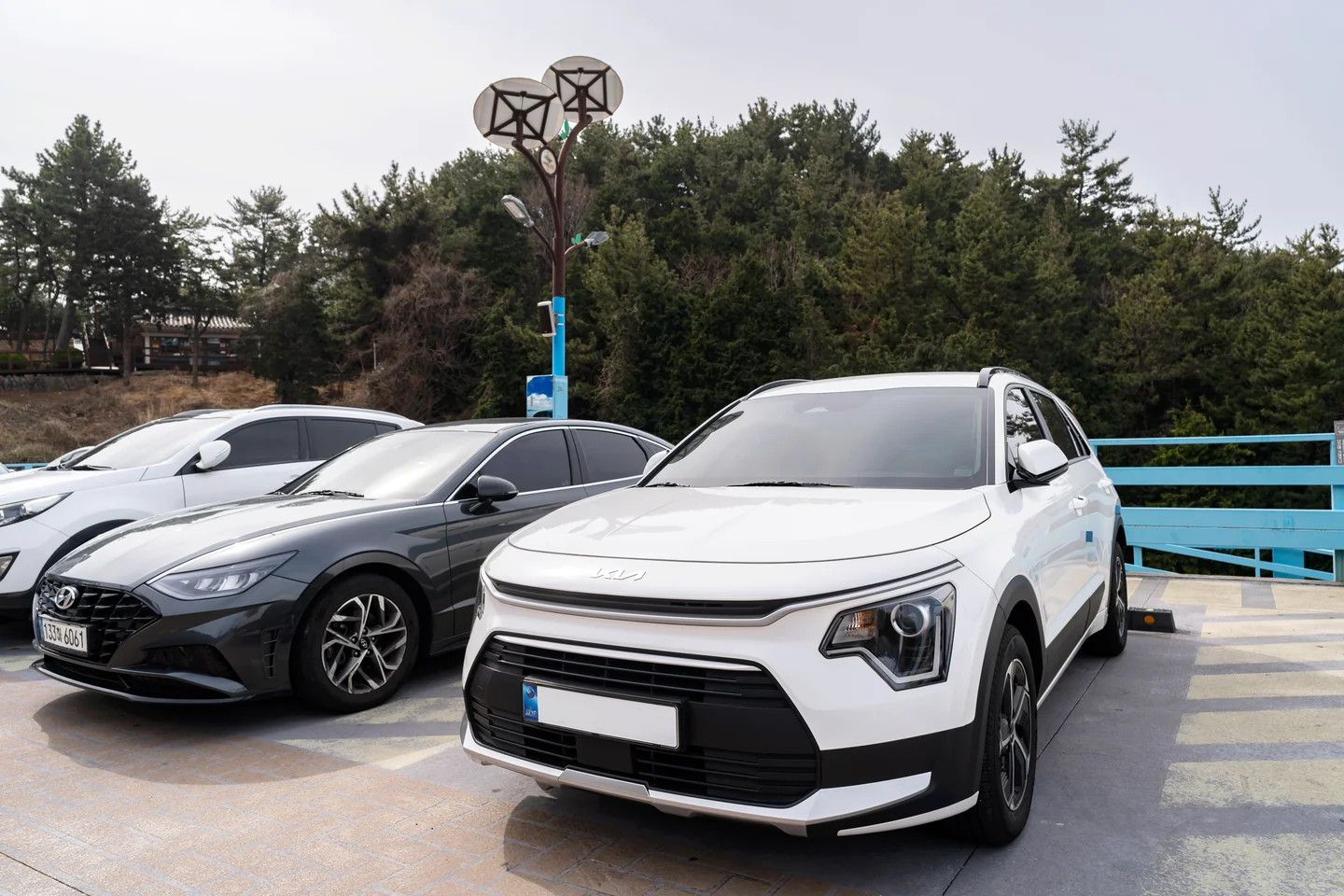
Since it’s a low-emission hybrid vehicle.. the 50% parking discount is really nice too. When I drove a Kia Ray and a Hyundai Casper, the 50% expressway toll discount was so good.. so I badly wanted to buy a Casper, but between ordering and delivery it’s, what.. 18 months?
I refuse to buy a used car, no matter what. By my standards. After driving only in Europe and Japan my whole life, the cars I saw when I came to Korea.. aren’t cars in my eyes. What even is this? It’s a tank. Everyone drives so roughly..
Let’s all drive safely.
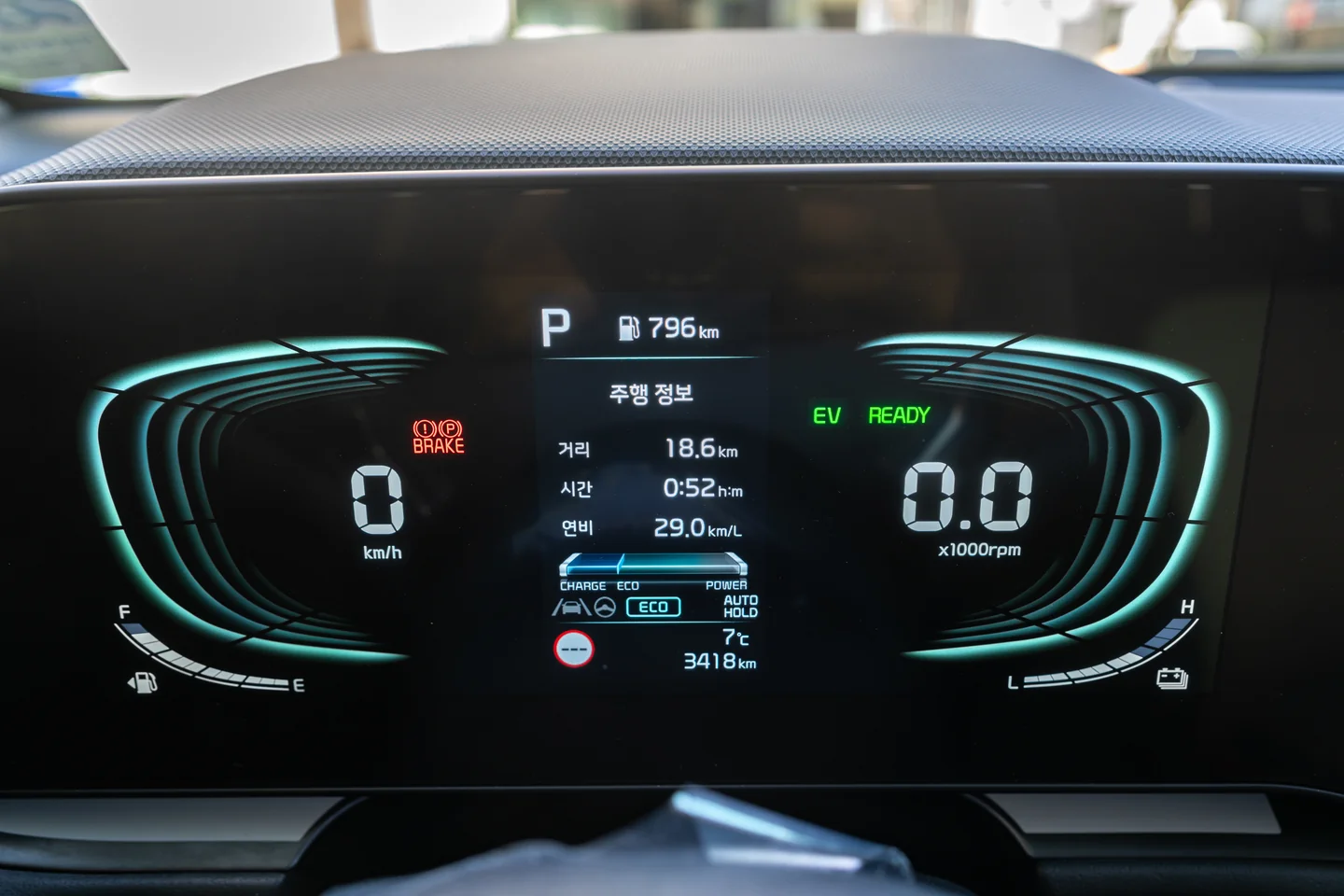
First off.. the Niro is much more comfortable to drive than the Casper. It’s a bit bigger and heavier.. so it definitely has a weightier feel when driving than the Casper. The Casper feels like a car that flies along..
I’ve driven every kind of car under the sun, but.. I haven’t driven many Korean cars, so..
I don’t need the smart cruise control, but the automatic steering assist is so convenient that I love it.
The reason I dislike smart cruise control is.. the fuel economy is just so bad. Seriously.. it’s awful at driving.
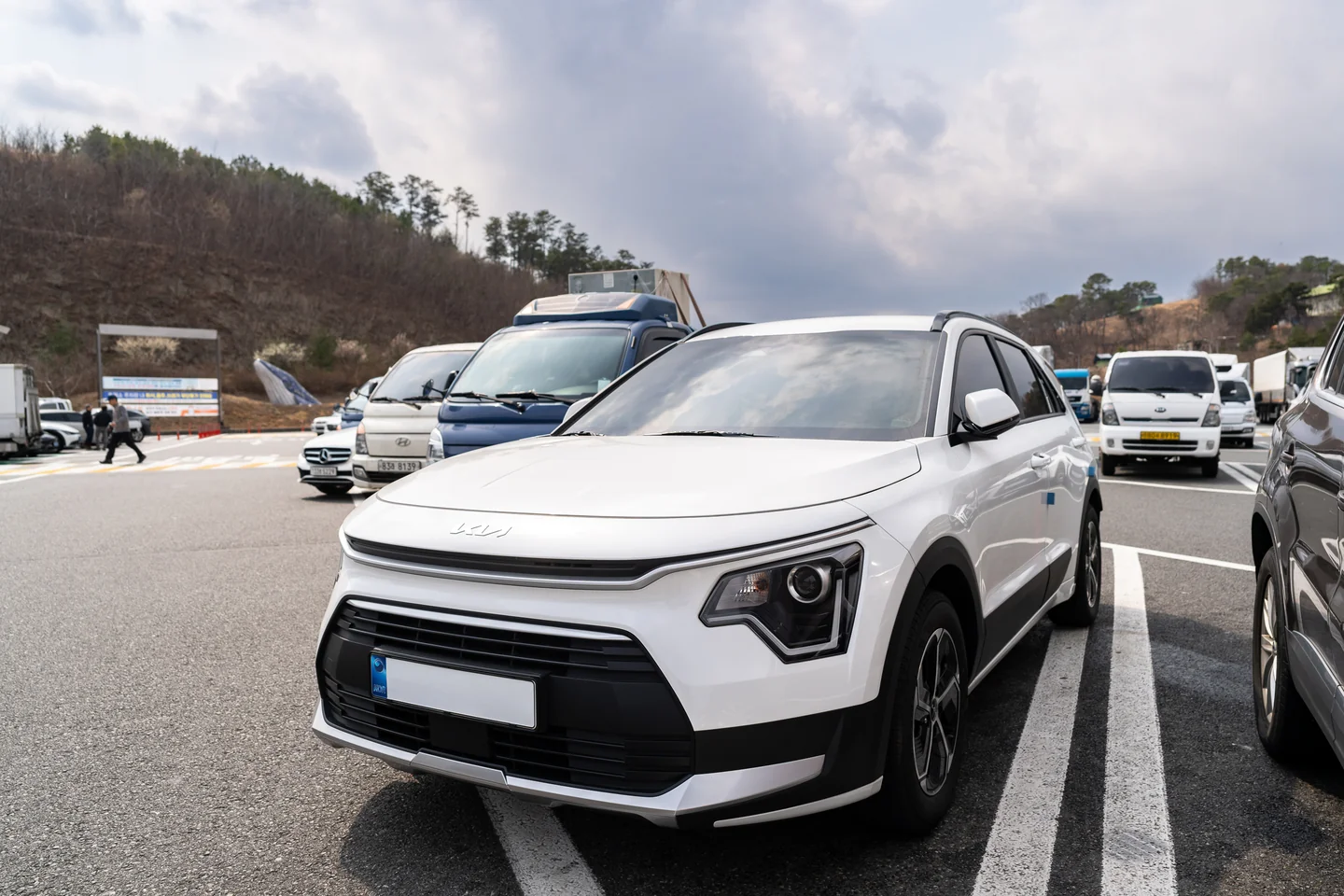
I’m on my way to Gyeongju to scout for photo shoot locations.
In a straight line, Tongyeong to Gyeongju looks close.. but it took almost 2 hours.. because there are so many mountains and the road twists and turns constantly..
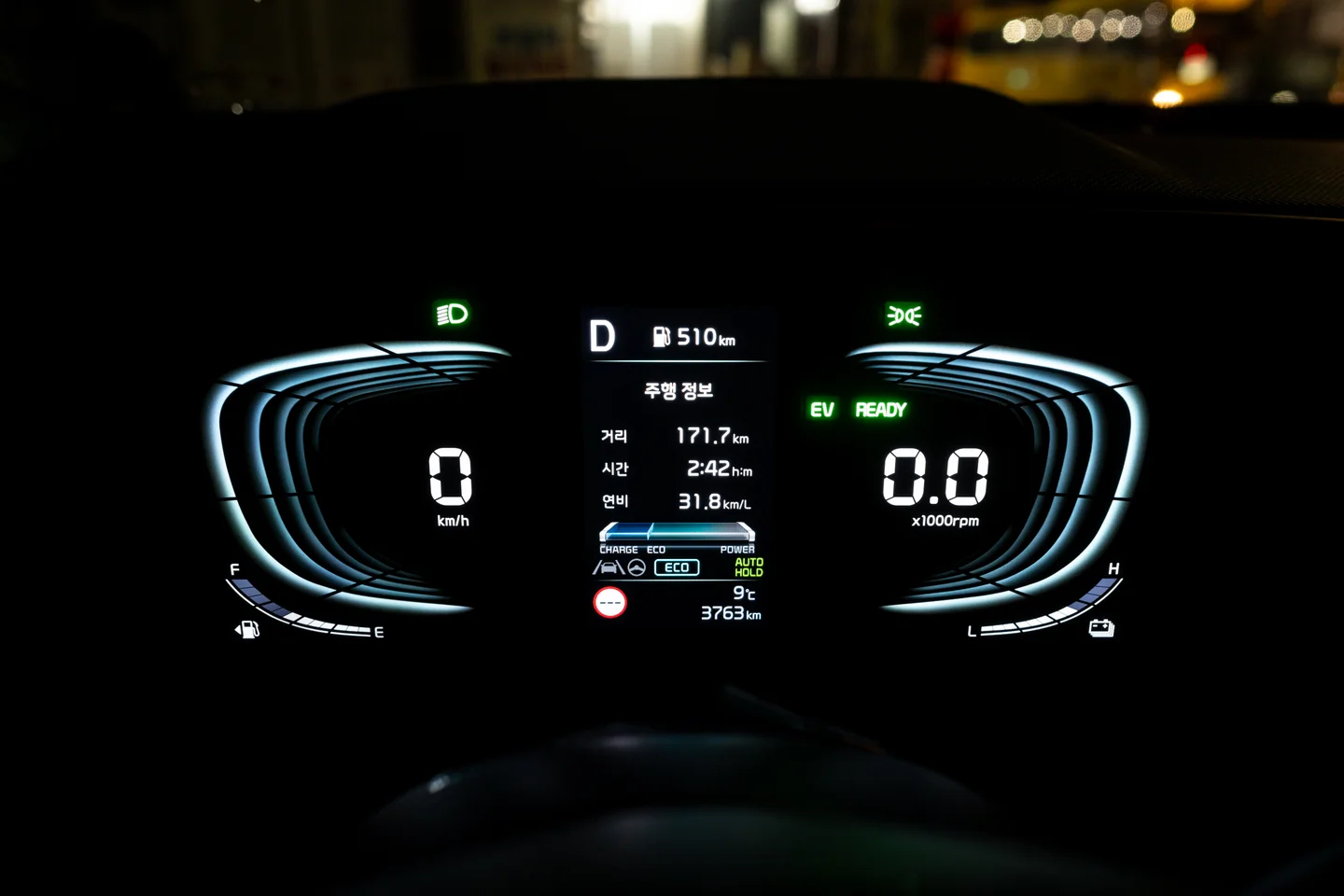
It took about 2 hours 10 minutes on the way there, but on the way back I didn’t think about rush hour, so it took about 30 minutes longer. After just an hour or so of driving a Kia Ray or a Casper my body gets a bit stiff, but the Niro seems to do that a lot less. I wonder if a Palisade or a Genesis is comfortable enough to drive from Seoul to Busan without stopping at a rest area even once?
Honestly, I’m not interested in bigger cars. Even the Niro is too big for me by my standards.. The Seltos was also among my original candidates, and I wondered about buying one, but the Seltos was bigger than the Niro. So it just got knocked out..
Also.. I don’t really like spending money on cars. If there were a hybrid minicar.. I’d want to buy that… The reason I keep looking closely at the Niro is.. it’s the smallest hybrid among Korean cars.
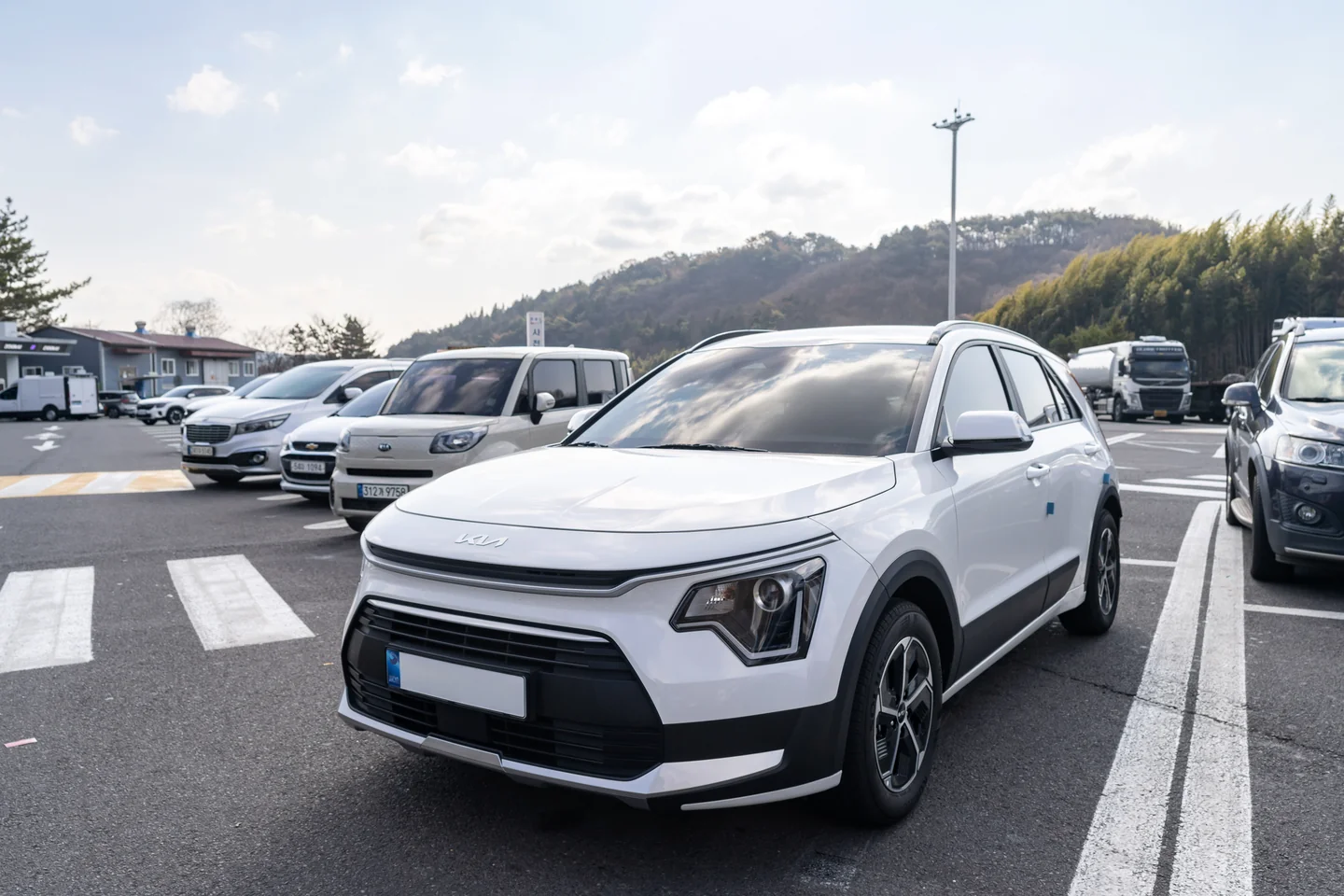
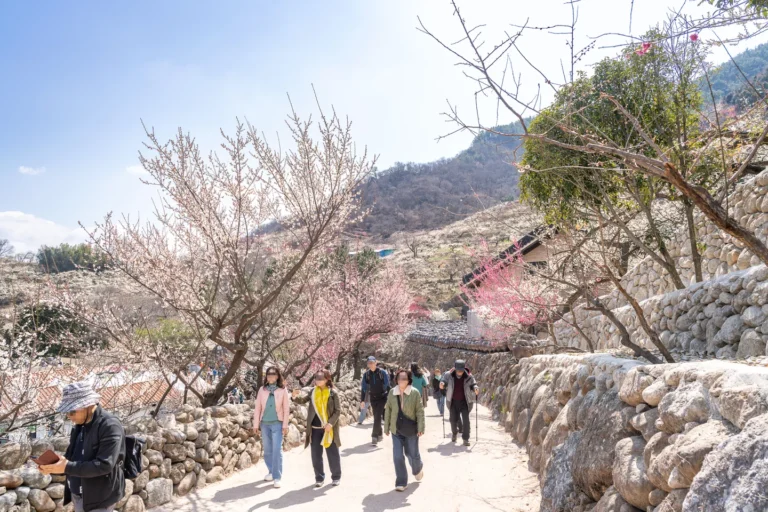
That day I was on my way to see the Gwangyang Plum Blossom Festival. Plum blossoms are really pretty 😀
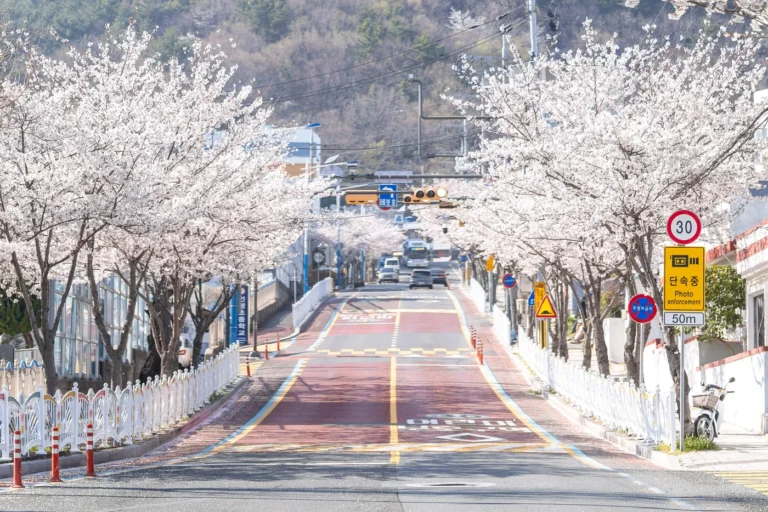
The plum blossoms have all fallen by now, though… Right now Jinhae is full of cherry blossoms! And of course Tongyeong is full of them too!
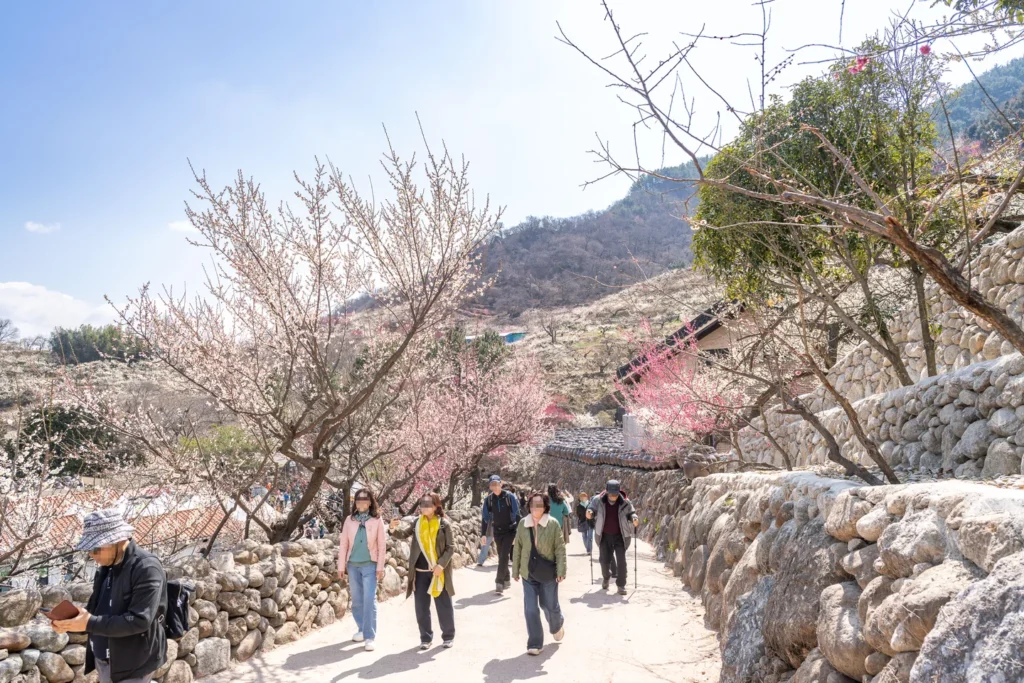
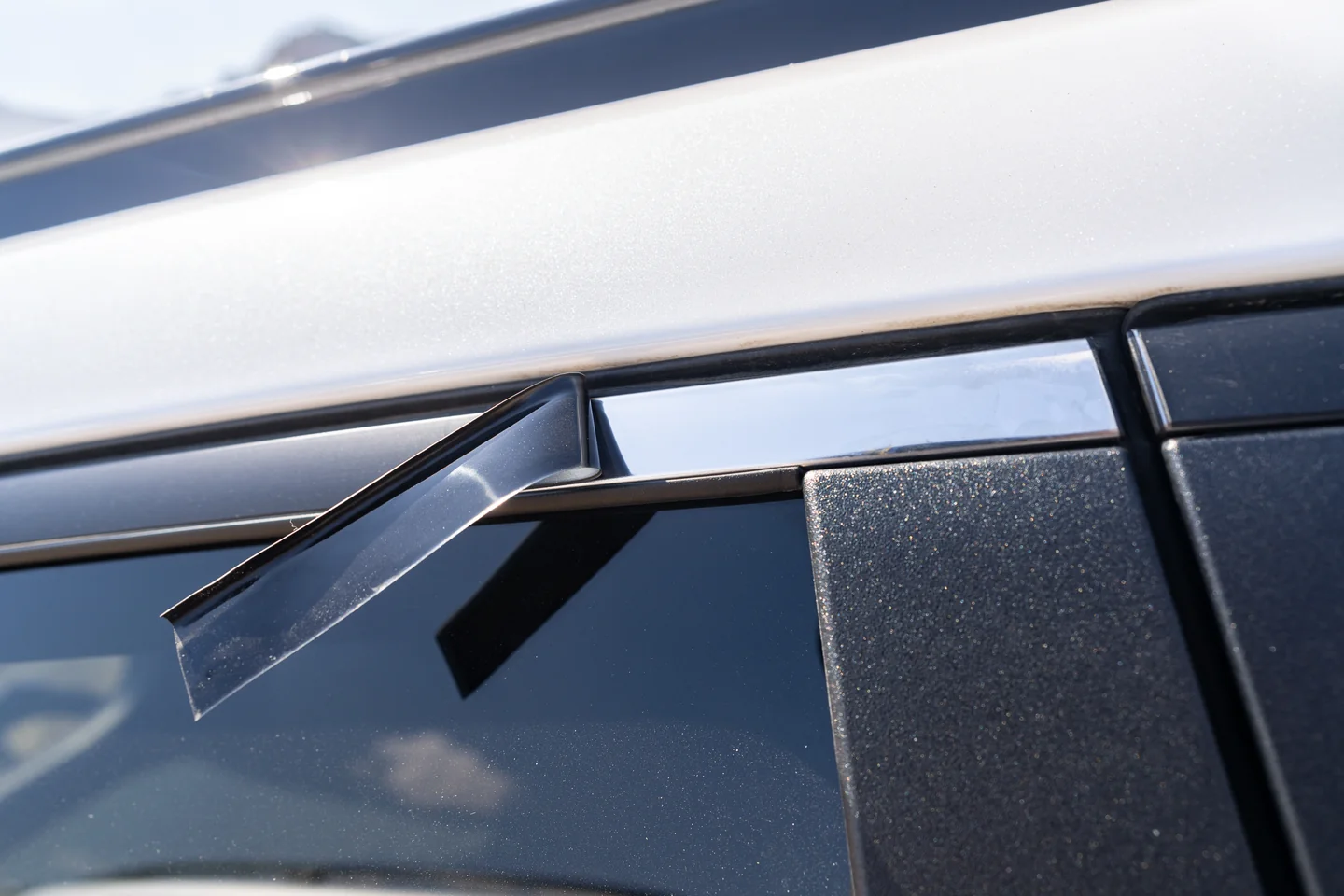
Ah.. the build quality is really something..
I always drive alone, so I never have to open the back doors. Even so, the fact that this comes off.. makes me feel the build quality is just poor. For now I’ve taped the end back onto the inside with Scotch tape.
In lots of ways I like it for driving, but.. it keeps catching my eye.. how should I put it.. it feels kind of half-built? Is it cost-cutting?
Oh, right.. the Niro’s fatal flaw.. if you play music.. you can hear.. all of it.. outside the car.. so.. loudly.. -_-;;
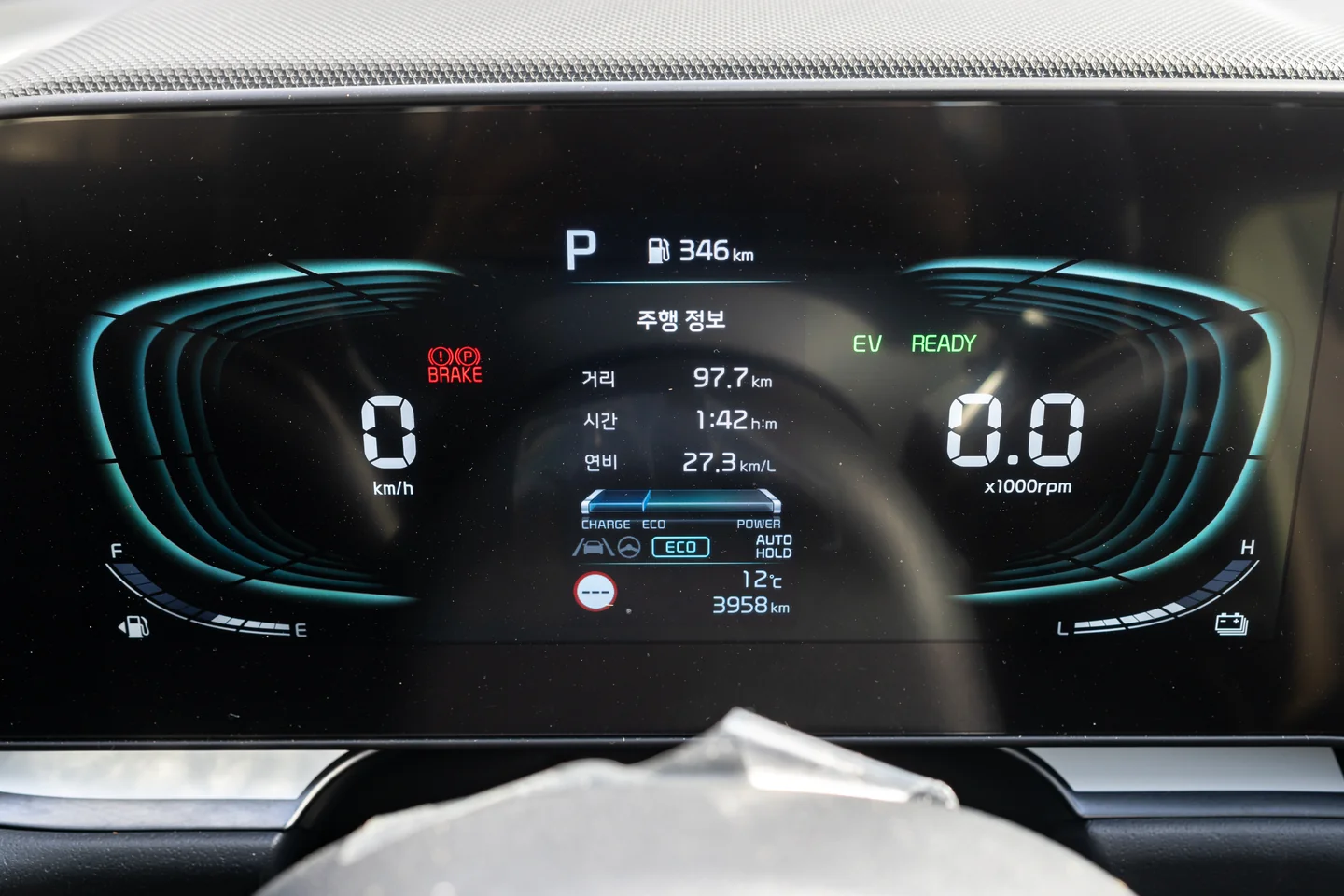
For reference.. I drive alone, so this is the fuel economy I get. Fuel economy drops sharply when you carry passengers.
I ran a few experiments in Okinawa, and there’s about a 30% fuel economy difference between driving alone and driving with four people plus luggage.
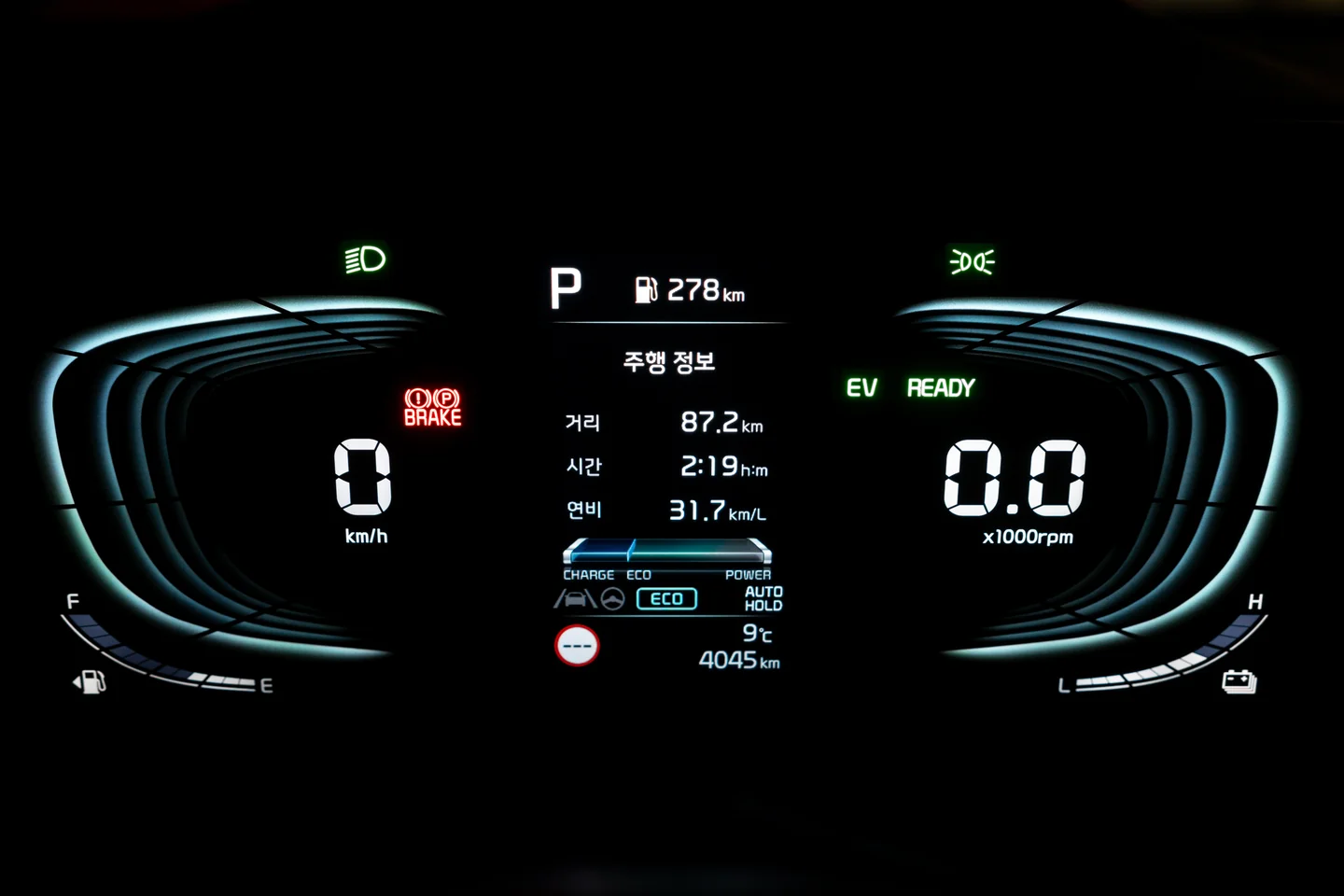
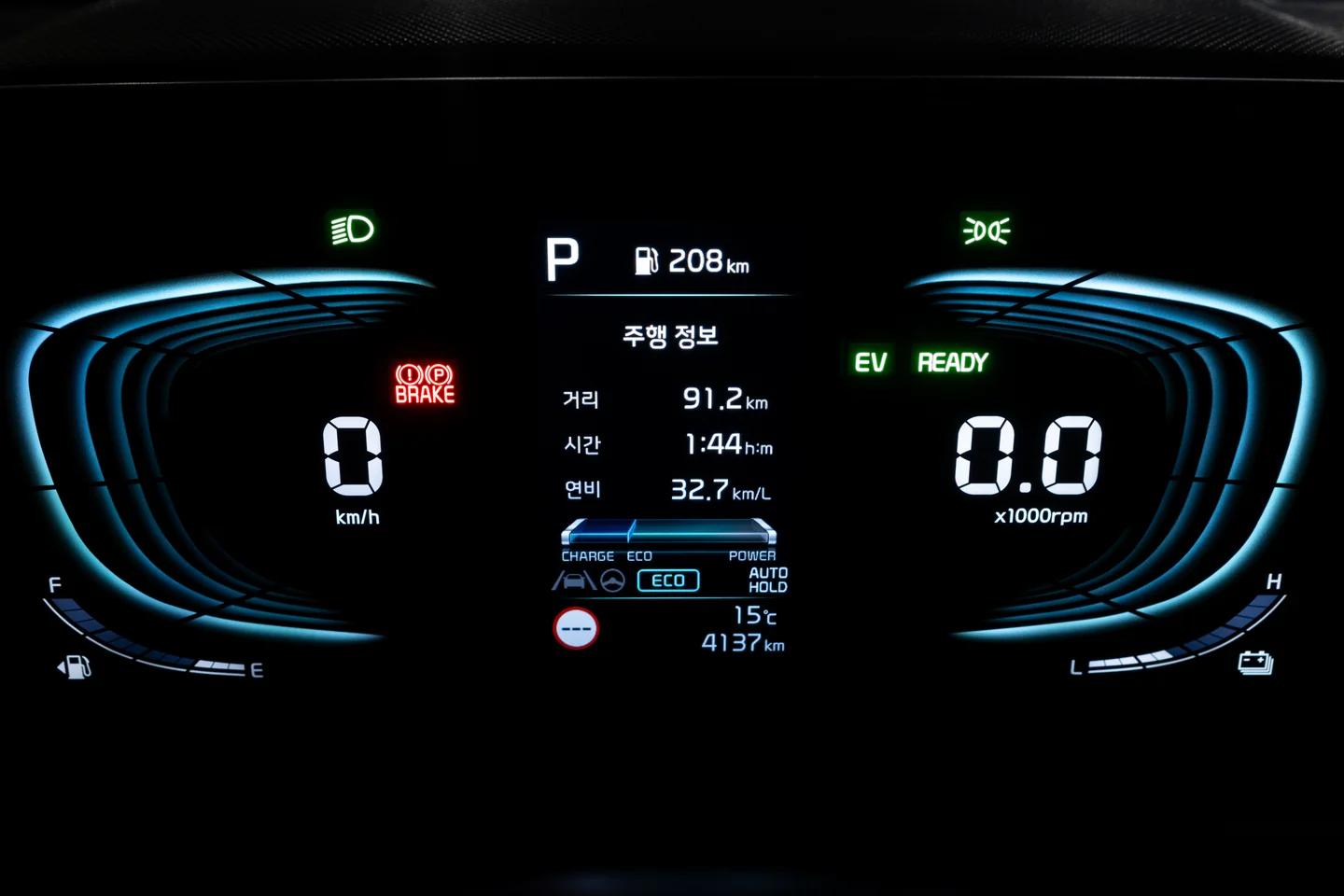
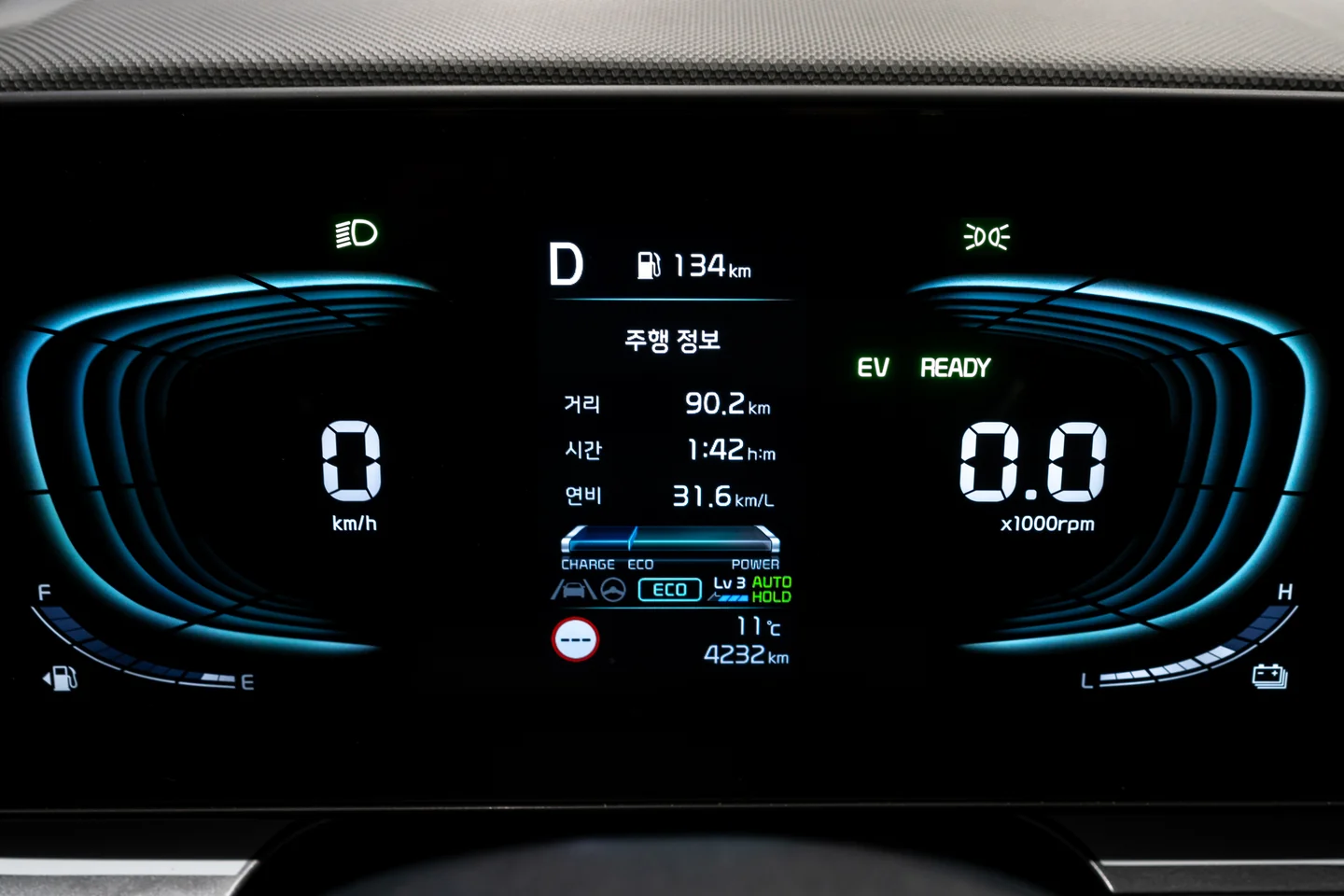
It seems the car gets good fuel economy because it’s light. And the fuel tank was even empty..
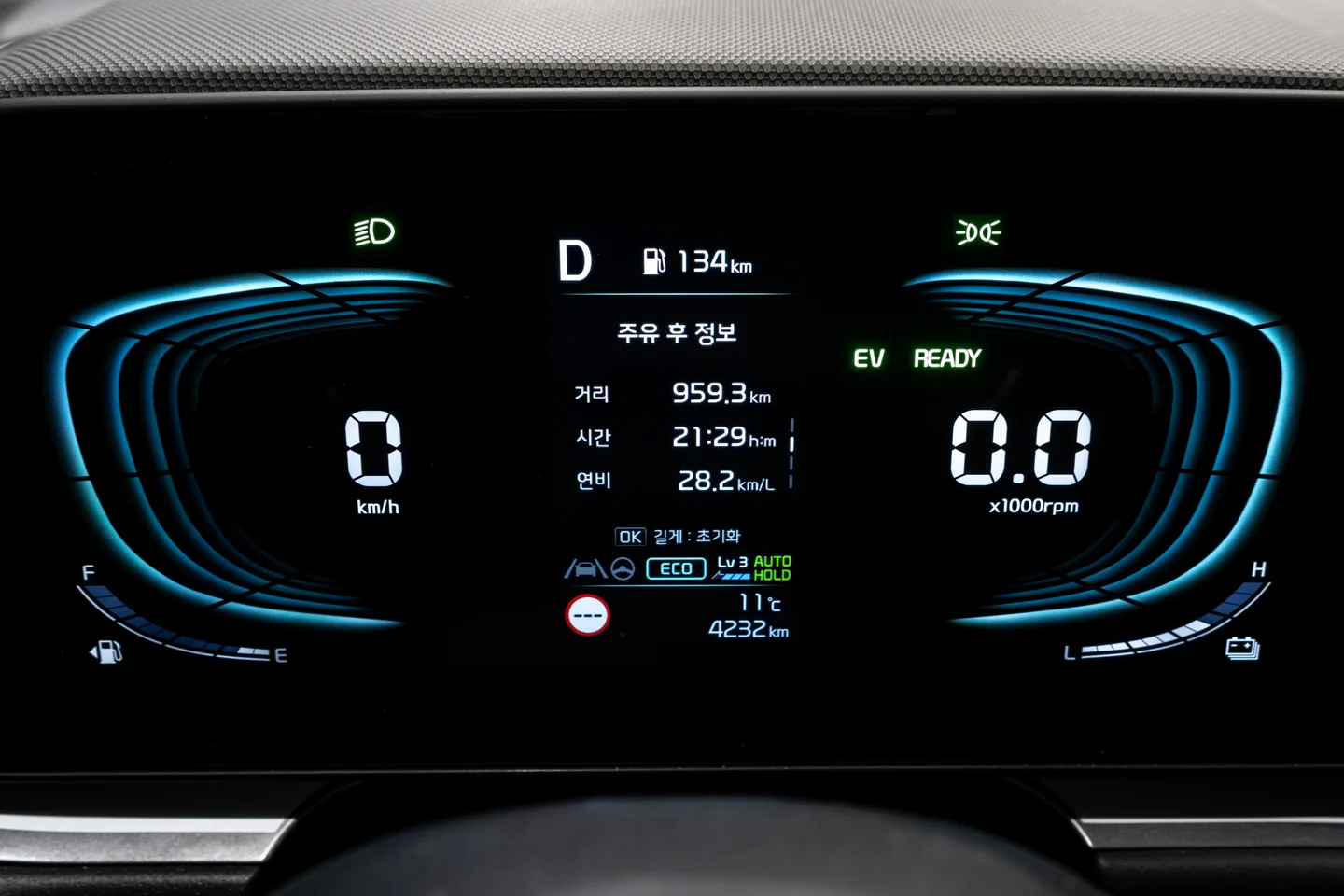
Before refueling..
This is the cheapest gas station in our neighborhood. At this time, the price at this station was fluctuating between 1,655 and 1,685 KRW per liter. I live in Tongyeong, so I usually fill up in Tongyeong.
The cheapest place I found while driving around was in Gimhae. Every time I went, it was 10 KRW cheaper than here.
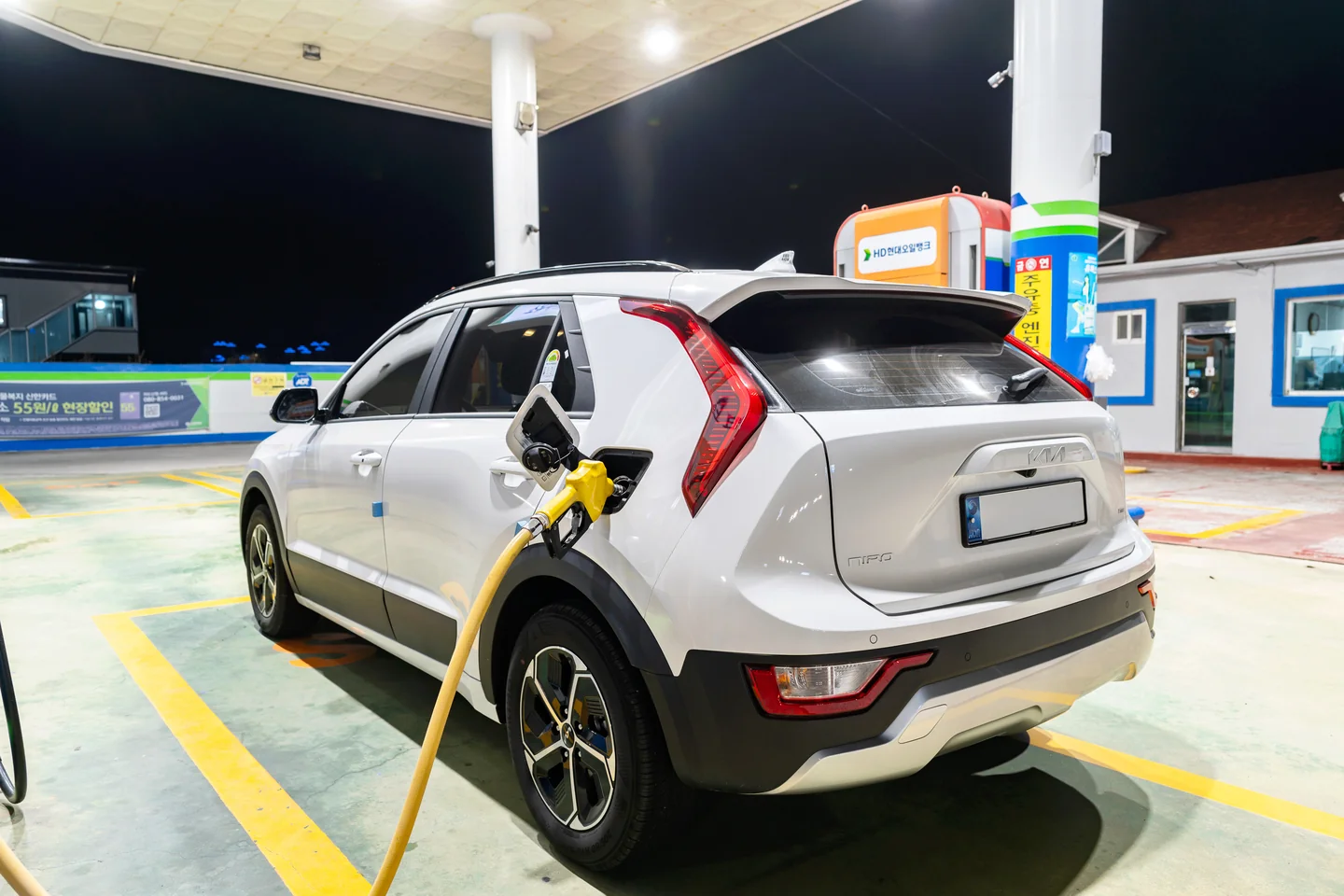
Ah.. In Korea the nozzle has a latch, so self-service refueling is convenient too. In Okinawa you have to keep holding the lever until it finishes -_-;;
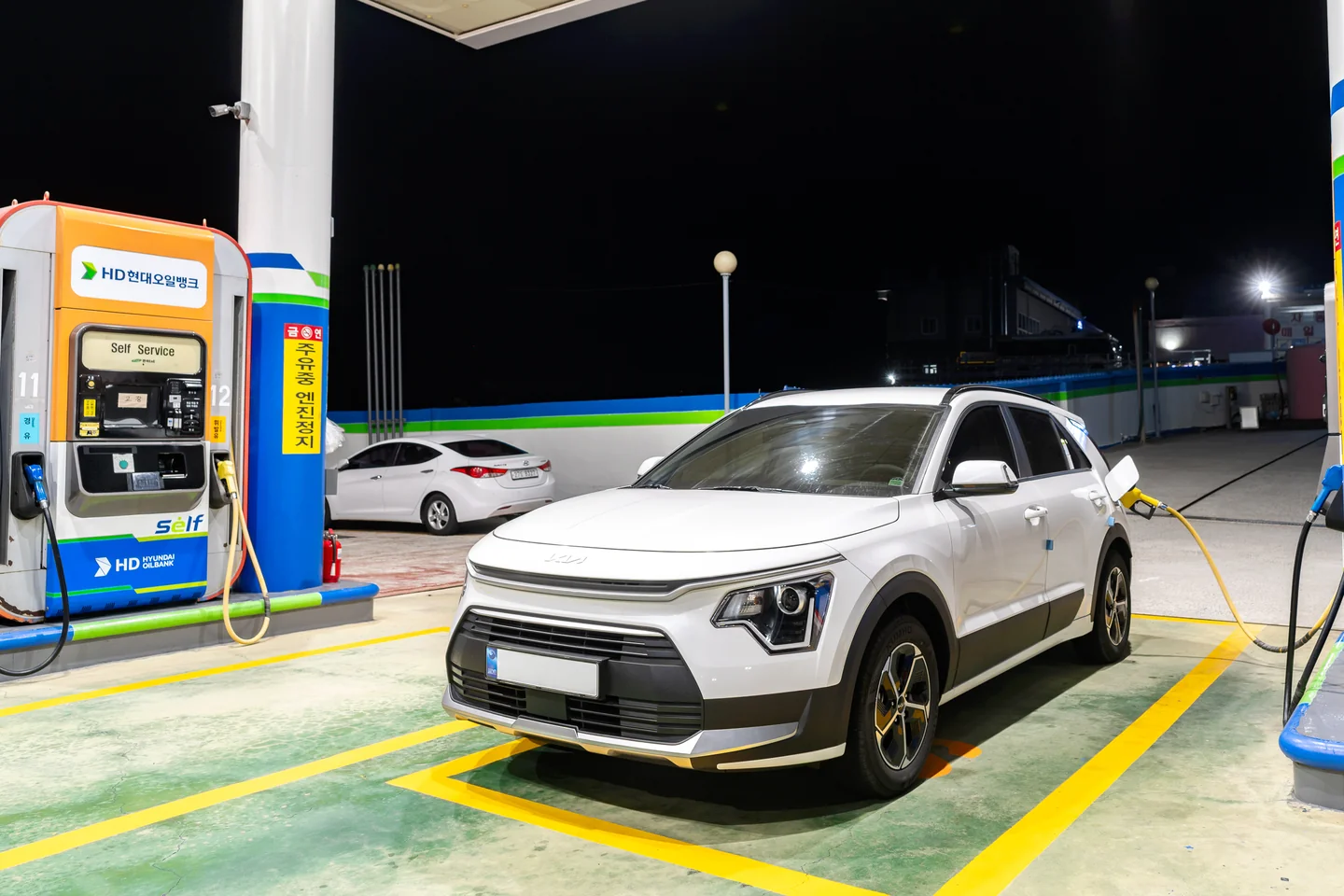
By the way.. unlike a regular long-term rental, maintenance needed through normal use, such as engine oil changes and tire replacement, is included in the fee. Insurance is of course included too. So I think it’s good. Well.. it would probably cost more than buying a car, though..
Above all.. this is my first time driving in Korea, so insurance is pretty expensive for me. So by renting a car like this and building up some driving history, I buy myself some time.
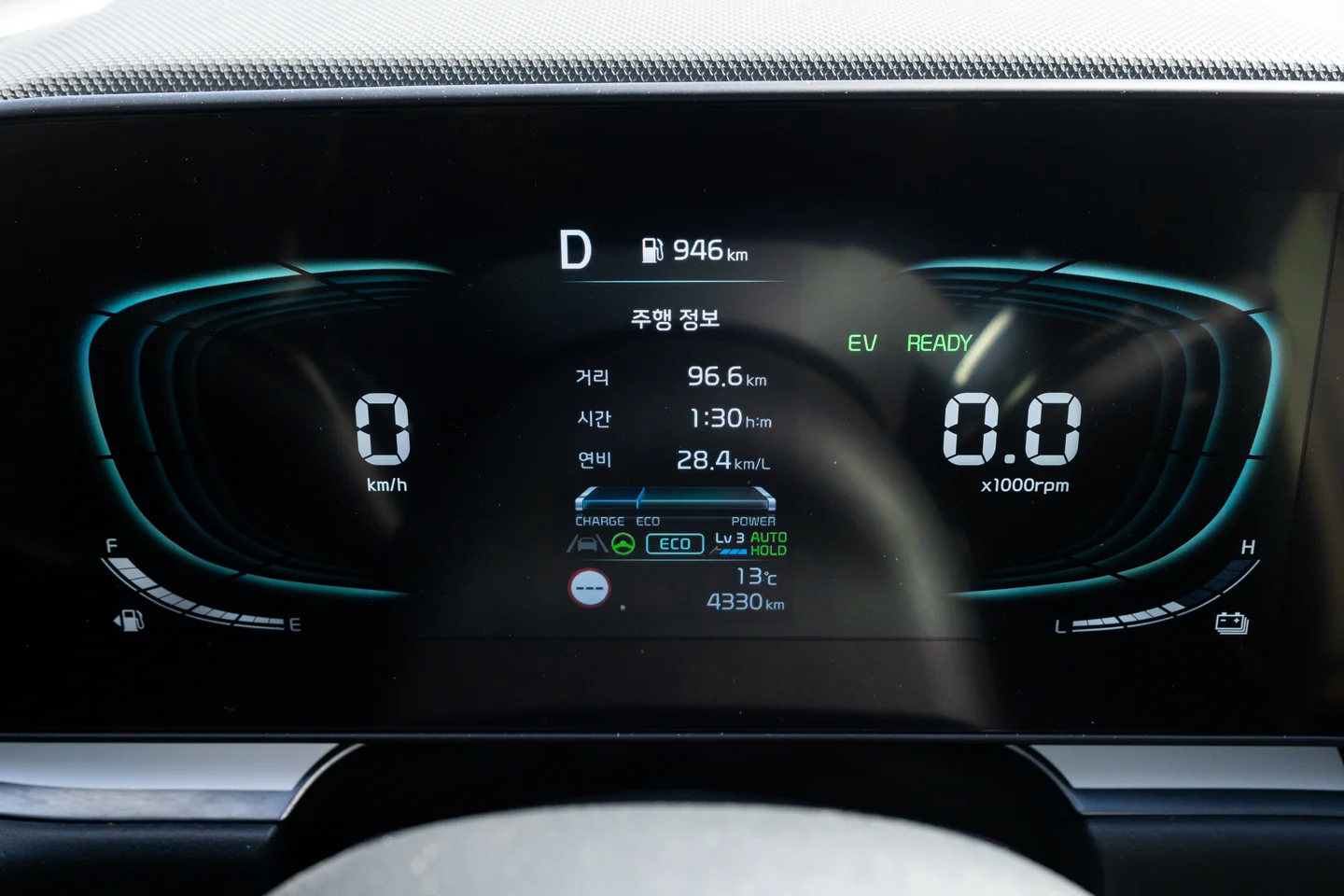
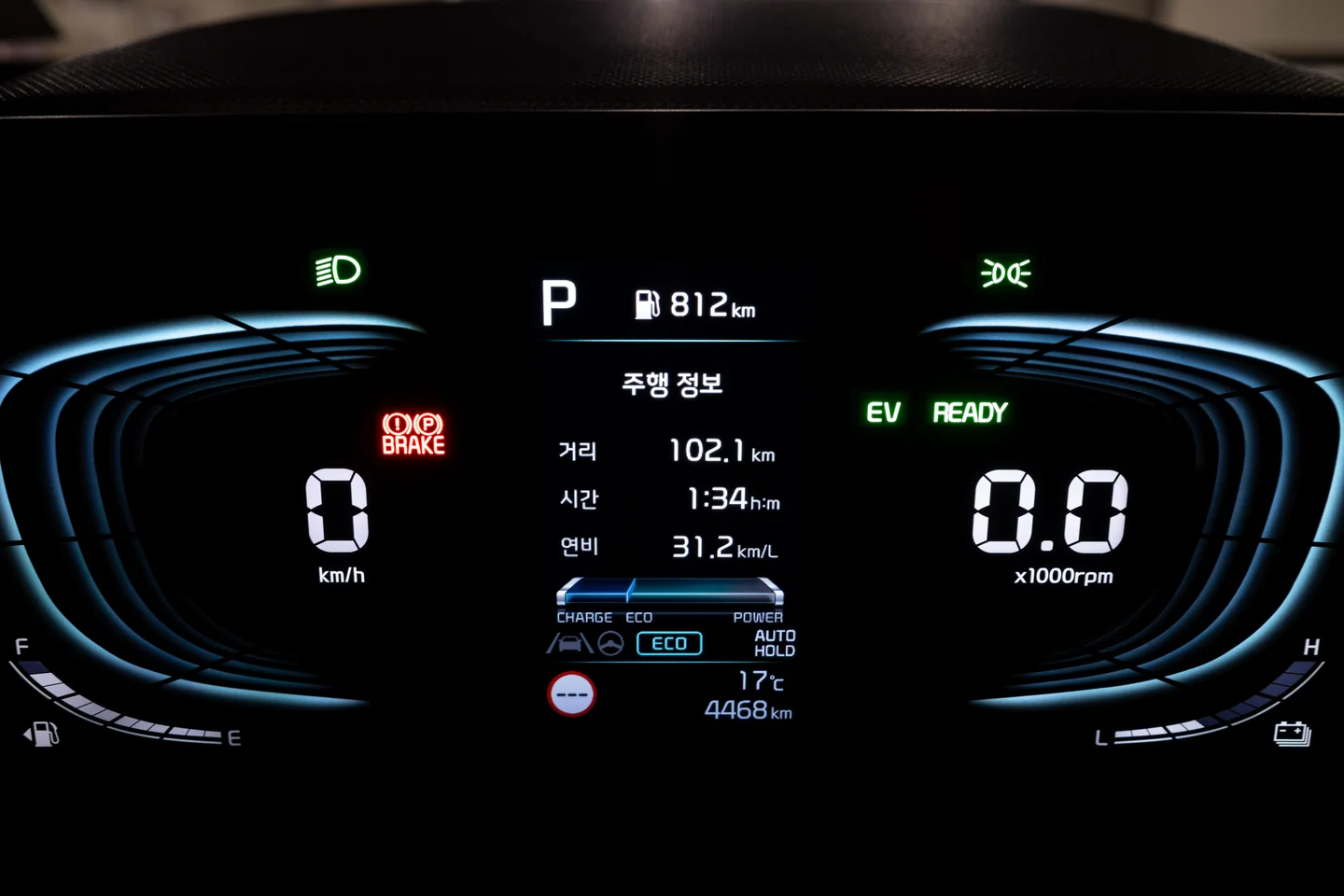
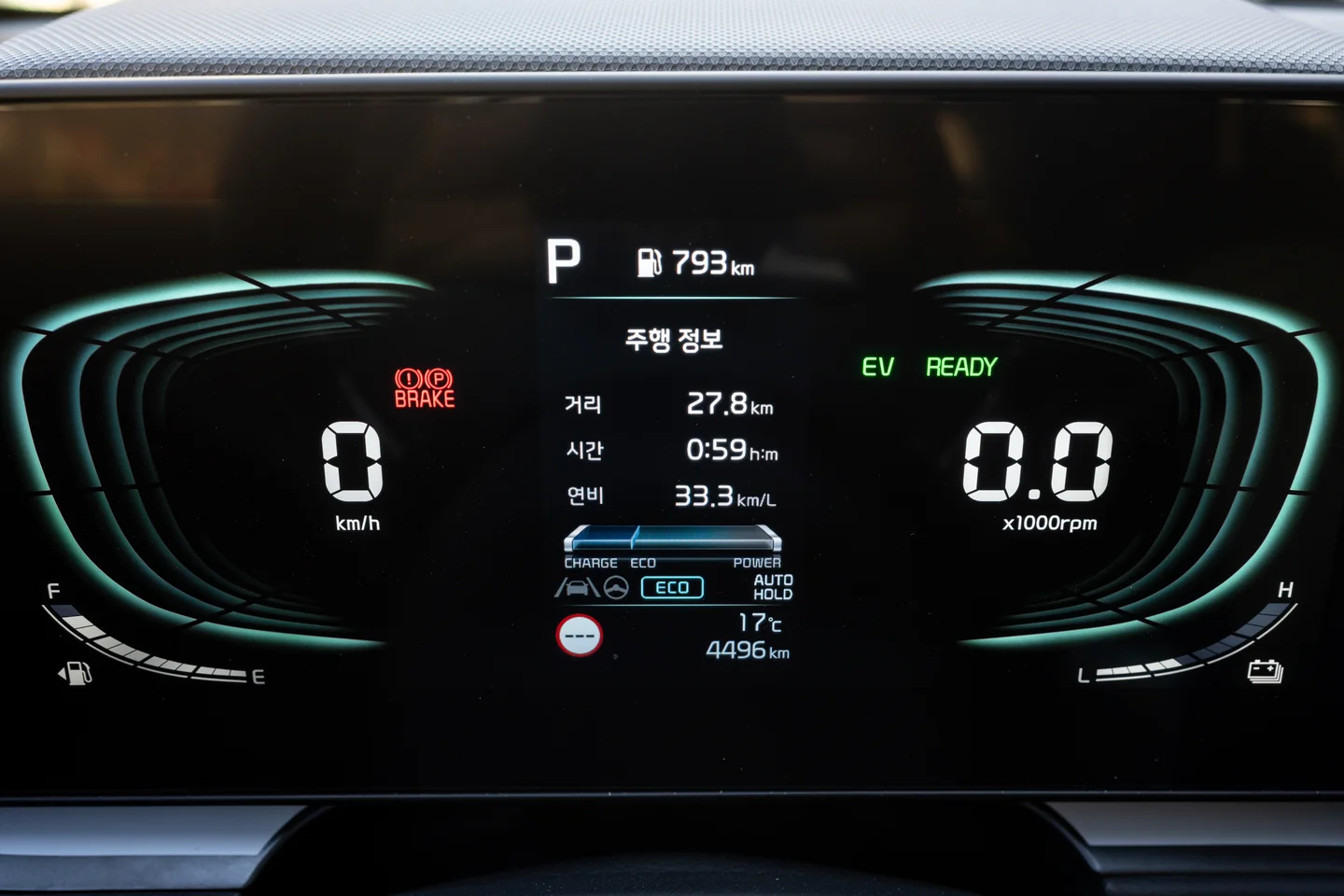
It seems the car is gradually following my driving habits. The rising temperatures play a part too, but I can clearly see that even on short drives I get good fuel economy.
And then.. that damn dual-clutch transmission (DCT).. in situations where there’s no need for high RPM at all.. on flat ground at 40 km/h, the RPM shoots up to 3,000, like it’s lost its mind, and that happens from time to time, you see? When it does, I put it in sport mode, select 3rd gear, let the RPM settle, and then switch back to auto. A bit of a hassle..
It always happens somewhere between 5 and 10 minutes into my first drive of the morning. That gas-guzzling RPM…
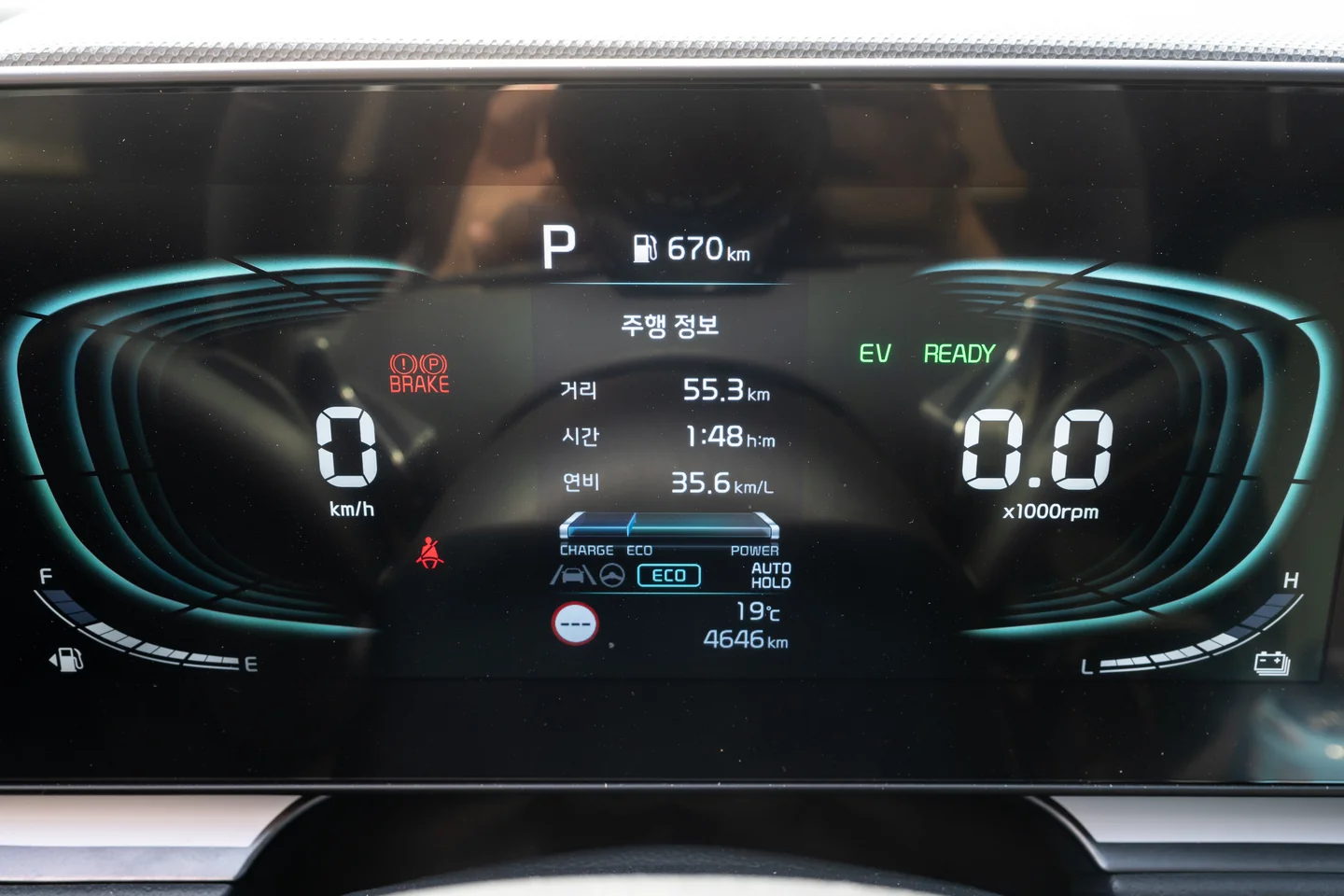
This is the fuel economy after I’d circled around downtown Gohyeon-dong on Geoje Island for a while and then gone to check how far the cherry blossoms had bloomed in Tongyeong. I pulled over on the shoulder, and from the repeated stopping and going, the fuel economy comes out looking good.
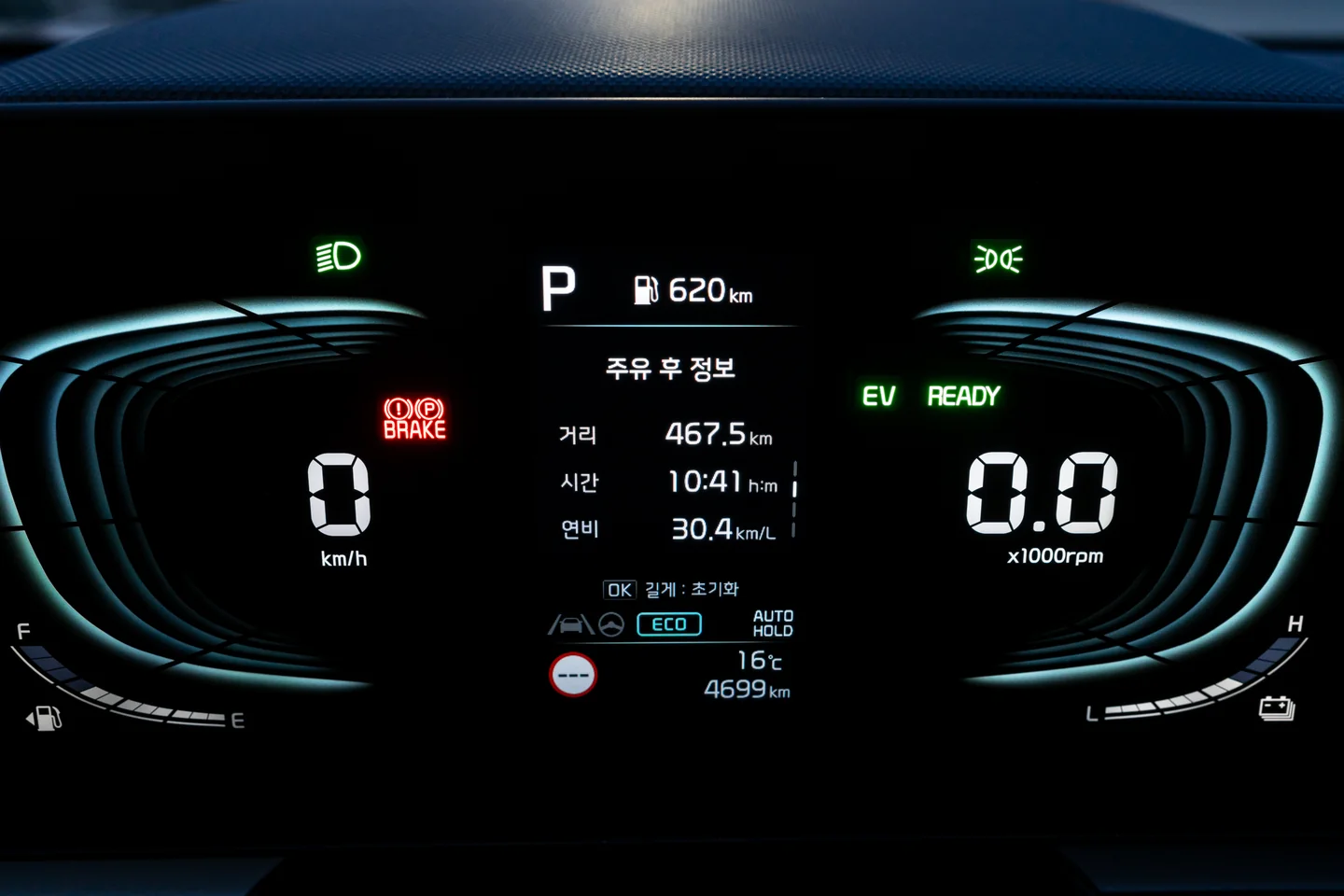
This fill-up was a great success. How to survive in the age of high fuel prices..
Even after driving 1,300 km after filling up.. the range shown above never went over 1,000 km..
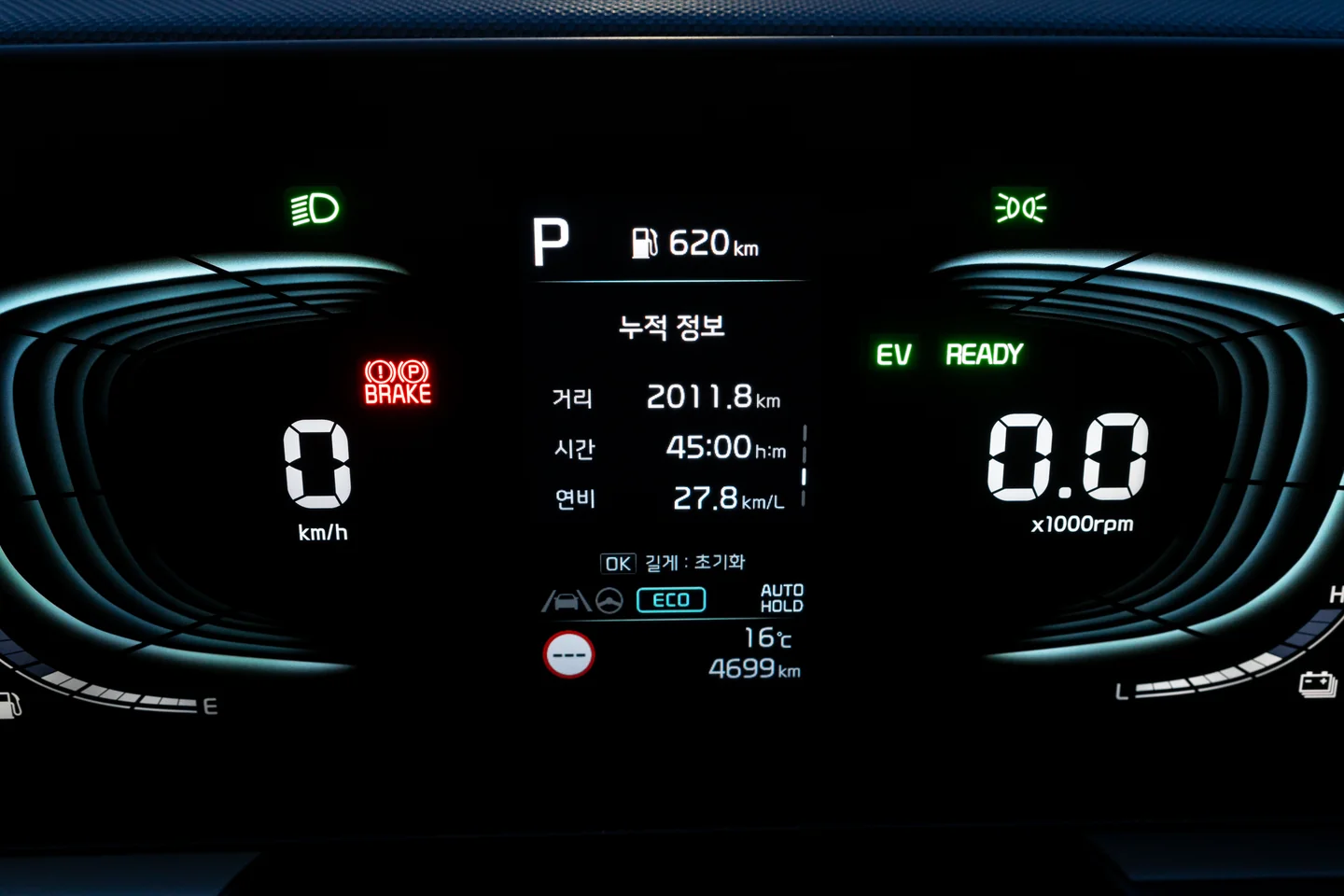
I drove 2,011 km in 30 days.
So if I sign a long-term rental contract, I’ll probably need an annual mileage allowance of more than 20,000 km.
The average fuel economy is 27.8 km per liter.. the reason the average is so much lower is.. for the first 600 km or so, I drove on the highway with the regenerative-braking paddles (the “paddle shift”) set to level 3.. so at first the fuel economy was like 20, 21 km per liter -_-;;
Accident and Repair at Kia AutoQ
It cost 200,000 KRW through insurance, and the repair took 3 days.
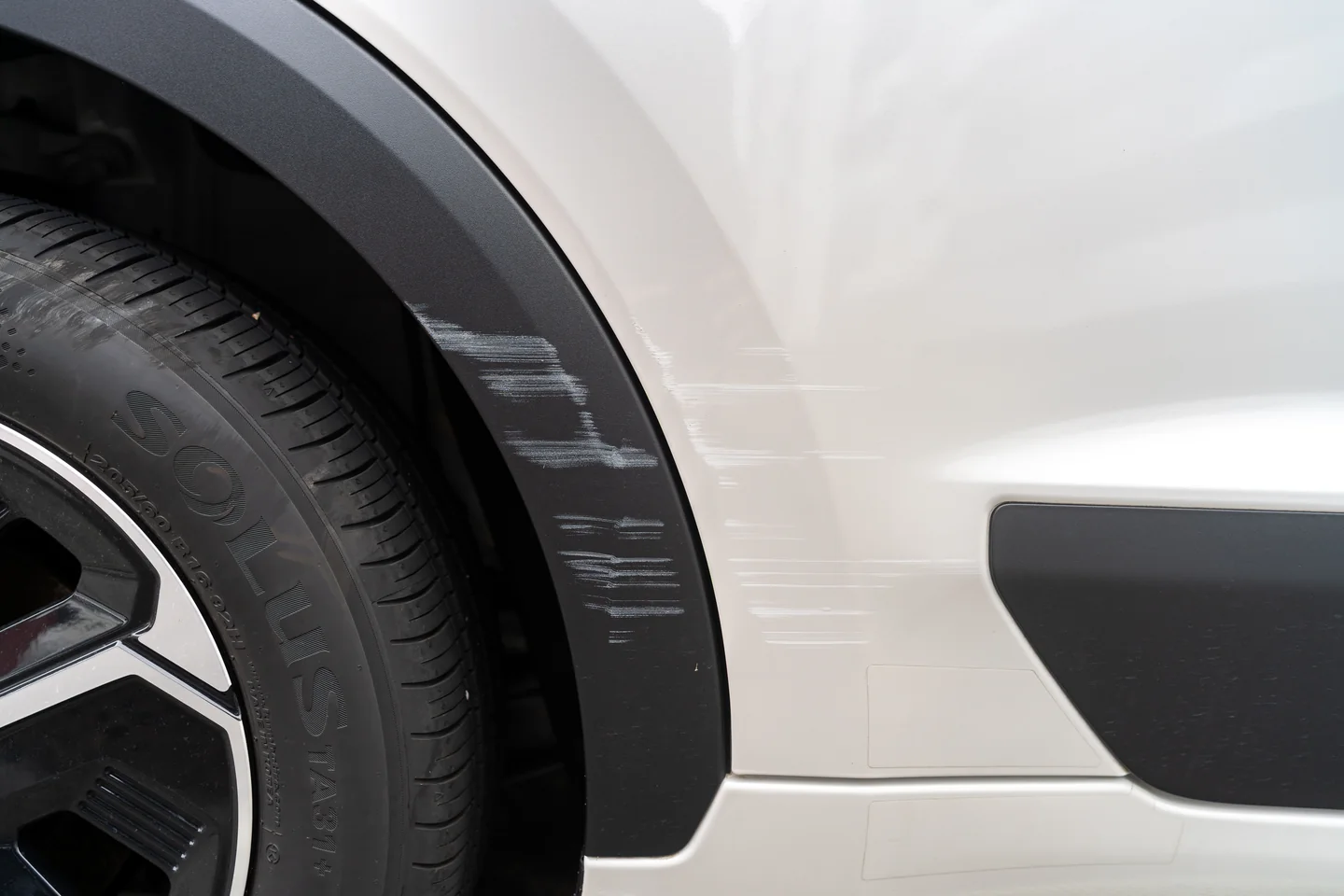
Well.. I had an accident.
I scraped the car on a stealth wall, about 50 cm high, that I couldn’t see -_-;;
Ah.. so this is why they sell the option where the side mirrors tilt down when you park…
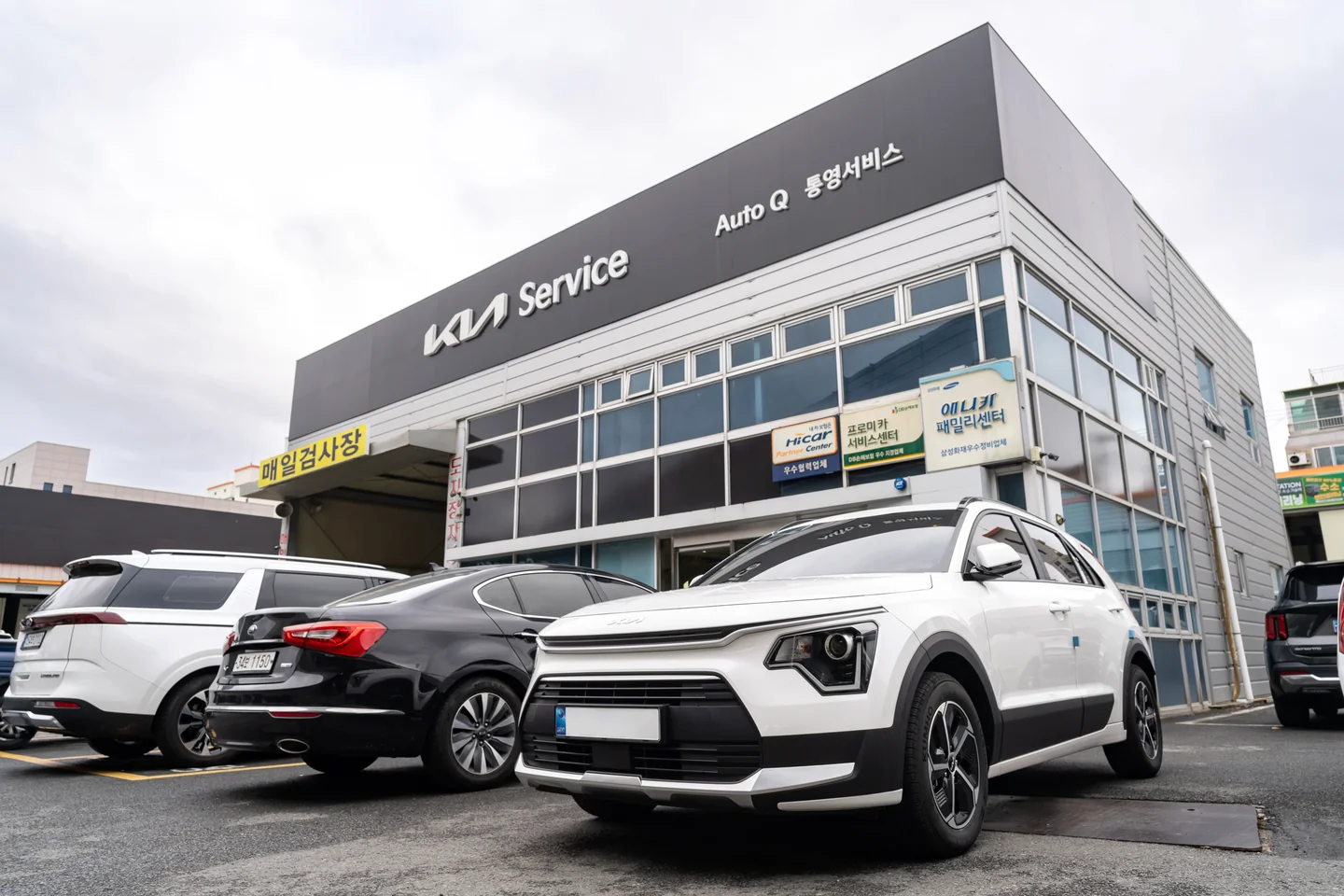
So I contacted Kia Flex, and they said I could just go to a nearby Kia AutoQ and get it repaired.
The price was 200,000 KRW through insurance..
I hear that even this kind of special rental leaves a record in your insurance history now.. but I’m starting from scratch, so that works out for me..
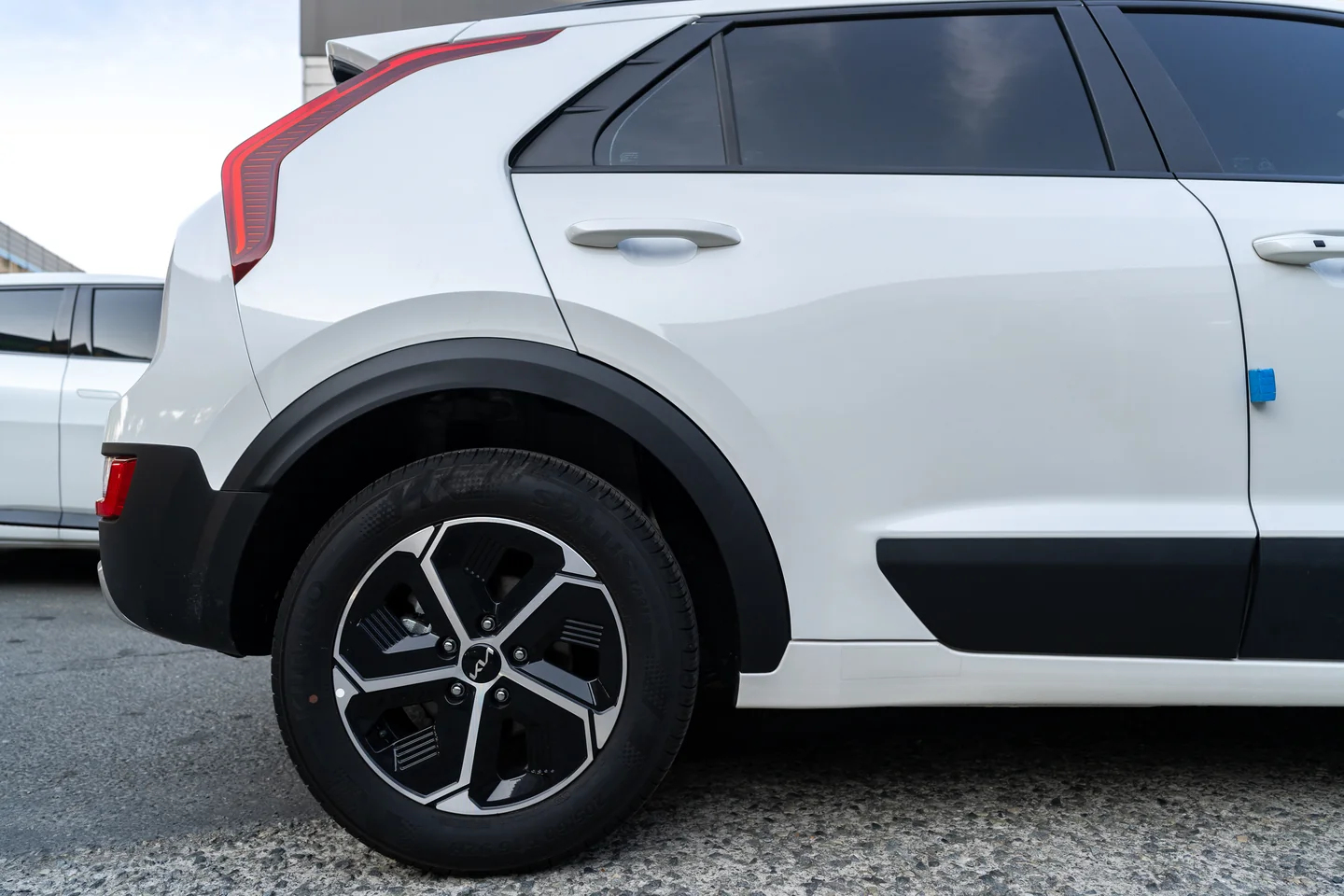
Anyway, the repair took about 3 days.
It looks even cleaner than before? I have no idea what those white stickers plastered all over it are..
Anyway,, I have quite a lot left on this car’s subscription contract.. so I plan to keep driving it for the time being. I hear the 2nd-generation facelift has come out.. but I think even just lane-keeping assist is enough for me.. and I don’t feel like I need a better car than this, so.. I’ll just wait and see for now.
Today’s story is about returning the Kia Flex car I rented in February. While using the car.. I came across other people’s reviews secondhand.. and the return process seemed to get some poor reviews. So I was worried.. but to get straight to the point.. nothing like that happened at all. I’m usually very careful to keep other people’s cars really clean.
Anyway.. they didn’t charge me for repairs on return or make a fuss over small scratches.
There was even a small stone chip on the front of the car, and they didn’t charge me any repair fee for that either.
The Day Before Return: Car Wash and Tire Pressure
About the car wash and a portable air pump.
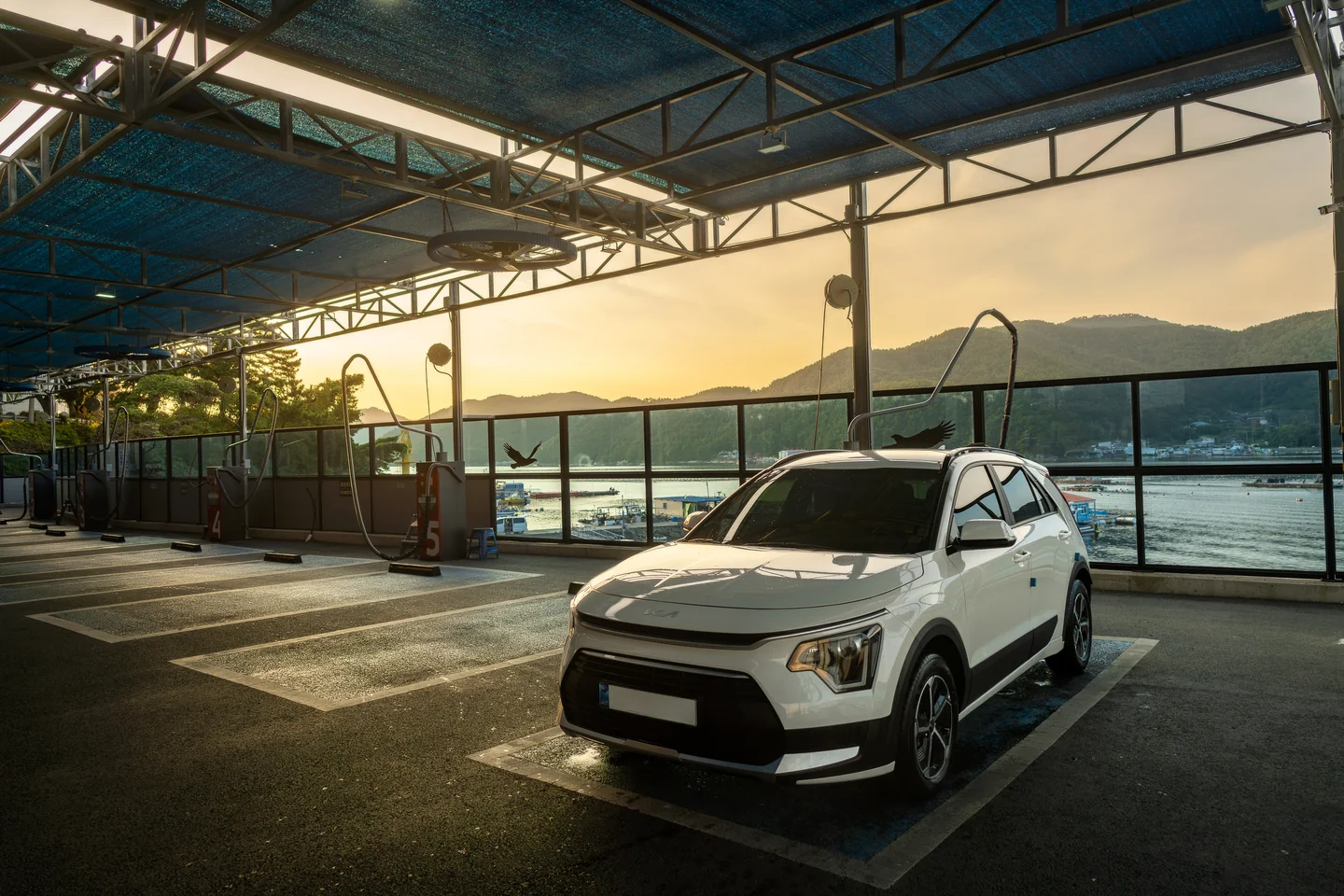
A touchless high-pressure car wash.. DK Car Wash. It’s in our neighborhood.. it’s the only car wash I use. It’s close to home, and because it’s touchless high-pressure water, I don’t have to worry about scratching the car. Through a friend of a friend.. I heard a little about Kia Flex’s repair charges.. I heard briefly about repair fees being charged over scratches.
You know, women’s nails? The area around the car’s door handle was visibly covered in nail scratches, almost as if a cat had clawed at a wall, so they charged for repairs. Another case was what they call everyday scratches, but it was at the level where they’d have to repaint the entire side door, so they charged for repairs..
Kia runs the cars as rentals, then has to sell them as used cars, and if there are lots of scratches the depreciation hit is heavy, right? That’s the idea.
It’s a different concept from ultra-short-term rentals at Okinawa rental car companies. Ultra-short-term rental cars.. that’s a business where you go in expecting a heavy depreciation hit.. while Kia Flex isn’t totally ultra-short-term; there’s a long-term rental concept too, with terms from as short as about 15 days to as long as 3 years, so I guess that’s why..
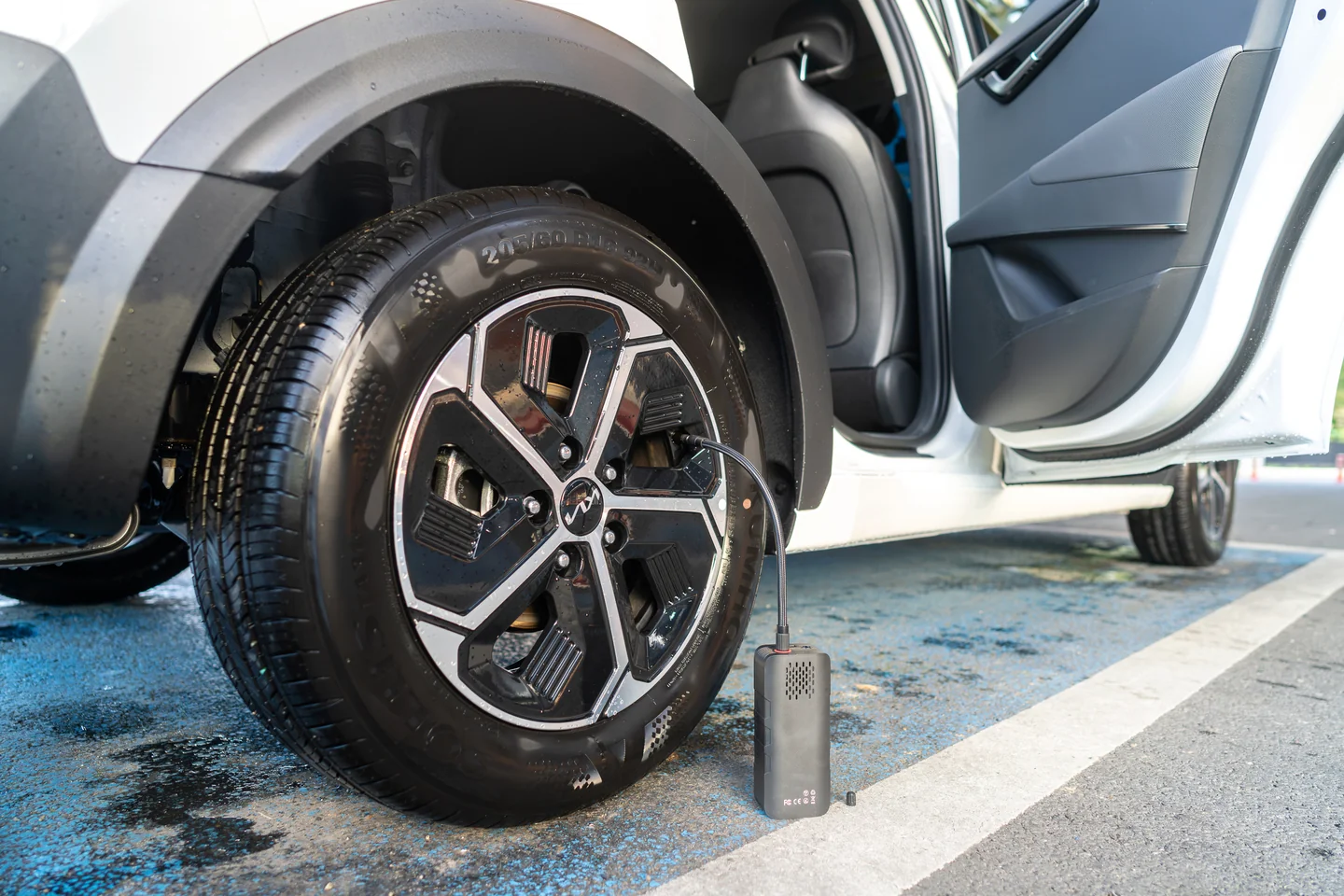
When I returned the car, I reported the issues I’d noticed. With this car, a low-pressure warning came on for a rear tire about once every 15 days. There might be a tiny puncture somewhere.. but I always carry a tire inflator, so it’s not a problem.
With that tiny gadget, you can easily inflate the tires on a small car like the Niro to about 40 psi. If you try for 41-42.. it doesn’t have the power, and the battery drains quickly.. You can buy one at Coupang for around 30,000 KRW. I bought mine in Japan, and I really like it. I originally bought it to inflate my bicycle tires, but it works on cars, and you can also inflate soccer balls or basketballs 😀
Return Day
I returned it at the Incheon Airport parking lot.
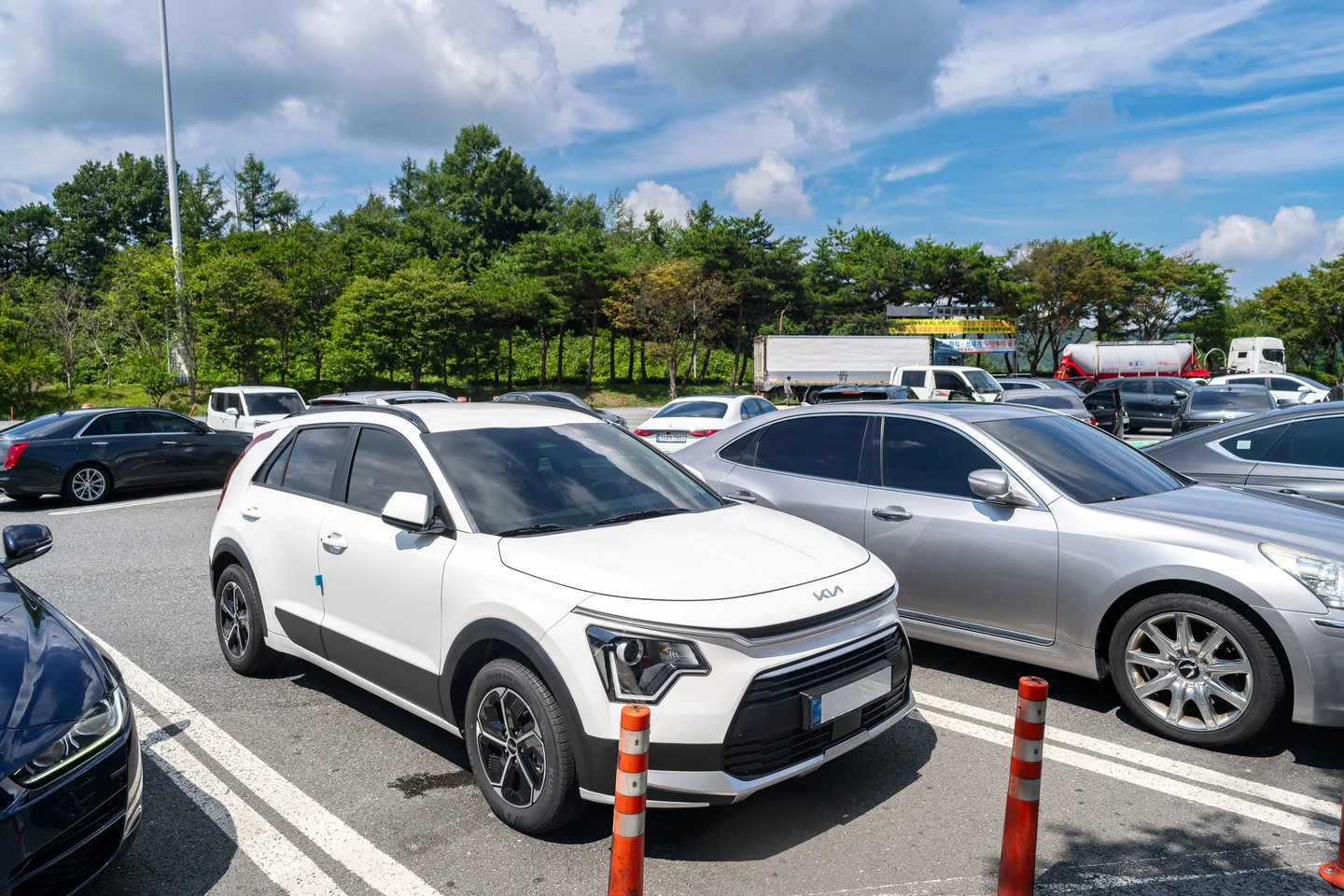
This is Deogyusan rest area.
I can have the car delivered and collected at a location of my choosing, but this car’s garage is in Gangseo-gu, near Gimpo Airport.
So the farther you get from there, the more it costs, so it’s cheaper to return it in Seoul or Gyeonggi Province if you can. I had to go to Incheon Airport that day, so I set the return location to the Incheon Airport parking lot and returned it there.
And you have to fill the tank all the way before returning. Well, that’s the basics.
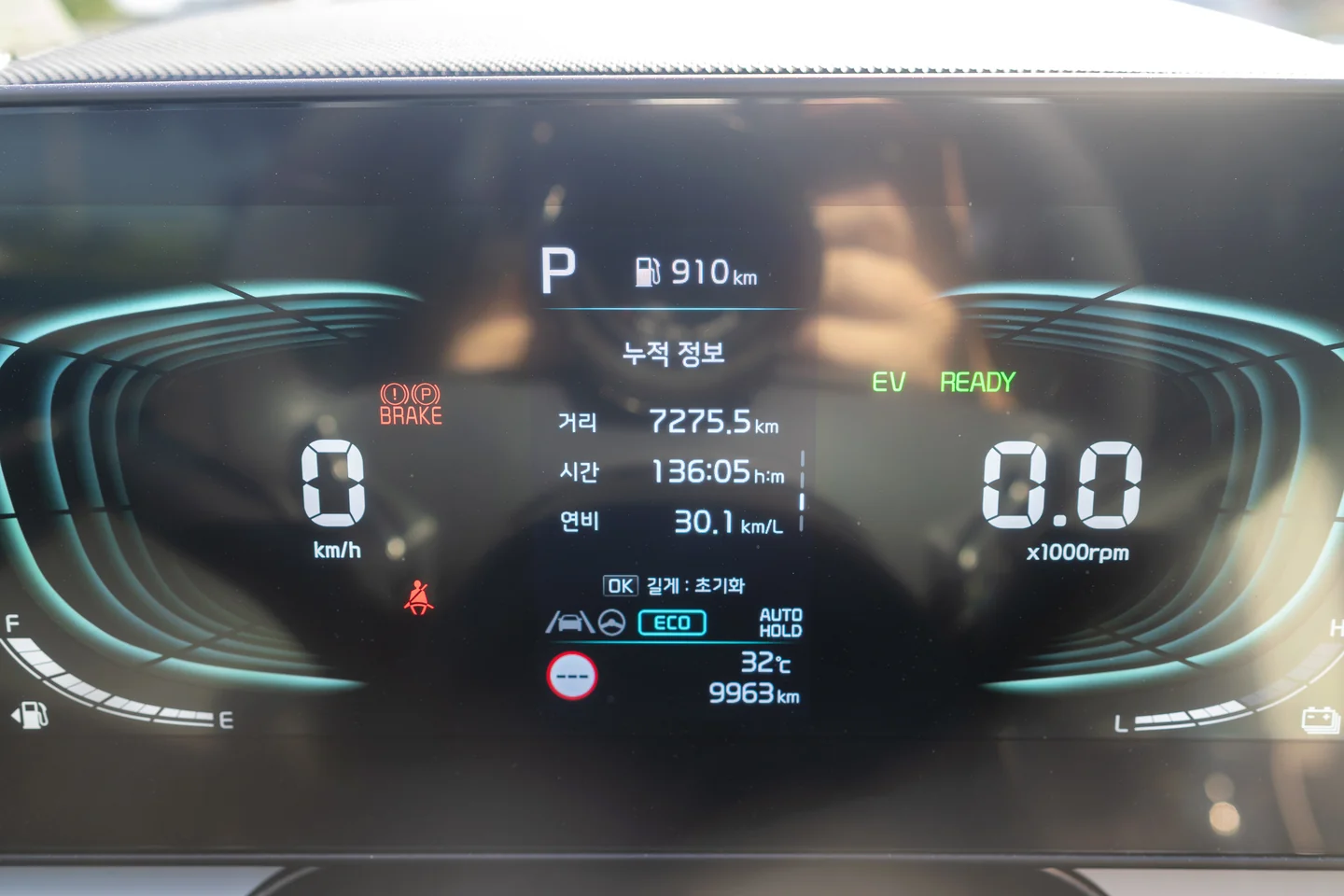
Over 6 months I drove 7,275 kilometers. The fuel economy came out at 30 kilometers per liter.
I was focused only on development work and barely did any marketing for photo shoots.. so there were hardly any shoots and I had little reason to go out.. which kept my mileage low.
Let me say it: a white car is the best, no exceptions. This car is a white 2nd-generation Niro.. and the car I just rented is a 2nd-generation facelift Niro, which is somewhere between black and gray, you see? Just a little time in the sun and it gets insanely hot. I really wanted to rent a white one, but I was told all the white ones were gone.. so I rented this one for just 6 months. It’s due back in early March 2027, so I’ll probably switch to a white one then.
Black cars in summer.. ah.. terrible.. Even in Okinawa I genuinely hated driving a black car…
Fuel economy-wise, the older 2nd generation is definitely better than the 2nd-generation facelift. I plan to post a separate review of the facelift.
If I compare the pros and cons.. the downside of the 2nd-generation Niro is the noise coming up from underneath, which is terrible.. as if they made the underside out of newspaper. And if I play music inside, you can hear all of it outside the car.. honestly it feels like they made the car way too light. The 2nd-generation facelift, on the other hand, is a bit heavier. The noise from underneath is definitely reduced, and while music still leaks out of the car, it’s a little less than in the older model.
It’s the same powertrain, but since the car weighs more, you can feel the fuel economy drop slightly.
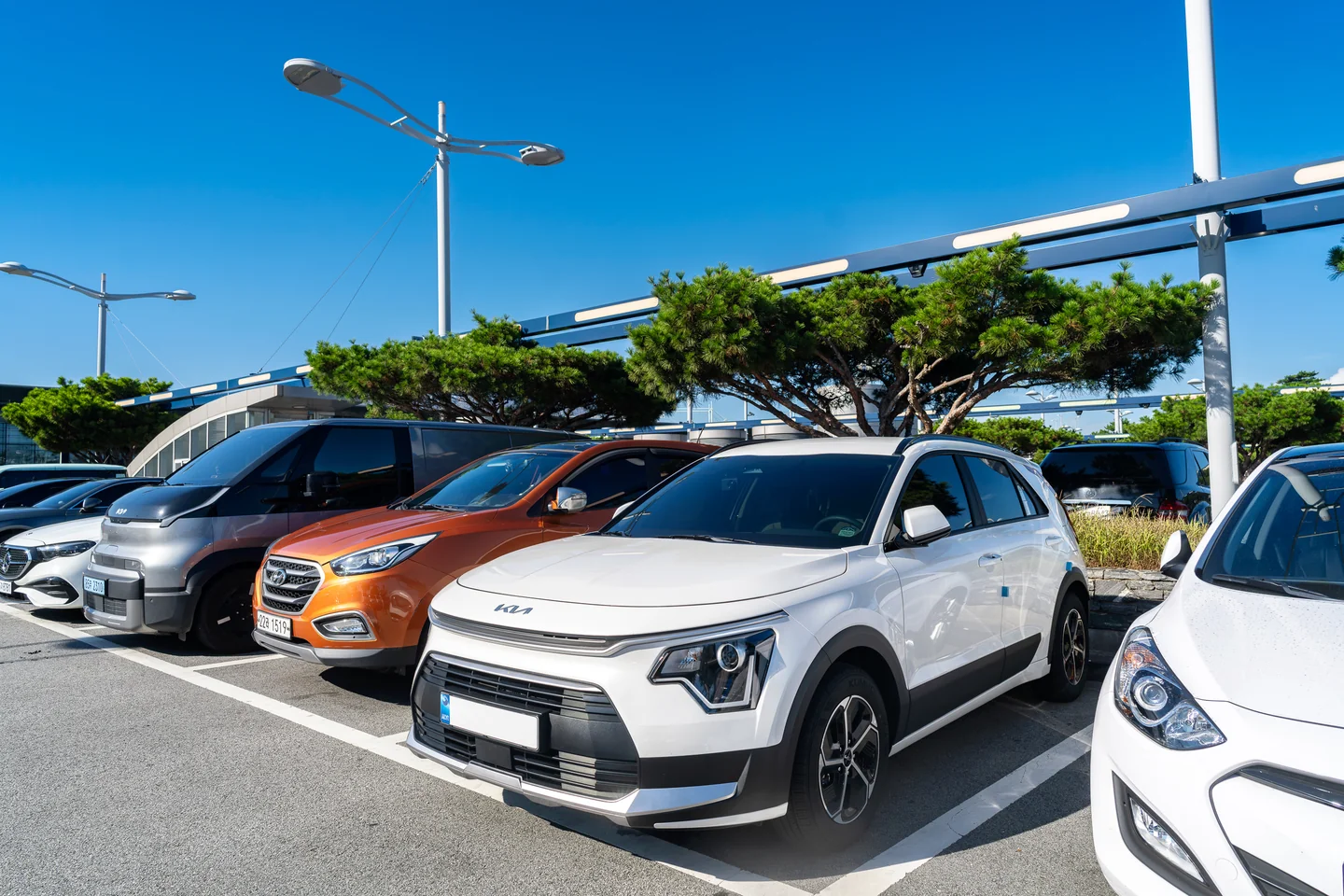
Personally, I really hate doing anything inside a car.
A car is just for getting around. I don’t like doing anything at all in a car, like eating, reading a book, or looking at my phone. I’m the type who goes outside or sits at a café table, so I went into the airport and lay down for a bit to close my eyes.
I booked the return for 5 o’clock, and I arrived at around 3:50. I actually returned it around 4:30. The return staff member came a little earlier than the scheduled time, both at pickup and at return.
Returning the Car and a 6-Month Wrap-Up
How the return went and my conclusion after 6 months.
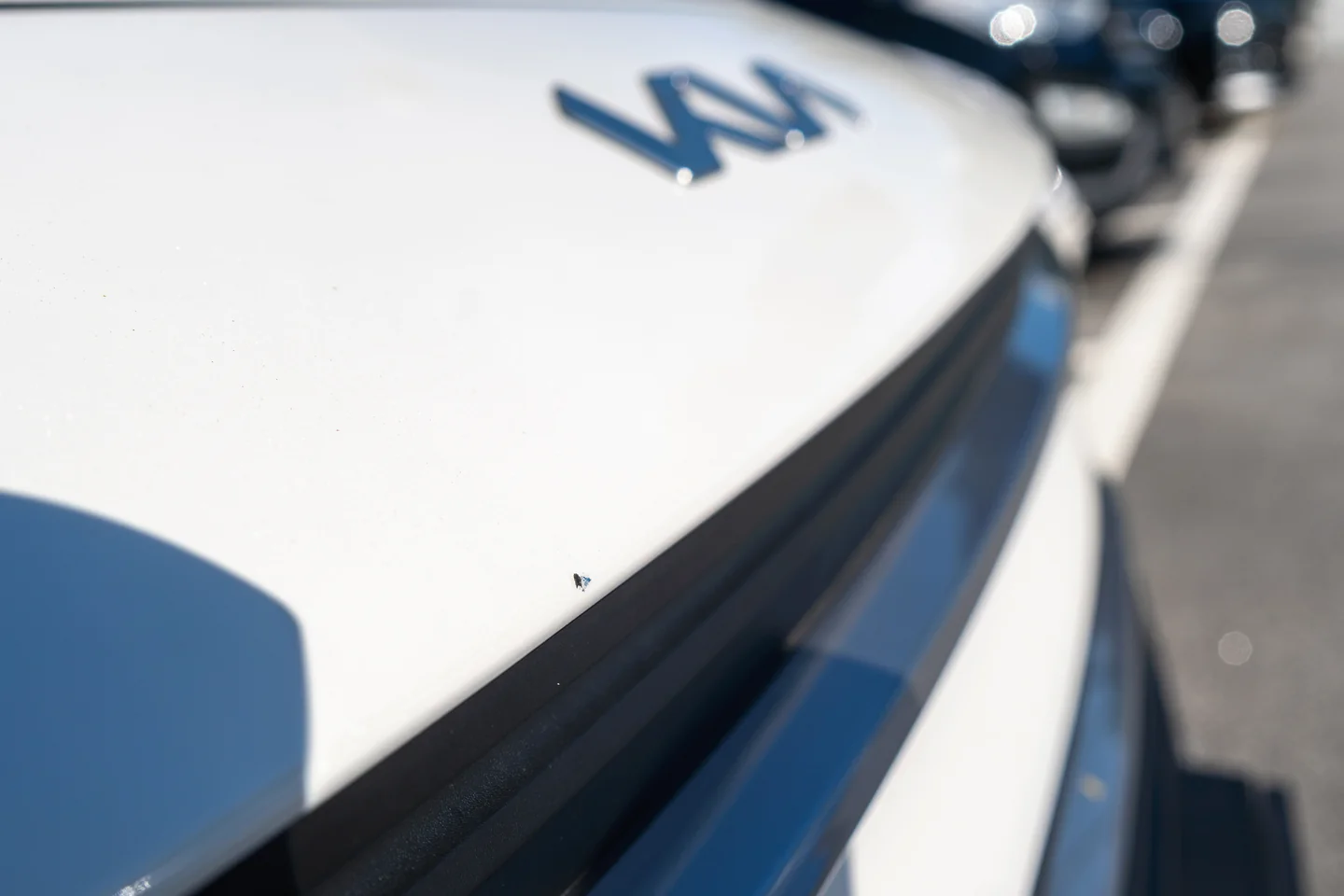
This stone chip appeared very recently. When I washed the car about 2 weeks before the return, it definitely wasn’t there. When I wash a car, I even open the hood and wipe away the dust inside, so I’m fairly detail-oriented.. I think it happened on my trip to Gyeongju for a photo shoot two days before the return..
I explained that this mark was there. There was no repair charge for it either. Well.. this is something they can fix quickly anyway..
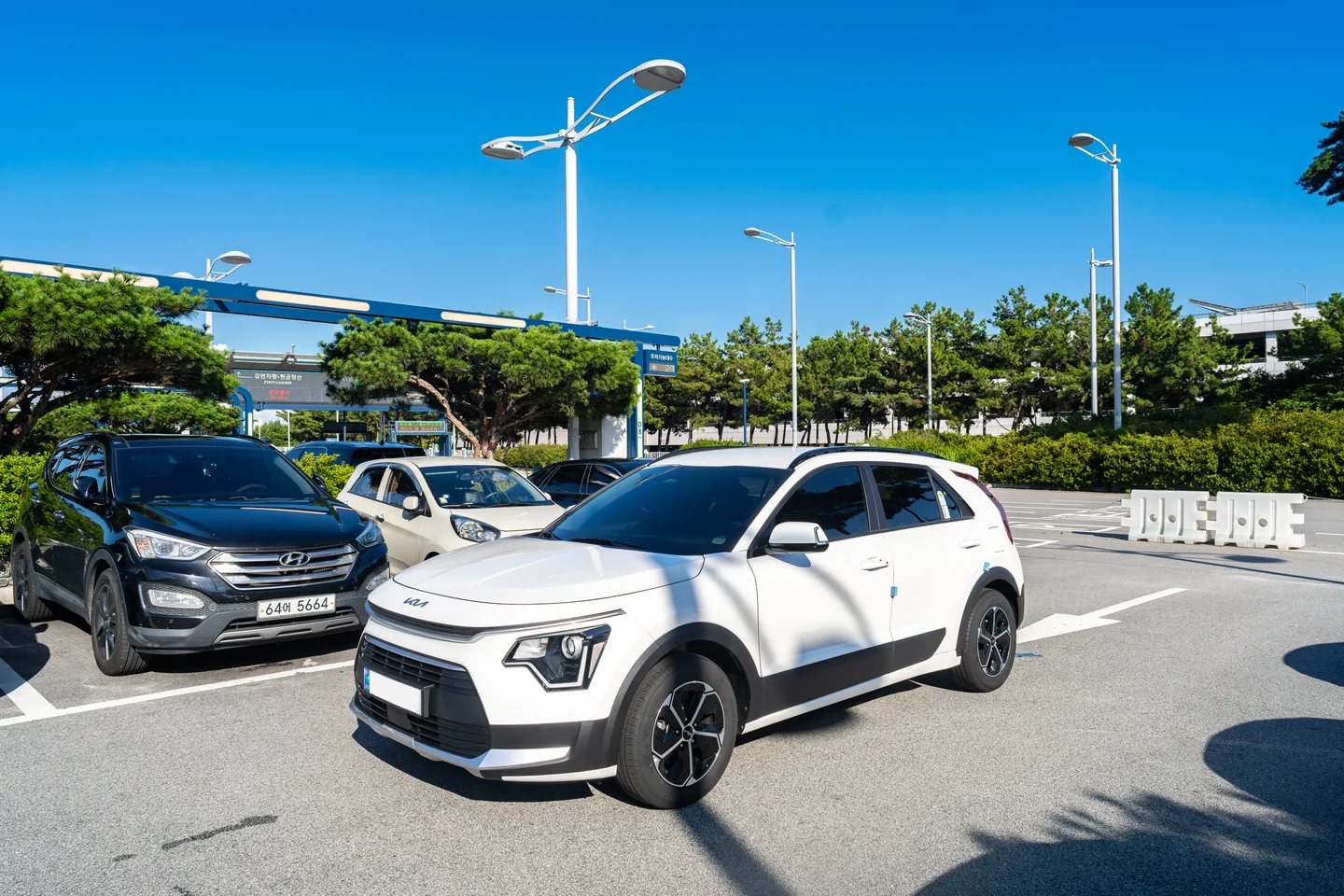
The return staff member is taking photos from the other side of the car.
Once they’ve taken all the photos, I sign and hand over the key, and the Kia Flex service is over. Of course, if I’d broken something, scratched the car badly, or damaged it enough to require bodywork and repainting, I’d be charged for repairs. But.. the only charge was 900 KRW for about an hour of parking at Incheon Airport that day, which was billed a month later.
I used it for a total of 180 days by extending every 3 months, and my new rental contract renews every 6 months. Personally, I find the service very convenient, which is why I like it. Of course.. about 3 days before each monthly payment, customer service calls me, you see? What they say is always the same.. the engine oil needs changing every 10,000 km, and if I contact them they’ll book a Kia AutoQ appointment, so go and get the oil changed. If I don’t want to extend the service, I need to schedule a return by a certain date. I think I’ve memorized it by now..
In my case, Kia Flex is cheaper than a long-term rental. Above all.. after using a car for about 6 months, you can switch to a different one. One reason I use the Niro is the good fuel economy, but it’s also the cheapest car on Kia Flex.. and personally, a good car is one that doesn’t cost money and doesn’t break down.. Anyway, I’m enjoying the Niro very much.
It’s convenient to have the car delivered and collected wherever you like. You should try it too 😀
After 6 Months
My conclusions on cost and convenience.
Seeing a big company like Kia Flex rent out cars at such an affordable price.. I’m reminded that renting a car in Korea is this cheap. If you find long-term rental a hassle or want something simple and easy, give it a try. I’m very happy with the service.
Kia Flex App Download and Referral Code
Install the app and enter the code when you sign up.


- It's a friend invite code (referral code), and mine is QF5hcx9skJ. Enter it when you sign up in the app to get 10% off a subscription of one month or longer.
- As far as I know, you enter it when you sign up in the app. I understand there is no web sign-up, and you can get the app from Google Play and the App Store.
- The cars range from the Niro to the Carnival, and for 1 month the price varies by model, from just over 600,000 KRW to just over 1,000,000 KRW. Check exact prices in the app.
- According to the official introduction page, the Monthly subscription can be used for anywhere from 15 days to 540 days. I extended every 3 months for a total of 180 days, then signed a new contract in 6-month terms.
- When I used it, insurance and maintenance needed through normal use, such as engine oil changes and tire replacement, were included in the fee. Contract terms may change, so check in the app.
- Yes. I picked mine up at Incheon Airport and returned it at the Incheon Airport parking lot. As of February 2026, the delivery fee to Incheon was 40,000 KRW, and the cost goes up if the return location is farther from Seoul and Gyeonggi Province.
- In my case, no. There was a small stone chip on the hood, but they didn't charge for it, and the only charge was 900 KRW for one hour of parking at Incheon Airport. However, repair costs may be charged if you scratch the car badly through your own fault or it needs repainting.
- Over 6 months and 7,275 km, the average was 30.1 km per liter. In the first month it averaged 27.8 km per liter over 2,011 km. I drive alone, and carrying passengers lowers fuel economy by about 30%.
- You need to check the terms of use and license requirements in the app. Personally, I think that for a foreigner living in Korea for less than a year, with a visa and a Korean driver's license, there's no car rental service as good as this one.